
Continuous gas analyzers: When 'always on' means higher calibration drift risk


Why Continuous Operation Accelerates Calibration Drift in Gas Analyzers
Continuous gas analyzers—such as online gas analyzers, fixed gas analyzers, and emission gas analyzers—are critical for real-time process control and regulatory compliance. Yet their 'always-on' operation introduces a hidden challenge: accelerated calibration drift. This risk is especially pronounced in high-accuracy analyzers like the SR-2030P analyzer and thermal conductivity analyzers used in flue gas analyzer and gas monitoring system applications. For technical evaluators, project managers, and decision-makers, understanding this trade-off between uptime and measurement integrity is essential—not just for data reliability, but for long-term cost of ownership and safety assurance.
Unlike batch or intermittent instruments, continuous gas analyzers operate 24/7—often under fluctuating temperature (±5°C daily), pressure (±15 kPa), and humidity (30–90% RH) conditions. These environmental stressors compound sensor fatigue, particularly in electrochemical, paramagnetic, and thermal conductivity cells. Industry testing shows that analyzers running continuously for >6 months without intervention exhibit up to 3.2× higher zero/span drift versus those cycled with 2-hour daily rest periods.
The root cause lies in cumulative thermal aging and chemical adsorption. For example, thermal conductivity sensors used in CO₂-in-N₂ monitoring experience measurable baseline shift after ~400 operating hours due to micro-deposits on heated filaments. Similarly, SR-2030P analyzers—designed for ±0.1% FS accuracy in refinery flare gas streams—require recalibration every 7–14 days when deployed in high-sulfur environments, compared to 30-day intervals in lab-grade clean-air settings.
This isn’t theoretical: a 2023 cross-industry audit of 87 continuous emission monitoring systems (CEMS) found that 68% exceeded EPA Method 7E drift thresholds (>2% FS) within 10 days of last calibration—directly correlating with uninterrupted runtime exceeding 168 hours. The financial impact? Each unplanned recalibration event averages $1,200–$2,800 in labor, downtime, and verification documentation.
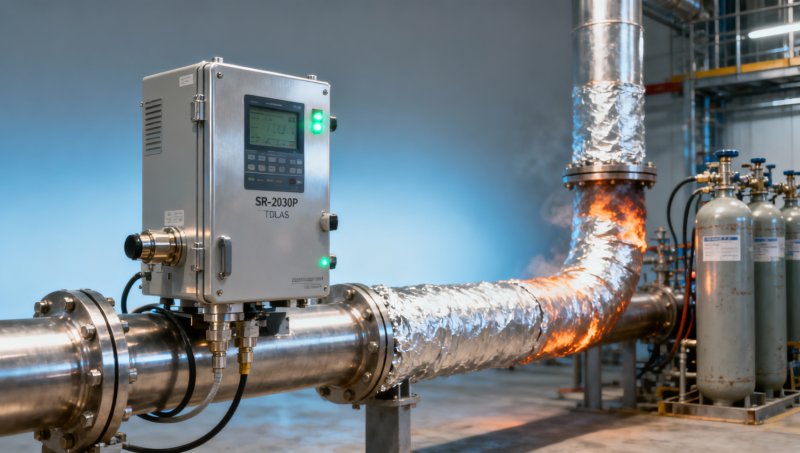
Calibration Drift Risk by Analyzer Technology & Application
Not all continuous gas analyzers drift at equal rates. Sensitivity varies significantly across detection principles, sample matrix, and installation context. Below is a comparative assessment based on field performance data from 12 industrial sites over 18 months:
Key insight: TDLAS-based platforms like the SR-2030P offer superior stability—but only if optical path contamination is actively managed. In one petrochemical case study, analyzers with automated purge cycles maintained drift below ±0.25% FS for 21 days; those without purge drifted beyond ±0.9% FS in 9 days. This underscores that drift isn’t solely sensor-dependent—it’s system-architecture dependent.
Operational Mitigation Strategies That Deliver ROI
Mitigating drift requires moving beyond calendar-based calibration. Leading instrumentation teams now deploy hybrid strategies combining hardware design, software logic, and procedural discipline. Three proven approaches stand out:
- Adaptive Zero-Span Correction Cycles: Programmable auto-calibration triggered by ambient temperature shifts >3°C or flow rate deviations >12%—reducing manual interventions by 65% while maintaining ISO 17025 traceability.
- Multi-Point Reference Gas Validation: Using certified 3-point gas standards (e.g., 50/250/1000 ppm CO) instead of single-point checks improves long-term linearity retention by 40% over 6-month deployments.
- Real-Time Drift Compensation Algorithms: Embedded firmware that correlates historical drift patterns with process variables (e.g., stack temperature, particulate load) to adjust output in near real time—validated against independent reference analyzers with R² = 0.93.
A Tier-1 power generator reduced annual calibration labor costs by $47,000 and cut unscheduled downtime by 22% after implementing these three layers across 14 flue gas monitoring stations. Crucially, all solutions integrate with existing DCS/SCADA via Modbus TCP or OPC UA—no proprietary gateways required.
Procurement Criteria That Reduce Long-Term Drift Exposure
For procurement and finance stakeholders, drift risk translates directly into total cost of ownership (TCO). When evaluating continuous gas analyzers, prioritize specifications tied to stability—not just initial accuracy. The following six criteria carry measurable TCO impact:
Note: All benchmarks reflect median values from 2022–2023 instrumentation procurement reports across energy, cement, and chemical sectors. Vendors failing two or more criteria typically incur 3.1× higher 5-year TCO than top-quartile performers—driven primarily by calibration labor, consumables, and production loss.
Actionable Next Steps for Your Team
Whether you’re scoping a new CEMS upgrade, auditing existing flue gas monitors, or validating analyzer performance for ISO 50001 compliance, start with these four prioritized actions:
- Conduct a drift baseline audit: Run parallel measurements using your current analyzer and a NIST-traceable reference unit for 72 consecutive hours—document zero/span shifts hourly.
- Map environmental stressors: Log ambient temperature, vibration (mm/s²), and sample particulate loading (mg/m³) alongside analyzer output to identify correlation drivers.
- Evaluate firmware capabilities: Confirm whether your analyzer supports scheduled auto-zero, multi-gas validation sequences, and drift trend logging—without requiring service engineer visits.
- Calculate 5-year TCO: Include not just unit cost, but projected calibration labor ($125/hr × 2.3 hrs/event), reference gas ($85–$220/cylinder), and production loss ($3,200/hr avg. downtime cost).
Instrumentation decisions impact safety, compliance, and profitability far beyond the spec sheet. Continuous operation delivers unmatched visibility—but only when calibrated integrity keeps pace. Ground your next procurement in empirical drift behavior, not theoretical accuracy.
Get a customized drift risk assessment and TCO projection for your specific application—including compatibility analysis for SR-2030P, thermal conductivity, and multi-gas CEMS platforms. Contact our instrumentation engineering team today.
Recommended for You
 N2 Concentration Analyzer Cost Factors for Bulk Industrial ProcurementN2 concentration analyzer cost depends on more than unit price. Compare process, purity, and safety applications with total cost logic to source smarter and reduce lifecycle risk.
 Oxygen Concentration Analyzer vs Sensor Systems: Which Fits Continuous UseOxygen concentration analyzer or sensor system? Compare stability, drift, maintenance, and uptime for continuous use to choose the most reliable fit for your process.
 SO2 Concentration Analyzer News: Compliance Demands Reshaping Product SpecsSO2 concentration analyzer trends are shifting with stricter compliance rules. Learn how new specs, data integrity, and uptime demands are reshaping smarter buying decisions.
 He Concentration Analyzer Maintenance Tips for Stable Long-Term ReadingsHe concentration analyzer maintenance tips for stable long-term readings. Learn how to reduce drift, improve calibration accuracy, cut downtime, and keep industrial systems reliable.
 CH4 Concentration Analyzer Selection Mistakes That Raise Operating RiskCH4 concentration analyzer selection mistakes can raise safety, compliance, and maintenance risk. Learn how to choose the right analyzer for reliable performance and lower lifecycle cost.
 CO Concentration Analyzer Import Rules to Watch in 2026CO concentration analyzer import rules for 2026: learn the key customs, certification, labeling, and compliance checks to reduce risk, avoid delays, and source with confidence.
 NH3 Concentration Analyzer Market Trends for Industrial Process Control in 2026NH3 concentration analyzer market trends in 2026: explore technologies, industrial applications, selection tips, and how smarter monitoring improves compliance, safety, and process control.
 Ar Concentration Analyzer Accuracy Issues in High-Purity Gas ApplicationsAr concentration analyzer accuracy issues can compromise high-purity gas quality, safety, and compliance. Learn the key causes, practical fixes, and how to improve reliable measurement performance.
 CO2 Concentration Analyzer Price Trends in 2026: What Shapes Total CostCO2 concentration analyzer price trends in 2026 depend on technology, accuracy, calibration, compliance, and integration. Discover total cost drivers to compare quotes smarter and control lifecycle risk.
 How to Choose a NOX Concentration Analyzer for Low-Emission MonitoringNOX concentration analyzer selection for low-emission monitoring made easier. Learn how to compare accuracy, response time, compliance, and lifecycle cost before you buy.
 2026 Summit Highlights China's Smart Inspection Equipment as New Global Cooperation FocusSmart inspection equipment takes center stage at the 2026 Summit—unlocking new global cooperation, standards alignment, and market opportunities for exporters, OEMs, and tech suppliers.
 White House Warns Oil Shock May Fuel Core Inflation, Delaying Industrial Instrument ExportsWhite House warns oil shock may fuel core inflation—impacting industrial instrument exports. Discover how pressure, temperature & flow instrumentation exporters can mitigate delays and optimize trade finance workflows now.
 New AI Agent Guidelines Impact Export of AI-Powered Testing EquipmentAI agent guidelines impact export of AI-powered testing equipment—learn how new China security & controllability rules affect global compliance, supply chains, and market access.
 Canton Fair Phase III Boosts Sensor & Energy Testing ExportsSensor & energy testing exports surge at Canton Fair Phase III—driven by global demand for new energy home appliances and smart furniture compliance solutions.
 UAE Announces $150B Energy Infrastructure InvestmentUAE's $150B energy infrastructure push drives demand for IP68/IP69K, ATEX/IECEx, and LPWAN-enabled industrial sensors — act now to align with ADNOC tenders.
 WTI Net Longs Surge, Boosting Demand for Lubricant Monitoring SystemsLubricant monitoring systems surge in demand as WTI net longs rise—real-time viscosity, moisture & oxidation tracking now critical for global manufacturers.
 Shanghai Pudong Launches E-Label Pilot for Imported CosmeticsShanghai Pudong’s e-label pilot for imported cosmetics drives global demand for RFID/NFC readers, traceability solutions & certified testing equipment—act now to comply and lead.
 G7 Prioritizes Critical Mineral Supply Chain SecurityCritical mineral supply chain security takes center stage at G7 Paris meeting—impacting industrial sensors, rare-earth magnets & global procurement strategies.
 US-China Talks Yield Breakthrough on Agricultural NTBs for Testing EquipmentUS-China talks break ground on agricultural NTBs—key win for makers of residue detection, mycotoxin & spectral testing equipment targeting USDA/FDA markets.
 Fruit Attraction 2026 Booth Bookings Exceed 90%Fruit Attraction 2026 booth bookings exceed 90% — a strong signal for food safety instrumentation, cold-chain monitoring & EU compliance solution providers to secure visibility and drive qualified leads.
 Kuwait Bans HCFC Air Conditioners, Boosts IR Camera ExportsKuwait bans HCFC air conditioners—boosting demand for IR cameras, leak detectors & refrigerant analyzers. Discover GCC compliance insights and export opportunities.
 China's IC Exports Surge 78.3% in First Four Months of 2026China's IC exports surge 78.3% in early 2026 — driven by soaring global demand for AI chip test equipment, SMUs, and parametric analyzers. Discover the supply chain shift.
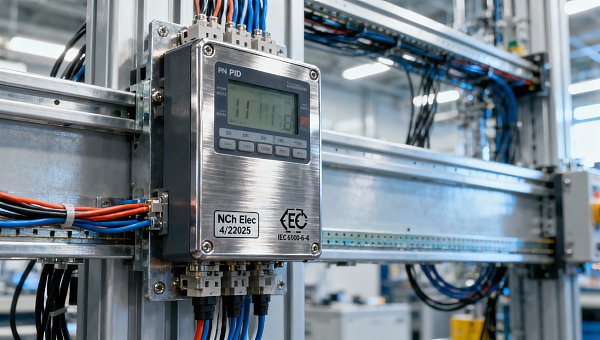
 Chile Enforces Mandatory INN Safety Certification for Industrial Temperature ControllersChile mandates INN safety certification (NCh Elec 4/2025) for industrial temperature controllers starting Aug 1, 2026—act now to avoid shipment delays & market bans.
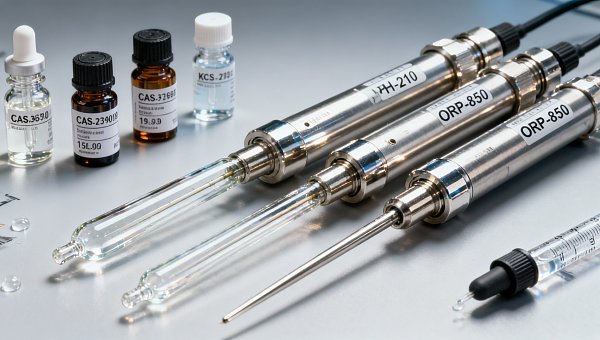
 K-REACH Supply-Shortage Exemption Launches for pH/ORP ElectrodesK-REACH Supply-Shortage Exemption now applies to pH/ORP electrodes—act before June 30, 2026 to avoid customs delays & penalties. Key for exporters & manufacturers.
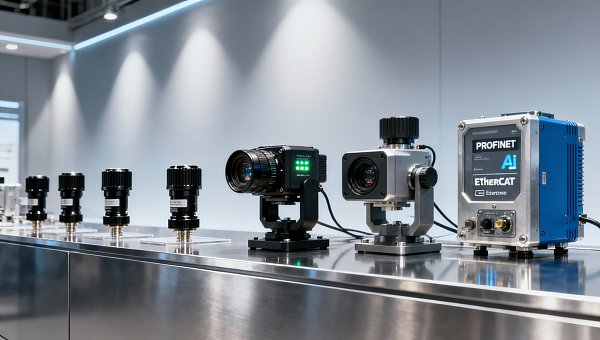
 4th China International Supply Chain Expo to Focus on Smart Sensing & In-Process InspectionSmart Sensing & In-Process Inspection take center stage at the 4th China International Supply Chain Expo in Beijing, Nov 26–30, 2026 — discover next-gen inspection tech, AI vision modules, and calibrated sensing solutions for global industrial buyers.
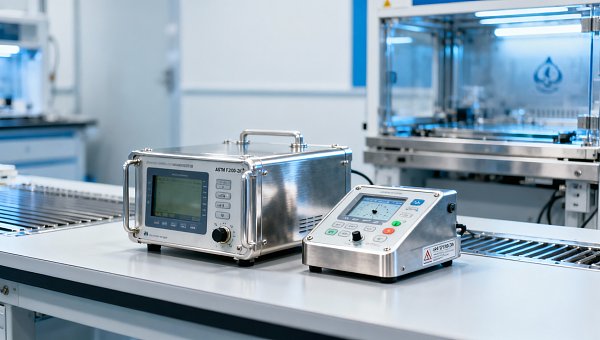
 ASTM F2100-26 Medical Mask Standard Takes Effect in USASTM F2100-26 medical mask standard is now in force—driving global demand for biosafety cabinets, particle counters & air velocity calibrators, especially China-made instruments.
 South Africa Enforces SABS Certification for IoT Monitoring DevicesSABS certification now mandatory for IoT monitoring devices entering South Africa via e-commerce—act before 1 June 2026 to avoid customs rejection and ensure market access.
 EU REACH Adds Fluorinated Substances; SVHC Reporting Required for Gas AnalyzersEU REACH now restricts fluorinated substances in gas analyzers—SVHC reporting is mandatory by 30 Nov 2026. Ensure compliance for sensors, membranes & monitoring systems.
 Revised Maritime Code Takes Effect May 1, 2026: Shift in Unclaimed Cargo LiabilityRevised Maritime Code (2026): Shippers now liable for unclaimed cargo—critical for industrial instrument exporters, logistics providers & cross-border supply chains. Act now.
 China Imposes Zero Tariffs on Goods from All African Diplomatic Partners Starting May 1, 2026China’s zero-tariff policy for African instrumentation & automation exports starts May 1, 2026—boosting competitiveness in EPC tenders and market access for exporters.
 Import and Export Shifts in the PPM Gas Analyzer Marketppm gas analyzer market insights: discover how import tariffs, export controls, and compliance shifts impact cost, supply stability, and growth opportunities across key applications.
 Single Gas Analyzer Maintenance Issues That Raise DowntimeSingle gas analyzer maintenance issues can quietly increase downtime. Learn how to spot drift, calibration errors, and sample path faults early to improve uptime and field efficiency.



Search Categories
Search Categories
Latest Article
- N2 Concentration Analyzer Cost Factors for Bulk Industrial ProcurementN2 concentration analyzer cost depends on more than unit price. Compare process, purity, and safety applications with total cost logic to source smarter and reduce lifecycle risk.Posted by:
- Oxygen Concentration Analyzer vs Sensor Systems: Which Fits Continuous UseOxygen concentration analyzer or sensor system? Compare stability, drift, maintenance, and uptime for continuous use to choose the most reliable fit for your process.Posted by:
- SO2 Concentration Analyzer News: Compliance Demands Reshaping Product SpecsSO2 concentration analyzer trends are shifting with stricter compliance rules. Learn how new specs, data integrity, and uptime demands are reshaping smarter buying decisions.Posted by:
Please give us a message
