
Extreme Condition Analyzer: How to Judge Reliability Beyond the Datasheet


In critical instrumentation projects, a datasheet rarely tells the whole story. An extreme condition analyzer helps technical evaluators judge whether an instrument can maintain accuracy, stability, and safety under harsh temperatures, pressure fluctuations, vibration, corrosion, or continuous operation. This article explores how to assess real-world reliability beyond standard specifications and make more confident selection decisions.
For technical evaluation teams in industrial manufacturing, power systems, environmental monitoring, laboratory analysis, and process automation, the main challenge is not whether an instrument works in a controlled demo. The real question is whether it will still perform after 6 months of thermal cycling, 10,000 hours of continuous duty, repeated washdown, or unstable field power conditions.
That is where an extreme condition analyzer becomes more than a test concept. It becomes a decision framework for comparing sensor robustness, enclosure integrity, signal stability, maintenance burden, and long-term ownership risk before a purchase order is issued. Instead of accepting a nominal specification such as accuracy at 25°C, evaluators can assess the full reliability envelope.
Why Datasheets Alone Are Not Enough in Harsh Instrumentation Environments
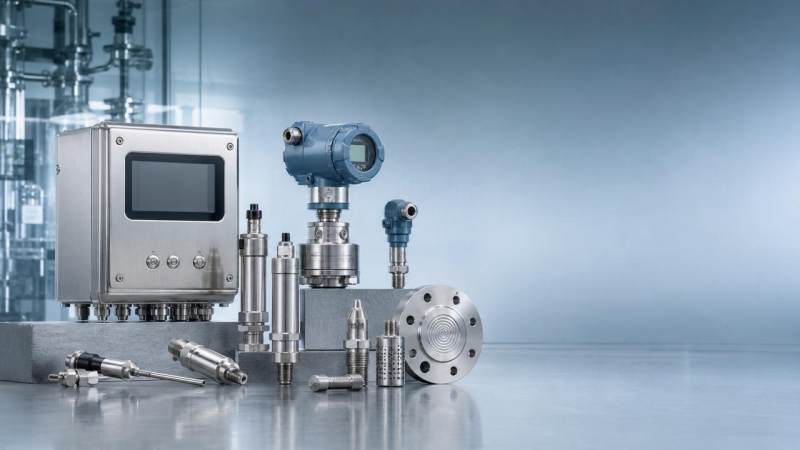
A standard datasheet is useful, but it usually reports performance under defined laboratory conditions. In instrumentation projects, those conditions may represent only 20% to 40% of actual exposure. Field devices often face combined stress: ambient temperatures from -20°C to 70°C, vibration from pumps or compressors, humidity above 85%, corrosive atmospheres, and electrical noise from drives or switching equipment.
An extreme condition analyzer focuses on what happens when multiple stress factors act together. A pressure transmitter may meet its nominal ±0.1% accuracy in a stable lab, yet drift noticeably when process temperature swings by 30°C in one shift. A gas analyzer may pass startup checks but struggle with sample contamination, condensation, or long warm-up periods in a real plant setting.
Common gaps between specification and field behavior
- Accuracy is stated at one reference point, not across the full operating range.
- Ingress protection is listed, but cable glands, connectors, and installation details are not.
- Response time may be measured under ideal media conditions, not viscous, dusty, or pulsating flow.
- Component life is often estimated separately, without addressing combined thermal and vibration fatigue.
- Calibration interval may assume clean service, while actual duty requires checks every 30 to 90 days.
For technical evaluators, the purpose of an extreme condition analyzer is to convert these hidden variables into comparable evidence. That evidence may include drift curves, accelerated life testing, insulation resistance trends, sealing inspection, and failure mode review across 4 to 6 stress categories rather than a single pass/fail statement.
What reliability means beyond initial compliance
Reliability in instrumentation should be judged at three levels: measurement integrity, mechanical survival, and maintenance stability. If one of these fails, the instrument may remain powered but still fail the application. A conductivity analyzer that drifts every 2 weeks, or a level sensor that survives vibration but loses repeatability, creates process risk even without a complete breakdown.
Three practical reliability questions
- Will the instrument hold calibration within the acceptable tolerance over the actual service interval?
- Can it tolerate environmental and process excursions without hidden degradation?
- How quickly can it be restored if connectors, seals, sensing elements, or electronics are stressed?
These questions matter in sectors where downtime can trigger batch loss, environmental non-compliance, or safety shutdowns. An extreme condition analyzer helps purchasing and engineering teams avoid selecting products that look equivalent on paper but differ sharply in field resilience.
Key Evaluation Dimensions for an Extreme Condition Analyzer
A structured evaluation model usually covers at least 5 dimensions: thermal performance, pressure or process fluctuation tolerance, mechanical durability, chemical compatibility, and long-duration operational stability. For most instrumentation categories, evaluating these five areas will reveal more useful risk information than comparing list price alone.
Core stress categories and what to verify
The table below shows how technical evaluators can use an extreme condition analyzer approach to connect field stress with measurable evidence during selection and qualification.
The most important lesson is that reliability is multidimensional. A device may tolerate temperature well but fail under vibration, or resist corrosion while showing unacceptable signal drift. An extreme condition analyzer should therefore compare trade-offs across conditions, not only headline values.
Performance indicators that matter more than brochure claims
Technical evaluators should prioritize indicators that reflect life-cycle usability. In many applications, four numbers matter more than a marketing-grade accuracy statement: drift per month, repeatability after thermal cycling, recovery time after overload, and mean service interval. Even a difference between 6 months and 12 months between recalibration events can significantly change operating cost across a large installed base.
- Drift trend after 100, 500, or 1,000 hours of operation
- Repeatability after 10 to 50 thermal cycles
- Signal stability under fluctuating supply or noisy grounding conditions
- Maintenance actions required per quarter
- Time to replace sensing modules, seals, or filters
How to Build a Practical Reliability Assessment Process
A useful extreme condition analyzer is not a single test. It is a process that combines document review, environmental matching, test planning, and acceptance criteria. For most industrial and laboratory instrumentation sourcing projects, a 5-step workflow is enough to reduce selection risk before full deployment.
A 5-step evaluation workflow
- Define the actual operating envelope, including worst-case temperature, humidity, vibration, media, power quality, and maintenance access.
- Map those conditions against supplier data, installation constraints, and component exposure points.
- Select 3 to 6 reliability tests relevant to the application instead of running a generic full test package.
- Set pass criteria such as allowable drift, recovery time, leakage threshold, or signal interruption limit.
- Review serviceability, spare availability, and calibration support before final approval.
In a flow measurement project, for example, the evaluation may focus on pulsation, entrained solids, enclosure heating, and cable sealing. In an online water quality analyzer project, the priority may shift to reagent stability, probe fouling, washdown exposure, and maintenance interval under continuous sampling.
Sample decision criteria for technical evaluators
The table below converts reliability review into operational criteria that can be used in bid comparison, FAT planning, or pilot qualification.
This kind of scoring method improves consistency across procurement teams. It also helps explain why two instruments with similar purchase prices can produce very different total costs over a 3-year to 5-year operating period.
When to request additional testing
Additional testing is especially valuable when the application includes at least one severe factor and one expensive consequence. Examples include offshore humidity plus vibration, analyzer shelters with high ambient heat, continuous wastewater exposure, or medical and laboratory systems where measurement error affects compliance or product validity.
In these cases, requesting a focused reliability review can save substantial troubleshooting time later. Even 7 to 14 extra days in pre-approval testing may be justified if the installed system is expected to run 24/7 and shutdown access is limited.
Frequent Mistakes in Reliability Judgement and How to Avoid Them
Many evaluation errors happen because teams review instruments as isolated products rather than installed systems. An extreme condition analyzer should include mounting, tubing, sample conditioning, cable routing, ventilation, and cleaning method. A robust sensor can still fail early if the cabinet overheats by 15°C or if vibration is amplified by a weak bracket.
Four common mistakes
- Comparing only nominal accuracy while ignoring stability over time.
- Assuming IP rating alone guarantees field survivability.
- Ignoring maintenance access, spare lead time, and calibration resource needs.
- Failing to separate process media exposure from ambient environmental exposure.
Another common mistake is applying the same acceptance criteria to every instrument class. A laboratory balance, a stack gas analyzer, and a pressure transmitter face different failure mechanisms. Technical evaluators should adapt the extreme condition analyzer framework to the device type, criticality level, and service consequences rather than using a rigid universal checklist.
Procurement advice for better long-term outcomes
Before final selection, ask suppliers for field-oriented evidence instead of broad claims. Useful documentation may include environmental derating notes, maintenance task lists, recommended recalibration intervals by application, sealing details, and replacement part strategy. A clear answer on spare availability within 2 to 6 weeks is often more valuable than a small headline price reduction.
It is also wise to rank instruments with a weighted model. For example, some projects may assign 35% to reliability under stress, 25% to measurement performance, 20% to serviceability, 10% to integration, and 10% to cost. This keeps the selection aligned with operating risk rather than short-term budget pressure.
Using Extreme Condition Analysis to Support Better Selection Decisions
The value of an extreme condition analyzer is not limited to qualification testing. It supports better specification writing, more realistic factory acceptance criteria, stronger bid comparison, and clearer maintenance planning after commissioning. In instrumentation-heavy sectors, this reduces surprises that usually appear only after the system enters continuous service.
Who benefits most from this approach
- Technical evaluators comparing similar instruments for harsh-duty projects
- Engineering teams preparing tender requirements for industrial automation systems
- Plant operators seeking longer service intervals and fewer unplanned interventions
- Laboratory and environmental monitoring users needing stable readings over extended cycles
When reliability is judged beyond the datasheet, procurement becomes more defensible and operations become more predictable. The best choice is often not the instrument with the strongest brochure language, but the one that demonstrates stable performance under the exact combinations of temperature, pressure, vibration, contamination, and operating duration your site will impose.
If you are evaluating measurement, monitoring, analysis, or control equipment for demanding environments, a structured extreme condition analyzer approach can help you reduce hidden risk, improve equipment life, and make selection decisions with greater confidence. Contact us to discuss your application, get a tailored evaluation framework, or learn more about reliability-focused instrumentation solutions.
Recommended for You
![]() SiH4 Concentration Analyzer Import Rules to Watch in 2026SiH4 concentration analyzer import rules are tightening in 2026. Learn the key documents, compliance checks, and procurement tips to avoid delays and speed project delivery.
SiH4 Concentration Analyzer Import Rules to Watch in 2026SiH4 concentration analyzer import rules are tightening in 2026. Learn the key documents, compliance checks, and procurement tips to avoid delays and speed project delivery. HF Concentration Analyzer Demand Shifts Across Key IndustriesHF concentration analyzer demand is shifting across chemical, refining, environmental, and advanced manufacturing sectors—learn what drives safer control, compliance, and precision upgrades.
 Common HCN Concentration Analyzer Mistakes in Daily OperationHCN concentration analyzer daily mistakes can quietly damage accuracy and uptime. Learn common errors, practical checks, and smart operating tips to improve reliability.
 PH3 Concentration Analyzer Price Trends in 2026PH3 concentration analyzer price trends in 2026 reveal what really drives cost, compliance, and performance. Explore key buying factors to compare quotes smarter and reduce total ownership risk.
 How to Choose an AsH3 Concentration Analyzer for Trace Gas SafetyAsH3 concentration analyzer selection starts with the right application context. Learn how to compare response, interference, integration, and lifecycle fit for safer trace gas monitoring.
 Released") China's Business Environment Report (2026) ReleasedChina's Business Environment Report (2026) reveals 92% digital CMA/CNAS coverage—cutting export test report time to 15 days. Boost CE, UKCA & UL certification for pressure gauges, thermostats & analyzers.
China's Business Environment Report (2026) ReleasedChina's Business Environment Report (2026) reveals 92% digital CMA/CNAS coverage—cutting export test report time to 15 days. Boost CE, UKCA & UL certification for pressure gauges, thermostats & analyzers. US MMA Tank Incident Triggers Regional Safety UpgradesUS MMA tank incident sparks urgent demand for VOCs monitoring, toxic gas modeling & intrinsically safe transmitters across LATAM and SEA.
 NDRC Expands Energy-Saving and Carbon-Reduction Oversight to Dyeing, Chemical Fibers, and PapermakingNDRC expands energy-saving & carbon-reduction oversight to dyeing, chemical fibers, and papermaking—boosting demand for COD/NH₃-N analyzers, VOCs monitors, and CEMS systems.
 MIIT Sets 2026 Energy-Saving Inspection Targets for High-Energy ChemicalsMIIT Sets 2026 Energy-Saving Inspection Targets for High-Energy Chemicals—urgent demand surges for certified pH meters, gas analyzers & explosion-proof controllers.
 MOFCOM: FDI in China Down 10.3% Jan–Apr 2026, but Manufacturing Up 12.1%FDI in China fell 10.3% Jan–Apr 2026—but manufacturing FDI surged 12.1%, led by high-tech sectors. Discover what this means for precision metrology, sensors & calibration providers.
 PBOC Conducts 600-Billion-Yuan MLF Operation, Boosting RMB Stability for Testing Equipment ExportsPBOC's 600-billion-yuan MLF operation boosts RMB stability—key for NDT equipment exporters using LC/DA terms. Reduce FX risk, optimize hedging & improve cash flow planning now.
 EU Steel Strategy Upgrade: CBAM Expansion to Machinery & InstrumentsEU Steel Strategy Upgrade expands CBAM to machinery & instruments (HS 84/90) — LCA data mandatory from 1 July 2026. Act now to avoid delays & ensure compliance.
 Global EV Energy Consumption Standard to Take Effect Oct 1, 2026Global EV Energy Consumption Standard (GTR No. 22) takes effect Oct 1, 2026 — learn how it reshapes battery testing, certification & supply chains worldwide.
 WTO Report Shows Strong Global Trade, Easing Export Pressure for Industrial Monitoring DevicesIndustrial monitoring devices exporters benefit as WTO reports 4.2% global trade growth—easing export pressure, improving delivery predictability & cash flow.
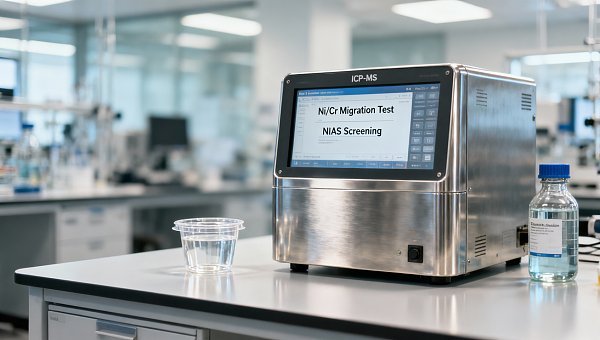
 South Korea MFDS Revises Food Contact Materials StandardsSouth Korea MFDS revises food contact materials standards: new nickel/chromium migration limits & NIAS verification—critical for lab instrument exporters and compliance providers.
 Brazil to Eliminate Import Duties on Cross-Border E-Commerce Orders Under USD 50Brazil to eliminate import duties on cross-border e-commerce orders under USD 50—key for portable testing instruments exporters targeting Mercado Livre & DIY buyers.
 New AI Agent Guidelines Impact Smart Inspection Device ExportsAI Agent Guidelines impact smart inspection device exports—learn how new China AI safety rules affect EU, US & Middle East market access.
 UPS Freight Rates Increase Effective May 17, 2026UPS freight rates increase effective May 17, 2026—impact FOB pricing for industrial monitoring equipment exporters. Act now to optimize packaging, revise quotes, and secure margins.
 新修订《海商法》施行:卸货港无人提货责任转向托运人,检测设备出口交期风控升级New Maritime Code shifts unclaimed cargo liability to shippers at discharge ports—critical for testing equipment exporters managing delivery timelines and compliance risk.
 China Imposes Zero Tariffs on Lab Analyzers for 20 African NationsChina's zero tariffs on lab analyzers for 20 African nations boost export competitiveness—pH meters, spectrophotometers & more now duty-free from May 2026.
 CA Toxic Chemical Tank Overheating Sparks Explosion Risk, Monitoring Equipment Orders SurgeGas leak detectors, remote temperature warning systems & explosion-proof thermal imagers surge in demand after CA toxic tank overheating incident.
 EU REACH Adds DBDPE to SVHC List, Impacting Brominated Flame Retardant Testing for Export EquipmentDBDPE added to EU REACH SVHC list—impact on brominated flame retardant testing for industrial instruments, sensors & export compliance. Act now.
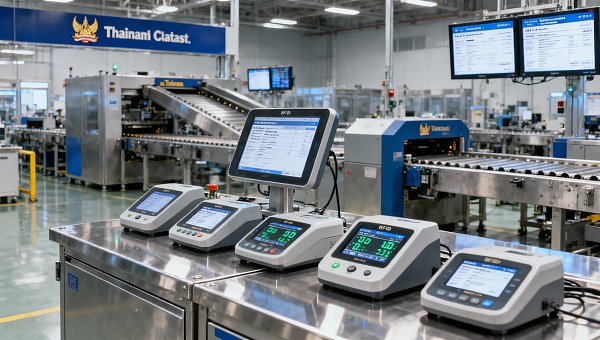
 Thailand Customs Digital Reform Spurs RFID Equipment DemandRFID equipment demand surges in Thailand as Customs digital reform mandates e-labeling, real-time parcel tracking & API compliance—act now to meet TISI specs and platform rules.
 Lazada Thailand Cuts Import Duties on 528 CategoriesLazada Thailand cuts import duties on 528 categories — including wired headphones & notebooks — lowering costs for Chinese exporters and Thai SMEs via LGS.
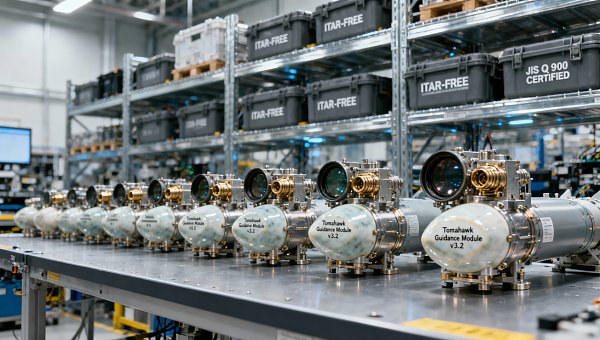
 US Delays 400 Tomahawk Missiles to Japan Amid Iran Inventory ReplenishmentTomahawk missiles delay to Japan sparks urgent demand for alternative guidance, navigation & secure comms suppliers—key opportunity for export-ready defense electronics firms.
 What to Check Before Importing an F2 Concentration Analyzer in 2026F2 concentration analyzer import guide for 2026: learn what to check on compliance, performance, integration, lifecycle cost, and supplier support before you buy.
 SF6 Concentration Analyzer Market Trends for Power and Gas Applications in 2026SF6 concentration analyzer market trends for 2026: explore accuracy, digital integration, emissions control, and buying tips for power and gas applications.
 Common HCl Concentration Analyzer Mistakes That Lead to Unstable ReadingsHCl concentration analyzer unstable readings? Discover the most common installation, calibration, sampling, and maintenance mistakes—and the practical fixes that improve accuracy fast.
 H2S Concentration Analyzer Price Trends: What’s Driving Costs in 2026H2S concentration analyzer price trends in 2026: discover what drives costs, from sensor technology and compliance to materials and digital features, and make smarter buying decisions.
 How to Choose a Cl2 Concentration Analyzer for Process Safety in 2026Cl2 concentration analyzer selection in 2026 starts with process safety. Learn how to match scenarios, improve reliability, avoid costly mistakes, and choose with confidence.
 N2 Concentration Analyzer Cost Factors for Bulk Industrial ProcurementN2 concentration analyzer cost depends on more than unit price. Compare process, purity, and safety applications with total cost logic to source smarter and reduce lifecycle risk.
 Oxygen Concentration Analyzer vs Sensor Systems: Which Fits Continuous UseOxygen concentration analyzer or sensor system? Compare stability, drift, maintenance, and uptime for continuous use to choose the most reliable fit for your process.



Search Categories
Search Categories
Latest Article
- SiH4 Concentration Analyzer Import Rules to Watch in 2026SiH4 concentration analyzer import rules are tightening in 2026. Learn the key documents, compliance checks, and procurement tips to avoid delays and speed project delivery.Posted by:
- HF Concentration Analyzer Demand Shifts Across Key IndustriesHF concentration analyzer demand is shifting across chemical, refining, environmental, and advanced manufacturing sectors—learn what drives safer control, compliance, and precision upgrades.Posted by:
- Common HCN Concentration Analyzer Mistakes in Daily OperationHCN concentration analyzer daily mistakes can quietly damage accuracy and uptime. Learn common errors, practical checks, and smart operating tips to improve reliability.Posted by:
Please give us a message
