
Laboratory Gas Analyzer Selection: Key Differences That Affect Test Accuracy


Choosing the right Laboratory Gas Analyzer is not just a purchasing decision—it directly affects data reliability, compliance, and laboratory efficiency. Different analyzer types vary in detection principle, sensitivity, response time, sample handling, and maintenance needs, all of which can influence test accuracy. For researchers and technical buyers comparing options, understanding these key differences is essential to selecting an instrument that delivers dependable results in real laboratory conditions.
For most information-seeking readers, the real question is not simply “which analyzer is best,” but “which analyzer will produce accurate, defensible results for my gas, my matrix, and my workflow.” The short answer is that test accuracy depends less on brand names and more on the fit between analytical principle, sample condition, detection range, calibration strategy, and daily operating environment.
A laboratory gas analyzer that performs exceptionally well in one application may introduce drift, cross-interference, or slow response in another. That is why selection should begin with the testing objective and sample characteristics, not with a feature list alone. When buyers understand what truly affects measurement quality, they can compare options more confidently and avoid costly mismatches.
What Actually Matters Most When Selecting a Laboratory Gas Analyzer
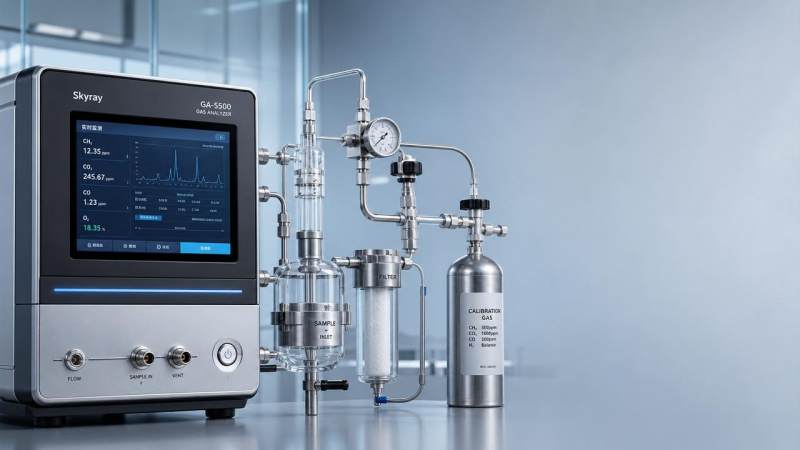
The core search intent behind this topic is practical evaluation. Readers want to know which differences between analyzer types have a direct impact on accuracy, repeatability, and real-world usability. They are usually comparing technologies, preparing for procurement, or narrowing a shortlist for a specific laboratory task.
Their biggest concerns are predictable: Will the analyzer detect the target gas at the required level? Will moisture, background gases, or particulates affect the reading? How often will calibration be needed? Can the instrument remain stable over time? And does its design support the laboratory’s pace, compliance needs, and staffing reality?
Because of that, the most useful article is one that explains decision criteria in terms of risk and performance. Instead of offering generic instrument descriptions, it should show how technology choice affects sensitivity, selectivity, response time, sample integrity, maintenance burden, and total confidence in the data.
Why Measurement Principle Has a Direct Impact on Test Accuracy
The first and most important difference between laboratory gas analyzers is the measurement principle. Technologies such as non-dispersive infrared, paramagnetic oxygen sensing, thermal conductivity, electrochemical detection, flame ionization, chemiluminescence, mass spectrometry, and gas chromatography each have strengths and limitations.
These differences matter because every principle responds differently to target gases, interfering compounds, temperature variation, pressure fluctuation, and sample composition. An analyzer may appear to meet the range requirement on paper but still perform poorly if the sensing principle is vulnerable to the sample matrix.
For example, infrared-based systems can work very well for gases that strongly absorb infrared energy, but they may suffer from interference if other components share overlapping absorption bands. Electrochemical sensors can be cost-effective and sensitive, yet they may have limited lifespan and can be influenced by environmental conditions or cross-sensitivity to similar gases.
Paramagnetic analyzers are often preferred for oxygen because of their strong selectivity and stability, while gas chromatography may be chosen when complex mixtures require component separation before detection. In highly demanding applications, mass spectrometry can offer exceptional analytical capability, but it may involve greater cost, complexity, and operational discipline.
The lesson is simple: the best Laboratory Gas Analyzer is usually the one whose detection principle matches the chemistry of the application. Technology fit is not a secondary detail; it is one of the main determinants of whether the final result is trustworthy.
Detection Range, Sensitivity, and Resolution: Small Specification Gaps Can Create Big Errors
Many buyers focus on whether an analyzer can detect a gas, but the more important question is whether it can detect it accurately at the concentration that matters. A trace-level environmental test, a purity verification task, and a process gas validation application may all require very different sensitivity and resolution.
An analyzer that is accurate at percent-level concentrations may not be suitable for ppm or ppb work. Likewise, an instrument with a broad range may sacrifice precision in the low end if the design is not optimized for trace analysis. This is where specifications such as lower detection limit, linearity, repeatability, and signal stability need careful review.
Readers should also watch for the difference between “detectable” and “quantifiable.” A gas may be technically visible to the instrument, but not at a level that supports reliable reporting or regulatory decisions. In practical terms, if the method requires confident discrimination near a threshold, the analyzer must provide enough resolution and low enough noise to support that judgment.
When comparing instruments, it helps to ask for performance data across the actual concentration range of interest rather than only the instrument’s full-scale capability. This reveals whether the analyzer will remain accurate where the laboratory truly operates.
How Cross-Interference and Sample Matrix Effects Distort Results
One of the most underestimated causes of poor accuracy is cross-interference. In real laboratory samples, the target gas rarely appears alone. Background gases, solvent vapors, humidity, corrosive compounds, and particulates can all affect the sensor response or sample transport path.
This is why a Laboratory Gas Analyzer should never be selected solely on the basis of the target gas name. The complete matrix must be considered. Carbon dioxide, water vapor, hydrocarbons, sulfur compounds, and nitrogen oxides can influence measurement in different ways depending on the analytical technology.
Humidity is especially important. In some analyzers, water vapor changes signal behavior directly. In others, condensation in the sampling path can remove soluble gas components or alter concentration before the gas reaches the detector. That means the measured value may reflect sample handling artifacts rather than true gas composition.
To reduce this risk, buyers should evaluate built-in or external conditioning requirements, interference compensation methods, and validation data from similar applications. If the vendor cannot explain how the analyzer performs in a realistic matrix, that is a warning sign. High accuracy depends not only on detector capability but on how well the full system handles real samples.
Sample Handling Is Often the Hidden Source of Inaccuracy
Even an excellent analyzer can produce poor data if the sampling system is poorly designed. In many laboratory settings, errors begin before the gas reaches the sensor. Dead volume, leaks, adsorption, condensation, contamination, pressure instability, and incompatible tubing materials can all distort the sample.
This is especially critical for reactive, trace-level, wet, or particulate-laden gases. Some analytes may stick to surfaces, decompose, or be lost during transport. Others may require heated lines, filters, dryers, regulators, or flow control to maintain sample integrity. The result is that two labs using the same analyzer model may achieve very different accuracy depending on sample path design.
Response time is also tied to sampling. A slow response is not always a detector issue; it may result from long tubing runs, poor flow dynamics, or an oversized conditioning system. If the application depends on fast stabilization or frequent sample switching, the entire gas path should be assessed together with the analyzer.
For technical buyers, this means procurement should cover more than the instrument body. A sound selection process includes inlet conditions, pressure and flow requirements, wetted materials, filtration approach, and whether the analyzer is being used with ambient, bottled, generated, or process-derived gas samples.
Calibration Strategy and Long-Term Stability Matter More Than Day-One Performance
Many instruments look impressive during initial demonstrations. However, real value comes from maintaining accuracy over weeks, months, and years of laboratory use. That is why calibration requirements and long-term stability deserve close attention during selection.
An analyzer that drifts frequently may increase labor costs, consume more calibration gas, interrupt workflows, and create uncertainty between calibration intervals. By contrast, an instrument with strong baseline stability and predictable calibration behavior is often more valuable than one with only slightly better headline sensitivity.
Buyers should ask how often calibration is required under normal use, what standards are needed, whether zero and span checks are automated, and how drift is monitored. It is also important to understand whether field adjustment is straightforward or whether service intervention is required.
For regulated laboratories, calibration records, audit trails, and method consistency may be just as important as the sensor itself. If data must support compliance, accreditation, or customer reporting, a stable analyzer with robust quality control support reduces operational risk substantially.
Response Time, Throughput, and Workflow Fit Influence Data Quality Too
Accuracy is often discussed as a purely analytical metric, but workflow fit also affects the reliability of results. If an analyzer is too slow for the lab’s testing rhythm, operators may shorten stabilization time, reduce replicates, or bypass recommended procedures. Those human workarounds can degrade data quality even when the instrument is technically capable.
Fast response is especially valuable in labs that process multiple samples per shift, monitor changing gas streams, or perform iterative experiments. However, speed should not be judged in isolation. An analyzer with rapid signal response but poor baseline stability may still be less useful than a slightly slower system that delivers more repeatable final values.
The best approach is to compare cycle time in the context of the actual method: warm-up time, purge time, stabilization time, calibration frequency, and sample changeover. This reveals whether the analyzer supports the laboratory’s required throughput without compromising accuracy discipline.
Maintenance Burden and Operator Skill Requirements Should Not Be Overlooked
Another major concern for information-seeking readers is practical ownership. Laboratories do not only buy measurement performance; they also inherit maintenance routines, consumables, downtime risk, and training needs. These factors can indirectly affect accuracy by influencing how consistently the analyzer is operated and maintained.
Some analyzer types require regular sensor replacement, optical cleaning, column maintenance, vacuum system care, or leak checks. Others are comparatively simple and robust. If the laboratory lacks highly specialized staff, a technically advanced analyzer may underperform simply because it is difficult to maintain at the required standard.
That does not mean simpler is always better. It means the right choice is the one the lab can support reliably. A Laboratory Gas Analyzer should match not only the test requirement but also the organization’s service capability, preventive maintenance discipline, and tolerance for downtime.
When evaluating options, readers should consider spare part availability, manufacturer support, local service access, diagnostics, and ease of routine verification. Reliable support can be a decisive factor in preserving long-term test accuracy.
How to Compare Analyzer Options More Effectively
A useful comparison framework starts with the application rather than the catalog. First define the target gas or gases, concentration range, matrix composition, required detection limit, expected sample condition, and reporting objective. Then compare technologies against those exact needs.
Next, review analytical performance in five practical categories: selectivity, sensitivity, stability, sample compatibility, and operational burden. This approach helps separate marketing claims from application fit. An instrument that scores highest in one category may still be the wrong choice overall if it introduces risk elsewhere.
It is also wise to request application-specific evidence. Ask vendors for data from comparable sample matrices, not only ideal laboratory standards. If possible, evaluate real samples or conduct a pilot test. This often reveals issues with moisture, drift, interference, or maintenance that are not obvious in general brochures.
Finally, calculate value in terms of usable data, not just purchase price. A lower-cost analyzer that requires frequent recalibration, creates repeat testing, or generates uncertain results may be more expensive over time than a higher-priced but more stable and application-matched system.
Common Selection Mistakes That Lead to Poor Accuracy
Several mistakes appear repeatedly in laboratory gas analyzer selection. One is choosing based only on target gas name without evaluating the full sample matrix. Another is relying on broad specification sheets while ignoring actual operating range and environmental conditions.
A third mistake is underestimating the importance of sampling and conditioning. Buyers may compare detector technologies carefully yet overlook tubing materials, moisture handling, pressure control, or particulate protection. In sensitive gas analysis, those details can make the difference between defensible data and misleading results.
Another frequent error is prioritizing low upfront cost over long-term stability and serviceability. When maintenance is difficult or calibration is frequent, the practical burden can outweigh initial savings. Finally, some teams purchase more analytical complexity than the application requires, increasing cost and training demands without meaningful gains in result quality.
Conclusion: The Right Laboratory Gas Analyzer Is the One That Preserves Accuracy in Real Conditions
Selecting a Laboratory Gas Analyzer is ultimately about controlling the factors that influence measurement truth. The most important differences are not cosmetic features but core performance variables: detection principle, sensitivity at the required range, resistance to interference, sample handling compatibility, calibration behavior, response characteristics, and maintenance demands.
For information researchers and technical buyers, the clearest takeaway is this: accuracy is created by system fit. A well-matched analyzer supports dependable, repeatable results under the lab’s real operating conditions. A poorly matched one may look capable on paper yet create drift, delays, and uncertainty in practice.
When comparing options, focus on how the instrument will behave with your actual gas, matrix, workflow, and quality requirements. That approach leads to better purchasing decisions, stronger data confidence, and a laboratory setup that supports both efficiency and analytical credibility over the long term.
Recommended for You
 Guangdong Launches 3-Year Service Trade Plan to Boost Instrument Exports via AI and HarmonyOSGuangdong's 3-year service trade plan boosts instrument exports via AI optimization & HarmonyOS—key for ASEAN/Latin America market access. Act now.
 China-Pakistan MOU Opens Faster Certification Path for Instruments in South AsiaChina-Pakistan MOU accelerates instrument certification in South Asia—faster CCC acceptance, mutual lab recognition & Islamabad testing hub for pressure gauges, flow meters, environmental monitors.
 Gold Futures Surge 1.1%; Overseas Orders for Precious Metals Analyzers Rise 35%Gold futures surge 1.1% — driving 35% rise in overseas orders for precious metals analyzers like XRF & ICP-MS. Discover key market impacts & compliance insights.
 《中华人民共和国矿产资源法实施条例》6月15日施行,矿产分析仪出口标准升级矿产分析仪出口标准升级!《中华人民共和国矿产资源法实施条例》6月15日正式施行,助力企业合规出海、抢占全球矿产检测新机遇。
 特朗普称美伊‘基本谈成’霍尔木兹通航协议,能源监测设备出口波动预警Energy monitoring equipment export volatility warning amid Trump’s 'nearly finalized' US-Iran Strait of Hormuz navigation deal—key insights for exporters and energy sector stakeholders.
,国产存储测试设备订单窗口打开") 长鑫科技科创板IPO上会(5月27日),国产存储测试设备订单窗口打开Changxin Technology's STAR Market IPO on May 27 opens a key window for domestic memory testing equipment orders—discover growth opportunities now!
长鑫科技科创板IPO上会(5月27日),国产存储测试设备订单窗口打开Changxin Technology's STAR Market IPO on May 27 opens a key window for domestic memory testing equipment orders—discover growth opportunities now! 墨西哥拟对中国轻型车及零部件加征关税至50%,车载检测设备出口承压Mexican tariff hike to 50% on Chinese light vehicles & parts pressures exports of automotive testing equipment—key insights and mitigation strategies.
 美SEC紧急叫停‘代币化美股’计划,全球AI算力设备出口融资环境趋稳AI算力设备出口融资环境趋稳!美SEC紧急叫停‘代币化美股’计划,释放监管明确信号,利好全球合规科技投融资布局。速看深度解析。
 EU Industrial Accelerator Act Enforces 70% Local Sourcing for InstrumentsEU Industrial Accelerator Act enforces 70% local sourcing for instruments—key implications for exporters, suppliers & integrators. Act now.
 China Imposes Full Export Ban on Dual-Use Items to Japanese Military End UsersChina's dual-use export ban to Japanese military users takes effect Jan 6, 2026—impacting rare earth, semiconductor & precision manufacturing supply chains. Act now.
 Where C3H8 Concentration Analyzers Fit in 2026 Industrial Emissions MonitoringC3H8 concentration analyzer solutions are reshaping 2026 industrial emissions monitoring with better compliance, safer propane control, and smarter efficiency insights. Learn where they fit.
 B2H6 Concentration Analyzer Import and Export Updates for 2026 Compliance PlanningB2H6 concentration analyzer import and export updates for 2026: explore compliance risks, documentation priorities, and planning tips to reduce delays and support smarter cross-border decisions.
 GeH4 Concentration Analyzer Safety Risks and Detection Limits in Semiconductor UseGeH4 concentration analyzer safety risks, alarm strategy, and detection limits for semiconductor use. Learn how to reduce exposure risk, improve process stability, and choose the right monitoring solution.
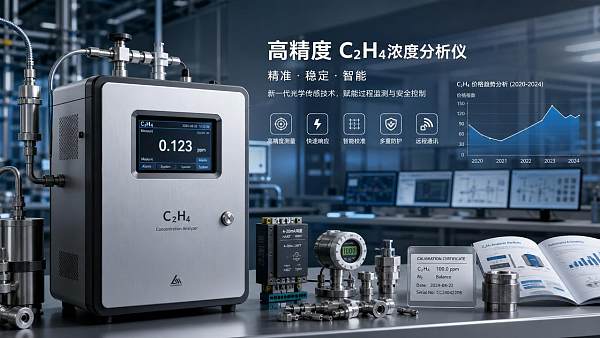
 C2H4 Concentration Analyzer Price Trends in 2026: What Is Driving Cost ChangesC2H4 concentration analyzer price trends in 2026 explained: discover key cost drivers, procurement risks, and smart buying tips to balance budget, compliance, and long-term value.
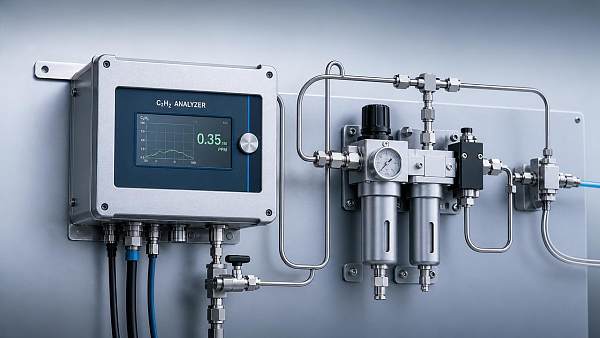
 How to Compare C2H2 Concentration Analyzer Accuracy in Industrial Gas MonitoringC2H2 concentration analyzer accuracy matters beyond the datasheet. Learn how to compare drift, calibration, interference, and field reliability for safer industrial gas monitoring.
![]() SiH4 Concentration Analyzer Import Rules to Watch in 2026SiH4 concentration analyzer import rules are tightening in 2026. Learn the key documents, compliance checks, and procurement tips to avoid delays and speed project delivery.
SiH4 Concentration Analyzer Import Rules to Watch in 2026SiH4 concentration analyzer import rules are tightening in 2026. Learn the key documents, compliance checks, and procurement tips to avoid delays and speed project delivery. HF Concentration Analyzer Demand Shifts Across Key IndustriesHF concentration analyzer demand is shifting across chemical, refining, environmental, and advanced manufacturing sectors—learn what drives safer control, compliance, and precision upgrades.
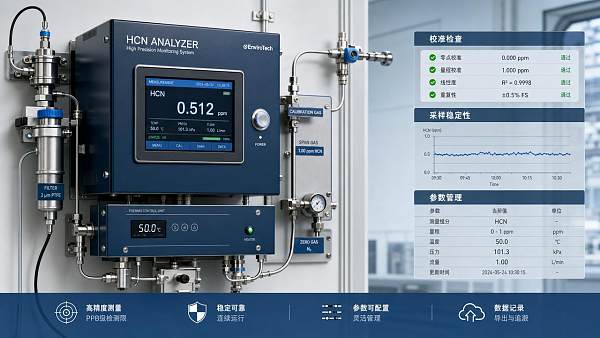
 Common HCN Concentration Analyzer Mistakes in Daily OperationHCN concentration analyzer daily mistakes can quietly damage accuracy and uptime. Learn common errors, practical checks, and smart operating tips to improve reliability.
 PH3 Concentration Analyzer Price Trends in 2026PH3 concentration analyzer price trends in 2026 reveal what really drives cost, compliance, and performance. Explore key buying factors to compare quotes smarter and reduce total ownership risk.
 How to Choose an AsH3 Concentration Analyzer for Trace Gas SafetyAsH3 concentration analyzer selection starts with the right application context. Learn how to compare response, interference, integration, and lifecycle fit for safer trace gas monitoring.
 Released") China's Business Environment Report (2026) ReleasedChina's Business Environment Report (2026) reveals 92% digital CMA/CNAS coverage—cutting export test report time to 15 days. Boost CE, UKCA & UL certification for pressure gauges, thermostats & analyzers.
China's Business Environment Report (2026) ReleasedChina's Business Environment Report (2026) reveals 92% digital CMA/CNAS coverage—cutting export test report time to 15 days. Boost CE, UKCA & UL certification for pressure gauges, thermostats & analyzers. US MMA Tank Incident Triggers Regional Safety UpgradesUS MMA tank incident sparks urgent demand for VOCs monitoring, toxic gas modeling & intrinsically safe transmitters across LATAM and SEA.
 NDRC Expands Energy-Saving and Carbon-Reduction Oversight to Dyeing, Chemical Fibers, and PapermakingNDRC expands energy-saving & carbon-reduction oversight to dyeing, chemical fibers, and papermaking—boosting demand for COD/NH₃-N analyzers, VOCs monitors, and CEMS systems.
 MIIT Sets 2026 Energy-Saving Inspection Targets for High-Energy ChemicalsMIIT Sets 2026 Energy-Saving Inspection Targets for High-Energy Chemicals—urgent demand surges for certified pH meters, gas analyzers & explosion-proof controllers.
 MOFCOM: FDI in China Down 10.3% Jan–Apr 2026, but Manufacturing Up 12.1%FDI in China fell 10.3% Jan–Apr 2026—but manufacturing FDI surged 12.1%, led by high-tech sectors. Discover what this means for precision metrology, sensors & calibration providers.
 PBOC Conducts 600-Billion-Yuan MLF Operation, Boosting RMB Stability for Testing Equipment ExportsPBOC's 600-billion-yuan MLF operation boosts RMB stability—key for NDT equipment exporters using LC/DA terms. Reduce FX risk, optimize hedging & improve cash flow planning now.
 EU Steel Strategy Upgrade: CBAM Expansion to Machinery & InstrumentsEU Steel Strategy Upgrade expands CBAM to machinery & instruments (HS 84/90) — LCA data mandatory from 1 July 2026. Act now to avoid delays & ensure compliance.
 Global EV Energy Consumption Standard to Take Effect Oct 1, 2026Global EV Energy Consumption Standard (GTR No. 22) takes effect Oct 1, 2026 — learn how it reshapes battery testing, certification & supply chains worldwide.
 WTO Report Shows Strong Global Trade, Easing Export Pressure for Industrial Monitoring DevicesIndustrial monitoring devices exporters benefit as WTO reports 4.2% global trade growth—easing export pressure, improving delivery predictability & cash flow.
 South Korea MFDS Revises Food Contact Materials StandardsSouth Korea MFDS revises food contact materials standards: new nickel/chromium migration limits & NIAS verification—critical for lab instrument exporters and compliance providers.
 Brazil to Eliminate Import Duties on Cross-Border E-Commerce Orders Under USD 50Brazil to eliminate import duties on cross-border e-commerce orders under USD 50—key for portable testing instruments exporters targeting Mercado Livre & DIY buyers.
 New AI Agent Guidelines Impact Smart Inspection Device ExportsAI Agent Guidelines impact smart inspection device exports—learn how new China AI safety rules affect EU, US & Middle East market access.



Search Categories
Search Categories
Latest Article
- Guangdong Launches 3-Year Service Trade Plan to Boost Instrument Exports via AI and HarmonyOSGuangdong's 3-year service trade plan boosts instrument exports via AI optimization & HarmonyOS—key for ASEAN/Latin America market access. Act now.Posted by:
- China-Pakistan MOU Opens Faster Certification Path for Instruments in South AsiaChina-Pakistan MOU accelerates instrument certification in South Asia—faster CCC acceptance, mutual lab recognition & Islamabad testing hub for pressure gauges, flow meters, environmental monitors.Posted by:
- Gold Futures Surge 1.1%; Overseas Orders for Precious Metals Analyzers Rise 35%Gold futures surge 1.1% — driving 35% rise in overseas orders for precious metals analyzers like XRF & ICP-MS. Discover key market impacts & compliance insights.Posted by:
Please give us a message
