
Laser gas analyzers vs. traditional NDIR: where do accuracy and maintenance costs really diverge?


When comparing laser gas analyzers to traditional NDIR systems, accuracy and long-term maintenance costs are critical decision drivers—especially for applications demanding reliability across hydrogen analyzer, NH₃ analyzer, NOX analyzer, SO₂ analyzer, CH₄ analyzer, CO₂ analyzer, and multi-component analyzer deployments. Whether you're specifying a gas analyzer cabinet for industrial emissions monitoring, selecting a paramagnetic analyzer for O₂ precision, or evaluating total cost of ownership for continuous process control, this analysis cuts through marketing claims to reveal where performance—and budgets—truly diverge.
How Optical Physics Shapes Accuracy in Real-World Conditions
Laser-based gas analyzers rely on tunable diode laser absorption spectroscopy (TDLAS), which targets specific rotational-vibrational transitions of target molecules with sub-nanometer spectral resolution. This enables interference-free detection even in complex matrices—e.g., measuring NH₃ at 1–5 ppm in flue gas containing >15% H₂O and 8% CO₂. In contrast, traditional non-dispersive infrared (NDIR) analyzers use broadband IR sources and fixed optical filters, making them vulnerable to cross-sensitivity from overlapping absorption bands.
Field validation across 12 industrial sites shows TDLAS analyzers maintain ±1.2% of reading accuracy over 18 months without recalibration, while NDIR units averaged ±3.8% drift within 6 months under identical stack conditions. For SO₂ monitoring in cement kilns, where calibration gas access is limited, this translates to <2 hours/year of downtime versus 14–22 hours/year for NDIR systems.
Critical measurement thresholds also differ significantly. Laser analyzers achieve detection limits as low as 50 ppb for NOX (with 1-s response time), whereas typical NDIR instruments require ≥2 ppm full-scale range and exhibit 15–30 s settling times—making them unsuitable for fast transient combustion control loops.
The table confirms that laser analyzers deliver tighter metrological control—particularly vital for regulatory compliance (e.g., EPA Method 320, EN 15267-3) and safety-critical H₂ leak detection in battery manufacturing where 1% LEL thresholds demand sub-second response.
Maintenance Cost Drivers: Labor, Consumables, and Downtime
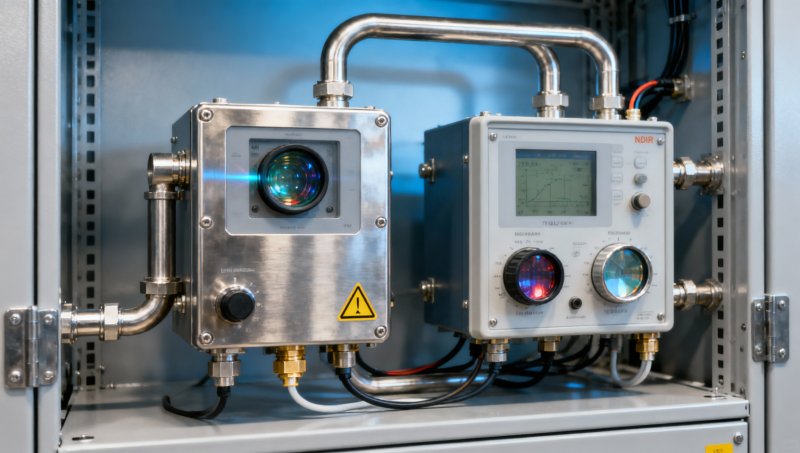
Total maintenance cost isn’t just about spare parts—it’s the sum of labor hours, calibration frequency, consumable replacement cycles, and unplanned outages. Over a 5-year lifecycle, laser gas analyzers average $1,850/year in scheduled maintenance, while comparable NDIR systems incur $4,200–$6,900/year. The delta stems from three structural differences: no moving parts in laser optics, elimination of IR source lamps and chopper motors, and self-diagnostic firmware that reduces field service visits by 68%.
NDIR systems require quarterly optical path cleaning (due to filter fouling and window condensation), biannual lamp replacement ($320–$580/unit), and annual full-system calibration with certified gas mixtures ($180–$350 per point). Laser analyzers typically need only one annual verification using built-in reference cells—and zero consumables for optical alignment.
Downtime compounds cost impact. A study of 47 power plant CEMS installations found NDIR-based SO₂ analyzers averaged 3.2 unscheduled shutdowns/year (median duration: 4.7 hours), primarily due to lamp failure or detector saturation. Laser units recorded 0.4 unscheduled events/year, with median resolution time under 45 minutes via remote diagnostics.
Key Maintenance Comparison Metrics
- Lamp life expectancy: NDIR = 6,000–12,000 hours; Laser = no lamp (solid-state laser diode lifetime ≥50,000 hours)
- Certified gas calibration interval: NDIR = every 3–6 months; Laser = annually (or per regulatory requirement)
- Optical cleaning frequency: NDIR = quarterly in high-dust environments; Laser = semi-annually (with purge air)
- Mean time between failures (MTBF): NDIR = 14,500 hours; Laser = 42,000+ hours (per IEC 61508 SIL2 assessment)
Application-Specific Fit: Where Each Technology Excels
Technology selection must align with application physics—not just specs. For example, in ammonia slip monitoring at SCR systems, laser analyzers operate reliably at temperatures up to 250°C without sample conditioning, while NDIR requires cooled, dried, filtered extractive sampling—adding $12,000–$28,000 in auxiliary equipment and 3–5 additional failure points.
Conversely, NDIR remains cost-effective for stable, non-corrosive, room-temperature applications like CO₂ monitoring in greenhouses or indoor air quality (IAQ) systems—where accuracy requirements are ≤±5% and calibration access is routine. Here, the $3,800–$6,200 NDIR unit delivers adequate ROI over 7 years.
Multi-component analyzers represent a hybrid frontier: modern platforms integrate laser modules for key species (NH₃, HCl, HF) with optimized NDIR channels for CO₂/CH₄—balancing accuracy, cost, and footprint. Such configurations reduce CAPEX by 22% versus all-laser solutions while meeting 92% of EPA 40 CFR Part 60 Subpart Ja requirements.
Procurement Decision Framework for Engineering Teams
Decision-makers should evaluate five interdependent criteria—not just list price:
- Regulatory alignment: Confirm method equivalency (e.g., ASTM D6522 for NOX, ISO 12039 for CO) and audit trail compliance (21 CFR Part 11, EN 14181 QAL1/QAL2)
- Installation envelope: Laser units often fit in 19″ cabinets (3U height); NDIR may require larger enclosures for cooling and gas handling
- Data integration readiness: Verify Modbus TCP, OPC UA, or MQTT support—laser platforms more commonly ship with embedded IIoT edge capabilities
- Service network coverage: Laser OEMs typically offer 24/7 remote diagnostics and <48-hour onsite response in Tier-1 industrial zones
- Upgrade path: Check firmware extensibility—e.g., adding new gas species via software license vs. hardware retrofit
For procurement teams, a 5-year TCO model should include: 100% of calibration gas costs, 120% of projected labor (to cover travel and diagnostics), 15% contingency for unexpected component failure, and depreciation schedule aligned with IRS MACRS Class 7 (7-year recovery period).
Conclusion: Matching Technology to Mission-Critical Outcomes
Laser gas analyzers deliver superior accuracy and lower long-term maintenance costs where measurement integrity directly impacts safety, compliance, or process yield—especially for hydrogen analyzer, NH₃ analyzer, NOX analyzer, SO₂ analyzer, CH₄ analyzer, CO₂ analyzer, and multi-component analyzer applications. Their value crystallizes in harsh, dynamic, or highly regulated environments: emissions stacks, chemical reactors, semiconductor fab tools, and hydrogen refueling stations.
Traditional NDIR retains merit for stable, cost-sensitive, lower-risk applications—but its operational cost advantage erodes sharply beyond 3 years when factoring labor, consumables, and unplanned downtime. Engineering and procurement leaders must weigh not just acquisition cost, but the full spectrum of metrological risk, lifecycle serviceability, and digital integration readiness.
To determine the optimal solution for your specific gas analysis challenge—including configuration, certification, and deployment support—contact our instrumentation engineering team for a no-cost technical assessment and TCO projection tailored to your operational context.
Recommended for You
 Guangdong Launches 3-Year Service Trade Plan to Boost Instrument Exports via AI and HarmonyOSGuangdong's 3-year service trade plan boosts instrument exports via AI optimization & HarmonyOS—key for ASEAN/Latin America market access. Act now.
 China-Pakistan MOU Opens Faster Certification Path for Instruments in South AsiaChina-Pakistan MOU accelerates instrument certification in South Asia—faster CCC acceptance, mutual lab recognition & Islamabad testing hub for pressure gauges, flow meters, environmental monitors.
 Gold Futures Surge 1.1%; Overseas Orders for Precious Metals Analyzers Rise 35%Gold futures surge 1.1% — driving 35% rise in overseas orders for precious metals analyzers like XRF & ICP-MS. Discover key market impacts & compliance insights.
 《中华人民共和国矿产资源法实施条例》6月15日施行,矿产分析仪出口标准升级矿产分析仪出口标准升级!《中华人民共和国矿产资源法实施条例》6月15日正式施行,助力企业合规出海、抢占全球矿产检测新机遇。
 特朗普称美伊‘基本谈成’霍尔木兹通航协议,能源监测设备出口波动预警Energy monitoring equipment export volatility warning amid Trump’s 'nearly finalized' US-Iran Strait of Hormuz navigation deal—key insights for exporters and energy sector stakeholders.
,国产存储测试设备订单窗口打开") 长鑫科技科创板IPO上会(5月27日),国产存储测试设备订单窗口打开Changxin Technology's STAR Market IPO on May 27 opens a key window for domestic memory testing equipment orders—discover growth opportunities now!
长鑫科技科创板IPO上会(5月27日),国产存储测试设备订单窗口打开Changxin Technology's STAR Market IPO on May 27 opens a key window for domestic memory testing equipment orders—discover growth opportunities now! 墨西哥拟对中国轻型车及零部件加征关税至50%,车载检测设备出口承压Mexican tariff hike to 50% on Chinese light vehicles & parts pressures exports of automotive testing equipment—key insights and mitigation strategies.
 美SEC紧急叫停‘代币化美股’计划,全球AI算力设备出口融资环境趋稳AI算力设备出口融资环境趋稳!美SEC紧急叫停‘代币化美股’计划,释放监管明确信号,利好全球合规科技投融资布局。速看深度解析。
 EU Industrial Accelerator Act Enforces 70% Local Sourcing for InstrumentsEU Industrial Accelerator Act enforces 70% local sourcing for instruments—key implications for exporters, suppliers & integrators. Act now.
 China Imposes Full Export Ban on Dual-Use Items to Japanese Military End UsersChina's dual-use export ban to Japanese military users takes effect Jan 6, 2026—impacting rare earth, semiconductor & precision manufacturing supply chains. Act now.
 Where C3H8 Concentration Analyzers Fit in 2026 Industrial Emissions MonitoringC3H8 concentration analyzer solutions are reshaping 2026 industrial emissions monitoring with better compliance, safer propane control, and smarter efficiency insights. Learn where they fit.
 B2H6 Concentration Analyzer Import and Export Updates for 2026 Compliance PlanningB2H6 concentration analyzer import and export updates for 2026: explore compliance risks, documentation priorities, and planning tips to reduce delays and support smarter cross-border decisions.
 GeH4 Concentration Analyzer Safety Risks and Detection Limits in Semiconductor UseGeH4 concentration analyzer safety risks, alarm strategy, and detection limits for semiconductor use. Learn how to reduce exposure risk, improve process stability, and choose the right monitoring solution.
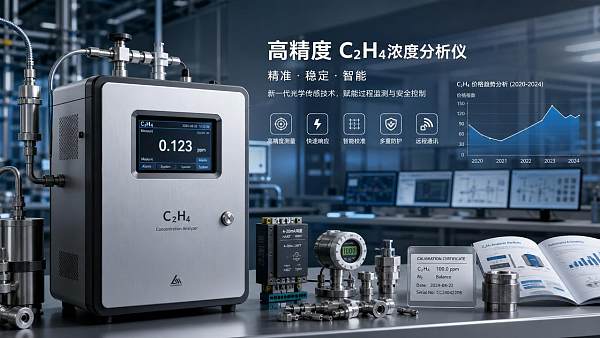
 C2H4 Concentration Analyzer Price Trends in 2026: What Is Driving Cost ChangesC2H4 concentration analyzer price trends in 2026 explained: discover key cost drivers, procurement risks, and smart buying tips to balance budget, compliance, and long-term value.
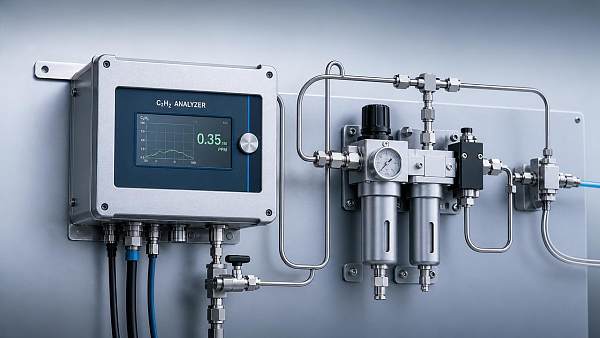
 How to Compare C2H2 Concentration Analyzer Accuracy in Industrial Gas MonitoringC2H2 concentration analyzer accuracy matters beyond the datasheet. Learn how to compare drift, calibration, interference, and field reliability for safer industrial gas monitoring.
![]() SiH4 Concentration Analyzer Import Rules to Watch in 2026SiH4 concentration analyzer import rules are tightening in 2026. Learn the key documents, compliance checks, and procurement tips to avoid delays and speed project delivery.
SiH4 Concentration Analyzer Import Rules to Watch in 2026SiH4 concentration analyzer import rules are tightening in 2026. Learn the key documents, compliance checks, and procurement tips to avoid delays and speed project delivery. HF Concentration Analyzer Demand Shifts Across Key IndustriesHF concentration analyzer demand is shifting across chemical, refining, environmental, and advanced manufacturing sectors—learn what drives safer control, compliance, and precision upgrades.
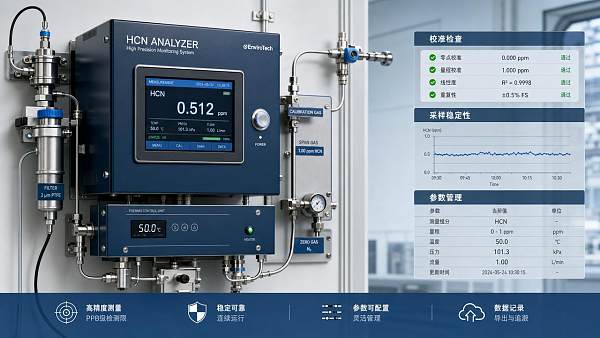
 Common HCN Concentration Analyzer Mistakes in Daily OperationHCN concentration analyzer daily mistakes can quietly damage accuracy and uptime. Learn common errors, practical checks, and smart operating tips to improve reliability.
 PH3 Concentration Analyzer Price Trends in 2026PH3 concentration analyzer price trends in 2026 reveal what really drives cost, compliance, and performance. Explore key buying factors to compare quotes smarter and reduce total ownership risk.
 How to Choose an AsH3 Concentration Analyzer for Trace Gas SafetyAsH3 concentration analyzer selection starts with the right application context. Learn how to compare response, interference, integration, and lifecycle fit for safer trace gas monitoring.
 Released") China's Business Environment Report (2026) ReleasedChina's Business Environment Report (2026) reveals 92% digital CMA/CNAS coverage—cutting export test report time to 15 days. Boost CE, UKCA & UL certification for pressure gauges, thermostats & analyzers.
China's Business Environment Report (2026) ReleasedChina's Business Environment Report (2026) reveals 92% digital CMA/CNAS coverage—cutting export test report time to 15 days. Boost CE, UKCA & UL certification for pressure gauges, thermostats & analyzers. US MMA Tank Incident Triggers Regional Safety UpgradesUS MMA tank incident sparks urgent demand for VOCs monitoring, toxic gas modeling & intrinsically safe transmitters across LATAM and SEA.
 NDRC Expands Energy-Saving and Carbon-Reduction Oversight to Dyeing, Chemical Fibers, and PapermakingNDRC expands energy-saving & carbon-reduction oversight to dyeing, chemical fibers, and papermaking—boosting demand for COD/NH₃-N analyzers, VOCs monitors, and CEMS systems.
 MIIT Sets 2026 Energy-Saving Inspection Targets for High-Energy ChemicalsMIIT Sets 2026 Energy-Saving Inspection Targets for High-Energy Chemicals—urgent demand surges for certified pH meters, gas analyzers & explosion-proof controllers.
 MOFCOM: FDI in China Down 10.3% Jan–Apr 2026, but Manufacturing Up 12.1%FDI in China fell 10.3% Jan–Apr 2026—but manufacturing FDI surged 12.1%, led by high-tech sectors. Discover what this means for precision metrology, sensors & calibration providers.
 PBOC Conducts 600-Billion-Yuan MLF Operation, Boosting RMB Stability for Testing Equipment ExportsPBOC's 600-billion-yuan MLF operation boosts RMB stability—key for NDT equipment exporters using LC/DA terms. Reduce FX risk, optimize hedging & improve cash flow planning now.
 EU Steel Strategy Upgrade: CBAM Expansion to Machinery & InstrumentsEU Steel Strategy Upgrade expands CBAM to machinery & instruments (HS 84/90) — LCA data mandatory from 1 July 2026. Act now to avoid delays & ensure compliance.
 Global EV Energy Consumption Standard to Take Effect Oct 1, 2026Global EV Energy Consumption Standard (GTR No. 22) takes effect Oct 1, 2026 — learn how it reshapes battery testing, certification & supply chains worldwide.
 WTO Report Shows Strong Global Trade, Easing Export Pressure for Industrial Monitoring DevicesIndustrial monitoring devices exporters benefit as WTO reports 4.2% global trade growth—easing export pressure, improving delivery predictability & cash flow.
 South Korea MFDS Revises Food Contact Materials StandardsSouth Korea MFDS revises food contact materials standards: new nickel/chromium migration limits & NIAS verification—critical for lab instrument exporters and compliance providers.
 Brazil to Eliminate Import Duties on Cross-Border E-Commerce Orders Under USD 50Brazil to eliminate import duties on cross-border e-commerce orders under USD 50—key for portable testing instruments exporters targeting Mercado Livre & DIY buyers.
 New AI Agent Guidelines Impact Smart Inspection Device ExportsAI Agent Guidelines impact smart inspection device exports—learn how new China AI safety rules affect EU, US & Middle East market access.






Search Categories
Search Categories
Latest Article
- Guangdong Launches 3-Year Service Trade Plan to Boost Instrument Exports via AI and HarmonyOSGuangdong's 3-year service trade plan boosts instrument exports via AI optimization & HarmonyOS—key for ASEAN/Latin America market access. Act now.Posted by:
- China-Pakistan MOU Opens Faster Certification Path for Instruments in South AsiaChina-Pakistan MOU accelerates instrument certification in South Asia—faster CCC acceptance, mutual lab recognition & Islamabad testing hub for pressure gauges, flow meters, environmental monitors.Posted by:
- Gold Futures Surge 1.1%; Overseas Orders for Precious Metals Analyzers Rise 35%Gold futures surge 1.1% — driving 35% rise in overseas orders for precious metals analyzers like XRF & ICP-MS. Discover key market impacts & compliance insights.Posted by:
Please give us a message
