
Laser measurement performs well, but only under stable optics


Laser measurement can be one of the fastest and most accurate ways to monitor process conditions, gas composition, distance, position, or dimensional change. But in industrial reality, its performance depends less on the laser itself and more on whether the optical path remains stable. For buyers, engineers, operators, and project decision-makers, the practical question is not “Is laser measurement precise?” It is “Will it stay precise in my plant, under my dust, vibration, temperature swings, and maintenance constraints?”
The short answer is clear: laser measurement performs extremely well when optical conditions are controlled, protected, or continuously compensated. When optics are unstable, contamination builds up, alignment drifts, or process conditions change unpredictably, measurement reliability can drop faster than many teams expect. That is why laser solutions should be evaluated not only against accuracy claims, but also against installation environment, maintenance burden, explosion proof requirements, online measurement needs, and whether a fixed analysis, portable analysis, continuous analysis, or custom analysis approach fits the site.
When is laser measurement the right choice, and when is it not?

For most industrial users, laser measurement is the right choice when they need fast response, high selectivity, non-contact sensing, and strong analytical sensitivity. It is especially valuable in applications where continuous analysis is important, where process optimization depends on real-time feedback, or where conventional sampling creates delay, contamination risk, or maintenance complexity.
Typical strong-fit scenarios include:
- Real-time gas concentration monitoring in process lines
- Online measurement where rapid response improves control performance
- Non-contact measurement in high-temperature or hazardous environments
- Applications requiring selective detection of a target component
- Situations where process interruption for manual sampling is undesirable
However, laser measurement is not automatically the best solution for every plant. It becomes a weaker choice when:
- The optical path is frequently obscured by dust, condensate, smoke, or oil mist
- Mechanical vibration causes alignment drift
- Temperature changes distort optical components or mounting geometry
- The site lacks the maintenance discipline to keep windows and optics clean
- The target parameter could be measured more robustly by thermal measurement or another established method
In procurement and technical evaluation, this distinction matters. A laser analyzer may look superior on a datasheet, but if the optics cannot remain stable in real operation, total lifecycle performance can be worse than a less sensitive but more rugged technology.
Why stable optics matter more than headline accuracy
Many decision-makers focus first on laboratory accuracy, resolution, or response time. Those specifications matter, but in field applications, optical stability is often the true performance gatekeeper.
Stable optics means the measurement system can maintain a clean, consistent, properly aligned optical path over time. If that condition is lost, several problems can appear:
- Signal attenuation from dirty windows or optical fouling
- Baseline drift caused by thermal expansion or movement
- False readings due to stray reflections or changing path geometry
- Reduced repeatability across operating cycles
- Unexpected downtime from cleaning, recalibration, or troubleshooting
For operators and quality teams, unstable optics do not just create “slightly worse numbers.” They can create misleading process data that affects safety margins, product quality, energy efficiency, and compliance reporting.
For management and finance teams, unstable optics usually translate into hidden costs:
- More frequent maintenance visits
- Higher spare parts usage
- Process inefficiency caused by poor control signals
- Production losses from analyzer downtime
- Longer commissioning and acceptance periods
What industrial conditions most often weaken laser measurement performance?
If a laser system underperforms, the root cause is often environmental rather than electronic. The most common field risks include:
Dust and particulate loading
Suspended particles can scatter or block the beam, especially in combustion, bulk solids handling, cement, mining, metals, and some chemical processes. Even when the beam penetrates, signal quality may fluctuate enough to reduce confidence in continuous analysis.
Condensation and moisture
Optical windows exposed to humid or cooling conditions may fog or collect droplets. In stack monitoring, gas analysis, and outdoor installations, this is one of the most underestimated failure modes.
Vibration and structural movement
Skids, ducts, rotating equipment, and long-span structures can shift enough to disturb optical alignment. A small physical movement may cause a major analytical error if path stability is critical.
Temperature swings
Thermal expansion affects optical mounts, housings, and measurement geometry. Outdoor day-night cycles, furnace proximity, and variable process loads can all influence stability.
Window fouling and coating
In dirty processes, measurement windows may gradually become coated by process residue. This issue can be slow enough to escape immediate detection but severe enough to compromise trend accuracy.
Harsh area classification requirements
Where explosion proof installation is required, system design becomes more demanding. Protective housings, purge systems, cable routing, and certified components may affect cost, complexity, and maintainability.
How does laser measurement compare with thermal measurement and other common methods?
Laser measurement should not be judged in isolation. Buyers often compare it with thermal measurement, paramagnetic oxygen technology, multi gas solutions, and conventional online analyzers.
Laser measurement vs thermal measurement
Thermal measurement methods can be more tolerant in some rugged environments, particularly where optical fouling is difficult to control. They are often chosen when absolute precision is less important than consistent operation under dirty conditions. Laser measurement, by contrast, typically offers faster response and better selectivity, but only if optical stability can be maintained.
Choose laser measurement when:
- Fast response and high sensitivity are critical
- Non-contact sensing offers operational benefit
- Target component selectivity is important
- Process control value justifies optical system care
Choose thermal measurement when:
- The environment is too dirty for reliable optics
- Robustness is more important than analytical speed
- Maintenance resources are limited
Laser measurement vs paramagnetic oxygen
For oxygen monitoring, paramagnetic oxygen analyzers remain a strong option because they are mature, well understood, and effective in many process applications. Laser systems may provide advantages in response speed or in-situ measurement design, but paramagnetic oxygen technology can be preferable when optical path integrity is difficult to guarantee or when sampling architecture is already established.
Laser measurement vs multi gas solutions
If users need multiple gas components from a single system, a multi gas platform may provide broader value than a single-purpose laser analyzer. Laser-based systems can be excellent for one critical component, but they are not always the most economical answer when broad composition analysis is required.
Laser measurement vs standard online measurement systems
Online measurement systems based on extractive sampling, electrochemical sensing, infrared analysis, or other technologies may offer easier integration in some plants. Laser measurement often wins on speed and directness, while other online measurement technologies may win on ruggedness, service familiarity, or lower upfront complexity.
How should different buyers evaluate fixed, portable, continuous, and custom analysis options?
The right configuration matters as much as the sensing principle.
Fixed analysis
Best for permanent process points where continuous visibility is needed and optical conditions can be engineered for stability. Fixed systems make sense when process control or compliance depends on constant data.
Portable analysis
Useful for troubleshooting, spot checks, commissioning, and cross-validation. Portable analysis is rarely a complete substitute for continuous laser monitoring, but it can reduce risk before a permanent investment is approved.
Continuous analysis
This is where laser measurement often delivers its strongest business value. Continuous analysis supports faster control action, reduced process variability, and better fault detection. But it also demands the highest confidence in long-term optical stability.
Custom analysis
Custom analysis becomes important when standard products cannot cope with unusual installation geometry, hazardous area constraints, purge requirements, high dust loading, or special gas matrices. For many industrial sites, a custom-engineered optical protection strategy is what makes laser measurement viable.
For project managers and engineering teams, the key question is not simply which format is available, but which format matches the site’s operating reality and maintenance culture.
What should procurement and technical teams ask suppliers before choosing a laser system?
To make a sound decision, teams should move beyond general performance claims and ask environment-specific questions:
- How does the system maintain optical alignment over time?
- What protections are included against dust, condensation, and fouling?
- What cleaning frequency is expected under similar field conditions?
- Is there built-in monitoring for optical signal degradation?
- How does the system behave during vibration or temperature fluctuation?
- What explosion proof certifications or hazardous-area options are available?
- Can the solution support fixed analysis, portable analysis, or custom analysis if requirements evolve?
- What is the expected maintenance cost over one, three, and five years?
- Are there reference installations in comparable industries and process environments?
- What commissioning support and operator training are provided?
These questions help procurement, technical evaluators, and financial approvers compare real operating value rather than just initial purchase price.
How can plants improve laser measurement reliability in real-world operation?
If laser measurement is strategically valuable, plants can often improve success rates through good engineering and operational discipline.
Practical measures include:
- Using purge air or protective window systems to keep optics clean
- Selecting rigid mounting structures that minimize alignment drift
- Designing for thermal management in hot or outdoor environments
- Adding diagnostics to detect signal loss early
- Planning regular inspection and cleaning routines
- Validating installation points before final procurement
- Using portable analysis tools during feasibility assessment
- Considering custom analysis designs for difficult processes
For operators, reliability improves when the measurement system is treated as part of the process, not as a standalone instrument. For managers, that means assigning ownership for maintenance, verification, and alarm response.
What is the real decision framework for choosing laser measurement?
The best decision is usually based on five practical criteria:
- Measurement value: Does faster, more selective data improve process control, quality, safety, or efficiency?
- Optical stability: Can the site realistically maintain a stable optical path?
- Environmental fit: Are dust, vibration, moisture, and temperature manageable?
- Compliance and safety: Can explosion proof and site certification requirements be met without excessive complexity?
- Lifecycle economics: Will the total value exceed installation and maintenance costs?
If the answer is yes across these five areas, laser measurement can outperform many alternatives. If optical stability is doubtful, then thermal measurement, paramagnetic oxygen analysis, or another online measurement approach may deliver better long-term value even with lower headline performance.
Laser measurement performs well, but only under stable optics. That is not a weakness of the technology so much as a condition for its success. In the instrumentation industry, the smartest buyers and engineers do not ask whether laser systems are advanced. They ask whether the process environment will allow that advanced performance to remain stable over time.
For information researchers, operators, technical evaluators, procurement teams, and business decision-makers, the clearest conclusion is this: choose laser measurement when the application truly benefits from speed, selectivity, and continuous insight, and when the optical path can be protected, monitored, and maintained. If not, a more rugged alternative may be the more profitable and dependable choice.
Recommended for You
 Brazil INMETRO to Require Portuguese UI and Local Units for Industrial Instruments by 2026Brazil INMETRO mandates Portuguese UI & local units (mbar, kPa, °C) for industrial instruments by Dec 2026—key for exporters, integrators & service providers.
 STMicroelectronics 200mm Line Eases Industrial Sensor Chip ShortageSTMicroelectronics 200mm line eases industrial sensor chip shortage — MCUs & signal-conditioning ICs now ship in 12 weeks. Secure allocation today.
 Southeast Asia Manufacturing Re-shoring Accelerates: Vietnam/Indonesia Industrial Instrument Imports Up 37% YoYSoutheast Asia manufacturing re-shoring accelerates: Vietnam & Indonesia industrial instrument imports up 37% YoY — key insights for suppliers, OEMs & procurement teams.
 First Global White Paper on Humanoid Robot Sensor Calibration ReleasedHumanoid robot sensor calibration: First global white paper released—key for ISO/IEC JWG 23 compliance, export readiness & dynamic torque accuracy. Act now.
 SAMR to Upgrade EV Battery Recycling Standard to MandatorySAMR to upgrade EV battery recycling standard GB/T 34015—202X to mandatory by Dec 2026 — critical for exporters, BMS makers & cert labs.
 Saudi SASO Accelerates AI Energy Efficiency Rules for TransmittersSASO AI energy efficiency rules for transmitters take effect 1 June 2026 — mandatory AI simulation, Saudi climate data, and authorized lab validation required. Act now to avoid export delays.
 IEC 63278:2026 Released for Industrial Instrument CybersecurityIEC 63278:2026 is live — the first global standard mandating cybersecurity verification for industrial instruments. Discover compliance impacts, deadlines, and actionable steps for OT/IT convergence.
 Red Sea Crisis Escalates: Gulf of Aden Navigation Ban Extended to June 15, 2026Red Sea Crisis escalates: Gulf of Aden navigation ban extended to June 15, 2026—disrupting industrial instrumentation shipments to the Middle East with 458% air freight spikes and 12–18 day delays.
 US DOE Updates Efficiency Rules for Industrial SensorsUS DOE updates industrial sensor efficiency rules: AI-driven dynamic calibration required by Sept 2026. Ensure AI-Cal Verified compliance now.
 EU Mandates PEF Carbon Footprint Module for Industrial Instruments from June 2026EU mandates PEF carbon footprint module for industrial instruments from June 2026—key for exporters, OEMs & certifiers. Act now to ensure compliance.
 Explosion-Proof Instruments: Compliance Risks Before You OrderExplosion-proof instruments can trigger delays, failed inspections, and safety risks if compliance is overlooked. Learn what to verify before ordering and make safer, smarter purchasing decisions.
 Gas Quality Monitoring Equipment Import Rules to Watch in 2026Gas quality monitoring equipment import rules for 2026 are tightening. Learn the key compliance, certification, and customs risks distributors must manage to avoid delays and protect margins.
 Emission Control Shelter Demand Shifts Across Industrial ProjectsEmission control shelter demand is rising across industrial projects as buyers seek faster deployment, reliable monitoring, and compliance-ready designs. Explore key evaluation factors.
 Temperature Measurement Instruments: Selection Mistakes That Raise DowntimeTemperature measurement instruments selection mistakes can drive downtime, unstable control, and higher costs. Discover 5 common errors and practical fixes to improve reliability.
 Thermal Conductivity Analyzers: When Are They the Right Choice?Thermal conductivity analyzers are ideal for binary and high-contrast gas mixtures. Learn when they deliver reliable, low-maintenance online monitoring and smarter project value.
 Level Measurement Instruments for Tanks: What Affects ReliabilityLevel measurement instruments reliability depends on media, installation, and diagnostics. Discover what causes tank reading failures and how to improve safety, uptime, and control.
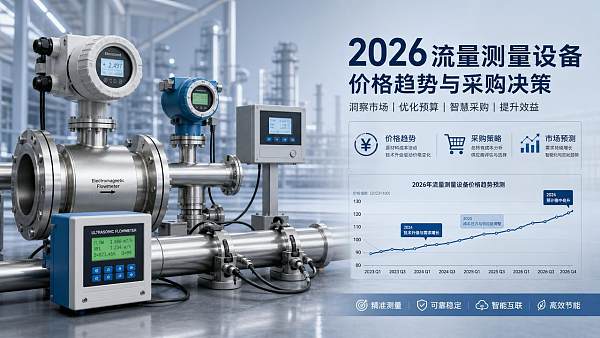
 Flow Measurement Equipment Price Trends in 2026Flow measurement equipment price trends in 2026: learn key cost drivers, budgeting risks, and smart buying strategies to improve ROI and make better procurement decisions.
 Flue Gas Monitoring Equipment: Common Accuracy Issues and FixesFlue gas monitoring equipment accuracy issues can lead to drift, false readings, and compliance risks. Discover common causes, practical fixes, and smarter maintenance tips.
 Process Control Shelter vs Control Room: Key Cost and Deployment DifferencesProcess control shelter vs control room: compare cost, deployment speed, integration, and lifecycle value to choose the smarter solution for industrial automation projects.
 How to Select an Industrial Control Shelter for Harsh Site ConditionsIndustrial control shelter selection for harsh sites: learn how to compare materials, HVAC, safety, and lifecycle cost to protect equipment, reduce downtime, and improve reliability.
 SAMR to Finalize 1,800+ Standards by 2026, Including EV Battery RecyclingSAMR to finalize 1,800+ standards by 2026—including EV battery recycling, hazardous chemical packaging & EMC immunity. Stay ahead of mandatory GB shifts and global export compliance.
 China's Largest Single-Line Large-Tow Carbon Fiber Line Starts OperationChina's largest single-line large-tow carbon fiber line is live—30,000 tons/year capacity, ASME-certified, 22% cheaper & 6-week lead time. Boost your industrial instrumentation supply chain now.
 China Mobile Unveils National Integrated Computing Power NetworkChina Mobile's National Integrated Computing Power Network accelerates AI quality inspection for global manufacturers—cutting model training time by 68% and enabling cross-border industrial AI development.
 World's First Humanoid Robot Industrial Calibration White Paper ReleasedWorld's First Humanoid Robot Industrial Calibration White Paper released—setting new global benchmarks for dynamic sensor calibration in robotics. Discover how ABB, Yaskawa & metrology leaders are reshaping industry trust.
 Red Sea Crisis Escalates: Aden Gulf Ban Extended to June 15Red Sea Crisis escalates: Aden Gulf ban extended to June 15 — disrupting industrial instrumentation trade between China and the Middle East with 452% air freight spikes and 7–12 day delays.
 Saudi SASO Introduces AI-Based Energy Validation for Industrial TransmittersAI-based energy validation for industrial transmitters is now mandatory in Saudi Arabia—learn how SASO’s new AI regulation impacts global exporters, compliance timelines, and supply chains.
 IEC TC65 Releases Cybersecurity Validation Guide for Industrial InstrumentsIEC TC65’s new Cybersecurity Validation Guide for Industrial Instruments mandates SDL certification & firmware signing—key for EU/US market access. Act now to align with GB/T 42278-2026 and avoid export delays.
 EU PEF Carbon Footprint Database Mandatory Access for Industrial InstrumentsEU PEF Carbon Footprint Database mandatory access starts June 2026 for industrial instruments—pressure, temperature & flow meters. Ensure compliance now to avoid EU customs delays and market exclusion.
 Gas Quality Analyzer Shelter Price Trends and Specification Gaps to WatchGas quality analyzer shelter price trends vary with materials, HVAC, safety, integration, and compliance. See key specification gaps before shortlisting suppliers or approving budget.
 Process Measurement Equipment: Key Accuracy Risks in Harsh EnvironmentsProcess measurement equipment in harsh environments can drift before failing. Discover key accuracy risks, warning signs, and practical controls to protect quality, safety, and compliance.
 Industrial Analyzer Shelter Export Factors Affecting Lead Times This YearIndustrial analyzer shelter export lead times vary with sourcing, engineering, compliance, packing, and logistics. Learn the key factors to quote smarter and deliver with confidence.
 What to Check Before Buying a Process Analyzer ShelterProcess analyzer shelter buying guide: learn what to check before purchase, from compliance and HVAC to utilities, durability, and maintenance access.


















Search Categories
Search Categories
Latest Article
- Brazil INMETRO to Require Portuguese UI and Local Units for Industrial Instruments by 2026Brazil INMETRO mandates Portuguese UI & local units (mbar, kPa, °C) for industrial instruments by Dec 2026—key for exporters, integrators & service providers.Posted by:
- STMicroelectronics 200mm Line Eases Industrial Sensor Chip ShortageSTMicroelectronics 200mm line eases industrial sensor chip shortage — MCUs & signal-conditioning ICs now ship in 12 weeks. Secure allocation today.Posted by:
- Southeast Asia Manufacturing Re-shoring Accelerates: Vietnam/Indonesia Industrial Instrument Imports Up 37% YoYSoutheast Asia manufacturing re-shoring accelerates: Vietnam & Indonesia industrial instrument imports up 37% YoY — key insights for suppliers, OEMs & procurement teams.Posted by:
Please give us a message
