
Why thermal measurement drifts in high dust environments


In high-dust environments, thermal measurement drift is usually not caused by a single sensor defect. It is more often the result of dust changing how heat moves, coating the sensing surface, weakening signal stability, and gradually shifting calibration performance over time. For teams evaluating fixed analysis, portable analysis, or continuous analysis systems, this matters because even a small thermal error can affect process control, product quality, safety margins, maintenance cost, and confidence in the data. The practical question is not only why drift happens, but how to identify the dominant cause and choose a measurement approach that stays reliable under real operating conditions.
Why does thermal measurement drift so often in dusty environments?
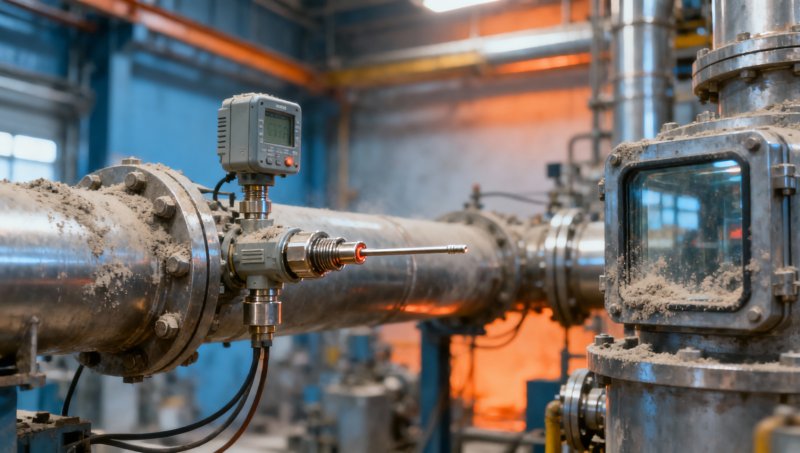
Thermal measurement depends on stable heat transfer between the process and the sensing element. In dusty environments, that stability is disrupted. Dust can settle on probes, housings, optics, thermal wells, protective screens, and cable interfaces. Once that happens, the instrument may no longer respond to the true process temperature in the same way it did during calibration.
The most common mechanisms include:
- Insulating buildup on the sensor surface: Dust layers act as a thermal barrier. This slows heat exchange and can make the measured value lag behind the actual process condition.
- Changed emissivity or radiative behavior: For non-contact or radiation-based thermal measurement, dust on lenses or target surfaces can alter the apparent thermal signature and produce systematic error.
- Airflow and convection disturbance: Suspended particles can change local flow patterns around the sensor, affecting convective heat transfer and measurement repeatability.
- Hot spot or cold spot formation: Dust accumulation is rarely uniform. Uneven buildup can create localized thermal gradients that the instrument was not designed to interpret.
- Signal instability and electronics contamination: Fine particulate matter can enter enclosures or connectors, increasing electrical noise, moisture retention, or long-term degradation.
In other words, dust does not just “make the sensor dirty.” It changes the thermal path, the response time, and sometimes the basic measurement principle itself.
What kinds of thermal measurement systems are most vulnerable?
Different technologies drift for different reasons. This is important for technical evaluators and procurement teams comparing alternatives.
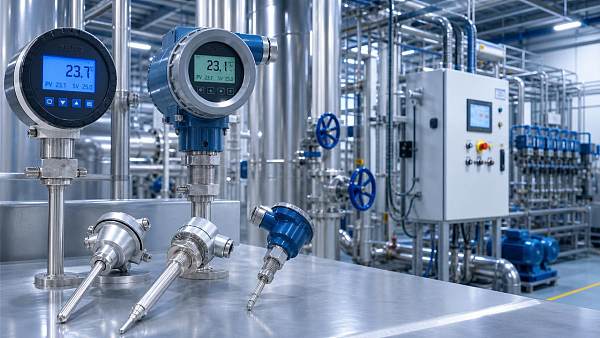
Contact temperature sensors such as thermocouples and RTDs often suffer from coating, delayed response, and thermal isolation caused by dust deposits. If the installation uses a thermowell, buildup on the well can further increase lag and measurement bias.
Infrared and non-contact thermal instruments are especially sensitive when dust accumulates on optical windows, lenses, or the measured surface. In airborne dust conditions, particles can also interfere with the line of sight and reduce reading stability.
Thermal mass flow or heat-based analytical instruments may drift when dust changes heat dissipation behavior, blocks flow paths, or contaminates internal sensing structures.
Portable analysis systems often face additional variation because they are moved between locations, exposed during handling, and may not receive the same enclosure protection as fixed installations.
Continuous online systems can perform well in dusty environments, but only when designed with suitable filtration, purge arrangements, sensor shielding, and maintenance access. Without those protections, they may produce a stable-looking but gradually inaccurate signal.
How does drift affect operations, quality, and business decisions?
For operators, thermal drift can quietly undermine daily process control. The danger is that the measurement may still appear believable while no longer representing the true thermal condition.
This can lead to:
- Process inefficiency: Heating, cooling, drying, curing, or combustion steps may run outside target conditions.
- Product quality variation: In manufacturing, even moderate temperature error can affect material properties, consistency, and yield.
- Energy waste: Incorrect readings often cause overcompensation, which increases fuel or power consumption.
- Safety and compliance risk: In hazardous or regulated operations, poor thermal data can weaken alarm reliability and reporting confidence.
- Unplanned maintenance and downtime: Teams may troubleshoot the process when the real issue is measurement drift, wasting time and parts.
For managers and financial approvers, the cost of drift is not limited to instrument replacement. It can show up as scrap, slower throughput, extra calibration work, false alarms, customer complaints, and reduced confidence in automation decisions.
How can you tell whether dust is the real cause of the drift?
Not every drifting temperature signal is caused by dust alone. Good diagnosis starts with separating process variation from measurement degradation.
Useful checks include:
- Compare against a trusted reference: Use a recently calibrated portable reference or secondary measurement point.
- Review drift trend over time: Dust-related drift often develops gradually and may correlate with cleaning intervals, seasonal load, or production intensity.
- Inspect sensor surfaces and protective components: Look for coating, abrasion, clogging, and evidence of uneven deposition.
- Check response time, not just value: A sensor affected by dust may still read near normal under steady conditions but react too slowly during change.
- Assess enclosure and cable condition: Fine dust intrusion can affect terminals, transmitters, and signal conditioning electronics.
- Review installation location: Sensors placed near turbulent flow, powder discharge, or poor shielding zones usually drift faster.
If the reading improves after cleaning, purge restoration, filter replacement, or sensor repositioning, dust is likely a major factor. If not, calibration aging, wiring faults, or process-side changes may also be involved.
What design and maintenance practices reduce thermal measurement drift?
The best way to improve accuracy in high-dust environments is to combine the right measurement technology with the right installation strategy. A strong instrument can still fail in a poor mounting position, while a suitable installation can extend the life of an otherwise standard device.
Practical measures include:
- Select sensor designs suited for contamination: Prefer robust housings, appropriate IP ratings, dust-resistant connectors, and sensing elements matched to the process.
- Use protective barriers carefully: Thermowells, shields, windows, and filters can help, but they should not create excessive thermal lag or block the intended measurement path.
- Add purge or air-knife systems where needed: For optical and exposed thermal sensors, clean purge air can reduce dust accumulation significantly.
- Optimize mounting location: Avoid areas with direct dust loading, dead zones, recirculation pockets, or misleading local heat sources.
- Plan cleaning and verification intervals based on actual dust load: Fixed schedules are useful, but condition-based checks are better in variable environments.
- Design for easy access: If cleaning or inspection is difficult, maintenance will be delayed and drift will persist longer.
- Use trend monitoring and diagnostics: Signal deviation, response delay, and maintenance records can help detect drift before it becomes a production problem.
In many cases, reliability improves more from a better system design and maintenance routine than from simply buying a higher-specification sensor.
How should buyers evaluate fixed, portable, and continuous analysis solutions for dusty sites?
When comparing solutions, buyers should look beyond stated accuracy under laboratory conditions. The more useful question is: how well does the system hold its performance in real dust exposure over time?
Evaluation criteria should include:
- Resistance to contamination: How easily do dust deposits affect the sensing principle?
- Cleaning and maintenance burden: How often will operators need to service it, and how long will that take?
- Drift behavior between calibrations: Is the system known for gradual bias, sudden failure, or recoverable contamination?
- Installation requirements: Does it need purge air, filtration, shielding, vibration isolation, or special mounting geometry?
- Total lifecycle cost: Include spare parts, calibration labor, downtime risk, and operator workload, not just purchase price.
- Data trustworthiness for decision-making: Stable, traceable measurement often delivers more value than nominally higher accuracy that cannot be sustained onsite.
For distributors, integrators, and project managers, the most successful recommendation is usually the one that matches the dust level, maintenance capability, and process criticality of the site. A portable analyzer may be fine for periodic checks, while a continuous online system may be justified when temperature data drives control loops, quality release, or compliance reporting.
When is it time to upgrade instead of repeatedly correcting the drift?
If thermal measurement requires frequent recalibration, constant cleaning, or repeated operator correction, the problem may no longer be maintenance alone. It may indicate a mismatch between the measurement solution and the environment.
An upgrade is often justified when:
- Drift returns quickly after cleaning or recalibration
- Measurement uncertainty is affecting quality, safety, or energy performance
- Maintenance effort is growing faster than the value of keeping the old setup
- Operators no longer trust the reading and rely on workarounds
- The process has become more automated and needs more dependable online data
In these cases, a more dust-tolerant sensor design, better enclosure strategy, or a continuous analysis system with stronger contamination control may offer a better long-term return.
Thermal measurement drifts in high-dust environments because dust changes the heat transfer conditions, contaminates sensing surfaces, and weakens signal stability. For users, engineers, buyers, and decision-makers, the key takeaway is that drift is usually a system issue, not just a sensor issue. The most effective response is to identify the dominant drift mechanism, review the installation and maintenance approach, and evaluate measurement solutions based on long-term reliability in dusty conditions. When accuracy must hold under real operating stress, the right combination of sensor type, protection method, service strategy, and online monitoring design makes the difference.
Recommended for You
 Brazil INMETRO to Require Portuguese UI and Local Units for Industrial Instruments by 2026Brazil INMETRO mandates Portuguese UI & local units (mbar, kPa, °C) for industrial instruments by Dec 2026—key for exporters, integrators & service providers.
 STMicroelectronics 200mm Line Eases Industrial Sensor Chip ShortageSTMicroelectronics 200mm line eases industrial sensor chip shortage — MCUs & signal-conditioning ICs now ship in 12 weeks. Secure allocation today.
 Southeast Asia Manufacturing Re-shoring Accelerates: Vietnam/Indonesia Industrial Instrument Imports Up 37% YoYSoutheast Asia manufacturing re-shoring accelerates: Vietnam & Indonesia industrial instrument imports up 37% YoY — key insights for suppliers, OEMs & procurement teams.
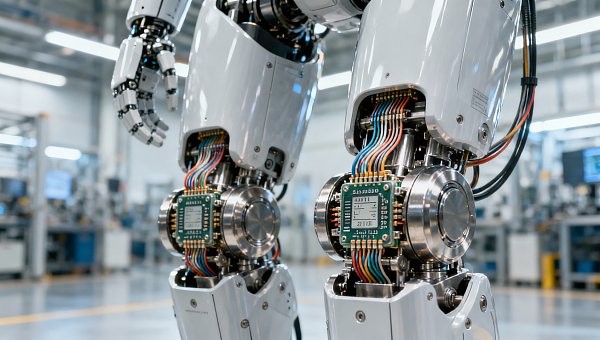
 First Global White Paper on Humanoid Robot Sensor Calibration ReleasedHumanoid robot sensor calibration: First global white paper released—key for ISO/IEC JWG 23 compliance, export readiness & dynamic torque accuracy. Act now.
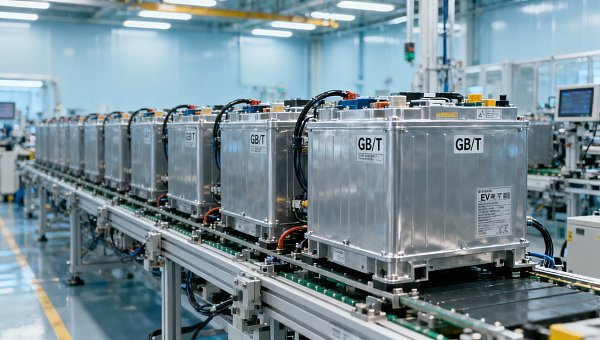
 SAMR to Upgrade EV Battery Recycling Standard to MandatorySAMR to upgrade EV battery recycling standard GB/T 34015—202X to mandatory by Dec 2026 — critical for exporters, BMS makers & cert labs.
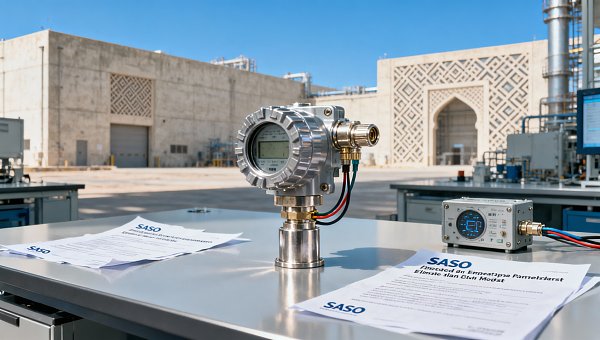
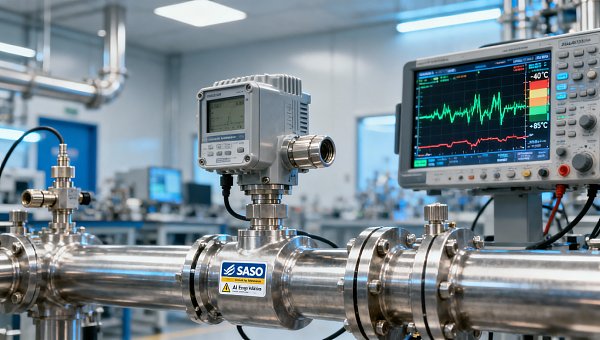
 Saudi SASO Accelerates AI Energy Efficiency Rules for TransmittersSASO AI energy efficiency rules for transmitters take effect 1 June 2026 — mandatory AI simulation, Saudi climate data, and authorized lab validation required. Act now to avoid export delays.
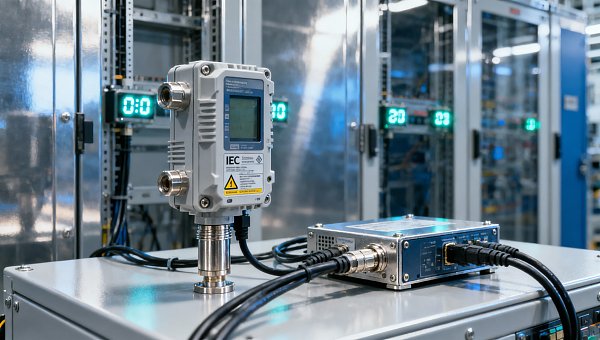
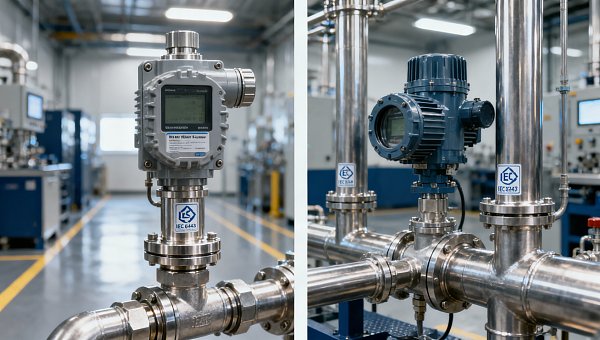
 IEC 63278:2026 Released for Industrial Instrument CybersecurityIEC 63278:2026 is live — the first global standard mandating cybersecurity verification for industrial instruments. Discover compliance impacts, deadlines, and actionable steps for OT/IT convergence.
 Red Sea Crisis Escalates: Gulf of Aden Navigation Ban Extended to June 15, 2026Red Sea Crisis escalates: Gulf of Aden navigation ban extended to June 15, 2026—disrupting industrial instrumentation shipments to the Middle East with 458% air freight spikes and 12–18 day delays.
 US DOE Updates Efficiency Rules for Industrial SensorsUS DOE updates industrial sensor efficiency rules: AI-driven dynamic calibration required by Sept 2026. Ensure AI-Cal Verified compliance now.
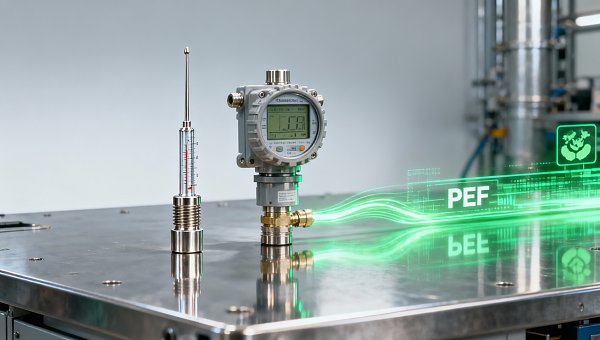
 EU Mandates PEF Carbon Footprint Module for Industrial Instruments from June 2026EU mandates PEF carbon footprint module for industrial instruments from June 2026—key for exporters, OEMs & certifiers. Act now to ensure compliance.
 Explosion-Proof Instruments: Compliance Risks Before You OrderExplosion-proof instruments can trigger delays, failed inspections, and safety risks if compliance is overlooked. Learn what to verify before ordering and make safer, smarter purchasing decisions.
 Gas Quality Monitoring Equipment Import Rules to Watch in 2026Gas quality monitoring equipment import rules for 2026 are tightening. Learn the key compliance, certification, and customs risks distributors must manage to avoid delays and protect margins.
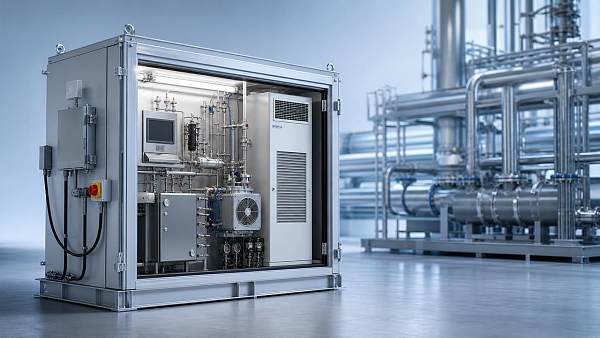
 Emission Control Shelter Demand Shifts Across Industrial ProjectsEmission control shelter demand is rising across industrial projects as buyers seek faster deployment, reliable monitoring, and compliance-ready designs. Explore key evaluation factors.
 Temperature Measurement Instruments: Selection Mistakes That Raise DowntimeTemperature measurement instruments selection mistakes can drive downtime, unstable control, and higher costs. Discover 5 common errors and practical fixes to improve reliability.
 Thermal Conductivity Analyzers: When Are They the Right Choice?Thermal conductivity analyzers are ideal for binary and high-contrast gas mixtures. Learn when they deliver reliable, low-maintenance online monitoring and smarter project value.
 Level Measurement Instruments for Tanks: What Affects ReliabilityLevel measurement instruments reliability depends on media, installation, and diagnostics. Discover what causes tank reading failures and how to improve safety, uptime, and control.
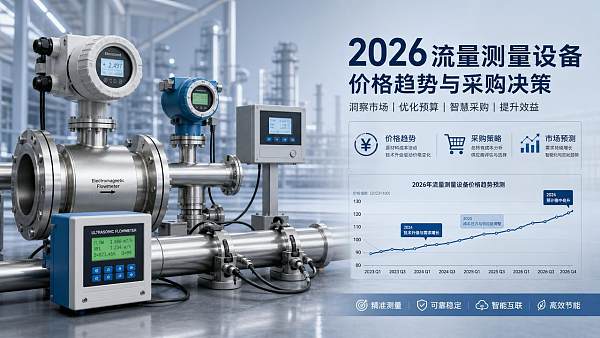
 Flow Measurement Equipment Price Trends in 2026Flow measurement equipment price trends in 2026: learn key cost drivers, budgeting risks, and smart buying strategies to improve ROI and make better procurement decisions.
 Flue Gas Monitoring Equipment: Common Accuracy Issues and FixesFlue gas monitoring equipment accuracy issues can lead to drift, false readings, and compliance risks. Discover common causes, practical fixes, and smarter maintenance tips.
 Process Control Shelter vs Control Room: Key Cost and Deployment DifferencesProcess control shelter vs control room: compare cost, deployment speed, integration, and lifecycle value to choose the smarter solution for industrial automation projects.
 How to Select an Industrial Control Shelter for Harsh Site ConditionsIndustrial control shelter selection for harsh sites: learn how to compare materials, HVAC, safety, and lifecycle cost to protect equipment, reduce downtime, and improve reliability.
 SAMR to Finalize 1,800+ Standards by 2026, Including EV Battery RecyclingSAMR to finalize 1,800+ standards by 2026—including EV battery recycling, hazardous chemical packaging & EMC immunity. Stay ahead of mandatory GB shifts and global export compliance.
 China's Largest Single-Line Large-Tow Carbon Fiber Line Starts OperationChina's largest single-line large-tow carbon fiber line is live—30,000 tons/year capacity, ASME-certified, 22% cheaper & 6-week lead time. Boost your industrial instrumentation supply chain now.
 China Mobile Unveils National Integrated Computing Power NetworkChina Mobile's National Integrated Computing Power Network accelerates AI quality inspection for global manufacturers—cutting model training time by 68% and enabling cross-border industrial AI development.
 World's First Humanoid Robot Industrial Calibration White Paper ReleasedWorld's First Humanoid Robot Industrial Calibration White Paper released—setting new global benchmarks for dynamic sensor calibration in robotics. Discover how ABB, Yaskawa & metrology leaders are reshaping industry trust.
 Red Sea Crisis Escalates: Aden Gulf Ban Extended to June 15Red Sea Crisis escalates: Aden Gulf ban extended to June 15 — disrupting industrial instrumentation trade between China and the Middle East with 452% air freight spikes and 7–12 day delays.
 Saudi SASO Introduces AI-Based Energy Validation for Industrial TransmittersAI-based energy validation for industrial transmitters is now mandatory in Saudi Arabia—learn how SASO’s new AI regulation impacts global exporters, compliance timelines, and supply chains.
 IEC TC65 Releases Cybersecurity Validation Guide for Industrial InstrumentsIEC TC65’s new Cybersecurity Validation Guide for Industrial Instruments mandates SDL certification & firmware signing—key for EU/US market access. Act now to align with GB/T 42278-2026 and avoid export delays.
 EU PEF Carbon Footprint Database Mandatory Access for Industrial InstrumentsEU PEF Carbon Footprint Database mandatory access starts June 2026 for industrial instruments—pressure, temperature & flow meters. Ensure compliance now to avoid EU customs delays and market exclusion.
 Gas Quality Analyzer Shelter Price Trends and Specification Gaps to WatchGas quality analyzer shelter price trends vary with materials, HVAC, safety, integration, and compliance. See key specification gaps before shortlisting suppliers or approving budget.
 Process Measurement Equipment: Key Accuracy Risks in Harsh EnvironmentsProcess measurement equipment in harsh environments can drift before failing. Discover key accuracy risks, warning signs, and practical controls to protect quality, safety, and compliance.
 Industrial Analyzer Shelter Export Factors Affecting Lead Times This YearIndustrial analyzer shelter export lead times vary with sourcing, engineering, compliance, packing, and logistics. Learn the key factors to quote smarter and deliver with confidence.
 What to Check Before Buying a Process Analyzer ShelterProcess analyzer shelter buying guide: learn what to check before purchase, from compliance and HVAC to utilities, durability, and maintenance access.







Search Categories
Search Categories
Latest Article
- Brazil INMETRO to Require Portuguese UI and Local Units for Industrial Instruments by 2026Brazil INMETRO mandates Portuguese UI & local units (mbar, kPa, °C) for industrial instruments by Dec 2026—key for exporters, integrators & service providers.Posted by:
- STMicroelectronics 200mm Line Eases Industrial Sensor Chip ShortageSTMicroelectronics 200mm line eases industrial sensor chip shortage — MCUs & signal-conditioning ICs now ship in 12 weeks. Secure allocation today.Posted by:
- Southeast Asia Manufacturing Re-shoring Accelerates: Vietnam/Indonesia Industrial Instrument Imports Up 37% YoYSoutheast Asia manufacturing re-shoring accelerates: Vietnam & Indonesia industrial instrument imports up 37% YoY — key insights for suppliers, OEMs & procurement teams.Posted by:
Please give us a message
