
Online measurement delays can quietly disrupt process control


Online measurement delays rarely trigger immediate alarms, but they can steadily undermine control loops, product consistency, compliance, and safety. In many plants, the problem is not that analyzers are inaccurate, but that the data arrives too late to support the process decisions being made. For teams using fixed analysis, portable analysis, or continuous analysis systems, response time should be evaluated as seriously as measurement accuracy. From multi gas monitoring and paramagnetic oxygen analysis to laser measurement, thermal measurement, custom analysis, and explosion proof systems, reducing delay can improve process stability, shorten troubleshooting time, and support better purchasing decisions.
Why do online measurement delays matter more than many teams realize?

The core issue is simple: if process data arrives late, control actions are based on outdated conditions. Even a high-quality instrument can create poor outcomes if its total response time is too long for the process dynamics.
For operators and engineers, this often shows up as unstable control, frequent manual intervention, slow fault detection, and unexplained quality variation. For managers and buyers, the impact is broader: increased waste, off-spec production, higher energy consumption, compliance risk, and reduced confidence in automation investments.
In practice, online measurement delays can quietly disrupt process control because the delay is distributed across the whole measurement chain, including:
- Sampling line length and dead volume
- Probe design and sample extraction efficiency
- Filter loading or condensation issues
- Transport lag from field to analyzer shelter
- Analyzer internal processing time
- Signal conditioning and PLC or DCS update intervals
- Control logic settings and actuator response
This is why plants sometimes replace an analyzer and still fail to solve the real problem. The bottleneck may not be the instrument itself, but the full system response.
What are different target readers actually trying to figure out?
Although the search starts with a technical topic, the user intent behind it is usually practical and decision-oriented. Different readers are often looking for different answers:
- Information researchers want to understand whether delay is a real control risk or just a minor technical detail.
- Operators and users want to know how to recognize delay in day-to-day operation and what can be improved.
- Technical evaluators need a reliable way to compare analyzer solutions beyond datasheet accuracy.
- Procurement teams want to avoid buying equipment that looks competitive on paper but performs poorly in the application.
- Business decision-makers and financial approvers care about production loss, risk reduction, ROI, maintenance burden, and lifecycle value.
- Quality and safety personnel want faster detection of deviations, hazardous gases, oxygen level changes, or emission excursions.
- Project managers and engineering leaders need to prevent late-stage surprises in analyzer system design.
- Distributors and agents need a better way to explain why response time is a commercial differentiator.
That means the most useful article is not one that only defines “measurement delay,” but one that helps readers judge risk, identify causes, and evaluate solutions in realistic industrial scenarios.
How can you tell when delay is harming process performance?
Many teams do not label the issue as “online measurement delay” at first. They notice symptoms elsewhere. Common warning signs include:
- Control loops that oscillate even after tuning
- Analyzer readings that seem correct but always late compared with process events
- Off-spec product appearing after upstream disturbances
- Frequent mismatch between lab results and online analyzer trends
- Slow alarm response in safety-critical or compliance-related applications
- Operator dependence increasing because automatic control does not react in time
- Long recovery times after load changes, feed changes, or startup transitions
In continuous analysis applications, these symptoms are especially important because delayed composition data can directly affect blending, combustion control, reaction efficiency, emissions control, and energy use. In portable analysis, delay may appear in a different form: setup time, stabilization time, and inconsistent readings caused by handling or environmental conditions. In fixed analysis systems, the largest hidden delays often come from sample transport and conditioning.
Which types of measurement applications are most sensitive to response time?
Not every process has the same tolerance for delay. The faster or more critical the process, the more seriously response time should be treated during instrument selection and system design.
Applications that are often highly delay-sensitive include:
- Combustion and boiler control, where oxygen and gas composition changes must be detected quickly
- Chemical reaction control, where delayed composition feedback can cause off-spec batches or yield loss
- Multi gas monitoring, where safety and environmental decisions depend on timely detection
- Paramagnetic oxygen analysis, especially in inerting, combustion optimization, and gas purity control
- Laser measurement, often selected for fast, in-situ response when extractive lag is a concern
- Thermal measurement systems, where process protection and efficiency depend on timely thermal trends
- Explosion proof systems, where both safety design and response expectations must be aligned
- Custom analysis systems, where application-specific engineering can either solve or introduce delay problems
The key lesson is that the best technology depends on the process. A slower analyzer may still be acceptable in a slow-changing application. But in dynamic control environments, response time can be a primary selection criterion rather than a secondary specification.
What should buyers and evaluators check beyond the analyzer datasheet?
This is where many purchasing mistakes happen. Vendors may provide analyzer response metrics under ideal test conditions, while the actual installed system performs very differently.
To evaluate online measurement solutions properly, buyers and technical reviewers should ask:
- What is the total system response time, not just the sensor response time?
- How was the response measured, and under what conditions?
- What sample conditioning components add lag?
- How long are the sample lines, and what are their diameters and materials?
- Will temperature, pressure, moisture, dust, or corrosive components slow the response?
- How does the system behave during process upsets, not just steady-state operation?
- Can the solution support the required control loop speed?
- What maintenance issues could gradually increase delay over time?
- Is there a faster in-situ, laser, or alternative measurement approach worth considering?
For procurement and finance stakeholders, this matters because a lower purchase price can lead to a higher total cost if delayed measurements cause waste, downtime, manual labor, or compliance incidents. A stronger buying decision is based on lifecycle performance, not equipment price alone.
How can plants reduce delay in fixed, portable, and continuous analysis systems?
Improvement methods vary by application, but the most effective approach is to examine the whole measurement path rather than blaming one component.
For fixed analysis systems:
- Shorten sampling lines where possible
- Reduce dead volume in probes, tubing, and conditioning components
- Optimize flow rates without compromising sample integrity
- Prevent condensation and particulate buildup
- Review shelter location and analyzer placement
- Match analyzer technology to process dynamics
For portable analysis:
- Standardize sampling and stabilization procedures
- Train users on warm-up, calibration, and environmental effects
- Use application-appropriate accessories to reduce handling-related delays
- Verify whether portable use is suitable for decisions that require near-real-time control
For continuous analysis:
- Validate loop timing from process event to control action
- Integrate analyzer data with control logic appropriately
- Avoid over-filtering or unnecessary signal smoothing
- Test response under real load changes and disturbance conditions
In many cases, custom analysis design is the right path because standard systems may not fit harsh environments, hazardous area requirements, or specialized gas compositions. However, customization should be guided by response objectives, not just installation convenience.
What is the business value of faster online measurement?
For senior decision-makers, the value of reducing delay is not only technical. It has measurable operational and financial effects.
- Better process stability: control systems act on current conditions instead of outdated data.
- Higher product quality: deviations are detected earlier, reducing scrap and rework.
- Improved safety: hazardous conditions can be identified faster in critical gas and oxygen applications.
- Lower operating cost: more stable operation often reduces energy use, waste, and manual intervention.
- Stronger compliance: environmental and safety monitoring systems can respond more reliably.
- Better return on automation investments: instrumentation contributes more effectively to digital transformation and intelligent process control.
This is especially important in industries where instrumentation is expected to support modernization. The real value of analysis and monitoring equipment is not just to generate data, but to generate data in time to improve decisions.
How should teams make a practical decision when selecting or upgrading a system?
A useful decision framework is to ask four questions:
- How fast does the process change? The answer defines the maximum acceptable delay.
- Where is the current lag coming from? Separate sensor delay from sampling, conditioning, communication, and control delays.
- What is the consequence of late measurement? Consider quality loss, energy cost, safety exposure, and compliance risk.
- Which design option gives the best lifecycle result? Compare not only capex, but uptime, maintenance, and process performance.
For some applications, a refined extractive system is enough. For others, a laser measurement approach, paramagnetic oxygen solution, multi gas platform, thermal measurement upgrade, or specially engineered explosion proof system may deliver better results. The right answer depends on the balance between speed, reliability, maintainability, and total cost of ownership.
Conclusion
Online measurement delays can quietly disrupt process control long before the root cause becomes obvious. That is why response time should be treated as a core performance factor, not a minor technical detail. Whether your team is using fixed analysis, portable analysis, or continuous analysis, the right evaluation focuses on total system response, application fit, operating risk, and business impact.
For users, the priority is recognizing delay-related symptoms early. For evaluators and buyers, the priority is comparing real-world performance rather than relying only on datasheets. For decision-makers, the priority is understanding that faster, better-timed measurement supports quality, safety, compliance, and return on investment. In modern instrumentation projects, the most valuable measurement is not just accurate data, but actionable data delivered in time.
Recommended for You
 Brazil INMETRO to Require Portuguese UI and Local Units for Industrial Instruments by 2026Brazil INMETRO mandates Portuguese UI & local units (mbar, kPa, °C) for industrial instruments by Dec 2026—key for exporters, integrators & service providers.
 STMicroelectronics 200mm Line Eases Industrial Sensor Chip ShortageSTMicroelectronics 200mm line eases industrial sensor chip shortage — MCUs & signal-conditioning ICs now ship in 12 weeks. Secure allocation today.
 Southeast Asia Manufacturing Re-shoring Accelerates: Vietnam/Indonesia Industrial Instrument Imports Up 37% YoYSoutheast Asia manufacturing re-shoring accelerates: Vietnam & Indonesia industrial instrument imports up 37% YoY — key insights for suppliers, OEMs & procurement teams.
 First Global White Paper on Humanoid Robot Sensor Calibration ReleasedHumanoid robot sensor calibration: First global white paper released—key for ISO/IEC JWG 23 compliance, export readiness & dynamic torque accuracy. Act now.
 SAMR to Upgrade EV Battery Recycling Standard to MandatorySAMR to upgrade EV battery recycling standard GB/T 34015—202X to mandatory by Dec 2026 — critical for exporters, BMS makers & cert labs.
 Saudi SASO Accelerates AI Energy Efficiency Rules for TransmittersSASO AI energy efficiency rules for transmitters take effect 1 June 2026 — mandatory AI simulation, Saudi climate data, and authorized lab validation required. Act now to avoid export delays.
 IEC 63278:2026 Released for Industrial Instrument CybersecurityIEC 63278:2026 is live — the first global standard mandating cybersecurity verification for industrial instruments. Discover compliance impacts, deadlines, and actionable steps for OT/IT convergence.
 Red Sea Crisis Escalates: Gulf of Aden Navigation Ban Extended to June 15, 2026Red Sea Crisis escalates: Gulf of Aden navigation ban extended to June 15, 2026—disrupting industrial instrumentation shipments to the Middle East with 458% air freight spikes and 12–18 day delays.
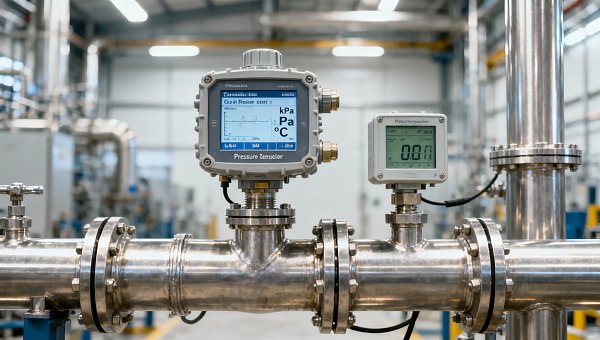
 US DOE Updates Efficiency Rules for Industrial SensorsUS DOE updates industrial sensor efficiency rules: AI-driven dynamic calibration required by Sept 2026. Ensure AI-Cal Verified compliance now.
 EU Mandates PEF Carbon Footprint Module for Industrial Instruments from June 2026EU mandates PEF carbon footprint module for industrial instruments from June 2026—key for exporters, OEMs & certifiers. Act now to ensure compliance.
 Explosion-Proof Instruments: Compliance Risks Before You OrderExplosion-proof instruments can trigger delays, failed inspections, and safety risks if compliance is overlooked. Learn what to verify before ordering and make safer, smarter purchasing decisions.
 Gas Quality Monitoring Equipment Import Rules to Watch in 2026Gas quality monitoring equipment import rules for 2026 are tightening. Learn the key compliance, certification, and customs risks distributors must manage to avoid delays and protect margins.
 Emission Control Shelter Demand Shifts Across Industrial ProjectsEmission control shelter demand is rising across industrial projects as buyers seek faster deployment, reliable monitoring, and compliance-ready designs. Explore key evaluation factors.
 Temperature Measurement Instruments: Selection Mistakes That Raise DowntimeTemperature measurement instruments selection mistakes can drive downtime, unstable control, and higher costs. Discover 5 common errors and practical fixes to improve reliability.
 Thermal Conductivity Analyzers: When Are They the Right Choice?Thermal conductivity analyzers are ideal for binary and high-contrast gas mixtures. Learn when they deliver reliable, low-maintenance online monitoring and smarter project value.
 Level Measurement Instruments for Tanks: What Affects ReliabilityLevel measurement instruments reliability depends on media, installation, and diagnostics. Discover what causes tank reading failures and how to improve safety, uptime, and control.
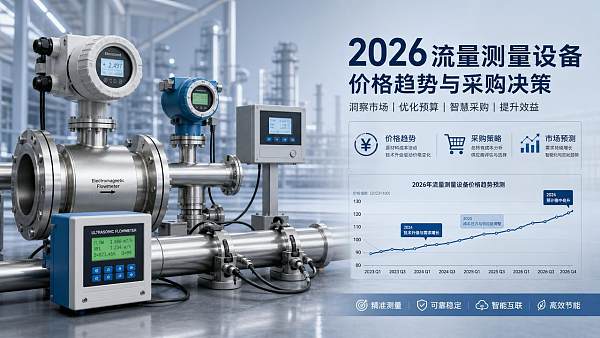
 Flow Measurement Equipment Price Trends in 2026Flow measurement equipment price trends in 2026: learn key cost drivers, budgeting risks, and smart buying strategies to improve ROI and make better procurement decisions.
 Flue Gas Monitoring Equipment: Common Accuracy Issues and FixesFlue gas monitoring equipment accuracy issues can lead to drift, false readings, and compliance risks. Discover common causes, practical fixes, and smarter maintenance tips.
 Process Control Shelter vs Control Room: Key Cost and Deployment DifferencesProcess control shelter vs control room: compare cost, deployment speed, integration, and lifecycle value to choose the smarter solution for industrial automation projects.
 How to Select an Industrial Control Shelter for Harsh Site ConditionsIndustrial control shelter selection for harsh sites: learn how to compare materials, HVAC, safety, and lifecycle cost to protect equipment, reduce downtime, and improve reliability.
 SAMR to Finalize 1,800+ Standards by 2026, Including EV Battery RecyclingSAMR to finalize 1,800+ standards by 2026—including EV battery recycling, hazardous chemical packaging & EMC immunity. Stay ahead of mandatory GB shifts and global export compliance.
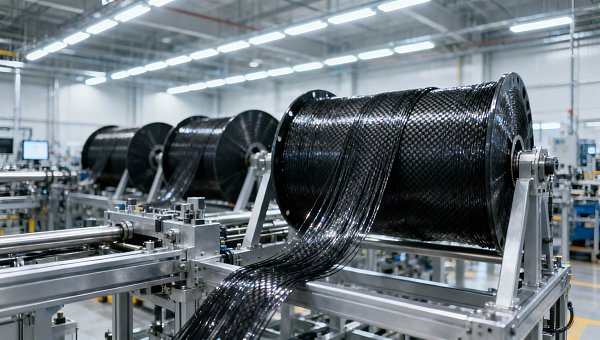
 China's Largest Single-Line Large-Tow Carbon Fiber Line Starts OperationChina's largest single-line large-tow carbon fiber line is live—30,000 tons/year capacity, ASME-certified, 22% cheaper & 6-week lead time. Boost your industrial instrumentation supply chain now.
 China Mobile Unveils National Integrated Computing Power NetworkChina Mobile's National Integrated Computing Power Network accelerates AI quality inspection for global manufacturers—cutting model training time by 68% and enabling cross-border industrial AI development.
 World's First Humanoid Robot Industrial Calibration White Paper ReleasedWorld's First Humanoid Robot Industrial Calibration White Paper released—setting new global benchmarks for dynamic sensor calibration in robotics. Discover how ABB, Yaskawa & metrology leaders are reshaping industry trust.
 Red Sea Crisis Escalates: Aden Gulf Ban Extended to June 15Red Sea Crisis escalates: Aden Gulf ban extended to June 15 — disrupting industrial instrumentation trade between China and the Middle East with 452% air freight spikes and 7–12 day delays.
 Saudi SASO Introduces AI-Based Energy Validation for Industrial TransmittersAI-based energy validation for industrial transmitters is now mandatory in Saudi Arabia—learn how SASO’s new AI regulation impacts global exporters, compliance timelines, and supply chains.
 IEC TC65 Releases Cybersecurity Validation Guide for Industrial InstrumentsIEC TC65’s new Cybersecurity Validation Guide for Industrial Instruments mandates SDL certification & firmware signing—key for EU/US market access. Act now to align with GB/T 42278-2026 and avoid export delays.
 EU PEF Carbon Footprint Database Mandatory Access for Industrial InstrumentsEU PEF Carbon Footprint Database mandatory access starts June 2026 for industrial instruments—pressure, temperature & flow meters. Ensure compliance now to avoid EU customs delays and market exclusion.
 Gas Quality Analyzer Shelter Price Trends and Specification Gaps to WatchGas quality analyzer shelter price trends vary with materials, HVAC, safety, integration, and compliance. See key specification gaps before shortlisting suppliers or approving budget.
 Process Measurement Equipment: Key Accuracy Risks in Harsh EnvironmentsProcess measurement equipment in harsh environments can drift before failing. Discover key accuracy risks, warning signs, and practical controls to protect quality, safety, and compliance.
 Industrial Analyzer Shelter Export Factors Affecting Lead Times This YearIndustrial analyzer shelter export lead times vary with sourcing, engineering, compliance, packing, and logistics. Learn the key factors to quote smarter and deliver with confidence.
 What to Check Before Buying a Process Analyzer ShelterProcess analyzer shelter buying guide: learn what to check before purchase, from compliance and HVAC to utilities, durability, and maintenance access.


















Search Categories
Search Categories
Latest Article
- Brazil INMETRO to Require Portuguese UI and Local Units for Industrial Instruments by 2026Brazil INMETRO mandates Portuguese UI & local units (mbar, kPa, °C) for industrial instruments by Dec 2026—key for exporters, integrators & service providers.Posted by:
- STMicroelectronics 200mm Line Eases Industrial Sensor Chip ShortageSTMicroelectronics 200mm line eases industrial sensor chip shortage — MCUs & signal-conditioning ICs now ship in 12 weeks. Secure allocation today.Posted by:
- Southeast Asia Manufacturing Re-shoring Accelerates: Vietnam/Indonesia Industrial Instrument Imports Up 37% YoYSoutheast Asia manufacturing re-shoring accelerates: Vietnam & Indonesia industrial instrument imports up 37% YoY — key insights for suppliers, OEMs & procurement teams.Posted by:
Please give us a message
