
Manufacturing Analyzer Upgrades That Improve Process Stability


In modern production environments, a high-performance manufacturing analyzer is no longer optional for companies seeking stable output, lower risk, and smarter process control. As manufacturing systems become more automated and data-driven, analyzer upgrades can help decision-makers improve measurement accuracy, reduce unplanned downtime, and strengthen overall process stability across complex industrial operations.
For enterprise decision-makers, the key question is not whether analyzers matter, but which upgrades create measurable business value. The most effective improvements are those that reduce variability at the source, support faster process corrections, and make plant operations more predictable. A well-planned manufacturing analyzer upgrade can improve quality consistency, cut maintenance costs, support compliance, and strengthen confidence in production data used across operations, engineering, and management.
Why analyzer upgrades matter more when process stability is the priority
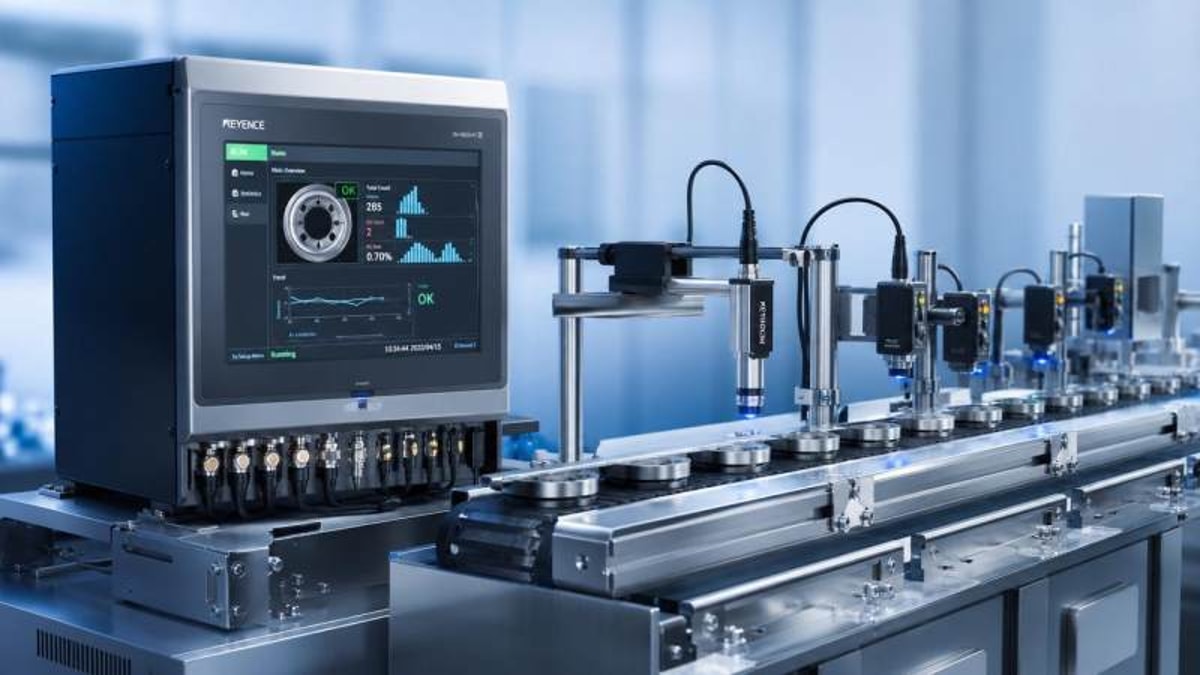
Process stability is one of the clearest indicators of operational maturity. When measurements drift, response times lag, or analyzer data is unreliable, production teams often compensate manually. That creates hidden instability: frequent setpoint changes, inconsistent product quality, higher waste, and greater dependence on operator experience.
Upgrading a manufacturing analyzer helps address these issues at the measurement layer, where many process problems begin. If the analyzer provides more accurate, faster, and more reliable data, control systems can respond earlier and more precisely. This reduces variability before it becomes scrap, downtime, or a customer complaint.
For leadership teams, analyzer performance should be viewed as a business enabler rather than just a technical component. In high-throughput environments, even small improvements in stability can translate into lower raw material loss, fewer off-spec batches, less emergency intervention, and stronger asset utilization. The value becomes even greater in plants with continuous operations, strict quality requirements, or tight energy and environmental targets.
What decision-makers are really evaluating before approving an upgrade
Most executives are not looking for a broader list of analyzer features. They want to know whether an upgrade will reduce business risk and improve operating results. That means the evaluation usually centers on five concerns: stability impact, return on investment, integration difficulty, lifecycle cost, and implementation risk.
The first concern is whether the upgraded manufacturing analyzer will actually improve process stability in a measurable way. That requires linking analyzer performance to real production pain points such as quality variation, delayed detection, calibration drift, frequent maintenance, or weak visibility into process deviations.
The second concern is financial. Leaders want to understand not only the capital cost, but also the gain from less waste, better yield, lower rework, fewer shutdowns, and stronger production planning. In many cases, the strongest ROI does not come from labor savings alone. It comes from protecting throughput and preventing instability that quietly erodes margins.
Third, management must consider implementation complexity. A technically advanced analyzer may still be a poor choice if it requires major line modifications, long downtime windows, or specialized skills that the plant does not have. The best upgrade path often balances improved functionality with practical deployment.
Fourth, total ownership cost matters. An analyzer that is highly accurate but difficult to maintain may introduce new burdens. Decision-makers should weigh service intervals, parts availability, calibration requirements, digital diagnostics, software support, and vendor responsiveness.
Finally, there is the issue of operational risk. Plants do not upgrade in theory; they upgrade in live environments where missed handoffs, poor commissioning, or weak data integration can create disruption. Leaders therefore need upgrades that are not only technically sound, but operationally controlled.
Which manufacturing analyzer upgrades usually deliver the strongest gains
Not every upgrade contributes equally to process stability. The highest-value investments are typically those that improve data trustworthiness, shorten response time, and reduce dependence on manual intervention. In practice, several upgrade categories stand out.
First is sensor and detection technology improvement. Older analyzers may suffer from drift, contamination sensitivity, slow recovery, or limited measurement range. Replacing them with more robust sensing technologies can improve signal quality and reduce false readings. This is especially valuable in demanding manufacturing conditions involving temperature variation, vibration, dust, moisture, or aggressive media.
Second is faster sampling and response performance. In dynamic processes, delayed measurement reduces the value of control action. By the time a legacy analyzer detects a problem, material may already be off-spec. Upgraded analyzers with faster cycle times enable earlier correction and reduce the amplitude of process disturbances.
Third is automated calibration and self-diagnostics. These functions support stability indirectly but powerfully. Automated calibration improves consistency, while onboard diagnostics help maintenance teams identify degradation before failure occurs. This reduces unplanned downtime and limits the hidden instability caused by operating with uncertain measurements.
Fourth is digital connectivity. A modern manufacturing analyzer should not operate as an isolated device. It should provide clean, structured data to control systems, historians, quality platforms, and predictive maintenance tools. Better integration supports faster root-cause analysis and makes it easier to correlate analyzer signals with production performance, maintenance events, and energy consumption.
Fifth is environmental and application-specific ruggedness. In many facilities, instability is not caused by poor process design alone, but by measurement devices that are not suited to the actual operating environment. Upgrades that improve enclosure protection, contamination resistance, thermal stability, or installation design can have a direct effect on data reliability.
How to identify where analyzer instability is hurting the business
Before investing, companies should identify where analyzer limitations are creating the biggest operational penalty. This step prevents overbuying and helps prioritize upgrades with visible returns.
Start by reviewing recurring production symptoms. These may include unexplained quality fluctuations, repeated operator overrides, higher-than-expected waste, inconsistent batch outcomes, or control loops that seem active but ineffective. Such symptoms often indicate that measurements are too slow, too noisy, or not trusted by the operating team.
Next, examine maintenance history. Frequent recalibration, repeated sensor replacement, contamination issues, and emergency troubleshooting are signs that the current analyzer setup may be undermining stability. Even if the process appears to be running, the plant may be absorbing hidden costs through reactive maintenance and production inefficiency.
Then connect analyzer performance to business metrics. Decision-makers should ask: Which lines show the greatest quality loss? Where does downtime create the highest financial impact? Which products have the narrowest tolerance windows? Which processes are most exposed to compliance or safety risk if measurements fail? The answers help define where a manufacturing analyzer upgrade will matter most.
It is also useful to assess data confidence across departments. If operations, engineering, and quality teams interpret analyzer readings differently or regularly question data validity, that is a strong signal that the measurement layer needs attention. Stable processes depend not only on good instruments, but on organizational trust in the data they produce.
How to evaluate ROI without oversimplifying the business case
Many analyzer upgrades are approved on too narrow a basis, often limited to equipment replacement or maintenance reduction. For a stronger decision, the business case should include both direct and indirect value.
Direct value includes lower maintenance labor, reduced spare parts consumption, and fewer service calls. These are easy to quantify, but they rarely capture the full impact of improved process stability.
Indirect value is usually much larger. This includes higher first-pass yield, reduced raw material loss, fewer off-spec products, lower rework, reduced energy waste, and less unplanned downtime. In regulated or quality-sensitive industries, it may also include better traceability and lower compliance exposure.
There is also strategic value. A more capable manufacturing analyzer can support digitalization goals by improving the quality of production data used in advanced control, performance analytics, and predictive maintenance. If the business is investing in automation or intelligent manufacturing, analyzer upgrades often provide the data foundation required for those initiatives to deliver results.
A practical ROI model should compare current-state losses with post-upgrade improvement potential. Even a modest reduction in variability can justify the investment when multiplied across production volume, product value, and operational hours. The key is to avoid treating the analyzer as a standalone asset. It should be evaluated as a lever that influences quality, throughput, maintenance, and decision-making.
What to ask vendors before selecting an analyzer upgrade path
Vendor selection has a major influence on project success. The right supplier does more than deliver a product; it helps ensure application fit, integration readiness, and long-term support. For decision-makers, the quality of the vendor conversation is often as important as the specification sheet.
Ask how the proposed manufacturing analyzer performs under your actual process conditions, not just in ideal test environments. Request evidence related to drift performance, maintenance interval, contamination tolerance, temperature stability, and response time in comparable applications.
Ask what infrastructure changes will be required. A good solution should come with clear guidance on sampling systems, installation requirements, communication protocols, software compatibility, and commissioning steps. Hidden integration work is one of the most common causes of budget and timeline overruns.
It is also important to ask about diagnostics and support. Can the analyzer provide predictive maintenance signals? Are remote support tools available? How quickly can replacement parts be supplied? Is training included for operators and maintenance technicians? These factors directly affect operational continuity after installation.
Finally, ask how success will be measured. A strong vendor should be willing to align on performance indicators such as reduced downtime, improved measurement repeatability, shorter calibration cycles, or lower process variation. This moves the conversation from product claims to operational outcomes.
Implementation risks to control during an upgrade project
Even a sound technology choice can fail to deliver value if implementation is weak. For companies focused on process stability, project execution should be managed with the same discipline as the equipment selection itself.
One major risk is insufficient process mapping before installation. If the existing measurement problem is misunderstood, the upgraded analyzer may be well designed but poorly applied. Teams should confirm sampling location, process dynamics, environmental constraints, and control loop interaction before finalizing the solution.
Another risk is inadequate cross-functional alignment. Operations, maintenance, engineering, quality, and IT may all depend on analyzer data, but they often define success differently. A stable rollout requires shared objectives, agreed responsibilities, and a realistic commissioning plan.
Data integration is another common weakness. If the analyzer delivers better information but the plant cannot use it effectively in control systems or reporting workflows, much of the value is lost. Decision-makers should verify communication standards, alarm handling, historian configuration, and dashboard visibility during the project, not after startup.
Training should not be treated as optional. Upgraded analyzers may introduce new interfaces, maintenance logic, calibration routines, or diagnostic functions. Without proper training, teams may continue working as if the old system is still in place, which limits the benefit of the upgrade.
When an analyzer upgrade is urgent, and when it can wait
Not every plant needs immediate replacement of existing systems. However, some conditions clearly indicate that an upgrade should move higher on the capital priority list.
An upgrade is usually urgent when analyzer drift is causing repeated quality issues, when failures are creating expensive downtime, when compliance exposure is increasing, or when production teams no longer trust the measurement data. It is also urgent when the plant is scaling automation and current analyzers cannot provide the speed, accuracy, or connectivity needed to support that transition.
It may also be time to act when maintenance effort is rising faster than output value. Legacy systems often remain in service beyond their practical lifecycle because they still function at a basic level. But if they require constant attention, create process blind spots, or limit improvement initiatives, the real cost of delay may exceed the replacement cost.
On the other hand, an immediate upgrade may not be necessary if current analyzers are stable, fit for process conditions, and integrated effectively with operational workflows. In that case, companies may benefit more from targeted improvements such as better calibration strategy, sampling optimization, or stronger data usage before pursuing full hardware replacement.
Conclusion: stable processes depend on stable measurements
For enterprise leaders, the case for a manufacturing analyzer upgrade should be tied to business outcomes, not technical novelty. The most valuable upgrades improve process stability by delivering more accurate, faster, and more reliable measurements that support better control decisions across the plant.
When chosen carefully, analyzer upgrades can reduce waste, lower downtime, improve quality consistency, and strengthen the data foundation for automation and digital transformation. The strongest decisions come from identifying where instability is costing the business most, evaluating lifecycle value rather than purchase price alone, and managing implementation with clear operational goals.
In a manufacturing environment where margins, compliance, and production confidence all depend on dependable process information, stable measurements are not a background issue. They are a strategic requirement. Companies that upgrade the right analyzers at the right time are often not just buying better instruments; they are building more resilient and controllable operations.
Recommended for You
 IEC 62443-4-2:2026 Released: New Cybersecurity Requirement for Industrial ComponentsIEC 62443-4-2:2026 is live — new cybersecurity requirements for industrial components like PLCs, HMIs & gateways. Act now to meet SDL mandates and win tenders with Siemens, ABB & more.
 US BIS Adds 12 High-Precision Calibration Devices to Export Control ListUS BIS adds 12 high-precision calibration devices to export control list—laser interferometers, quantum gradiometers & more. Critical for semiconductor, aerospace & metrology firms exporting to China. Act now.
 Southeast Asia Launches Industrial Metrology Green CorridorIndustrial Metrology Green Corridor launched across ASEAN — CNAS-accredited temp, pressure & flow reports now accepted in all 10 member states. Faster customs, lower compliance costs.
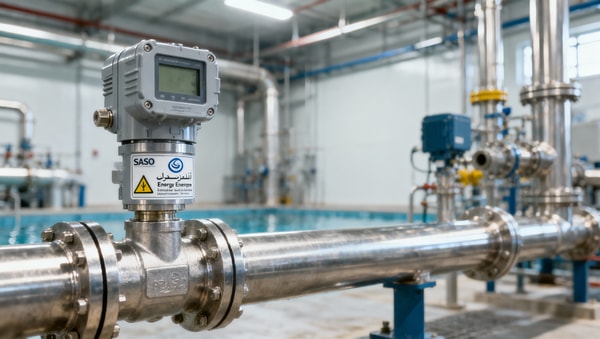
 SASO Energy Labeling Rule for Field Instruments Effective July 2026SASO Energy Labeling Rule for Field Instruments takes effect July 2026 — mandatory for 17 new instrument categories. Ensure compliance now to avoid customs delays in Saudi Arabia.
 Red Sea Crisis Escalates: Suez Canal Industrial Instrument Shipping Delays to 28 DaysRed Sea Crisis escalates: Suez Canal industrial instrument shipping delays hit 28 days — urgent air freight up 320%. Act now to protect precision manufacturing & compliance.
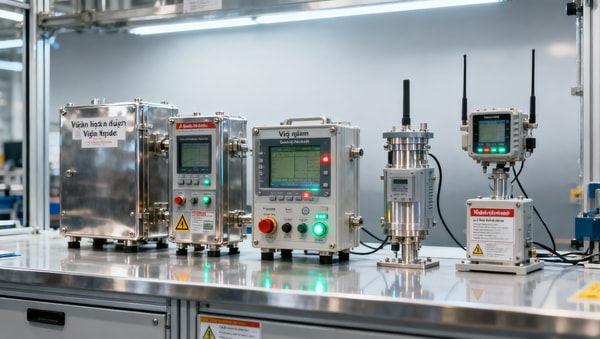
 Vietnam Tightens Industrial Instrument Import Rules from June 2026Vietnam Tightens Industrial Instrument Import Rules from June 2026: CNAS test reports & Vietnamese labels now mandatory—avoid port detention and 15% penalties.
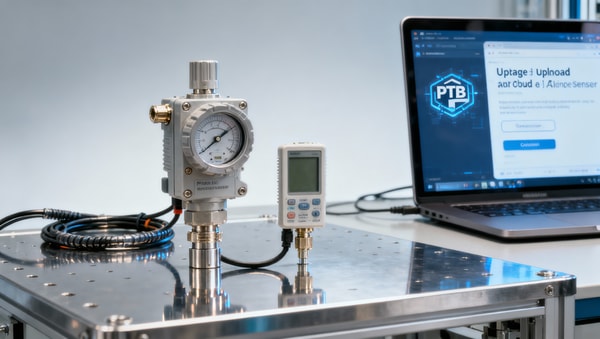
 PTB Launches AI Remote Calibration Cloud for CNAS LabsPTB launches CalCloud AI — the world’s first AI remote calibration cloud for CNAS labs, enabling fast, ILAC-MRA-compliant English certificates for EU-bound pressure, temperature & flow instruments.
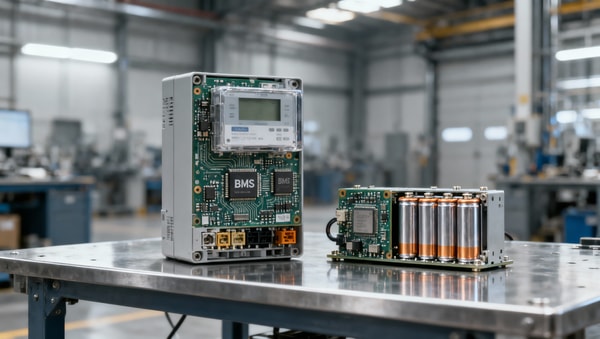
 New China Battery Recycling Rules Take Effect Apr 27, 2026New China battery recycling rules (effective Apr 27, 2026) impact smart meter & industrial sensor exporters—ensure BMS traceability and compliance now.
 Plant Safety Analyzer Investments That Reduce Hidden Operational RiskPlant safety analyzer investments help enterprises uncover hidden operational risk, improve uptime, strengthen compliance, and protect long-term profitability.
 High Purity Monitoring: When Standard Analyzers Are No Longer EnoughHigh purity monitoring is essential when standard analyzers miss trace contamination, fast excursions, and compliance risks. Discover where advanced solutions deliver safer, smarter control.
 Explosion Proof Equipment Export Checks That Delay Overseas ShipmentsExplosion proof equipment export checks can delay overseas shipments through certificate gaps, label mismatches, and local compliance issues. Learn how distributors can reduce risks, avoid rework, and keep projects on schedule.
 Electrochemistry Oxygen Analyzer Accuracy: What Affects Long-Term PerformanceElectrochemistry Oxygen Analyzer accuracy depends on sensor stability, calibration, sampling, and maintenance. Learn what drives long-term performance and choose the right solution.
 Explosion Protected Analyzer Market Direction After New Safety UpgradesExplosion protected analyzer trends are shifting fast after new safety upgrades. Learn where the market is headed, what buyers now prioritize, and how smarter systems can reduce risk and improve ROI.
 Smart Analyzer Features That Matter More Than Marketing ClaimsSmart Analyzer features that truly impact accuracy, uptime, integration, and lifecycle cost. Learn what matters beyond marketing claims before you choose.
 Production Line Analyzer Data Gaps That Hurt Process DecisionsProduction line analyzer data gaps can quietly distort trends, delay control actions, and weaken traceability. Learn how to spot the risks and protect smarter process decisions.
 Flameproof Analyzer Lead Times and Supply Risks in Global TradeFlameproof analyzer lead times are rising due to certification, logistics, and supplier risks. Learn how distributors can reduce delays, protect margins, and source with confidence.
 Intrinsically Safe Analyzer vs Flameproof Analyzer for Compact InstallationsIntrinsically safe analyzer vs flameproof analyzer: discover which option suits compact hazardous-area installations best for safer maintenance, smaller footprint, and lower lifecycle cost.
 Industrial Oxygen Monitoring: Common Setup Errors and How to Avoid ThemIndustrial oxygen monitoring setup mistakes can trigger false readings, downtime, and safety risks. Learn the most common errors and how to avoid them for more reliable, compliant performance.
 Cost Effective Analyzer Options Without Cutting Safety StandardsCost Effective analyzer sourcing starts with safety, not shortcuts. Learn how to compare options by compliance, performance, and lifecycle value to cut costs with confidence.
 When OEM Service Makes More Sense Than Standard SupplyOEM Service helps businesses match instrumentation to exact performance, integration, and compliance needs—reducing risk, lowering lifecycle costs, and improving reliability.
 Trace Gas Detection Challenges in High-Sensitivity Production EnvironmentsTrace gas detection challenges in high-sensitivity production demand more than low limits. Explore accuracy risks, technology choices, and smart selection tips for safer, more reliable operations.
 Gas Analyzer Equipment Price Shifts: What Is Driving Costs This YearGas analyzer equipment price shifts are being driven by sensor upgrades, supply pressure, compliance, and integration needs. Learn what is raising costs this year and how to buy smarter.
 Zone 1 Analyzer Import Rules That May Affect Delivery TimelinesZone 1 analyzer import rules can quietly delay projects. Learn the certification, HS code, document, and customs checks buyers must review early to avoid costly delivery setbacks.
 Zone 2 Analyzer Applications: Where It Fits and Where It Does NotZone 2 analyzer applications explained: discover where a zone 2 analyzer delivers fast, cost-effective field performance—and when safer, more precise alternatives make better sense.
 Industrial Safety Analyzer Trends Shaping Safer Plants in 2026Industrial safety analyzer trends in 2026 are redefining safer plants with real-time monitoring, smarter integration, and better lifecycle decisions. Explore what project leaders need to know.
 Oxygen Monitoring System Basics for Safer Daily OperationsOxygen monitoring system basics made practical: learn daily safety checks, sensor placement tips, alarm readiness, and smart actions to reduce risk and improve operational safety.
 Factory Gas Analyzer Maintenance Issues That Often Go UnnoticedFactory gas analyzer maintenance issues often start with hidden sampling, calibration, or environmental faults. Learn the overlooked causes of drift and downtime before they become costly failures.
 Manufacturing Analyzer Upgrades That Improve Process StabilityManufacturing analyzer upgrades improve process stability, reduce downtime, and strengthen data accuracy. Discover how smarter analyzer investments boost quality, ROI, and operational confidence.
 When a Quality Assurance Analyzer Becomes Worth the Extra SpendQuality assurance analyzer investments pay off when they cut defects, speed verification, and improve compliance. See how to justify the extra spend with clearer ROI.
 Laboratory Gas Analyzer Selection: Key Differences That Affect Test AccuracyLaboratory Gas Analyzer selection shapes test accuracy, stability, and compliance. Learn how principles, sensitivity, sample handling, and calibration affect reliable lab results.
 How to Identify a Trusted Manufacturer for Hazardous Area AnalyzersTrusted Manufacturer selection starts with safety, certifications, and reliable support. Learn how to identify the right hazardous area analyzer partner for long-term growth.
 What a Quality Product Means in Industrial Gas AnalysisQuality Product in industrial gas analysis means more than accuracy—discover how the right analyzer improves safety, compliance, uptime, and long-term ROI across industries.

Search Categories
Search Categories
Latest Article
- IEC 62443-4-2:2026 Released: New Cybersecurity Requirement for Industrial ComponentsIEC 62443-4-2:2026 is live — new cybersecurity requirements for industrial components like PLCs, HMIs & gateways. Act now to meet SDL mandates and win tenders with Siemens, ABB & more.Posted by:
- US BIS Adds 12 High-Precision Calibration Devices to Export Control ListUS BIS adds 12 high-precision calibration devices to export control list—laser interferometers, quantum gradiometers & more. Critical for semiconductor, aerospace & metrology firms exporting to China. Act now.Posted by:
- Southeast Asia Launches Industrial Metrology Green CorridorIndustrial Metrology Green Corridor launched across ASEAN — CNAS-accredited temp, pressure & flow reports now accepted in all 10 member states. Faster customs, lower compliance costs.Posted by:
Please give us a message
