
Smart Analyzer Features That Matter More Than Marketing Claims


When evaluating a Smart Analyzer, flashy marketing often hides the features that truly affect accuracy, uptime, integration, and long-term operating cost. For information-focused buyers in instrumentation, the real value lies in performance under real conditions, data reliability, maintenance efficiency, and compatibility with existing systems. This article highlights the practical capabilities that matter most before making a decision.
For most researchers and early-stage buyers, the core search intent behind this topic is not to find another product pitch. It is to identify which analyzer features actually influence results in the field, which vendor claims deserve skepticism, and how to compare systems based on operational value rather than branding language.
The most useful conclusion up front is simple: the best Smart Analyzer is rarely the one with the longest brochure feature list. It is the one that delivers stable measurements, trustworthy diagnostics, manageable maintenance, and clean integration with your existing workflows. If a feature does not improve decision quality, process reliability, or lifecycle cost, it should not drive the buying decision.
What should you evaluate first when comparing a Smart Analyzer?
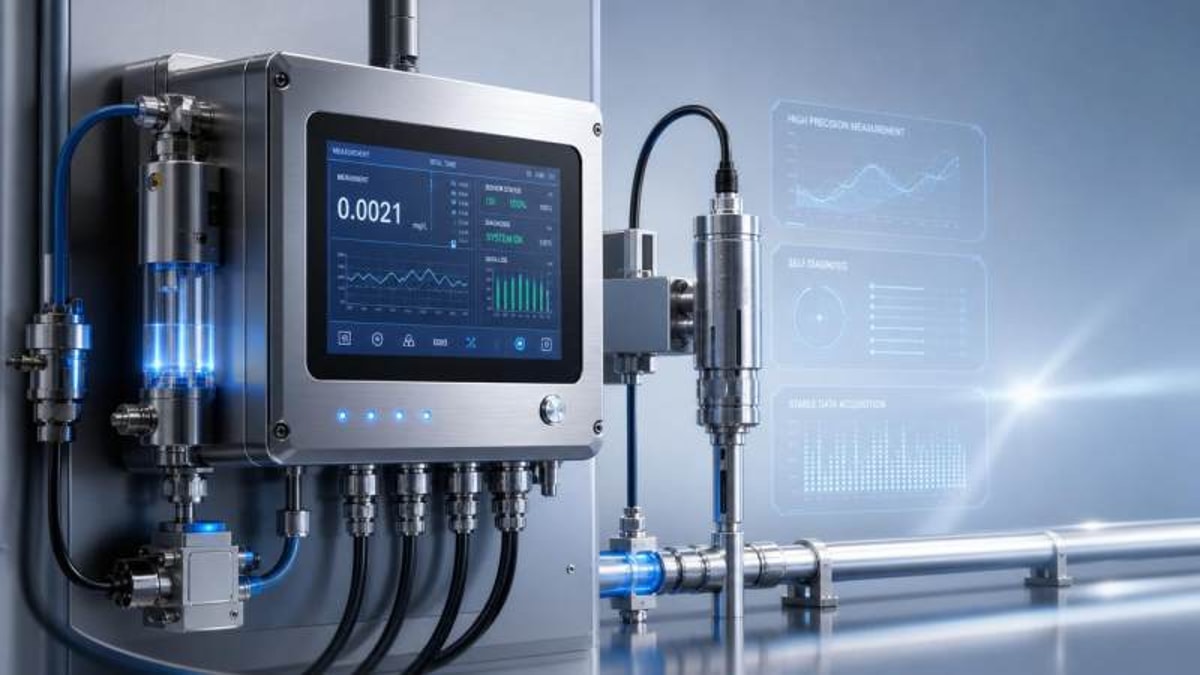
Before looking at advanced dashboards, AI labels, or promotional claims about “smart” performance, start with the basics that determine whether the instrument can be trusted. In practice, four areas matter most: measurement quality, resilience in real operating conditions, integration into your control or data environment, and maintenance burden over time.
For information-focused readers, this is often the most important shift in perspective. A Smart Analyzer should not be judged by how modern it sounds, but by how reliably it turns raw sensing into actionable information. That means asking whether the system remains accurate when temperature changes, whether it flags drift early, whether it can be serviced efficiently, and whether its outputs can be used without custom workarounds.
Many products present “smartness” as an umbrella term. However, in instrumentation, smart value is more concrete. It may mean automated calibration checks, self-diagnostics, digital communications, event logging, predictive maintenance alerts, or remote configuration. These are useful only if they reduce uncertainty, labor, downtime, or compliance risk.
Why measurement accuracy is more than a spec-sheet number
Accuracy is often advertised as a headline specification, but a single number rarely tells the whole story. A Smart Analyzer may perform well under controlled reference conditions and still deliver inconsistent results in actual service. The meaningful question is not just “What is the stated accuracy?” but “How stable is that accuracy over time, across process conditions, and between maintenance intervals?”
Readers evaluating analyzers should look beyond initial precision and consider repeatability, drift behavior, response consistency, and sensitivity to interference. In industrial and laboratory settings alike, results are affected by sample quality, contamination, ambient temperature, vibration, humidity, pressure changes, and operator variation. A useful analyzer is one that manages these factors transparently rather than hiding them behind ideal test conditions.
It is also worth checking whether the vendor clearly defines the test basis for performance claims. Was the specification measured using a stable reference gas, a clean laboratory sample, or a realistic process stream? Were warm-up time, environmental compensation, and calibration interval included in the claim? These details often separate dependable instruments from polished marketing.
For practical comparison, ask for evidence of long-term measurement stability, not just baseline accuracy. Trend data, field validation records, drift curves, and recommended recalibration frequency are often more revealing than a premium-looking brochure table.
How self-diagnostics and health monitoring reduce hidden operating risk
One of the most valuable features in a Smart Analyzer is not a flashy user interface but meaningful self-diagnostics. Good diagnostics help operators distinguish between a true process event and an instrument problem. That difference matters because false confidence in bad data can be more damaging than a clearly visible fault.
Advanced diagnostics should monitor more than power status or communication activity. They should detect sensor degradation, contamination, unstable baselines, calibration anomalies, sample flow issues, component aging, and internal temperature deviations. The analyzer should also present these conditions in a usable way, with clear alarms, event histories, and maintenance guidance.
For information researchers, this is a key buying filter. Diagnostics are valuable only if they support action. A long list of status codes is not enough. The better question is whether the system helps maintenance teams respond faster, isolate root causes, and prevent unscheduled downtime.
In sectors such as environmental monitoring, industrial process control, energy systems, and laboratory analysis, data reliability is tied directly to compliance, quality assurance, and operational safety. A Smart Analyzer with useful condition monitoring can lower risk by detecting performance decline before it becomes a reporting error or production problem.
Does the analyzer stay reliable under real operating conditions?
Many purchasing mistakes happen because buyers assume all analyzers can tolerate real-world conditions equally well. In reality, robustness varies widely. A Smart Analyzer may appear strong in demonstrations but struggle with dust, corrosive atmospheres, variable sample composition, vibration, electrical noise, unstable utilities, or temperature swings.
That is why environmental suitability deserves more attention than it often gets. Look at enclosure protection, thermal control strategy, tolerance to ambient variation, sample conditioning needs, and resistance to fouling or condensation. In online industrial monitoring, especially, the surrounding conditions frequently determine whether performance remains consistent.
Another important factor is recovery behavior. If the process changes suddenly or the analyzer experiences a disturbance, how quickly can it return to stable operation? Fast recovery and predictable response times are often more valuable than extreme theoretical sensitivity, particularly in continuous monitoring applications where delayed or unstable readings reduce control value.
Prospective buyers should also examine how dependent the analyzer is on ideal installation. If a system requires narrow environmental limits, constant manual supervision, or unusually clean sample streams to deliver rated performance, the true operating cost may be much higher than expected.
What integration features actually matter in existing instrumentation environments?
Integration is one of the most underappreciated decision factors for a Smart Analyzer. A technically capable instrument can still create major friction if it does not connect smoothly with plant controls, SCADA, historians, laboratory information systems, asset management platforms, or remote monitoring tools.
The practical issue is not whether the analyzer is “digital,” but whether it supports the protocols, data structures, and management processes your environment already uses. Depending on the application, that may include Modbus, HART, Profibus, Ethernet-based industrial protocols, OPC interfaces, or cloud connectivity. The right choice depends on where the data needs to go and who needs to act on it.
Data quality is just as important as data transport. Ask whether timestamps are reliable, whether audit trails are accessible, whether alarms can be classified clearly, and whether raw and processed values can both be exported. In regulated or quality-sensitive environments, traceability can matter as much as measurement itself.
Cybersecurity is another real concern. As more analyzers support remote access and network integration, buyers should understand user access control, firmware update processes, encryption practices, logging, and configuration backup options. “Smart” should not mean difficult to secure.
How maintenance design affects lifecycle cost more than purchase price
For many analyzers, the real cost difference appears after installation. Maintenance frequency, calibration labor, spare parts consumption, service accessibility, and downtime exposure usually have greater long-term impact than the initial purchase price. This is why maintainability is one of the most important practical evaluation areas.
A strong Smart Analyzer should simplify routine work. Features such as modular components, easy-access service points, guided calibration workflows, consumable life tracking, and remote diagnostics can significantly reduce labor hours. These features may not look impressive in promotional material, but they have direct value for total cost of ownership.
It is also useful to understand which maintenance tasks require highly trained specialists and which can be handled by in-house technicians. If every adjustment requires vendor intervention, the analyzer may create delays and service dependencies that become costly over time.
Calibration strategy deserves close attention as well. How often is calibration required? Can verification be automated or remotely initiated? Does the analyzer support calibration records and traceable documentation? In industries where uptime and auditability both matter, these are not secondary details. They are central buying criteria.
Why data usability matters as much as data generation
An analyzer that produces data is not automatically valuable. The output must be understandable, timely, and actionable. This is where many “smart” claims become vague. Dashboards and analytics features are only useful if they help users interpret process conditions, detect emerging problems, and make better operating decisions.
For information-stage readers, it helps to separate visual features from decision support. A sleek display or mobile app may improve convenience, but the bigger question is whether the analyzer presents trends, alarms, confidence indicators, and event context in a way that improves judgment. Good systems help users understand not just what the measurement is, but whether it should be trusted and what may have influenced it.
Historical data access is another practical differentiator. Can users retrieve trends over meaningful time windows? Can they compare calibration events with process changes? Can maintenance teams correlate faults with environmental conditions or operating shifts? These capabilities often determine whether the analyzer supports continuous improvement or simply acts as a reading device.
How to question marketing claims without missing genuine innovation
Not every promoted feature is useless, and not every marketing phrase is misleading. The challenge is to separate genuine capability from language that sounds advanced but lacks operational meaning. Terms such as “AI-powered,” “predictive,” “self-optimizing,” or “intelligent sensing” should lead to follow-up questions, not automatic acceptance.
A good evaluation approach is to ask what specific problem the feature solves, what inputs it uses, how it behaves under abnormal conditions, and what evidence supports the claim. If a vendor says the analyzer predicts maintenance needs, ask what failure modes it predicts, how early it detects them, and what false alarm rate has been observed. If it claims adaptive accuracy, ask what variables are compensated and how that compensation is validated.
This method protects buyers from dismissing useful innovation while still demanding proof. In a mature instrumentation market, real innovation usually appears in measurable forms: lower drift, fewer manual interventions, better diagnostics, stronger interoperability, improved sample handling, or clearer data quality indicators.
A practical checklist for evaluating Smart Analyzer value
When comparing options, it helps to use a structured lens rather than relying on headline messaging. Start with measurement fundamentals: accuracy in real conditions, repeatability, drift, response time, and interference resistance. Then examine diagnostics: fault clarity, sensor health visibility, and event logging quality.
Next, assess integration fit. Confirm protocol compatibility, data export options, alarm handling, and cybersecurity controls. After that, review maintainability: calibration burden, consumables, service access, remote support capability, and spare parts availability. Finally, evaluate lifecycle evidence: field references, uptime history, and support responsiveness.
For information researchers who are not yet at the procurement stage, this checklist can still be useful. It provides a framework for reading technical documents critically and identifying where more evidence is needed before moving forward.
Final takeaways for information-focused buyers
If you are researching a Smart Analyzer, the most important insight is that smart value is operational, not promotional. The features that matter most are the ones that protect measurement integrity, reduce maintenance effort, support integration, and make data more trustworthy in everyday use.
In other words, focus less on how advanced the analyzer sounds and more on how well it performs when conditions are imperfect. Reliable accuracy, actionable diagnostics, environmental robustness, practical connectivity, and maintainable design are usually stronger indicators of long-term value than broad claims about intelligence.
For buyers in the instrumentation sector, this approach leads to better decisions because it aligns evaluation with actual business and technical outcomes. A capable Smart Analyzer should help teams monitor more confidently, troubleshoot faster, integrate more smoothly, and operate at lower lifecycle risk. Those are the features that matter more than marketing claims.
Recommended for You
 IEC 62443-4-2:2026 Released: New Cybersecurity Requirement for Industrial ComponentsIEC 62443-4-2:2026 is live — new cybersecurity requirements for industrial components like PLCs, HMIs & gateways. Act now to meet SDL mandates and win tenders with Siemens, ABB & more.
 US BIS Adds 12 High-Precision Calibration Devices to Export Control ListUS BIS adds 12 high-precision calibration devices to export control list—laser interferometers, quantum gradiometers & more. Critical for semiconductor, aerospace & metrology firms exporting to China. Act now.
 Southeast Asia Launches Industrial Metrology Green CorridorIndustrial Metrology Green Corridor launched across ASEAN — CNAS-accredited temp, pressure & flow reports now accepted in all 10 member states. Faster customs, lower compliance costs.
 SASO Energy Labeling Rule for Field Instruments Effective July 2026SASO Energy Labeling Rule for Field Instruments takes effect July 2026 — mandatory for 17 new instrument categories. Ensure compliance now to avoid customs delays in Saudi Arabia.
 Red Sea Crisis Escalates: Suez Canal Industrial Instrument Shipping Delays to 28 DaysRed Sea Crisis escalates: Suez Canal industrial instrument shipping delays hit 28 days — urgent air freight up 320%. Act now to protect precision manufacturing & compliance.
 Vietnam Tightens Industrial Instrument Import Rules from June 2026Vietnam Tightens Industrial Instrument Import Rules from June 2026: CNAS test reports & Vietnamese labels now mandatory—avoid port detention and 15% penalties.
 PTB Launches AI Remote Calibration Cloud for CNAS LabsPTB launches CalCloud AI — the world’s first AI remote calibration cloud for CNAS labs, enabling fast, ILAC-MRA-compliant English certificates for EU-bound pressure, temperature & flow instruments.
 New China Battery Recycling Rules Take Effect Apr 27, 2026New China battery recycling rules (effective Apr 27, 2026) impact smart meter & industrial sensor exporters—ensure BMS traceability and compliance now.
 Plant Safety Analyzer Investments That Reduce Hidden Operational RiskPlant safety analyzer investments help enterprises uncover hidden operational risk, improve uptime, strengthen compliance, and protect long-term profitability.
 High Purity Monitoring: When Standard Analyzers Are No Longer EnoughHigh purity monitoring is essential when standard analyzers miss trace contamination, fast excursions, and compliance risks. Discover where advanced solutions deliver safer, smarter control.
 Explosion Proof Equipment Export Checks That Delay Overseas ShipmentsExplosion proof equipment export checks can delay overseas shipments through certificate gaps, label mismatches, and local compliance issues. Learn how distributors can reduce risks, avoid rework, and keep projects on schedule.
 Electrochemistry Oxygen Analyzer Accuracy: What Affects Long-Term PerformanceElectrochemistry Oxygen Analyzer accuracy depends on sensor stability, calibration, sampling, and maintenance. Learn what drives long-term performance and choose the right solution.
 Explosion Protected Analyzer Market Direction After New Safety UpgradesExplosion protected analyzer trends are shifting fast after new safety upgrades. Learn where the market is headed, what buyers now prioritize, and how smarter systems can reduce risk and improve ROI.
 Smart Analyzer Features That Matter More Than Marketing ClaimsSmart Analyzer features that truly impact accuracy, uptime, integration, and lifecycle cost. Learn what matters beyond marketing claims before you choose.
 Production Line Analyzer Data Gaps That Hurt Process DecisionsProduction line analyzer data gaps can quietly distort trends, delay control actions, and weaken traceability. Learn how to spot the risks and protect smarter process decisions.
 Flameproof Analyzer Lead Times and Supply Risks in Global TradeFlameproof analyzer lead times are rising due to certification, logistics, and supplier risks. Learn how distributors can reduce delays, protect margins, and source with confidence.
 Intrinsically Safe Analyzer vs Flameproof Analyzer for Compact InstallationsIntrinsically safe analyzer vs flameproof analyzer: discover which option suits compact hazardous-area installations best for safer maintenance, smaller footprint, and lower lifecycle cost.
 Industrial Oxygen Monitoring: Common Setup Errors and How to Avoid ThemIndustrial oxygen monitoring setup mistakes can trigger false readings, downtime, and safety risks. Learn the most common errors and how to avoid them for more reliable, compliant performance.
 Cost Effective Analyzer Options Without Cutting Safety StandardsCost Effective analyzer sourcing starts with safety, not shortcuts. Learn how to compare options by compliance, performance, and lifecycle value to cut costs with confidence.
 When OEM Service Makes More Sense Than Standard SupplyOEM Service helps businesses match instrumentation to exact performance, integration, and compliance needs—reducing risk, lowering lifecycle costs, and improving reliability.
 Trace Gas Detection Challenges in High-Sensitivity Production EnvironmentsTrace gas detection challenges in high-sensitivity production demand more than low limits. Explore accuracy risks, technology choices, and smart selection tips for safer, more reliable operations.
 Gas Analyzer Equipment Price Shifts: What Is Driving Costs This YearGas analyzer equipment price shifts are being driven by sensor upgrades, supply pressure, compliance, and integration needs. Learn what is raising costs this year and how to buy smarter.
 Zone 1 Analyzer Import Rules That May Affect Delivery TimelinesZone 1 analyzer import rules can quietly delay projects. Learn the certification, HS code, document, and customs checks buyers must review early to avoid costly delivery setbacks.
 Zone 2 Analyzer Applications: Where It Fits and Where It Does NotZone 2 analyzer applications explained: discover where a zone 2 analyzer delivers fast, cost-effective field performance—and when safer, more precise alternatives make better sense.
 Industrial Safety Analyzer Trends Shaping Safer Plants in 2026Industrial safety analyzer trends in 2026 are redefining safer plants with real-time monitoring, smarter integration, and better lifecycle decisions. Explore what project leaders need to know.
 Oxygen Monitoring System Basics for Safer Daily OperationsOxygen monitoring system basics made practical: learn daily safety checks, sensor placement tips, alarm readiness, and smart actions to reduce risk and improve operational safety.
 Factory Gas Analyzer Maintenance Issues That Often Go UnnoticedFactory gas analyzer maintenance issues often start with hidden sampling, calibration, or environmental faults. Learn the overlooked causes of drift and downtime before they become costly failures.
 Manufacturing Analyzer Upgrades That Improve Process StabilityManufacturing analyzer upgrades improve process stability, reduce downtime, and strengthen data accuracy. Discover how smarter analyzer investments boost quality, ROI, and operational confidence.
 When a Quality Assurance Analyzer Becomes Worth the Extra SpendQuality assurance analyzer investments pay off when they cut defects, speed verification, and improve compliance. See how to justify the extra spend with clearer ROI.
 Laboratory Gas Analyzer Selection: Key Differences That Affect Test AccuracyLaboratory Gas Analyzer selection shapes test accuracy, stability, and compliance. Learn how principles, sensitivity, sample handling, and calibration affect reliable lab results.
 How to Identify a Trusted Manufacturer for Hazardous Area AnalyzersTrusted Manufacturer selection starts with safety, certifications, and reliable support. Learn how to identify the right hazardous area analyzer partner for long-term growth.
 What a Quality Product Means in Industrial Gas AnalysisQuality Product in industrial gas analysis means more than accuracy—discover how the right analyzer improves safety, compliance, uptime, and long-term ROI across industries.


Search Categories
Search Categories
Latest Article
- IEC 62443-4-2:2026 Released: New Cybersecurity Requirement for Industrial ComponentsIEC 62443-4-2:2026 is live — new cybersecurity requirements for industrial components like PLCs, HMIs & gateways. Act now to meet SDL mandates and win tenders with Siemens, ABB & more.Posted by:
- US BIS Adds 12 High-Precision Calibration Devices to Export Control ListUS BIS adds 12 high-precision calibration devices to export control list—laser interferometers, quantum gradiometers & more. Critical for semiconductor, aerospace & metrology firms exporting to China. Act now.Posted by:
- Southeast Asia Launches Industrial Metrology Green CorridorIndustrial Metrology Green Corridor launched across ASEAN — CNAS-accredited temp, pressure & flow reports now accepted in all 10 member states. Faster customs, lower compliance costs.Posted by:
Please give us a message
