
Can a SO2 Analyzer with Low Maintenance Cost Cut Lifetime Expenses


For finance approvers, equipment decisions are not just about purchase price but about total cost over time. A SO2 analyzer with low maintenance cost can help reduce service labor, spare parts use, and unexpected downtime, making long-term budgeting more predictable. In industries that rely on accurate gas monitoring, choosing a cost-efficient analyzer is a practical way to protect both compliance and lifetime operating expenses.
Why finance teams should use a checklist before approving an analyzer
A finance approver rarely benefits from technical detail alone. What matters is whether the equipment will create stable operating costs, lower service dependence, and support compliance without repeated unplanned spending. That is why a checklist-based review works better than a feature-only comparison. A SO2 analyzer with low maintenance cost may look similar to other analyzers at the quotation stage, but its real value appears over years of operation through fewer consumables, simpler calibration routines, lower labor needs, and reduced downtime risk.
In the instrumentation industry, analyzers are often installed in environments where reliability affects production continuity, environmental reporting, and audit confidence. If the equipment requires frequent intervention, the cost impact expands beyond the maintenance budget. It can affect process efficiency, compliance exposure, emergency callouts, inventory of spare parts, and even the workload of internal technical staff. A structured decision list helps finance teams test whether the supplier’s “low maintenance” claim is financially meaningful or just marketing language.
First-review checklist: what to confirm before comparing prices
Before comparing quotations, finance approvers should first confirm the variables that drive lifetime expense. This step prevents a low upfront bid from hiding a high cost of ownership.
- Confirm expected service interval. Ask how often the SO2 analyzer with low maintenance cost needs calibration, filter replacement, sensor checks, and preventive service.
- Review consumable dependency. Determine whether operation relies on frequent replacement parts, reagents, sample conditioning items, or proprietary accessories.
- Check labor intensity. Clarify whether routine maintenance can be handled by plant technicians or requires specialist visits.
- Assess downtime consequences. Understand whether maintenance stops monitoring completely and how long recovery takes.
- Verify accuracy stability over time. A low-maintenance analyzer is only financially useful if it maintains performance without drift that triggers rework or repeat servicing.
- Ask for documented field life. Real operating data is more valuable than brochure claims, especially in industrial and environmental monitoring applications.
- Measure support responsiveness. Fast remote diagnosis and local spare availability directly affect total cost.
This initial checklist shifts the discussion from “How much does it cost to buy?” to “How much does it cost to keep reliable?” That is the more useful question for capital approval.
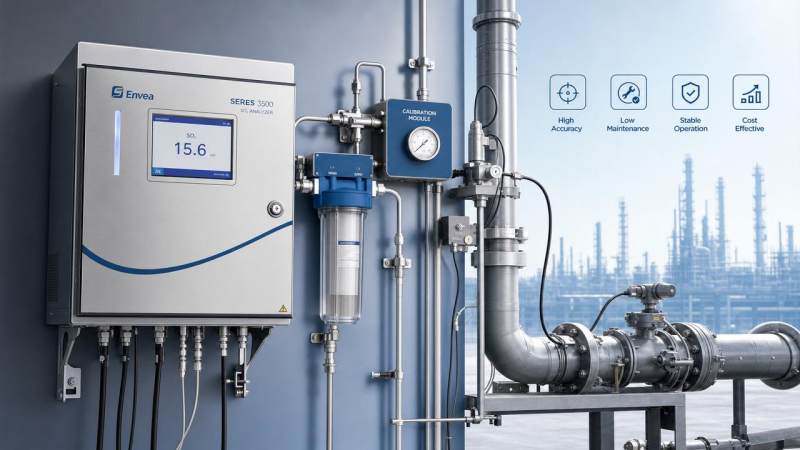
Core evaluation standards for a SO2 analyzer with low maintenance cost
When finance leaders review proposals, the following standards usually have the strongest effect on lifetime spending. These are the items worth prioritizing in internal approval discussions.
1. Maintenance frequency
Less frequent maintenance reduces technician time, shutdown coordination, and service invoice volume. Ask suppliers for a clear maintenance schedule across one year, three years, and five years. If one analyzer needs monthly attention while another requires only quarterly checks, the labor difference can be significant even before spare parts are counted.
2. Spare parts and consumables cost
A SO2 analyzer with low maintenance cost should not depend on expensive or hard-to-source replacement items. Finance approvers should request a full list of expected consumables, replacement cycles, unit prices, and whether parts are standard or proprietary. A modest purchase discount can quickly disappear if ownership requires high-priced recurring components.
3. Service model and labor requirement
If basic maintenance can be completed by trained in-house staff, long-term costs usually fall. If every issue requires a factory-certified engineer, costs become less predictable. Ask whether diagnostics, calibration checks, and module replacement are user-friendly, and whether remote support can resolve most issues before an on-site visit is needed.
4. Reliability in actual site conditions
Industrial manufacturing, power facilities, environmental stations, laboratories, and process plants all create different stress conditions. Dust, vibration, temperature fluctuation, moisture, and corrosive gas streams can increase maintenance frequency. A true SO2 analyzer with low maintenance cost must remain stable in the user’s real operating environment, not just under ideal test conditions.
5. Calibration burden and compliance support
Calibration has both direct and indirect cost. Direct cost includes gases, labor, and service tools. Indirect cost includes documentation effort, audit preparation, and process interruption. A model that simplifies calibration workflows, stores traceable records, and maintains stable measurement performance can produce measurable savings for regulated operations.
Practical comparison table for budget approval
Use this decision table when comparing suppliers. It helps finance approvers translate technical claims into budget impact.
Scenario-based checks: where maintenance cost matters most
Not every site values low maintenance in the same way. Finance approvers should match evaluation criteria to the operating scenario.
Continuous industrial monitoring
In continuous operations, downtime can create a chain reaction of cost. Here, the best SO2 analyzer with low maintenance cost is one that combines high uptime, quick recovery, and minimal manual intervention. Reliability is usually more valuable than a small price reduction at purchase.
Environmental compliance applications
For emissions or ambient monitoring, compliance documentation is part of the cost base. Finance teams should prioritize analyzers that reduce recalibration frequency, support data integrity, and provide stable output suitable for reporting. Hidden costs in this scenario often come from failed audits, missing records, or inconsistent measurements.
Laboratory and testing environments
In laboratory use, maintenance cost is influenced by precision demands and operator time. Even if throughput is lower than in process applications, recurring adjustment work can consume skilled labor. A low-maintenance system helps preserve staff availability for higher-value analytical work.
Common oversight risks that increase lifetime expense
- Approving based only on capital cost and ignoring five-year service burden.
- Accepting general “low maintenance” claims without written service schedules.
- Failing to ask whether consumables are supplier-locked or regionally difficult to source.
- Underestimating the cost of analyzer downtime during calibration or repair.
- Not checking whether local technicians can maintain the system without expensive specialist travel.
- Ignoring environmental conditions that may shorten maintenance intervals in real use.
- Overlooking software, data logging, and recordkeeping features that reduce compliance workload.
These oversight points are common because they sit between technical evaluation and financial review. Closing that gap often leads to better approvals and fewer budget surprises later.
Execution advice: how to build a stronger approval case
If your organization is evaluating a SO2 analyzer with low maintenance cost, the approval file should include more than a quotation and a datasheet. A stronger business case usually contains the following items:
- A three-year or five-year ownership estimate covering purchase, consumables, routine service, expected downtime, and likely spare parts.
- A comparison of at least two maintenance models, showing the cost difference between internal servicing and supplier-dependent servicing.
- Site-specific operating assumptions, including gas conditions, environmental stress, duty cycle, and compliance requirements.
- Supplier evidence such as case references, maintenance logs, or lifecycle support commitments.
- A risk note identifying the financial effect of analyzer failure or delayed repair.
This format helps non-technical decision makers see whether the low-maintenance claim will actually reduce annual cost volatility. It also supports better cross-functional alignment among finance, operations, engineering, and compliance teams.
FAQ for finance approvers
Does a higher-priced analyzer still make financial sense?
Yes, if the higher-priced unit is a SO2 analyzer with low maintenance cost that significantly reduces service frequency, consumables, labor, and downtime. A higher initial price can be justified when lifetime expense is lower and more predictable.
What is the most important number to request from suppliers?
Ask for an expected annual maintenance cost under your operating conditions, supported by a service schedule and consumables list. Without this, total cost analysis remains incomplete.
How can finance validate “low maintenance” claims?
Request field references, maintenance interval documentation, spare parts pricing, and average response times for support. These details are easier to verify than general performance statements.
What to prepare before the next supplier discussion
To move from interest to a sound decision, prepare a short information pack covering target budget, expected operating hours, site environment, compliance obligations, internal maintenance capability, and acceptable downtime. Then ask suppliers to respond in the same format so comparisons stay clear. If you are selecting a SO2 analyzer with low maintenance cost, the most useful follow-up questions are about service interval, consumables forecast, spare parts lead time, support model, and lifecycle commitment. Those answers will do more to protect long-term budget performance than a purchase price comparison alone.
Recommended for You
 N2 Concentration Analyzer Cost Factors for Bulk Industrial ProcurementN2 concentration analyzer cost depends on more than unit price. Compare process, purity, and safety applications with total cost logic to source smarter and reduce lifecycle risk.
 Oxygen Concentration Analyzer vs Sensor Systems: Which Fits Continuous UseOxygen concentration analyzer or sensor system? Compare stability, drift, maintenance, and uptime for continuous use to choose the most reliable fit for your process.
 SO2 Concentration Analyzer News: Compliance Demands Reshaping Product SpecsSO2 concentration analyzer trends are shifting with stricter compliance rules. Learn how new specs, data integrity, and uptime demands are reshaping smarter buying decisions.
 He Concentration Analyzer Maintenance Tips for Stable Long-Term ReadingsHe concentration analyzer maintenance tips for stable long-term readings. Learn how to reduce drift, improve calibration accuracy, cut downtime, and keep industrial systems reliable.
 CH4 Concentration Analyzer Selection Mistakes That Raise Operating RiskCH4 concentration analyzer selection mistakes can raise safety, compliance, and maintenance risk. Learn how to choose the right analyzer for reliable performance and lower lifecycle cost.
 CO Concentration Analyzer Import Rules to Watch in 2026CO concentration analyzer import rules for 2026: learn the key customs, certification, labeling, and compliance checks to reduce risk, avoid delays, and source with confidence.
 NH3 Concentration Analyzer Market Trends for Industrial Process Control in 2026NH3 concentration analyzer market trends in 2026: explore technologies, industrial applications, selection tips, and how smarter monitoring improves compliance, safety, and process control.
 Ar Concentration Analyzer Accuracy Issues in High-Purity Gas ApplicationsAr concentration analyzer accuracy issues can compromise high-purity gas quality, safety, and compliance. Learn the key causes, practical fixes, and how to improve reliable measurement performance.
 CO2 Concentration Analyzer Price Trends in 2026: What Shapes Total CostCO2 concentration analyzer price trends in 2026 depend on technology, accuracy, calibration, compliance, and integration. Discover total cost drivers to compare quotes smarter and control lifecycle risk.
 How to Choose a NOX Concentration Analyzer for Low-Emission MonitoringNOX concentration analyzer selection for low-emission monitoring made easier. Learn how to compare accuracy, response time, compliance, and lifecycle cost before you buy.
 2026 Summit Highlights China's Smart Inspection Equipment as New Global Cooperation FocusSmart inspection equipment takes center stage at the 2026 Summit—unlocking new global cooperation, standards alignment, and market opportunities for exporters, OEMs, and tech suppliers.
 White House Warns Oil Shock May Fuel Core Inflation, Delaying Industrial Instrument ExportsWhite House warns oil shock may fuel core inflation—impacting industrial instrument exports. Discover how pressure, temperature & flow instrumentation exporters can mitigate delays and optimize trade finance workflows now.
 New AI Agent Guidelines Impact Export of AI-Powered Testing EquipmentAI agent guidelines impact export of AI-powered testing equipment—learn how new China security & controllability rules affect global compliance, supply chains, and market access.
 Canton Fair Phase III Boosts Sensor & Energy Testing ExportsSensor & energy testing exports surge at Canton Fair Phase III—driven by global demand for new energy home appliances and smart furniture compliance solutions.
 UAE Announces $150B Energy Infrastructure InvestmentUAE's $150B energy infrastructure push drives demand for IP68/IP69K, ATEX/IECEx, and LPWAN-enabled industrial sensors — act now to align with ADNOC tenders.
 WTI Net Longs Surge, Boosting Demand for Lubricant Monitoring SystemsLubricant monitoring systems surge in demand as WTI net longs rise—real-time viscosity, moisture & oxidation tracking now critical for global manufacturers.
 Shanghai Pudong Launches E-Label Pilot for Imported CosmeticsShanghai Pudong’s e-label pilot for imported cosmetics drives global demand for RFID/NFC readers, traceability solutions & certified testing equipment—act now to comply and lead.
 G7 Prioritizes Critical Mineral Supply Chain SecurityCritical mineral supply chain security takes center stage at G7 Paris meeting—impacting industrial sensors, rare-earth magnets & global procurement strategies.
 US-China Talks Yield Breakthrough on Agricultural NTBs for Testing EquipmentUS-China talks break ground on agricultural NTBs—key win for makers of residue detection, mycotoxin & spectral testing equipment targeting USDA/FDA markets.
 Fruit Attraction 2026 Booth Bookings Exceed 90%Fruit Attraction 2026 booth bookings exceed 90% — a strong signal for food safety instrumentation, cold-chain monitoring & EU compliance solution providers to secure visibility and drive qualified leads.
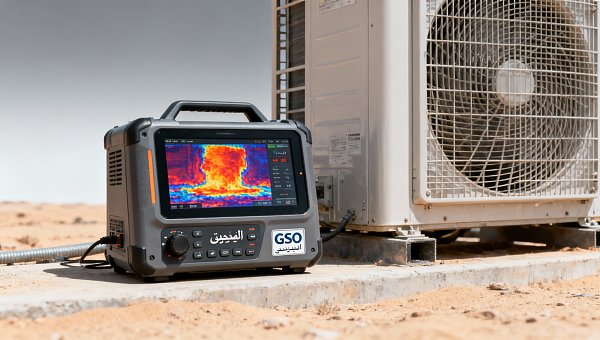
 Kuwait Bans HCFC Air Conditioners, Boosts IR Camera ExportsKuwait bans HCFC air conditioners—boosting demand for IR cameras, leak detectors & refrigerant analyzers. Discover GCC compliance insights and export opportunities.
 China's IC Exports Surge 78.3% in First Four Months of 2026China's IC exports surge 78.3% in early 2026 — driven by soaring global demand for AI chip test equipment, SMUs, and parametric analyzers. Discover the supply chain shift.
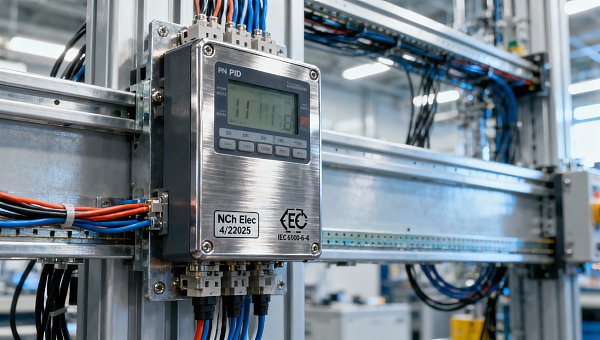
 Chile Enforces Mandatory INN Safety Certification for Industrial Temperature ControllersChile mandates INN safety certification (NCh Elec 4/2025) for industrial temperature controllers starting Aug 1, 2026—act now to avoid shipment delays & market bans.
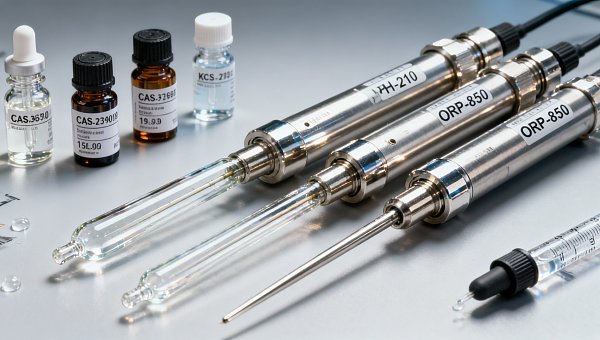
 K-REACH Supply-Shortage Exemption Launches for pH/ORP ElectrodesK-REACH Supply-Shortage Exemption now applies to pH/ORP electrodes—act before June 30, 2026 to avoid customs delays & penalties. Key for exporters & manufacturers.
 4th China International Supply Chain Expo to Focus on Smart Sensing & In-Process InspectionSmart Sensing & In-Process Inspection take center stage at the 4th China International Supply Chain Expo in Beijing, Nov 26–30, 2026 — discover next-gen inspection tech, AI vision modules, and calibrated sensing solutions for global industrial buyers.
 ASTM F2100-26 Medical Mask Standard Takes Effect in USASTM F2100-26 medical mask standard is now in force—driving global demand for biosafety cabinets, particle counters & air velocity calibrators, especially China-made instruments.
 South Africa Enforces SABS Certification for IoT Monitoring DevicesSABS certification now mandatory for IoT monitoring devices entering South Africa via e-commerce—act before 1 June 2026 to avoid customs rejection and ensure market access.
 EU REACH Adds Fluorinated Substances; SVHC Reporting Required for Gas AnalyzersEU REACH now restricts fluorinated substances in gas analyzers—SVHC reporting is mandatory by 30 Nov 2026. Ensure compliance for sensors, membranes & monitoring systems.
 Revised Maritime Code Takes Effect May 1, 2026: Shift in Unclaimed Cargo LiabilityRevised Maritime Code (2026): Shippers now liable for unclaimed cargo—critical for industrial instrument exporters, logistics providers & cross-border supply chains. Act now.
 China Imposes Zero Tariffs on Goods from All African Diplomatic Partners Starting May 1, 2026China’s zero-tariff policy for African instrumentation & automation exports starts May 1, 2026—boosting competitiveness in EPC tenders and market access for exporters.
 Import and Export Shifts in the PPM Gas Analyzer Marketppm gas analyzer market insights: discover how import tariffs, export controls, and compliance shifts impact cost, supply stability, and growth opportunities across key applications.
 Single Gas Analyzer Maintenance Issues That Raise DowntimeSingle gas analyzer maintenance issues can quietly increase downtime. Learn how to spot drift, calibration errors, and sample path faults early to improve uptime and field efficiency.

Search Categories
Search Categories
Latest Article
- N2 Concentration Analyzer Cost Factors for Bulk Industrial ProcurementN2 concentration analyzer cost depends on more than unit price. Compare process, purity, and safety applications with total cost logic to source smarter and reduce lifecycle risk.Posted by:
- Oxygen Concentration Analyzer vs Sensor Systems: Which Fits Continuous UseOxygen concentration analyzer or sensor system? Compare stability, drift, maintenance, and uptime for continuous use to choose the most reliable fit for your process.Posted by:
- SO2 Concentration Analyzer News: Compliance Demands Reshaping Product SpecsSO2 concentration analyzer trends are shifting with stricter compliance rules. Learn how new specs, data integrity, and uptime demands are reshaping smarter buying decisions.Posted by:
Please give us a message
