
Explosion proof design mistakes that delay site approval


Explosion proof design errors can stall approval, inflate project costs, and expose safety gaps long before commissioning. For teams comparing fixed analysis, portable analysis, continuous analysis, or custom analysis solutions, understanding risks around multi gas systems, paramagnetic oxygen, laser measurement, thermal measurement, and online measurement is essential to avoid rework and speed compliance.
Why do explosion proof design mistakes delay approval so often?
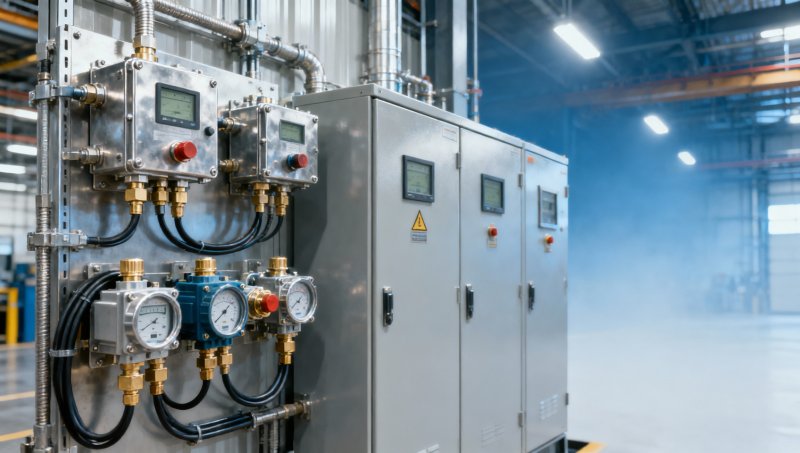
In instrumentation projects, approval delays rarely come from one dramatic failure. More often, they come from a chain of small mismatches between hazardous area requirements, equipment selection, installation details, and documentation quality. In industrial manufacturing, power plants, environmental monitoring stations, laboratories, and process automation sites, these gaps can appear during design review, factory acceptance, site inspection, or pre-commissioning checks.
For procurement teams and project managers, the problem is practical: a 2–4 week approval review can extend into 6–10 weeks when the design package lacks correct hazardous area classification, cable entry details, temperature class confirmation, or enclosure certification alignment. For financial approvers, that delay can trigger idle labor, rescheduled shutdown windows, and duplicated inspection costs.
In the instrumentation industry, explosion proof design affects more than the enclosure itself. It directly influences analyzer shelter layout, sampling systems, purge logic, wiring segregation, calibration access, and maintenance workflow. This is especially important for fixed analysis and continuous online measurement systems, where pressure, temperature, flow, oxygen, and gas composition monitoring often operate together in one integrated control environment.
Typical approval blockers seen across multi-industry projects
The most common blockers are usually preventable. They tend to show up in the early design package, the bill of materials, or the final installation drawing set. When one issue is found, inspectors often expand the review to the entire system, which adds another 5–10 working days.
- Hazardous area classification does not match the actual gas group, zone, or ignition risk of the process area.
- Analyzer, transmitter, junction box, and cable gland certifications are individually valid but not valid as a complete installed assembly.
- Temperature class, ambient temperature range, and heat dissipation from nearby equipment were not checked together during design.
- Documentation lacks wiring schedules, purge calculations, component certificates, or maintenance access notes required for approval.
For distributors and technical evaluators, the key lesson is simple: approval is based on the installed system condition, not only on component brochures. A compliant oxygen analyzer or laser gas analyzer can still fail site approval if the mounting method, cable entry, or purge arrangement breaks the certified concept.
Which design errors are most common in fixed, portable, and continuous analysis systems?
Different analyzer formats create different explosion proof risks. Portable analysis may reduce permanent installation complexity, but it introduces charging, connection, and operator handling concerns. Fixed analysis and online measurement systems usually involve more wiring, more interfaces, and higher documentation requirements. Custom analysis packages often face the greatest approval risk because multiple technologies must work as one compliant assembly.
The table below highlights practical differences that matter during design review. It is especially useful for technical assessment teams comparing project options before issuing a final procurement decision.
The comparison shows why approval risk rises when teams focus only on analyzer performance and ignore installation integrity. For example, paramagnetic oxygen analyzers, laser measurement systems, and thermal measurement devices each have distinct environmental and integration requirements. A strong design package must translate those requirements into approved field implementation details.
Technology-specific pitfalls that evaluators should check
Not all analysis technologies fail in the same way. A multi gas system may struggle with sampling path segregation. A laser measurement system may need clear optical path protection and enclosure controls. Paramagnetic oxygen analysis may be sensitive to vibration, flow stability, and maintenance accessibility. Thermal measurement devices may raise surface temperature review issues if installed in compact panels.
Three practical checks before freezing the design
- Confirm whether the hazardous area concept applies to each component and to the assembled system after wiring, tubing, and mounting.
- Review the maintenance interval and access path. If calibration is expected monthly or quarterly, the design must allow safe intervention without breaking compliance.
- Align procurement and engineering documents. A certificate mismatch between drawing revision and purchased hardware can stop inspection immediately.
For users and operators, these checks improve more than approval speed. They also reduce startup troubleshooting, minimize nuisance alarms, and lower the chance that the final system will require on-site modifications under schedule pressure.
How should buyers evaluate compliance, certification, and implementation risk?
Procurement decisions in hazardous area instrumentation should never be based on price alone. Buyers need a structured review that covers 5 core dimensions: area classification fit, certification scope, installation method, documentation completeness, and serviceability after startup. This applies whether the project involves pressure, temperature, flow, level, gas composition, or integrated automatic control systems.
The most useful procurement question is not “Is this analyzer explosion proof?” but “Will this exact configuration be accepted in this exact zone under this installation method?” That shift helps purchasing teams avoid hidden costs such as redesign, replacement accessories, extra inspection visits, and delayed shutdown restart.
The table below can be used as a pre-award review tool for technical assessment personnel, quality managers, project owners, and finance approvers. It converts broad safety concerns into measurable procurement checkpoints.
This framework helps teams compare suppliers on implementation quality, not just initial quotation. It is particularly useful for custom analysis projects where pressure, flow, oxygen, and multi-gas monitoring are combined with automatic control and industrial online monitoring functions in one package.
Standards and compliance language buyers should expect
Exact certification requirements vary by project region and industry, but responsible suppliers should be able to discuss common hazardous area concepts, installation constraints, marking interpretation, and documentation expectations clearly. In complex projects, review should involve at least 3 roles: instrumentation engineering, safety or quality oversight, and procurement. If one of these roles is missing, compliance gaps often appear late.
A sound supplier response should also explain what is included and what is not included. For example, does the offer cover only the analyzer, or the analyzer plus panel, glands, purge accessories, calibration ports, and installation documents? That distinction often decides whether approval proceeds smoothly or enters another revision cycle.
What can project teams do to reduce rework, cost growth, and schedule slippage?
The best way to avoid explosion proof design delays is to treat compliance as an engineering workflow, not as a final paperwork step. In most instrumentation projects, 4 implementation stages are enough to control risk: requirement definition, design review, procurement alignment, and pre-inspection verification. When these stages are documented, teams reduce the chance of late field changes.
A practical 4-step implementation workflow
- Define the process environment first. Confirm gas exposure, zone classification, ambient conditions, maintenance frequency, and whether the analyzer is fixed, portable, continuous, or custom integrated.
- Review the full assembly at design stage. Include enclosure, power, signal, sampling path, ventilation, alarms, and operator access, not just analyzer specifications.
- Lock procurement to approved revisions. The purchase order, drawings, accessory list, and certificate package should match line by line before production starts.
- Conduct a pre-inspection file check 7–10 days before site review. This should include certificates, installation drawings, marking details, and maintenance instructions.
This workflow is highly relevant for analyzer shelters, gas conditioning systems, and industrial online monitoring packages used in energy, environmental, and process facilities. It also supports digital transformation goals because a compliant design is easier to integrate into remote diagnostics, predictive maintenance, and centralized control architectures.
Where hidden costs usually appear
Cost growth is often underestimated because the first visible issue is only hardware replacement. In reality, the larger cost drivers are engineering revision time, installation labor, shutdown rescheduling, travel for repeat inspection, and delayed production start. Even a small mismatch in glands, labeling, or purge logic can create a chain reaction across 3–5 disciplines.
For finance approvers and decision makers, that means the lowest bid is not always the lowest project cost. A slightly higher upfront package with complete documentation, matched accessories, and clear compliance support can reduce total project risk significantly over the first commissioning cycle and the following 12 months of operation.
FAQ: what do buyers, engineers, and operators ask most often?
How do I choose between fixed analysis and portable analysis in hazardous areas?
Choose fixed analysis when continuous monitoring, integration with control systems, and traceable alarm response are required. Choose portable analysis when measurements are periodic, locations vary, or permanent installation is not justified. The key is to evaluate not only measurement need but also zone restrictions, charging practice, operator training, and documentation burden over the next 6–12 months.
What should I check first for a multi gas system?
Start with the sampling path and area classification. Multi gas systems often fail because the gas path, analyzer housing, valves, and tubing arrangement were engineered separately. Confirm cross-sensitivity risk, maintenance access, purge or ventilation needs, and whether each channel remains compliant after integration into one panel or shelter.
How long does approval usually take if the package is complete?
Timing depends on site procedure and project complexity, but a complete review package often moves through internal and external checks in roughly 2–4 weeks. If drawings, certificates, installation details, and marking information are inconsistent, the process can extend by another 1–3 weeks or more. Early file review is one of the most effective schedule controls.
Are custom analysis systems harder to approve?
Yes, usually. Custom systems combine multiple technologies, which increases the chance of interface problems between analyzers, enclosures, power supplies, sampling modules, and control logic. Approval can still be efficient if the project includes staged design reviews, matched accessory selection, and a single controlled documentation package.
Why choose us for explosion proof instrumentation planning and project support?
In the instrumentation industry, successful hazardous area projects depend on more than supplying devices. They require coordinated understanding of measurement technology, process conditions, analyzer integration, compliance review, and long-term operability. That is where a technically grounded partner adds value for information researchers, operators, evaluators, procurement teams, safety managers, and project leaders.
We support projects across pressure, temperature, flow, level, oxygen, composition analysis, industrial online monitoring, and automatic control applications. Whether your need involves fixed analysis, portable analysis, continuous analysis, or a custom analysis package, the focus is to reduce approval friction and help your team compare options on technical fit, compliance risk, delivery feasibility, and lifecycle cost.
What you can contact us about
- Parameter confirmation for hazardous area conditions, measurement range, ambient temperature, installation method, and maintenance interval.
- Product selection for multi gas systems, paramagnetic oxygen analyzers, laser measurement, thermal measurement, and online measurement configurations.
- Delivery planning, including standard lead-time expectations, staged documentation submission, and pre-inspection preparation.
- Custom solution discussion for analyzer panels, shelters, field integration, signal interfaces, and maintenance-access design.
- Certification and approval support, including document scope clarification, accessory matching, and procurement checklist review.
- Quotation communication, sample support where applicable, and comparison of alternative configurations before final budget approval.
If your site approval is already slowing down, it is still possible to recover time by reviewing the design package before field rework begins. If you are still in the planning stage, early consultation is even more valuable. A clear discussion around parameters, compliance boundaries, and implementation details can prevent weeks of delay and help your project move from specification to approval with fewer surprises.
Recommended for You
 Brazil INMETRO to Require Portuguese UI and Local Units for Industrial Instruments by 2026Brazil INMETRO mandates Portuguese UI & local units (mbar, kPa, °C) for industrial instruments by Dec 2026—key for exporters, integrators & service providers.
 STMicroelectronics 200mm Line Eases Industrial Sensor Chip ShortageSTMicroelectronics 200mm line eases industrial sensor chip shortage — MCUs & signal-conditioning ICs now ship in 12 weeks. Secure allocation today.
 Southeast Asia Manufacturing Re-shoring Accelerates: Vietnam/Indonesia Industrial Instrument Imports Up 37% YoYSoutheast Asia manufacturing re-shoring accelerates: Vietnam & Indonesia industrial instrument imports up 37% YoY — key insights for suppliers, OEMs & procurement teams.
 First Global White Paper on Humanoid Robot Sensor Calibration ReleasedHumanoid robot sensor calibration: First global white paper released—key for ISO/IEC JWG 23 compliance, export readiness & dynamic torque accuracy. Act now.
 SAMR to Upgrade EV Battery Recycling Standard to MandatorySAMR to upgrade EV battery recycling standard GB/T 34015—202X to mandatory by Dec 2026 — critical for exporters, BMS makers & cert labs.
 Saudi SASO Accelerates AI Energy Efficiency Rules for TransmittersSASO AI energy efficiency rules for transmitters take effect 1 June 2026 — mandatory AI simulation, Saudi climate data, and authorized lab validation required. Act now to avoid export delays.
 IEC 63278:2026 Released for Industrial Instrument CybersecurityIEC 63278:2026 is live — the first global standard mandating cybersecurity verification for industrial instruments. Discover compliance impacts, deadlines, and actionable steps for OT/IT convergence.
 Red Sea Crisis Escalates: Gulf of Aden Navigation Ban Extended to June 15, 2026Red Sea Crisis escalates: Gulf of Aden navigation ban extended to June 15, 2026—disrupting industrial instrumentation shipments to the Middle East with 458% air freight spikes and 12–18 day delays.
 US DOE Updates Efficiency Rules for Industrial SensorsUS DOE updates industrial sensor efficiency rules: AI-driven dynamic calibration required by Sept 2026. Ensure AI-Cal Verified compliance now.
 EU Mandates PEF Carbon Footprint Module for Industrial Instruments from June 2026EU mandates PEF carbon footprint module for industrial instruments from June 2026—key for exporters, OEMs & certifiers. Act now to ensure compliance.
 Explosion-Proof Instruments: Compliance Risks Before You OrderExplosion-proof instruments can trigger delays, failed inspections, and safety risks if compliance is overlooked. Learn what to verify before ordering and make safer, smarter purchasing decisions.
 Gas Quality Monitoring Equipment Import Rules to Watch in 2026Gas quality monitoring equipment import rules for 2026 are tightening. Learn the key compliance, certification, and customs risks distributors must manage to avoid delays and protect margins.
 Emission Control Shelter Demand Shifts Across Industrial ProjectsEmission control shelter demand is rising across industrial projects as buyers seek faster deployment, reliable monitoring, and compliance-ready designs. Explore key evaluation factors.
 Temperature Measurement Instruments: Selection Mistakes That Raise DowntimeTemperature measurement instruments selection mistakes can drive downtime, unstable control, and higher costs. Discover 5 common errors and practical fixes to improve reliability.
 Thermal Conductivity Analyzers: When Are They the Right Choice?Thermal conductivity analyzers are ideal for binary and high-contrast gas mixtures. Learn when they deliver reliable, low-maintenance online monitoring and smarter project value.
 Level Measurement Instruments for Tanks: What Affects ReliabilityLevel measurement instruments reliability depends on media, installation, and diagnostics. Discover what causes tank reading failures and how to improve safety, uptime, and control.
 Flow Measurement Equipment Price Trends in 2026Flow measurement equipment price trends in 2026: learn key cost drivers, budgeting risks, and smart buying strategies to improve ROI and make better procurement decisions.
 Flue Gas Monitoring Equipment: Common Accuracy Issues and FixesFlue gas monitoring equipment accuracy issues can lead to drift, false readings, and compliance risks. Discover common causes, practical fixes, and smarter maintenance tips.
 Process Control Shelter vs Control Room: Key Cost and Deployment DifferencesProcess control shelter vs control room: compare cost, deployment speed, integration, and lifecycle value to choose the smarter solution for industrial automation projects.
 How to Select an Industrial Control Shelter for Harsh Site ConditionsIndustrial control shelter selection for harsh sites: learn how to compare materials, HVAC, safety, and lifecycle cost to protect equipment, reduce downtime, and improve reliability.
 SAMR to Finalize 1,800+ Standards by 2026, Including EV Battery RecyclingSAMR to finalize 1,800+ standards by 2026—including EV battery recycling, hazardous chemical packaging & EMC immunity. Stay ahead of mandatory GB shifts and global export compliance.
 China's Largest Single-Line Large-Tow Carbon Fiber Line Starts OperationChina's largest single-line large-tow carbon fiber line is live—30,000 tons/year capacity, ASME-certified, 22% cheaper & 6-week lead time. Boost your industrial instrumentation supply chain now.
 China Mobile Unveils National Integrated Computing Power NetworkChina Mobile's National Integrated Computing Power Network accelerates AI quality inspection for global manufacturers—cutting model training time by 68% and enabling cross-border industrial AI development.
 World's First Humanoid Robot Industrial Calibration White Paper ReleasedWorld's First Humanoid Robot Industrial Calibration White Paper released—setting new global benchmarks for dynamic sensor calibration in robotics. Discover how ABB, Yaskawa & metrology leaders are reshaping industry trust.
 Red Sea Crisis Escalates: Aden Gulf Ban Extended to June 15Red Sea Crisis escalates: Aden Gulf ban extended to June 15 — disrupting industrial instrumentation trade between China and the Middle East with 452% air freight spikes and 7–12 day delays.
 Saudi SASO Introduces AI-Based Energy Validation for Industrial TransmittersAI-based energy validation for industrial transmitters is now mandatory in Saudi Arabia—learn how SASO’s new AI regulation impacts global exporters, compliance timelines, and supply chains.
 IEC TC65 Releases Cybersecurity Validation Guide for Industrial InstrumentsIEC TC65’s new Cybersecurity Validation Guide for Industrial Instruments mandates SDL certification & firmware signing—key for EU/US market access. Act now to align with GB/T 42278-2026 and avoid export delays.
 EU PEF Carbon Footprint Database Mandatory Access for Industrial InstrumentsEU PEF Carbon Footprint Database mandatory access starts June 2026 for industrial instruments—pressure, temperature & flow meters. Ensure compliance now to avoid EU customs delays and market exclusion.
 Gas Quality Analyzer Shelter Price Trends and Specification Gaps to WatchGas quality analyzer shelter price trends vary with materials, HVAC, safety, integration, and compliance. See key specification gaps before shortlisting suppliers or approving budget.
 Process Measurement Equipment: Key Accuracy Risks in Harsh EnvironmentsProcess measurement equipment in harsh environments can drift before failing. Discover key accuracy risks, warning signs, and practical controls to protect quality, safety, and compliance.
 Industrial Analyzer Shelter Export Factors Affecting Lead Times This YearIndustrial analyzer shelter export lead times vary with sourcing, engineering, compliance, packing, and logistics. Learn the key factors to quote smarter and deliver with confidence.
 What to Check Before Buying a Process Analyzer ShelterProcess analyzer shelter buying guide: learn what to check before purchase, from compliance and HVAC to utilities, durability, and maintenance access.















Search Categories
Search Categories
Latest Article
- Brazil INMETRO to Require Portuguese UI and Local Units for Industrial Instruments by 2026Brazil INMETRO mandates Portuguese UI & local units (mbar, kPa, °C) for industrial instruments by Dec 2026—key for exporters, integrators & service providers.Posted by:
- STMicroelectronics 200mm Line Eases Industrial Sensor Chip ShortageSTMicroelectronics 200mm line eases industrial sensor chip shortage — MCUs & signal-conditioning ICs now ship in 12 weeks. Secure allocation today.Posted by:
- Southeast Asia Manufacturing Re-shoring Accelerates: Vietnam/Indonesia Industrial Instrument Imports Up 37% YoYSoutheast Asia manufacturing re-shoring accelerates: Vietnam & Indonesia industrial instrument imports up 37% YoY — key insights for suppliers, OEMs & procurement teams.Posted by:
Please give us a message
