
Oxygen Analyzer for Diving Applications: Safety Checks That Matter


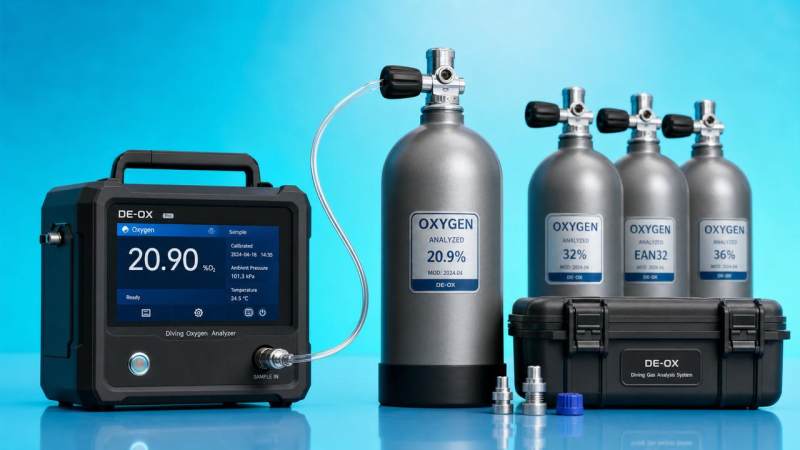
Whether you dive for recreation, training, or technical missions, an oxygen analyzer for diving applications is one of the most important tools for pre-dive safety. Accurate gas verification helps prevent dangerous mix errors, supports confident planning, and protects every breath underwater. In this article, we look at the safety checks that matter most and how reliable analysis can reduce risk before you enter the water.
Why a checklist-first approach matters before every dive
Gas analysis is not the place for guesswork. A cylinder label, a fill station note, or a memory of yesterday’s blend is never as reliable as a fresh reading taken by the diver who will actually breathe the gas. That is why a checklist-first method works so well. It turns a technical task into a repeatable safety habit, reduces missed steps, and gives divers a clear standard for deciding whether a tank is ready to use.
For end users, the value of an oxygen analyzer for diving applications is practical rather than theoretical. It helps confirm nitrox percentages, supports maximum operating depth calculations, checks stage and decompression cylinders, and reduces the chance of oxygen toxicity exposure caused by using the wrong mix at the wrong depth. In short, the analyzer supports better decisions before the dive starts, when there is still time to correct a problem.
A good checklist also improves consistency across different situations. A recreational diver analyzing one enriched air tank, an instructor checking student cylinders, and a technical diver verifying multiple stages all need the same core discipline: verify the gas, record the result, and match the plan to the confirmed oxygen content.
Start here: the core safety checks that matter most
If you use an oxygen analyzer for diving applications, these are the priority checks to complete every time. The list is simple, but each item has a direct link to dive safety.
- Confirm the analyzer is turned on, stable, and ready to read. A rushed startup can lead to false confidence.
- Calibrate the unit in the correct environment, following the manufacturer’s instructions. Calibration should not be skipped just because the analyzer worked fine last week.
- Check battery condition before analysis. Weak batteries can cause drift, unstable displays, or shutdown during use.
- Inspect the sensor and sampling path for contamination, moisture, damage, or loose fittings.
- Analyze the gas slowly and steadily. Fast flow can distort readings on many analyzers.
- Wait for the reading to settle before recording the oxygen percentage.
- Label the cylinder immediately with the measured oxygen content, date, and initials if your diving practice or operator requires it.
- Match the measured result to your dive plan, including MOD, PO2 limits, and contingency gas strategy.
These checks are basic, but they address the most common failure points: poor calibration, incorrect handling, weak power supply, unstable readings, and recordkeeping mistakes. A high-quality oxygen analyzer for diving applications becomes most valuable when paired with disciplined use.
How to judge analyzer reliability before trusting the number
Not every displayed number deserves equal trust. Before you accept a result, assess whether the instrument conditions support an accurate reading. This is especially important for divers who analyze gas in changing environments such as hot fill stations, windy docks, liveaboards, or cold equipment rooms.
Key signs of a reliable reading
- The analyzer was recently calibrated and the calibration process completed normally.
- The display reaches a stable value rather than drifting continuously.
- The sample flow is controlled and not blasting directly into the sensor.
- The sensor is within its service life and shows no visible corrosion or contamination.
- Ambient conditions are suitable for the analyzer’s operating range.
Warning signs you should not ignore
- Large differences between repeated tests on the same cylinder.
- Very slow stabilization, especially when the battery is weak.
- Readings that seem inconsistent with the expected blend or fill order.
- Physical damage to tubing, faceplate, connectors, or sensor housing.
- Using a unit that has been stored wet, overheated, or left unmaintained for long periods.
If any of these warning signs appear, the safest decision is to stop, re-check the analyzer setup, and if necessary compare with another known-good oxygen analyzer for diving applications. Trust should come from process, not assumption.
Priority checks by diving scenario
Different dives place different demands on gas verification. The checklist should stay consistent, but your level of caution should rise with complexity.
Recreational nitrox diving
For standard enriched air diving, the main goal is to confirm the oxygen fraction accurately enough to calculate or verify maximum operating depth and stay within your training limits. Even here, do not rely only on the shop tag. Analyze your own tank, write down the mix, and check that your computer is set correctly before entering the water.
Training dives and student use
In training settings, procedures matter as much as the result. Students should be taught how to calibrate, sample, interpret, and label tanks properly. An oxygen analyzer for diving applications is not just a measurement tool in this scenario; it is also part of safe diver education. Instructors should watch for shortcuts, especially when multiple students are waiting and fill lines are busy.
Technical diving and multiple cylinders
Technical divers face the highest consequences from gas identification errors. Bottom gas, travel gas, and decompression cylinders may all have different oxygen percentages, and a labeling mistake can be critical. The priority checks here include analyzing each cylinder individually, confirming tag readability, cross-checking MOD markings, and ensuring that team members share the same understanding of which gas is assigned to each depth and stage of the dive.
Commonly missed details that create unnecessary risk
Many incidents are not caused by dramatic equipment failure but by small skipped steps. When using an oxygen analyzer for diving applications, these are among the easiest details to overlook.
- Failing to let the analyzer acclimate to the surrounding environment before calibration.
- Assuming a fresh fill is correct because it came from a trusted operator.
- Analyzing one tank in a set and assuming the others match.
- Forgetting to update the dive computer after analyzing the gas.
- Writing an oxygen percentage on tape but not including MOD or date.
- Leaving the analyzer unprotected during transport, which can shorten sensor life.
- Ignoring sensor replacement intervals until performance becomes obviously poor.
These points matter because underwater safety relies on a chain of correct decisions. A precise reading that never gets transferred correctly to the cylinder label or dive computer is still a safety failure.
A simple decision table for pre-dive gas verification
Use this quick reference when deciding whether your gas analysis result is ready to trust, needs a re-check, or should be treated as a stop condition.
Practical tips for choosing and using an analyzer as an end consumer
If you are buying or regularly using an oxygen analyzer for diving applications, focus on usability and repeatability, not just price. A model that is easy to calibrate, easy to read, and easy to protect in transport is more likely to be used correctly every time.
What to prioritize when comparing options
- Clear display visibility in bright outdoor conditions.
- Straightforward calibration steps suitable for travel and boat use.
- Sensor availability, replacement cost, and expected service life.
- Strong housing or protective case for transport.
- Compatibility with your preferred sampling method and diving workflow.
It also helps to think beyond the device itself. Consider where you dive, how often you travel, whether you need to analyze multiple cylinders quickly, and how comfortable you are with routine maintenance. For many users, reliability in real-world handling is more important than extra features that add little to pre-dive safety.
FAQ: quick answers divers often need
Should I analyze every tank myself?
Yes. Even if a fill station labels the tank, the diver who will use it should verify the gas personally with an oxygen analyzer for diving applications whenever possible.
How often should I calibrate?
Follow the manufacturer’s instructions, but in practical dive use, calibration before analysis is the safest routine, especially when conditions change.
Can I trust a reading that changes a lot?
No. Large fluctuation usually means something needs attention, such as battery condition, sample flow, calibration quality, or sensor health.
Is this only important for technical diving?
No. Recreational nitrox divers also rely on correct oxygen percentage for safe depth limits and proper computer settings.
Final action guide before you commit to a dive
The most effective use of an oxygen analyzer for diving applications comes down to a short sequence: calibrate carefully, analyze slowly, wait for a stable reading, label clearly, and align the result with your plan. That routine is simple, but it directly supports safer diving across recreational, training, and technical scenarios.
If you need to go one step further before choosing a device or refining your gas verification process, prioritize a few questions: What oxygen range do you usually analyze? How often will you use the analyzer? Do you need fast checks for multiple cylinders? What is your budget for sensor replacement and maintenance? How important are portability, durability, and ease of calibration in your diving environment? Getting clear answers to those points will help you select a solution that fits your diving habits and supports consistent pre-dive safety.
Recommended for You
![]() SiH4 Concentration Analyzer Import Rules to Watch in 2026SiH4 concentration analyzer import rules are tightening in 2026. Learn the key documents, compliance checks, and procurement tips to avoid delays and speed project delivery.
SiH4 Concentration Analyzer Import Rules to Watch in 2026SiH4 concentration analyzer import rules are tightening in 2026. Learn the key documents, compliance checks, and procurement tips to avoid delays and speed project delivery. HF Concentration Analyzer Demand Shifts Across Key IndustriesHF concentration analyzer demand is shifting across chemical, refining, environmental, and advanced manufacturing sectors—learn what drives safer control, compliance, and precision upgrades.
 Common HCN Concentration Analyzer Mistakes in Daily OperationHCN concentration analyzer daily mistakes can quietly damage accuracy and uptime. Learn common errors, practical checks, and smart operating tips to improve reliability.
 PH3 Concentration Analyzer Price Trends in 2026PH3 concentration analyzer price trends in 2026 reveal what really drives cost, compliance, and performance. Explore key buying factors to compare quotes smarter and reduce total ownership risk.
 How to Choose an AsH3 Concentration Analyzer for Trace Gas SafetyAsH3 concentration analyzer selection starts with the right application context. Learn how to compare response, interference, integration, and lifecycle fit for safer trace gas monitoring.
 Released") China's Business Environment Report (2026) ReleasedChina's Business Environment Report (2026) reveals 92% digital CMA/CNAS coverage—cutting export test report time to 15 days. Boost CE, UKCA & UL certification for pressure gauges, thermostats & analyzers.
China's Business Environment Report (2026) ReleasedChina's Business Environment Report (2026) reveals 92% digital CMA/CNAS coverage—cutting export test report time to 15 days. Boost CE, UKCA & UL certification for pressure gauges, thermostats & analyzers. US MMA Tank Incident Triggers Regional Safety UpgradesUS MMA tank incident sparks urgent demand for VOCs monitoring, toxic gas modeling & intrinsically safe transmitters across LATAM and SEA.
 NDRC Expands Energy-Saving and Carbon-Reduction Oversight to Dyeing, Chemical Fibers, and PapermakingNDRC expands energy-saving & carbon-reduction oversight to dyeing, chemical fibers, and papermaking—boosting demand for COD/NH₃-N analyzers, VOCs monitors, and CEMS systems.
 MIIT Sets 2026 Energy-Saving Inspection Targets for High-Energy ChemicalsMIIT Sets 2026 Energy-Saving Inspection Targets for High-Energy Chemicals—urgent demand surges for certified pH meters, gas analyzers & explosion-proof controllers.
 MOFCOM: FDI in China Down 10.3% Jan–Apr 2026, but Manufacturing Up 12.1%FDI in China fell 10.3% Jan–Apr 2026—but manufacturing FDI surged 12.1%, led by high-tech sectors. Discover what this means for precision metrology, sensors & calibration providers.
 PBOC Conducts 600-Billion-Yuan MLF Operation, Boosting RMB Stability for Testing Equipment ExportsPBOC's 600-billion-yuan MLF operation boosts RMB stability—key for NDT equipment exporters using LC/DA terms. Reduce FX risk, optimize hedging & improve cash flow planning now.
 EU Steel Strategy Upgrade: CBAM Expansion to Machinery & InstrumentsEU Steel Strategy Upgrade expands CBAM to machinery & instruments (HS 84/90) — LCA data mandatory from 1 July 2026. Act now to avoid delays & ensure compliance.
 Global EV Energy Consumption Standard to Take Effect Oct 1, 2026Global EV Energy Consumption Standard (GTR No. 22) takes effect Oct 1, 2026 — learn how it reshapes battery testing, certification & supply chains worldwide.
 WTO Report Shows Strong Global Trade, Easing Export Pressure for Industrial Monitoring DevicesIndustrial monitoring devices exporters benefit as WTO reports 4.2% global trade growth—easing export pressure, improving delivery predictability & cash flow.
 South Korea MFDS Revises Food Contact Materials StandardsSouth Korea MFDS revises food contact materials standards: new nickel/chromium migration limits & NIAS verification—critical for lab instrument exporters and compliance providers.
 Brazil to Eliminate Import Duties on Cross-Border E-Commerce Orders Under USD 50Brazil to eliminate import duties on cross-border e-commerce orders under USD 50—key for portable testing instruments exporters targeting Mercado Livre & DIY buyers.
 New AI Agent Guidelines Impact Smart Inspection Device ExportsAI Agent Guidelines impact smart inspection device exports—learn how new China AI safety rules affect EU, US & Middle East market access.
 UPS Freight Rates Increase Effective May 17, 2026UPS freight rates increase effective May 17, 2026—impact FOB pricing for industrial monitoring equipment exporters. Act now to optimize packaging, revise quotes, and secure margins.
 新修订《海商法》施行:卸货港无人提货责任转向托运人,检测设备出口交期风控升级New Maritime Code shifts unclaimed cargo liability to shippers at discharge ports—critical for testing equipment exporters managing delivery timelines and compliance risk.
 China Imposes Zero Tariffs on Lab Analyzers for 20 African NationsChina's zero tariffs on lab analyzers for 20 African nations boost export competitiveness—pH meters, spectrophotometers & more now duty-free from May 2026.
 CA Toxic Chemical Tank Overheating Sparks Explosion Risk, Monitoring Equipment Orders SurgeGas leak detectors, remote temperature warning systems & explosion-proof thermal imagers surge in demand after CA toxic tank overheating incident.
 EU REACH Adds DBDPE to SVHC List, Impacting Brominated Flame Retardant Testing for Export EquipmentDBDPE added to EU REACH SVHC list—impact on brominated flame retardant testing for industrial instruments, sensors & export compliance. Act now.
 Thailand Customs Digital Reform Spurs RFID Equipment DemandRFID equipment demand surges in Thailand as Customs digital reform mandates e-labeling, real-time parcel tracking & API compliance—act now to meet TISI specs and platform rules.
 Lazada Thailand Cuts Import Duties on 528 CategoriesLazada Thailand cuts import duties on 528 categories — including wired headphones & notebooks — lowering costs for Chinese exporters and Thai SMEs via LGS.
 US Delays 400 Tomahawk Missiles to Japan Amid Iran Inventory ReplenishmentTomahawk missiles delay to Japan sparks urgent demand for alternative guidance, navigation & secure comms suppliers—key opportunity for export-ready defense electronics firms.
 What to Check Before Importing an F2 Concentration Analyzer in 2026F2 concentration analyzer import guide for 2026: learn what to check on compliance, performance, integration, lifecycle cost, and supplier support before you buy.
 SF6 Concentration Analyzer Market Trends for Power and Gas Applications in 2026SF6 concentration analyzer market trends for 2026: explore accuracy, digital integration, emissions control, and buying tips for power and gas applications.
 Common HCl Concentration Analyzer Mistakes That Lead to Unstable ReadingsHCl concentration analyzer unstable readings? Discover the most common installation, calibration, sampling, and maintenance mistakes—and the practical fixes that improve accuracy fast.
 H2S Concentration Analyzer Price Trends: What’s Driving Costs in 2026H2S concentration analyzer price trends in 2026: discover what drives costs, from sensor technology and compliance to materials and digital features, and make smarter buying decisions.
 How to Choose a Cl2 Concentration Analyzer for Process Safety in 2026Cl2 concentration analyzer selection in 2026 starts with process safety. Learn how to match scenarios, improve reliability, avoid costly mistakes, and choose with confidence.
 N2 Concentration Analyzer Cost Factors for Bulk Industrial ProcurementN2 concentration analyzer cost depends on more than unit price. Compare process, purity, and safety applications with total cost logic to source smarter and reduce lifecycle risk.
 Oxygen Concentration Analyzer vs Sensor Systems: Which Fits Continuous UseOxygen concentration analyzer or sensor system? Compare stability, drift, maintenance, and uptime for continuous use to choose the most reliable fit for your process.



Search Categories
Search Categories
Latest Article
- SiH4 Concentration Analyzer Import Rules to Watch in 2026SiH4 concentration analyzer import rules are tightening in 2026. Learn the key documents, compliance checks, and procurement tips to avoid delays and speed project delivery.Posted by:
- HF Concentration Analyzer Demand Shifts Across Key IndustriesHF concentration analyzer demand is shifting across chemical, refining, environmental, and advanced manufacturing sectors—learn what drives safer control, compliance, and precision upgrades.Posted by:
- Common HCN Concentration Analyzer Mistakes in Daily OperationHCN concentration analyzer daily mistakes can quietly damage accuracy and uptime. Learn common errors, practical checks, and smart operating tips to improve reliability.Posted by:
Please give us a message
