
Gas Concentration Analyzer Accuracy: What Affects Readings Most


A gas concentration analyzer is only as reliable as the conditions around it. For operators, even small factors such as calibration drift, sample contamination, temperature changes, sensor aging, or poor maintenance can lead to misleading readings and costly decisions. Understanding what affects analyzer accuracy most is the first step toward more stable measurements, safer operations, and better process control across industrial and monitoring applications.
Why Accuracy Problems Look Different Across Real Operating Scenarios
In daily work, operators rarely use a gas concentration analyzer in a perfect laboratory environment. The same instrument may perform very differently in a boiler room, a chemical process line, an environmental station, a confined workspace, or a mobile inspection route. That is why analyzer accuracy should never be judged only by catalog specifications. What matters in practice is the match between the analyzer, the gas matrix, the sampling method, and the operating environment.
For users and operators, the key question is not simply “How accurate is this gas concentration analyzer?” but “What most affects accuracy in my application?” In some scenarios, the biggest issue is moisture and dust in the sample. In others, the challenge is zero drift, cross-sensitivity, pressure fluctuation, response delay, or infrequent calibration. Recognizing those differences helps operators prevent false alarms, missed hazards, unstable process control, and unnecessary maintenance calls.
The Main Factors That Affect a Gas Concentration Analyzer Most
Although every application has its own details, several causes appear repeatedly when gas concentration analyzer readings become unreliable. These factors influence electrochemical, infrared, thermal conductivity, paramagnetic, photoionization, and other sensing technologies in different ways, but the operational impact is often similar.
- Calibration drift caused by time, vibration, exposure conditions, or unstable reference gas.
- Sample contamination from dust, oil mist, condensate, corrosive gases, or particulate matter.
- Temperature and pressure variation that changes sensor response or gas density.
- Sensor aging, poisoning, or membrane degradation after long service exposure.
- Cross-interference from similar gases in mixed process streams.
- Improper sample line design, including leaks, dead volume, adsorption, and slow transport.
- Poor maintenance habits, such as skipped filter replacement or overdue bump testing.
These issues are common across the instrumentation industry because analyzers support many sectors at once: manufacturing, energy, environmental monitoring, laboratories, construction, and automation systems. The accuracy risk is not only technical. It directly affects safety decisions, compliance reports, combustion efficiency, product quality, and downtime management.
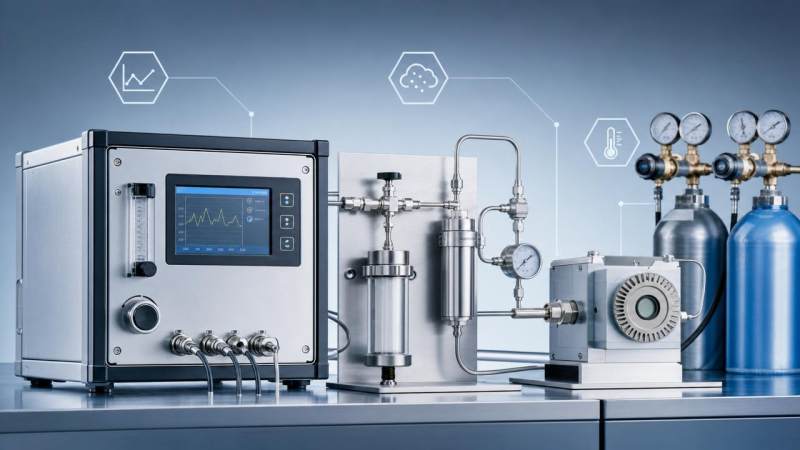
Typical Application Scenarios and What Usually Disturbs Readings First
A practical way to evaluate a gas concentration analyzer is to look at the operating scene first. The table below highlights how the main accuracy threats change by application.
Scenario 1: Industrial Process Lines Need Fast, Stable, and Contamination-Resistant Readings
In manufacturing, energy, and automation environments, a gas concentration analyzer often supports combustion tuning, inerting control, reaction monitoring, or leak detection. Here, the most damaging accuracy problem is often not the sensor alone. It is the sample path. If the sample line is too long, too cold, or poorly filtered, the analyzer may receive a delayed or altered gas sample. Operators then react to stale data, which can push process settings in the wrong direction.
Another common problem in process applications is drift caused by continuous exposure to harsh gases. Sulfur compounds, solvent vapor, and corrosive components can shorten sensor life or contaminate optical surfaces. In this scenario, users should pay attention to the full measuring system: probe, filter, cooler, pump, tubing, pressure regulation, and calibration schedule. A high-performance gas concentration analyzer cannot compensate for a poor sampling system.
Best practice for operators
- Inspect sample lines for leaks, blockage, and condensation points.
- Confirm whether the response time still matches process control needs.
- Trend zero and span results to detect gradual analyzer drift before failure.
Scenario 2: Environmental Monitoring Depends on Conditioning Quality More Than Many Users Expect
In stack gas, ambient air, and emissions monitoring work, a gas concentration analyzer may appear stable while the sample entering it is already compromised. High humidity, acid gases, particulate matter, and seasonal ambient changes can all distort readings. A small amount of condensate in the line may dissolve target gases. Dust loading can reduce flow or damage internal parts. If the operator only checks the analyzer display and ignores the conditioning unit, the root cause may go unnoticed for weeks.
This is why compliance-related applications require disciplined verification, not assumptions. Operators should monitor filter condition, flow stability, gas cooler performance, and calibration cylinder quality. For this scenario, the gas concentration analyzer should be treated as part of a regulated measurement chain, not a standalone box. Accuracy is usually strongest when maintenance records, reference standards, and alarm histories are reviewed together.
Scenario 3: Portable Safety Use Is Highly Sensitive to Daily Handling and Sensor Condition
For personal protection, confined space entry, or maintenance inspection, the biggest accuracy threats often come from field handling. Portable units are dropped, stored in vehicles, exposed to solvents, and used in temperature swings. A gas concentration analyzer that passed calibration last month may still fail today if the sensor has been poisoned or the pump path is partially blocked.
In these safety-critical scenes, bump testing is often more important than operators realize. A full calibration interval may still be acceptable on paper, but a quick daily response test can reveal dead sensors, blocked inlets, or weak batteries before a worker enters a hazardous zone. Cross-sensitivity also matters. A reading that seems normal for one gas may be elevated by another vapor present nearby. Users should therefore match sensor type to the true site hazard profile, not simply buy the most common detector configuration.
Scenario 4: Laboratory and Validation Work Requires Strong Control of Reference Quality
Laboratories and technical testing environments usually demand tighter uncertainty control than general field applications. Here, operators may assume the environment is clean enough that the gas concentration analyzer itself is the main concern. In reality, many errors come from reference gas preparation, connection technique, purge time, adsorption inside tubing, or incomplete stabilization before recording results.
For this scenario, traceability matters. Calibration gas concentration, expiration date, regulator cleanliness, and line material can all shift outcomes. Even a good analyzer may seem inaccurate if the standard gas is wrong or the sampling sequence allows carryover from a previous gas. Operators working in validation or comparison testing should document environmental conditions and allow adequate equilibration time before judging analyzer performance.
How Different Users Should Prioritize Accuracy Checks
Not every operator needs the same checklist. The most useful approach is to align the gas concentration analyzer review with business risk and use frequency.
Common Misjudgments That Lead to False Confidence
Several mistakes appear repeatedly across industries. The first is assuming that a recent calibration guarantees ongoing accuracy. Calibration only confirms performance at a point in time. If conditions change, the gas concentration analyzer may drift quickly afterward. The second is blaming the sensor before checking the sample system. A blocked filter or wet line can produce the same symptoms as sensor failure.
Another frequent error is choosing an analyzer based on target gas alone while ignoring interference gases, temperature range, installation position, and maintenance capability. This is especially risky in mixed industrial atmospheres and mobile safety work. Finally, some teams review analyzer data without looking at maintenance history. Trends in filter loading, sensor replacement, and zero shift often explain reading instability better than isolated spot checks.
Practical Steps to Improve Gas Concentration Analyzer Accuracy in Your Own Setting
If you want more reliable readings, start with a scenario-based review rather than a generic troubleshooting list. First, define whether your main need is safety, compliance, process control, or validation. Second, map the full path from gas source to displayed value. Third, identify which factor is most likely to distort results in that path: contamination, delay, environmental change, or sensor degradation.
- Set calibration frequency according to exposure severity, not only by manual recommendation.
- Use sampling components that fit the gas composition, moisture level, and temperature.
- Record zero/span drift so operators can recognize trends early.
- Train users to distinguish analyzer failure from sample handling failure.
- For critical tasks, combine routine maintenance with periodic performance audits.
Final Takeaway for Operators and Decision-Makers
The most important lesson is simple: gas concentration analyzer accuracy is highly dependent on application context. In one setting, calibration drift may be the main issue. In another, moisture, pressure fluctuation, sensor poisoning, or installation method may dominate. Operators get the best results when they stop viewing the analyzer as an isolated device and start evaluating the complete measurement scenario.
Before adjusting alarms, replacing sensors, or questioning process data, review the conditions around the gas concentration analyzer: gas path, environment, maintenance history, reference quality, and field usage habits. That scenario-based approach leads to better troubleshooting, safer operations, and more confident decisions. If your application includes harsh gases, variable temperatures, or strict reporting requirements, the next step is to confirm whether your current analyzer type, sampling design, and maintenance plan truly match the demands of your operating scene.
Recommended for You
![]() SiH4 Concentration Analyzer Import Rules to Watch in 2026SiH4 concentration analyzer import rules are tightening in 2026. Learn the key documents, compliance checks, and procurement tips to avoid delays and speed project delivery.
SiH4 Concentration Analyzer Import Rules to Watch in 2026SiH4 concentration analyzer import rules are tightening in 2026. Learn the key documents, compliance checks, and procurement tips to avoid delays and speed project delivery. HF Concentration Analyzer Demand Shifts Across Key IndustriesHF concentration analyzer demand is shifting across chemical, refining, environmental, and advanced manufacturing sectors—learn what drives safer control, compliance, and precision upgrades.
 Common HCN Concentration Analyzer Mistakes in Daily OperationHCN concentration analyzer daily mistakes can quietly damage accuracy and uptime. Learn common errors, practical checks, and smart operating tips to improve reliability.
 PH3 Concentration Analyzer Price Trends in 2026PH3 concentration analyzer price trends in 2026 reveal what really drives cost, compliance, and performance. Explore key buying factors to compare quotes smarter and reduce total ownership risk.
 How to Choose an AsH3 Concentration Analyzer for Trace Gas SafetyAsH3 concentration analyzer selection starts with the right application context. Learn how to compare response, interference, integration, and lifecycle fit for safer trace gas monitoring.
 Released") China's Business Environment Report (2026) ReleasedChina's Business Environment Report (2026) reveals 92% digital CMA/CNAS coverage—cutting export test report time to 15 days. Boost CE, UKCA & UL certification for pressure gauges, thermostats & analyzers.
China's Business Environment Report (2026) ReleasedChina's Business Environment Report (2026) reveals 92% digital CMA/CNAS coverage—cutting export test report time to 15 days. Boost CE, UKCA & UL certification for pressure gauges, thermostats & analyzers. US MMA Tank Incident Triggers Regional Safety UpgradesUS MMA tank incident sparks urgent demand for VOCs monitoring, toxic gas modeling & intrinsically safe transmitters across LATAM and SEA.
 NDRC Expands Energy-Saving and Carbon-Reduction Oversight to Dyeing, Chemical Fibers, and PapermakingNDRC expands energy-saving & carbon-reduction oversight to dyeing, chemical fibers, and papermaking—boosting demand for COD/NH₃-N analyzers, VOCs monitors, and CEMS systems.
 MIIT Sets 2026 Energy-Saving Inspection Targets for High-Energy ChemicalsMIIT Sets 2026 Energy-Saving Inspection Targets for High-Energy Chemicals—urgent demand surges for certified pH meters, gas analyzers & explosion-proof controllers.
 MOFCOM: FDI in China Down 10.3% Jan–Apr 2026, but Manufacturing Up 12.1%FDI in China fell 10.3% Jan–Apr 2026—but manufacturing FDI surged 12.1%, led by high-tech sectors. Discover what this means for precision metrology, sensors & calibration providers.
 PBOC Conducts 600-Billion-Yuan MLF Operation, Boosting RMB Stability for Testing Equipment ExportsPBOC's 600-billion-yuan MLF operation boosts RMB stability—key for NDT equipment exporters using LC/DA terms. Reduce FX risk, optimize hedging & improve cash flow planning now.
 EU Steel Strategy Upgrade: CBAM Expansion to Machinery & InstrumentsEU Steel Strategy Upgrade expands CBAM to machinery & instruments (HS 84/90) — LCA data mandatory from 1 July 2026. Act now to avoid delays & ensure compliance.
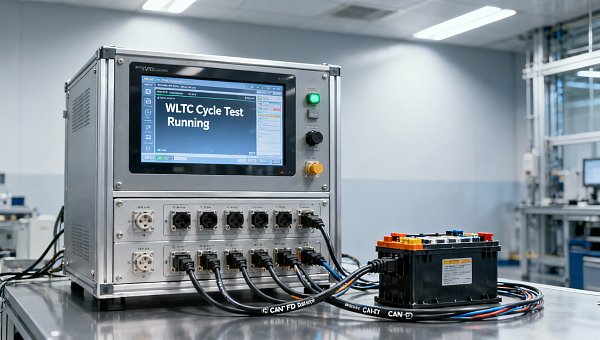
 Global EV Energy Consumption Standard to Take Effect Oct 1, 2026Global EV Energy Consumption Standard (GTR No. 22) takes effect Oct 1, 2026 — learn how it reshapes battery testing, certification & supply chains worldwide.
 WTO Report Shows Strong Global Trade, Easing Export Pressure for Industrial Monitoring DevicesIndustrial monitoring devices exporters benefit as WTO reports 4.2% global trade growth—easing export pressure, improving delivery predictability & cash flow.
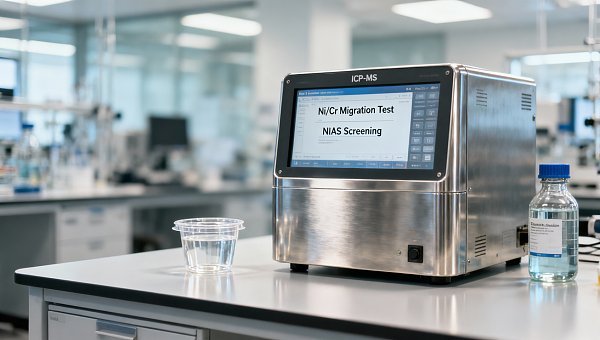
 South Korea MFDS Revises Food Contact Materials StandardsSouth Korea MFDS revises food contact materials standards: new nickel/chromium migration limits & NIAS verification—critical for lab instrument exporters and compliance providers.
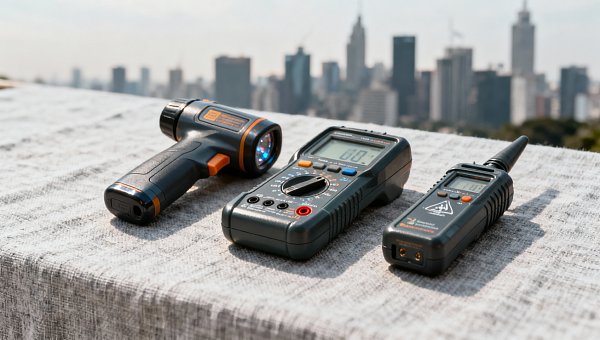
 Brazil to Eliminate Import Duties on Cross-Border E-Commerce Orders Under USD 50Brazil to eliminate import duties on cross-border e-commerce orders under USD 50—key for portable testing instruments exporters targeting Mercado Livre & DIY buyers.
 New AI Agent Guidelines Impact Smart Inspection Device ExportsAI Agent Guidelines impact smart inspection device exports—learn how new China AI safety rules affect EU, US & Middle East market access.
 UPS Freight Rates Increase Effective May 17, 2026UPS freight rates increase effective May 17, 2026—impact FOB pricing for industrial monitoring equipment exporters. Act now to optimize packaging, revise quotes, and secure margins.
 新修订《海商法》施行:卸货港无人提货责任转向托运人,检测设备出口交期风控升级New Maritime Code shifts unclaimed cargo liability to shippers at discharge ports—critical for testing equipment exporters managing delivery timelines and compliance risk.
 China Imposes Zero Tariffs on Lab Analyzers for 20 African NationsChina's zero tariffs on lab analyzers for 20 African nations boost export competitiveness—pH meters, spectrophotometers & more now duty-free from May 2026.
 CA Toxic Chemical Tank Overheating Sparks Explosion Risk, Monitoring Equipment Orders SurgeGas leak detectors, remote temperature warning systems & explosion-proof thermal imagers surge in demand after CA toxic tank overheating incident.
 EU REACH Adds DBDPE to SVHC List, Impacting Brominated Flame Retardant Testing for Export EquipmentDBDPE added to EU REACH SVHC list—impact on brominated flame retardant testing for industrial instruments, sensors & export compliance. Act now.
 Thailand Customs Digital Reform Spurs RFID Equipment DemandRFID equipment demand surges in Thailand as Customs digital reform mandates e-labeling, real-time parcel tracking & API compliance—act now to meet TISI specs and platform rules.
 Lazada Thailand Cuts Import Duties on 528 CategoriesLazada Thailand cuts import duties on 528 categories — including wired headphones & notebooks — lowering costs for Chinese exporters and Thai SMEs via LGS.
 US Delays 400 Tomahawk Missiles to Japan Amid Iran Inventory ReplenishmentTomahawk missiles delay to Japan sparks urgent demand for alternative guidance, navigation & secure comms suppliers—key opportunity for export-ready defense electronics firms.
 What to Check Before Importing an F2 Concentration Analyzer in 2026F2 concentration analyzer import guide for 2026: learn what to check on compliance, performance, integration, lifecycle cost, and supplier support before you buy.
 SF6 Concentration Analyzer Market Trends for Power and Gas Applications in 2026SF6 concentration analyzer market trends for 2026: explore accuracy, digital integration, emissions control, and buying tips for power and gas applications.
 Common HCl Concentration Analyzer Mistakes That Lead to Unstable ReadingsHCl concentration analyzer unstable readings? Discover the most common installation, calibration, sampling, and maintenance mistakes—and the practical fixes that improve accuracy fast.
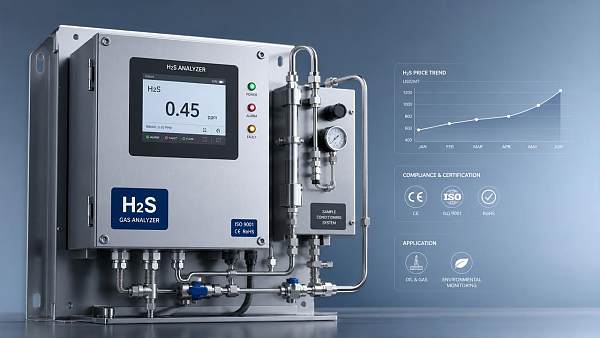
 H2S Concentration Analyzer Price Trends: What’s Driving Costs in 2026H2S concentration analyzer price trends in 2026: discover what drives costs, from sensor technology and compliance to materials and digital features, and make smarter buying decisions.
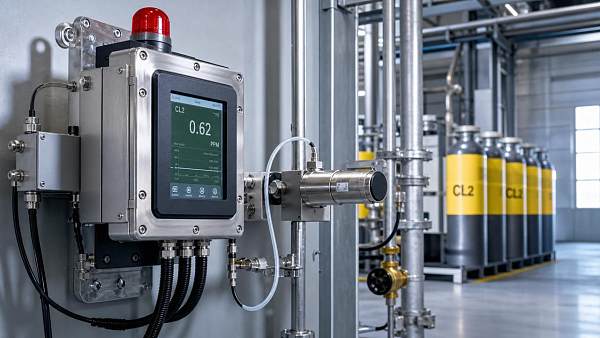
 How to Choose a Cl2 Concentration Analyzer for Process Safety in 2026Cl2 concentration analyzer selection in 2026 starts with process safety. Learn how to match scenarios, improve reliability, avoid costly mistakes, and choose with confidence.
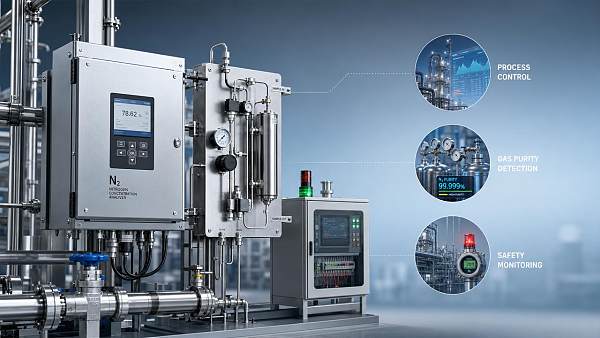
 N2 Concentration Analyzer Cost Factors for Bulk Industrial ProcurementN2 concentration analyzer cost depends on more than unit price. Compare process, purity, and safety applications with total cost logic to source smarter and reduce lifecycle risk.
 Oxygen Concentration Analyzer vs Sensor Systems: Which Fits Continuous UseOxygen concentration analyzer or sensor system? Compare stability, drift, maintenance, and uptime for continuous use to choose the most reliable fit for your process.

Search Categories
Search Categories
Latest Article
- SiH4 Concentration Analyzer Import Rules to Watch in 2026SiH4 concentration analyzer import rules are tightening in 2026. Learn the key documents, compliance checks, and procurement tips to avoid delays and speed project delivery.Posted by:
- HF Concentration Analyzer Demand Shifts Across Key IndustriesHF concentration analyzer demand is shifting across chemical, refining, environmental, and advanced manufacturing sectors—learn what drives safer control, compliance, and precision upgrades.Posted by:
- Common HCN Concentration Analyzer Mistakes in Daily OperationHCN concentration analyzer daily mistakes can quietly damage accuracy and uptime. Learn common errors, practical checks, and smart operating tips to improve reliability.Posted by:
Please give us a message
