
Industrial Shelter Design Trends for Analyzer Protection


As process industries demand higher accuracy, safety, and uptime, industrial shelter design is evolving to better protect analyzers in harsh operating environments. For distributors, agents, and channel partners, understanding these trends helps identify market opportunities and match customers with reliable, high-value solutions. From modular structures to climate control and compliance-focused layouts, the latest industrial shelter innovations are reshaping analyzer protection across multiple industrial applications.
In the instrumentation industry, analyzers often operate at the edge of performance limits. They may be exposed to corrosive gases, vibration, dust loading, solar heat gain, sub-zero temperatures, or washdown conditions. An industrial shelter is no longer a simple enclosure; it has become a controlled environment that supports measurement stability, maintenance access, and safer operation across energy, chemicals, water treatment, environmental monitoring, and process manufacturing.
For distributors and channel partners, this shift matters for two reasons. First, end users increasingly evaluate total lifecycle value rather than upfront enclosure cost alone. Second, project requirements are becoming more detailed, with buyers asking about insulation levels, HVAC redundancy, hazardous-area considerations, cable routing, service clearances, and delivery lead times that can range from 4 to 12 weeks depending on customization. Knowing the latest industrial shelter trends helps you position solutions more accurately and improve conversion quality.
Why Industrial Shelter Design Is Becoming More Application-Specific
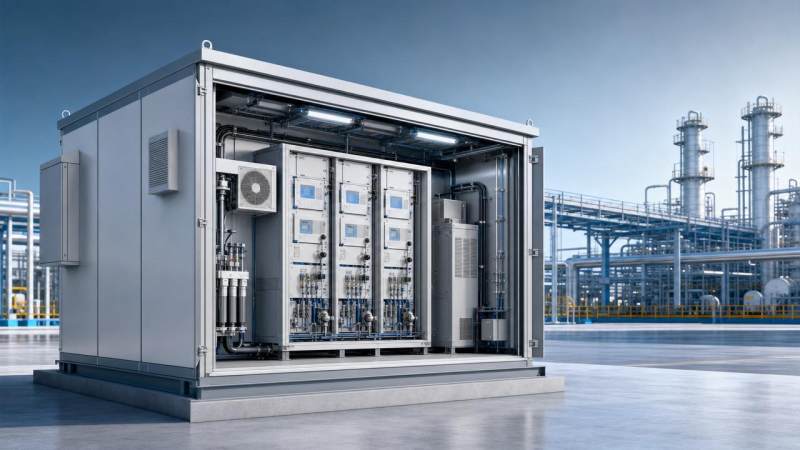
The biggest design trend is specialization. Ten years ago, many buyers accepted a standard analyzer house with a few optional upgrades. Today, customers often need a more application-specific industrial shelter configured around sample systems, analyzer cabinets, calibration gas cylinders, electrical panels, and operator access paths. The result is a stronger focus on process risk, ambient conditions, and maintenance workflow from day one.
From generic enclosure to controlled analyzer environment
A modern industrial shelter typically integrates 4 core functions: environmental protection, temperature control, safe utility distribution, and service accessibility. In practical terms, this means maintaining internal conditions such as 18°C to 25°C for sensitive analysis equipment, reducing dust ingress through sealing and filtration, and allowing technicians to complete routine inspection tasks within 10 to 20 minutes without obstructed access.
This trend is especially relevant in online process analysis, where drift or downtime can trigger off-spec production, delayed reporting, or avoidable maintenance visits. In sectors such as petrochemicals, power generation, and emissions monitoring, stable housing conditions can influence instrument response consistency and shorten troubleshooting cycles by 1 to 2 service visits per quarter.
What distributors are hearing from end users
- Need for faster project adaptation without a full custom engineering cycle
- Higher demand for corrosion-resistant materials in coastal, chemical, or wastewater sites
- Requests for easier maintenance access, especially when multiple analyzers share one shelter
- Pressure to meet internal safety reviews within 2 to 3 approval rounds
- Interest in pre-assembled packages that reduce site installation labor by several days
These points create a clear opportunity for channel partners. Instead of selling only enclosure dimensions, you can lead with operating fit, utility integration, and maintainability. That approach aligns better with buyer expectations and supports higher-value conversations.
Typical design variables that now affect selection
At quotation stage, the most common variables include ambient temperature range, internal heat load, hazardous-area classification, number of analyzers, sample line entry points, and whether the unit must be skid-mountable or transportable in modular sections. Even a small difference, such as planning for 2 analyzers versus 6 analyzers, can significantly change airflow, wiring space, and service clearance requirements.
The table below outlines how application conditions influence industrial shelter design choices across common instrumentation scenarios.
The main takeaway is that industrial shelter specification now starts with use case mapping, not just enclosure size. Distributors that ask about process media, maintenance frequency, and local climate early can reduce redesign cycles and improve proposal accuracy.
Core Design Trends Shaping Analyzer Protection
Several design directions are gaining traction across the instrumentation market. These trends are practical rather than cosmetic. They respond to customer demand for lower operating risk, faster deployment, and better serviceability over a 5- to 15-year shelter life.
1. Modular construction for faster delivery and easier installation
Modular industrial shelter systems are increasingly favored because they simplify fabrication, logistics, and on-site assembly. For channel partners, this can support shorter project schedules. A modular design may cut site installation time from 5 to 7 days down to 2 to 4 days, especially when cable trays, lighting, HVAC, and equipment mounting rails are pre-integrated before shipment.
This approach is useful when end users need repeatable analyzer station formats across multiple plants. Standardized module sizes also make it easier to quote options such as insulated wall thickness, floor loading range, and utility entry orientation without restarting engineering each time.
2. Higher-performance climate control
HVAC is now a strategic part of analyzer protection rather than a basic add-on. Sensitive instruments often require a defined internal operating window, while external environments may vary from -20°C winter exposure to 45°C summer heat. Better climate control reduces thermal cycling, helps maintain analyzer repeatability, and lowers the chance of condensation affecting electronics or sample conditioning components.
In demanding installations, buyers increasingly ask for redundant cooling, heater backup, filtered air circulation, or partitioned thermal zones. These features are especially valuable when shelters house analyzers with different heat loads or maintenance sensitivities.
3. Layouts built around maintenance and safety workflow
Another major trend is layout optimization. Instead of densely packing equipment, manufacturers are designing for service access, cable separation, and logical utility routing. A practical industrial shelter should provide enough clearance for door swing, front and rear access where needed, and safe handling of calibration cylinders, drains, and electrical isolation points.
For example, a service aisle of 800 mm to 1200 mm is often easier to work in than a tighter layout, particularly when technicians carry test tools or replace components during scheduled shutdown windows. Cleaner layouts can reduce maintenance time and improve acceptance during site review.
4. Compliance-focused detailing
Project teams are paying closer attention to details that support safety and compliance reviews. Depending on the region and application, this may include fire-rated materials, emergency lighting, anti-slip flooring, purge or ventilation strategies, grounding provisions, and clearly separated electrical and process zones. For distributors, this means specification support is becoming as important as product supply.
Practical trend checklist for channel partners
- Confirm ambient temperature range and solar exposure
- Estimate total internal heat load from analyzers and auxiliary devices
- Review material compatibility for corrosive or coastal conditions
- Verify service clearance for routine access and part replacement
- Check whether local safety review requires ventilation, purge, or fire-rated options
When these five points are addressed early, the industrial shelter proposal is more likely to survive technical review without repeated redesign. That shortens the sales cycle and improves confidence among EPCs, plant engineers, and procurement teams.
How to Evaluate Industrial Shelter Options for Distribution Projects
For distributors, a good opportunity is not defined only by price competitiveness. The stronger question is whether the industrial shelter can be matched to project scope, delivery expectations, and after-sales support requirements. In many analyzer projects, the wrong enclosure choice causes more downstream cost than the initial savings justify.
Commercial and technical factors to compare
A useful evaluation model combines 4 dimensions: technical fit, delivery predictability, installation efficiency, and service support. Technical fit covers structure, thermal design, ingress resistance, and layout. Delivery predictability includes standard lead time, documentation speed, and change management. Installation efficiency affects on-site labor hours. Service support influences spare parts response and maintenance guidance over the operating life.
The following table can help channel partners compare industrial shelter options in a structured way before committing to a supplier or recommending a configuration to the customer.
This comparison framework highlights a key point: the best industrial shelter is the one that reduces project friction across engineering, installation, and maintenance. That is where channel value becomes visible to the customer.
Common buying mistakes to help customers avoid
- Selecting shelter size based only on analyzer count, without allowing maintenance clearance
- Ignoring future expansion, even when 1 or 2 extra instrument positions may be needed within 24 months
- Underestimating HVAC load by not including transmitters, lighting, heat tracing interfaces, or sample system heat release
- Choosing materials unsuited to chloride-rich, humid, or chemical environments
- Approving layout drawings before confirming actual door access and lifting restrictions on site
If channel partners can identify these issues early, they move from transactional supply to consultative support. That is particularly valuable in instrumentation projects where buyers expect technical guidance before purchase approval.
A practical 5-step selection process
- Gather environmental data, analyzer list, and utility requirements
- Define internal layout, service zones, and cable or sample line entries
- Match thermal control and material specifications to the operating conditions
- Review transport, lifting, site installation, and commissioning constraints
- Finalize documentation, optional accessories, and spare parts scope
This process is simple, but it reduces avoidable revisions. In many cases, it can shorten pre-order clarification by 1 to 3 weeks and improve confidence during engineering review.
Service, Lifecycle Value, and Market Opportunity for Channel Partners
Industrial shelter demand is tied closely to the broader upgrade cycle in automation, emissions control, power reliability, and digitalized process monitoring. As plants invest in online analysis and smarter field instrumentation, shelters become part of the measurement performance chain rather than an isolated accessory. That creates recurring business opportunities for distributors, agents, and integrators.
Where the channel can add value beyond product supply
The strongest partners typically add value in 3 areas: pre-sales specification support, project coordination, and after-sales continuity. Pre-sales support includes helping customers define shelter dimensions, thermal loads, and environmental assumptions. Project coordination covers documentation flow, drawing approval, and logistics planning. After-sales continuity may include spare filters, HVAC maintenance parts, door seal kits, or upgrade support when analyzers are added later.
This matters because many end users prefer fewer interfaces during analyzer shelter projects. If a distributor can coordinate enclosure, utilities, and maintenance expectations in one process, procurement becomes easier and technical risk is lower.
Lifecycle thinking improves project economics
A lower initial quote may not deliver lower operating cost. Over a 5- to 10-year period, a better industrial shelter can reduce unplanned service calls, improve analyzer stability, and simplify maintenance scheduling. Even modest gains matter. Saving 2 emergency maintenance visits per year or reducing restart time by a few hours can justify a more suitable shelter configuration in critical applications.
For customers in continuous process operations, uptime often outweighs small differences in enclosure cost. That is why lifecycle discussion should include insulation quality, seal durability, HVAC accessibility, spare part availability, and layout serviceability.
Questions distributors should ask before quoting
- How many analyzers, cabinets, or sample conditioning assemblies will be installed now and later?
- What internal temperature range is preferred for instrument stability?
- Will the shelter face corrosive atmosphere, high dust, washdown, or direct solar exposure?
- Are there local safety or facility review requirements that affect layout and ventilation?
- What is the target delivery window: 4 weeks, 8 weeks, or a longer engineered schedule?
- Will the customer need support for installation supervision, documentation, or maintenance parts?
These questions help qualify the opportunity and clarify whether a standard, semi-custom, or fully customized industrial shelter is the best fit. They also improve handoff between sales, engineering, and procurement teams.
Industrial shelter design trends are moving toward modularity, thermal precision, safer layouts, and stronger application fit. For the instrumentation market, these trends support analyzer reliability in environments where temperature, contamination, corrosion, and service access directly affect performance. For distributors, agents, and channel partners, the commercial advantage lies in translating these design trends into clearer specifications, faster approvals, and better lifecycle outcomes for end users.
If you are evaluating industrial shelter solutions for analyzer protection, now is the right time to review project requirements more strategically. Contact us to discuss application conditions, compare shelter configurations, get a customized solution, or learn more about practical options for your next instrumentation project.
Recommended for You
![]() SiH4 Concentration Analyzer Import Rules to Watch in 2026SiH4 concentration analyzer import rules are tightening in 2026. Learn the key documents, compliance checks, and procurement tips to avoid delays and speed project delivery.
SiH4 Concentration Analyzer Import Rules to Watch in 2026SiH4 concentration analyzer import rules are tightening in 2026. Learn the key documents, compliance checks, and procurement tips to avoid delays and speed project delivery. HF Concentration Analyzer Demand Shifts Across Key IndustriesHF concentration analyzer demand is shifting across chemical, refining, environmental, and advanced manufacturing sectors—learn what drives safer control, compliance, and precision upgrades.
 Common HCN Concentration Analyzer Mistakes in Daily OperationHCN concentration analyzer daily mistakes can quietly damage accuracy and uptime. Learn common errors, practical checks, and smart operating tips to improve reliability.
 PH3 Concentration Analyzer Price Trends in 2026PH3 concentration analyzer price trends in 2026 reveal what really drives cost, compliance, and performance. Explore key buying factors to compare quotes smarter and reduce total ownership risk.
 How to Choose an AsH3 Concentration Analyzer for Trace Gas SafetyAsH3 concentration analyzer selection starts with the right application context. Learn how to compare response, interference, integration, and lifecycle fit for safer trace gas monitoring.
 Released") China's Business Environment Report (2026) ReleasedChina's Business Environment Report (2026) reveals 92% digital CMA/CNAS coverage—cutting export test report time to 15 days. Boost CE, UKCA & UL certification for pressure gauges, thermostats & analyzers.
China's Business Environment Report (2026) ReleasedChina's Business Environment Report (2026) reveals 92% digital CMA/CNAS coverage—cutting export test report time to 15 days. Boost CE, UKCA & UL certification for pressure gauges, thermostats & analyzers. US MMA Tank Incident Triggers Regional Safety UpgradesUS MMA tank incident sparks urgent demand for VOCs monitoring, toxic gas modeling & intrinsically safe transmitters across LATAM and SEA.
 NDRC Expands Energy-Saving and Carbon-Reduction Oversight to Dyeing, Chemical Fibers, and PapermakingNDRC expands energy-saving & carbon-reduction oversight to dyeing, chemical fibers, and papermaking—boosting demand for COD/NH₃-N analyzers, VOCs monitors, and CEMS systems.
 MIIT Sets 2026 Energy-Saving Inspection Targets for High-Energy ChemicalsMIIT Sets 2026 Energy-Saving Inspection Targets for High-Energy Chemicals—urgent demand surges for certified pH meters, gas analyzers & explosion-proof controllers.
 MOFCOM: FDI in China Down 10.3% Jan–Apr 2026, but Manufacturing Up 12.1%FDI in China fell 10.3% Jan–Apr 2026—but manufacturing FDI surged 12.1%, led by high-tech sectors. Discover what this means for precision metrology, sensors & calibration providers.
 PBOC Conducts 600-Billion-Yuan MLF Operation, Boosting RMB Stability for Testing Equipment ExportsPBOC's 600-billion-yuan MLF operation boosts RMB stability—key for NDT equipment exporters using LC/DA terms. Reduce FX risk, optimize hedging & improve cash flow planning now.
 EU Steel Strategy Upgrade: CBAM Expansion to Machinery & InstrumentsEU Steel Strategy Upgrade expands CBAM to machinery & instruments (HS 84/90) — LCA data mandatory from 1 July 2026. Act now to avoid delays & ensure compliance.
 Global EV Energy Consumption Standard to Take Effect Oct 1, 2026Global EV Energy Consumption Standard (GTR No. 22) takes effect Oct 1, 2026 — learn how it reshapes battery testing, certification & supply chains worldwide.
 WTO Report Shows Strong Global Trade, Easing Export Pressure for Industrial Monitoring DevicesIndustrial monitoring devices exporters benefit as WTO reports 4.2% global trade growth—easing export pressure, improving delivery predictability & cash flow.
 South Korea MFDS Revises Food Contact Materials StandardsSouth Korea MFDS revises food contact materials standards: new nickel/chromium migration limits & NIAS verification—critical for lab instrument exporters and compliance providers.
 Brazil to Eliminate Import Duties on Cross-Border E-Commerce Orders Under USD 50Brazil to eliminate import duties on cross-border e-commerce orders under USD 50—key for portable testing instruments exporters targeting Mercado Livre & DIY buyers.
 New AI Agent Guidelines Impact Smart Inspection Device ExportsAI Agent Guidelines impact smart inspection device exports—learn how new China AI safety rules affect EU, US & Middle East market access.
 UPS Freight Rates Increase Effective May 17, 2026UPS freight rates increase effective May 17, 2026—impact FOB pricing for industrial monitoring equipment exporters. Act now to optimize packaging, revise quotes, and secure margins.
 新修订《海商法》施行:卸货港无人提货责任转向托运人,检测设备出口交期风控升级New Maritime Code shifts unclaimed cargo liability to shippers at discharge ports—critical for testing equipment exporters managing delivery timelines and compliance risk.
 China Imposes Zero Tariffs on Lab Analyzers for 20 African NationsChina's zero tariffs on lab analyzers for 20 African nations boost export competitiveness—pH meters, spectrophotometers & more now duty-free from May 2026.
 CA Toxic Chemical Tank Overheating Sparks Explosion Risk, Monitoring Equipment Orders SurgeGas leak detectors, remote temperature warning systems & explosion-proof thermal imagers surge in demand after CA toxic tank overheating incident.
 EU REACH Adds DBDPE to SVHC List, Impacting Brominated Flame Retardant Testing for Export EquipmentDBDPE added to EU REACH SVHC list—impact on brominated flame retardant testing for industrial instruments, sensors & export compliance. Act now.
 Thailand Customs Digital Reform Spurs RFID Equipment DemandRFID equipment demand surges in Thailand as Customs digital reform mandates e-labeling, real-time parcel tracking & API compliance—act now to meet TISI specs and platform rules.
 Lazada Thailand Cuts Import Duties on 528 CategoriesLazada Thailand cuts import duties on 528 categories — including wired headphones & notebooks — lowering costs for Chinese exporters and Thai SMEs via LGS.
 US Delays 400 Tomahawk Missiles to Japan Amid Iran Inventory ReplenishmentTomahawk missiles delay to Japan sparks urgent demand for alternative guidance, navigation & secure comms suppliers—key opportunity for export-ready defense electronics firms.
 What to Check Before Importing an F2 Concentration Analyzer in 2026F2 concentration analyzer import guide for 2026: learn what to check on compliance, performance, integration, lifecycle cost, and supplier support before you buy.
 SF6 Concentration Analyzer Market Trends for Power and Gas Applications in 2026SF6 concentration analyzer market trends for 2026: explore accuracy, digital integration, emissions control, and buying tips for power and gas applications.
 Common HCl Concentration Analyzer Mistakes That Lead to Unstable ReadingsHCl concentration analyzer unstable readings? Discover the most common installation, calibration, sampling, and maintenance mistakes—and the practical fixes that improve accuracy fast.
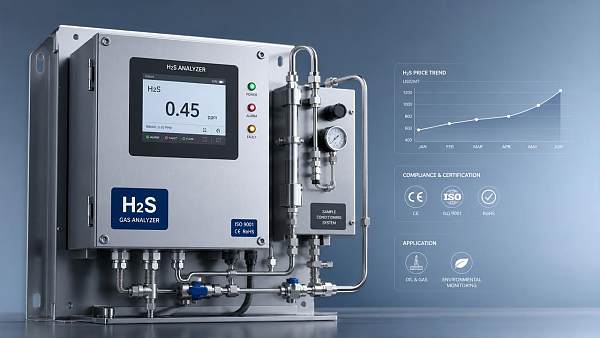
 H2S Concentration Analyzer Price Trends: What’s Driving Costs in 2026H2S concentration analyzer price trends in 2026: discover what drives costs, from sensor technology and compliance to materials and digital features, and make smarter buying decisions.
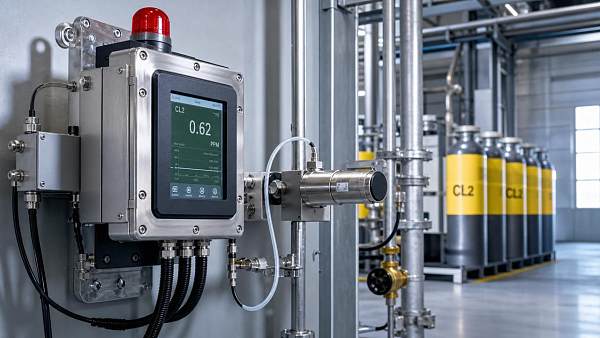
 How to Choose a Cl2 Concentration Analyzer for Process Safety in 2026Cl2 concentration analyzer selection in 2026 starts with process safety. Learn how to match scenarios, improve reliability, avoid costly mistakes, and choose with confidence.
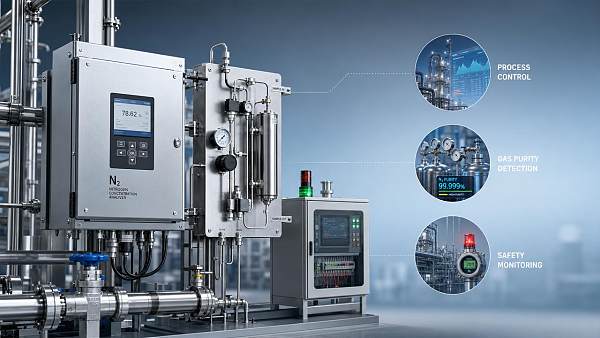
 N2 Concentration Analyzer Cost Factors for Bulk Industrial ProcurementN2 concentration analyzer cost depends on more than unit price. Compare process, purity, and safety applications with total cost logic to source smarter and reduce lifecycle risk.
 Oxygen Concentration Analyzer vs Sensor Systems: Which Fits Continuous UseOxygen concentration analyzer or sensor system? Compare stability, drift, maintenance, and uptime for continuous use to choose the most reliable fit for your process.





Search Categories
Search Categories
Latest Article
- SiH4 Concentration Analyzer Import Rules to Watch in 2026SiH4 concentration analyzer import rules are tightening in 2026. Learn the key documents, compliance checks, and procurement tips to avoid delays and speed project delivery.Posted by:
- HF Concentration Analyzer Demand Shifts Across Key IndustriesHF concentration analyzer demand is shifting across chemical, refining, environmental, and advanced manufacturing sectors—learn what drives safer control, compliance, and precision upgrades.Posted by:
- Common HCN Concentration Analyzer Mistakes in Daily OperationHCN concentration analyzer daily mistakes can quietly damage accuracy and uptime. Learn common errors, practical checks, and smart operating tips to improve reliability.Posted by:
Please give us a message
