
Why CH4 analyzer response time matters more than spec sheets suggest


When selecting a CH4 analyzer, many teams focus on accuracy and price, yet response time often has a bigger impact on safety, process control, and operating cost than spec sheets imply. For users, project managers, and buyers comparing an infrared gas analyzer, oxygen analyzer, CO2 analyzer, CO analyzer, NOX analyzer, SO2 analyzer, NH3 analyzer, or hydrogen analyzer, understanding real-world response behavior can prevent costly mistakes.
Why does CH4 analyzer response time affect operations more than many buyers expect?

In the instrumentation industry, measurement speed is rarely an isolated specification. A CH4 analyzer influences alarms, combustion tuning, leak response, emissions tracking, and process stability across industrial manufacturing, energy and power, environmental monitoring, laboratory analysis, and automation control. When methane concentration changes quickly, a slow analyzer can make a well-designed control system behave like a delayed system, with operators reacting 10–60 seconds too late.
This matters to different stakeholders in different ways. Operators care about whether the displayed value reflects what is actually happening in the line right now. Quality and safety managers care about whether an alarm is triggered in time to reduce risk. Project managers care about whether the analyzer integrates into a sampling system without creating hidden lag. Financial approvers care because poor response time often increases purge gas use, scrap, downtime, and troubleshooting labor.
A spec sheet may list T90 or T95 response time under ideal conditions, but real installations add sample line length, filters, pressure regulators, moisture traps, flow restrictions, and ambient temperature variation. In practice, the total response seen by the process may be 2–5 times the instrument core response. That is why comparing a methane analyzer only by accuracy, range, and price can lead to an expensive mismatch in field performance.
For companies involved in digital transformation and intelligent upgrading, fast and stable gas analysis also supports better data quality. A delayed methane analyzer can distort trend curves, reduce the value of process analytics, and weaken event correlation with flow, temperature, pressure, or oxygen signals. In automated systems, bad timing often creates more damage than a small difference in stated accuracy.
What “response time” really includes in field conditions
Many teams assume response time means only the sensor’s internal speed. In reality, the measured delay usually includes at least 4 parts: gas transport through the sample path, conditioning delay, analyzer cell response, and signal transmission to the control or monitoring system. If the sample line is 5–20 meters long, with low flow and multiple fittings, transport delay alone can dominate the total system response.
- Sample transport delay: affected by line length, inner diameter, pump capacity, and flow stability.
- Conditioning delay: filters, dryers, coolers, and water removal stages can smooth or slow concentration changes.
- Analyzer cell delay: depends on sensing principle such as infrared gas analyzer technology and signal processing.
- Output delay: analog filtering, PLC scan cycle, and communication polling can add several more seconds.
For a buyer, the correct question is not only “What is the analyzer T90?” but also “What is the full system response from gas change to action at the control point?” That is the number that determines whether the methane analyzer helps or hinders the process.
Which applications are most sensitive to methane analyzer response time?
Response time is especially critical where methane concentration can change in short cycles, where safety margins are narrow, or where process control decisions are made every few seconds. In these cases, a slow CH4 analyzer does not simply provide old data; it can create false confidence and poor operating decisions. This is true not only for methane but also when teams compare an oxygen analyzer, CO analyzer, CO2 analyzer, NOX analyzer, SO2 analyzer, NH3 analyzer, or hydrogen analyzer for related process loops.
In combustion and burner management, methane concentration shifts can occur during startup, fuel switching, air-fuel balancing, and load changes. If the analyzer response is delayed by 20–40 seconds, operators may overcorrect the burner, causing oscillation, higher fuel use, unstable flame conditions, or increased CO emissions. In such systems, a slightly higher purchase price for faster response can be justified by lower energy loss over months of continuous operation.
In biogas, landfill gas, and environmental monitoring, methane concentration often fluctuates with moisture, pressure, and feed variation. Here the analyzer must distinguish between real process change and sampling system damping. A fast methane analyzer paired with proper sample conditioning helps operators see actual gas quality, support generator tuning, and protect downstream equipment. Delayed readings can lead to poor engine performance, unstable gas utilization, and avoidable maintenance events every quarter or even every month.
For safety-related applications such as enclosure monitoring, gas cabinet monitoring, or confined-area surveillance, time-to-alarm is the practical metric. If the analyzer plus system delay exceeds the process risk window, accuracy on paper becomes far less meaningful. Safety managers should evaluate alarm trip strategy, relay logic, and sampling path design together, not as separate procurement items.
Typical scenarios where fast response delivers measurable value
The following comparison helps procurement teams identify where response time should carry more weight in evaluation. It also helps distributors and project engineers explain why two analyzers with similar stated ranges may perform very differently after installation.
A key takeaway is that the value of fast response increases as process variability increases. Where methane levels change slowly over hours, response time may be less critical. Where changes happen within 5–30 seconds, it becomes one of the first items to assess.
How different stakeholders read the same performance issue
An operator sees delayed feedback. A project manager sees commissioning trouble. A finance approver sees increased cost of poor quality. A distributor sees more support calls after handover. Framing response time in these business terms often improves internal alignment during analyzer selection.
How should buyers compare CH4 analyzer response time beyond the spec sheet?
A good procurement review separates the instrument’s stated response from the installed system response. This is especially important in comprehensive industrial environments where gas analysis must work alongside pressure, flow, temperature, and automatic control instruments. Buyers should ask suppliers to clarify test conditions, gas path volume, sample flow assumptions, and whether the stated value is T50, T90, or T95. These definitions are not interchangeable.
The most practical evaluation method is to score the analyzer across 5 key dimensions: sensing principle, sample system design, installation layout, control integration, and maintenance burden. A methane analyzer with a fast infrared cell can still perform poorly if the sample line is oversized, the filter train is restrictive, or the PLC applies heavy signal smoothing. Procurement should therefore involve operators and instrumentation engineers early, not only purchasing staff.
When comparing an infrared gas analyzer with alternatives or adjacent analyzers such as oxygen analyzer, CO2 analyzer, or hydrogen analyzer, review whether all devices in the control strategy have compatible dynamic behavior. If one analyzer responds in 8–12 seconds and another takes 45–90 seconds, control interpretation becomes more difficult. Trend alignment, alarm rationalization, and event logging can all suffer.
It is also useful to distinguish between continuous operation, periodic sampling, and portable spot-check use. A system designed for continuous online monitoring usually justifies more investment in response optimization than a low-frequency inspection workflow. This is not only a technical choice but a budget prioritization issue for project and finance teams.
A practical evaluation table for procurement teams
The table below can be used during RFQ review, technical clarification, or distributor qualification. It helps convert abstract response-time claims into comparable buying criteria.
For many projects, this table reveals why the lowest initial quote may not offer the best lifecycle value. A slightly better analyzer package can reduce commissioning time by days and lower service intervention over the first 6–12 months of operation.
A 4-step procurement check before approval
- Confirm the response-time definition and test conditions in writing.
- Map the actual sample path and estimate total gas transport delay.
- Review PLC or DCS filtering, polling cycle, and alarm logic.
- Request recommendations for calibration, maintenance interval, and spare parts.
This simple workflow helps business evaluators and finance approvers compare proposals using operational risk and total cost, not just unit price.
What hidden costs come from choosing a slow or poorly configured methane analyzer?
The biggest cost of a slow CH4 analyzer is usually indirect. It appears as wasted fuel, unstable control, product quality drift, missed gas events, excess alarm investigation, and longer commissioning. In instrumentation-heavy industries, these hidden costs often exceed the original price difference between analyzer options within one budget cycle. That is why financial approval should include process impact, not only equipment price and freight.
A delayed methane analyzer may also push teams toward unnecessary hardware changes. Operators may assume the burner, valve, blower, or process recipe is unstable, when the true issue is gas analysis lag. This can trigger avoidable engineering hours, repeated tuning sessions, and spare part consumption. For distributors and integrators, misdiagnosed response problems often become warranty disputes or service burdens even when the analyzer itself is functioning within its declared limits.
There is also a maintenance cost dimension. Sampling systems with long lines, oversized conditioning assemblies, or poorly selected filters tend to collect contamination and moisture. Over time, this can shift response from acceptable to problematic. If filter checks move from every quarter to every month because of difficult gas conditions, service labor and downtime increase. A faster, cleaner sampling design can therefore reduce both lag and maintenance burden.
For project managers, delayed analyzer performance can affect acceptance testing. If the specification did not clearly define field response conditions, disputes may arise during FAT or SAT. Aligning expectations early on response metrics, sample design, and operating window helps protect schedule and avoids late-stage redesign.
Common cost drivers tied to response performance
- Energy inefficiency caused by slow combustion correction during load variation.
- Additional commissioning time, often extending startup by 2–7 days in complex systems.
- Higher troubleshooting workload due to poor correlation between methane, oxygen, and CO trends.
- More frequent sampling system maintenance when the gas path is not optimized for fast response.
- Potential quality or safety events when alarms and interlocks act on delayed information.
Standards, compliance, and validation considerations
Specific compliance requirements vary by application, but buyers should still request clear documentation on calibration method, maintenance recommendations, environmental suitability, and any applicable safety or emissions framework. In regulated settings, the analyzer must be considered as part of the whole measurement chain. Validation should check not only range and repeatability but also response under realistic operating flow, pressure, and sample conditioning conditions.
A useful acceptance approach is to define 3 stages: factory confirmation, site commissioning, and post-startup verification after stable operation. This phased method helps detect whether field response differs from workshop conditions and gives both supplier and buyer a clear basis for adjustment.
FAQ: what do buyers, operators, and project teams ask most often?
The questions below reflect common search and procurement concerns in B2B gas analysis projects. They are especially relevant when selecting a CH4 analyzer for online monitoring, process control, safety applications, or integrated analyzer packages.
How fast should a CH4 analyzer be for industrial use?
There is no single number for every case. The right target depends on how quickly the process changes and what action depends on the reading. For relatively steady gas streams, a slower response may be acceptable. For combustion control, interlocks, or fast-varying biogas streams, teams often need the total installed response to be short enough for decisions within the relevant control cycle, which may be measured in seconds or low tens of seconds.
Is a faster infrared gas analyzer always the better choice?
Not always. A faster core analyzer can still underperform if the sample system is poorly designed. Buyers should match the sensing technology to gas composition, moisture load, maintenance capability, and installation layout. The best result usually comes from balancing analyzer speed, conditioning reliability, calibration access, and control integration rather than chasing one isolated number.
What should finance teams ask before approving the purchase?
Finance teams should ask 4 practical questions: what total response is expected after installation, what operating loss may result from delay, what maintenance interval is recommended, and what commissioning support is included. These questions connect capital expense to energy cost, service labor, process stability, and time to full operation.
What is the most common mistake during analyzer selection?
The most common mistake is treating the analyzer as a standalone box instead of part of a complete measurement system. Teams compare the methane analyzer, oxygen analyzer, CO analyzer, or CO2 analyzer by brochure numbers but ignore the impact of sample line design, conditioning, communication delay, and maintenance access. That is where many real-world performance gaps begin.
How long does implementation typically take?
For standard configurations, technical clarification and quotation review may take several business days, while delivery and integration depend on scope, customization, and documentation needs. Complex projects involving multiple analyzers, panel integration, or special compliance requirements often require a staged schedule covering specification review, assembly, commissioning, and acceptance. The key is to confirm response expectations before installation, not after startup.
Why choose a supplier that understands both analyzers and the full instrumentation system?
A methane analyzer does not operate in isolation. In real industrial projects, it must work with pressure control, flow management, sample conditioning, automation logic, data acquisition, and maintenance routines. A supplier with broader instrumentation capability can help align these elements, reducing the risk that a good analyzer is weakened by poor system design. This is especially important for companies pursuing automation modernization, digitalization, and smarter process visibility.
For users and operators, this means clearer parameter recommendations and more realistic expectations about response in the field. For project managers, it means better support on integration details such as sample path layout, communication interface, and commissioning checkpoints. For finance and business evaluators, it means a more reliable assessment of lifecycle value rather than a narrow component quote.
If you are comparing a CH4 analyzer with an infrared gas analyzer package or related products such as oxygen analyzer, CO2 analyzer, CO analyzer, NOX analyzer, SO2 analyzer, NH3 analyzer, or hydrogen analyzer, we can help you review the application from a system perspective. That includes parameter confirmation, sample path evaluation, response-time expectations, delivery scope, and service planning.
Contact us to discuss 6 practical items before you commit: methane range and accuracy target, required response behavior, gas composition and moisture level, installation environment, control system interface, and expected delivery or commissioning schedule. We can also support selection comparison, customization discussion, documentation review, sample feasibility, and quotation alignment for distributors, project teams, and end users.
Recommended for You
 C2H5OH Concentration Analyzer: Key Checks Before Import OrdersC2H5OH concentration analyzer import guide: check specs, calibration, compliance, and supplier support before ordering to reduce risk and choose the right analyzer with confidence.
 2026 Market Trends for C4H10 Concentration Analyzers in Process IndustriesC4H10 concentration analyzer market trends for 2026: discover how smarter, connected analyzers help process industries improve safety, compliance, uptime, and ROI.
 Common Safety Gaps When Using a C6H6 Concentration AnalyzerC6H6 concentration analyzer safety gaps can distort readings and delay hazard response. Learn the most common risks, practical fixes, and smarter deployment tips across industrial, lab, and environmental use.
 C7H8 Concentration Analyzer Price Trends in 2026: What Shapes CostC7H8 concentration analyzer price trends in 2026 depend on sensors, compliance, calibration, integration, and service. See what really shapes total cost before you approve a budget.
 How to Choose a C8H10 Concentration Analyzer for Stable VOC MonitoringC8H10 concentration analyzer selection guide for stable VOC monitoring. Learn how to compare performance, technology, drift, and application fit for reliable results.
 Guangdong Launches 3-Year Service Trade Plan to Boost Instrument Exports via AI and HarmonyOSGuangdong's 3-year service trade plan boosts instrument exports via AI optimization & HarmonyOS—key for ASEAN/Latin America market access. Act now.
 China-Pakistan MOU Opens Faster Certification Path for Instruments in South AsiaChina-Pakistan MOU accelerates instrument certification in South Asia—faster CCC acceptance, mutual lab recognition & Islamabad testing hub for pressure gauges, flow meters, environmental monitors.
 Gold Futures Surge 1.1%; Overseas Orders for Precious Metals Analyzers Rise 35%Gold futures surge 1.1% — driving 35% rise in overseas orders for precious metals analyzers like XRF & ICP-MS. Discover key market impacts & compliance insights.
 EU Industrial Accelerator Act Enforces 70% Local Sourcing for InstrumentsEU Industrial Accelerator Act enforces 70% local sourcing for instruments—key implications for exporters, suppliers & integrators. Act now.
 China Imposes Full Export Ban on Dual-Use Items to Japanese Military End UsersChina's dual-use export ban to Japanese military users takes effect Jan 6, 2026—impacting rare earth, semiconductor & precision manufacturing supply chains. Act now.
 Where C3H8 Concentration Analyzers Fit in 2026 Industrial Emissions MonitoringC3H8 concentration analyzer solutions are reshaping 2026 industrial emissions monitoring with better compliance, safer propane control, and smarter efficiency insights. Learn where they fit.
 B2H6 Concentration Analyzer Import and Export Updates for 2026 Compliance PlanningB2H6 concentration analyzer import and export updates for 2026: explore compliance risks, documentation priorities, and planning tips to reduce delays and support smarter cross-border decisions.
 GeH4 Concentration Analyzer Safety Risks and Detection Limits in Semiconductor UseGeH4 concentration analyzer safety risks, alarm strategy, and detection limits for semiconductor use. Learn how to reduce exposure risk, improve process stability, and choose the right monitoring solution.
 C2H4 Concentration Analyzer Price Trends in 2026: What Is Driving Cost ChangesC2H4 concentration analyzer price trends in 2026 explained: discover key cost drivers, procurement risks, and smart buying tips to balance budget, compliance, and long-term value.
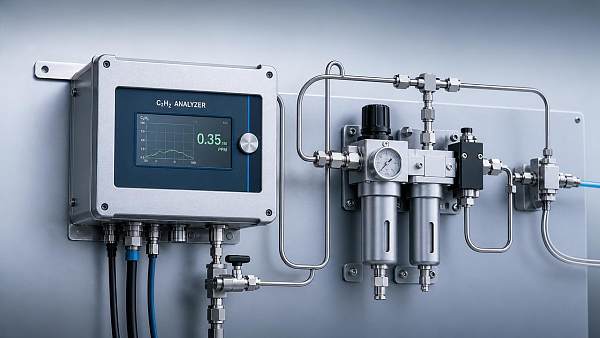
 How to Compare C2H2 Concentration Analyzer Accuracy in Industrial Gas MonitoringC2H2 concentration analyzer accuracy matters beyond the datasheet. Learn how to compare drift, calibration, interference, and field reliability for safer industrial gas monitoring.
![]() SiH4 Concentration Analyzer Import Rules to Watch in 2026SiH4 concentration analyzer import rules are tightening in 2026. Learn the key documents, compliance checks, and procurement tips to avoid delays and speed project delivery.
SiH4 Concentration Analyzer Import Rules to Watch in 2026SiH4 concentration analyzer import rules are tightening in 2026. Learn the key documents, compliance checks, and procurement tips to avoid delays and speed project delivery. HF Concentration Analyzer Demand Shifts Across Key IndustriesHF concentration analyzer demand is shifting across chemical, refining, environmental, and advanced manufacturing sectors—learn what drives safer control, compliance, and precision upgrades.
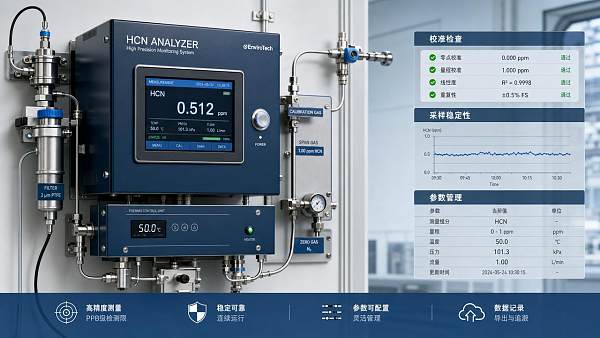
 Common HCN Concentration Analyzer Mistakes in Daily OperationHCN concentration analyzer daily mistakes can quietly damage accuracy and uptime. Learn common errors, practical checks, and smart operating tips to improve reliability.
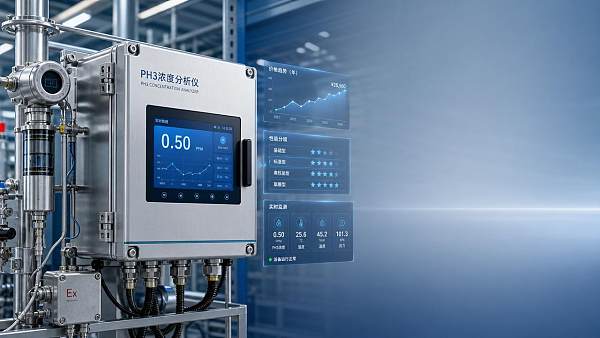
 PH3 Concentration Analyzer Price Trends in 2026PH3 concentration analyzer price trends in 2026 reveal what really drives cost, compliance, and performance. Explore key buying factors to compare quotes smarter and reduce total ownership risk.
 How to Choose an AsH3 Concentration Analyzer for Trace Gas SafetyAsH3 concentration analyzer selection starts with the right application context. Learn how to compare response, interference, integration, and lifecycle fit for safer trace gas monitoring.
 Released") China's Business Environment Report (2026) ReleasedChina's Business Environment Report (2026) reveals 92% digital CMA/CNAS coverage—cutting export test report time to 15 days. Boost CE, UKCA & UL certification for pressure gauges, thermostats & analyzers.
China's Business Environment Report (2026) ReleasedChina's Business Environment Report (2026) reveals 92% digital CMA/CNAS coverage—cutting export test report time to 15 days. Boost CE, UKCA & UL certification for pressure gauges, thermostats & analyzers. US MMA Tank Incident Triggers Regional Safety UpgradesUS MMA tank incident sparks urgent demand for VOCs monitoring, toxic gas modeling & intrinsically safe transmitters across LATAM and SEA.
 NDRC Expands Energy-Saving and Carbon-Reduction Oversight to Dyeing, Chemical Fibers, and PapermakingNDRC expands energy-saving & carbon-reduction oversight to dyeing, chemical fibers, and papermaking—boosting demand for COD/NH₃-N analyzers, VOCs monitors, and CEMS systems.
 MIIT Sets 2026 Energy-Saving Inspection Targets for High-Energy ChemicalsMIIT Sets 2026 Energy-Saving Inspection Targets for High-Energy Chemicals—urgent demand surges for certified pH meters, gas analyzers & explosion-proof controllers.
 MOFCOM: FDI in China Down 10.3% Jan–Apr 2026, but Manufacturing Up 12.1%FDI in China fell 10.3% Jan–Apr 2026—but manufacturing FDI surged 12.1%, led by high-tech sectors. Discover what this means for precision metrology, sensors & calibration providers.
 PBOC Conducts 600-Billion-Yuan MLF Operation, Boosting RMB Stability for Testing Equipment ExportsPBOC's 600-billion-yuan MLF operation boosts RMB stability—key for NDT equipment exporters using LC/DA terms. Reduce FX risk, optimize hedging & improve cash flow planning now.
 EU Steel Strategy Upgrade: CBAM Expansion to Machinery & InstrumentsEU Steel Strategy Upgrade expands CBAM to machinery & instruments (HS 84/90) — LCA data mandatory from 1 July 2026. Act now to avoid delays & ensure compliance.
 Global EV Energy Consumption Standard to Take Effect Oct 1, 2026Global EV Energy Consumption Standard (GTR No. 22) takes effect Oct 1, 2026 — learn how it reshapes battery testing, certification & supply chains worldwide.
 WTO Report Shows Strong Global Trade, Easing Export Pressure for Industrial Monitoring DevicesIndustrial monitoring devices exporters benefit as WTO reports 4.2% global trade growth—easing export pressure, improving delivery predictability & cash flow.
 South Korea MFDS Revises Food Contact Materials StandardsSouth Korea MFDS revises food contact materials standards: new nickel/chromium migration limits & NIAS verification—critical for lab instrument exporters and compliance providers.
 Brazil to Eliminate Import Duties on Cross-Border E-Commerce Orders Under USD 50Brazil to eliminate import duties on cross-border e-commerce orders under USD 50—key for portable testing instruments exporters targeting Mercado Livre & DIY buyers.
 New AI Agent Guidelines Impact Smart Inspection Device ExportsAI Agent Guidelines impact smart inspection device exports—learn how new China AI safety rules affect EU, US & Middle East market access.





Search Categories
Search Categories
Latest Article
- C2H5OH Concentration Analyzer: Key Checks Before Import OrdersC2H5OH concentration analyzer import guide: check specs, calibration, compliance, and supplier support before ordering to reduce risk and choose the right analyzer with confidence.Posted by:
- 2026 Market Trends for C4H10 Concentration Analyzers in Process IndustriesC4H10 concentration analyzer market trends for 2026: discover how smarter, connected analyzers help process industries improve safety, compliance, uptime, and ROI.Posted by:
- Common Safety Gaps When Using a C6H6 Concentration AnalyzerC6H6 concentration analyzer safety gaps can distort readings and delay hazard response. Learn the most common risks, practical fixes, and smarter deployment tips across industrial, lab, and environmental use.Posted by:
Please give us a message
