
What Shortens the Service Life of an Oxygen Detector?


An oxygen detector can fail long before its expected lifespan when exposed to harsh environments, poor calibration practices, contamination, or improper storage. Whether using a paramagnetic detector, electrochemical detector, or infrared detector, understanding what damages a high accuracy sensor is essential for every fixed sensor, portable sensor, laboratory sensor, control sensor, and monitoring sensor application.
Why does an oxygen detector lose service life earlier than expected?
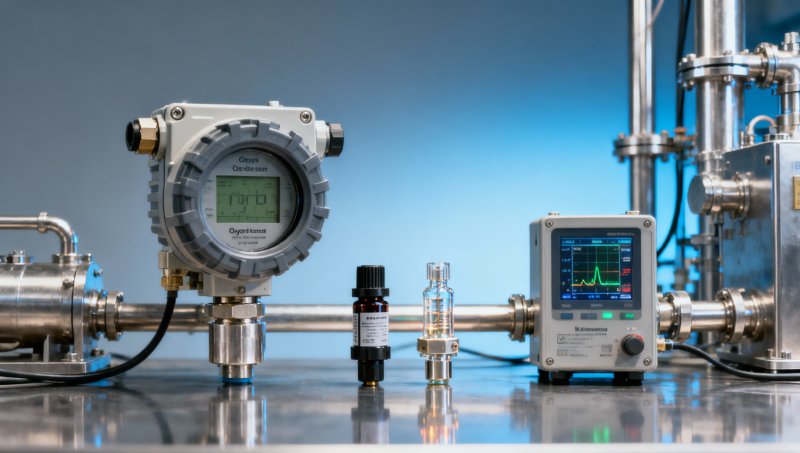
In the instrumentation industry, oxygen detection is not a standalone task. It is part of a larger measurement and control chain used in industrial manufacturing, power generation, environmental monitoring, laboratory analysis, medical testing, and automation systems. When an oxygen detector ages too quickly, the impact spreads beyond one instrument. It can disrupt alarm reliability, process control stability, safety compliance, maintenance planning, and procurement budgets over a 12–36 month operating cycle.
Different sensing principles have different wear mechanisms. Electrochemical sensors can dry out, drift, or become poisoned. Paramagnetic oxygen detectors may suffer from vibration, contamination, and mechanical instability. Infrared designs used in some oxygen analysis configurations can be affected by optical fouling, temperature stress, and electronics degradation. For users and technical evaluators, this means service life should never be judged by a catalog line alone. It must be linked to installation conditions, maintenance discipline, and actual duty cycle.
A common mistake in B2B projects is to assume that a detector rated for continuous use will automatically remain accurate in every plant area. In reality, detector life is often shortened by 5 core factors: temperature extremes, humidity and condensation, chemical contamination, calibration neglect, and poor storage or handling before commissioning. In complex sites such as wastewater treatment, chemical dosing rooms, boiler houses, battery rooms, and confined spaces, these factors often combine rather than appear alone.
For procurement teams and financial approvers, the key issue is total lifecycle cost rather than purchase price alone. A lower-cost oxygen detector that requires sensor replacement every 6–12 months may become more expensive than a better-matched solution that remains stable for 18–24 months under the same workload. This is why service life analysis matters to operators, safety managers, project engineers, distributors, and buyers alike.
The main service-life killers in real operating environments
Before comparing technologies, it helps to map the most common damage sources seen across industrial and laboratory oxygen detector applications. The table below gives a practical view for information researchers, operators, and purchasing teams who need fast screening criteria.
The practical takeaway is simple: service life is a systems issue. A detector installed in a protected indoor panel at 10°C–25°C and checked monthly will usually last longer than the same model installed in a corrosive, wet, vibrating area with no fixed calibration schedule. That difference is often larger than the difference between two brands at the quotation stage.
Which operating conditions damage oxygen sensors the fastest?
Operators often ask whether heat or contamination is the bigger threat. In practice, the answer depends on the sensing principle and the process environment. Electrochemical oxygen detector designs are especially sensitive to storage conditions and environmental exposure. Long periods in high heat, prolonged low humidity, or severe overexposure to target gas can consume the sensor faster than expected. In portable detector fleets, leaving units in vehicles or near process heaters is a frequent cause of early aging.
Fixed oxygen detector systems face a different pattern. They may run 24/7 for years, but their life depends heavily on the sampling path, enclosure rating, and installation location. If the sensor is mounted where washdown spray, dust loading, or splash chemicals are common, even a high accuracy sensor can drift early. A detector should not be installed simply where cable routing is easiest. It should be placed where oxygen measurement is representative yet physically protected.
Laboratory and medical testing environments can also shorten service life, though in subtler ways. Repeated exposure to cleaning agents, aggressive sterilants, or unstable sample conditioning may affect membranes, seals, tubing, and internal components. In laboratory sensor applications, contamination often comes from handling, sample carryover, and insufficient purge time between test cycles. In control sensor and monitoring sensor systems, vibration from nearby equipment can further reduce stability over 6–18 months.
For project managers and safety personnel, environmental mapping before purchase is one of the most cost-effective actions. A short site review covering 4 points—temperature range, humidity profile, contaminant list, and maintenance access—can prevent repeated replacement cycles. This is especially important in integrated automation projects where the oxygen detector feeds alarms, PLC logic, data logging, or remote monitoring platforms.
High-risk conditions to check before commissioning
- Daily temperature cycling greater than the normal indoor range, especially outdoor installations that move from low morning temperatures to hot enclosure conditions by midday.
- Frequent washdown, splash exposure, or condensation that can block membranes, corrode connectors, or alter sample quality in a fixed sensor system.
- Presence of solvent vapors, sulfur compounds, chlorine-based chemicals, or silicone contamination that may poison or foul an electrochemical detector or interfere with other sensing components.
- Difficult maintenance access that causes bump testing, filter replacement, or calibration to be skipped for 1–3 months longer than planned.
Why installation details matter as much as detector specification
Technical evaluators often compare response time, range, and output signal, but detector longevity is also shaped by mounting orientation, cable gland sealing, sample line material, and accessibility for service. For example, a correctly selected oxygen detector can still fail early if moisture accumulates in the sample path or if a splash guard is omitted in a wet process area. These are engineering issues, not just sensor issues.
Distributors and system integrators should therefore present oxygen detector selection as an application package. The detector head, accessories, mounting kit, protection elements, and maintenance plan should be reviewed together. This approach improves end-user outcomes and reduces disputes over warranty expectations versus actual site conditions.
How do electrochemical, paramagnetic, and infrared oxygen detectors compare?
Not all oxygen detector technologies age in the same way. Choosing the wrong sensing principle can shorten service life even when the product is used correctly. In procurement projects, a technology mismatch often appears later as unstable calibration, repeated downtime, or unexpected consumable cost. The comparison below helps buyers and engineers judge whether a portable sensor, fixed sensor, or laboratory sensor should use a different method.
This comparison shows why service life cannot be discussed without application context. An electrochemical detector may be the most practical choice for general safety use, but a paramagnetic detector may provide better long-term value in a clean, controlled analytical environment. Conversely, placing a precision analyzer in a dirty, wet, vibrating location can create a shorter life than a simpler sensor would have delivered.
For procurement staff, three questions usually clarify the decision. First, is the oxygen detector for life safety, process control, or laboratory analysis? Second, will it operate continuously or intermittently? Third, can the site support routine maintenance every month, every quarter, or only during major shutdowns? The best technology is usually the one that remains stable under the real maintenance capacity of the user.
Selection signals that often predict longer service life
When reviewing quotations, do not focus only on initial detector price. A better indicator is whether the supplier discusses environmental fit, calibration frequency, replaceable sensor availability, and expected consumables. If these points are absent, the quotation may be incomplete for lifecycle decision-making.
- Choose a sensing principle that matches the process environment, not just the oxygen range.
- Confirm whether the detector is intended for continuous 24/7 duty, intermittent field use, or bench analysis.
- Ask for typical maintenance intervals, storage recommendations, and replacement lead time for spare sensors or critical parts.
- Check whether the system requires accessories such as filters, regulators, sample conditioning, splash protection, or protective housings.
What should buyers, engineers, and safety teams check before purchase?
In many organizations, the oxygen detector buying decision involves at least 5 roles: operator, technical evaluator, purchaser, safety or quality manager, and financial approver. Each role sees a different risk. Operators care about usability and alarm trust. Engineers care about signal integration and environment fit. Procurement teams need delivery reliability. Finance looks at replacement frequency. Safety teams need traceable maintenance and reliable compliance. A good selection process must answer all of these concerns in one review cycle.
A practical pre-purchase checklist should include operating range, environmental hazards, maintenance plan, installation method, and support availability. If the detector will be used in regulated or safety-sensitive operations, buyers should also ask about calibration procedure, documentation package, and compatibility with common industrial interfaces. In many projects, a 7–15 day technical clarification phase prevents months of rework after installation.
For distributors and agents, this stage is also where trust is built. End users do not only need a product list; they need a recommendation that links oxygen detector technology with their process, their service team capacity, and their required uptime. In instrumentation projects tied to digital transformation and industrial automation, sensor longevity directly affects data continuity and maintenance predictability.
The table below summarizes a practical procurement view. It is designed for mixed audiences, from first-time information researchers to experienced project managers evaluating bids from multiple suppliers.
This checklist turns oxygen detector selection into a measurable process. It helps finance teams compare total ownership cost, not just line-item price. It also helps project managers reduce the risk of selecting a detector that looks suitable on paper but performs poorly in the field.
A practical 4-step selection workflow
- Define the application: safety monitoring, process control, lab analysis, or portable field testing.
- Map the site conditions: identify temperature range, humidity, contaminants, mounting limits, and whether use is continuous or shift-based.
- Review lifecycle support: calibration gas access, maintenance interval, spare sensor stock, and expected delivery cycle of 1–4 weeks where applicable.
- Compare commercial options: initial price, replacement frequency, service documentation, and any accessory requirements that affect total project cost.
Common mistakes, maintenance advice, and FAQs
Many oxygen detector failures are not caused by manufacturing defects. They come from avoidable handling and maintenance errors. The most common mistake is irregular calibration. A detector may still power on and display a value while already drifting outside acceptable performance. Another common mistake is storing spare sensors for too long or in unsuitable conditions, especially for electrochemical detector types that age even before being placed in service.
Another issue is using the wrong protection strategy. In dusty or wet areas, users may assume a high enclosure rating alone is enough. In reality, sample filtration, splash protection, and proper mounting height can matter just as much. In laboratory sensor systems, users sometimes ignore purge cycles or sample conditioning, which creates contamination and unstable readings over repeated test sequences.
For most sites, a basic maintenance discipline works better than reactive replacement. This usually includes a visual inspection, a scheduled bump test where applicable, calibration verification, and review of alarm or trend history. Monthly review is common in demanding environments, while some controlled applications may use quarterly checks depending on risk level and internal procedures. The goal is to identify drift before it becomes downtime or a safety event.
The FAQ below addresses the questions that frequently appear during research, vendor comparison, and internal approval discussions.
How often should an oxygen detector be calibrated?
Calibration interval depends on the technology, site conditions, and risk level. In harsher industrial environments, monthly or more frequent verification may be necessary. In cleaner, controlled applications, quarterly intervals may be workable if supported by operating procedures and performance history. The critical point is consistency. Skipping two or three planned checks can shorten practical service life because drift goes unnoticed and the sensor is forced back into service without correction.
Can improper storage damage a new oxygen sensor before use?
Yes. This is especially true for electrochemical sensors. Excessive heat, freezing conditions, poor sealing, or long shelf time can reduce remaining life before installation. Buyers should confirm storage temperature recommendations, shelf-life handling, and first-in-first-out inventory practice. For distributors, inventory rotation is as important as sales volume because older stock can create early field complaints.
Is a high accuracy sensor always the best choice?
Not always. A high accuracy sensor is valuable when the process requires precise control or analytical performance, but it may not deliver the best overall outcome in rough field conditions with limited maintenance. If the application is basic area monitoring and the site is wet, dusty, or hard to access, a more robust and maintainable oxygen detector may deliver lower total ownership cost and better uptime over 12–24 months.
What should a buyer ask a supplier before approving a purchase?
Ask at least 5 questions: What sensing principle is recommended for the site? What are the storage and operating limits? What is the typical maintenance interval? What accessories are needed for moisture, dust, or sampling? What is the spare sensor and delivery lead time? These questions usually reveal whether the proposed oxygen detector is matched to the application or just quoted from a generic list.
Why choose a solution-oriented instrumentation partner?
Oxygen detector performance is shaped by more than the sensor itself. It depends on installation, environment, maintenance planning, integration, and lifecycle support. That is why many industrial users, laboratories, engineering contractors, and channel partners prefer working with an instrumentation supplier that understands measurement, analysis, control, and online monitoring as one connected system rather than as isolated products.
A capable partner can help you evaluate whether you need a portable sensor, fixed sensor, laboratory sensor, control sensor, or monitoring sensor; whether electrochemical detector, paramagnetic detector, or infrared detector technology is more suitable; and what protective accessories, calibration routines, and spare strategy will reduce long-term cost. This is especially useful in projects involving automation upgrades, plant expansions, replacement planning, or distributor channel development.
If you are comparing oxygen detector options, you can move faster by discussing 6 practical points in advance: measurement range, installation environment, output or communication requirements, maintenance interval, delivery expectations, and any certification or documentation needs. This shortens technical clarification time and helps procurement, engineering, and finance teams align before placing an order.
Contact us to discuss oxygen detector parameter confirmation, product selection, replacement strategy, sample support, delivery cycle, application-specific protection measures, and quotation planning. If your project involves harsh environments, strict maintenance constraints, or multi-site deployment, we can help you review the risk factors that shorten service life and identify a more sustainable instrumentation solution.
Recommended for You
 First Global White Paper on Dynamic Calibration for Humanoid Robot Sensors ReleasedFirst global white paper on dynamic calibration for humanoid robot sensors—key for pressure & 6-axis force/torque accuracy in smart manufacturing and collaborative robotics.
 FDA Updates IVD Import Guidelines: CNAS/NIST Calibration Chain RequiredFDA mandates CNAS/NIST calibration chain for IVD pressure & temperature sensors—key for Chinese exporters. Act now to meet July 2026 deadline.
 EU PEF Carbon Database Mandatory Access for Chinese Industrial InstrumentsEU PEF Carbon Database mandatory for Chinese industrial instruments—meet June 15, 2026 deadline to keep CE marking & win EU tenders.
 IEC TC65 Releases Cybersecurity Validation Guide for Industrial InstrumentsIEC TC65 releases cybersecurity validation guide for industrial instruments—key for firmware signing, OT encryption & remote audit compliance. Act now.
 SASO Introduces AI-Based Energy Efficiency Verification for Industrial TransmittersSASO AI energy efficiency verification now mandatory for industrial transmitters in Saudi Arabia—ensure compliance before June 1, 2026 to avoid customs delays.
 ASEAN Green Customs Corridor Fully LaunchedASEAN Green Customs Corridor now live: AI-verified CNAS calibration reports slash ASEAN-China customs clearance to under 4 hours — boost precision equipment trade today.
 Process Control Equipment Price Trends Under Energy Cost PressureProcess control equipment price trends are shifting under energy cost pressure. Discover key cost drivers, total ownership factors, and smart sourcing tips to reduce risk and improve ROI.
 Multi Gas Analysis in Safety-Critical Areas: What to Check FirstMulti gas analysis starts with risk, not just instruments. Learn what to check first in safety-critical areas to improve compliance, reduce downtime, and protect people and assets.
 Industrial Analyzer Equipment: Common Failures and Maintenance TipsIndustrial analyzer equipment failures can disrupt uptime, compliance, and data accuracy. Discover common faults and practical maintenance tips to improve reliability fast.
 Industrial Measurement System Import Trends and Supply RisksIndustrial measurement system import trends and supply risks explained: learn how distributors can protect margins, reduce delays, and build stronger sourcing resilience.
 Emission Control Equipment Rules Reshaping Industrial DemandEmission control equipment is reshaping industrial investment as stricter rules drive demand for smarter monitoring, lower risk, and compliance-ready systems. Explore what buyers must evaluate now.
 Emission Measurement System Costs in 2026: What Shapes PricingEmission measurement system costs in 2026 depend on accuracy, compliance, installation, integration, and service. Learn what shapes pricing and plan a smarter investment.
 Process Measurement System Upgrades: When Do They Pay Off?Process measurement system upgrades pay off when they cut downtime, improve accuracy, and support compliance. Learn the key signals, ROI factors, and smart upgrade strategies.
 Paramagnetic Gas Measurement: Where It Performs Best in IndustryParamagnetic gas measurement delivers fast, stable oxygen analysis for combustion, emissions, and process control. Discover where it performs best and how it improves efficiency, compliance, and reliability.
 Gas Quality Analyzer Selection: Key Specs That Affect ResultsGas quality analyzer selection starts with the specs that truly impact results. Learn how accuracy, drift, response time, and durability affect safety, compliance, and process performance.
 How to Compare Custom Gas Analysis Options for Complex Process StreamsCustom gas analysis for complex process streams: learn how to compare technologies, sample conditioning, compliance, and maintenance to choose a reliable, application-fit solution.
 First Global White Paper on Humanoid Robot Industrial Calibration ReleasedHumanoid robot industrial calibration: First global white paper released—key for sensor makers, integrators & metrology labs. Learn impact & action steps.
 FDA Updates IVD Import Guidance: CNAS Calibration Chain RequiredFDA mandates CNAS calibration chain with NIST traceability for IVD instruments from China—act now to avoid U.S. import rejection starting July 1, 2026.
 IEC TC65 Releases Cybersecurity Validation Guidance for Industrial InstrumentsIEC TC65 releases cybersecurity validation guidance for industrial instruments—key for exporters, OEMs & integrators targeting EU/NA markets. Act now.
 ASEAN Green Corridor for Measuring Instruments Fully LaunchedASEAN Green Corridor for Measuring Instruments is live—unlock 3.8-hour customs clearance for CNAS-calibrated instruments across all 10 ASEAN nations. Act now!
 PTB Opens Direct VDA/ISO 17025 Report Portal for CNAS LabsPTB opens direct VDA/ISO 17025 report portal for CNAS labs — enabling dual-compliant calibration reports in <72h. Boost automotive audit readiness now!
 Vietnam Enforces Dual CNAS + Vietnamese Language Requirement for Industrial InstrumentsVietnam enforces dual CNAS + Vietnamese language requirement for industrial instruments (HS 9026/9027/9030) — avoid customs rejection. Act now!
 Red Sea Crisis Escalates: Gulf of Aden No-Sail Zone Extended to June 15, 2026Red Sea Crisis escalates: Gulf of Aden no-sail zone extended to June 15, 2026 — impacting industrial instrumentation trade, airfreight costs (+452%), and supply chain resilience between China and the Middle East.
 SASO Mandates AI-Driven Energy Simulation for Industrial Transmitters from June 2026SASO mandates AI-driven energy simulation for industrial transmitters from June 2026 — ensure compliance with NAIEC-certified testing now to avoid delays & rejections.
 BIS Adds 3 High-Precision Process Calibrators to EAR Supplement No. 4BIS Adds 3 High-Precision Process Calibrators to EAR Supplement No. 4—urgent compliance insights for semiconductor, nuclear, and calibration service providers operating with China.
 EU PEF Carbon Footprint Database Mandatory Integration CountdownEU PEF Carbon Footprint Database integration is mandatory for industrial instrument exporters by Jan 2027—act now to secure market access, customs clearance & B2B tenders.
 FDA Updates IVD Import Guidance: CNAS Calibration Traceability to NIST Required for Chinese ManufacturersFDA now requires CNAS calibration traceability to NIST for Chinese IVD manufacturers — critical for 510(k)/De Novo submissions. Act now to avoid RTA delays!
 ASEAN's Green Clearance Corridor Fully LaunchedGreen Clearance Corridor now live: CNAS calibration reports auto-verified for ASEAN customs clearance in under 4 hours — boost your China–ASEAN trade efficiency today!
 First Global Cybersecurity Verification Guide for Industrial Instruments ReleasedFirst global cybersecurity verification guide for industrial instruments launched—featuring a 5-level maturity model & standardized pentest library. Essential for exporters, OEMs, and critical infrastructure suppliers.
 SASO Shortens Energy Labeling for Industrial Transmitters to 7 Days, Adds AI Power Simulation RequirementSASO energy labeling for industrial transmitters now takes just 7 days — but requires AI power simulation. Learn how to comply fast and avoid delays.
 PTB Launches AI Calibration Cloud Platform 2.0PTB AI Calibration Cloud Platform 2.0 launches with CNAS-VDA 5/ISO/IEC 17025 dual-compliance reporting — streamline cross-border calibration for auto suppliers, labs & equipment makers.
 EU Mandates Carbon Footprint Labels on Industrial Instruments from 2027EU mandates carbon footprint labels on industrial instruments from 2027—key for pressure, temperature & flow meter exporters. Act now to ensure PEF compliance and market access.



Search Categories
Search Categories
Latest Article
- First Global White Paper on Dynamic Calibration for Humanoid Robot Sensors ReleasedFirst global white paper on dynamic calibration for humanoid robot sensors—key for pressure & 6-axis force/torque accuracy in smart manufacturing and collaborative robotics.Posted by:
- FDA Updates IVD Import Guidelines: CNAS/NIST Calibration Chain RequiredFDA mandates CNAS/NIST calibration chain for IVD pressure & temperature sensors—key for Chinese exporters. Act now to meet July 2026 deadline.Posted by:
- EU PEF Carbon Database Mandatory Access for Chinese Industrial InstrumentsEU PEF Carbon Database mandatory for Chinese industrial instruments—meet June 15, 2026 deadline to keep CE marking & win EU tenders.Posted by:
Please give us a message
