
When Does a Paramagnetic Detector Outperform Other O2 Methods?


Choosing the right oxygen detector is not just about measuring O2—it is about matching performance to the application. This article explores when a paramagnetic detector delivers clear advantages over an electrochemical detector or infrared detector, especially in high accuracy sensor, laboratory sensor, fixed sensor, portable sensor, control sensor, and monitoring sensor scenarios across industrial and analytical environments.
For instrumentation buyers, plant engineers, laboratory managers, safety teams, and technical evaluators, oxygen measurement is rarely a one-specification decision. Accuracy, response time, maintenance interval, sample gas condition, operating pressure, installation method, and total cost over 3–5 years all affect whether a paramagnetic detector is the right fit.
In many industrial and analytical systems, the real question is not whether a paramagnetic oxygen analyzer can measure O2, but whether it can outperform other methods under demanding process conditions. That distinction matters in combustion control, gas blending, emissions monitoring, laboratory analysis, inerting verification, and quality assurance applications where small oxygen deviations can lead to off-spec product, safety risk, or higher operating cost.
How Paramagnetic Oxygen Detection Works and Why It Matters
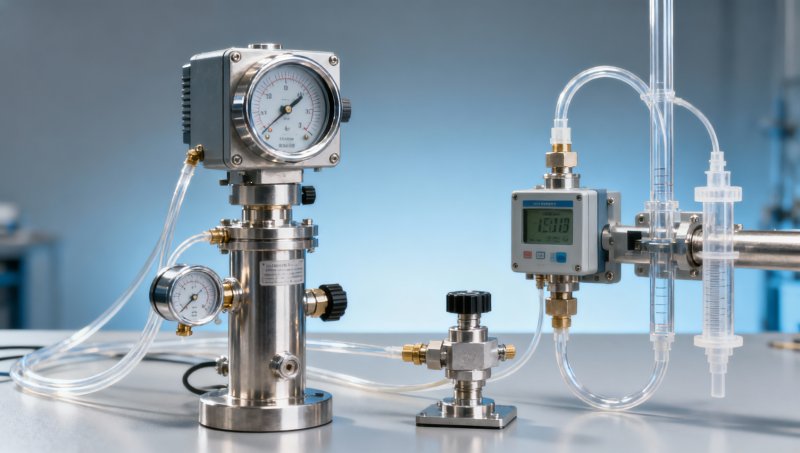
A paramagnetic detector measures oxygen based on a fundamental physical property: oxygen is strongly attracted to a magnetic field compared with most other common gases. This allows the analyzer to determine O2 concentration without consuming the sample gas, which is a major difference from electrochemical cells that gradually deplete reactive materials over time.
In instrumentation practice, this non-consumptive principle gives paramagnetic technology a strong advantage in continuous analysis. A fixed sensor installed in a process line, stack monitoring cabinet, gas mixing skid, or laboratory bench can often deliver stable performance for thousands of operating hours, provided the sample conditioning system is properly designed and the gas path stays clean and dry.
The method is especially valued where users need fast response and repeatable readings. Depending on analyzer design and sample system layout, a T90 response time in the range of 3–15 seconds is common in online systems. That is important in process control loops where delayed O2 feedback can reduce combustion efficiency, affect product consistency, or slow operator decisions during troubleshooting.
Why it is different from electrochemical and infrared methods
Electrochemical detectors are widely used because they are compact, cost-effective, and suitable for portable sensor applications. However, they typically involve consumable cell chemistry, and their lifespan may range from 12 to 36 months depending on oxygen exposure, temperature, humidity, and storage conditions. In contrast, a paramagnetic detector does not rely on a consumable sensing reaction.
Infrared detectors are highly effective for gases such as CO, CO2, CH4, and hydrocarbons, but oxygen does not absorb infrared energy in the same practical way for standard non-dispersive IR measurement. That means IR is generally not the primary direct method for O2 analysis in mainstream industrial instrumentation. Where a specification compares “other O2 methods,” the realistic comparison is often paramagnetic versus electrochemical, zirconia, or trace-level technologies.
Typical operating strengths of a paramagnetic detector
- Continuous measurement over broad oxygen ranges, often from low percentages up to 100% O2 depending on analyzer configuration.
- High repeatability for laboratory sensor and process monitoring sensor applications where drift must stay controlled between calibration intervals.
- Fast response suitable for control sensor use in combustion tuning, gas blending, and purge verification systems.
- No routine sensor cell replacement in the way electrochemical devices typically require.
For plants managing multiple process analyzers across utilities, production lines, and environmental systems, that combination can reduce maintenance planning complexity. It also helps procurement teams compare not just purchase price, but annual service burden, spare parts frequency, and downtime exposure.
When a Paramagnetic Detector Clearly Outperforms Other O2 Methods
A paramagnetic detector outperforms other oxygen methods when the application demands a blend of high accuracy, rapid response, and low long-term sensor consumption. This is especially true in industrial manufacturing, power generation, laboratory analysis, environmental systems, and automation control platforms where O2 is a process variable, not just a safety indicator.
The first high-value use case is combustion and excess air control. Boilers, furnaces, kilns, thermal oxidizers, and burners often operate best within a narrow oxygen window. Even a 0.5% to 2.0% deviation in flue gas oxygen can affect fuel efficiency, emissions performance, and product quality. In these systems, faster and more stable oxygen measurement can improve control loop response and reduce unnecessary fuel use.
The second strong use case is gas blending and quality verification. In food packaging support systems, semiconductor support gases, specialty gas production, metal processing, and industrial gas distribution, operators may need repeatable oxygen readings across multiple batches every shift. A high accuracy sensor with stable zero and span behavior becomes more valuable than a low upfront device that drifts quickly under daily production loads.
The third use case is laboratory sensor deployment. R&D labs, calibration benches, university test stations, and materials research facilities often require broad-range O2 analysis with reliable repeatability across many test cycles. Paramagnetic analyzers are often favored here because they support controlled analytical workflows and typically fit well with clean, conditioned gas streams.
Application conditions where the technology stands out
The table below highlights practical conditions where a paramagnetic detector tends to outperform an electrochemical detector or offer better direct oxygen capability than infrared-based approaches.
The key takeaway is that paramagnetic detection is strongest when oxygen is a control-quality or analysis-quality variable. If the job is only occasional spot checking at moderate precision, an electrochemical portable sensor may still be more economical. But for fixed sensor networks and monitoring sensor duties with daily runtime near 20–24 hours, the long-term value equation often shifts.
Where it may not be the best fit
- Very low trace oxygen measurement in ppm ranges may require specialized trace analyzers instead of standard paramagnetic units.
- Highly contaminated sample gas with particulates, condensate, or corrosive carryover can raise maintenance demands unless conditioning is robust.
- Simple handheld safety checks may favor portable electrochemical devices due to size, battery format, and lower initial cost.
That is why technical evaluation should always start with process conditions, not just analyzer type. A strong technology can still underperform if applied outside its practical sample environment.
Selection Criteria for High Accuracy, Fixed, Portable, and Monitoring Sensor Projects
For project managers and procurement teams, selecting an oxygen detector should involve at least 6 checkpoints: measurement range, accuracy target, response time, sample gas cleanliness, maintenance resources, and integration method. These criteria matter more than product category labels alone, because the same site may need one type of laboratory sensor and a different type of portable sensor.
A high accuracy sensor project usually begins with defining the acceptable error band. In many industrial and lab environments, users target performance levels such as ±1% of full scale, ±0.1% O2, or better repeatability depending on range. If the process control logic is sensitive to tight oxygen windows, a paramagnetic analyzer is often easier to justify than a lower-cost alternative that needs more frequent replacement or recalibration.
For fixed sensor installations, the sample system often determines success as much as the detector itself. Filters, moisture traps, pressure regulation, sample flow control, and bypass design can influence reading stability by 10%–30% of real-world performance quality. Plants that overlook sample conditioning often blame the analyzer when the root cause is water carryover or unstable pressure.
Portable sensor applications require a different decision framework. Weight, battery life, warm-up time, enclosure rating, and ease of bump test may matter more than continuous high-precision operation. In that scenario, electrochemical technology may still be preferred. The goal is not to force paramagnetic use everywhere, but to place it where it adds measurable operational value.
Decision matrix by sensor scenario
The following comparison helps technical evaluators separate application-driven choices from general assumptions about oxygen measurement technologies.
This matrix shows why procurement should avoid a one-size-fits-all specification. A plant may reasonably standardize on paramagnetic analyzers for 4 fixed control points while still using electrochemical portable units for maintenance rounds and confined-space checks.
A practical 5-step selection process
- Define the oxygen range and normal operating band, such as 0–25%, 0–100%, or a narrower process target.
- Set the required response speed, for example under 10 seconds, under 30 seconds, or non-critical periodic measurement.
- Review sample gas quality, including dust load, condensate risk, pressure stability, and corrosive components.
- Estimate 2–5 year maintenance cost, including calibration gas, spare parts, labor, and downtime.
- Confirm control system compatibility, such as 4–20 mA, digital communication, alarm outputs, and enclosure requirements.
This process helps financial approvers as much as engineers. A lower initial purchase price can become less attractive when replacement intervals, process interruptions, and field labor are added to the total ownership picture.
Installation, Maintenance, and Risk Control in Real Industrial Environments
A paramagnetic detector can deliver strong performance only if the installation supports it. In industrial manufacturing, energy and power sites, environmental monitoring stations, construction engineering systems, and laboratory skids, the most common failure points are not always inside the sensor. They are often upstream: poor filtration, wet sample gas, unstable flow, vibration, pressure swings, or delayed calibration routines.
For fixed sensor and monitoring sensor applications, sample conditioning should usually be treated as part of the analyzer package, not an accessory. A practical setup may include a particulate filter rated around 1–5 microns, moisture removal if dew point is a risk, flow control in a stable range, and pressure management that keeps the analyzer within its specified operating window. Even a high-quality detector may show unstable readings if sample pressure fluctuates significantly during each production cycle.
Calibration planning is another area where teams either protect or waste analyzer value. Depending on duty and quality requirements, many operations review zero and span performance every 1 to 4 weeks, while lower-risk systems may extend checks to monthly or quarterly intervals. The right schedule depends on process criticality, environmental stress, and internal quality procedures.
Common risks and mitigation measures
- Condensation in sample lines: use heated lines or moisture management where process gas temperature crosses dew point.
- Particulate contamination: specify filtration stages and service access points for routine cleaning.
- Pressure instability: install proper regulators and verify analyzer pressure tolerance during commissioning.
- Calibration drift assumptions: build a documented schedule instead of waiting for visible process problems.
- Mismatch between analyzer and application: avoid using a laboratory-grade configuration in dirty field gas without conditioning.
These controls matter for safety and quality teams because oxygen readings often feed alarm thresholds, process interlocks, or product release decisions. A 2-minute unstable reading during startup may be acceptable in one application but unacceptable in another that verifies inert atmosphere before a critical batch begins.
Maintenance planning table
A structured maintenance plan reduces unplanned downtime and helps distributors, service partners, and site operators align responsibilities before startup.
The most important conclusion is that maintenance should be system-based, not detector-only. Sites that monitor only the sensor but ignore filters, tubing, regulators, and calibration gas quality often face recurring performance complaints that are preventable.
Procurement Questions, Cost Logic, and FAQ for Decision Makers
From a purchasing perspective, a paramagnetic detector should be evaluated on total value, not just device price. This includes analyzer life expectancy, service hours, calibration routine, spare parts demand, process downtime risk, and the financial impact of oxygen measurement errors. For many continuous-duty applications, the difference becomes visible over a 24–60 month ownership period.
Distributors and project integrators should also assess integration cost early. Panel layout, sample conditioning hardware, signal outputs, hazardous area requirements, commissioning time, and operator training can shift project cost by 15%–40%. A lower-cost detector can become more expensive if it requires frequent replacement visits or causes process interruptions during maintenance windows.
For quality managers and safety supervisors, the best purchase is usually the one that produces dependable measurement in the actual operating environment. That may mean approving a more robust fixed sensor package for a critical line, while using simpler portable devices for routine field verification tasks.
FAQ: How should buyers compare paramagnetic and electrochemical options?
Start with duty cycle and required precision. If the application runs 8–24 hours per day and oxygen data directly affects process control, product quality, or compliance records, a paramagnetic detector often makes more sense. If the need is mobile, intermittent, and budget-sensitive, electrochemical can be practical.
FAQ: Is a paramagnetic detector suitable for portable sensor use?
It can be, but suitability depends on form factor, power availability, and environmental conditions. In many field handheld applications, electrochemical sensors remain more common because they are smaller and simpler. Paramagnetic technology is typically stronger in benchtop, rack-mounted, cabinet-mounted, or integrated analyzer systems.
FAQ: What should be checked before approval of a fixed sensor project?
Review at least 4 areas: gas composition, pressure and flow stability, contamination risk, and maintenance access. Also confirm calibration gas availability, output compatibility, and whether the sample line length will slow response beyond the process requirement.
Procurement checklist
- Match detector type to application duty: laboratory, fixed monitoring, control loop, or portable survey.
- Request realistic maintenance intervals instead of headline performance only.
- Evaluate lifecycle cost across 2, 3, and 5 years.
- Verify sample conditioning scope in the quotation.
- Confirm commissioning support, training, and spare parts plan.
When a site needs dependable oxygen measurement for industrial analysis, automation control, or quality-critical monitoring, a paramagnetic detector often delivers the strongest performance where speed, repeatability, and continuous duty matter most. If you are comparing detector options for a high accuracy sensor, laboratory sensor, fixed sensor, control sensor, or monitoring sensor project, now is the right time to review your operating conditions and lifecycle cost assumptions. Contact us to discuss your application, request a tailored solution, or learn more about the right oxygen measurement strategy for your system.
Recommended for You
 First Global White Paper on Dynamic Calibration for Humanoid Robot Sensors ReleasedFirst global white paper on dynamic calibration for humanoid robot sensors—key for pressure & 6-axis force/torque accuracy in smart manufacturing and collaborative robotics.
 FDA Updates IVD Import Guidelines: CNAS/NIST Calibration Chain RequiredFDA mandates CNAS/NIST calibration chain for IVD pressure & temperature sensors—key for Chinese exporters. Act now to meet July 2026 deadline.
 EU PEF Carbon Database Mandatory Access for Chinese Industrial InstrumentsEU PEF Carbon Database mandatory for Chinese industrial instruments—meet June 15, 2026 deadline to keep CE marking & win EU tenders.
 IEC TC65 Releases Cybersecurity Validation Guide for Industrial InstrumentsIEC TC65 releases cybersecurity validation guide for industrial instruments—key for firmware signing, OT encryption & remote audit compliance. Act now.
 SASO Introduces AI-Based Energy Efficiency Verification for Industrial TransmittersSASO AI energy efficiency verification now mandatory for industrial transmitters in Saudi Arabia—ensure compliance before June 1, 2026 to avoid customs delays.
 ASEAN Green Customs Corridor Fully LaunchedASEAN Green Customs Corridor now live: AI-verified CNAS calibration reports slash ASEAN-China customs clearance to under 4 hours — boost precision equipment trade today.
 Process Control Equipment Price Trends Under Energy Cost PressureProcess control equipment price trends are shifting under energy cost pressure. Discover key cost drivers, total ownership factors, and smart sourcing tips to reduce risk and improve ROI.
 Multi Gas Analysis in Safety-Critical Areas: What to Check FirstMulti gas analysis starts with risk, not just instruments. Learn what to check first in safety-critical areas to improve compliance, reduce downtime, and protect people and assets.
 Industrial Analyzer Equipment: Common Failures and Maintenance TipsIndustrial analyzer equipment failures can disrupt uptime, compliance, and data accuracy. Discover common faults and practical maintenance tips to improve reliability fast.
 Industrial Measurement System Import Trends and Supply RisksIndustrial measurement system import trends and supply risks explained: learn how distributors can protect margins, reduce delays, and build stronger sourcing resilience.
 Emission Control Equipment Rules Reshaping Industrial DemandEmission control equipment is reshaping industrial investment as stricter rules drive demand for smarter monitoring, lower risk, and compliance-ready systems. Explore what buyers must evaluate now.
 Emission Measurement System Costs in 2026: What Shapes PricingEmission measurement system costs in 2026 depend on accuracy, compliance, installation, integration, and service. Learn what shapes pricing and plan a smarter investment.
 Process Measurement System Upgrades: When Do They Pay Off?Process measurement system upgrades pay off when they cut downtime, improve accuracy, and support compliance. Learn the key signals, ROI factors, and smart upgrade strategies.
 Paramagnetic Gas Measurement: Where It Performs Best in IndustryParamagnetic gas measurement delivers fast, stable oxygen analysis for combustion, emissions, and process control. Discover where it performs best and how it improves efficiency, compliance, and reliability.
 Gas Quality Analyzer Selection: Key Specs That Affect ResultsGas quality analyzer selection starts with the specs that truly impact results. Learn how accuracy, drift, response time, and durability affect safety, compliance, and process performance.
 How to Compare Custom Gas Analysis Options for Complex Process StreamsCustom gas analysis for complex process streams: learn how to compare technologies, sample conditioning, compliance, and maintenance to choose a reliable, application-fit solution.
 First Global White Paper on Humanoid Robot Industrial Calibration ReleasedHumanoid robot industrial calibration: First global white paper released—key for sensor makers, integrators & metrology labs. Learn impact & action steps.
 FDA Updates IVD Import Guidance: CNAS Calibration Chain RequiredFDA mandates CNAS calibration chain with NIST traceability for IVD instruments from China—act now to avoid U.S. import rejection starting July 1, 2026.
 IEC TC65 Releases Cybersecurity Validation Guidance for Industrial InstrumentsIEC TC65 releases cybersecurity validation guidance for industrial instruments—key for exporters, OEMs & integrators targeting EU/NA markets. Act now.
 ASEAN Green Corridor for Measuring Instruments Fully LaunchedASEAN Green Corridor for Measuring Instruments is live—unlock 3.8-hour customs clearance for CNAS-calibrated instruments across all 10 ASEAN nations. Act now!
 PTB Opens Direct VDA/ISO 17025 Report Portal for CNAS LabsPTB opens direct VDA/ISO 17025 report portal for CNAS labs — enabling dual-compliant calibration reports in <72h. Boost automotive audit readiness now!
 Vietnam Enforces Dual CNAS + Vietnamese Language Requirement for Industrial InstrumentsVietnam enforces dual CNAS + Vietnamese language requirement for industrial instruments (HS 9026/9027/9030) — avoid customs rejection. Act now!
 Red Sea Crisis Escalates: Gulf of Aden No-Sail Zone Extended to June 15, 2026Red Sea Crisis escalates: Gulf of Aden no-sail zone extended to June 15, 2026 — impacting industrial instrumentation trade, airfreight costs (+452%), and supply chain resilience between China and the Middle East.
 SASO Mandates AI-Driven Energy Simulation for Industrial Transmitters from June 2026SASO mandates AI-driven energy simulation for industrial transmitters from June 2026 — ensure compliance with NAIEC-certified testing now to avoid delays & rejections.
 BIS Adds 3 High-Precision Process Calibrators to EAR Supplement No. 4BIS Adds 3 High-Precision Process Calibrators to EAR Supplement No. 4—urgent compliance insights for semiconductor, nuclear, and calibration service providers operating with China.
 EU PEF Carbon Footprint Database Mandatory Integration CountdownEU PEF Carbon Footprint Database integration is mandatory for industrial instrument exporters by Jan 2027—act now to secure market access, customs clearance & B2B tenders.
 FDA Updates IVD Import Guidance: CNAS Calibration Traceability to NIST Required for Chinese ManufacturersFDA now requires CNAS calibration traceability to NIST for Chinese IVD manufacturers — critical for 510(k)/De Novo submissions. Act now to avoid RTA delays!
 ASEAN's Green Clearance Corridor Fully LaunchedGreen Clearance Corridor now live: CNAS calibration reports auto-verified for ASEAN customs clearance in under 4 hours — boost your China–ASEAN trade efficiency today!
 First Global Cybersecurity Verification Guide for Industrial Instruments ReleasedFirst global cybersecurity verification guide for industrial instruments launched—featuring a 5-level maturity model & standardized pentest library. Essential for exporters, OEMs, and critical infrastructure suppliers.
 SASO Shortens Energy Labeling for Industrial Transmitters to 7 Days, Adds AI Power Simulation RequirementSASO energy labeling for industrial transmitters now takes just 7 days — but requires AI power simulation. Learn how to comply fast and avoid delays.
 PTB Launches AI Calibration Cloud Platform 2.0PTB AI Calibration Cloud Platform 2.0 launches with CNAS-VDA 5/ISO/IEC 17025 dual-compliance reporting — streamline cross-border calibration for auto suppliers, labs & equipment makers.
 EU Mandates Carbon Footprint Labels on Industrial Instruments from 2027EU mandates carbon footprint labels on industrial instruments from 2027—key for pressure, temperature & flow meter exporters. Act now to ensure PEF compliance and market access.





Search Categories
Search Categories
Latest Article
- First Global White Paper on Dynamic Calibration for Humanoid Robot Sensors ReleasedFirst global white paper on dynamic calibration for humanoid robot sensors—key for pressure & 6-axis force/torque accuracy in smart manufacturing and collaborative robotics.Posted by:
- FDA Updates IVD Import Guidelines: CNAS/NIST Calibration Chain RequiredFDA mandates CNAS/NIST calibration chain for IVD pressure & temperature sensors—key for Chinese exporters. Act now to meet July 2026 deadline.Posted by:
- EU PEF Carbon Database Mandatory Access for Chinese Industrial InstrumentsEU PEF Carbon Database mandatory for Chinese industrial instruments—meet June 15, 2026 deadline to keep CE marking & win EU tenders.Posted by:
Please give us a message
