
CH3OH Concentration Analyzer Upgrades: Efficiency Gains Worth the Cost?


Upgrading a CH3OH concentration analyzer can unlock significant efficiency gains across industrial environments, from chemical production lines to laboratory quality control systems. As instrumentation technology advances, models related to C10H20O concentration analyzer, C9H18O concentration analyzer, and C2H4O concentration analyzer are setting new performance standards. This article explores whether investing in the latest CH3OH concentration analyzer upgrades delivers measurable returns in precision, reliability, and long-term operational savings.
1. Definition and Technological Evolution of CH3OH Concentration Analyzers
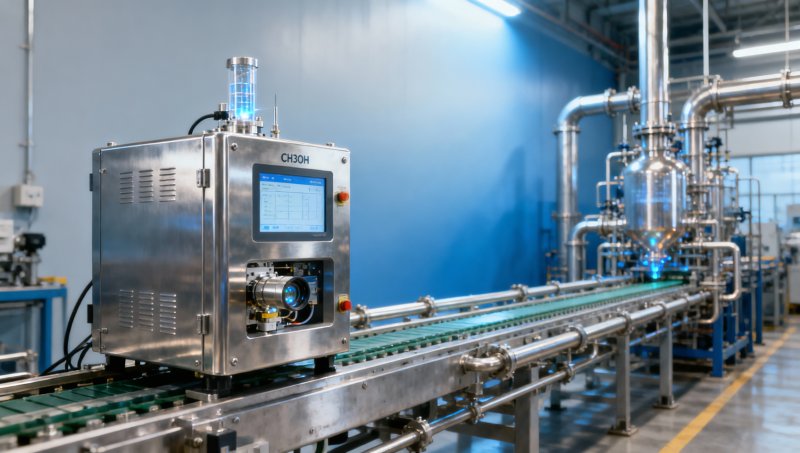
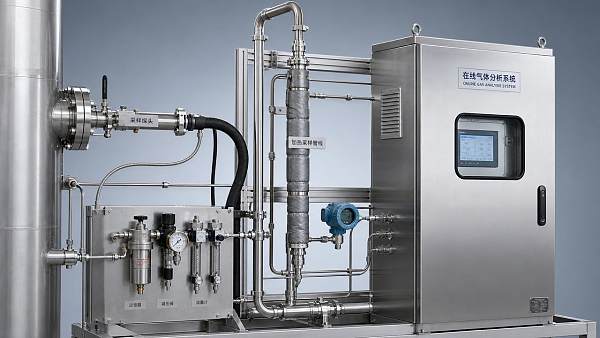
A CH3OH concentration analyzer is a precision instrument designed to determine methanol content in gas or liquid mixtures, commonly used in applications such as alcohol synthesis, VOC monitoring, and safety compliance. Over the past 5–10 years, technological progress in spectroscopy, gas chromatography, and optical sensors has shortened measurement cycles from 60 seconds to less than 10 seconds, increasing throughput by nearly 80%.
Modern analyzers integrate IR absorption, laser-based detection, or electrochemical sensing. Each technique provides detection accuracy typically within ±1% of full scale, meeting industrial monitoring standards such as ISO 5167 and ASTM D1078. Compared to older instruments, the new versions offer multi-point calibration (3–5 reference concentrations) and real-time drift compensation, extending service intervals up to 18 months.
An essential upgrade trend is the integration of digital communication protocols—Modbus TCP, Profibus, and MQTT—for Industry 4.0 environments. With network connectivity, analyzer data can be uploaded to supervisory systems such as DCS or cloud databases for 24-hour monitoring and predictive maintenance.
Moreover, modular architecture allows simplified replacement of optical cells and sensors within 15–30 minutes of downtime, improving maintainability and minimizing production interruption. Such structural refinements have a tangible ROI effect, often achieving payback within one fiscal year when implemented across 3–4 key production lines.
2. Market Overview and Application Scenarios
The global instrumentation segment related to methanol and organic compound analysis has shown compound annual growth rates around 7–9% between 2021 and 2024. Demand primarily originates from chemical production plants, refineries, and laboratories seeking higher analytical accuracy and compliance with stricter emissions standards (e.g., below 50 ppm methanol in exhaust streams).
Common environments utilizing CH3OH analyzers include:
- Continuous monitoring of methanol recovery systems in petrochemical processes.
- Quality assurance in formalin and biodiesel production lines where methanol purity >99.85% is required.
- Environmental monitoring stations for air and wastewater analysis with detection thresholds around 0.5–5 ppm.
- Laboratories performing calibration of C9H18O or C2H4O analyzers under consistent reference conditions.
Companies typically adopt upgraded analyzers in phases—pilot, small-scale, then full-scale deployment—to validate gains in measurement stability. The transition from manual sampling to automated online systems reduces labor time by approximately 30–40 hours per month per line, creating measurable operational savings.
With modernization efforts such as smart factories and energy optimization, integrating CH3OH analysis into digital control loops can support 3–6% energy optimization by maintaining optimal reaction ratios and minimizing resource waste.
3. Performance Comparison: Legacy vs. Upgraded Models
To evaluate whether the upgrade cost is justified, it is essential to understand measurable improvements. The following table compares legacy and modern CH3OH analyzer models across typical parameters.
In most scenarios, process industries report 15–25% reduction in calibration gas consumption and a 10–12% improvement in product yield efficiency. For large-scale chemical plants operating 24 hours a day, such performance boosts directly translate to annual savings exceeding mid-five-figure USD amounts.
Additionally, upgraded models with condition-based monitoring use sensor drift analytics. These adapters issue alerts when deviation exceeds 0.5% FS, enabling proactive maintenance scheduling. As a result, downtime events per quarter can drop from 3–4 incidents to less than one.
Hence, while capital expenditure for next-generation systems is roughly 20–30% higher, the total cost of ownership typically declines by 25% across a 3-year lifecycle due to lower maintenance, calibration, and downtime costs.
4. Procurement Guide: Evaluating Cost vs. ROI
Decision-makers, especially financial approvers and project managers, should evaluate CH3OH analyzer upgrades through quantifiable procurement dimensions—precision, integration capacity, energy savings, and compliance assurance. The following table summarizes key purchase considerations with estimated ranges.
Procurement teams are advised to request data sheets specifying optimal ambient temperatures (commonly 10°C–45°C) and safety certifications such as ATEX Zone 2 or IECEx for volatile environments. Such due diligence ensures compliance and minimizes post-installation modification costs.
Integrators and distributors often recommend implementing a 4-step selection process: requirement assessment (2–3 days), specification alignment (1 week), prototype testing (2–4 weeks), and validation (1 week). This method balances technical and procurement perspectives for an efficient evaluation cycle.
Finally, decision-makers should combine qualitative and numerical analysis. For example, quantify downtime reduction (hours per month) and contamination loss (kg per batch) before final approval, transforming evaluation into a data-driven justification for the investment.
5. Common Misconceptions and Practical Recommendations
Organizations often misjudge three aspects while assessing analyzer upgrades. First, assuming all analyzers within the same concentration range perform similarly. In reality, sensor linearity, optical design, and reagent stability can yield up to 15% variance in repeatability. Second, underestimating installation conditions—humidity control (40–70%) and vibration tolerance (<2 mm displacement) directly influence long-term stability. Third, overlooking the training period: operators typically require 2–3 days to adapt to interface logic and maintenance cycles.
To minimize risk, implement a verification routine every quarter. Use reference materials at 10%, 50%, and 90% concentration levels to confirm calibration integrity. Documentation of deviations exceeding ±1% should trigger recalibration or inspection.
For plant-wide rollouts, the best practice is to combine analyzer upgrade with digital control system updates. Consolidating CH3OH, C2H4O, and C9H18O analyzers under unified software supervision simplifies compliance reporting and improves cross-department coordination by approximately 20%.
Maintenance teams are encouraged to negotiate service agreements with 6-month performance audits, including optical alignment check and moisture filter replacement. Such agreements cost 10–15% of initial device price but reduce unscheduled stops by up to 50%.
6. Why Consult Us for CH3OH Analyzer Upgrades
Industrial users planning to modernize their measurement systems can benefit from expert consultation across specification verification, model screening, and ROI projection. Our team of instrumentation specialists offers assistance in:
- Confirming parameter compatibility and detection range for project-specific requirements (0–100% vol typical).
- Analyzing integration with existing DCS/PLC and recommending control loop optimization plans.
- Estimating delivery schedule (6–10 weeks) and coordinating certification needs such as ATEX or CE compliance.
- Providing pre-installation testing and calibration guidance to ensure first-month accuracy within ±0.5%.
To learn more about how a CH3OH concentration analyzer upgrade can improve reliability, energy efficiency, and safety assurance within your operation, contact our technical advisory team to discuss a customized plan including selection, commissioning, and periodic maintenance support. We can assist you in turning analytical improvements into direct process profitability.
Recommended for You
 First Global White Paper on Dynamic Calibration for Humanoid Robot Sensors ReleasedFirst global white paper on dynamic calibration for humanoid robot sensors—key for pressure & 6-axis force/torque accuracy in smart manufacturing and collaborative robotics.
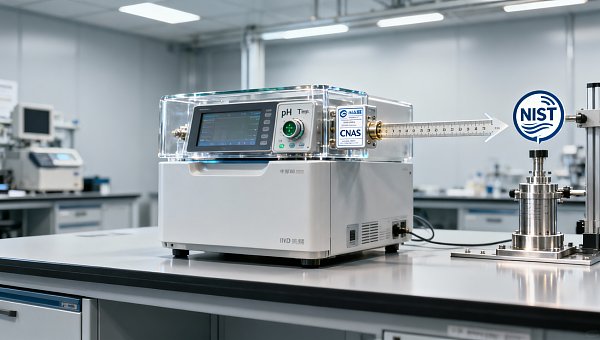
 FDA Updates IVD Import Guidelines: CNAS/NIST Calibration Chain RequiredFDA mandates CNAS/NIST calibration chain for IVD pressure & temperature sensors—key for Chinese exporters. Act now to meet July 2026 deadline.
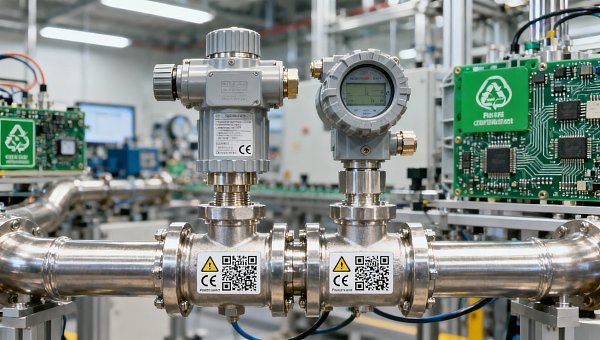
 EU PEF Carbon Database Mandatory Access for Chinese Industrial InstrumentsEU PEF Carbon Database mandatory for Chinese industrial instruments—meet June 15, 2026 deadline to keep CE marking & win EU tenders.
 IEC TC65 Releases Cybersecurity Validation Guide for Industrial InstrumentsIEC TC65 releases cybersecurity validation guide for industrial instruments—key for firmware signing, OT encryption & remote audit compliance. Act now.
 SASO Introduces AI-Based Energy Efficiency Verification for Industrial TransmittersSASO AI energy efficiency verification now mandatory for industrial transmitters in Saudi Arabia—ensure compliance before June 1, 2026 to avoid customs delays.
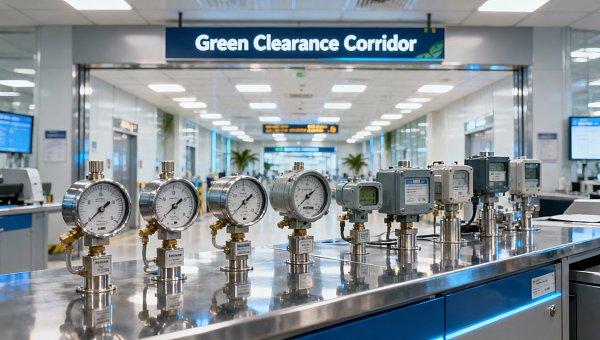
 ASEAN Green Customs Corridor Fully LaunchedASEAN Green Customs Corridor now live: AI-verified CNAS calibration reports slash ASEAN-China customs clearance to under 4 hours — boost precision equipment trade today.
 Process Control Equipment Price Trends Under Energy Cost PressureProcess control equipment price trends are shifting under energy cost pressure. Discover key cost drivers, total ownership factors, and smart sourcing tips to reduce risk and improve ROI.
 Multi Gas Analysis in Safety-Critical Areas: What to Check FirstMulti gas analysis starts with risk, not just instruments. Learn what to check first in safety-critical areas to improve compliance, reduce downtime, and protect people and assets.
 Industrial Analyzer Equipment: Common Failures and Maintenance TipsIndustrial analyzer equipment failures can disrupt uptime, compliance, and data accuracy. Discover common faults and practical maintenance tips to improve reliability fast.
 Industrial Measurement System Import Trends and Supply RisksIndustrial measurement system import trends and supply risks explained: learn how distributors can protect margins, reduce delays, and build stronger sourcing resilience.
 Emission Control Equipment Rules Reshaping Industrial DemandEmission control equipment is reshaping industrial investment as stricter rules drive demand for smarter monitoring, lower risk, and compliance-ready systems. Explore what buyers must evaluate now.
 Emission Measurement System Costs in 2026: What Shapes PricingEmission measurement system costs in 2026 depend on accuracy, compliance, installation, integration, and service. Learn what shapes pricing and plan a smarter investment.
 Process Measurement System Upgrades: When Do They Pay Off?Process measurement system upgrades pay off when they cut downtime, improve accuracy, and support compliance. Learn the key signals, ROI factors, and smart upgrade strategies.
 Paramagnetic Gas Measurement: Where It Performs Best in IndustryParamagnetic gas measurement delivers fast, stable oxygen analysis for combustion, emissions, and process control. Discover where it performs best and how it improves efficiency, compliance, and reliability.
 Gas Quality Analyzer Selection: Key Specs That Affect ResultsGas quality analyzer selection starts with the specs that truly impact results. Learn how accuracy, drift, response time, and durability affect safety, compliance, and process performance.
 How to Compare Custom Gas Analysis Options for Complex Process StreamsCustom gas analysis for complex process streams: learn how to compare technologies, sample conditioning, compliance, and maintenance to choose a reliable, application-fit solution.
 First Global White Paper on Humanoid Robot Industrial Calibration ReleasedHumanoid robot industrial calibration: First global white paper released—key for sensor makers, integrators & metrology labs. Learn impact & action steps.
 FDA Updates IVD Import Guidance: CNAS Calibration Chain RequiredFDA mandates CNAS calibration chain with NIST traceability for IVD instruments from China—act now to avoid U.S. import rejection starting July 1, 2026.
 IEC TC65 Releases Cybersecurity Validation Guidance for Industrial InstrumentsIEC TC65 releases cybersecurity validation guidance for industrial instruments—key for exporters, OEMs & integrators targeting EU/NA markets. Act now.
 ASEAN Green Corridor for Measuring Instruments Fully LaunchedASEAN Green Corridor for Measuring Instruments is live—unlock 3.8-hour customs clearance for CNAS-calibrated instruments across all 10 ASEAN nations. Act now!
 PTB Opens Direct VDA/ISO 17025 Report Portal for CNAS LabsPTB opens direct VDA/ISO 17025 report portal for CNAS labs — enabling dual-compliant calibration reports in <72h. Boost automotive audit readiness now!
 Vietnam Enforces Dual CNAS + Vietnamese Language Requirement for Industrial InstrumentsVietnam enforces dual CNAS + Vietnamese language requirement for industrial instruments (HS 9026/9027/9030) — avoid customs rejection. Act now!
 Red Sea Crisis Escalates: Gulf of Aden No-Sail Zone Extended to June 15, 2026Red Sea Crisis escalates: Gulf of Aden no-sail zone extended to June 15, 2026 — impacting industrial instrumentation trade, airfreight costs (+452%), and supply chain resilience between China and the Middle East.
 SASO Mandates AI-Driven Energy Simulation for Industrial Transmitters from June 2026SASO mandates AI-driven energy simulation for industrial transmitters from June 2026 — ensure compliance with NAIEC-certified testing now to avoid delays & rejections.
 BIS Adds 3 High-Precision Process Calibrators to EAR Supplement No. 4BIS Adds 3 High-Precision Process Calibrators to EAR Supplement No. 4—urgent compliance insights for semiconductor, nuclear, and calibration service providers operating with China.
 EU PEF Carbon Footprint Database Mandatory Integration CountdownEU PEF Carbon Footprint Database integration is mandatory for industrial instrument exporters by Jan 2027—act now to secure market access, customs clearance & B2B tenders.
 FDA Updates IVD Import Guidance: CNAS Calibration Traceability to NIST Required for Chinese ManufacturersFDA now requires CNAS calibration traceability to NIST for Chinese IVD manufacturers — critical for 510(k)/De Novo submissions. Act now to avoid RTA delays!
 ASEAN's Green Clearance Corridor Fully LaunchedGreen Clearance Corridor now live: CNAS calibration reports auto-verified for ASEAN customs clearance in under 4 hours — boost your China–ASEAN trade efficiency today!
 First Global Cybersecurity Verification Guide for Industrial Instruments ReleasedFirst global cybersecurity verification guide for industrial instruments launched—featuring a 5-level maturity model & standardized pentest library. Essential for exporters, OEMs, and critical infrastructure suppliers.
 SASO Shortens Energy Labeling for Industrial Transmitters to 7 Days, Adds AI Power Simulation RequirementSASO energy labeling for industrial transmitters now takes just 7 days — but requires AI power simulation. Learn how to comply fast and avoid delays.
 PTB Launches AI Calibration Cloud Platform 2.0PTB AI Calibration Cloud Platform 2.0 launches with CNAS-VDA 5/ISO/IEC 17025 dual-compliance reporting — streamline cross-border calibration for auto suppliers, labs & equipment makers.
 EU Mandates Carbon Footprint Labels on Industrial Instruments from 2027EU mandates carbon footprint labels on industrial instruments from 2027—key for pressure, temperature & flow meter exporters. Act now to ensure PEF compliance and market access.


Search Categories
Search Categories
Latest Article
- First Global White Paper on Dynamic Calibration for Humanoid Robot Sensors ReleasedFirst global white paper on dynamic calibration for humanoid robot sensors—key for pressure & 6-axis force/torque accuracy in smart manufacturing and collaborative robotics.Posted by:
- FDA Updates IVD Import Guidelines: CNAS/NIST Calibration Chain RequiredFDA mandates CNAS/NIST calibration chain for IVD pressure & temperature sensors—key for Chinese exporters. Act now to meet July 2026 deadline.Posted by:
- EU PEF Carbon Database Mandatory Access for Chinese Industrial InstrumentsEU PEF Carbon Database mandatory for Chinese industrial instruments—meet June 15, 2026 deadline to keep CE marking & win EU tenders.Posted by:
Please give us a message
