
Intrinsically Safe Analyzer or Purged System for Tight Spaces?


When installation space is limited, the choice between an intrinsically safe analyzer and a purged system is usually not just about enclosure size. It affects hazardous-area compliance, maintenance effort, uptime, and total cost over the full project life cycle. In most tight-space projects, an intrinsically safe analyzer is the better fit when the measurement technology and required performance can be achieved within low-energy design limits. A purged system often becomes the better option when the analyzer needs more power, supports more complex components, or must deliver capabilities that intrinsic safety cannot practically provide. The right answer depends on area classification, service conditions, maintenance access, and the real cost of ownership—not just the initial purchase price.
For buyers evaluating a compact zone 2 analyzer, a higher-protection zone 1 analyzer, or solutions aligned with IECEx analyzer and ATEX analyzer requirements, the key is to compare safety method, physical footprint, utilities, serviceability, and operational risk together. This guide focuses on the questions engineers, operators, procurement teams, safety managers, and decision-makers actually need answered before selecting a system for a tight industrial environment.
What matters most in tight spaces: safe design, usable access, and lifetime cost
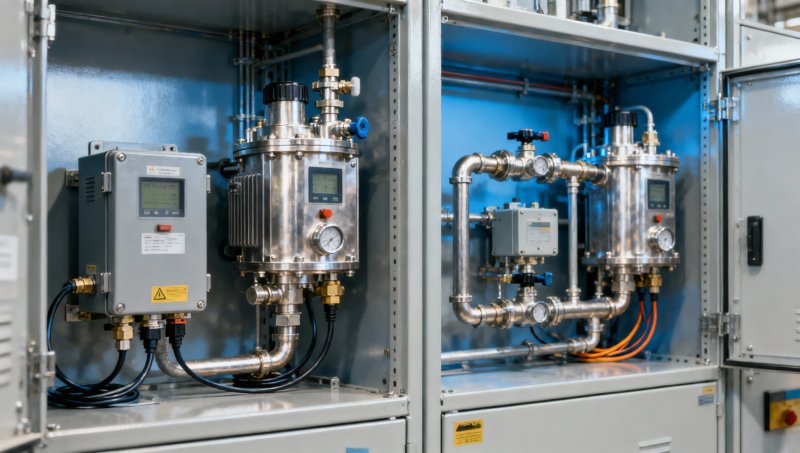
In confined installations, the wrong protection concept can create problems long after commissioning. A system may technically fit in the allocated area but still be difficult to maintain, expensive to operate, or risky to service. That is why the first practical question is not “Which is smaller on paper?” but “Which solution will remain safe, accessible, and cost-effective in this location?”
An intrinsically safe analyzer is designed so that electrical energy remains below the level that could ignite a hazardous atmosphere. This approach is often highly attractive for compact installations because it can reduce enclosure complexity and simplify intervention during maintenance, depending on the design and local procedures.
A purged system, by contrast, protects the analyzer by using a purge or pressurization method to keep hazardous gas out of the enclosure. This allows the use of higher-power components and more conventional analyzer hardware, but it also introduces additional requirements such as purge gas supply, monitoring, interlocks, and enclosure management.
For most target readers, the real decision factors are these:
- Can the analyzer technology actually be implemented as intrinsically safe?
- How much installation volume is required beyond the analyzer itself?
- Will technicians have enough room for calibration, repair, and inspection?
- What utilities are required, including instrument air or purge gas?
- What are the ongoing compliance and operating costs?
- What happens to production if the protection system trips or fails?
When an intrinsically safe analyzer is usually the better choice
An intrinsically safe design is often the preferred option when space is extremely restricted and the analyzer can perform its function without high-power electronics, heat-generating devices, or large internal assemblies. This is especially relevant in skid packages, retrofits, offshore modules, compact shelters, and plant areas where every access point matters.
An intrinsically safe analyzer is often a strong choice when:
- The sensing and signal architecture can operate within intrinsic safety energy limits.
- The application requires a compact zone 2 analyzer or similar space-efficient hazardous-area solution.
- Maintenance teams need easier access without depending on purge recovery procedures.
- There is limited availability of clean, stable purge gas or compressed air.
- The project wants fewer auxiliary systems and a cleaner installation layout.
Its main advantages in tight spaces include:
- Smaller system architecture: Fewer external purge-related components can reduce the total installed footprint.
- Simplified field support: In many cases, maintenance planning is easier because the protection concept is built into the circuit design.
- Lower utility dependence: No continuous reliance on purge supply can be a major operational benefit.
- Reduced failure points: Eliminating purge controllers, pressure switches, and gas supply issues may improve reliability in some applications.
However, intrinsic safety is not automatically the best answer. Its limits become clear when the analyzer requires more energy, larger pumps, heated components, fast-response conditioning systems, or advanced computing elements that cannot be easily certified under intrinsic safety rules.
When a purged system makes more sense despite the extra complexity
A purged system is often the practical choice when the analyzer technology itself cannot realistically be made intrinsically safe, or when performance requirements outweigh the desire for the smallest possible arrangement. This can happen in advanced process analyzers, systems with power-hungry components, or applications needing a full-featured analyzer package in a hazardous location.
A purged solution may be more suitable when:
- The analyzer requires standard industrial electronics with higher power consumption.
- The measurement principle involves heated chambers, pumps, valves, or larger sample-conditioning assemblies.
- The project needs a zone 1 analyzer with broader analyzer functionality than an intrinsically safe platform can offer.
- The team wants to use proven analyzer hardware already available in non-IS configurations.
- Performance, response time, or analytical range would be compromised by forcing an IS design.
The tradeoff is that a purged system usually needs more than just the analyzer enclosure. You must consider purge gas piping, pressure control, alarms, startup sequencing, and lockout logic. In a tight installation, these support elements can consume valuable layout space and make service access more difficult than expected.
For procurement and business stakeholders, this means the visible cabinet dimensions may understate the true installed footprint. The enclosure may fit, but if the purge train, valves, cable routing, and maintenance clearance do not fit comfortably, the project may face delays, unsafe servicing practices, or later relocation cost.
How IECEx and ATEX requirements affect the decision
For buyers comparing an IECEx analyzer and an ATEX analyzer, certification should not be treated as a simple label-checking exercise. The relevant issue is whether the protection method, area classification, and installation conditions align with the site’s regulatory and operational requirements.
In practice, teams should verify:
- Area classification: Is the analyzer intended for zone 1 or zone 2, and does that match the actual installation area?
- Protection concept: Is the certification based on intrinsic safety, purge/pressurization, or another method?
- System scope: Does the certificate cover only the analyzer core, or the full assembled package including accessories?
- Installation conditions: Are there restrictions for ambient temperature, gas group, ingress protection, cable glands, or maintenance procedures?
- Regional acceptance: Does the project require ATEX, IECEx, or both for commercial or regulatory reasons?
This matters because a compliant analyzer on paper can still become a poor project choice if the certified installation method is hard to achieve in a physically constrained area. For example, a purged ATEX analyzer may be fully compliant, but if the purge support system cannot be installed with proper access and monitoring, it may create more operational risk than a smaller intrinsically safe alternative.
For technical evaluators and safety managers, the best approach is to compare certified solutions at the system level, not just by analyzer model. For finance and management teams, this reduces the risk of underestimating hidden engineering and installation costs.
Which option is usually better for maintenance, uptime, and operator practicality?
In tight spaces, maintenance access is often the deciding factor because it directly affects uptime and safety behavior in the field. A solution that looks efficient during design can become inefficient if technicians cannot comfortably inspect, calibrate, or replace parts.
An intrinsically safe analyzer often provides an advantage when frequent intervention is expected, particularly in locations where opening and restoring a purged system would increase downtime or procedural burden. It can also reduce dependence on purge integrity checks and related troubleshooting.
A purged system can still perform very well, but it usually demands stronger discipline in operation and maintenance. Teams need to manage:
- Purge gas quality and availability
- Startup and shutdown sequences
- Interlocks and alarm verification
- Enclosure sealing and pressure integrity
- Recovery procedures after maintenance access
From an uptime perspective, the best option is not necessarily the one with the highest protection level in abstract terms. It is the one that your site can realistically support with its actual technicians, spare parts, utility reliability, and maintenance planning maturity.
If the site has limited service resources, intermittent utility stability, or difficult access conditions, a simpler intrinsically safe architecture may reduce avoidable downtime. If the site already has strong purge-system experience and the analyzer performance requirement is demanding, a purged system may still deliver better operational value.
A practical decision framework for buyers and project teams
To make a sound decision, use a selection process that combines engineering feasibility with business impact. The most effective question is: Which option meets the hazardous-area requirement with the lowest total project risk in this specific space?
Use this checklist during evaluation:
- Confirm the hazardous area and target protection level.
Determine whether the installation is zone 1, zone 2, or another classified area, and identify whether a compact zone 2 analyzer is sufficient or a higher-protection zone 1 analyzer is required. - Validate analyzer technology constraints.
Check whether the measurement method can truly be implemented as intrinsically safe without compromising analytical performance. - Measure the real installed footprint.
Include not only the analyzer body, but also clearances, tubing runs, cable entry, purge equipment, service swing space, and calibration access. - Assess utility dependence.
Review availability and reliability of purge gas, compressed air, power, and site support infrastructure. - Compare lifecycle costs.
Include engineering, certification, installation, commissioning, maintenance, downtime exposure, and operator training. - Review compliance details early.
Verify IECEx analyzer or ATEX analyzer suitability at the package level, not only by component brochures. - Test operator practicality.
Ask the people who will maintain the analyzer whether the design is serviceable in the proposed location.
For procurement and finance teams, this framework helps avoid a common mistake: selecting the lowest-price analyzer without pricing the full support architecture. For project managers, it helps reduce change orders. For decision-makers, it supports a balanced choice between compliance, usability, and long-term cost control.
Bottom line: choose the protection concept that fits the space and the analyzer, not just the specification sheet
In tight industrial spaces, an intrinsically safe analyzer is often the best option when compactness, low utility dependence, and easier field practicality are priorities—and when the analyzer technology can meet application requirements within IS limits. A purged system becomes the better choice when the process demands analyzer functions or power levels that intrinsic safety cannot practically support.
The smartest selection is rarely made by comparing cabinet dimensions alone. It comes from looking at area classification, certification method, actual maintenance access, utility requirements, and lifetime cost together. Whether you are sourcing a compact zone 2 analyzer, evaluating a zone 1 analyzer, or comparing IECEx analyzer and ATEX analyzer options, the most valuable question is simple: Which solution will remain safe, compliant, maintainable, and cost-effective in this exact space over time?
If your team answers that question early, you are far more likely to choose a system that works not only at handover, but throughout its full operating life.
Recommended for You
 FDA Updates IVD Import Guidance: CNAS Calibration Traceability to NIST Required for Chinese ManufacturersFDA now requires CNAS calibration traceability to NIST for Chinese IVD manufacturers — critical for 510(k)/De Novo submissions. Act now to avoid RTA delays!
 ASEAN's Green Clearance Corridor Fully LaunchedGreen Clearance Corridor now live: CNAS calibration reports auto-verified for ASEAN customs clearance in under 4 hours — boost your China–ASEAN trade efficiency today!
 First Global Cybersecurity Verification Guide for Industrial Instruments ReleasedFirst global cybersecurity verification guide for industrial instruments launched—featuring a 5-level maturity model & standardized pentest library. Essential for exporters, OEMs, and critical infrastructure suppliers.
 SASO Shortens Energy Labeling for Industrial Transmitters to 7 Days, Adds AI Power Simulation RequirementSASO energy labeling for industrial transmitters now takes just 7 days — but requires AI power simulation. Learn how to comply fast and avoid delays.
 PTB Launches AI Calibration Cloud Platform 2.0PTB AI Calibration Cloud Platform 2.0 launches with CNAS-VDA 5/ISO/IEC 17025 dual-compliance reporting — streamline cross-border calibration for auto suppliers, labs & equipment makers.
 EU Mandates Carbon Footprint Labels on Industrial Instruments from 2027EU mandates carbon footprint labels on industrial instruments from 2027—key for pressure, temperature & flow meter exporters. Act now to ensure PEF compliance and market access.
 Red Sea Crisis Worsens: Gulf of Aden Ban Extends to 3 Weeks, Air Freight Premiums for Industrial Instruments Surge 420%Red Sea crisis deepens: Gulf of Aden ban hits 3 weeks, spiking air freight premiums for industrial instruments by 420%—urgent insights for exporters & EPC contractors.
 Vietnam Enforces CNAS + Vietnamese Dual Requirement for Industrial InstrumentsVietnam Enforces CNAS + Vietnamese Dual Requirement for Industrial Instruments: Key compliance update for exporters, labs & documentation teams ahead of June 2026.
 U.S. BIS Adds 5 High-Precision Pressure/Flow Calibration Sources to EAR ListU.S. BIS adds 5 high-precision pressure/flow calibration sources to EAR list — critical for exporters, instrument makers & supply chain teams. Act now.
 IEC 61508-3:2026 Published: Functional Safety Certification UpgradedIEC 61508-3:2026 is live—discover what the upgraded functional safety certification means for your industrial software, AI diagnostics & global market access.
 FDA Updates IVD Import Guidance: CNAS Calibration Chain Required for China-Made DevicesFDA now requires CNAS calibration chain reports for China-made IVD analyzers—pH, ion & clinical chemistry devices entering via 510(k)/De Novo. Act now to avoid U.S. port rejections.
 EN 61000-6-4:2026 Enters Force: Stricter EMC Requirements for Industrial Field InstrumentsEN 61000-6-4:2026 enforces stricter EMC requirements for industrial field instruments—key for AI edge controllers, sensors & exporters. Act now to ensure CE-EMC compliance by Nov 2026.
 Global Methanol Electric Alliance Launches Cross-Border Energy Efficiency Recognition RoadmapGlobal Methanol Electric Alliance launches cross-border energy efficiency recognition roadmap—key for exporters, cal labs & methanol-instrument manufacturers.
 Red Sea Crisis Escalates: Air Freight Premiums for China–Middle East Industrial Instruments Hit 390%Red Sea Crisis hits industrial instruments: China–Middle East air freight premiums surge 390%. Act now to secure Q3 capacity, avoid delays & optimize LCL alternatives.
 IEC TC65 Mandates Cybersecurity Certification for Industrial Field Instruments from 2027IEC TC65 mandates cybersecurity certification for industrial field instruments by 2027 — pressure, flow & analytical devices must meet IEC 62443-4-2:2026 and display SL1–SL3 labels. Act now to ensure market access.
 SASO Cuts Energy Labeling Turnaround for Industrial Transmitters to 7 Working DaysSASO Energy Labeling now takes just 7 working days for industrial transmitters — faster market access, CNAS reports accepted. Act now!
 PTB Launches CalCloud 2.0 with Direct CNAS Lab IntegrationCalCloud 2.0 now integrates directly with CNAS labs—enabling automated VDA 5 & ISO/IEC 17025 dual-compliant calibration reports for automotive and industrial exporters. Boost compliance efficiency today!
 ASEAN's Green Clearance Corridor for CNAS Calibration Reports LaunchesASEAN's Green Clearance Corridor now verifies CNAS calibration reports via blockchain—cut customs clearance to <48h for flow meters, analyzers & more. Act now!
 Vietnam Mandates CNAS Calibration Certificates & Vietnamese Manuals for Industrial Meters from June 1, 2026CNAS calibration certificates & Vietnamese manuals now mandatory for industrial meters entering Vietnam from June 1, 2026—avoid customs delays and ensure seamless market access.
 U.S. BIS Tightens Export Controls on High-Precision Laser InterferometersU.S. BIS tightens export controls on high-precision laser interferometers—critical for semiconductor metrology & ISO/IEC 17025 calibration. Act now to ensure compliance.
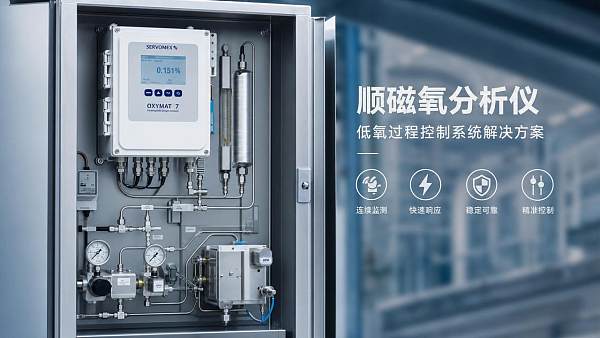
 Paramagnetic Monitor Calibration Tips for Stable OutputParamagnetic monitor calibration tips for stable output: learn how to reduce drift, improve accuracy, cut downtime, and keep oxygen measurement reliable in demanding industrial applications.
 Paramagnetic Measurement in Low-Oxygen Process ControlParamagnetic measurement enables accurate low-oxygen process control with fast response and stable oxygen analysis. Learn how it improves safety, consistency, and system performance.
 Laser Detector Import Risks and Certification DelaysLaser detector import risks can cause costly certification delays, customs issues, and testing setbacks. Learn how to avoid compliance failures before ordering.
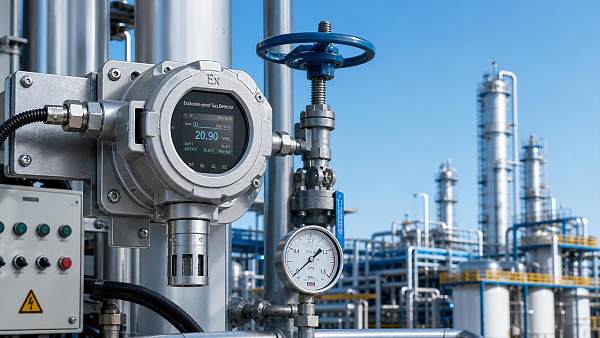
 Explosion Proof Detector Demand Under New Safety RulesExplosion proof detector demand is rising under new safety rules. Discover how to compare certified, reliable options that improve compliance, integration, and long-term site safety.
 Laboratory Detector Accuracy Standards You Should CheckLaboratory detector accuracy standards explained: check detection limits, repeatability, drift, and traceability to reduce risk, improve audit readiness, and choose with confidence.
 Custom Measurement Lead Times and Budget PlanningCustom measurement lead times and budgets explained for procurement teams. Learn key cost drivers, planning steps, and supplier tips to reduce delays and buy with confidence.
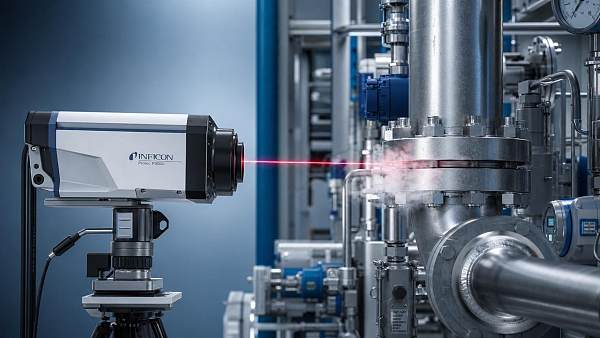
 Laser Measurement for Leak Detection: Common PitfallsLaser measurement for leak detection can fail due to setup, airflow, and data interpretation errors. Learn the common pitfalls and proven fixes for more accurate, reliable results.
 How to Evaluate a High Accuracy Detector in the FieldHigh accuracy detector evaluation starts with real field performance. Learn how to compare stability, response time, and reliability to choose the right detector with confidence.
 Electrochemical Monitor Lifespan and Replacement CostsElectrochemical monitor lifespan and replacement costs explained for buyers. Learn how sensor life, maintenance, and total ownership cost affect safer, smarter purchasing decisions.
 Thermal Analysis Market Direction in Process IndustriesThermal analysis market direction in process industries: discover trends, applications, and investment insights that improve quality control, reduce risk, and support smarter industrial decisions.
 Monitoring Shelter Design Priorities for Outdoor SitesMonitoring shelter design starts with protection, climate control, and power reliability. Discover how to choose the right outdoor solution for stable data, safer maintenance, and lower lifecycle risk.
 Fixed Measurement Planning for Multi-Point InstallationsFixed measurement planning is essential for multi-point installations. Learn how to improve accuracy, reliability, compliance, and maintenance efficiency across complex industrial systems.







Search Categories
Search Categories
Latest Article
- FDA Updates IVD Import Guidance: CNAS Calibration Traceability to NIST Required for Chinese ManufacturersFDA now requires CNAS calibration traceability to NIST for Chinese IVD manufacturers — critical for 510(k)/De Novo submissions. Act now to avoid RTA delays!Posted by:
- ASEAN's Green Clearance Corridor Fully LaunchedGreen Clearance Corridor now live: CNAS calibration reports auto-verified for ASEAN customs clearance in under 4 hours — boost your China–ASEAN trade efficiency today!Posted by:
- First Global Cybersecurity Verification Guide for Industrial Instruments ReleasedFirst global cybersecurity verification guide for industrial instruments launched—featuring a 5-level maturity model & standardized pentest library. Essential for exporters, OEMs, and critical infrastructure suppliers.Posted by:
Please give us a message
