
What Makes a Process Monitoring Analyzer Hard to Trust?


A process monitoring analyzer becomes hard to trust when its readings are unstable, its maintenance needs are unclear, its protection design is weak, or its overall analyzer system cannot hold accuracy under real process conditions. For operators, engineers, buyers, and decision-makers, trust is not built by specification sheets alone. It comes from repeatable performance, verifiable calibration logic, enclosure protection, sample handling quality, alarm integrity, and the supplier’s ability to support long-term monitoring system reliability.
In practice, the biggest concerns are usually simple: Will the data drift? Will moisture, dust, vibration, or temperature swings affect the result? Can the gas analysis equipment keep running in the field without constant intervention? And if the analyzer is used for safety control analyzer or emission control analyzer duties, can the organization defend the measurement in front of auditors, customers, regulators, and internal risk teams? These are the questions that define trust.
Why do users stop trusting a process monitoring analyzer?
Most trust issues do not start with a dramatic failure. They start with small inconsistencies. One day the analyzer reads slightly higher than expected. A week later calibration frequency increases. Then operators begin relying on manual checks more than the online system. Once that happens, confidence drops fast.
The most common reasons include:
- Measurement drift that is not explained or corrected in time
- Poor sample conditioning causing contamination, condensation, pressure instability, or delayed response
- Weak enclosure design that allows heat, dust, corrosion, or moisture to affect analyzer performance
- High maintenance burden with frequent consumable changes, recalibration, or component replacement
- Unclear alarm logic that makes operators unsure whether a warning is process-related or instrument-related
- Limited traceability for calibration records, diagnostics, and performance history
- Mismatch between specification and real application, especially in harsh industrial environments
In other words, a process monitoring analyzer is hard to trust when users cannot easily distinguish between true process change and analyzer error.
What matters more than the analyzer itself: the full analyzer system
Many evaluation teams focus too heavily on the analyzer core and too lightly on the complete system around it. But field trust is often determined by the total analyzer package, not only the sensor or measuring principle.
A reliable analyzer system typically depends on:
- Sample extraction quality from the process point
- Transport line design to prevent lag, adsorption, or condensation
- Filtration and conditioning suited to the gas composition and operating environment
- Flow, pressure, and temperature stability at the analyzer inlet
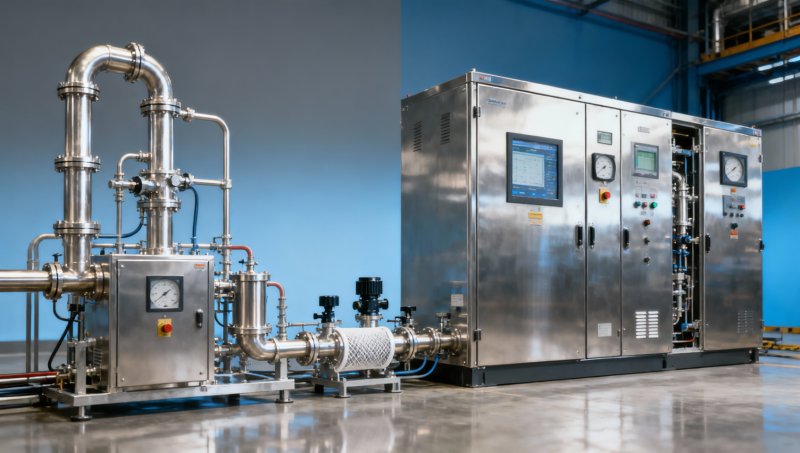
- Correct installation inside a gas analyzer enclosure or industrial shelter
- Power quality, grounding, and communications reliability
- Accessible maintenance layout for safe service and fast troubleshooting
This is especially important for gas measurement in industrial manufacturing, energy and power, and environmental monitoring. Even excellent gas analysis equipment can produce questionable results if the shelter ventilation is poor, ambient temperature is uncontrolled, or the sampling path introduces bias before the gas reaches the measuring cell.
How enclosure integrity affects trust in gas analysis equipment
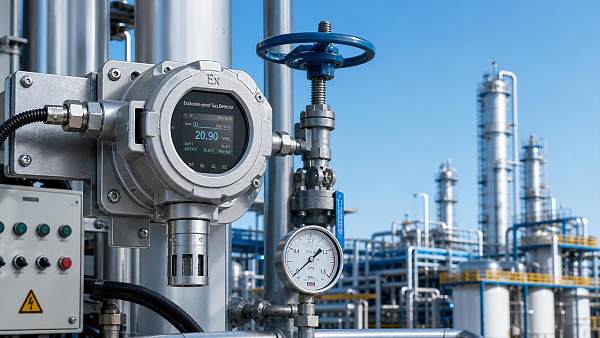
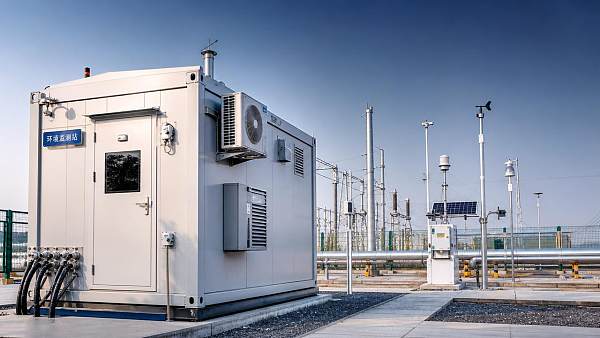
When a process monitoring analyzer is installed in demanding environments, enclosure design becomes a trust issue, not just a packaging issue. A gas analyzer enclosure or industrial shelter must protect both the equipment and the measurement quality.
Decision-makers should assess whether the enclosure supports:
- Stable temperature control for analyzer accuracy and component life
- Ingress protection against dust, water, and corrosive air
- Hazardous area compliance when required by the site
- Ventilation and heat dissipation without exposing instruments to contamination
- Safe access for maintenance personnel
- Proper cable routing and tubing management
- Mechanical robustness against vibration and weather exposure
If the enclosure cannot maintain the operating conditions assumed in the analyzer specification, the specification loses real meaning. Buyers should therefore ask not only, “What is the analyzer accuracy?” but also, “Under what installed conditions can that accuracy actually be maintained?”
Why drift, calibration, and diagnostics are the first proof points of trust
For operators and technical evaluators, trust begins with stability over time. A process monitoring analyzer that performs well only immediately after commissioning is not enough. What matters is whether performance remains stable between calibration intervals and whether diagnostics clearly reveal developing issues.
Useful evaluation questions include:
- How often does the analyzer require calibration under actual site conditions?
- What are the main causes of drift, and how are they detected?
- Are zero and span checks automated, manual, or both?
- Can maintenance staff separate sensor drift from sample system problems?
- Are diagnostics predictive or only reactive after failure occurs?
- Is calibration traceable for internal QA, customer audits, or regulatory review?
In safety-critical or compliance-related applications, this becomes even more important. A safety control analyzer must provide confidence that decisions based on its signal are defensible. An emission control analyzer must support reporting credibility, not just continuous operation. In both cases, undocumented or unexplained drift can create operational, legal, and financial risk.
What procurement and management teams should verify before approving a purchase
Procurement, finance, project leaders, and business evaluators often need a practical framework, not just technical detail. The core question is whether the analyzer will deliver dependable value over its lifecycle.
Before approval, teams should verify:
- Total cost of ownership, including calibration gas, spare parts, service visits, filters, pumps, and downtime impact
- Expected maintenance workload for site staff
- Supplier support capability for commissioning, training, troubleshooting, and parts availability
- System documentation quality, including P&IDs, maintenance manuals, calibration procedures, and alarm descriptions
- Integration readiness with DCS, SCADA, historian, or plant monitoring platforms
- Application references in similar process conditions
- Performance responsibility for the complete analyzer system, not only the analyzer module
A low purchase price can still result in poor value if the unit requires frequent service, creates false alarms, or causes process uncertainty. For enterprise decision-makers, trust should be assessed as a business risk issue as much as a technical one.
How to tell whether a trust problem comes from the instrument or the application design
One common mistake is blaming the analyzer whenever readings appear unreliable. In reality, trust problems often come from application design errors. The analyzer may be sound, while the sampling point, pretreatment setup, or installation environment is not.
To identify the true source of the problem, teams should review:
- Sampling point suitability: Is the sample representative of the actual process?
- Line length and dead volume: Is the response time acceptable?
- Condensation risk: Are heat tracing and moisture control adequate?
- Material compatibility: Are tubing and wetted parts suitable for the gas composition?
- Pressure and flow control: Are inlet conditions stable enough for the analyzer?
- Cross-sensitivity and interference: Can other gases or process variables distort the reading?
This is why experienced buyers often prefer vendors that understand complete monitoring system engineering, not only standalone analyzer sales. A trustworthy result depends on application fit, system design, and after-sales support working together.
What trustworthy analyzer vendors usually do differently
Vendors that inspire confidence usually make evaluation easier, not more confusing. They are transparent about limitations, realistic about maintenance, and willing to discuss actual site conditions rather than relying on ideal laboratory numbers.
Signs of a trustworthy supplier include:
- They ask detailed questions about process gas, temperature, pressure, dust, moisture, and installation environment
- They define performance boundaries clearly
- They provide a complete analyzer system recommendation when needed
- They explain calibration, spare parts, and service intervals in practical terms
- They support FAT, SAT, commissioning, and operator training
- They provide clear diagnostic and maintenance documentation
- They have reference installations in comparable industries and conditions
If a supplier avoids discussing shelter design, sample conditioning, expected drift, or lifecycle support, that is often an early warning sign. Trustworthy industrial analysis solutions are usually backed by engineering discipline, not marketing language alone.
Conclusion: trust is earned through stable data, protected design, and lifecycle clarity
What makes a process monitoring analyzer hard to trust is rarely a single issue. It is usually a combination of unstable measurement, weak system design, insufficient protection, unclear maintenance expectations, and poor visibility into long-term performance. For operators, engineers, procurement teams, and enterprise leaders, the right evaluation approach is to look beyond the analyzer specification and judge the full analyzer system, including sample handling, enclosure design, diagnostics, calibration strategy, and supplier support.
When a process monitoring analyzer, gas analysis equipment package, or gas analyzer enclosure is designed for real operating conditions and supported with transparent service logic, trust becomes measurable. The result is not only better data, but also lower risk, stronger compliance confidence, and better business decisions across the entire monitoring system lifecycle.
Recommended for You
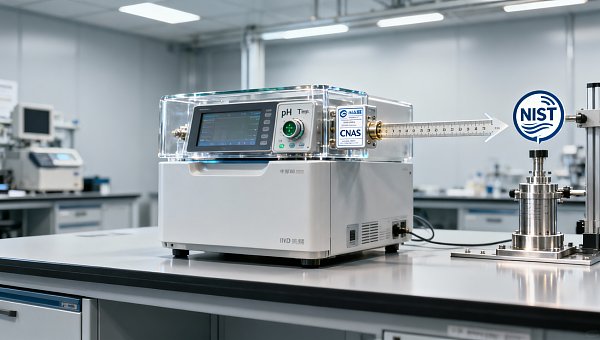
 FDA Updates IVD Import Guidance: CNAS Calibration Traceability to NIST Required for Chinese ManufacturersFDA now requires CNAS calibration traceability to NIST for Chinese IVD manufacturers — critical for 510(k)/De Novo submissions. Act now to avoid RTA delays!
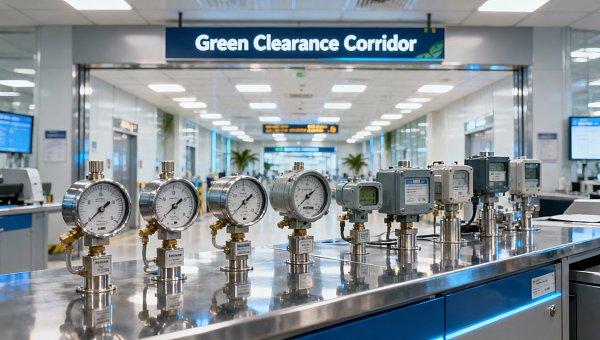
 ASEAN's Green Clearance Corridor Fully LaunchedGreen Clearance Corridor now live: CNAS calibration reports auto-verified for ASEAN customs clearance in under 4 hours — boost your China–ASEAN trade efficiency today!
 First Global Cybersecurity Verification Guide for Industrial Instruments ReleasedFirst global cybersecurity verification guide for industrial instruments launched—featuring a 5-level maturity model & standardized pentest library. Essential for exporters, OEMs, and critical infrastructure suppliers.
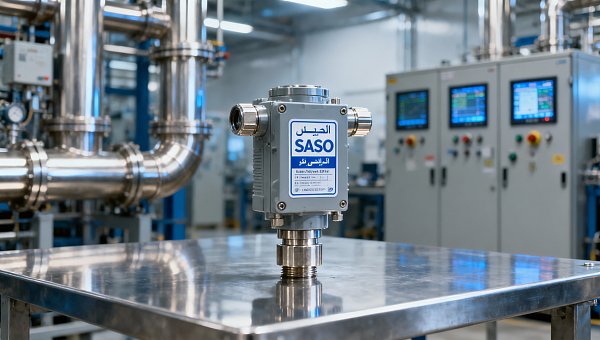
 SASO Shortens Energy Labeling for Industrial Transmitters to 7 Days, Adds AI Power Simulation RequirementSASO energy labeling for industrial transmitters now takes just 7 days — but requires AI power simulation. Learn how to comply fast and avoid delays.
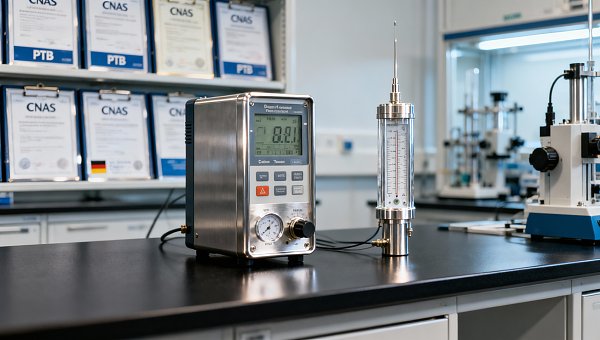
 PTB Launches AI Calibration Cloud Platform 2.0PTB AI Calibration Cloud Platform 2.0 launches with CNAS-VDA 5/ISO/IEC 17025 dual-compliance reporting — streamline cross-border calibration for auto suppliers, labs & equipment makers.
 EU Mandates Carbon Footprint Labels on Industrial Instruments from 2027EU mandates carbon footprint labels on industrial instruments from 2027—key for pressure, temperature & flow meter exporters. Act now to ensure PEF compliance and market access.
 Red Sea Crisis Worsens: Gulf of Aden Ban Extends to 3 Weeks, Air Freight Premiums for Industrial Instruments Surge 420%Red Sea crisis deepens: Gulf of Aden ban hits 3 weeks, spiking air freight premiums for industrial instruments by 420%—urgent insights for exporters & EPC contractors.
 Vietnam Enforces CNAS + Vietnamese Dual Requirement for Industrial InstrumentsVietnam Enforces CNAS + Vietnamese Dual Requirement for Industrial Instruments: Key compliance update for exporters, labs & documentation teams ahead of June 2026.
 U.S. BIS Adds 5 High-Precision Pressure/Flow Calibration Sources to EAR ListU.S. BIS adds 5 high-precision pressure/flow calibration sources to EAR list — critical for exporters, instrument makers & supply chain teams. Act now.
 IEC 61508-3:2026 Published: Functional Safety Certification UpgradedIEC 61508-3:2026 is live—discover what the upgraded functional safety certification means for your industrial software, AI diagnostics & global market access.
 FDA Updates IVD Import Guidance: CNAS Calibration Chain Required for China-Made DevicesFDA now requires CNAS calibration chain reports for China-made IVD analyzers—pH, ion & clinical chemistry devices entering via 510(k)/De Novo. Act now to avoid U.S. port rejections.
 EN 61000-6-4:2026 Enters Force: Stricter EMC Requirements for Industrial Field InstrumentsEN 61000-6-4:2026 enforces stricter EMC requirements for industrial field instruments—key for AI edge controllers, sensors & exporters. Act now to ensure CE-EMC compliance by Nov 2026.
 Global Methanol Electric Alliance Launches Cross-Border Energy Efficiency Recognition RoadmapGlobal Methanol Electric Alliance launches cross-border energy efficiency recognition roadmap—key for exporters, cal labs & methanol-instrument manufacturers.
 Red Sea Crisis Escalates: Air Freight Premiums for China–Middle East Industrial Instruments Hit 390%Red Sea Crisis hits industrial instruments: China–Middle East air freight premiums surge 390%. Act now to secure Q3 capacity, avoid delays & optimize LCL alternatives.
 IEC TC65 Mandates Cybersecurity Certification for Industrial Field Instruments from 2027IEC TC65 mandates cybersecurity certification for industrial field instruments by 2027 — pressure, flow & analytical devices must meet IEC 62443-4-2:2026 and display SL1–SL3 labels. Act now to ensure market access.
 SASO Cuts Energy Labeling Turnaround for Industrial Transmitters to 7 Working DaysSASO Energy Labeling now takes just 7 working days for industrial transmitters — faster market access, CNAS reports accepted. Act now!
 PTB Launches CalCloud 2.0 with Direct CNAS Lab IntegrationCalCloud 2.0 now integrates directly with CNAS labs—enabling automated VDA 5 & ISO/IEC 17025 dual-compliant calibration reports for automotive and industrial exporters. Boost compliance efficiency today!
 ASEAN's Green Clearance Corridor for CNAS Calibration Reports LaunchesASEAN's Green Clearance Corridor now verifies CNAS calibration reports via blockchain—cut customs clearance to <48h for flow meters, analyzers & more. Act now!
 Vietnam Mandates CNAS Calibration Certificates & Vietnamese Manuals for Industrial Meters from June 1, 2026CNAS calibration certificates & Vietnamese manuals now mandatory for industrial meters entering Vietnam from June 1, 2026—avoid customs delays and ensure seamless market access.
 U.S. BIS Tightens Export Controls on High-Precision Laser InterferometersU.S. BIS tightens export controls on high-precision laser interferometers—critical for semiconductor metrology & ISO/IEC 17025 calibration. Act now to ensure compliance.
 Paramagnetic Monitor Calibration Tips for Stable OutputParamagnetic monitor calibration tips for stable output: learn how to reduce drift, improve accuracy, cut downtime, and keep oxygen measurement reliable in demanding industrial applications.
 Paramagnetic Measurement in Low-Oxygen Process ControlParamagnetic measurement enables accurate low-oxygen process control with fast response and stable oxygen analysis. Learn how it improves safety, consistency, and system performance.
 Laser Detector Import Risks and Certification DelaysLaser detector import risks can cause costly certification delays, customs issues, and testing setbacks. Learn how to avoid compliance failures before ordering.
 Explosion Proof Detector Demand Under New Safety RulesExplosion proof detector demand is rising under new safety rules. Discover how to compare certified, reliable options that improve compliance, integration, and long-term site safety.
 Laboratory Detector Accuracy Standards You Should CheckLaboratory detector accuracy standards explained: check detection limits, repeatability, drift, and traceability to reduce risk, improve audit readiness, and choose with confidence.
 Custom Measurement Lead Times and Budget PlanningCustom measurement lead times and budgets explained for procurement teams. Learn key cost drivers, planning steps, and supplier tips to reduce delays and buy with confidence.
 Laser Measurement for Leak Detection: Common PitfallsLaser measurement for leak detection can fail due to setup, airflow, and data interpretation errors. Learn the common pitfalls and proven fixes for more accurate, reliable results.
 How to Evaluate a High Accuracy Detector in the FieldHigh accuracy detector evaluation starts with real field performance. Learn how to compare stability, response time, and reliability to choose the right detector with confidence.
 Electrochemical Monitor Lifespan and Replacement CostsElectrochemical monitor lifespan and replacement costs explained for buyers. Learn how sensor life, maintenance, and total ownership cost affect safer, smarter purchasing decisions.
 Thermal Analysis Market Direction in Process IndustriesThermal analysis market direction in process industries: discover trends, applications, and investment insights that improve quality control, reduce risk, and support smarter industrial decisions.
 Monitoring Shelter Design Priorities for Outdoor SitesMonitoring shelter design starts with protection, climate control, and power reliability. Discover how to choose the right outdoor solution for stable data, safer maintenance, and lower lifecycle risk.
 Fixed Measurement Planning for Multi-Point InstallationsFixed measurement planning is essential for multi-point installations. Learn how to improve accuracy, reliability, compliance, and maintenance efficiency across complex industrial systems.


Search Categories
Search Categories
Latest Article
- FDA Updates IVD Import Guidance: CNAS Calibration Traceability to NIST Required for Chinese ManufacturersFDA now requires CNAS calibration traceability to NIST for Chinese IVD manufacturers — critical for 510(k)/De Novo submissions. Act now to avoid RTA delays!Posted by:
- ASEAN's Green Clearance Corridor Fully LaunchedGreen Clearance Corridor now live: CNAS calibration reports auto-verified for ASEAN customs clearance in under 4 hours — boost your China–ASEAN trade efficiency today!Posted by:
- First Global Cybersecurity Verification Guide for Industrial Instruments ReleasedFirst global cybersecurity verification guide for industrial instruments launched—featuring a 5-level maturity model & standardized pentest library. Essential for exporters, OEMs, and critical infrastructure suppliers.Posted by:
Please give us a message
