
What Makes a Zone 1 Analyzer Harder to Maintain Offshore?


Offshore maintenance is harder for a Zone 1 analyzer because the device must survive two pressures at the same time: a harsh marine environment and a hazardous-area compliance regime that leaves little room for shortcuts. In practice, that means more demanding enclosure design, stricter inspection and repair rules, more difficult access for technicians, and higher consequences if corrosion, sealing failure, drift, or component damage is overlooked. For operators, engineers, and buyers, the real issue is not only whether the analyzer can run offshore, but whether it can be maintained safely, quickly, and cost-effectively over its full service life.
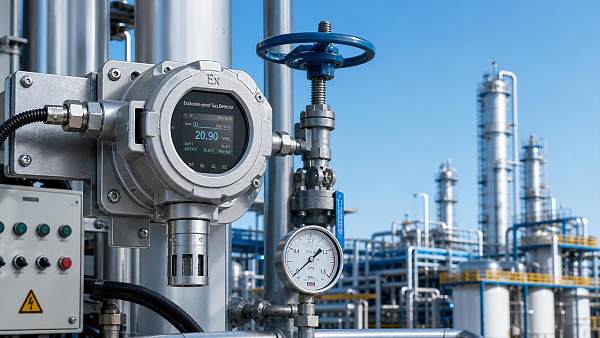
That is why many project teams compare a Zone 1 analyzer with a Zone 2 analyzer very carefully before procurement. An IECEx analyzer or ATEX analyzer intended for hazardous offshore duty may offer the required protection level, but maintainability depends on far more than certification alone. Features such as intrinsically safe analyzer architecture, corrosion resistant analyzer materials, modular access, spare-part strategy, and rugged gas analyzer design often determine whether maintenance becomes routine or disruptive in a harsh environment analyzer application.
Why is a Zone 1 analyzer more difficult to maintain offshore than a Zone 2 analyzer?
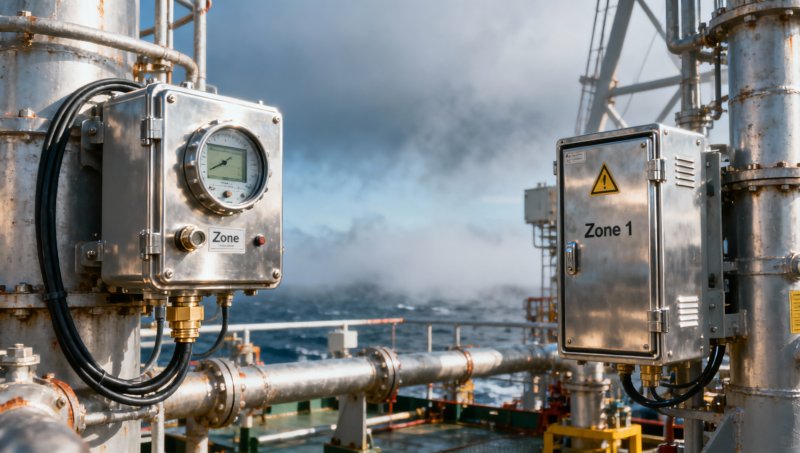
The short answer is that Zone 1 analyzers are built for areas where an explosive gas atmosphere is likely to occur in normal operation, so maintenance work must protect both equipment integrity and explosion protection integrity. Offshore, that challenge becomes bigger because salt spray, humidity, vibration, temperature cycling, and space constraints accelerate wear and make service work slower.
Compared with a Zone 2 analyzer, a Zone 1 system often involves:
- More stringent enclosure and protection concepts
- Tighter rules for opening, inspection, repair, and recertification
- Greater sensitivity to sealing, cable entries, and corrosion damage
- Longer shutdown planning and permit coordination
- Higher cost of mistakes, because non-compliant repair can affect safety and certification status
For offshore users, this means maintainability should be treated as a design and procurement priority, not just a maintenance department issue.
What offshore conditions create the biggest maintenance burden?
Many buyers underestimate how aggressively the offshore environment attacks analyzer systems. The maintenance burden is usually driven by a combination of environmental stress and logistical limitations.
Salt spray and corrosion
Salt is one of the biggest reasons a corrosion resistant analyzer matters offshore. It can damage fasteners, hinges, cable glands, external tubing, connectors, sample conditioning components, and enclosure surfaces. Even when corrosion does not cause immediate failure, it can make routine service difficult by seizing bolts, weakening sealing points, and increasing the risk of enclosure damage during opening.
Vibration and mechanical fatigue
Continuous vibration from rotating equipment, platform motion, and marine conditions can loosen fittings, stress internal connections, and shorten the life of sensitive components. In a rugged gas analyzer, vibration resistance is not just about surviving transport; it is about maintaining calibration stability and physical integrity over time.
Humidity, condensation, and temperature changes
Offshore analyzers often experience rapid environmental changes that create condensation inside cabinets, junction boxes, and sampling systems. Moisture can affect electronics, optical paths, terminals, and sensor performance. In hazardous areas, this becomes more serious because sealing and purge performance must remain reliable.
Limited access and manpower
Unlike onshore facilities, offshore platforms have tighter space, stricter permit systems, smaller maintenance teams, and more limited spare inventory. If an analyzer requires specialized tools, long service time, or difficult disassembly, maintenance delays become expensive very quickly.
Safety restrictions during intervention
Any maintenance activity in a hazardous area may require gas testing, work permits, isolation procedures, and coordination across operations and safety teams. A task that seems simple in a workshop can become a multi-step operation offshore.
How do hazardous-area requirements make maintenance more complex?
The defining challenge of a Zone 1 analyzer is that maintenance cannot compromise explosion protection. This is where many practical difficulties appear.
If the analyzer uses explosion proof equipment design, flamepath integrity, cover condition, bolt specification, gasket compatibility, cable entry selection, and enclosure reassembly all matter. A small error, such as using the wrong replacement part or damaging a threaded joint, can create both safety risk and compliance problems.
If the design uses an intrinsically safe analyzer approach, maintenance may be simpler in some respects because energy levels are limited by design. However, the full loop still matters. Barriers, grounding, wiring segregation, device substitutions, and documentation must remain correct. Intrinsic safety can reduce service burden, but only when the entire system is engineered and maintained properly.
For IECEx analyzer and ATEX analyzer installations, teams also need to consider:
- Whether field repairs are permitted or restricted
- What parts must come from the original manufacturer
- How inspection records are maintained
- Whether modifications affect the original certification basis
- How local site standards align with certified equipment use
This is why offshore maintainability is not just a hardware question. It is also a documentation, competency, and lifecycle management issue.
Which analyzer design choices reduce offshore maintenance problems?
For decision-makers and technical evaluators, the most useful question is not “Is it certified?” but “What specific design features reduce maintenance frequency, service time, and risk offshore?”
Material selection for marine durability
Look for corrosion resistant analyzer construction with suitable stainless steel grades, protective coatings, marine-rated external hardware, and corrosion-resistant tubing and fittings. Material compatibility should be reviewed not only for the enclosure but for every exposed accessory.
Modular internal layout
A modular analyzer is easier to service because technicians can isolate and replace key assemblies without disturbing the whole system. This reduces maintenance time and lowers the chance of damaging certified interfaces or internal connections.
Accessible service points
Filters, drains, regulators, fuses, terminals, calibration ports, and diagnostic interfaces should be placed for practical access. Offshore, poor access design can add hours to a routine intervention.
Reduced dependence on frequent manual calibration
Analyzer technologies that hold calibration well, include automatic validation, or support remote diagnostics can dramatically reduce offshore service burden. In extreme condition analyzer applications, stability often matters more than laboratory-level theoretical performance.
Robust sample conditioning system
Many analyzer failures offshore begin in the sample handling path rather than the measuring core. Heated lines, moisture control, filtration strategy, pressure management, and corrosion-resistant wetted parts are critical for maintainability.
Clear spare-part strategy
Equipment that relies on uncommon parts, long lead times, or factory-only replacement can create major offshore downtime risk. Buyers should ask which parts are consumables, which are field-replaceable, and what inventory should be held on the platform.
What should buyers and project teams evaluate before purchase?
For procurement, engineering, operations, and finance teams, a Zone 1 analyzer should be assessed on total lifecycle practicality, not only purchase price or specification compliance.
Key evaluation points include:
- Maintenance interval: How often will filters, sensors, lamps, pumps, seals, or conditioning components need attention?
- Mean time to repair: Can common failures be resolved offshore, or does the unit require return to base?
- Certification implications: What maintenance actions are allowed in the field without affecting compliance?
- Remote support capability: Does the analyzer provide diagnostics that reduce offshore attendance?
- Environmental suitability: Has the design been proven for salt, vibration, humidity, and platform motion?
- Training burden: Can site technicians maintain it safely, or does it require rare expertise?
- Spare availability: Are critical components stocked regionally, and what are the lead times?
- Downtime cost: What is the business impact if the analyzer is unavailable?
These questions matter because the cheapest certified analyzer may become the most expensive option once offshore labor, shutdown planning, logistics, and production risk are included.
When is a Zone 1 analyzer worth the extra maintenance challenge?
A Zone 1 analyzer is worth the additional maintenance complexity when the installation area genuinely requires that protection level and when moving the analyzer to a safer area is impractical. It is often the right choice when process safety, measurement response time, sample transport limitations, or installation constraints demand local placement in a hazardous area.
However, teams should still ask whether the architecture can be optimized. In some cases, placing more components in a safer zone, using sheltering strategies, or selecting an intrinsically safe analyzer configuration can improve maintainability without sacrificing compliance. The best solution is not always the most rugged-looking enclosure; it is the one that balances safety, accessibility, reliability, and lifecycle cost.
How can operators reduce maintenance risk after installation?
Even a well-designed analyzer can become difficult to maintain if lifecycle practices are weak. Offshore operators can reduce risk by focusing on discipline and predictability.
- Create a hazardous-area-specific maintenance procedure for each analyzer type
- Use only approved replacement parts and documented repair methods
- Inspect glands, seals, coatings, and external corrosion before internal failures appear
- Trend analyzer drift, alarm history, and conditioning-system performance to catch issues early
- Train technicians on both measurement function and hazardous-area protection concepts
- Keep critical spares aligned with actual failure patterns, not generic lists
- Review whether recurring maintenance pain points are caused by design, environment, or operating practice
These steps help transform offshore analyzer maintenance from reactive firefighting into controlled asset management.
Conclusion
What makes a Zone 1 analyzer harder to maintain offshore is not one single factor, but the combination of hazardous-area compliance, marine corrosion, vibration, humidity, restricted access, and high-cost intervention. A Zone 2 analyzer may face some of the same environmental pressures, but a Zone 1 system must also preserve its explosion protection integrity every time it is inspected, opened, repaired, or reassembled.
For buyers and engineers, the practical takeaway is clear: choose offshore analyzers based not only on IECEx analyzer or ATEX analyzer certification, but on maintainability in real operating conditions. A truly suitable harsh environment analyzer should combine safe design, corrosion resistance, rugged construction, accessible serviceability, and realistic spare support. When those factors are evaluated early, companies can reduce downtime, improve safety, and make better long-term investment decisions.
Recommended for You
 FDA Updates IVD Import Guidance: CNAS Calibration Traceability to NIST Required for Chinese ManufacturersFDA now requires CNAS calibration traceability to NIST for Chinese IVD manufacturers — critical for 510(k)/De Novo submissions. Act now to avoid RTA delays!
 ASEAN's Green Clearance Corridor Fully LaunchedGreen Clearance Corridor now live: CNAS calibration reports auto-verified for ASEAN customs clearance in under 4 hours — boost your China–ASEAN trade efficiency today!
 First Global Cybersecurity Verification Guide for Industrial Instruments ReleasedFirst global cybersecurity verification guide for industrial instruments launched—featuring a 5-level maturity model & standardized pentest library. Essential for exporters, OEMs, and critical infrastructure suppliers.
 SASO Shortens Energy Labeling for Industrial Transmitters to 7 Days, Adds AI Power Simulation RequirementSASO energy labeling for industrial transmitters now takes just 7 days — but requires AI power simulation. Learn how to comply fast and avoid delays.
 PTB Launches AI Calibration Cloud Platform 2.0PTB AI Calibration Cloud Platform 2.0 launches with CNAS-VDA 5/ISO/IEC 17025 dual-compliance reporting — streamline cross-border calibration for auto suppliers, labs & equipment makers.
 EU Mandates Carbon Footprint Labels on Industrial Instruments from 2027EU mandates carbon footprint labels on industrial instruments from 2027—key for pressure, temperature & flow meter exporters. Act now to ensure PEF compliance and market access.
 Red Sea Crisis Worsens: Gulf of Aden Ban Extends to 3 Weeks, Air Freight Premiums for Industrial Instruments Surge 420%Red Sea crisis deepens: Gulf of Aden ban hits 3 weeks, spiking air freight premiums for industrial instruments by 420%—urgent insights for exporters & EPC contractors.
 Vietnam Enforces CNAS + Vietnamese Dual Requirement for Industrial InstrumentsVietnam Enforces CNAS + Vietnamese Dual Requirement for Industrial Instruments: Key compliance update for exporters, labs & documentation teams ahead of June 2026.
 U.S. BIS Adds 5 High-Precision Pressure/Flow Calibration Sources to EAR ListU.S. BIS adds 5 high-precision pressure/flow calibration sources to EAR list — critical for exporters, instrument makers & supply chain teams. Act now.
 IEC 61508-3:2026 Published: Functional Safety Certification UpgradedIEC 61508-3:2026 is live—discover what the upgraded functional safety certification means for your industrial software, AI diagnostics & global market access.
 FDA Updates IVD Import Guidance: CNAS Calibration Chain Required for China-Made DevicesFDA now requires CNAS calibration chain reports for China-made IVD analyzers—pH, ion & clinical chemistry devices entering via 510(k)/De Novo. Act now to avoid U.S. port rejections.
 EN 61000-6-4:2026 Enters Force: Stricter EMC Requirements for Industrial Field InstrumentsEN 61000-6-4:2026 enforces stricter EMC requirements for industrial field instruments—key for AI edge controllers, sensors & exporters. Act now to ensure CE-EMC compliance by Nov 2026.
 Global Methanol Electric Alliance Launches Cross-Border Energy Efficiency Recognition RoadmapGlobal Methanol Electric Alliance launches cross-border energy efficiency recognition roadmap—key for exporters, cal labs & methanol-instrument manufacturers.
 Red Sea Crisis Escalates: Air Freight Premiums for China–Middle East Industrial Instruments Hit 390%Red Sea Crisis hits industrial instruments: China–Middle East air freight premiums surge 390%. Act now to secure Q3 capacity, avoid delays & optimize LCL alternatives.
 IEC TC65 Mandates Cybersecurity Certification for Industrial Field Instruments from 2027IEC TC65 mandates cybersecurity certification for industrial field instruments by 2027 — pressure, flow & analytical devices must meet IEC 62443-4-2:2026 and display SL1–SL3 labels. Act now to ensure market access.
 SASO Cuts Energy Labeling Turnaround for Industrial Transmitters to 7 Working DaysSASO Energy Labeling now takes just 7 working days for industrial transmitters — faster market access, CNAS reports accepted. Act now!
 PTB Launches CalCloud 2.0 with Direct CNAS Lab IntegrationCalCloud 2.0 now integrates directly with CNAS labs—enabling automated VDA 5 & ISO/IEC 17025 dual-compliant calibration reports for automotive and industrial exporters. Boost compliance efficiency today!
 ASEAN's Green Clearance Corridor for CNAS Calibration Reports LaunchesASEAN's Green Clearance Corridor now verifies CNAS calibration reports via blockchain—cut customs clearance to <48h for flow meters, analyzers & more. Act now!
 Vietnam Mandates CNAS Calibration Certificates & Vietnamese Manuals for Industrial Meters from June 1, 2026CNAS calibration certificates & Vietnamese manuals now mandatory for industrial meters entering Vietnam from June 1, 2026—avoid customs delays and ensure seamless market access.
 U.S. BIS Tightens Export Controls on High-Precision Laser InterferometersU.S. BIS tightens export controls on high-precision laser interferometers—critical for semiconductor metrology & ISO/IEC 17025 calibration. Act now to ensure compliance.
 Paramagnetic Monitor Calibration Tips for Stable OutputParamagnetic monitor calibration tips for stable output: learn how to reduce drift, improve accuracy, cut downtime, and keep oxygen measurement reliable in demanding industrial applications.
 Paramagnetic Measurement in Low-Oxygen Process ControlParamagnetic measurement enables accurate low-oxygen process control with fast response and stable oxygen analysis. Learn how it improves safety, consistency, and system performance.
 Laser Detector Import Risks and Certification DelaysLaser detector import risks can cause costly certification delays, customs issues, and testing setbacks. Learn how to avoid compliance failures before ordering.
 Explosion Proof Detector Demand Under New Safety RulesExplosion proof detector demand is rising under new safety rules. Discover how to compare certified, reliable options that improve compliance, integration, and long-term site safety.
 Laboratory Detector Accuracy Standards You Should CheckLaboratory detector accuracy standards explained: check detection limits, repeatability, drift, and traceability to reduce risk, improve audit readiness, and choose with confidence.
 Custom Measurement Lead Times and Budget PlanningCustom measurement lead times and budgets explained for procurement teams. Learn key cost drivers, planning steps, and supplier tips to reduce delays and buy with confidence.
 Laser Measurement for Leak Detection: Common PitfallsLaser measurement for leak detection can fail due to setup, airflow, and data interpretation errors. Learn the common pitfalls and proven fixes for more accurate, reliable results.
 How to Evaluate a High Accuracy Detector in the FieldHigh accuracy detector evaluation starts with real field performance. Learn how to compare stability, response time, and reliability to choose the right detector with confidence.
 Electrochemical Monitor Lifespan and Replacement CostsElectrochemical monitor lifespan and replacement costs explained for buyers. Learn how sensor life, maintenance, and total ownership cost affect safer, smarter purchasing decisions.
 Thermal Analysis Market Direction in Process IndustriesThermal analysis market direction in process industries: discover trends, applications, and investment insights that improve quality control, reduce risk, and support smarter industrial decisions.
 Monitoring Shelter Design Priorities for Outdoor SitesMonitoring shelter design starts with protection, climate control, and power reliability. Discover how to choose the right outdoor solution for stable data, safer maintenance, and lower lifecycle risk.
 Fixed Measurement Planning for Multi-Point InstallationsFixed measurement planning is essential for multi-point installations. Learn how to improve accuracy, reliability, compliance, and maintenance efficiency across complex industrial systems.




Search Categories
Search Categories
Latest Article
- FDA Updates IVD Import Guidance: CNAS Calibration Traceability to NIST Required for Chinese ManufacturersFDA now requires CNAS calibration traceability to NIST for Chinese IVD manufacturers — critical for 510(k)/De Novo submissions. Act now to avoid RTA delays!Posted by:
- ASEAN's Green Clearance Corridor Fully LaunchedGreen Clearance Corridor now live: CNAS calibration reports auto-verified for ASEAN customs clearance in under 4 hours — boost your China–ASEAN trade efficiency today!Posted by:
- First Global Cybersecurity Verification Guide for Industrial Instruments ReleasedFirst global cybersecurity verification guide for industrial instruments launched—featuring a 5-level maturity model & standardized pentest library. Essential for exporters, OEMs, and critical infrastructure suppliers.Posted by:
Please give us a message
