
Gas Measurement Trends That Are Changing Plant Design


Gas measurement is no longer a secondary utility in plant engineering. It is now a design driver. For plant owners, EPC teams, operators, and procurement stakeholders, the key question is no longer whether to include gas analysis equipment, but how to design it so it improves safety, compliance, uptime, and lifecycle cost. The biggest trend is clear: gas measurement is moving upstream into early plant design decisions, where analyzer system architecture, enclosure strategy, automation integration, and maintainability have a direct impact on project risk and long-term performance.
That shift matters because modern facilities are under pressure from multiple directions at once: tighter emissions rules, stricter safety expectations, higher energy costs, and growing demand for digital visibility. As a result, decisions involving a safety control analyzer, emission control analyzer, or process monitoring analyzer now affect more than measurement accuracy. They influence plot space, utility consumption, installation schedule, maintenance workload, and even financial approval.
Why gas measurement is becoming a plant design decision, not just an instrument choice
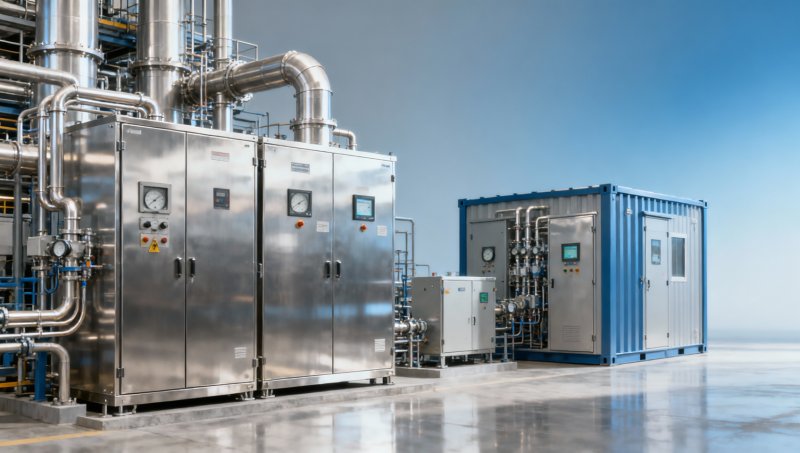
Many plants used to treat gas analysis as a late-stage package: add the required analyzer, connect sample lines, build a shelter if needed, and complete commissioning. That approach is becoming less effective. Today, gas measurement often supports safety interlocks, environmental reporting, combustion optimization, quality assurance, and process efficiency all at once. When one monitoring system serves several business-critical functions, its design can no longer be isolated from the wider plant layout.
For engineering teams, this means analyzer system planning now starts earlier. Questions about response time, sample conditioning, hazardous area classification, redundancy, and maintenance access must be addressed during front-end engineering rather than after mechanical and electrical layouts are already fixed. For decision-makers, the implication is equally important: early investment in the right industrial analysis equipment often reduces expensive redesign, compliance risk, and unplanned downtime later.
In practical terms, gas measurement is changing plant design in four major ways:
- Safety systems are becoming more analyzer-dependent, especially where toxic, combustible, or oxygen-sensitive gases are involved.
- Emission compliance requires more continuous and auditable measurement, pushing plants toward more robust emission control analyzer configurations.
- Digital plants need cleaner, more connected data, making analyzer integration part of automation strategy rather than a standalone task.
- Lifecycle cost is under more scrutiny, so enclosure design, shelter concept, and serviceability matter as much as analyzer selection.
Which gas measurement trends matter most to plant owners and project teams?
Not every trend has equal impact. The most relevant ones are the trends that change plant performance, approval logic, and project execution. Below are the developments that matter most across industrial manufacturing, energy, environmental monitoring, and process operations.
1. From single-point devices to integrated analyzer system design
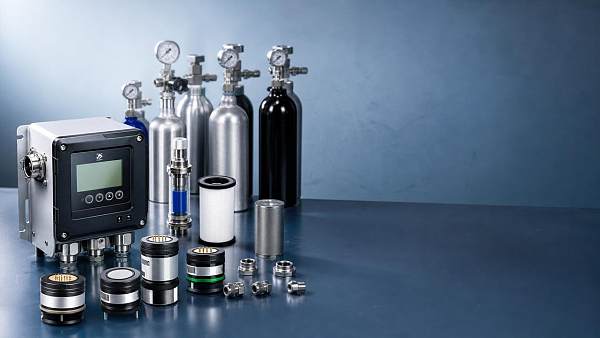
Plants increasingly prefer an integrated analyzer system rather than a collection of disconnected components. Instead of selecting analyzers one by one, project teams now evaluate the full package: sample extraction, conditioning, transport lines, shelter or cabinet design, utilities, software interface, diagnostics, and maintenance access.
This trend improves consistency and reduces interface problems between vendors, disciplines, and commissioning teams. It is especially valuable in large or hazardous facilities where field conditions make troubleshooting expensive. For procurement and commercial evaluators, integrated designs also make total cost comparison easier because hidden installation and maintenance costs become more visible.
2. Greater use of analyzers in safety and risk reduction
A modern safety control analyzer is expected to do more than detect abnormal conditions. It must provide dependable performance under realistic process and ambient conditions, respond within required time limits, and support plant safety philosophy. In many applications, the analyzer is closely tied to shutdown logic, flare management, burner control, inerting verification, or hazardous gas detection strategy.
This affects design choices such as analyzer placement, heated lines, voting logic, redundancy, and calibration access. Plants that overlook these design factors may meet technical specifications on paper but still experience poor field reliability.
3. Continuous emissions monitoring is shaping plant layout
Emission control analyzer solutions are expanding because environmental oversight is becoming stricter and more data-driven. Plants need reliable measurement not only for regulatory compliance but also for sustainability reporting, operating permits, and public accountability.
This trend influences stack access, shelter location, cable routing, conditioning systems, and data archiving infrastructure. It also raises the importance of serviceability. If an emissions system is difficult to maintain, compliance risk rises quickly.
4. Analyzer enclosures are being engineered for lifecycle performance
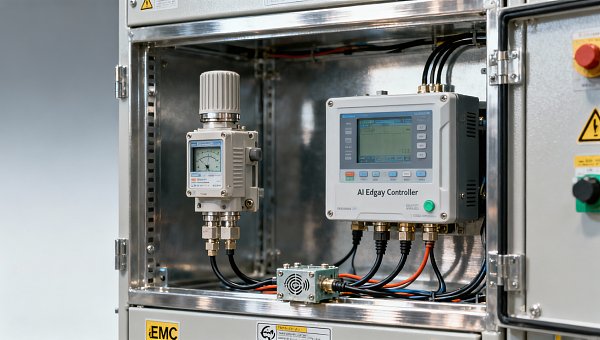
The gas analyzer enclosure is no longer just a box for weather protection. It is now part of performance engineering. Temperature control, corrosion resistance, ingress protection, hazardous area suitability, vibration resistance, and access ergonomics can all determine whether analysis equipment performs reliably over time.
For example, an analyzer specified correctly but housed poorly may suffer drift, premature failure, or maintenance delays. That is why enclosure strategy increasingly appears in technical and financial reviews.
5. Modular industrial shelter concepts are gaining preference
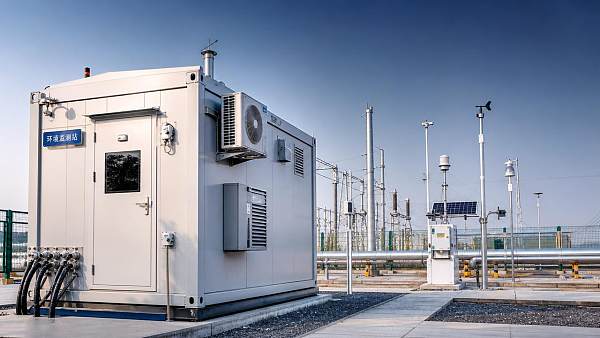
More projects are moving toward modular industrial shelter solutions because they simplify site work, reduce installation uncertainty, and support faster deployment. A well-designed shelter can integrate multiple analyzers, utilities, HVAC, sample conditioning, fire and gas protection, and digital communications in a controlled environment.
For project managers, this can shorten commissioning and reduce onsite rework. For operators, it can improve accessibility and safety. For business stakeholders, modularization often improves cost predictability.
What should buyers and engineers evaluate before selecting gas analysis equipment?
For most target readers, the real challenge is not understanding that gas measurement is important. The challenge is deciding what to buy, how to compare options, and what risks to avoid. The most effective evaluations consider technical fit, operational impact, and business value together.
Measure the process need, not just the gas
Different applications require different analyzer priorities. A process monitoring analyzer may be optimized for response and control stability, while an emission control analyzer may prioritize reporting accuracy and auditability. A safety control analyzer may be driven by reliability, redundancy, and proof-testing requirements.
Before selection, teams should define:
- What decision the measurement supports
- Required response time
- Expected gas composition variability
- Environmental and installation conditions
- Required availability and maintenance intervals
- Data integration and reporting needs
Look beyond analyzer accuracy
Accuracy matters, but plant outcomes are often determined by the full measurement chain. Poor sample handling, long transport delays, contamination, moisture, pressure instability, and inadequate enclosure control can undermine performance even when the analyzer itself is high quality.
This is why industrial analysis equipment should be assessed as a system. A technically advanced analyzer may deliver poor results if the overall design is weak.
Compare lifecycle cost, not purchase price only
Financial approvers and procurement teams should pay close attention to maintenance burden, spare parts demand, calibration frequency, utility usage, training needs, and expected service life. A lower upfront price can be offset quickly by difficult maintenance access, unstable operation, or frequent downtime.
Useful lifecycle cost questions include:
- How often will calibration and validation be required?
- Can maintenance be performed safely and quickly?
- How many vendor interfaces must the plant manage?
- What is the expected mean time between failures?
- How much unplanned production loss could failure create?
How are these trends changing plant design in practice?
The practical impact is visible across engineering, construction, operation, and management. Gas measurement trends are not changing plant design in an abstract way. They are changing real decisions made during project planning and facility upgrades.
Earlier cross-functional collaboration
Analyzer decisions now involve process engineering, instrumentation, electrical, automation, HSE, operations, and procurement earlier in the project lifecycle. This reduces rework and ensures that the monitoring system supports both plant performance and compliance obligations.
More space and utility planning for analyzer infrastructure
Plants are allocating space for shelters, cabinets, conditioning systems, calibration gas handling, maintenance access, and digital communication hardware from the beginning. This helps avoid congested layouts and service challenges later.
Stronger integration with automation and data systems
Gas analysis equipment increasingly feeds plant historians, control systems, environmental reporting platforms, and predictive maintenance tools. As a result, communication protocols, diagnostics, cybersecurity, and data quality assurance are now part of analyzer design discussions.
Standardization across sites
Multi-site operators are increasingly standardizing analyzer system architecture, enclosure specifications, and shelter concepts. This simplifies operator training, spare parts management, service support, and compliance governance.
What risks should plants avoid when following new gas measurement trends?
Adopting modern gas measurement strategies can create strong value, but only if plants avoid common mistakes.
- Late-stage analyzer selection: waiting too long creates layout compromises, utility conflicts, and higher project cost.
- Focusing only on instrument specification: ignoring sample systems, enclosure conditions, and service access often causes underperformance.
- Underestimating maintenance reality: designs that look efficient on paper may be difficult or unsafe to maintain in the field.
- Choosing fragmented packages: too many suppliers can increase interface risk and complicate troubleshooting.
- Missing the business case: if teams discuss only compliance and not uptime, energy savings, and risk reduction, internal approval can become harder.
How to make a better gas measurement investment decision
For organizations evaluating new installations or retrofits, the best approach is to treat gas measurement as a strategic plant capability. That means linking technical requirements to business outcomes.
A strong decision framework should answer five questions:
- What plant-critical outcome does this measurement protect or improve? Safety, emissions, quality, efficiency, or all of them.
- What system design will make the measurement reliable in real operating conditions?
- How will enclosure or industrial shelter design affect uptime and serviceability?
- How well will the solution integrate with plant controls and reporting systems?
- What is the total lifecycle value compared with project and operating cost?
When these questions are answered clearly, decision-makers can compare options more effectively and avoid short-term choices that create long-term operating problems.
Conclusion: gas measurement is now part of competitive plant design
Gas measurement trends are changing plant design because modern plants need more than basic compliance. They need dependable safety control analyzer performance, credible emission control analyzer data, and process monitoring analyzer visibility that supports efficiency and smarter operations. This is why integrated analyzer system planning, robust gas analyzer enclosure design, and modular industrial shelter strategies are becoming standard rather than optional.
For operators, engineers, buyers, and business leaders, the key takeaway is simple: the value of gas analysis equipment depends on how early and how intelligently it is designed into the plant. The organizations that treat industrial analysis equipment as a strategic system, not just a line-item instrument, will be better positioned to reduce risk, improve reliability, and support future-ready operations.
Recommended for You
 FDA Updates IVD Import Guidance: CNAS Calibration Traceability to NIST Required for Chinese ManufacturersFDA now requires CNAS calibration traceability to NIST for Chinese IVD manufacturers — critical for 510(k)/De Novo submissions. Act now to avoid RTA delays!
 ASEAN's Green Clearance Corridor Fully LaunchedGreen Clearance Corridor now live: CNAS calibration reports auto-verified for ASEAN customs clearance in under 4 hours — boost your China–ASEAN trade efficiency today!
 First Global Cybersecurity Verification Guide for Industrial Instruments ReleasedFirst global cybersecurity verification guide for industrial instruments launched—featuring a 5-level maturity model & standardized pentest library. Essential for exporters, OEMs, and critical infrastructure suppliers.
 SASO Shortens Energy Labeling for Industrial Transmitters to 7 Days, Adds AI Power Simulation RequirementSASO energy labeling for industrial transmitters now takes just 7 days — but requires AI power simulation. Learn how to comply fast and avoid delays.
 PTB Launches AI Calibration Cloud Platform 2.0PTB AI Calibration Cloud Platform 2.0 launches with CNAS-VDA 5/ISO/IEC 17025 dual-compliance reporting — streamline cross-border calibration for auto suppliers, labs & equipment makers.
 EU Mandates Carbon Footprint Labels on Industrial Instruments from 2027EU mandates carbon footprint labels on industrial instruments from 2027—key for pressure, temperature & flow meter exporters. Act now to ensure PEF compliance and market access.
 Red Sea Crisis Worsens: Gulf of Aden Ban Extends to 3 Weeks, Air Freight Premiums for Industrial Instruments Surge 420%Red Sea crisis deepens: Gulf of Aden ban hits 3 weeks, spiking air freight premiums for industrial instruments by 420%—urgent insights for exporters & EPC contractors.
 Vietnam Enforces CNAS + Vietnamese Dual Requirement for Industrial InstrumentsVietnam Enforces CNAS + Vietnamese Dual Requirement for Industrial Instruments: Key compliance update for exporters, labs & documentation teams ahead of June 2026.
 U.S. BIS Adds 5 High-Precision Pressure/Flow Calibration Sources to EAR ListU.S. BIS adds 5 high-precision pressure/flow calibration sources to EAR list — critical for exporters, instrument makers & supply chain teams. Act now.
 IEC 61508-3:2026 Published: Functional Safety Certification UpgradedIEC 61508-3:2026 is live—discover what the upgraded functional safety certification means for your industrial software, AI diagnostics & global market access.
 FDA Updates IVD Import Guidance: CNAS Calibration Chain Required for China-Made DevicesFDA now requires CNAS calibration chain reports for China-made IVD analyzers—pH, ion & clinical chemistry devices entering via 510(k)/De Novo. Act now to avoid U.S. port rejections.
 EN 61000-6-4:2026 Enters Force: Stricter EMC Requirements for Industrial Field InstrumentsEN 61000-6-4:2026 enforces stricter EMC requirements for industrial field instruments—key for AI edge controllers, sensors & exporters. Act now to ensure CE-EMC compliance by Nov 2026.
 Global Methanol Electric Alliance Launches Cross-Border Energy Efficiency Recognition RoadmapGlobal Methanol Electric Alliance launches cross-border energy efficiency recognition roadmap—key for exporters, cal labs & methanol-instrument manufacturers.
 Red Sea Crisis Escalates: Air Freight Premiums for China–Middle East Industrial Instruments Hit 390%Red Sea Crisis hits industrial instruments: China–Middle East air freight premiums surge 390%. Act now to secure Q3 capacity, avoid delays & optimize LCL alternatives.
 IEC TC65 Mandates Cybersecurity Certification for Industrial Field Instruments from 2027IEC TC65 mandates cybersecurity certification for industrial field instruments by 2027 — pressure, flow & analytical devices must meet IEC 62443-4-2:2026 and display SL1–SL3 labels. Act now to ensure market access.
 SASO Cuts Energy Labeling Turnaround for Industrial Transmitters to 7 Working DaysSASO Energy Labeling now takes just 7 working days for industrial transmitters — faster market access, CNAS reports accepted. Act now!
 PTB Launches CalCloud 2.0 with Direct CNAS Lab IntegrationCalCloud 2.0 now integrates directly with CNAS labs—enabling automated VDA 5 & ISO/IEC 17025 dual-compliant calibration reports for automotive and industrial exporters. Boost compliance efficiency today!
 ASEAN's Green Clearance Corridor for CNAS Calibration Reports LaunchesASEAN's Green Clearance Corridor now verifies CNAS calibration reports via blockchain—cut customs clearance to <48h for flow meters, analyzers & more. Act now!
 Vietnam Mandates CNAS Calibration Certificates & Vietnamese Manuals for Industrial Meters from June 1, 2026CNAS calibration certificates & Vietnamese manuals now mandatory for industrial meters entering Vietnam from June 1, 2026—avoid customs delays and ensure seamless market access.
 U.S. BIS Tightens Export Controls on High-Precision Laser InterferometersU.S. BIS tightens export controls on high-precision laser interferometers—critical for semiconductor metrology & ISO/IEC 17025 calibration. Act now to ensure compliance.
 Paramagnetic Monitor Calibration Tips for Stable OutputParamagnetic monitor calibration tips for stable output: learn how to reduce drift, improve accuracy, cut downtime, and keep oxygen measurement reliable in demanding industrial applications.
 Paramagnetic Measurement in Low-Oxygen Process ControlParamagnetic measurement enables accurate low-oxygen process control with fast response and stable oxygen analysis. Learn how it improves safety, consistency, and system performance.
 Laser Detector Import Risks and Certification DelaysLaser detector import risks can cause costly certification delays, customs issues, and testing setbacks. Learn how to avoid compliance failures before ordering.
 Explosion Proof Detector Demand Under New Safety RulesExplosion proof detector demand is rising under new safety rules. Discover how to compare certified, reliable options that improve compliance, integration, and long-term site safety.
 Laboratory Detector Accuracy Standards You Should CheckLaboratory detector accuracy standards explained: check detection limits, repeatability, drift, and traceability to reduce risk, improve audit readiness, and choose with confidence.
 Custom Measurement Lead Times and Budget PlanningCustom measurement lead times and budgets explained for procurement teams. Learn key cost drivers, planning steps, and supplier tips to reduce delays and buy with confidence.
 Laser Measurement for Leak Detection: Common PitfallsLaser measurement for leak detection can fail due to setup, airflow, and data interpretation errors. Learn the common pitfalls and proven fixes for more accurate, reliable results.
 How to Evaluate a High Accuracy Detector in the FieldHigh accuracy detector evaluation starts with real field performance. Learn how to compare stability, response time, and reliability to choose the right detector with confidence.
 Electrochemical Monitor Lifespan and Replacement CostsElectrochemical monitor lifespan and replacement costs explained for buyers. Learn how sensor life, maintenance, and total ownership cost affect safer, smarter purchasing decisions.
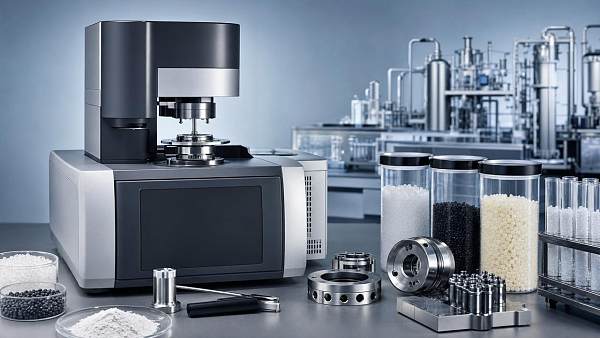
 Thermal Analysis Market Direction in Process IndustriesThermal analysis market direction in process industries: discover trends, applications, and investment insights that improve quality control, reduce risk, and support smarter industrial decisions.
 Monitoring Shelter Design Priorities for Outdoor SitesMonitoring shelter design starts with protection, climate control, and power reliability. Discover how to choose the right outdoor solution for stable data, safer maintenance, and lower lifecycle risk.
 Fixed Measurement Planning for Multi-Point InstallationsFixed measurement planning is essential for multi-point installations. Learn how to improve accuracy, reliability, compliance, and maintenance efficiency across complex industrial systems.

Search Categories
Search Categories
Latest Article
- FDA Updates IVD Import Guidance: CNAS Calibration Traceability to NIST Required for Chinese ManufacturersFDA now requires CNAS calibration traceability to NIST for Chinese IVD manufacturers — critical for 510(k)/De Novo submissions. Act now to avoid RTA delays!Posted by:
- ASEAN's Green Clearance Corridor Fully LaunchedGreen Clearance Corridor now live: CNAS calibration reports auto-verified for ASEAN customs clearance in under 4 hours — boost your China–ASEAN trade efficiency today!Posted by:
- First Global Cybersecurity Verification Guide for Industrial Instruments ReleasedFirst global cybersecurity verification guide for industrial instruments launched—featuring a 5-level maturity model & standardized pentest library. Essential for exporters, OEMs, and critical infrastructure suppliers.Posted by:
Please give us a message
