
What Makes a Hazardous Area Analyzer Worth the Extra Cost


When a hazardous area analyzer costs more than a standard unit, buyers naturally ask what justifies the premium. In critical environments, the answer often lies in safer design, higher reliability, and more stable performance under heat, pressure, and corrosive or toxic gases. For teams comparing analyzer options, understanding these value drivers is essential before making a long-term investment.
Why does a hazardous area analyzer cost more in the first place?
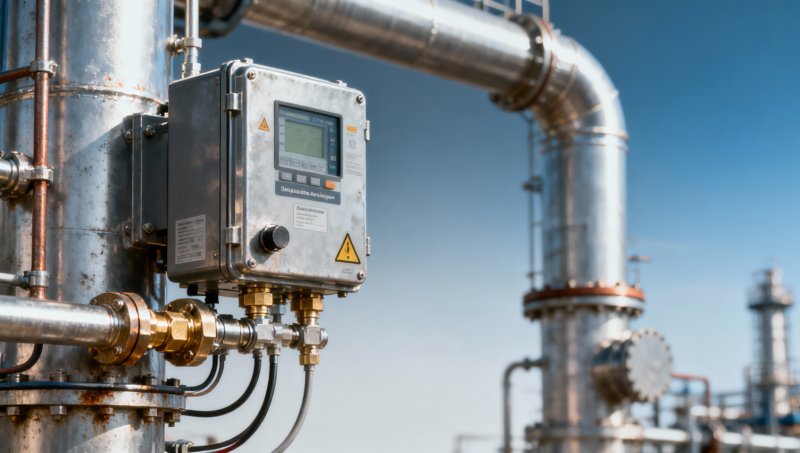
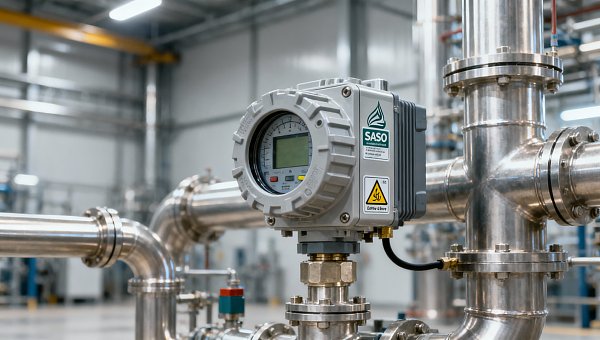
A hazardous area analyzer is not simply a standard analyzer placed in a stronger enclosure. In most industrial settings, the premium comes from a layered safety approach that includes explosion protection design, material compatibility, stable sensing performance, and compliance preparation for classified zones. For buyers in energy, chemical processing, environmental monitoring, and automated manufacturing, this difference matters because a lower upfront price can create a much higher operating risk over a 3–10 year service life.
In the instrumentation industry, analyzers often work as part of broader measurement and control systems. They interact with sampling systems, transmitters, controllers, PLC or DCS platforms, and plant safety routines. A hazardous area analyzer therefore has to do more than measure accurately. It must remain dependable during continuous operation, frequent temperature variation, vibration, and exposure to corrosive media while preserving signal integrity and operator safety.
The extra cost usually reflects 4 core factors: protection concept, mechanical durability, calibration stability, and lifecycle support. These are especially relevant when the installation site involves flammable gas, combustible vapor, dust, or oxygen-deficient conditions. In such environments, a single weak point such as poor sealing, unstable electronics, or unsuitable wetted materials can trigger downtime, maintenance escalation, or a failed site audit.
What buyers are really paying for
The higher price often includes design and validation work that is not obvious from a brochure. It may cover enclosure strength, temperature class suitability, safe cable entry design, controlled heat generation, and compatibility with field maintenance procedures. It also includes better resistance to drift, which is critical when analyzers run 24/7 and support production quality, emissions compliance, or process safety decisions.
- Safety engineering for hazardous zones, including suitable protection methods and installation interfaces.
- Materials and sealing systems chosen for hydrocarbons, solvents, moisture, acidic gases, or salt-laden environments.
- Operational stability under common field ranges such as -20°C to 60°C or extended continuous operation with periodic calibration intervals.
- Support for commissioning, documentation, spare parts planning, and inspection readiness.
Hazardous area analyzer vs standard analyzer: what changes in real operation?
A standard analyzer may perform well in a laboratory, utility room, or non-classified production area. The problem starts when the operating environment becomes unstable or potentially explosive. In those cases, the comparison should not focus only on measurement range or display interface. It should include environmental tolerance, maintenance frequency, installation complexity, and the cost of production interruption if the analyzer fails during a critical cycle.
For technical evaluators and project managers, the most useful method is to compare the total application fit rather than the catalog specification alone. A hazardous area analyzer often reduces hidden costs by avoiding additional protection cabinets, frequent replacement of seals and sensors, and repeated troubleshooting due to drift or condensation. This is why a premium unit may be the more economical choice over 2–5 years of plant operation.
The table below highlights practical differences that affect procurement, operation, and financial approval in industrial instrumentation projects.
This comparison shows why finance teams should not evaluate only unit price. In hazardous applications, the real benchmark is risk-adjusted operating cost. If a production line runs continuously, even one unplanned stop during a 6–12 hour batch or a critical transfer period can outweigh the initial equipment premium.
Where the performance gap becomes obvious
The difference is usually most visible in offshore platforms, chemical dosing systems, fuel handling areas, solvent storage, wastewater gas monitoring, and process skids installed outdoors. In these applications, analyzers may experience rain ingress risk, thermal cycling, process pulsation, and aggressive vapors. Standard units can work temporarily, but they often need extra protection layers that add installation cost and increase complexity.
Operators also notice the gap during calibration and troubleshooting. A hazardous area analyzer is typically designed to support safer access, more stable readings after restart, and better repeatability during routine verification. This can reduce unnecessary process adjustments and help quality or safety teams maintain a clearer audit trail.
Which technical features actually justify the premium?
Not every expensive analyzer is worth paying for. The premium is justified only when the technical package directly matches the application risk. For engineering teams, 5 key areas deserve close review: protection design, sensor stability, environmental resistance, integration capability, and maintainability. If one of these areas is weak, the extra cost may not deliver full value in the field.
Protection and environmental resilience
A hazardous area analyzer should be selected according to the site classification, process medium, and mounting conditions. Typical field questions include whether the unit will face washdown exposure, direct sunlight, vibration from rotating equipment, or winter start-up conditions. In many projects, the expected ambient operating range may fall between -20°C and 55°C, while sample gas conditions may be far more demanding depending on pressure and contamination level.
Good design also includes suitable wetted materials, stable seals, corrosion-resistant fasteners, and electronics protected against moisture or chemical ingress. For online industrial monitoring, this matters because analyzers often support continuous data collection for control systems, emissions checks, or process optimization. A device that survives only under ideal conditions is not a strong investment in digitalized industrial operations.
Measurement stability and integration
A premium analyzer should provide stable output over realistic calibration cycles. Depending on technology and process cleanliness, teams may plan verification every week, every month, or each quarter. The right model minimizes drift between these intervals and supports communication with plant systems through practical interfaces used in automation and industrial monitoring projects.
It should also fit maintenance workflows. That means accessible consumables, clear diagnostics, and replacement parts with manageable lead times such as 2–4 weeks for common items rather than open-ended supply uncertainty. For project leaders, this directly affects commissioning schedules and spares planning.
Before approving a premium budget, many teams use a structured review like the one below.
If the analyzer performs strongly across these points, the premium usually reflects real engineering value rather than a branding effect. That is particularly important in instrumentation projects where analysis quality supports both production continuity and safety management.
How should procurement, engineering, and finance evaluate total cost?
Procurement decisions around hazardous area analyzers often stall because each stakeholder measures value differently. Operators want reliable readings and easier maintenance. Engineers want correct integration and lower commissioning risk. Finance wants clear justification for the premium. The best solution is to use a total cost approach that covers acquisition, installation, operation, service, and downtime exposure over a realistic lifecycle.
For many industrial analyzer projects, the evaluation horizon is 3–5 years. Within that period, the purchase price is only one part of the cost picture. Additional items may include protective accessories, purge arrangements where applicable, cabling, commissioning support, calibration gas logistics, spare sensors, technician labor, and line stoppage risk if the analyzer becomes unreliable. Once those items are counted, the lower-cost option is not always the lower-cost decision.
A practical selection checklist
A disciplined selection process helps buyers avoid under-specifying or overpaying. The following 6-point checklist is useful in complex B2B projects across process plants, laboratories with hazardous utility areas, and industrial online monitoring applications.
- Confirm the classified area and installation method before comparing models.
- Define the sample characteristics, including pressure, moisture, particles, and corrosive components.
- Estimate expected calibration and maintenance intervals, such as weekly checks or quarterly verification.
- Review integration needs with existing PLC, DCS, SCADA, or laboratory information systems.
- Ask about common spare part lead times, service scope, and commissioning support.
- Calculate the operational impact of one unplanned failure event during a critical production window.
This approach helps financial approvers see the business logic. If a premium analyzer reduces two emergency callouts per year, extends service intervals, or lowers the probability of process shutdown during a high-value batch, the return can be easier to justify than it first appears.
When a lower-cost alternative may still be reasonable
A standard analyzer may still be suitable when the installation is outside the hazardous zone, when sample conditioning allows remote measurement, or when the analyzer is used only for intermittent checks rather than continuous online monitoring. In such cases, a safer installation architecture can sometimes control risk without requiring a fully hazardous area analyzer at the measurement point.
However, that alternative should be validated carefully. Additional tubing, shelters, cabinets, or remote conditioning can increase lag time, maintenance burden, and installation complexity. What looks cheaper on the equipment line item may become less attractive after engineering hours and support hardware are added.
What standards, compliance issues, and common mistakes should buyers watch?
In hazardous area projects, compliance is part of equipment value, not an afterthought. Buyers should check how the analyzer aligns with the site’s regional and industry requirements, installation documentation needs, and inspection procedures. The exact standard set varies by country and plant type, but the practical question remains the same: can the analyzer be installed, maintained, and audited without creating avoidable uncertainty?
This is particularly important for safety managers and quality personnel. An analyzer that lacks the right documentation package, marking clarity, or installation guidance can delay project approval even if the hardware itself appears suitable. Delays of 1–3 weeks during commissioning are not unusual when document review and field conditions do not align.
Frequent mistakes in hazardous area analyzer selection
- Choosing by analyzer technology alone and ignoring the hazardous zone classification and installation details.
- Assuming that a rugged enclosure automatically means full hazardous area suitability.
- Neglecting sample conditioning, which can undermine measurement quality even with a premium analyzer.
- Ignoring service access, calibration routines, and the availability of spare parts for 2–4 year operational planning.
- Treating documentation and compliance review as a final step instead of an early procurement criterion.
Another common error is to focus on one parameter, such as sensitivity, while overlooking system stability. In industrial instrumentation, a slightly lower nominal performance with stronger long-term repeatability may be more valuable than a high-spec unit that drifts, trips, or requires excessive field intervention. Reliable data supports automation, safety response, and product quality all at once.
FAQ: practical buying questions
How do I know whether the premium is justified for my site?
Start with 3 checks: site classification, process medium, and failure consequence. If the analyzer will operate in a classified area, under corrosive or unstable conditions, or in a process where one wrong reading can trigger shutdown or safety action, the premium usually has a rational basis.
What delivery timeline is common?
Typical lead times vary by configuration, documentation package, and accessories. Standardized configurations may fit shorter project windows, while customized hazardous area analyzer packages with special materials, sample systems, or approval documents can take several weeks longer. Buyers should ask early about factory preparation, inspection, and commissioning support timing.
What should operators ask before acceptance?
At minimum, confirm 5 items: start-up procedure, calibration routine, alarm behavior, consumable replacement method, and recommended preventive maintenance interval. These points often affect day-to-day usability more than brochure features do.
Why choose us for hazardous area analyzer selection and project support?
In the instrumentation industry, successful analyzer projects depend on more than equipment supply. They require application understanding, integration awareness, and disciplined communication between engineering, procurement, and operations. We support this process by helping teams translate site risk, measurement goals, and compliance needs into a practical hazardous area analyzer selection path.
Our approach is built for industrial manufacturing, energy and power, environmental monitoring, laboratory analysis, construction engineering support systems, and automation control projects. That means we can discuss not only the analyzer itself, but also sample conditions, signal integration, maintenance logic, and the documentation needed for project execution. This reduces rework during the 3 main phases of a typical project: specification, procurement, and commissioning.
If you are comparing options, contact us with your application details. We can help review measurement parameters, hazardous area requirements, suitable analyzer configurations, expected delivery windows, and whether a standard analyzer plus remote installation could be a valid alternative. We can also discuss sample support, accessory matching, calibration planning, and quotation preparation based on your project timeline.
For faster evaluation, send 6 key inputs: process medium, installation area classification, ambient temperature range, operating pressure or flow condition, required output or communication interface, and target delivery schedule. With these basics, the discussion becomes more accurate and much more useful for technical reviewers, purchasing teams, and final approvers.
Recommended for You
 First Global White Paper on Dynamic Calibration for Humanoid Robot Sensors ReleasedFirst global white paper on dynamic calibration for humanoid robot sensors—key for pressure & 6-axis force/torque accuracy in smart manufacturing and collaborative robotics.
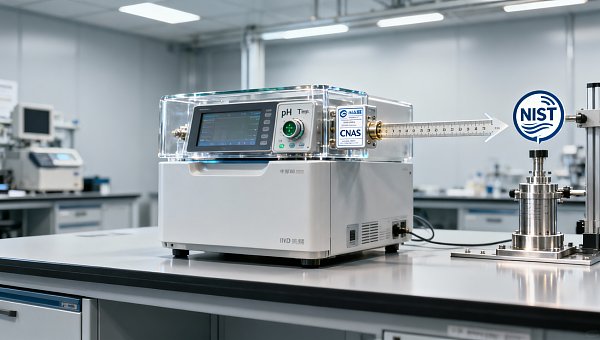
 FDA Updates IVD Import Guidelines: CNAS/NIST Calibration Chain RequiredFDA mandates CNAS/NIST calibration chain for IVD pressure & temperature sensors—key for Chinese exporters. Act now to meet July 2026 deadline.
 EU PEF Carbon Database Mandatory Access for Chinese Industrial InstrumentsEU PEF Carbon Database mandatory for Chinese industrial instruments—meet June 15, 2026 deadline to keep CE marking & win EU tenders.
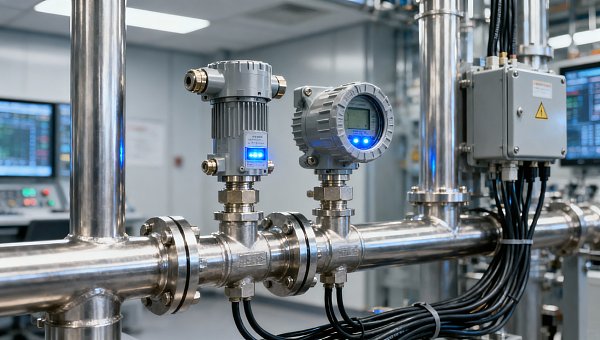
 IEC TC65 Releases Cybersecurity Validation Guide for Industrial InstrumentsIEC TC65 releases cybersecurity validation guide for industrial instruments—key for firmware signing, OT encryption & remote audit compliance. Act now.
 SASO Introduces AI-Based Energy Efficiency Verification for Industrial TransmittersSASO AI energy efficiency verification now mandatory for industrial transmitters in Saudi Arabia—ensure compliance before June 1, 2026 to avoid customs delays.
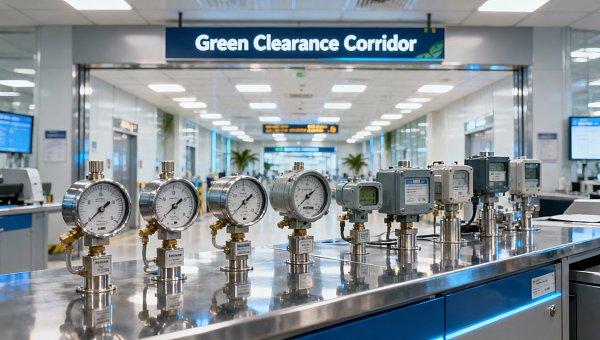
 ASEAN Green Customs Corridor Fully LaunchedASEAN Green Customs Corridor now live: AI-verified CNAS calibration reports slash ASEAN-China customs clearance to under 4 hours — boost precision equipment trade today.
 Process Control Equipment Price Trends Under Energy Cost PressureProcess control equipment price trends are shifting under energy cost pressure. Discover key cost drivers, total ownership factors, and smart sourcing tips to reduce risk and improve ROI.
 Multi Gas Analysis in Safety-Critical Areas: What to Check FirstMulti gas analysis starts with risk, not just instruments. Learn what to check first in safety-critical areas to improve compliance, reduce downtime, and protect people and assets.
 Industrial Analyzer Equipment: Common Failures and Maintenance TipsIndustrial analyzer equipment failures can disrupt uptime, compliance, and data accuracy. Discover common faults and practical maintenance tips to improve reliability fast.
 Industrial Measurement System Import Trends and Supply RisksIndustrial measurement system import trends and supply risks explained: learn how distributors can protect margins, reduce delays, and build stronger sourcing resilience.
 Emission Control Equipment Rules Reshaping Industrial DemandEmission control equipment is reshaping industrial investment as stricter rules drive demand for smarter monitoring, lower risk, and compliance-ready systems. Explore what buyers must evaluate now.
 Emission Measurement System Costs in 2026: What Shapes PricingEmission measurement system costs in 2026 depend on accuracy, compliance, installation, integration, and service. Learn what shapes pricing and plan a smarter investment.
 Process Measurement System Upgrades: When Do They Pay Off?Process measurement system upgrades pay off when they cut downtime, improve accuracy, and support compliance. Learn the key signals, ROI factors, and smart upgrade strategies.
 Paramagnetic Gas Measurement: Where It Performs Best in IndustryParamagnetic gas measurement delivers fast, stable oxygen analysis for combustion, emissions, and process control. Discover where it performs best and how it improves efficiency, compliance, and reliability.
 Gas Quality Analyzer Selection: Key Specs That Affect ResultsGas quality analyzer selection starts with the specs that truly impact results. Learn how accuracy, drift, response time, and durability affect safety, compliance, and process performance.
 How to Compare Custom Gas Analysis Options for Complex Process StreamsCustom gas analysis for complex process streams: learn how to compare technologies, sample conditioning, compliance, and maintenance to choose a reliable, application-fit solution.
 First Global White Paper on Humanoid Robot Industrial Calibration ReleasedHumanoid robot industrial calibration: First global white paper released—key for sensor makers, integrators & metrology labs. Learn impact & action steps.
 FDA Updates IVD Import Guidance: CNAS Calibration Chain RequiredFDA mandates CNAS calibration chain with NIST traceability for IVD instruments from China—act now to avoid U.S. import rejection starting July 1, 2026.
 IEC TC65 Releases Cybersecurity Validation Guidance for Industrial InstrumentsIEC TC65 releases cybersecurity validation guidance for industrial instruments—key for exporters, OEMs & integrators targeting EU/NA markets. Act now.
 ASEAN Green Corridor for Measuring Instruments Fully LaunchedASEAN Green Corridor for Measuring Instruments is live—unlock 3.8-hour customs clearance for CNAS-calibrated instruments across all 10 ASEAN nations. Act now!
 PTB Opens Direct VDA/ISO 17025 Report Portal for CNAS LabsPTB opens direct VDA/ISO 17025 report portal for CNAS labs — enabling dual-compliant calibration reports in <72h. Boost automotive audit readiness now!
 Vietnam Enforces Dual CNAS + Vietnamese Language Requirement for Industrial InstrumentsVietnam enforces dual CNAS + Vietnamese language requirement for industrial instruments (HS 9026/9027/9030) — avoid customs rejection. Act now!
 Red Sea Crisis Escalates: Gulf of Aden No-Sail Zone Extended to June 15, 2026Red Sea Crisis escalates: Gulf of Aden no-sail zone extended to June 15, 2026 — impacting industrial instrumentation trade, airfreight costs (+452%), and supply chain resilience between China and the Middle East.
 SASO Mandates AI-Driven Energy Simulation for Industrial Transmitters from June 2026SASO mandates AI-driven energy simulation for industrial transmitters from June 2026 — ensure compliance with NAIEC-certified testing now to avoid delays & rejections.
 BIS Adds 3 High-Precision Process Calibrators to EAR Supplement No. 4BIS Adds 3 High-Precision Process Calibrators to EAR Supplement No. 4—urgent compliance insights for semiconductor, nuclear, and calibration service providers operating with China.
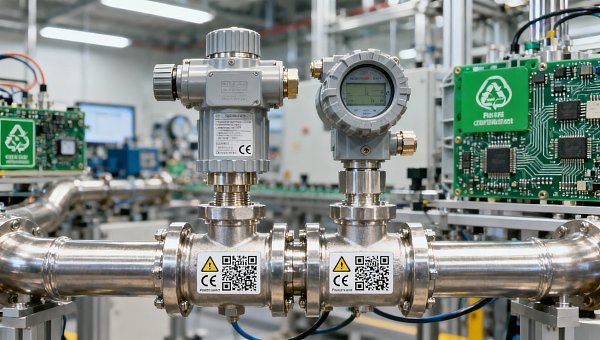
 EU PEF Carbon Footprint Database Mandatory Integration CountdownEU PEF Carbon Footprint Database integration is mandatory for industrial instrument exporters by Jan 2027—act now to secure market access, customs clearance & B2B tenders.
 FDA Updates IVD Import Guidance: CNAS Calibration Traceability to NIST Required for Chinese ManufacturersFDA now requires CNAS calibration traceability to NIST for Chinese IVD manufacturers — critical for 510(k)/De Novo submissions. Act now to avoid RTA delays!
 ASEAN's Green Clearance Corridor Fully LaunchedGreen Clearance Corridor now live: CNAS calibration reports auto-verified for ASEAN customs clearance in under 4 hours — boost your China–ASEAN trade efficiency today!
 First Global Cybersecurity Verification Guide for Industrial Instruments ReleasedFirst global cybersecurity verification guide for industrial instruments launched—featuring a 5-level maturity model & standardized pentest library. Essential for exporters, OEMs, and critical infrastructure suppliers.
 SASO Shortens Energy Labeling for Industrial Transmitters to 7 Days, Adds AI Power Simulation RequirementSASO energy labeling for industrial transmitters now takes just 7 days — but requires AI power simulation. Learn how to comply fast and avoid delays.
 PTB Launches AI Calibration Cloud Platform 2.0PTB AI Calibration Cloud Platform 2.0 launches with CNAS-VDA 5/ISO/IEC 17025 dual-compliance reporting — streamline cross-border calibration for auto suppliers, labs & equipment makers.
 EU Mandates Carbon Footprint Labels on Industrial Instruments from 2027EU mandates carbon footprint labels on industrial instruments from 2027—key for pressure, temperature & flow meter exporters. Act now to ensure PEF compliance and market access.


Search Categories
Search Categories
Latest Article
- First Global White Paper on Dynamic Calibration for Humanoid Robot Sensors ReleasedFirst global white paper on dynamic calibration for humanoid robot sensors—key for pressure & 6-axis force/torque accuracy in smart manufacturing and collaborative robotics.Posted by:
- FDA Updates IVD Import Guidelines: CNAS/NIST Calibration Chain RequiredFDA mandates CNAS/NIST calibration chain for IVD pressure & temperature sensors—key for Chinese exporters. Act now to meet July 2026 deadline.Posted by:
- EU PEF Carbon Database Mandatory Access for Chinese Industrial InstrumentsEU PEF Carbon Database mandatory for Chinese industrial instruments—meet June 15, 2026 deadline to keep CE marking & win EU tenders.Posted by:
Please give us a message
