
Low Range Analyzer or Portable Sensor: Which Fits Better


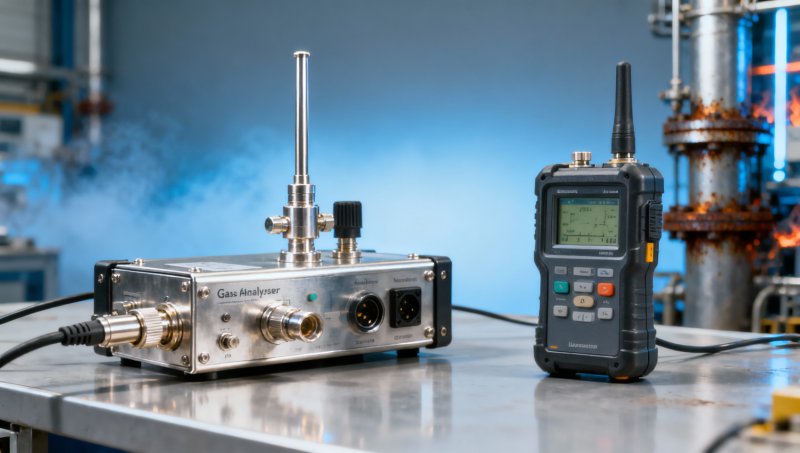
Choosing between a low range analyzer and a portable sensor is usually not about which device is “better” in general. It is about which one fits your measurement goal, compliance burden, and operating environment better. If you need higher precision, traceable data, trend stability, and stronger support for regulated testing, a low range analyzer is often the safer choice. If you need fast spot checks, field mobility, easier deployment, and lower upfront cost, a portable sensor may be the more practical option. In applications involving a high temperature analyzer, corrosive gas analyzer, toxic gas analyzer, or air quality analyzer, this decision can affect safety performance, data credibility, maintenance workload, and total cost over time.
For operators, engineers, project managers, and business decision-makers, the most useful comparison is not feature-by-feature marketing language. It is understanding where each option performs well, where it creates risk, and how to match it to real use cases. This guide focuses on that practical decision process.
What most buyers really need to know before choosing
The core search intent behind this topic is comparison for decision-making. Readers are usually not looking for a generic definition of instruments. They want a clear answer to questions such as:
- Which option gives more reliable data at low concentrations?
- Which one is easier to use on site?
- Which fits compliance, safety, or audit requirements?
- What are the trade-offs in cost, calibration, maintenance, and lifespan?
- Which one is better for air quality checks, toxic gas screening, or process monitoring?
In practice, the answer often comes down to this: a low range analyzer is better when measurement quality is business-critical, while a portable sensor is better when speed and mobility matter more than laboratory-grade confidence.
Low range analyzer vs portable sensor: the practical difference
A low range analyzer is typically designed to detect and quantify very low concentrations with greater sensitivity, repeatability, and long-term stability. It is often used where decisions depend on precise values rather than simple presence/absence signals. These systems may support advanced compensation, stronger calibration routines, data logging, alarm logic, and integration into broader quality or control systems.
A portable sensor is generally built for mobility, convenience, and fast field use. It is useful for walk-through inspections, temporary checks, maintenance rounds, preliminary safety screening, and distributed measurements across multiple points. Portable devices are often easier to deploy and less expensive initially, but their performance can be more affected by environmental changes, cross-sensitivity, sensor drift, and handling conditions.
This does not mean portable sensors are low-value tools. In many operations they are the most efficient choice. The issue is fitness for purpose, not instrument prestige.
When a low range analyzer is the better fit
A low range analyzer is usually the stronger option when your application involves any of the following:
- Very low detection thresholds: especially when small concentration changes matter operationally or legally.
- Compliance and reporting: if your data may be reviewed by auditors, regulators, customers, or internal quality teams.
- Process optimization: where stable trend data supports control decisions, root-cause analysis, or energy and material efficiency.
- Critical safety monitoring: especially in environments involving toxic gas analyzer or corrosive gas analyzer requirements.
- Harsh or sensitive operating conditions: including high temperature analyzer applications, continuous monitoring, or environments with strong interference.
For example, if a facility must document low-level emissions, confirm air quality performance, or monitor gas composition with high confidence, a low range analyzer is often worth the added investment. The benefit is not just precision on paper. It is reduced uncertainty in operational and compliance decisions.
When a portable sensor makes more sense
A portable sensor is often the better fit when flexibility and response speed are more important than ultra-low-level analytical precision. Typical good-fit situations include:
- Routine site inspections across multiple locations
- Maintenance troubleshooting and temporary diagnostics
- Pre-entry safety checks or rapid environmental screening
- Short-term projects where permanent installation is unnecessary
- Budget-sensitive deployments that need practical coverage fast
For many operations teams, portable sensors improve responsiveness. They allow users to move quickly, identify obvious issues, and verify conditions without waiting for a fixed analytical setup. In air quality analyzer workflows, for instance, a portable device may be ideal for preliminary investigation, while a low range analyzer is used later for validation or reporting.
The biggest decision factors: accuracy, speed, mobility, and compliance
If readers remember only one section, it should be this one. Most real-world decisions are based on four factors.
1. Accuracy and low-level sensitivity
If your measurement target is close to a detection limit, or if small differences change the decision, choose the option with stronger low-range performance. Low range analyzers generally perform better here.
2. Response speed in the field
If your team needs quick readings across many points in a short time, portable sensors usually offer better operational speed and convenience.
3. Mobility and deployment burden
Portable sensors win when access is difficult, measurements are temporary, or multiple assets must be checked in one shift. Fixed or more advanced analyzers can require more setup, utilities, training, and maintenance planning.
4. Compliance and data defensibility
If a reading may trigger a shutdown, a regulatory report, a product release decision, or a customer dispute, data defensibility matters. In these cases, a low range analyzer is often the lower-risk choice.
What operators and engineers should watch out for
Execution-level users usually care less about procurement language and more about whether the instrument performs consistently in the real environment. Important concerns include:
- Calibration frequency: how often the device must be checked and adjusted
- Sensor drift: whether readings change noticeably over time
- Cross-sensitivity: whether other gases or conditions distort results
- Warm-up and stabilization time: especially important for field efficiency
- Environmental resistance: humidity, dust, vibration, heat, and corrosive exposure
- User error risk: sampling method, handling, storage, and interpretation
In high temperature analyzer or corrosive gas analyzer scenarios, this becomes even more important. Not every portable sensor can withstand aggressive media or elevated temperatures without shortened life or compromised accuracy. Engineers should verify not just the measurement range, but also the real operating tolerance and maintenance impact.
What managers, approvers, and buyers should evaluate beyond purchase price
Management and finance stakeholders often focus first on initial equipment cost, but the smarter comparison is total lifecycle value. Questions worth asking include:
- What is the cost of wrong or weak data?
- How much labor is needed for routine use, calibration, and maintenance?
- Will this tool support audits, customer requirements, or internal quality systems?
- What downtime risk comes from instrument failure or unreliable readings?
- Will a cheaper portable option lead to retesting, disputes, or later upgrades?
A portable sensor may look more attractive in capital budgeting, but if the application later requires defensible low-level analysis, that lower upfront cost can become a false economy. On the other hand, buying a more advanced low range analyzer for simple spot checks may create unnecessary complexity and underused capability. The right financial decision is alignment with business need.
Typical application examples by scenario
Air quality screening across a building or industrial site: portable sensor first, low range analyzer if the results need confirmation, reporting, or deeper trend analysis.
Toxic gas risk in confined or hazardous areas: portable sensor for rapid safety checks, but a toxic gas analyzer with stronger performance may be necessary for continuous or compliance-sensitive monitoring.
Corrosive process stream monitoring: choose based on material compatibility, drift resistance, and maintenance burden. A corrosive gas analyzer designed for the environment is often more reliable than a general portable device.
High-temperature industrial process measurement: a high temperature analyzer is usually more appropriate when stable process data is required. Portable sensors may be limited unless specifically engineered for the condition.
Quality assurance or product validation: low range analyzer is usually preferred because repeatability and traceability carry more value than convenience.
A simple way to decide
If you are choosing between the two, use this short decision logic:
- Define whether the measurement is for screening, control, safety, compliance, or proof.
- Determine how low the concentration range really is and how much error is acceptable.
- Check the environment: temperature, humidity, corrosiveness, interference, and access conditions.
- Estimate how often the device will be used and by whom.
- Compare not only price, but calibration effort, downtime risk, and data credibility.
- If the reading will drive serious decisions, bias toward the more defensible instrument.
This approach usually prevents overbuying and underbuying at the same time.
Conclusion
A low range analyzer fits better when precision, low-level detection, trend reliability, and compliance confidence are central to the job. A portable sensor fits better when mobility, fast deployment, and practical field checks matter most. For many organizations, the real answer is not either-or, but using both strategically: portable sensors for rapid screening and low range analyzers for validation, continuous monitoring, or critical decision support.
If your application involves air quality analyzer needs, toxic gas analyzer safety concerns, corrosive gas analyzer durability challenges, or high temperature analyzer process demands, choose based on actual decision risk rather than specification headlines alone. The best instrument is the one that delivers usable, trustworthy results in your operating reality.
Recommended for You
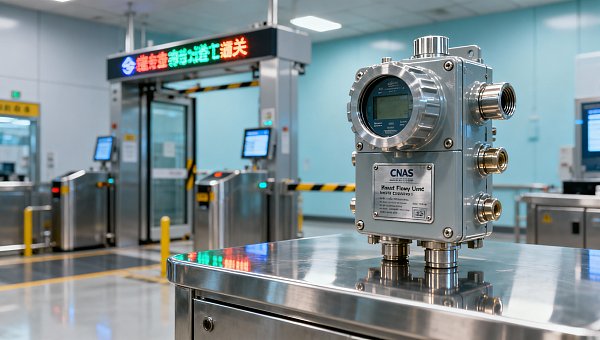
 FDA Updates IVD Import Guidance: CNAS Calibration Chain Required for China-Made DevicesFDA now requires CNAS calibration chain reports for China-made IVD analyzers—pH, ion & clinical chemistry devices entering via 510(k)/De Novo. Act now to avoid U.S. port rejections.
 EN 61000-6-4:2026 Enters Force: Stricter EMC Requirements for Industrial Field InstrumentsEN 61000-6-4:2026 enforces stricter EMC requirements for industrial field instruments—key for AI edge controllers, sensors & exporters. Act now to ensure CE-EMC compliance by Nov 2026.
 Global Methanol Electric Alliance Launches Cross-Border Energy Efficiency Recognition RoadmapGlobal Methanol Electric Alliance launches cross-border energy efficiency recognition roadmap—key for exporters, cal labs & methanol-instrument manufacturers.
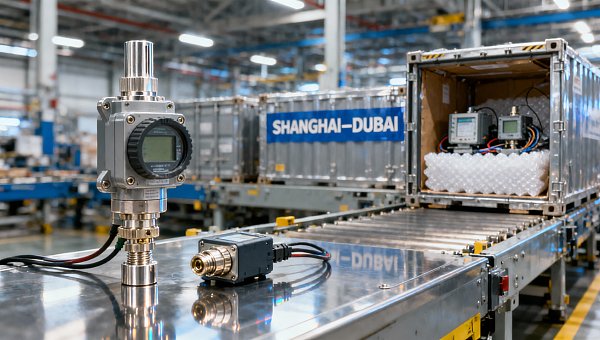
 Red Sea Crisis Escalates: Air Freight Premiums for China–Middle East Industrial Instruments Hit 390%Red Sea Crisis hits industrial instruments: China–Middle East air freight premiums surge 390%. Act now to secure Q3 capacity, avoid delays & optimize LCL alternatives.
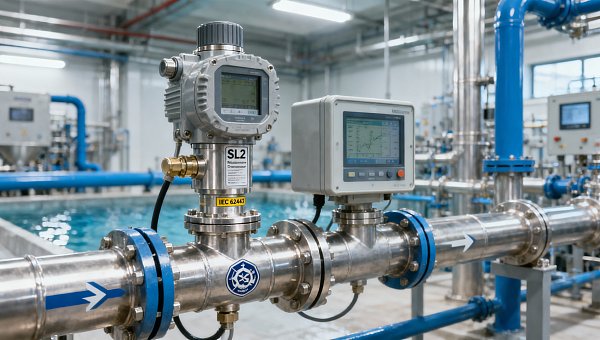
 IEC TC65 Mandates Cybersecurity Certification for Industrial Field Instruments from 2027IEC TC65 mandates cybersecurity certification for industrial field instruments by 2027 — pressure, flow & analytical devices must meet IEC 62443-4-2:2026 and display SL1–SL3 labels. Act now to ensure market access.
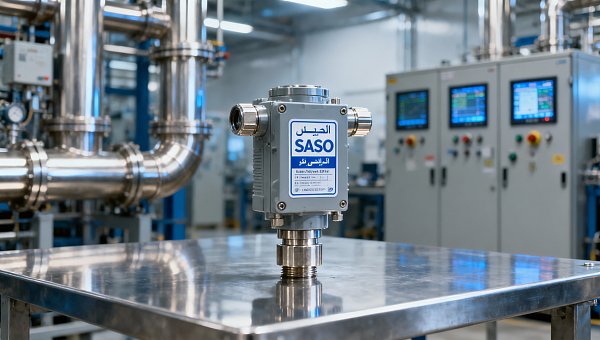
 SASO Cuts Energy Labeling Turnaround for Industrial Transmitters to 7 Working DaysSASO Energy Labeling now takes just 7 working days for industrial transmitters — faster market access, CNAS reports accepted. Act now!
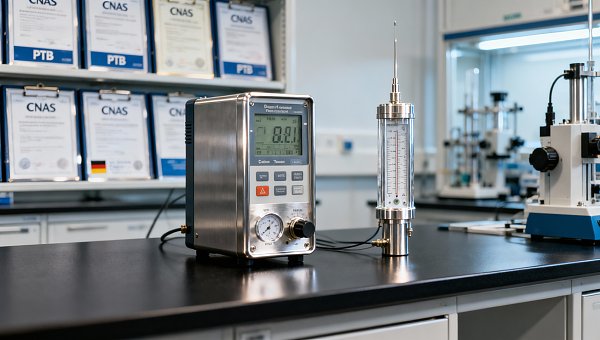
 PTB Launches CalCloud 2.0 with Direct CNAS Lab IntegrationCalCloud 2.0 now integrates directly with CNAS labs—enabling automated VDA 5 & ISO/IEC 17025 dual-compliant calibration reports for automotive and industrial exporters. Boost compliance efficiency today!
 ASEAN's Green Clearance Corridor for CNAS Calibration Reports LaunchesASEAN's Green Clearance Corridor now verifies CNAS calibration reports via blockchain—cut customs clearance to <48h for flow meters, analyzers & more. Act now!
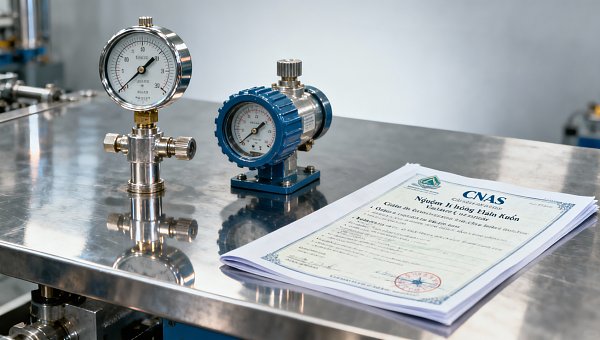
 Vietnam Mandates CNAS Calibration Certificates & Vietnamese Manuals for Industrial Meters from June 1, 2026CNAS calibration certificates & Vietnamese manuals now mandatory for industrial meters entering Vietnam from June 1, 2026—avoid customs delays and ensure seamless market access.
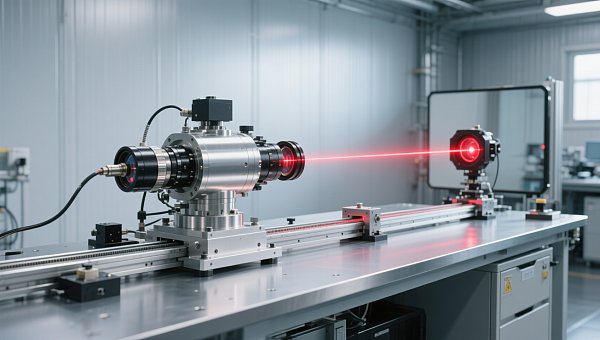
 U.S. BIS Tightens Export Controls on High-Precision Laser InterferometersU.S. BIS tightens export controls on high-precision laser interferometers—critical for semiconductor metrology & ISO/IEC 17025 calibration. Act now to ensure compliance.
 Paramagnetic Monitor Calibration Tips for Stable OutputParamagnetic monitor calibration tips for stable output: learn how to reduce drift, improve accuracy, cut downtime, and keep oxygen measurement reliable in demanding industrial applications.
 Paramagnetic Measurement in Low-Oxygen Process ControlParamagnetic measurement enables accurate low-oxygen process control with fast response and stable oxygen analysis. Learn how it improves safety, consistency, and system performance.
 Laser Detector Import Risks and Certification DelaysLaser detector import risks can cause costly certification delays, customs issues, and testing setbacks. Learn how to avoid compliance failures before ordering.
 Explosion Proof Detector Demand Under New Safety RulesExplosion proof detector demand is rising under new safety rules. Discover how to compare certified, reliable options that improve compliance, integration, and long-term site safety.
 Laboratory Detector Accuracy Standards You Should CheckLaboratory detector accuracy standards explained: check detection limits, repeatability, drift, and traceability to reduce risk, improve audit readiness, and choose with confidence.
 Custom Measurement Lead Times and Budget PlanningCustom measurement lead times and budgets explained for procurement teams. Learn key cost drivers, planning steps, and supplier tips to reduce delays and buy with confidence.
 Laser Measurement for Leak Detection: Common PitfallsLaser measurement for leak detection can fail due to setup, airflow, and data interpretation errors. Learn the common pitfalls and proven fixes for more accurate, reliable results.
 How to Evaluate a High Accuracy Detector in the FieldHigh accuracy detector evaluation starts with real field performance. Learn how to compare stability, response time, and reliability to choose the right detector with confidence.
 Electrochemical Monitor Lifespan and Replacement CostsElectrochemical monitor lifespan and replacement costs explained for buyers. Learn how sensor life, maintenance, and total ownership cost affect safer, smarter purchasing decisions.
 Thermal Analysis Market Direction in Process IndustriesThermal analysis market direction in process industries: discover trends, applications, and investment insights that improve quality control, reduce risk, and support smarter industrial decisions.
 Monitoring Shelter Design Priorities for Outdoor SitesMonitoring shelter design starts with protection, climate control, and power reliability. Discover how to choose the right outdoor solution for stable data, safer maintenance, and lower lifecycle risk.
 Fixed Measurement Planning for Multi-Point InstallationsFixed measurement planning is essential for multi-point installations. Learn how to improve accuracy, reliability, compliance, and maintenance efficiency across complex industrial systems.
 Fixed Analysis Systems for Stable Long-Term MonitoringFixed analysis systems enable stable long-term monitoring, reliable data, and better process control. Discover how they improve safety, compliance, and operational efficiency.
 Thermal Gas Applications Expanding in Clean IndustryThermal gas applications are reshaping clean industry with smarter flow measurement, emissions control, and energy optimization. Discover where they cut risk, boost efficiency, and support automation.
 Monitoring Detector Export Rules to Watch in 2026Monitoring detector export rules are changing fast in 2026. Learn the key compliance risks, supplier checks, and trade signals to protect margins and make smarter sourcing decisions.
 Control Detector Setup Mistakes That Affect ReliabilityControl detector setup mistakes can quietly reduce accuracy and uptime. Learn the most common installation, wiring, and calibration errors—and how to avoid them for reliable performance.
 What Defines a High Accuracy Monitor TodayHigh accuracy monitor selection starts with real-world performance. Learn the key accuracy factors, buyer checklist, and how to choose a reliable monitor for industrial control.
 Infrared Monitor Demand in Industrial Safety UpgradesInfrared monitor demand is rising as industrial safety upgrades accelerate. Discover where buyers need it most, how channel partners can sell smarter, and which applications drive long-term growth.
 Thermal Conductivity Monitor Limits in Mixed Gas StreamsThermal conductivity monitor limits in mixed gas streams explained—learn where accuracy drops, what buyers should compare, and how to choose the right analyzer with confidence.
 Laser Monitor vs Infrared Monitor for Fast DetectionLaser monitor vs infrared monitor for fast detection: discover which delivers better precision, response speed, and reliability for industrial monitoring and smarter sensor selection.
 Thermal Gas Analyzer Price Shifts Across Global MarketsThermal gas analyzer price shifts are reshaping global budgets. Learn what drives costs, regional differences, and how buyers can reduce risk and improve long-term value.
 Custom Analysis Options for Complex Gas ApplicationsCustom analysis helps solve complex gas applications with better accuracy, compliance, and reliability. Discover practical selection insights that reduce risk and improve system performance.
Search Categories
Search Categories
Latest Article
- FDA Updates IVD Import Guidance: CNAS Calibration Chain Required for China-Made DevicesFDA now requires CNAS calibration chain reports for China-made IVD analyzers—pH, ion & clinical chemistry devices entering via 510(k)/De Novo. Act now to avoid U.S. port rejections.Posted by:
- EN 61000-6-4:2026 Enters Force: Stricter EMC Requirements for Industrial Field InstrumentsEN 61000-6-4:2026 enforces stricter EMC requirements for industrial field instruments—key for AI edge controllers, sensors & exporters. Act now to ensure CE-EMC compliance by Nov 2026.Posted by:
- Global Methanol Electric Alliance Launches Cross-Border Energy Efficiency Recognition RoadmapGlobal Methanol Electric Alliance launches cross-border energy efficiency recognition roadmap—key for exporters, cal labs & methanol-instrument manufacturers.Posted by:
Please give us a message
