
Rugged Gas Analyzer Specs That Look Strong but Miss Real Site Needs


A rugged gas analyzer can look impressive in a datasheet, yet still become a weak link once it reaches a corrosive, vibration-heavy, hazardous, or maintenance-constrained site. For buyers comparing a zone 1 analyzer, zone 2 analyzer, IECEx analyzer, ATEX analyzer, or intrinsically safe analyzer, the real question is not which product has the strongest headline specs. It is which system will remain safe, accurate, serviceable, and cost-effective under actual operating conditions.
That matters across engineering, procurement, operations, safety, and finance. A unit that passes specification review but fails under site realities can create shutdown risk, false readings, repeated maintenance visits, higher consumables use, delayed approvals, and expensive retrofits. The best purchase decision comes from testing claims against application details: gas composition, ambient conditions, hazardous area classification, sample system design, maintenance access, lifecycle cost, and local compliance needs.
Why “rugged” specs often fail when the analyzer reaches the real site
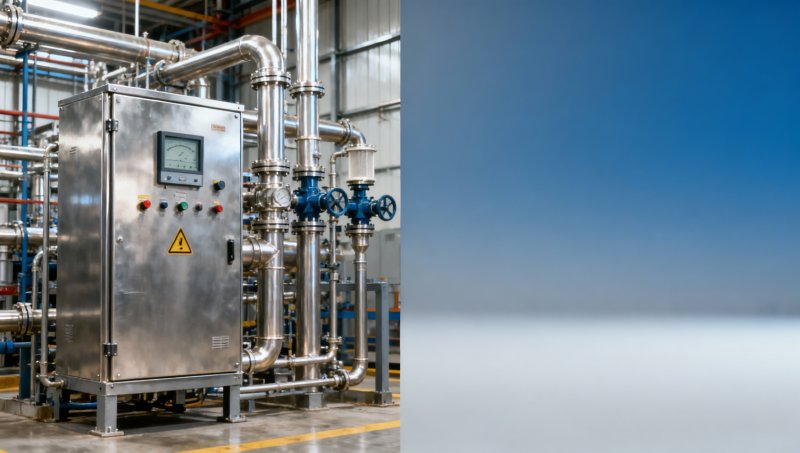
Many gas analyzers are marketed as suitable for harsh environments because they offer a robust enclosure, wide ambient temperature range, or hazardous area certification. Those are important, but they are only part of the selection picture. A harsh environment analyzer may still underperform if the full installation context is ignored.
The most common mismatch is confusing product toughness with application suitability. A strong enclosure does not solve sample contamination. A certified housing does not guarantee sensor stability in corrosive gas streams. A zone 2 analyzer may be inappropriate where continuous explosive gas presence requires a zone 1 analyzer. Likewise, an IECEx analyzer or ATEX analyzer may satisfy regulatory expectations in principle, but still create problems if purge requirements, cable entry, maintenance procedures, spare parts access, or calibration routines are impractical on site.
In other words, paper specs often describe what the analyzer can survive in isolation. Real sites test how the whole analyzer system behaves as part of a working process.
What buyers and technical teams should evaluate before trusting the datasheet
For most stakeholders, the real concern is risk reduction. Operators want stable readings and easier maintenance. Technical evaluators want reliable performance under actual process conditions. Procurement teams want fewer hidden costs. Decision-makers want lower downtime risk and better lifecycle value. Safety and quality teams want compliance and traceability.
To make a sound decision, teams should evaluate at least these areas:
- Hazardous area fit: Is the product truly suitable for the classified area, such as zone 1 analyzer or zone 2 analyzer use, including accessories and installation method?
- Certification relevance: Does IECEx analyzer or ATEX analyzer certification cover the final installed configuration, not just the core device?
- Intrinsic safety boundaries: If selecting an intrinsically safe analyzer, are barriers, wiring limits, maintenance procedures, and performance limitations fully understood?
- Process gas compatibility: Can wetted materials handle corrosive, wet, dirty, hot, or reactive gases over time?
- Sample system design: Is conditioning, filtering, pressure control, heating, cooling, or moisture management included where needed?
- Calibration and serviceability: Can technicians access filters, sensors, valves, and calibration points without major shutdown effort?
- Environmental stress: Will dust, vibration, salt fog, washdown, sunlight, thermal cycling, or remote placement affect reliability?
- Lifecycle support: Are spare parts, technical support, calibration gases, and service intervals practical for the site and region?
These factors usually matter more than headline claims such as “ruggedized design” or “industrial-grade enclosure.”
Zone 1 analyzer vs zone 2 analyzer: a common source of costly selection mistakes
One of the biggest practical errors is treating zone classification as a simple box-checking exercise. It is not. The difference between a zone 1 analyzer and a zone 2 analyzer can affect safety strategy, installation complexity, operating procedures, maintenance rules, and total project cost.
A zone 1 analyzer is intended for areas where an explosive gas atmosphere is likely to occur in normal operation. A zone 2 analyzer is meant for areas where such an atmosphere is less likely and, if it occurs, exists only briefly. Choosing the wrong category can lead to rejection during project review, redesign of installation plans, or higher-than-expected mitigation costs.
Even when a lower-cost zone 2 analyzer seems attractive, it may not be viable if the site classification is stricter, if operating scenarios can change, or if future expansions could alter area definitions. On the other hand, automatically selecting a more heavily protected option without evaluating maintenance impact, power needs, installation footprint, and support requirements can also create unnecessary expense.
The right approach is to match the analyzer not only to present zone classification, but also to actual operating practice, upset conditions, maintenance access, and future compliance expectations.
IECEx analyzer, ATEX analyzer, and intrinsically safe analyzer claims: what to verify beyond the label
Certification language is often used as a shortcut in purchasing discussions, but the label alone does not tell the full story. An IECEx analyzer or ATEX analyzer may be formally certified, yet buyers still need to verify how the unit will be installed and operated in the intended market and facility.
Key questions include:
- Does certification apply to the complete assembled analyzer package, including displays, junction boxes, sample handling components, heaters, and transmitters?
- Are there special conditions for safe use that add installation or maintenance burden?
- Will the certification be recognized by the project owner, insurer, EPC contractor, and local authority?
- Are ambient temperature limits, cable gland requirements, purge conditions, or panel modifications likely to invalidate the approved configuration?
For an intrinsically safe analyzer, teams should go even deeper. Intrinsic safety can be highly effective, but only if loop design, barriers, power limitations, and field maintenance practices are correctly managed. In some projects, intrinsically safe architecture reduces risk and simplifies field work. In others, it may constrain analyzer functionality or complicate integration with existing systems. The best answer depends on the application, not on whether “intrinsically safe” sounds more robust.
Corrosion, contamination, and sample handling usually matter more than enclosure strength
In many installations, analyzers fail not because the enclosure was weak, but because the sample path was poorly matched to the gas stream. This is especially important in chemical plants, wastewater treatment, energy facilities, process industries, and outdoor environmental monitoring stations.
If the process gas contains moisture, acid gases, solvents, particulates, sulfur compounds, or condensable components, the analyzer’s long-term accuracy will depend heavily on materials compatibility and sample conditioning. Stainless steel may be fine in one application and insufficient in another. Elastomers, tubing materials, seals, valves, and filters all affect system durability. A device promoted as a harsh environment analyzer may still drift, foul, or corrode quickly if the internal sample-contact materials are not suitable.
Buyers should ask practical questions:
- What are the wetted materials throughout the full sample path?
- What happens during startup, shutdown, purging, and upset conditions?
- Will condensation form anywhere between the process tap and the measuring cell?
- How often will filters clog, and how difficult are they to replace?
- Can the analyzer recover quickly after contamination events?
These details often determine whether the analyzer remains trustworthy after six months, not just whether it passed factory testing.
Maintenance reality is where many “strong” analyzers become expensive analyzers
Operations teams know that maintenance burden can erase the value of a lower purchase price. If a gas analyzer requires frequent recalibration, difficult access, specialist service tools, repeated sensor replacement, or full shutdown for routine work, it can become far more expensive than a higher-priced but easier-to-maintain alternative.
This is why maintenance planning should be part of the evaluation process from the beginning. A good analyzer choice is not just one that survives the site. It is one that can be kept running by the people, schedules, and spare parts actually available.
Review these points carefully:
- Mean time between service interventions under similar field conditions
- Calibration interval and calibration gas consumption
- Ease of replacing consumables in hazardous locations
- Remote diagnostics and fault transparency
- Local service partner capability
- Training needs for operators and maintenance staff
- Expected downtime per maintenance event
From a finance and management perspective, these factors directly affect total cost of ownership, labor cost, compliance risk, and production continuity.
How to judge total lifecycle value instead of buying on headline ruggedness
The most useful buying framework is lifecycle-based rather than spec-sheet-based. Instead of asking which analyzer appears strongest, ask which option creates the lowest long-term risk-adjusted cost for the intended site.
A practical comparison should include:
- Initial purchase and installation cost
- Certification and approval fit for target markets and project standards
- Sample system complexity and supporting infrastructure needs
- Expected maintenance labor and consumables
- Accuracy stability under actual gas and ambient conditions
- Spare parts availability and lead times
- Consequences of analyzer downtime or false readings
- Upgrade flexibility if process conditions change
This broader view is especially important for procurement teams, project managers, and enterprise decision-makers. The cheapest unit or the one with the most aggressive rugged marketing can become the worst investment if it causes field modifications, compliance delays, or recurring service problems.
A simple decision framework for selecting the right analyzer for harsh and hazardous sites
If your team is comparing options, use this sequence:
- Define the actual hazard classification and compliance requirement. Confirm whether the application truly requires a zone 1 analyzer, zone 2 analyzer, IECEx analyzer, ATEX analyzer, or intrinsically safe analyzer approach.
- Map real gas and site conditions. Include contaminants, humidity, corrosion risk, temperature swings, dust, vibration, and washdown exposure.
- Review the complete analyzer system. Evaluate the sample conditioning train, not only the analyzer body.
- Test maintenance practicality. Ask who will service it, how often, with what tools, and under what access restrictions.
- Compare lifecycle cost scenarios. Include downtime, labor, calibration gas, consumables, and support responsiveness.
- Request application-specific references. Look for installations with similar gas streams and environmental stress, not generic industry claims.
This process helps teams avoid buying a product that looks excellent in a proposal but performs poorly in the field.
Conclusion
Strong rugged gas analyzer specs are not enough. Real site success depends on whether the analyzer fits the hazard classification, process gas, maintenance reality, compliance framework, and long-term operating model. Whether you are evaluating a zone 1 analyzer, zone 2 analyzer, IECEx analyzer, ATEX analyzer, or intrinsically safe analyzer, the smartest decision is the one that reflects field conditions rather than marketing language.
For most projects, the winning analyzer is not the one with the boldest brochure. It is the one that stays accurate, safe, maintainable, and economically justifiable after months and years on the actual site.
Recommended for You
 FDA Updates IVD Import Guidance: CNAS Calibration Traceability to NIST Required for Chinese ManufacturersFDA now requires CNAS calibration traceability to NIST for Chinese IVD manufacturers — critical for 510(k)/De Novo submissions. Act now to avoid RTA delays!
 ASEAN's Green Clearance Corridor Fully LaunchedGreen Clearance Corridor now live: CNAS calibration reports auto-verified for ASEAN customs clearance in under 4 hours — boost your China–ASEAN trade efficiency today!
 First Global Cybersecurity Verification Guide for Industrial Instruments ReleasedFirst global cybersecurity verification guide for industrial instruments launched—featuring a 5-level maturity model & standardized pentest library. Essential for exporters, OEMs, and critical infrastructure suppliers.
 SASO Shortens Energy Labeling for Industrial Transmitters to 7 Days, Adds AI Power Simulation RequirementSASO energy labeling for industrial transmitters now takes just 7 days — but requires AI power simulation. Learn how to comply fast and avoid delays.
 PTB Launches AI Calibration Cloud Platform 2.0PTB AI Calibration Cloud Platform 2.0 launches with CNAS-VDA 5/ISO/IEC 17025 dual-compliance reporting — streamline cross-border calibration for auto suppliers, labs & equipment makers.
 EU Mandates Carbon Footprint Labels on Industrial Instruments from 2027EU mandates carbon footprint labels on industrial instruments from 2027—key for pressure, temperature & flow meter exporters. Act now to ensure PEF compliance and market access.
 Red Sea Crisis Worsens: Gulf of Aden Ban Extends to 3 Weeks, Air Freight Premiums for Industrial Instruments Surge 420%Red Sea crisis deepens: Gulf of Aden ban hits 3 weeks, spiking air freight premiums for industrial instruments by 420%—urgent insights for exporters & EPC contractors.
 Vietnam Enforces CNAS + Vietnamese Dual Requirement for Industrial InstrumentsVietnam Enforces CNAS + Vietnamese Dual Requirement for Industrial Instruments: Key compliance update for exporters, labs & documentation teams ahead of June 2026.
 U.S. BIS Adds 5 High-Precision Pressure/Flow Calibration Sources to EAR ListU.S. BIS adds 5 high-precision pressure/flow calibration sources to EAR list — critical for exporters, instrument makers & supply chain teams. Act now.
 IEC 61508-3:2026 Published: Functional Safety Certification UpgradedIEC 61508-3:2026 is live—discover what the upgraded functional safety certification means for your industrial software, AI diagnostics & global market access.
 FDA Updates IVD Import Guidance: CNAS Calibration Chain Required for China-Made DevicesFDA now requires CNAS calibration chain reports for China-made IVD analyzers—pH, ion & clinical chemistry devices entering via 510(k)/De Novo. Act now to avoid U.S. port rejections.
 EN 61000-6-4:2026 Enters Force: Stricter EMC Requirements for Industrial Field InstrumentsEN 61000-6-4:2026 enforces stricter EMC requirements for industrial field instruments—key for AI edge controllers, sensors & exporters. Act now to ensure CE-EMC compliance by Nov 2026.
 Global Methanol Electric Alliance Launches Cross-Border Energy Efficiency Recognition RoadmapGlobal Methanol Electric Alliance launches cross-border energy efficiency recognition roadmap—key for exporters, cal labs & methanol-instrument manufacturers.
 Red Sea Crisis Escalates: Air Freight Premiums for China–Middle East Industrial Instruments Hit 390%Red Sea Crisis hits industrial instruments: China–Middle East air freight premiums surge 390%. Act now to secure Q3 capacity, avoid delays & optimize LCL alternatives.
 IEC TC65 Mandates Cybersecurity Certification for Industrial Field Instruments from 2027IEC TC65 mandates cybersecurity certification for industrial field instruments by 2027 — pressure, flow & analytical devices must meet IEC 62443-4-2:2026 and display SL1–SL3 labels. Act now to ensure market access.
 SASO Cuts Energy Labeling Turnaround for Industrial Transmitters to 7 Working DaysSASO Energy Labeling now takes just 7 working days for industrial transmitters — faster market access, CNAS reports accepted. Act now!
 PTB Launches CalCloud 2.0 with Direct CNAS Lab IntegrationCalCloud 2.0 now integrates directly with CNAS labs—enabling automated VDA 5 & ISO/IEC 17025 dual-compliant calibration reports for automotive and industrial exporters. Boost compliance efficiency today!
 ASEAN's Green Clearance Corridor for CNAS Calibration Reports LaunchesASEAN's Green Clearance Corridor now verifies CNAS calibration reports via blockchain—cut customs clearance to <48h for flow meters, analyzers & more. Act now!
 Vietnam Mandates CNAS Calibration Certificates & Vietnamese Manuals for Industrial Meters from June 1, 2026CNAS calibration certificates & Vietnamese manuals now mandatory for industrial meters entering Vietnam from June 1, 2026—avoid customs delays and ensure seamless market access.
 U.S. BIS Tightens Export Controls on High-Precision Laser InterferometersU.S. BIS tightens export controls on high-precision laser interferometers—critical for semiconductor metrology & ISO/IEC 17025 calibration. Act now to ensure compliance.
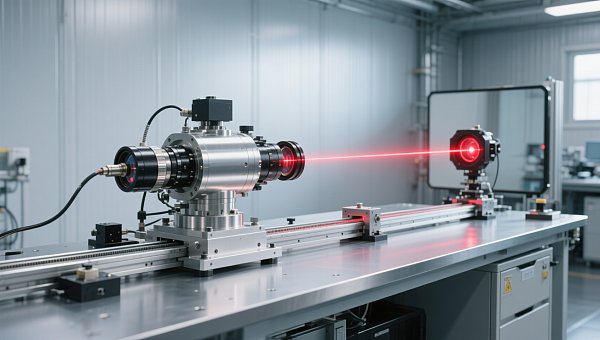
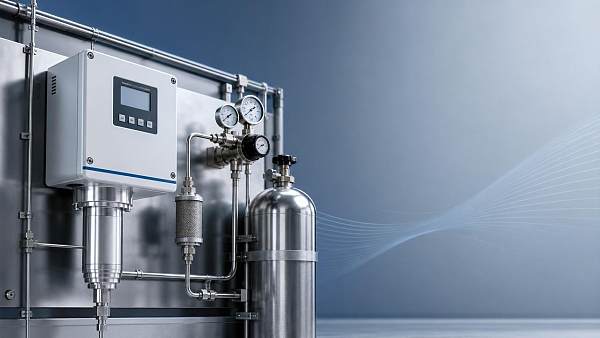
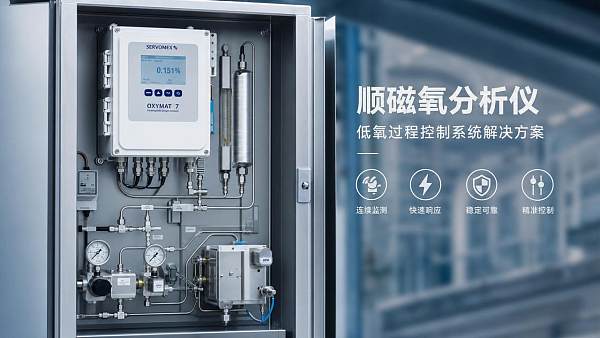
 Paramagnetic Monitor Calibration Tips for Stable OutputParamagnetic monitor calibration tips for stable output: learn how to reduce drift, improve accuracy, cut downtime, and keep oxygen measurement reliable in demanding industrial applications.
 Paramagnetic Measurement in Low-Oxygen Process ControlParamagnetic measurement enables accurate low-oxygen process control with fast response and stable oxygen analysis. Learn how it improves safety, consistency, and system performance.
 Laser Detector Import Risks and Certification DelaysLaser detector import risks can cause costly certification delays, customs issues, and testing setbacks. Learn how to avoid compliance failures before ordering.
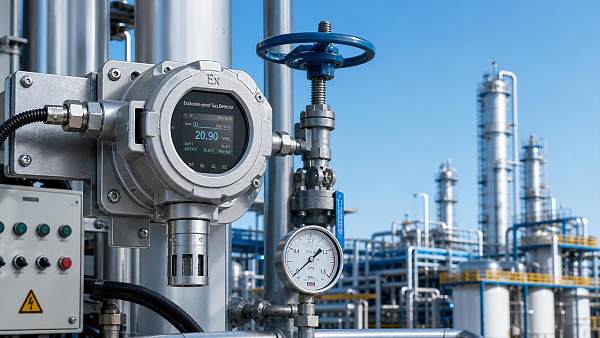
 Explosion Proof Detector Demand Under New Safety RulesExplosion proof detector demand is rising under new safety rules. Discover how to compare certified, reliable options that improve compliance, integration, and long-term site safety.
 Laboratory Detector Accuracy Standards You Should CheckLaboratory detector accuracy standards explained: check detection limits, repeatability, drift, and traceability to reduce risk, improve audit readiness, and choose with confidence.
 Custom Measurement Lead Times and Budget PlanningCustom measurement lead times and budgets explained for procurement teams. Learn key cost drivers, planning steps, and supplier tips to reduce delays and buy with confidence.
 Laser Measurement for Leak Detection: Common PitfallsLaser measurement for leak detection can fail due to setup, airflow, and data interpretation errors. Learn the common pitfalls and proven fixes for more accurate, reliable results.
 How to Evaluate a High Accuracy Detector in the FieldHigh accuracy detector evaluation starts with real field performance. Learn how to compare stability, response time, and reliability to choose the right detector with confidence.
 Electrochemical Monitor Lifespan and Replacement CostsElectrochemical monitor lifespan and replacement costs explained for buyers. Learn how sensor life, maintenance, and total ownership cost affect safer, smarter purchasing decisions.
 Thermal Analysis Market Direction in Process IndustriesThermal analysis market direction in process industries: discover trends, applications, and investment insights that improve quality control, reduce risk, and support smarter industrial decisions.
 Monitoring Shelter Design Priorities for Outdoor SitesMonitoring shelter design starts with protection, climate control, and power reliability. Discover how to choose the right outdoor solution for stable data, safer maintenance, and lower lifecycle risk.
 Fixed Measurement Planning for Multi-Point InstallationsFixed measurement planning is essential for multi-point installations. Learn how to improve accuracy, reliability, compliance, and maintenance efficiency across complex industrial systems.





Search Categories
Search Categories
Latest Article
- FDA Updates IVD Import Guidance: CNAS Calibration Traceability to NIST Required for Chinese ManufacturersFDA now requires CNAS calibration traceability to NIST for Chinese IVD manufacturers — critical for 510(k)/De Novo submissions. Act now to avoid RTA delays!Posted by:
- ASEAN's Green Clearance Corridor Fully LaunchedGreen Clearance Corridor now live: CNAS calibration reports auto-verified for ASEAN customs clearance in under 4 hours — boost your China–ASEAN trade efficiency today!Posted by:
- First Global Cybersecurity Verification Guide for Industrial Instruments ReleasedFirst global cybersecurity verification guide for industrial instruments launched—featuring a 5-level maturity model & standardized pentest library. Essential for exporters, OEMs, and critical infrastructure suppliers.Posted by:
Please give us a message
