
When a Safety Control Analyzer Gives False Alarms


When a safety control analyzer starts giving false alarms, the issue is rarely just “too many alerts.” In most industrial settings, false alarms point to a deeper problem in analyzer system performance, installation conditions, maintenance practices, or signal interpretation. Left unresolved, they can interrupt production, trigger unnecessary shutdowns, consume labor hours, and reduce confidence in genuinely critical warnings. For operators, technical evaluators, purchasing teams, and business decision-makers, the right response is not to silence the alarm—it is to identify whether the fault comes from the sensor, sampling path, calibration routine, process conditions, or system integration. This article explains the most common causes, how to troubleshoot them efficiently, and what to consider when evaluating gas analysis equipment for more reliable gas measurement.
Why false alarms matter more than most plants first assume

A false alarm from an emission control analyzer or process monitoring analyzer is not only an operational nuisance. It affects safety response discipline, maintenance planning, production continuity, and cost control. If operators repeatedly see alarms that do not match real process conditions, alarm fatigue can develop. Once trust is reduced, the risk is that a true hazardous event may not receive the immediate attention it requires.
For management and project stakeholders, the impact is broader. False alarms can lead to unnecessary process interruptions, avoidable field inspections, excessive spare parts consumption, and disputes over analyzer reliability. In regulated applications, unstable or questionable data can also create compliance concerns. In short, poor gas measurement reliability becomes both a technical and a business problem.
What usually causes a safety control analyzer to give false alarms
In most cases, false alarms do not come from a single root cause. They often result from several small weaknesses across the analyzer system. The most common sources include the following:
Sensor drift or analyzer aging. Over time, sensing elements lose stability. If calibration intervals are too long, the analyzer may report concentrations outside normal limits even when the process is stable.
Sampling system problems. Many gas analysis equipment failures are not caused by the analyzer core itself, but by sample lines, filters, pumps, moisture traps, valves, or leaks. Condensation, blockage, contamination, or slow sample transport can distort readings and trigger alarms.
Poor calibration practices. Incorrect calibration gas, expired standards, improper span settings, or rushed procedures can shift the analyzer response. A system may appear functional while still generating unreliable alarm behavior.
Electrical noise and signal interference. In industrial environments with motors, drives, switching devices, and long cable runs, signal instability can create false threshold crossings if shielding, grounding, or isolation is inadequate.
Process variability not reflected in alarm settings. Some alarms are technically “false” only because the configured thresholds do not match actual operating conditions. Startup, shutdown, load changes, or transient spikes may be normal for the process but still activate alarms.
Software or logic integration issues. If the analyzer is connected to PLC, DCS, SCADA, or safety systems, signal scaling errors, bad tag mapping, delayed filtering, or incorrect voting logic can produce alarm events that do not reflect real gas conditions.
Environmental influences. Temperature swings, humidity, dust, vibration, corrosive atmospheres, and unstable utility supply can all affect analyzer system performance, especially when the installation environment was not fully considered during equipment selection.
How to tell whether the problem is the analyzer, the sample system, or the process itself
This is one of the most practical questions for users and engineering teams. A structured diagnosis saves time and avoids replacing the wrong component.
Start by reviewing the alarm pattern. Ask whether the false alarms occur randomly, only during certain shifts, during process transitions, after maintenance, or under specific ambient conditions. Patterns often reveal whether the issue is mechanical, environmental, or procedural.
Next, compare analyzer readings with an independent reference. Portable instruments, lab analysis, or cross-checking with another measurement point can help determine whether the alarm is tied to actual gas concentration or is an instrument artifact.
Then inspect the sample conditioning path in detail. In many industrial analyzer systems, this is where hidden faults accumulate. Check for leaks, clogged filters, water ingress, pump weakness, dead volume, pressure fluctuations, and delayed sample response. A healthy analyzer connected to a poor sample path will still produce poor results.
Calibration records should also be reviewed. Look for drift trends, repeated offset corrections, inconsistent zero/span results, or unexplained calibration failures. If the instrument frequently needs adjustment, the root issue may be sensor degradation, contamination, or unstable application conditions.
Finally, verify alarm logic and signal handling in the control system. Confirm analog scaling, engineering units, alarm deadbands, delay timers, averaging functions, and fail-safe states. Sometimes the analyzer is accurate, but the control architecture turns normal signal variation into repeated nuisance alarms.
What operators and maintenance teams can do immediately
For frontline users, the goal is to restore dependable operation without creating new risk. The best immediate actions are practical and disciplined:
- Confirm whether the alarm corresponds to actual process conditions before resetting or bypassing it.
- Inspect sample lines, filters, drains, and fittings for contamination, blockage, or moisture.
- Review the last calibration date, calibration gas quality, and recent maintenance history.
- Check analyzer status logs for fault codes, signal instability, or warm-up issues.
- Observe whether alarms coincide with startup, shutdown, cleaning, or batch changes.
- Record recurring conditions rather than treating each alarm as an isolated event.
These steps help teams move from reactive alarm clearing to evidence-based troubleshooting. They also create better data for technical assessment and vendor support.
What technical evaluators and project leaders should assess before blaming the equipment
For technical assessment personnel, quality managers, and engineering project leaders, false alarms should trigger a broader system review. The key question is not only whether the analyzer works, but whether the selected configuration matches the application.
Important evaluation points include:
- Measurement principle suitability: Is the analyzer technology appropriate for the target gas, concentration range, cross-sensitivity risk, and response time requirement?
- Sample handling design: Is the sample conditioning system designed for moisture, particulates, corrosive components, pressure variation, and temperature control?
- Installation quality: Are mounting location, line length, enclosure protection, grounding, and utility supply aligned with best practice?
- Maintenance accessibility: Can operators easily inspect, calibrate, and service the equipment without disrupting production?
- Data integration: Is the analyzer system correctly integrated into plant controls, alarm management, and reporting workflows?
- Lifecycle support: Are spare parts, service guidance, calibration support, and documentation available over the expected service life?
In many cases, reducing false alarms requires improving the total measurement chain, not simply replacing the analyzer head.
How false alarms affect purchasing decisions, cost control, and ROI
For procurement teams, business evaluators, financial approvers, and enterprise decision-makers, the hidden cost of false alarms is often underestimated. A lower upfront equipment price can become expensive if the analyzer generates repeated field interventions, production interruptions, or high maintenance demand.
When comparing gas analysis equipment suppliers, buyers should look beyond specification sheets and ask:
- What is the expected calibration frequency in real operating conditions?
- How resistant is the system to contamination, moisture, and process variability?
- What diagnostics are built in to identify drift, blockage, or sensor failure early?
- How easy is it to replace consumables and perform routine service?
- What training and after-sales support are available for users and distributors?
- Can the supplier provide application references for similar industries and gas conditions?
A more reliable analyzer system often delivers better total cost of ownership by reducing nuisance alarms, improving uptime, lowering emergency maintenance, and preserving confidence in safety-related decisions.
Best practices to improve gas measurement reliability over the long term
Plants that successfully reduce false alarms usually combine technical upgrades with process discipline. The most effective long-term measures include:
- Establishing risk-based calibration and verification intervals based on actual drift behavior
- Maintaining the sample conditioning system as carefully as the analyzer itself
- Using alarm deadband, delay, and logic settings that reflect real process dynamics
- Training operators to distinguish process events from instrument faults
- Tracking false alarm frequency as a measurable reliability KPI
- Standardizing root-cause analysis after repeated nuisance alarms
- Selecting analyzer technologies based on application fit, not only initial cost
For distributors, integrators, and engineering partners, these practices also improve customer satisfaction because they shift the conversation from product replacement to performance optimization.
Choosing the right response: repair, redesign, or replace?
Not every false alarm problem requires new equipment. If the analyzer has a stable sensing core and the issue lies in filters, moisture control, grounding, or alarm configuration, corrective maintenance or system redesign may be enough. If the application has changed, the original analyzer selection may no longer be suitable. And if the instrument shows chronic drift, obsolete components, poor diagnostics, or limited support, replacement may be the most cost-effective decision.
The right choice depends on failure frequency, process criticality, compliance requirements, maintenance burden, and lifecycle cost. Decision-makers should compare the cost of ongoing nuisance alarms with the investment required to restore dependable gas measurement reliability.
False alarms from a safety control analyzer should never be treated as a minor inconvenience. They are a warning that something in the measurement chain, alarm strategy, or application fit is not working as intended. For operators, the priority is safe and structured troubleshooting. For engineers and quality teams, the focus should be on identifying whether the root cause lies in the analyzer, sample system, integration logic, or process conditions. For buyers and managers, the real value lies in selecting gas analysis equipment that delivers stable analyzer system performance over time, not just acceptable specifications on paper. The more systematically a plant addresses false alarms, the more reliable its safety response, operational continuity, and long-term return on investment will be.
Recommended for You
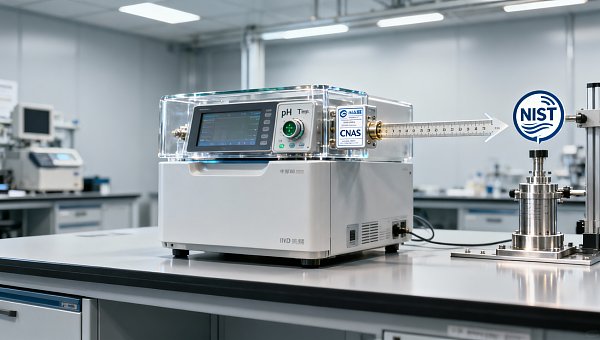
 FDA Updates IVD Import Guidance: CNAS Calibration Traceability to NIST Required for Chinese ManufacturersFDA now requires CNAS calibration traceability to NIST for Chinese IVD manufacturers — critical for 510(k)/De Novo submissions. Act now to avoid RTA delays!
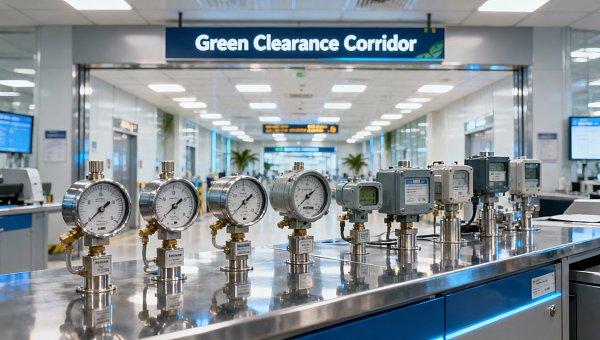
 ASEAN's Green Clearance Corridor Fully LaunchedGreen Clearance Corridor now live: CNAS calibration reports auto-verified for ASEAN customs clearance in under 4 hours — boost your China–ASEAN trade efficiency today!
 First Global Cybersecurity Verification Guide for Industrial Instruments ReleasedFirst global cybersecurity verification guide for industrial instruments launched—featuring a 5-level maturity model & standardized pentest library. Essential for exporters, OEMs, and critical infrastructure suppliers.
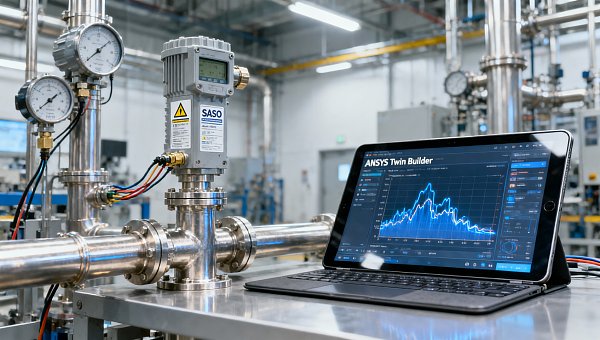
 SASO Shortens Energy Labeling for Industrial Transmitters to 7 Days, Adds AI Power Simulation RequirementSASO energy labeling for industrial transmitters now takes just 7 days — but requires AI power simulation. Learn how to comply fast and avoid delays.
 PTB Launches AI Calibration Cloud Platform 2.0PTB AI Calibration Cloud Platform 2.0 launches with CNAS-VDA 5/ISO/IEC 17025 dual-compliance reporting — streamline cross-border calibration for auto suppliers, labs & equipment makers.
 EU Mandates Carbon Footprint Labels on Industrial Instruments from 2027EU mandates carbon footprint labels on industrial instruments from 2027—key for pressure, temperature & flow meter exporters. Act now to ensure PEF compliance and market access.
 Red Sea Crisis Worsens: Gulf of Aden Ban Extends to 3 Weeks, Air Freight Premiums for Industrial Instruments Surge 420%Red Sea crisis deepens: Gulf of Aden ban hits 3 weeks, spiking air freight premiums for industrial instruments by 420%—urgent insights for exporters & EPC contractors.
 Vietnam Enforces CNAS + Vietnamese Dual Requirement for Industrial InstrumentsVietnam Enforces CNAS + Vietnamese Dual Requirement for Industrial Instruments: Key compliance update for exporters, labs & documentation teams ahead of June 2026.
 U.S. BIS Adds 5 High-Precision Pressure/Flow Calibration Sources to EAR ListU.S. BIS adds 5 high-precision pressure/flow calibration sources to EAR list — critical for exporters, instrument makers & supply chain teams. Act now.
 IEC 61508-3:2026 Published: Functional Safety Certification UpgradedIEC 61508-3:2026 is live—discover what the upgraded functional safety certification means for your industrial software, AI diagnostics & global market access.
 FDA Updates IVD Import Guidance: CNAS Calibration Chain Required for China-Made DevicesFDA now requires CNAS calibration chain reports for China-made IVD analyzers—pH, ion & clinical chemistry devices entering via 510(k)/De Novo. Act now to avoid U.S. port rejections.
 EN 61000-6-4:2026 Enters Force: Stricter EMC Requirements for Industrial Field InstrumentsEN 61000-6-4:2026 enforces stricter EMC requirements for industrial field instruments—key for AI edge controllers, sensors & exporters. Act now to ensure CE-EMC compliance by Nov 2026.
 Global Methanol Electric Alliance Launches Cross-Border Energy Efficiency Recognition RoadmapGlobal Methanol Electric Alliance launches cross-border energy efficiency recognition roadmap—key for exporters, cal labs & methanol-instrument manufacturers.
 Red Sea Crisis Escalates: Air Freight Premiums for China–Middle East Industrial Instruments Hit 390%Red Sea Crisis hits industrial instruments: China–Middle East air freight premiums surge 390%. Act now to secure Q3 capacity, avoid delays & optimize LCL alternatives.
 IEC TC65 Mandates Cybersecurity Certification for Industrial Field Instruments from 2027IEC TC65 mandates cybersecurity certification for industrial field instruments by 2027 — pressure, flow & analytical devices must meet IEC 62443-4-2:2026 and display SL1–SL3 labels. Act now to ensure market access.
 SASO Cuts Energy Labeling Turnaround for Industrial Transmitters to 7 Working DaysSASO Energy Labeling now takes just 7 working days for industrial transmitters — faster market access, CNAS reports accepted. Act now!
 PTB Launches CalCloud 2.0 with Direct CNAS Lab IntegrationCalCloud 2.0 now integrates directly with CNAS labs—enabling automated VDA 5 & ISO/IEC 17025 dual-compliant calibration reports for automotive and industrial exporters. Boost compliance efficiency today!
 ASEAN's Green Clearance Corridor for CNAS Calibration Reports LaunchesASEAN's Green Clearance Corridor now verifies CNAS calibration reports via blockchain—cut customs clearance to <48h for flow meters, analyzers & more. Act now!
 Vietnam Mandates CNAS Calibration Certificates & Vietnamese Manuals for Industrial Meters from June 1, 2026CNAS calibration certificates & Vietnamese manuals now mandatory for industrial meters entering Vietnam from June 1, 2026—avoid customs delays and ensure seamless market access.
 U.S. BIS Tightens Export Controls on High-Precision Laser InterferometersU.S. BIS tightens export controls on high-precision laser interferometers—critical for semiconductor metrology & ISO/IEC 17025 calibration. Act now to ensure compliance.
 Paramagnetic Monitor Calibration Tips for Stable OutputParamagnetic monitor calibration tips for stable output: learn how to reduce drift, improve accuracy, cut downtime, and keep oxygen measurement reliable in demanding industrial applications.
 Paramagnetic Measurement in Low-Oxygen Process ControlParamagnetic measurement enables accurate low-oxygen process control with fast response and stable oxygen analysis. Learn how it improves safety, consistency, and system performance.
 Laser Detector Import Risks and Certification DelaysLaser detector import risks can cause costly certification delays, customs issues, and testing setbacks. Learn how to avoid compliance failures before ordering.
 Explosion Proof Detector Demand Under New Safety RulesExplosion proof detector demand is rising under new safety rules. Discover how to compare certified, reliable options that improve compliance, integration, and long-term site safety.
 Laboratory Detector Accuracy Standards You Should CheckLaboratory detector accuracy standards explained: check detection limits, repeatability, drift, and traceability to reduce risk, improve audit readiness, and choose with confidence.
 Custom Measurement Lead Times and Budget PlanningCustom measurement lead times and budgets explained for procurement teams. Learn key cost drivers, planning steps, and supplier tips to reduce delays and buy with confidence.
 Laser Measurement for Leak Detection: Common PitfallsLaser measurement for leak detection can fail due to setup, airflow, and data interpretation errors. Learn the common pitfalls and proven fixes for more accurate, reliable results.
 How to Evaluate a High Accuracy Detector in the FieldHigh accuracy detector evaluation starts with real field performance. Learn how to compare stability, response time, and reliability to choose the right detector with confidence.
 Electrochemical Monitor Lifespan and Replacement CostsElectrochemical monitor lifespan and replacement costs explained for buyers. Learn how sensor life, maintenance, and total ownership cost affect safer, smarter purchasing decisions.
 Thermal Analysis Market Direction in Process IndustriesThermal analysis market direction in process industries: discover trends, applications, and investment insights that improve quality control, reduce risk, and support smarter industrial decisions.
 Monitoring Shelter Design Priorities for Outdoor SitesMonitoring shelter design starts with protection, climate control, and power reliability. Discover how to choose the right outdoor solution for stable data, safer maintenance, and lower lifecycle risk.
 Fixed Measurement Planning for Multi-Point InstallationsFixed measurement planning is essential for multi-point installations. Learn how to improve accuracy, reliability, compliance, and maintenance efficiency across complex industrial systems.



Search Categories
Search Categories
Latest Article
- FDA Updates IVD Import Guidance: CNAS Calibration Traceability to NIST Required for Chinese ManufacturersFDA now requires CNAS calibration traceability to NIST for Chinese IVD manufacturers — critical for 510(k)/De Novo submissions. Act now to avoid RTA delays!Posted by:
- ASEAN's Green Clearance Corridor Fully LaunchedGreen Clearance Corridor now live: CNAS calibration reports auto-verified for ASEAN customs clearance in under 4 hours — boost your China–ASEAN trade efficiency today!Posted by:
- First Global Cybersecurity Verification Guide for Industrial Instruments ReleasedFirst global cybersecurity verification guide for industrial instruments launched—featuring a 5-level maturity model & standardized pentest library. Essential for exporters, OEMs, and critical infrastructure suppliers.Posted by:
Please give us a message
