
Safety Control Analyzer or Redundant Sensor Logic?


When deciding between a safety control analyzer and redundant sensor logic, the right answer is rarely “one is always better.” For most industrial projects, the best choice depends on the consequence of failure, the need for regulatory compliance, the complexity of process conditions, and the cost of downtime. In simple terms: if your application requires certified safety actions, traceable diagnostics, and predictable fault handling, a safety control analyzer is often the stronger fit. If the main goal is to improve availability or cross-check measurements in a narrower scope, redundant sensor logic may be enough. The challenge is knowing where that line is.
For buyers, engineers, project managers, and safety teams, this is not just a technical selection. It affects plant risk, maintenance workload, analyzer shelter design, gas analyzer enclosure planning, lifecycle cost, and whether the monitoring system will remain dependable under real operating conditions. This article focuses on the practical differences, selection logic, and business implications so you can make a sound decision for emission control analyzer projects, process monitoring analyzer deployments, and broader industrial analysis equipment investments.
Which option is better for your plant: safety control analyzer or redundant sensor logic?
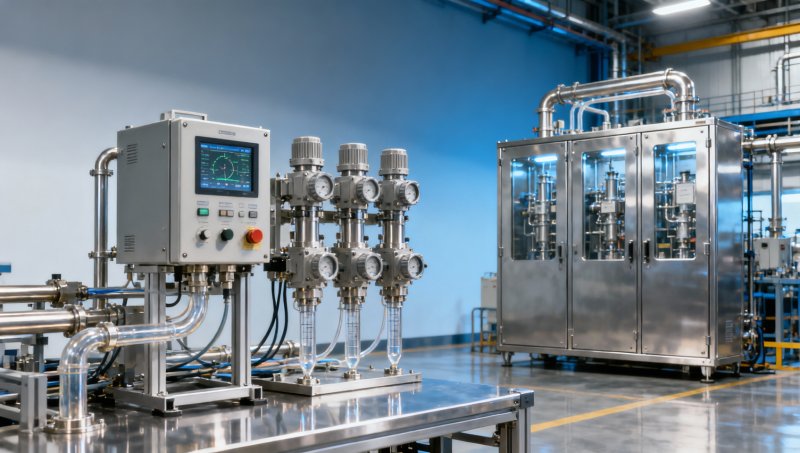
The fastest way to answer this question is to start with function, not hardware. Ask what the system must do when something goes wrong.
A safety control analyzer is typically the better choice when the analyzer output is tied directly to a safety-related action, such as shutting down a process, isolating a line, triggering alarms with defined safety integrity requirements, or protecting people, assets, and the environment from hazardous events. In these cases, the analyzer system is not just measuring gas composition or process condition. It is part of a protective function.
Redundant sensor logic, by contrast, is usually more suitable when the objective is to increase measurement reliability, reduce nuisance trips, validate readings, or maintain operational continuity by comparing multiple sensors. It can improve robustness, but it does not automatically provide the same level of engineered fault response, diagnostics, certification support, or lifecycle control as a dedicated safety solution.
In practice, the decision often comes down to this:
- Choose a safety control analyzer when failure could lead to safety, environmental, or compliance consequences.
- Choose redundant sensor logic when the main issue is availability, signal confidence, or process optimization rather than a formally defined safety instrumented function.
- Consider a hybrid approach when you need both high availability and a defensible safety layer.
What are buyers and engineers actually trying to avoid?
Most readers searching this topic are not looking for a textbook definition. They are trying to avoid expensive mistakes. Across technical, commercial, and management roles, the biggest concerns are usually the same.
1. Hidden safety gaps
A system may appear reliable in normal operation but still fail dangerously under upset conditions. This is especially important in gas analysis equipment used for toxic, combustible, or environmentally regulated applications.
2. Compliance and audit exposure
If the analyzer is involved in emission control analyzer duties or critical process monitoring, decision-makers want to know whether the selected architecture can stand up to internal review, customer scrutiny, and regulatory inspection.
3. Downtime and false trips
Operations teams worry about nuisance shutdowns, while plant managers worry about undetected failure. A poor selection can create both problems at the same time.
4. Lifecycle cost that looks small at purchase but grows later
Procurement teams often compare capital cost first, but maintenance burden, calibration frequency, spare parts strategy, fault investigation time, and enclosure or industrial shelter requirements can change the total economics significantly.
5. Unclear responsibility during project execution
Project managers want a solution that can be specified, integrated, tested, documented, and maintained without ambiguity. If the logic is spread across sensors, PLC programming, and third-party devices, the system may become harder to validate and support.
What is the real technical difference between the two approaches?
Although both approaches can involve multiple instruments and logic handling, their purpose and engineering depth are different.
Safety control analyzer
A safety control analyzer is typically designed as a more complete protection-oriented package. Depending on the application, it may include analyzer hardware, signal validation, fault diagnostics, defined alarm behavior, safe-state logic, and documentation aligned with safety requirements. In demanding gas measurement applications, this can also involve a controlled gas analyzer enclosure or industrial shelter environment to ensure analyzer performance and integrity.
Key strengths usually include:
- Designed for safety-related decision making
- More structured diagnostics and fault management
- Better fit for documented risk reduction strategies
- Stronger support for regulated or critical applications
- Clearer lifecycle management from design through maintenance
Redundant sensor logic
Redundant sensor logic generally uses two or more sensors with comparison logic such as 1oo2, 2oo3, or deviation-based voting. This can improve confidence in readings and help continue operation when one sensor drifts or fails. For many industrial monitoring system designs, this is a practical and cost-conscious way to improve reliability.
Key strengths usually include:
- Higher measurement availability
- Reduced dependence on a single sensing point
- Flexible implementation in existing control systems
- Useful for cross-checking process conditions
- Can be more economical in lower-risk applications
However, redundant sensors do not automatically create a safety-grade architecture. If diagnostics, failure mode handling, proof testing, and safe response design are not engineered properly, redundancy may only add complexity without delivering real risk reduction.
When does a safety control analyzer make more sense?
A safety control analyzer is usually the more appropriate investment in the following situations:
- Hazardous process environments where delayed or incorrect readings could lead to fire, explosion, toxic release, or personnel exposure
- Compliance-critical applications such as regulated emissions, hazardous gas shutdown logic, or processes requiring documented protective functions
- High consequence operations where production loss, environmental penalties, or reputational damage would outweigh higher initial cost
- Applications requiring defensible fault behavior such as known safe-state action on analyzer failure
- Projects needing easier validation by safety, quality, or corporate engineering teams
For example, in an emission control analyzer application, the system may need not only precise measurement but also dependable response when sample handling fails, analyzer drift exceeds threshold, or a critical component becomes unavailable. In these cases, a dedicated analyzer system with safety-oriented diagnostics is often easier to justify than building equivalent confidence from basic redundant sensor logic.
When is redundant sensor logic the smarter and more efficient choice?
Redundant sensor logic can be the better answer when the application is important but not truly safety-instrumented in nature.
It is often well suited for:
- Process optimization where stable measurement matters more than protective shutdown
- Availability-focused systems where uptime is the main business driver
- Incremental upgrades to existing industrial analysis equipment without a full redesign
- Budget-sensitive projects where risk level does not justify a more complex safety architecture
- Distributed monitoring points where cross-checking sensors provides enough confidence for operations
For example, a process monitoring analyzer used to improve combustion efficiency or product consistency may benefit greatly from redundant sensing and voting logic. If the output is advisory or used for process control rather than emergency protection, this approach may deliver the best cost-performance balance.
How do enclosure, shelter, and sample system design affect the decision?
This is one of the most overlooked issues in analyzer selection. In real plants, the quality of measurement depends not only on analyzer electronics but also on environment, sample conditioning, and installation quality.
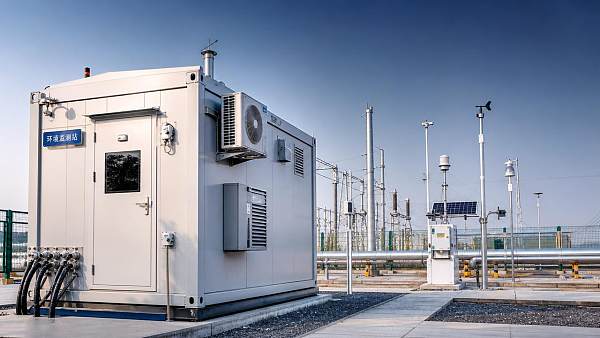
A gas analyzer enclosure or industrial shelter may be necessary to protect equipment from weather, temperature swings, dust, corrosion, vibration, and hazardous area constraints. These physical factors influence response time, stability, maintenance access, and long-term reliability.
This matters because:
- A highly capable analyzer can underperform if the shelter or sample path is poorly designed
- Redundant sensors installed in the same bad environment may fail in similar ways, reducing the value of redundancy
- Safety functions depend on the entire measurement chain, not just the sensor element
- Maintenance teams need safe and efficient access for calibration, validation, and repair
For gas measurement projects, decision-makers should evaluate the complete analyzer package, including sample transport, conditioning, environmental control, purge or pressurization requirements, and maintenance workflow. Often, the stronger solution is the one that performs more predictably in the field, not the one that appears better on a component datasheet.
How should procurement and management evaluate total cost, not just purchase price?
For procurement teams, financial approvers, and business evaluators, the better question is not “Which option is cheaper?” but “Which option creates lower total risk-adjusted lifecycle cost?”
Use these cost categories when comparing options:
Initial capital cost
Hardware, integration, engineering hours, shelter or enclosure requirements, software logic, and commissioning.
Operating cost
Calibration gas consumption, maintenance labor, replacement parts, analyzer downtime, fault investigation, and training.
Cost of failure
Production interruption, safety incidents, environmental non-compliance, product quality loss, emergency response, and reputational damage.
Upgrade and support cost
How easy it is to expand, document, troubleshoot, and maintain the system over time.
In many cases, redundant sensor logic has a lower initial price, but a safety control analyzer delivers better value when consequences of failure are high. On the other hand, overspecifying a safety-oriented solution for a low-risk application may waste budget without generating proportional return.
What selection questions should your team ask before making a final decision?
If your team wants a practical decision framework, start with these questions:
- Is the analyzer output part of a safety action or only part of process control?
- What happens if the measurement is wrong, delayed, or unavailable?
- Do we need documented diagnostics, defined fail-safe behavior, or compliance support?
- Are we trying to reduce risk, improve uptime, or both?
- Will the installation environment require a gas analyzer enclosure or industrial shelter?
- Can the logic be validated, maintained, and understood by plant personnel?
- What is the cost of a false trip versus the cost of a missed dangerous condition?
- Do common-cause failures reduce the value of sensor redundancy in this application?
These questions help align engineering, operations, procurement, safety, and management teams around business reality rather than isolated specifications.
Final recommendation: choose based on function, consequence, and lifecycle reality
There is no universal winner between a safety control analyzer and redundant sensor logic. The correct choice depends on the job the system must perform.
If your application involves hazardous conditions, formal safety requirements, or significant environmental and operational consequences, a safety control analyzer is usually the more defensible and valuable solution. If your main goal is to improve measurement reliability, support process monitoring analyzer performance, and maintain uptime in a lower-risk context, redundant sensor logic may be the more efficient path.
The most effective projects look beyond sensor count and compare the full analyzer system: measurement purpose, fault behavior, enclosure strategy, maintenance burden, compliance needs, and total lifecycle cost. When those factors are evaluated together, the right architecture becomes much easier to justify technically and commercially.
For industrial analysis equipment, gas analysis equipment, and monitoring system investments, the best decision is not the most complex option or the cheapest one. It is the one that delivers reliable measurement, manageable risk, and clear value over the life of the project.
Recommended for You
 FDA Updates IVD Import Guidance: CNAS Calibration Traceability to NIST Required for Chinese ManufacturersFDA now requires CNAS calibration traceability to NIST for Chinese IVD manufacturers — critical for 510(k)/De Novo submissions. Act now to avoid RTA delays!
 ASEAN's Green Clearance Corridor Fully LaunchedGreen Clearance Corridor now live: CNAS calibration reports auto-verified for ASEAN customs clearance in under 4 hours — boost your China–ASEAN trade efficiency today!
 First Global Cybersecurity Verification Guide for Industrial Instruments ReleasedFirst global cybersecurity verification guide for industrial instruments launched—featuring a 5-level maturity model & standardized pentest library. Essential for exporters, OEMs, and critical infrastructure suppliers.
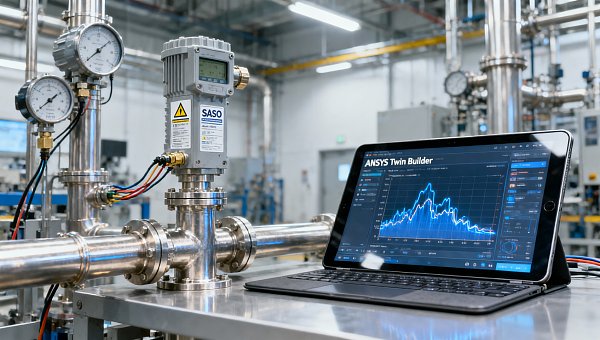
 SASO Shortens Energy Labeling for Industrial Transmitters to 7 Days, Adds AI Power Simulation RequirementSASO energy labeling for industrial transmitters now takes just 7 days — but requires AI power simulation. Learn how to comply fast and avoid delays.
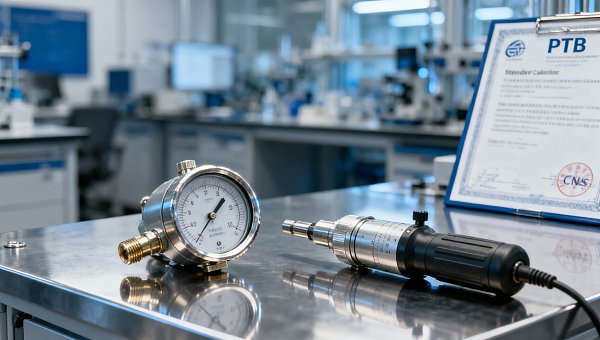
 PTB Launches AI Calibration Cloud Platform 2.0PTB AI Calibration Cloud Platform 2.0 launches with CNAS-VDA 5/ISO/IEC 17025 dual-compliance reporting — streamline cross-border calibration for auto suppliers, labs & equipment makers.
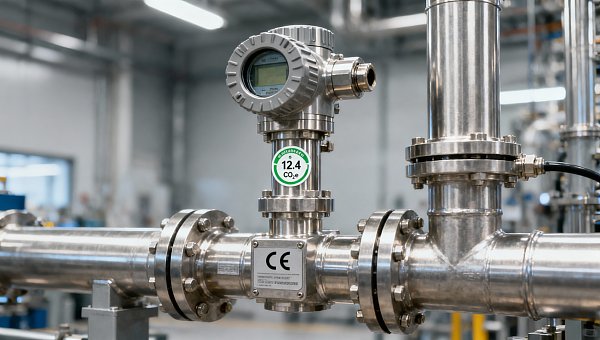
 EU Mandates Carbon Footprint Labels on Industrial Instruments from 2027EU mandates carbon footprint labels on industrial instruments from 2027—key for pressure, temperature & flow meter exporters. Act now to ensure PEF compliance and market access.
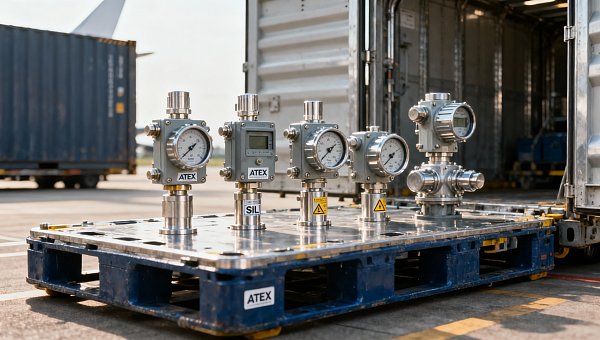
 Red Sea Crisis Worsens: Gulf of Aden Ban Extends to 3 Weeks, Air Freight Premiums for Industrial Instruments Surge 420%Red Sea crisis deepens: Gulf of Aden ban hits 3 weeks, spiking air freight premiums for industrial instruments by 420%—urgent insights for exporters & EPC contractors.
 Vietnam Enforces CNAS + Vietnamese Dual Requirement for Industrial InstrumentsVietnam Enforces CNAS + Vietnamese Dual Requirement for Industrial Instruments: Key compliance update for exporters, labs & documentation teams ahead of June 2026.
 U.S. BIS Adds 5 High-Precision Pressure/Flow Calibration Sources to EAR ListU.S. BIS adds 5 high-precision pressure/flow calibration sources to EAR list — critical for exporters, instrument makers & supply chain teams. Act now.
 IEC 61508-3:2026 Published: Functional Safety Certification UpgradedIEC 61508-3:2026 is live—discover what the upgraded functional safety certification means for your industrial software, AI diagnostics & global market access.
 FDA Updates IVD Import Guidance: CNAS Calibration Chain Required for China-Made DevicesFDA now requires CNAS calibration chain reports for China-made IVD analyzers—pH, ion & clinical chemistry devices entering via 510(k)/De Novo. Act now to avoid U.S. port rejections.
 EN 61000-6-4:2026 Enters Force: Stricter EMC Requirements for Industrial Field InstrumentsEN 61000-6-4:2026 enforces stricter EMC requirements for industrial field instruments—key for AI edge controllers, sensors & exporters. Act now to ensure CE-EMC compliance by Nov 2026.
 Global Methanol Electric Alliance Launches Cross-Border Energy Efficiency Recognition RoadmapGlobal Methanol Electric Alliance launches cross-border energy efficiency recognition roadmap—key for exporters, cal labs & methanol-instrument manufacturers.
 Red Sea Crisis Escalates: Air Freight Premiums for China–Middle East Industrial Instruments Hit 390%Red Sea Crisis hits industrial instruments: China–Middle East air freight premiums surge 390%. Act now to secure Q3 capacity, avoid delays & optimize LCL alternatives.
 IEC TC65 Mandates Cybersecurity Certification for Industrial Field Instruments from 2027IEC TC65 mandates cybersecurity certification for industrial field instruments by 2027 — pressure, flow & analytical devices must meet IEC 62443-4-2:2026 and display SL1–SL3 labels. Act now to ensure market access.
 SASO Cuts Energy Labeling Turnaround for Industrial Transmitters to 7 Working DaysSASO Energy Labeling now takes just 7 working days for industrial transmitters — faster market access, CNAS reports accepted. Act now!
 PTB Launches CalCloud 2.0 with Direct CNAS Lab IntegrationCalCloud 2.0 now integrates directly with CNAS labs—enabling automated VDA 5 & ISO/IEC 17025 dual-compliant calibration reports for automotive and industrial exporters. Boost compliance efficiency today!
 ASEAN's Green Clearance Corridor for CNAS Calibration Reports LaunchesASEAN's Green Clearance Corridor now verifies CNAS calibration reports via blockchain—cut customs clearance to <48h for flow meters, analyzers & more. Act now!
 Vietnam Mandates CNAS Calibration Certificates & Vietnamese Manuals for Industrial Meters from June 1, 2026CNAS calibration certificates & Vietnamese manuals now mandatory for industrial meters entering Vietnam from June 1, 2026—avoid customs delays and ensure seamless market access.
 U.S. BIS Tightens Export Controls on High-Precision Laser InterferometersU.S. BIS tightens export controls on high-precision laser interferometers—critical for semiconductor metrology & ISO/IEC 17025 calibration. Act now to ensure compliance.
 Paramagnetic Monitor Calibration Tips for Stable OutputParamagnetic monitor calibration tips for stable output: learn how to reduce drift, improve accuracy, cut downtime, and keep oxygen measurement reliable in demanding industrial applications.
 Paramagnetic Measurement in Low-Oxygen Process ControlParamagnetic measurement enables accurate low-oxygen process control with fast response and stable oxygen analysis. Learn how it improves safety, consistency, and system performance.
 Laser Detector Import Risks and Certification DelaysLaser detector import risks can cause costly certification delays, customs issues, and testing setbacks. Learn how to avoid compliance failures before ordering.
 Explosion Proof Detector Demand Under New Safety RulesExplosion proof detector demand is rising under new safety rules. Discover how to compare certified, reliable options that improve compliance, integration, and long-term site safety.
 Laboratory Detector Accuracy Standards You Should CheckLaboratory detector accuracy standards explained: check detection limits, repeatability, drift, and traceability to reduce risk, improve audit readiness, and choose with confidence.
 Custom Measurement Lead Times and Budget PlanningCustom measurement lead times and budgets explained for procurement teams. Learn key cost drivers, planning steps, and supplier tips to reduce delays and buy with confidence.
 Laser Measurement for Leak Detection: Common PitfallsLaser measurement for leak detection can fail due to setup, airflow, and data interpretation errors. Learn the common pitfalls and proven fixes for more accurate, reliable results.
 How to Evaluate a High Accuracy Detector in the FieldHigh accuracy detector evaluation starts with real field performance. Learn how to compare stability, response time, and reliability to choose the right detector with confidence.
 Electrochemical Monitor Lifespan and Replacement CostsElectrochemical monitor lifespan and replacement costs explained for buyers. Learn how sensor life, maintenance, and total ownership cost affect safer, smarter purchasing decisions.
 Thermal Analysis Market Direction in Process IndustriesThermal analysis market direction in process industries: discover trends, applications, and investment insights that improve quality control, reduce risk, and support smarter industrial decisions.
 Monitoring Shelter Design Priorities for Outdoor SitesMonitoring shelter design starts with protection, climate control, and power reliability. Discover how to choose the right outdoor solution for stable data, safer maintenance, and lower lifecycle risk.
 Fixed Measurement Planning for Multi-Point InstallationsFixed measurement planning is essential for multi-point installations. Learn how to improve accuracy, reliability, compliance, and maintenance efficiency across complex industrial systems.




Search Categories
Search Categories
Latest Article
- FDA Updates IVD Import Guidance: CNAS Calibration Traceability to NIST Required for Chinese ManufacturersFDA now requires CNAS calibration traceability to NIST for Chinese IVD manufacturers — critical for 510(k)/De Novo submissions. Act now to avoid RTA delays!Posted by:
- ASEAN's Green Clearance Corridor Fully LaunchedGreen Clearance Corridor now live: CNAS calibration reports auto-verified for ASEAN customs clearance in under 4 hours — boost your China–ASEAN trade efficiency today!Posted by:
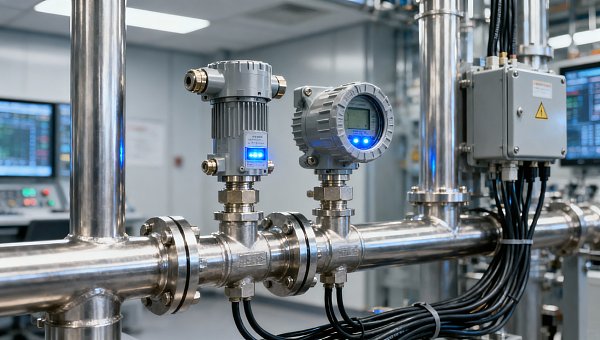
- First Global Cybersecurity Verification Guide for Industrial Instruments ReleasedFirst global cybersecurity verification guide for industrial instruments launched—featuring a 5-level maturity model & standardized pentest library. Essential for exporters, OEMs, and critical infrastructure suppliers.Posted by:
Please give us a message
