
Gas Analysis Equipment Lead Times Are Still Uneven


Gas analysis equipment lead times are still uneven, and for most buyers the practical answer is no longer “wait and hope.” The real priority is to identify which analyzer categories remain volatile, where integration work adds hidden time, and how to reduce schedule risk without sacrificing measurement performance, safety compliance, or long-term operating reliability. For teams sourcing a safety control analyzer, emission control analyzer, or process monitoring analyzer, the best decisions now depend on more than quoted delivery dates. They depend on component availability, system design complexity, shelter or gas analyzer enclosure requirements, factory testing plans, and the supplier’s ability to support commissioning.
That is why purchasers, engineers, project managers, and business reviewers are asking a broader question: how do we buy industrial analysis equipment in a market where some products ship quickly, while complete analyzer systems still face long and unpredictable lead times? This article focuses on that decision-making problem and explains what matters most when evaluating options.
Why lead times are still uneven—and what that means for buyers
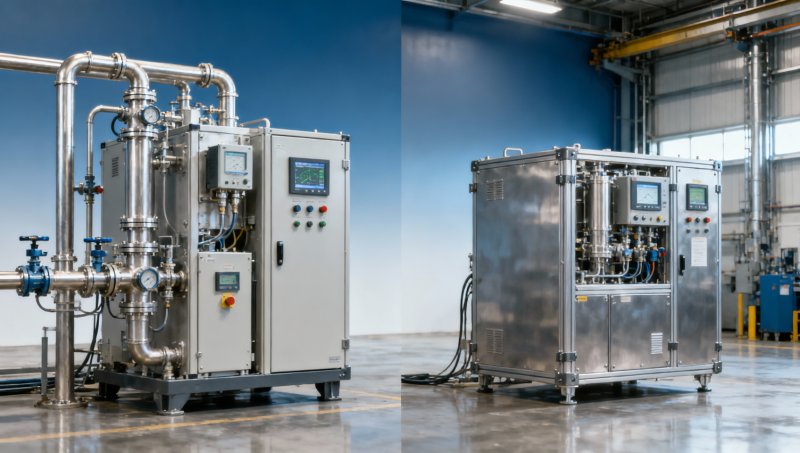
Lead times across the instrumentation industry have improved in some product lines, but gas analysis equipment remains more uneven than many buyers expect. The reason is simple: a gas analyzer is rarely just a single device. In many projects, it is part of a larger analyzer system integration package that may include sample conditioning, cabinets, shelters, heat tracing, valves, pumps, PLC or DCS interfacing, hazardous-area considerations, and factory acceptance testing.
Some standalone instruments may be available in a relatively short window, while complete systems can take much longer because one delayed subcomponent affects the whole package. This is especially true for:
- Safety control analyzer systems used in shutdown or protection applications
- Emission control analyzer packages tied to environmental compliance requirements
- Process monitoring analyzer systems that need customized sampling and integration
- Projects requiring a gas analyzer enclosure or industrial shelter for field deployment
For buyers, the implication is important: a supplier’s headline delivery promise may not reflect the real completion date of the usable system. A fast analyzer with slow integration, documentation, or enclosure fabrication is not truly a fast solution.
What target readers usually care about most
Although different stakeholders evaluate the purchase from different angles, their concerns often overlap around five practical issues.
1. Can the project stay on schedule?
Project managers and engineering leaders need to know whether the quoted lead time is realistic, whether long-lead items have already been identified, and what parts of the delivery are still exposed to supply risk.
2. Will the analyzer meet process and compliance needs?
Technical evaluators, operators, quality teams, and safety managers care about gas measurement accuracy, repeatability, response time, uptime, calibration stability, and suitability for the intended duty.
3. Is the full system ready for the site environment?
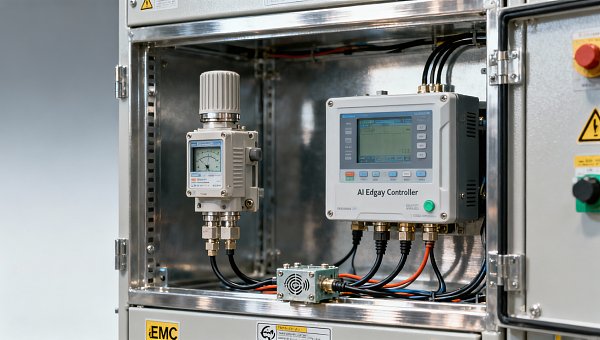
Many problems occur not with the analyzer core, but with the system around it. A gas analyzer enclosure, industrial shelter, sample handling design, environmental control, and maintenance access all influence reliability in the field.
4. What is the real total cost?
Procurement, finance approvers, and business reviewers increasingly look beyond unit price. A cheaper analyzer can become the more expensive option if it causes commissioning delays, compliance exposure, rework, or excessive maintenance.
5. Can the supplier actually support delivery and startup?
Distributors, EPC teams, and plant buyers need confidence that the supplier can handle documentation, testing, logistics, installation support, and after-sales service—not just product shipment.
How to judge gas analysis equipment when delivery risk is high
In the current market, good buying decisions depend on evaluating three layers at the same time: instrument performance, system deliverability, and business risk.
Start with application fit, not catalog specifications alone
For a safety control analyzer, the decision should begin with application criticality, required response time, failure mode expectations, and maintenance strategy. For an emission control analyzer, compliance standards, reporting accuracy, and audit readiness are central. For a process monitoring analyzer, the process conditions, sample quality, measurement range, and integration with plant control systems are usually the deciding factors.
Buyers should ask:
- What gas components must be measured, and at what accuracy?
- What are the pressure, temperature, contamination, and moisture conditions?
- Is continuous online monitoring required, or is periodic measurement acceptable?
- What response time is needed for control, safety, or reporting?
- What calibration and maintenance burden will operators face?
Then verify the system scope in detail
This is where many schedules fail. If industrial analysis equipment is delivered as a package, buyers should verify exactly what is included:
- Analyzer technology and model
- Sample conditioning system
- Tubing, valves, filters, and regulators
- Control panel or analyzer cabinet
- Gas analyzer enclosure or industrial shelter
- HVAC, purge, heat tracing, or environmental conditioning
- Signal integration, PLC/DCS communication, and software
- Factory acceptance test and site support
A short lead time on the analyzer itself does not help much if the shelter, HVAC unit, or certified electrical components are delayed.
Finally, test the supplier’s delivery credibility
Ask suppliers to separate:
- Instrument lead time
- System assembly lead time
- Shelter or enclosure fabrication lead time
- Inspection and FAT timing
- Shipping and site service timing
This breakdown helps procurement and decision-makers compare offers on a realistic basis rather than relying on a single optimistic date.
Why analyzer system integration now matters as much as the analyzer itself
In many cases, the biggest source of delay is not the measuring principle but the integration effort required to make the analyzer operate reliably in a real plant environment. Analyzer system integration affects schedule, startup success, maintenance load, and long-term ownership cost.
Well-executed integration improves:
- Monitoring system reliability
- Measurement stability under changing process conditions
- Operator usability and maintenance access
- Compliance with site electrical and safety standards
- Faster commissioning and fewer field modifications
Poor integration creates familiar problems: condensation in lines, delayed sample response, unstable readings, difficult maintenance, repeated alarm events, and site rework that erodes any initial savings.
For this reason, technical reviewers and project owners should give serious weight to suppliers that can demonstrate complete engineering capability, not just analyzer supply. This is particularly important for remote sites, harsh climates, and regulated facilities where an industrial shelter or gas analyzer enclosure becomes part of the performance equation.
When a gas analyzer enclosure or industrial shelter becomes a strategic choice
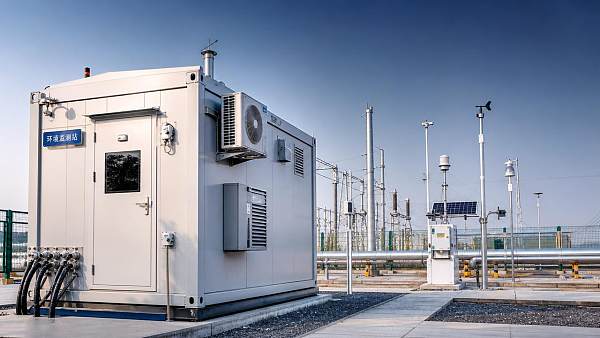
Many buyers treat the enclosure as a secondary accessory, but in practice it can be a major determinant of reliability, service life, and installation timing. If the analyzer is exposed to temperature extremes, dust, corrosion, vibration, moisture, or hazardous-area constraints, enclosure design becomes critical.
A properly engineered gas analyzer enclosure or industrial shelter can provide:
- Environmental protection for sensitive measuring equipment
- Stable operating conditions that support gas measurement accuracy
- Safer and easier access for operators and maintenance personnel
- Better cable management, utility layout, and sample line routing
- Simpler site installation compared with fragmented field assembly
However, buyers should confirm whether the shelter is standardized or custom-built. Custom shelters often improve application fit, but they may also add engineering and fabrication time. The best choice depends on whether the project values speed, standardization, field durability, or lifecycle performance most.
Practical buying questions for procurement, engineering, and management teams
When lead times are uneven, better questions produce better outcomes. Cross-functional teams should align around a shortlist of practical checks before approval.
For procurement and commercial reviewers
- Is the quoted date based on current material availability or only forecast assumptions?
- Which components are long-lead or single-source?
- Are there approved alternatives if one part becomes unavailable?
- What milestones trigger payment, inspection, and shipment?
For technical evaluators and users
- Will the selected analyzer maintain performance under actual process conditions?
- How easy is calibration, maintenance, and spare parts replacement?
- What site utilities and environmental controls are required?
- Has the supplier addressed sample handling risks in enough detail?
For project managers and decision-makers
- What is the schedule impact if delivery slips by 4, 8, or 12 weeks?
- Can the project be phased using temporary or modular solutions?
- Is a standard package acceptable, or is full customization essential?
- What commercial or operational risk is created by choosing the lowest-cost offer?
These questions help organizations compare options based on execution reality rather than only price or brochure-level specifications.
How buyers can reduce risk right now
Teams that are coping successfully with today’s gas analysis equipment market usually take a more proactive sourcing approach. Several actions can reduce delay risk and improve outcomes:
- Define critical requirements early and separate them from optional customization
- Request a detailed bill of scope for analyzer, integration, and enclosure elements
- Prioritize proven configurations where speed and predictability matter
- Evaluate modular analyzer houses or standardized shelters when suitable
- Confirm FAT timing, documentation readiness, and commissioning support before award
- Align engineering, procurement, operations, safety, and finance teams early in the review process
In many cases, the fastest path is not the most stripped-down option, but the most executable one: a solution that balances acceptable lead time with reliable system integration and lower field risk.
Final takeaway: uneven lead times require smarter evaluation, not just faster purchasing
Gas analysis equipment lead times are still uneven, but the key issue for buyers is not simply whether one analyzer ships sooner than another. The more important question is whether the full solution—instrument, sample system, controls, documentation, enclosure, shelter, and service—can arrive, install, and perform as required.
For organizations evaluating a safety control analyzer, emission control analyzer, or process monitoring analyzer, the most valuable approach is to judge suppliers on delivery credibility, analyzer system integration capability, monitoring system reliability, and lifecycle fit. When buyers look beyond price and headline lead time, they make stronger decisions, avoid costly project disruption, and gain equipment that supports both operational goals and long-term business value.
Recommended for You
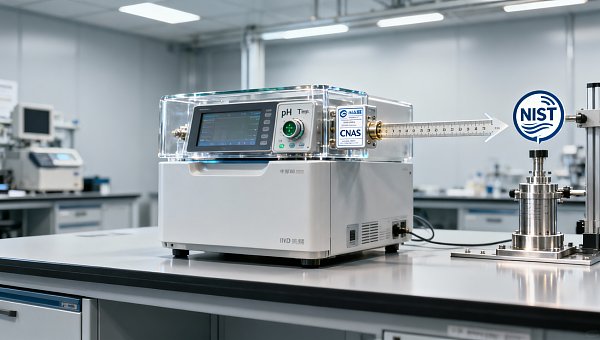
 FDA Updates IVD Import Guidance: CNAS Calibration Traceability to NIST Required for Chinese ManufacturersFDA now requires CNAS calibration traceability to NIST for Chinese IVD manufacturers — critical for 510(k)/De Novo submissions. Act now to avoid RTA delays!
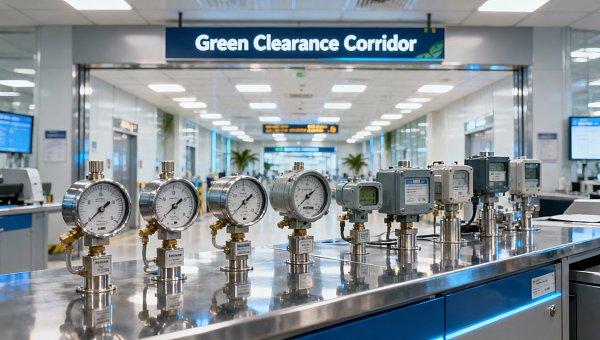
 ASEAN's Green Clearance Corridor Fully LaunchedGreen Clearance Corridor now live: CNAS calibration reports auto-verified for ASEAN customs clearance in under 4 hours — boost your China–ASEAN trade efficiency today!
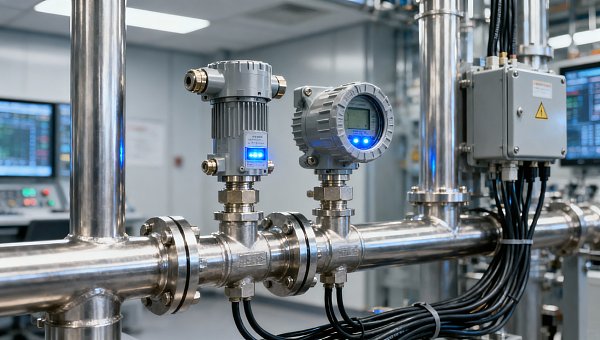
 First Global Cybersecurity Verification Guide for Industrial Instruments ReleasedFirst global cybersecurity verification guide for industrial instruments launched—featuring a 5-level maturity model & standardized pentest library. Essential for exporters, OEMs, and critical infrastructure suppliers.
 SASO Shortens Energy Labeling for Industrial Transmitters to 7 Days, Adds AI Power Simulation RequirementSASO energy labeling for industrial transmitters now takes just 7 days — but requires AI power simulation. Learn how to comply fast and avoid delays.
 PTB Launches AI Calibration Cloud Platform 2.0PTB AI Calibration Cloud Platform 2.0 launches with CNAS-VDA 5/ISO/IEC 17025 dual-compliance reporting — streamline cross-border calibration for auto suppliers, labs & equipment makers.
 EU Mandates Carbon Footprint Labels on Industrial Instruments from 2027EU mandates carbon footprint labels on industrial instruments from 2027—key for pressure, temperature & flow meter exporters. Act now to ensure PEF compliance and market access.
 Red Sea Crisis Worsens: Gulf of Aden Ban Extends to 3 Weeks, Air Freight Premiums for Industrial Instruments Surge 420%Red Sea crisis deepens: Gulf of Aden ban hits 3 weeks, spiking air freight premiums for industrial instruments by 420%—urgent insights for exporters & EPC contractors.
 Vietnam Enforces CNAS + Vietnamese Dual Requirement for Industrial InstrumentsVietnam Enforces CNAS + Vietnamese Dual Requirement for Industrial Instruments: Key compliance update for exporters, labs & documentation teams ahead of June 2026.
 U.S. BIS Adds 5 High-Precision Pressure/Flow Calibration Sources to EAR ListU.S. BIS adds 5 high-precision pressure/flow calibration sources to EAR list — critical for exporters, instrument makers & supply chain teams. Act now.
 IEC 61508-3:2026 Published: Functional Safety Certification UpgradedIEC 61508-3:2026 is live—discover what the upgraded functional safety certification means for your industrial software, AI diagnostics & global market access.
 FDA Updates IVD Import Guidance: CNAS Calibration Chain Required for China-Made DevicesFDA now requires CNAS calibration chain reports for China-made IVD analyzers—pH, ion & clinical chemistry devices entering via 510(k)/De Novo. Act now to avoid U.S. port rejections.
 EN 61000-6-4:2026 Enters Force: Stricter EMC Requirements for Industrial Field InstrumentsEN 61000-6-4:2026 enforces stricter EMC requirements for industrial field instruments—key for AI edge controllers, sensors & exporters. Act now to ensure CE-EMC compliance by Nov 2026.
 Global Methanol Electric Alliance Launches Cross-Border Energy Efficiency Recognition RoadmapGlobal Methanol Electric Alliance launches cross-border energy efficiency recognition roadmap—key for exporters, cal labs & methanol-instrument manufacturers.
 Red Sea Crisis Escalates: Air Freight Premiums for China–Middle East Industrial Instruments Hit 390%Red Sea Crisis hits industrial instruments: China–Middle East air freight premiums surge 390%. Act now to secure Q3 capacity, avoid delays & optimize LCL alternatives.
 IEC TC65 Mandates Cybersecurity Certification for Industrial Field Instruments from 2027IEC TC65 mandates cybersecurity certification for industrial field instruments by 2027 — pressure, flow & analytical devices must meet IEC 62443-4-2:2026 and display SL1–SL3 labels. Act now to ensure market access.
 SASO Cuts Energy Labeling Turnaround for Industrial Transmitters to 7 Working DaysSASO Energy Labeling now takes just 7 working days for industrial transmitters — faster market access, CNAS reports accepted. Act now!
 PTB Launches CalCloud 2.0 with Direct CNAS Lab IntegrationCalCloud 2.0 now integrates directly with CNAS labs—enabling automated VDA 5 & ISO/IEC 17025 dual-compliant calibration reports for automotive and industrial exporters. Boost compliance efficiency today!
 ASEAN's Green Clearance Corridor for CNAS Calibration Reports LaunchesASEAN's Green Clearance Corridor now verifies CNAS calibration reports via blockchain—cut customs clearance to <48h for flow meters, analyzers & more. Act now!
 Vietnam Mandates CNAS Calibration Certificates & Vietnamese Manuals for Industrial Meters from June 1, 2026CNAS calibration certificates & Vietnamese manuals now mandatory for industrial meters entering Vietnam from June 1, 2026—avoid customs delays and ensure seamless market access.
 U.S. BIS Tightens Export Controls on High-Precision Laser InterferometersU.S. BIS tightens export controls on high-precision laser interferometers—critical for semiconductor metrology & ISO/IEC 17025 calibration. Act now to ensure compliance.
 Paramagnetic Monitor Calibration Tips for Stable OutputParamagnetic monitor calibration tips for stable output: learn how to reduce drift, improve accuracy, cut downtime, and keep oxygen measurement reliable in demanding industrial applications.
 Paramagnetic Measurement in Low-Oxygen Process ControlParamagnetic measurement enables accurate low-oxygen process control with fast response and stable oxygen analysis. Learn how it improves safety, consistency, and system performance.
 Laser Detector Import Risks and Certification DelaysLaser detector import risks can cause costly certification delays, customs issues, and testing setbacks. Learn how to avoid compliance failures before ordering.
 Explosion Proof Detector Demand Under New Safety RulesExplosion proof detector demand is rising under new safety rules. Discover how to compare certified, reliable options that improve compliance, integration, and long-term site safety.
 Laboratory Detector Accuracy Standards You Should CheckLaboratory detector accuracy standards explained: check detection limits, repeatability, drift, and traceability to reduce risk, improve audit readiness, and choose with confidence.
 Custom Measurement Lead Times and Budget PlanningCustom measurement lead times and budgets explained for procurement teams. Learn key cost drivers, planning steps, and supplier tips to reduce delays and buy with confidence.
 Laser Measurement for Leak Detection: Common PitfallsLaser measurement for leak detection can fail due to setup, airflow, and data interpretation errors. Learn the common pitfalls and proven fixes for more accurate, reliable results.
 How to Evaluate a High Accuracy Detector in the FieldHigh accuracy detector evaluation starts with real field performance. Learn how to compare stability, response time, and reliability to choose the right detector with confidence.
 Electrochemical Monitor Lifespan and Replacement CostsElectrochemical monitor lifespan and replacement costs explained for buyers. Learn how sensor life, maintenance, and total ownership cost affect safer, smarter purchasing decisions.
 Thermal Analysis Market Direction in Process IndustriesThermal analysis market direction in process industries: discover trends, applications, and investment insights that improve quality control, reduce risk, and support smarter industrial decisions.
 Monitoring Shelter Design Priorities for Outdoor SitesMonitoring shelter design starts with protection, climate control, and power reliability. Discover how to choose the right outdoor solution for stable data, safer maintenance, and lower lifecycle risk.
 Fixed Measurement Planning for Multi-Point InstallationsFixed measurement planning is essential for multi-point installations. Learn how to improve accuracy, reliability, compliance, and maintenance efficiency across complex industrial systems.





Search Categories
Search Categories
Latest Article
- FDA Updates IVD Import Guidance: CNAS Calibration Traceability to NIST Required for Chinese ManufacturersFDA now requires CNAS calibration traceability to NIST for Chinese IVD manufacturers — critical for 510(k)/De Novo submissions. Act now to avoid RTA delays!Posted by:
- ASEAN's Green Clearance Corridor Fully LaunchedGreen Clearance Corridor now live: CNAS calibration reports auto-verified for ASEAN customs clearance in under 4 hours — boost your China–ASEAN trade efficiency today!Posted by:
- First Global Cybersecurity Verification Guide for Industrial Instruments ReleasedFirst global cybersecurity verification guide for industrial instruments launched—featuring a 5-level maturity model & standardized pentest library. Essential for exporters, OEMs, and critical infrastructure suppliers.Posted by:
Please give us a message
