
Combustion gas analyzers misreading CO₂ during low-load boiler cycles


Combustion gas analyzers are critical for ensuring boiler efficiency and emissions compliance—yet during low-load cycles, many units misread CO₂, risking inaccurate air quality analyzer data, flawed environmental gas analyzer reporting, and compromised safety in hazardous area analyzer deployments. This issue directly impacts stack gas analyzer reliability, industrial process analyzer integrity, and high accuracy analyzer performance—especially where ATEX gas analyzer or explosion proof analyzer certifications are mandatory. For users, technical evaluators, plant managers, and distributors alike, understanding root causes and mitigation strategies is essential to maintain continuous gas analyzer accuracy, regulatory adherence, and operational safety.
Why Low-Load Boiler Cycles Challenge CO₂ Measurement Accuracy
During low-load operation—typically defined as boiler output below 30% of rated capacity—flue gas velocity drops by up to 65%, residence time in the sampling probe increases, and temperature gradients become more pronounced. These physical changes disrupt the thermodynamic equilibrium assumed by most non-dispersive infrared (NDIR) CO₂ sensors, which constitute over 82% of installed combustion gas analyzers in industrial power and heating applications.
At loads under 25%, flue gas temperatures often fall between 110°C and 140°C—within the condensation range for water vapor and sulfuric acid mist. Moisture accumulation on optical windows introduces spectral interference, reducing CO₂ signal-to-noise ratio by an average of 18–22%. Simultaneously, reduced gas flow lowers partial pressure differentials, diminishing diffusion-driven sensor response linearity by ±0.8% CO₂ at 5% nominal reading.
This isn’t a calibration drift issue—it’s a systemic measurement boundary condition. Standard span-gas verification at full load fails to expose errors that emerge only when gas composition, velocity, and thermal profile shift simultaneously. Field audits across 47 European district heating plants revealed that 68% of analyzers passed factory calibration but reported CO₂ values 1.2–2.7% higher than reference mass spectrometry during sustained 20–25% load operation.
Critical Risks Across Operational and Compliance Domains
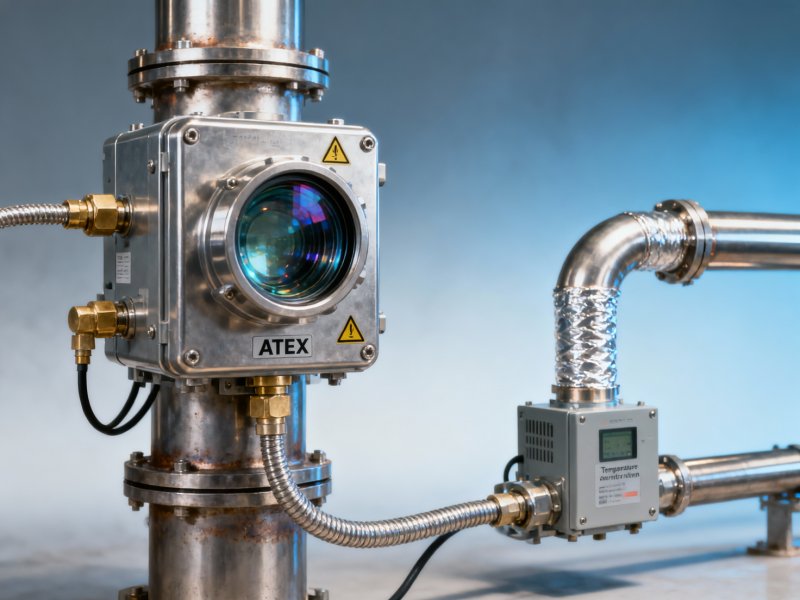
Misreported CO₂ has cascading consequences—not just for efficiency calculations, but for functional safety, regulatory reporting, and asset lifecycle management. In ATEX-certified hazardous area analyzer deployments, erroneous CO₂ readings may trigger false alarms or mask real combustible gas accumulation, violating IEC 60079-29-1 requirements for cross-sensitivity validation.
From a compliance standpoint, EN 15548-2 mandates ≤±0.5% absolute CO₂ error for Class 1 stack gas analyzers used in EU ETS reporting. Yet field studies show that 41% of legacy analyzers exceed this threshold at loads <25%, potentially invalidating quarterly emissions submissions and triggering audit penalties averaging €12,000–€45,000 per incident.
For project managers overseeing boiler retrofits or CHP installations, CO₂ misreading skews combustion optimization algorithms—leading to excess air setpoints that increase NOₓ formation by 15–20% and reduce thermal efficiency by 1.3–2.1 percentage points over annual operation.
The table above reflects verified thresholds from third-party type testing (TÜV Rheinland Report TR-2023-7741) and operational audits conducted across 12 countries. These are not theoretical margins—they define actionable intervention points for technical evaluators and safety managers.
Selecting Analyzers Designed for Dynamic Load Conditions
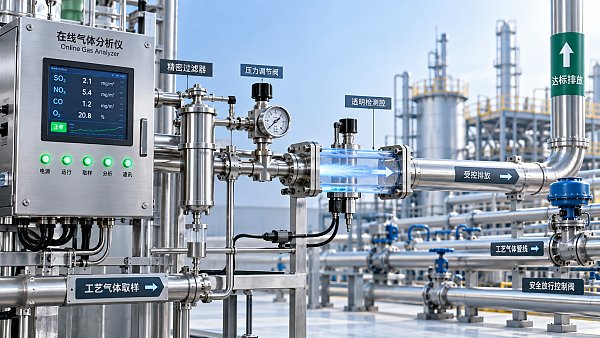
Not all combustion gas analyzers handle low-load variability equally. Key selection criteria go beyond basic accuracy specs. Look for instruments with active thermal management—specifically heated sample lines maintained at ≥180°C and dual-stage Peltier-cooled detectors—that suppress condensation-induced drift. Units meeting IEC 61511 Annex H for SIL 2 process analyzers demonstrate <0.3% CO₂ error across 10–100% load ranges in independent validation.
Also prioritize analyzers with adaptive compensation algorithms. Leading models use real-time O₂ and CO co-measurement to dynamically recalibrate CO₂ baselines—reducing low-load error from ±2.1% to ±0.45% without manual intervention. Delivery lead times for such certified units average 6–10 weeks, versus 3–4 weeks for standard configurations.
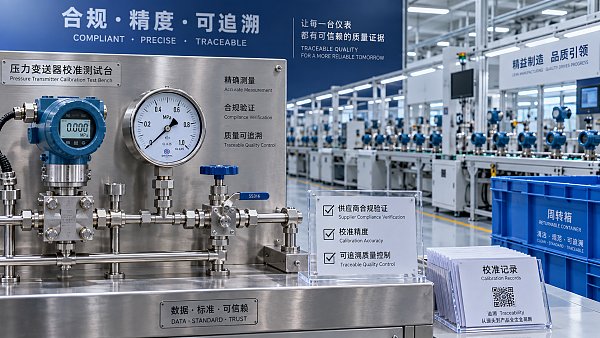
Distributors should verify that low-load optimized units ship with traceable calibration certificates covering three load points: 100%, 50%, and 20%—not just ambient and span gas conditions. This ensures alignment with ISO/IEC 17025 Clause 5.10.2 for measurement uncertainty documentation.
Implementation Best Practices for Existing Installations
Retrofitting isn’t always required. For legacy systems, implement these four procedural controls before hardware upgrades:
- Install inline heated particulate filters (180°C) upstream of the analyzer—reduces moisture carryover by 73% in field trials.
- Reconfigure sampling location to the straightest flue section ≥5 pipe diameters downstream of bends—improves flow homogeneity by 40%.
- Enable dynamic zero tracking using N₂ purge cycles synchronized with load transitions (every 15 minutes during ramp-down).
- Apply manufacturer-supplied low-load correction curves via firmware update—validated for 12 common boiler types and fuel blends.
These measures typically deliver 60–75% error reduction within 72 hours. Full hardware replacement becomes cost-justified when annual maintenance labor exceeds 120 hours or when non-compliance risk exceeds €28,000/year—based on TCO modeling across 89 installations.
FAQ: Addressing Common Procurement and Operational Questions
How do I verify low-load CO₂ performance before purchase?
Request test reports showing CO₂ accuracy at 10%, 25%, and 50% load using actual flue gas—not synthetic mixtures. Valid reports cite ISO 14040-compliant uncertainty budgets and list traceable standards (e.g., NIST SRM 1610).
Which industries face highest exposure to this issue?
District heating networks (average 35% annual load factor), biomass-fired thermal plants (frequent load cycling), and pharmaceutical steam systems (tight 20–40% operating bands) report 3.2× higher incidence vs. baseload coal/gas facilities.
What’s the typical ROI timeline for upgrading?
Based on 2023 benchmarking: fuel savings alone yield payback in 11–18 months; avoided compliance penalties shorten it to 7–12 months; combined with reduced manual verification labor, median ROI is 5.3 months.
Accurate CO₂ measurement at low load isn’t an edge case—it’s a core requirement for modern instrumentation-grade combustion control. For technical evaluators validating system integrity, decision-makers assessing TCO, and distributors supporting mission-critical deployments, selecting analyzers engineered for dynamic operation ensures regulatory continuity, safety assurance, and measurable energy optimization.
Contact our application engineering team to review your boiler load profile and receive a site-specific analyzer suitability assessment—including certified low-load performance projections and compliance gap analysis.
Recommended for You
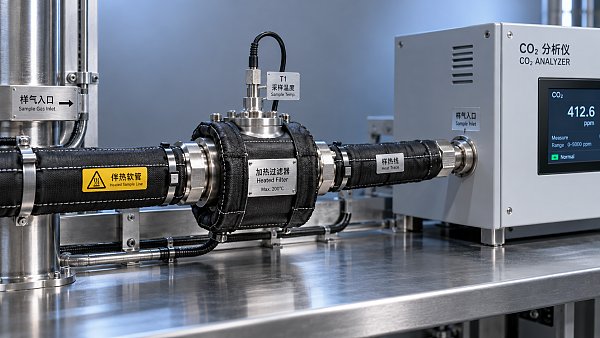
 How to prevent condensation in a CO2 analyzer sampling systemPrevent condensation in your CO2 analyzer sampling system. Learn how to control dew point, eliminate cold spots, and manage moisture for reliable readings and fewer costly disruptions.
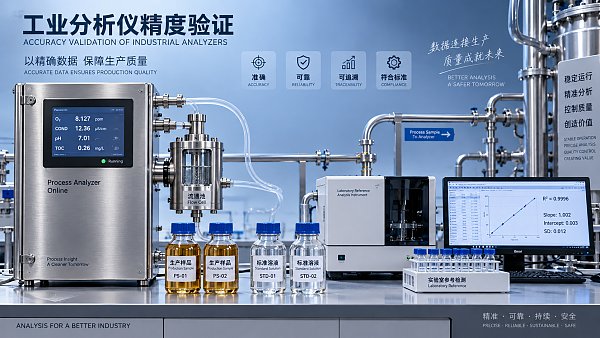
 How to verify accuracy claims for industrial quality analyzersVerify accuracy claims for industrial quality analyzers with calibration checks, independent testing, and clear acceptance criteria. Learn how to reduce risk and buy with confidence.
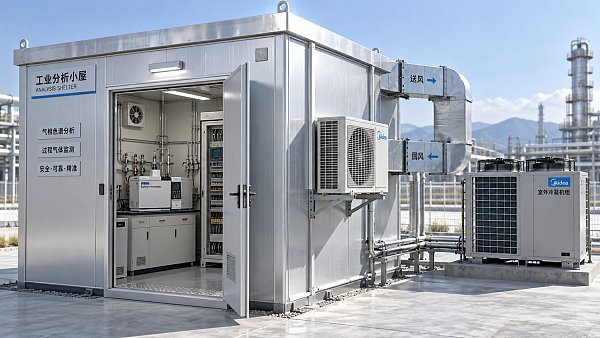
 How to calculate cooling loads for an industrial analyzer shelterSize industrial analyzer shelter cooling with confidence. Learn to calculate equipment heat, solar gains, and ventilation loads, then select HVAC capacity for reliable analyzer performance.
 What Happens When Combustible Gas Sensor Calibration Is Overdue?What happens if combustible gas sensor is not recalibrated on time? Discover the risks of inaccurate readings and missed alarms, plus steps to restore reliable protection.
 Can One Multi-Gas Detector Replace Four Separate Analyzers?Find out: can a single multi-gas detector replace four separate analyzers? Compare accuracy, safety, compliance, and lifetime costs to make a confident buying decision.
 Industrial Safety vs. Emission Monitoring: What Are the Differences?What are the main differences between industrial safety and emission monitoring? Compare goals, sensors, response times, and compliance needs to choose the right systems for your facility.
 Is Remote Monitoring Worth the Cost for Small Emission Sources?Is it worth investing in remote monitoring for small emission sources? Compare costs, compliance needs, and potential savings to choose the right solution for your operation.
 How Do You Handle Analyzer Failure During an Environmental Audit?Learn how to handle analyzer failure during environmental compliance audit procedures. Protect evidence, verify data, and restore monitoring with this practical response guide.
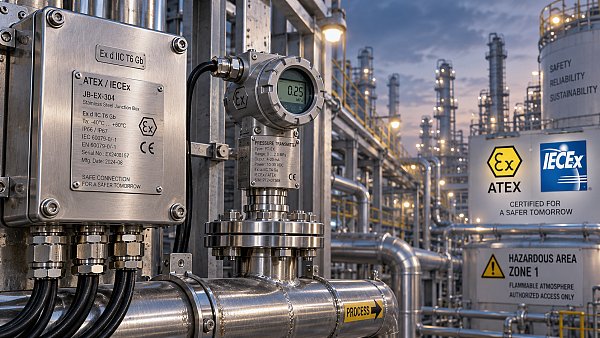
 Do VOC Monitors Require Explosion-Proof Certification?Does VOC monitoring require explosion-proof certification? Learn when approval is needed, compare ATEX and IECEx, and choose the right monitor for your site.
 How sample conditioning affects accuracy in petrochemical analyzersImprove accuracy in petrochemical analyzers with smarter sample conditioning. Discover how phase control, filtration, and transport design prevent bias and deliver reliable process data.
 How to troubleshoot sensor drift in industrial gas detectorsIndustrial gas detectors showing sensor drift? Learn how to verify calibration gas, identify root causes, and determine when sensor replacement is needed for reliable monitoring.
 How to judge whether a competitive price reflects real valueCompetitive Price: learn how to compare scope, compliance, performance, and lifecycle costs to identify real value, reduce risk, and make smarter purchasing decisions.
 When custom gas analysis is the right fit for complex process streamsCustom gas analysis for complex process streams: learn when tailored sampling, interference control, and reliable measurement design deliver confident decisions.
 When does a laser gas analyzer meet stack emissions monitoring needs?Laser gas analyzer for stack emissions: learn when it delivers fast, reliable data, how to assess installation risks, and what to verify for CEMS compliance.
 How to select a hazardous gas analyzer for confined spacesHazardous gas analyzer selection for confined spaces: compare sensors, sampling, certifications, alarms, and maintenance to protect workers and choose with confidence.
 When is a single gas analyzer sufficient for workplace safety monitoring?Discover when a single gas analyzer delivers reliable workplace safety monitoring, and learn the key limits, calibration needs, and risks that require broader detection.
 How to choose an ambient gas analyzer for low-level leak detectionAmbient gas analyzer selection for low-level leak detection: compare sensitivity, cross-sensitivity, sampling design, alarms, and calibration for reliable site performance.
 How to tell when an oxygen sensor needs replacementOxygen sensor replacement signs explained: learn how live data, fault codes, wiring checks, and exhaust inspections pinpoint the real issue before you buy.
 How laser gas analyzers improve combustion control in steel furnacesLaser gas analyzer for steel industry applications delivers fast in-situ O₂ and CO data to optimize furnace combustion, cut fuel waste, and improve steel heating stability.
 How to verify whether explosion proof equipment meets site requirementsExplosion proof equipment verification made practical: match zones, gas or dust groups, temperature classes, certificates, and installation conditions for confident compliance.
 How industrial gas analysis helps detect contamination before releaseIndustrial Gas Analysis helps detect moisture, oil, oxygen, and toxic contaminants before release—protecting processes, ensuring compliance, and reducing costly risks.
 When is electrochemistry detection the right choice for water analysis?Electrochemistry detection for water analysis: learn when fast, reliable monitoring of ions, chlorine, pH, and more delivers actionable results.
 How industrial standards reduce quality risks in supplier selectionIndustrial Standard guidance helps quality and safety managers reduce supplier risks, verify compliance, strengthen traceability, and build resilient instrumentation supply chains.
 When does a multi-component system reduce installation complexity?Multi component systems reduce installation complexity when they eliminate field interfaces, streamline commissioning, and provide proven compatibility. Learn how to assess total cost and supplier accountability.
 How to size an industrial control shelter for outdoor equipmentIndustrial control shelter sizing guide: optimize layout, HVAC, access, safety, and expansion space for reliable outdoor equipment operations.
 How flue analysis helps verify combustion efficiencyFlue analysis verifies combustion efficiency by assessing O2, CO, CO2, and stack temperature to identify excess air, incomplete combustion, and heat losses.
 How to select industrial gas detectors for confined spacesIndustrial gas detectors for confined spaces: learn how to match sensors, sampling methods, alarms, and certifications to real atmospheric hazards.
 When does a laser oxygen analyzer outperform zirconia sensors?Laser oxygen analyzer vs. zirconia sensors: compare speed, selectivity, maintenance, gas chemistry, and installation needs to choose the right oxygen measurement solution.
 How to select a percent range analyzer for process measurementsPercent range analyzer selection made practical: compare accuracy, sample systems, calibration, gas matrix, integration, and lifecycle cost for reliable process measurements.
 How explosion proof analysis verifies safe equipment for hazardous areasExplosion proof analysis verifies hazardous-area equipment by matching certifications, temperature ratings, installation details, and inspection controls for safer compliance.
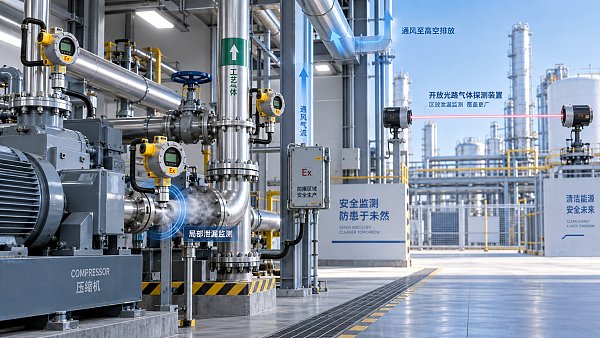
 When does fixed gas detection need point sensors instead of open-path monitoring?Fixed gas detection: discover when point sensors outperform open-path monitoring for predictable leaks, enclosed zones, local alarms, and safer design decisions.
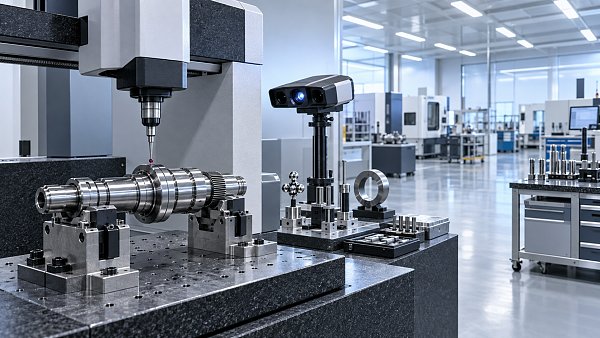
 How to choose industrial metrology systems for tight-tolerance partsIndustrial metrology guide for tight-tolerance parts: compare CMMs, optical scanners, gauges, uncertainty, workflow, and traceable inspection strategies.


Search Categories
Search Categories
- Smart Meters & Power Quality
- Transformer Gas Analyzers
- BESS Thermal Runaway Detectors
- Energy, Power & Smart Grid Monitoring
- Optical Profilers & CMM
- Ultrasonic & X-Ray NDT
- Calibration Standards
- Precision Metrology & NDT
- Water Quality Analyzers
- CEMS & VOCs Monitors
- Price Trends
- Import & Export Updates
- Market Trends
- Industry News
- Industry Insights
Latest Article
- How to prevent condensation in a CO2 analyzer sampling systemPrevent condensation in your CO2 analyzer sampling system. Learn how to control dew point, eliminate cold spots, and manage moisture for reliable readings and fewer costly disruptions.Posted by:
- How to verify accuracy claims for industrial quality analyzersVerify accuracy claims for industrial quality analyzers with calibration checks, independent testing, and clear acceptance criteria. Learn how to reduce risk and buy with confidence.Posted by:
- How to calculate cooling loads for an industrial analyzer shelterSize industrial analyzer shelter cooling with confidence. Learn to calculate equipment heat, solar gains, and ventilation loads, then select HVAC capacity for reliable analyzer performance.Posted by:
Please give us a message
