
Combustible Gas Detection: Common Installation Mistakes


Combustible gas detection is a critical safeguard for facilities where leaks can quickly escalate into fire, explosion, or production shutdowns.
Yet even high-quality detectors can fail when installed in the wrong location, mounted at the wrong height, or poorly integrated with plant systems.
For quality control and safety managers, the real question is not whether detectors are installed, but whether they can detect credible leaks early.
Why Installation Quality Matters More Than Detector Brand Alone
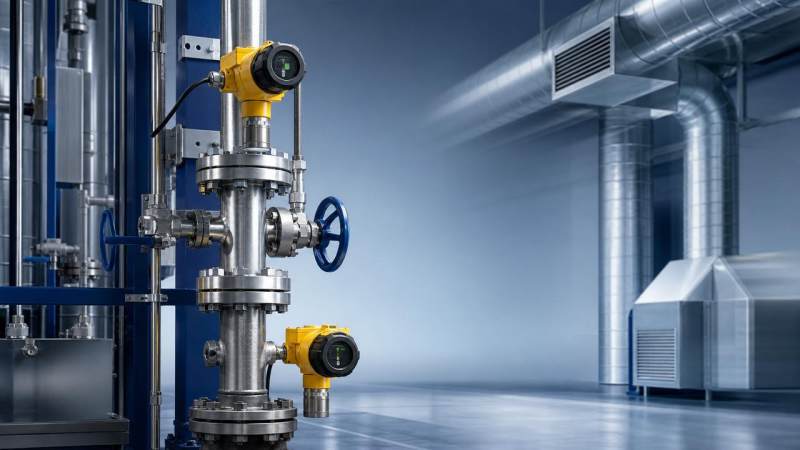
A combustible gas detector is only as reliable as the installation assumptions behind it. Sensor technology cannot compensate for poor placement or weak maintenance access.
Many incidents are not caused by total absence of gas detection. They happen because gas reached dangerous concentrations before a sensor saw it.
For safety managers, this means installation review should be treated as a risk control activity, not a simple electrical or procurement task.
Quality control teams should also care because false alarms, missed alarms, and nuisance trips directly affect production stability and audit confidence.
The most useful approach is to connect detector location, gas behavior, ventilation, ignition sources, and alarm response into one practical protection strategy.
Mistake 1: Placing Detectors Where Gas Is Unlikely to Travel
The most common installation error is placing detectors based on convenience instead of gas dispersion. Easy wiring does not equal effective leak detection.
Combustible gases do not spread evenly through a room. Their movement depends on density, release pressure, temperature, ventilation, and surrounding obstacles.
Methane, for example, is lighter than air and tends to accumulate near ceilings or high points when ventilation is limited.
Propane, butane, and many hydrocarbon vapors are heavier than air. They may collect near floors, trenches, pits, or low-lying process areas.
Hydrogen rises quickly and disperses rapidly, making ceiling placement and fast sensor response especially important in battery rooms or electrolyzer facilities.
A detector installed near a doorway or clean air supply may remain silent while gas accumulates behind equipment or under platforms.
Before approving installation drawings, managers should ask whether each detector is positioned along a realistic gas path from likely leak sources.
Useful reference points include valves, flanges, compressors, pumps, regulators, storage connections, burner trains, gas cabinets, and sampling points.
A practical layout review should include process engineers, safety personnel, maintenance technicians, and instrument specialists, not only the electrical contractor.
Mistake 2: Using the Wrong Mounting Height for the Target Gas
Incorrect mounting height is another frequent reason combustible gas detection underperforms. The sensor may be present but outside the hazard zone.
For lighter-than-air gases, detectors are often installed near ceilings, roof beams, or high ventilation dead zones where gas may gather.
For heavier-than-air gases, detectors normally need low-level installation, often near the floor but protected from washdown, damage, and obstruction.
However, density rules are only a starting point. Hot releases, high-pressure jets, or forced airflow may move gas differently than expected.
Mounting every detector at the same height across a facility is usually a sign that risk assessment has been oversimplified.
Safety managers should verify that detector height matches the gas inventory, leak scenario, room geometry, and ventilation pattern.
QC personnel can support this by checking whether installation records include gas type, mounting elevation, calibration gas, and detector tag information.
When multiple combustible gases exist in one area, placement may require layered detection rather than one universal mounting height.
Mistake 3: Ignoring Ventilation Patterns and Air Movement
Ventilation can protect a facility, but it can also prevent detectors from seeing gas if placement is not carefully evaluated.
Supply air, exhaust fans, louvers, open doors, and process heat all shape how leaked gas travels through a workspace.
A sensor installed directly in a strong fresh-air stream may consistently read lower concentrations than the actual hazardous area.
Conversely, a detector placed at an exhaust point may alarm late if gas first accumulates near people, equipment, or ignition sources.
Facilities with variable ventilation require special attention because gas movement may change between normal operation, shutdown, maintenance, and emergency modes.
Installation design should consider airflow smoke tests, computational dispersion studies, or practical walkdowns in complex or high-risk areas.
For smaller facilities, a structured review of supply points, exhaust points, dead zones, and likely leak sources can still improve placement significantly.
Ventilation changes should trigger reassessment. Adding a fan, enclosing equipment, or modifying ductwork can change the effectiveness of existing detectors.
Mistake 4: Installing Sensors Too Close to Contaminants or Harsh Conditions
Combustible gas sensors are exposed instruments, not indestructible fixtures. Their environment can shorten life, reduce sensitivity, or create unstable readings.
Catalytic bead sensors may be poisoned by silicone, sulfur compounds, lead, chlorinated solvents, or other substances common in industrial environments.
Infrared sensors are more resistant to some poisons, but they still require clean optical paths and suitable environmental protection.
Excessive humidity, direct water spray, dust buildup, vibration, corrosive atmospheres, and temperature extremes can all degrade detection reliability.
A detector installed where it is constantly struck by steam, washdown water, or airborne particles may become a maintenance burden.
Protective accessories can help, but they must not block gas access or slow response beyond acceptable safety limits.
Safety managers should ensure environmental conditions are evaluated during selection and installation, not discovered later through repeated faults.
QC teams should review whether the chosen detector technology matches the actual site atmosphere, not only the purchasing specification.
Mistake 5: Making Calibration and Maintenance Access Difficult
A detector that cannot be safely reached will not be properly maintained. Poor access gradually turns a protection system into a liability.
Common problems include sensors mounted above equipment, behind pipe racks, inside restricted spaces, or in areas requiring excessive permits.
When calibration is inconvenient, testing intervals are delayed, bump tests are skipped, and fault conditions may remain unresolved for too long.
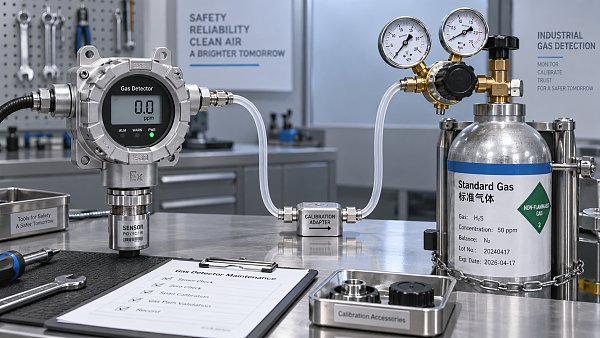
Installation plans should include safe access for calibration gas application, sensor replacement, visual inspection, and cable termination checks.
Remote calibration ports may be useful in difficult locations, but they should be designed to avoid leaks, dilution, and incorrect gas delivery.
Maintenance access is especially important for facilities operating under strict safety management systems, insurance audits, or regulatory inspections.
A good installation is one that technicians can test consistently without improvising ladders, bypassing safety controls, or interrupting production unnecessarily.
Mistake 6: Treating Alarm Setpoints as Default Values
Alarm setpoints are often copied from vendor defaults, but default values may not match the site’s actual risk tolerance.
Combustible gas alarms are typically based on percentage of the lower explosive limit, commonly shown as percent LEL.
Many facilities use a low alarm for investigation and a high alarm for shutdown, evacuation, or automatic control actions.
However, the right setpoints depend on leak speed, occupancy, ventilation, response time, ignition probability, and process consequences.
Setting alarms too low can cause frequent nuisance alarms, reducing operator trust and encouraging informal bypass behavior.
Setting alarms too high can reduce warning time and leave little margin before an explosive atmosphere develops.
Safety managers should document the reasoning behind alarm thresholds and verify they align with company standards and applicable codes.
Alarm logic should also consider voting, time delays, equipment shutdowns, and ventilation activation without masking real hazards.
Mistake 7: Poor Integration With Control, Shutdown, and Notification Systems
A detector alarm is only useful if the right people and systems respond quickly. Integration failures often appear during emergencies.
Some installations connect detectors to local indicators but fail to route critical alarms to control rooms, safety systems, or emergency panels.
Others create alarm floods, unclear messages, or identical tones that do not tell operators which area requires immediate action.
Combustible gas detection should be integrated with clear annunciation, cause-and-effect logic, event logging, and emergency response procedures.
Where automatic shutdown is required, the design should define exactly which equipment stops, which valves close, and which ventilation actions start.
Managers should test not only the sensor response but also the full alarm chain from detector to operator action.
Commissioning tests should confirm signal scaling, alarm priorities, relay actions, controller mapping, backup power, and communication fault handling.
This is where instrumentation discipline and safety management overlap, and where many hidden weaknesses are discovered before they become incidents.
Mistake 8: Overlooking Hazardous Area Certification and Compliance
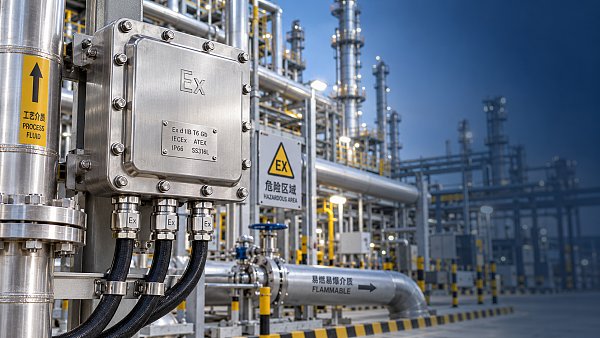
Combustible gas detectors are often installed in classified hazardous areas, where electrical equipment must meet strict explosion protection requirements.
Using a detector without suitable certification can create an ignition risk, even if the device is intended for gas monitoring.
Managers should verify certification against the area classification, gas group, temperature class, protection method, and local regulatory framework.
Common schemes include ATEX, IECEx, NEC, and other national or regional requirements depending on the operating location.
Compliance also includes cable glands, junction boxes, barriers, seals, grounding, and installation practices, not only the detector head.
A certified detector can still become noncompliant if installed with unsuitable accessories or modified in the field.
Documentation should be retained for audits, including certificates, installation drawings, loop checks, calibration records, and inspection reports.
For global procurement teams, comparing certifications early prevents costly redesign, customs delays, and rejected site acceptance tests.
Mistake 9: Failing to Review Coverage After Process Changes
Gas detection coverage is not permanent. Facilities evolve, and each change can alter leak sources, airflow, occupancy, or ignition risk.
New equipment, relocated piping, temporary enclosures, increased production rates, and modified cleaning chemicals can all affect detector performance.
A common weakness is treating gas detection as a one-time installation project rather than a living safety control.
Management of change procedures should include a specific question: does this change affect combustible gas detection coverage or alarm response?
After major modifications, teams should reassess detector locations, alarm logic, calibration gases, maintenance access, and hazardous area boundaries.
Annual reviews are also useful, especially in plants with frequent layout changes, seasonal ventilation differences, or evolving product lines.
This review does not always require a major study, but it should be documented and based on current operating reality.
How Safety and QC Teams Can Assess Existing Installations
A practical assessment begins with a detector inventory. Confirm tag numbers, gas types, sensor technologies, locations, heights, and alarm destinations.
Next, compare each detector against credible leak sources. Ask whether gas would realistically reach the sensor before reaching danger points.
Review calibration and bump test records for overdue tasks, repeated failures, drifting readings, or sensors replaced earlier than expected.
Walk the site with drawings in hand. Look for blocked sensors, changed airflow, damaged housings, missing labels, and difficult access.
Interview operators and maintenance staff. They often know which alarms are trusted, ignored, frequent, or difficult to investigate.
Check alarm history for nuisance patterns. Repeated alarms may indicate real leaks, poor placement, unsuitable technology, or incorrect setpoints.
Finally, test the full response path. A simulated gas input should produce the expected local alarm, control signal, and operator response.
Procurement Considerations When Upgrading Detection Systems
When upgrading combustible gas detection, procurement should not focus only on unit price. Lifecycle reliability and compliance cost matter more.
Important selection factors include target gas compatibility, response time, environmental resistance, certification, diagnostics, communication protocol, and calibration requirements.
Facilities with high maintenance constraints may benefit from remote diagnostics, modular sensors, infrared technology, or centralized gas monitoring architecture.
However, advanced features do not remove the need for correct placement, commissioning, and periodic verification.
Buyers should request installation guidance, application notes, calibration procedures, hazardous area documents, and references from similar industries.
For multinational sites, standardizing detector platforms can simplify training and spare parts, but local gas risks must still guide placement.
A strong supplier should help clarify application limits rather than simply recommend the most expensive model.
Conclusion: Reliable Detection Starts With Realistic Installation Decisions
Combustible gas detection is most effective when installation decisions reflect how gas actually leaks, moves, accumulates, and triggers response.
The biggest mistakes are usually practical ones: wrong location, wrong height, poor airflow understanding, weak maintenance access, and incomplete alarm integration.
For quality control and safety managers, the best protection comes from combining engineering review, field verification, documentation, and periodic reassessment.
A detector should not merely exist on a drawing. It should provide timely, credible warning under the leak scenarios your facility truly faces.
By correcting installation weaknesses, organizations reduce false alarms, improve compliance confidence, and strengthen the first line of defense against fire and explosion.
Recommended for You
 How to prevent condensation in a CO2 analyzer sampling systemPrevent condensation in your CO2 analyzer sampling system. Learn how to control dew point, eliminate cold spots, and manage moisture for reliable readings and fewer costly disruptions.
 How to verify accuracy claims for industrial quality analyzersVerify accuracy claims for industrial quality analyzers with calibration checks, independent testing, and clear acceptance criteria. Learn how to reduce risk and buy with confidence.
 How to calculate cooling loads for an industrial analyzer shelterSize industrial analyzer shelter cooling with confidence. Learn to calculate equipment heat, solar gains, and ventilation loads, then select HVAC capacity for reliable analyzer performance.
 What Happens When Combustible Gas Sensor Calibration Is Overdue?What happens if combustible gas sensor is not recalibrated on time? Discover the risks of inaccurate readings and missed alarms, plus steps to restore reliable protection.
 Can One Multi-Gas Detector Replace Four Separate Analyzers?Find out: can a single multi-gas detector replace four separate analyzers? Compare accuracy, safety, compliance, and lifetime costs to make a confident buying decision.
 Industrial Safety vs. Emission Monitoring: What Are the Differences?What are the main differences between industrial safety and emission monitoring? Compare goals, sensors, response times, and compliance needs to choose the right systems for your facility.
 Is Remote Monitoring Worth the Cost for Small Emission Sources?Is it worth investing in remote monitoring for small emission sources? Compare costs, compliance needs, and potential savings to choose the right solution for your operation.
 How Do You Handle Analyzer Failure During an Environmental Audit?Learn how to handle analyzer failure during environmental compliance audit procedures. Protect evidence, verify data, and restore monitoring with this practical response guide.
 Do VOC Monitors Require Explosion-Proof Certification?Does VOC monitoring require explosion-proof certification? Learn when approval is needed, compare ATEX and IECEx, and choose the right monitor for your site.
 How sample conditioning affects accuracy in petrochemical analyzersImprove accuracy in petrochemical analyzers with smarter sample conditioning. Discover how phase control, filtration, and transport design prevent bias and deliver reliable process data.
 How to troubleshoot sensor drift in industrial gas detectorsIndustrial gas detectors showing sensor drift? Learn how to verify calibration gas, identify root causes, and determine when sensor replacement is needed for reliable monitoring.
 How to judge whether a competitive price reflects real valueCompetitive Price: learn how to compare scope, compliance, performance, and lifecycle costs to identify real value, reduce risk, and make smarter purchasing decisions.
 When custom gas analysis is the right fit for complex process streamsCustom gas analysis for complex process streams: learn when tailored sampling, interference control, and reliable measurement design deliver confident decisions.
 When does a laser gas analyzer meet stack emissions monitoring needs?Laser gas analyzer for stack emissions: learn when it delivers fast, reliable data, how to assess installation risks, and what to verify for CEMS compliance.
 How to select a hazardous gas analyzer for confined spacesHazardous gas analyzer selection for confined spaces: compare sensors, sampling, certifications, alarms, and maintenance to protect workers and choose with confidence.
 When is a single gas analyzer sufficient for workplace safety monitoring?Discover when a single gas analyzer delivers reliable workplace safety monitoring, and learn the key limits, calibration needs, and risks that require broader detection.
 How to choose an ambient gas analyzer for low-level leak detectionAmbient gas analyzer selection for low-level leak detection: compare sensitivity, cross-sensitivity, sampling design, alarms, and calibration for reliable site performance.
 How to tell when an oxygen sensor needs replacementOxygen sensor replacement signs explained: learn how live data, fault codes, wiring checks, and exhaust inspections pinpoint the real issue before you buy.
 How laser gas analyzers improve combustion control in steel furnacesLaser gas analyzer for steel industry applications delivers fast in-situ O₂ and CO data to optimize furnace combustion, cut fuel waste, and improve steel heating stability.
 How to verify whether explosion proof equipment meets site requirementsExplosion proof equipment verification made practical: match zones, gas or dust groups, temperature classes, certificates, and installation conditions for confident compliance.
 How industrial gas analysis helps detect contamination before releaseIndustrial Gas Analysis helps detect moisture, oil, oxygen, and toxic contaminants before release—protecting processes, ensuring compliance, and reducing costly risks.
 When is electrochemistry detection the right choice for water analysis?Electrochemistry detection for water analysis: learn when fast, reliable monitoring of ions, chlorine, pH, and more delivers actionable results.
 How industrial standards reduce quality risks in supplier selectionIndustrial Standard guidance helps quality and safety managers reduce supplier risks, verify compliance, strengthen traceability, and build resilient instrumentation supply chains.
 When does a multi-component system reduce installation complexity?Multi component systems reduce installation complexity when they eliminate field interfaces, streamline commissioning, and provide proven compatibility. Learn how to assess total cost and supplier accountability.
 How to size an industrial control shelter for outdoor equipmentIndustrial control shelter sizing guide: optimize layout, HVAC, access, safety, and expansion space for reliable outdoor equipment operations.
 How flue analysis helps verify combustion efficiencyFlue analysis verifies combustion efficiency by assessing O2, CO, CO2, and stack temperature to identify excess air, incomplete combustion, and heat losses.
 How to select industrial gas detectors for confined spacesIndustrial gas detectors for confined spaces: learn how to match sensors, sampling methods, alarms, and certifications to real atmospheric hazards.
 When does a laser oxygen analyzer outperform zirconia sensors?Laser oxygen analyzer vs. zirconia sensors: compare speed, selectivity, maintenance, gas chemistry, and installation needs to choose the right oxygen measurement solution.
 How to select a percent range analyzer for process measurementsPercent range analyzer selection made practical: compare accuracy, sample systems, calibration, gas matrix, integration, and lifecycle cost for reliable process measurements.
 How explosion proof analysis verifies safe equipment for hazardous areasExplosion proof analysis verifies hazardous-area equipment by matching certifications, temperature ratings, installation details, and inspection controls for safer compliance.
 When does fixed gas detection need point sensors instead of open-path monitoring?Fixed gas detection: discover when point sensors outperform open-path monitoring for predictable leaks, enclosed zones, local alarms, and safer design decisions.
 How to choose industrial metrology systems for tight-tolerance partsIndustrial metrology guide for tight-tolerance parts: compare CMMs, optical scanners, gauges, uncertainty, workflow, and traceable inspection strategies.

Search Categories
Search Categories
- Smart Meters & Power Quality
- Transformer Gas Analyzers
- BESS Thermal Runaway Detectors
- Energy, Power & Smart Grid Monitoring
- Optical Profilers & CMM
- Ultrasonic & X-Ray NDT
- Calibration Standards
- Precision Metrology & NDT
- Water Quality Analyzers
- CEMS & VOCs Monitors
- Price Trends
- Import & Export Updates
- Market Trends
- Industry News
- Industry Insights
Latest Article
- How to prevent condensation in a CO2 analyzer sampling systemPrevent condensation in your CO2 analyzer sampling system. Learn how to control dew point, eliminate cold spots, and manage moisture for reliable readings and fewer costly disruptions.Posted by:
- How to verify accuracy claims for industrial quality analyzersVerify accuracy claims for industrial quality analyzers with calibration checks, independent testing, and clear acceptance criteria. Learn how to reduce risk and buy with confidence.Posted by:
- How to calculate cooling loads for an industrial analyzer shelterSize industrial analyzer shelter cooling with confidence. Learn to calculate equipment heat, solar gains, and ventilation loads, then select HVAC capacity for reliable analyzer performance.Posted by:
Please give us a message
