
How to Evaluate an Industrial Solution for Scalability, Downtime, and ROI


What Decision-Makers Actually Mean When They Ask Whether an Industrial Solution Will Scale
In industrial procurement, “scalable” is one of the most overused and least examined words in the room. A vendor may use it to describe software licenses, an engineering team may mean control architecture, and operations may be thinking about whether a plant can add one more line without creating a maintenance headache. Those are not the same question. If the discussion is really about an Industrial Solution, the evaluation has to move beyond feature lists and ask three harder things at once: how the system behaves when production volume changes, how it fails when conditions are imperfect, and whether the money spent today still makes sense after integration, support, and lifecycle costs show up.
That is why scalability, downtime, and ROI should not be treated as separate boxes on a procurement checklist. In practice, they are tightly coupled. A system that appears inexpensive at purchase can become expensive if every expansion requires custom engineering. A platform that performs well in a factory acceptance test may still create hidden downtime if spare parts, calibration routines, or firmware management are weak. And a solution with a strong return on paper can disappoint if it depends on data quality the site cannot actually sustain.
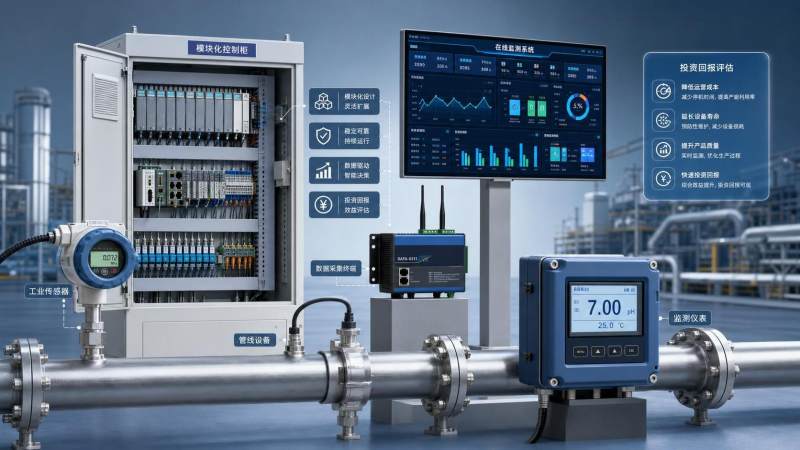
For sectors that depend on instrumentation, control, and monitoring, this is especially true. Whether the site is a process plant, a power facility, a water treatment system, a laboratory environment, or a high-mix manufacturing operation, the Industrial Solution sits close to the point where physical reality becomes operational data. That boundary matters. If sensors drift, if network design creates blind spots, if historian data is inconsistent, the business does not only lose visibility. It loses the ability to make reliable production, maintenance, and safety decisions.
Scalability Is Not Just About Adding More Devices
A common mistake is to reduce scalability to capacity: more tags, more I/O, more connected assets, more users. Capacity matters, but it is the shallowest layer of the problem. A solution is scalable when expansion does not force the operation to redesign core logic, retrain every team from scratch, or accept rising instability as the price of growth.
In industrial environments, that usually means looking at architecture first. Can the control and data layers support modular expansion across sites, lines, or skids? Does the solution work with common industrial protocols already present in the plant, such as Modbus, HART, PROFINET, EtherNet/IP, or OPC UA, where relevant? Can edge devices, SCADA layers, historians, quality systems, and enterprise platforms exchange structured data without creating brittle custom connectors? If the answer depends heavily on one systems integrator or one vendor-specific workaround, the scalability claim is already weaker than it sounds.
There is also a human side to scale. An Industrial Solution that requires specialist knowledge for every configuration change may work in a flagship facility and fail in a regional plant with a thinner engineering bench. Decision-makers should ask a practical question: if the original project team disappears in eighteen months, can the operating organization still expand, troubleshoot, and govern the system with confidence? If not, the solution may be technically expandable but operationally fragile.
This is where Global Instrument Hub’s industry lens becomes useful. In instrumentation-heavy industries, the most durable solutions are usually the ones that respect both measurement integrity and plant reality. They account for calibration workflows, hazardous-area requirements where applicable, environmental conditions, redundancy strategy, and the quality of signal acquisition at the edge. Scale built on poor measurement discipline is only the appearance of progress.
Downtime Evaluation Starts Before the System Is Installed
Most buyers ask about reliability. Fewer ask about recoverability. That distinction matters. No industrial system is immune to faults. The more relevant question is how quickly the operation can detect a problem, isolate it, restore service, and prevent recurrence.
Downtime risk often hides in places that procurement documents treat as secondary details: controller failover behavior, firmware version control, sensor replacement procedures, spare-parts availability, alarm rationalization, remote diagnostics, cybersecurity patching windows, and the clarity of maintenance documentation. A solution may have high-quality hardware and still create long interruptions if replacing a failed module requires proprietary tools, vendor travel, or a full-line shutdown.
For decision-makers, the right evaluation method is scenario-based rather than purely promotional. Ask what happens if a transmitter fails during production. Ask what happens if a communication segment drops intermittently. Ask how the system behaves when a plant adds a new unit operation with different data rates or response-time requirements. Ask whether the diagnostic information is meaningful to site maintenance personnel or only to the original implementer. The quality of those answers often reveals more than a reliability percentage in a slide deck.
This is also the point where standards and compliance enter the conversation in a grounded way. In regulated or safety-sensitive environments, evaluation may involve calibration traceability, laboratory competence frameworks such as ISO/IEC 17025 where relevant, explosion-protection requirements like ATEX or IECEx for hazardous areas, and documented cybersecurity or validation practices depending on the industry. These are not administrative extras. They shape downtime because non-compliant systems are harder to maintain, harder to certify, and often slower to return to service after intervention.
ROI Is Usually Lost in the Gaps Between Departments
Return on investment in industrial projects is rarely destroyed by one dramatic failure. More often, it leaks away through mismatched assumptions. Finance models expected labor savings, but operations kept manual checks because they did not trust the data. Engineering expected standardization, but procurement accepted exceptions to hit a project deadline. Management expected plant-wide visibility, but the integration stopped at isolated dashboards.
A credible ROI model for an Industrial Solution should include more than acquisition cost and predicted efficiency gains. It needs to consider engineering hours, commissioning complexity, training time, planned maintenance burden, calibration intervals where applicable, obsolescence risk, software support structure, and the cost of interoperability. If the solution improves OEE, reduces unplanned shutdowns, lowers energy waste, shortens batch changeovers, or improves quality consistency, those pathways should be stated explicitly and tied to operating conditions that the site can actually meet.
This is where many digital transformation projects become vague. “Better data” is not a return by itself. It only becomes a return when the organization can convert that data into fewer interventions, faster diagnosis, tighter control, or more confident production planning. The value of a condition monitoring layer, for example, depends not just on analytics quality but on whether maintenance teams have the workflow and spare-part strategy to act on the alerts. A plant historian is useful, but the ROI changes sharply depending on tag quality, time synchronization, contextual metadata, and how often engineers actually use it to improve process control.
A More Useful Evaluation Framework
When comparing solutions, decision-makers often benefit from a simple test: separate claims into four layers and challenge each one.
This kind of structure is more useful than scoring glossy features because it forces the conversation back to the plant, the lab, the utility asset, or the production network where the solution has to survive.
Common Misreadings That Distort Selection
One misreading is to assume that a larger vendor automatically means lower risk. In reality, the relevant question is whether the specific product line, regional support model, and integration ecosystem match the project’s complexity. Another is to treat interoperability claims as settled because a protocol is listed on a datasheet. Protocol support does not guarantee smooth data modeling, time alignment, semantic consistency, or manageable system governance.
There is also a persistent tendency to underweight instrumentation quality when the investment discussion is dominated by software or analytics. But poor primary measurement undermines everything upstream. If flow, pressure, temperature, vibration, or analytical data is unstable, no dashboard or AI layer can fully compensate for that weakness. In many industrial environments, the most expensive digital mistake is to build sophisticated decisions on untrustworthy signals.
Another trap is confusing pilot success with enterprise readiness. A pilot may run under ideal supervision, limited scope, and exceptional support. Enterprise deployment introduces procurement variation, site-to-site differences, maintenance turnover, and inconsistent legacy infrastructure. A decision-maker should therefore ask not only “Did it work in a pilot?” but “What assumptions made the pilot work, and do those assumptions still hold at scale?”
What a Strong Decision Usually Looks Like
The strongest selections are rarely driven by the most ambitious feature set. They tend to come from disciplined alignment between process requirements, measurement reliability, maintainability, and expansion strategy. In other words, the best Industrial Solution is often the one that fits the operating model with the least distortion, while still leaving room for future architecture goals.
For enterprise decision-makers, a good final filter is straightforward: can the proposed solution preserve measurement integrity, reduce exposure to avoidable downtime, and produce returns that survive contact with real operations? If any one of those three depends on optimistic assumptions, the evaluation is incomplete. If all three are supported by architecture logic, maintenance practicality, and a believable value path, procurement confidence usually improves for the right reasons.
That is the level at which industrial selection becomes more than buying equipment or software. It becomes an operating decision about how much uncertainty the business is willing to carry, and how much truth it expects from the systems measuring the process in the first place.
Recommended for You
 Can a C4H8O concentration analyzer distinguish between isomers?Can a C4H8O concentration analyzer distinguish isomers? Compare GC, FTIR and MS methods, uncover selectivity limits, and learn what to validate before choosing your instrument.
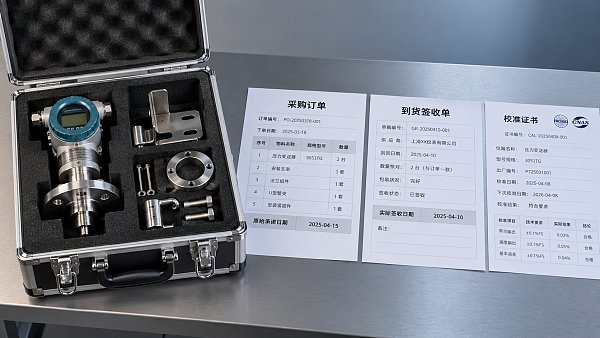
 How to identify a reliable supplier using on-time delivery recordsIdentify a Reliable Supplier by verifying on-time delivery records, original commitments, and complete shipments. Learn practical checks to reduce purchasing risk and protect your project schedule.
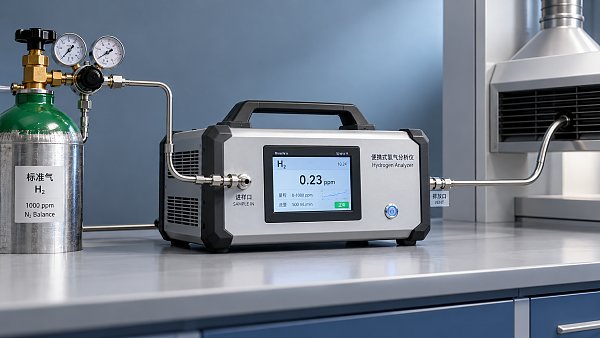
 How sensitive should a portable hydrogen analyzer be for lab use?Choose a portable hydrogen analyzer for laboratory use with the right quantification limit, accuracy, and range. Learn how to verify performance and avoid costly buying mistakes.
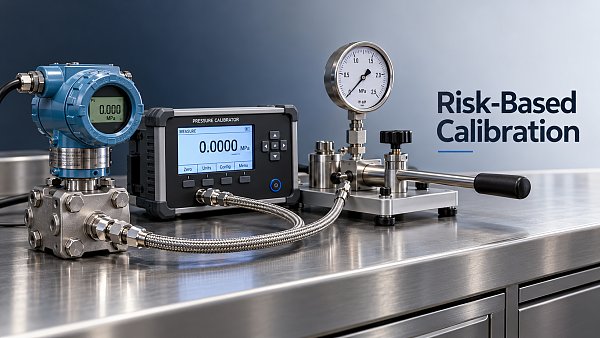
 How to set industrial calibration intervals based on equipment riskSet industrial calibration intervals based on equipment risk, drift, and as-found data. Learn when to shorten or extend schedules to improve reliability and avoid unnecessary costs.
 How to choose electrochemical analyzers for low-current measurementsCompare electrochemical analyzers for precise low-current measurements. Learn how noise, leakage, bandwidth, and real-cell testing help you choose the right instrument.
 What tolerance does a custom gas mixture need for calibration?Choose the right custom gas tolerance for calibration. Learn how blending tolerance, certified uncertainty, and stability affect accuracy—and avoid paying for precision you don’t need.
 How condensation affects stack detector readings in wet flue gasStack detector readings can drift when wet flue gas condenses. Learn how to identify moisture interference, prevent sample losses, and improve emissions monitoring reliability.
 How to prevent condensation in a CO2 analyzer sampling systemPrevent condensation in your CO2 analyzer sampling system. Learn how to control dew point, eliminate cold spots, and manage moisture for reliable readings and fewer costly disruptions.
 How to verify accuracy claims for industrial quality analyzersVerify accuracy claims for industrial quality analyzers with calibration checks, independent testing, and clear acceptance criteria. Learn how to reduce risk and buy with confidence.
 How to calculate cooling loads for an industrial analyzer shelterSize industrial analyzer shelter cooling with confidence. Learn to calculate equipment heat, solar gains, and ventilation loads, then select HVAC capacity for reliable analyzer performance.
 Hydrogen Analyzers for Energy Storage: Purity Monitoring vs. Leak DetectionChoosing a hydrogen analyzer for energy storage systems? Compare purity monitoring and leak detection to select the right sensors, improve safety, and protect fuel cell performance.
 NH3 Monitoring in Fertilizer Plants: Where Should Leak Analyzers Be Installed?NH3 analyzer for fertilizer production: discover where to place leak detectors around storage, compressors, and loading areas to reduce blind spots and improve early warning.
 Diesel Engine NOx Analyzers: Response Time and NO2 Conversion ExplainedChoosing a NOX analyzer for diesel engines? Learn how response time, NO2 conversion, and sampling design affect accuracy—and make a smarter, evidence-based purchase.
 SO2 Analyzers for Smelter Emissions: Sampling Hot, Dust-Laden Flue GasSelect an SO2 analyzer for smelting industry applications. Discover how to handle hot, dust-laden flue gas, prevent sample losses, and achieve reliable emissions monitoring.
 Unstable CH4 Readings in Biogas Monitoring? Check Moisture and Sample FlowCH4 analyzer for biogas monitoring giving unstable readings? Discover how moisture, sample flow, and pressure checks help pinpoint faults and restore reliable methane measurements.
 Buying a CO2 Analyzer for Brewery Gas Recovery: Costs Beyond the Purchase PriceBuying a CO2 analyzer for brewery applications? Compare sampling, installation, calibration, and downtime costs to uncover hidden expenses and make a smarter gas recovery investment.
 Where to Place CO Analyzers for Effective Parking Garage VentilationOptimize your CO analyzer for parking garage ventilation with practical placement tips. Learn how sensor height, airflow, and zone coverage support timely detection and effective fan control.
 NDIR vs. FTIR Gas Analyzers: Which Fits Your Environmental Research?Find the right infrared gas analyzer for environmental research. Compare NDIR vs. FTIR on sensitivity, gas coverage, sampling needs, and cost to choose confidently for your study.
 Oxygen Analyzers for Diving: Calibration Checks Before Nitrox BlendingUsing an oxygen analyzer for diving applications? Discover essential calibration, sensor, and sampling checks before nitrox blending to support reliable readings.
 How Paramagnetic Oxygen Analyzers Work and Why Sample Pressure MattersLearn how a paramagnetic oxygen analyzer works, why sample pressure affects accuracy, and what to check in compensation and calibration before choosing your system.
 How Much Does a Complete CEMS Integration Project Typically Cost?How much does a complete CEMS integration project typically cost? Explore budget ranges, hidden installation costs, and compliance needs to compare quotes and plan confidently.
 What Is the Typical Response Time for Industrial Air Monitors?What is the typical response time for industrial air monitors? Explore T90, sampling delays, and alarm settings to compare performance and choose the right monitor with confidence.
 Do Regulatory Monitoring Systems Need Third-Party Certification?Do regulatory monitoring systems need third-party certification? Learn when it is required, what certificates prove, and how to verify compliance before buying.
 How Do You Choose Wired or Wireless for Stack Monitoring?Learn how to choose between wired and wireless for stack monitoring. Compare reliability, lifecycle costs, and data recovery to find the right CEMS setup for your site.
 What Happens When Combustible Gas Sensor Calibration Is Overdue?What happens if combustible gas sensor is not recalibrated on time? Discover the risks of inaccurate readings and missed alarms, plus steps to restore reliable protection.
 Can One Multi-Gas Detector Replace Four Separate Analyzers?Find out: can a single multi-gas detector replace four separate analyzers? Compare accuracy, safety, compliance, and lifetime costs to make a confident buying decision.
 Industrial Safety vs. Emission Monitoring: What Are the Differences?What are the main differences between industrial safety and emission monitoring? Compare goals, sensors, response times, and compliance needs to choose the right systems for your facility.
 Is Remote Monitoring Worth the Cost for Small Emission Sources?Is it worth investing in remote monitoring for small emission sources? Compare costs, compliance needs, and potential savings to choose the right solution for your operation.
 How Do You Handle Analyzer Failure During an Environmental Audit?Learn how to handle analyzer failure during environmental compliance audit procedures. Protect evidence, verify data, and restore monitoring with this practical response guide.
 Do VOC Monitors Require Explosion-Proof Certification?Does VOC monitoring require explosion-proof certification? Learn when approval is needed, compare ATEX and IECEx, and choose the right monitor for your site.
 How sample conditioning affects accuracy in petrochemical analyzersImprove accuracy in petrochemical analyzers with smarter sample conditioning. Discover how phase control, filtration, and transport design prevent bias and deliver reliable process data.
 How to troubleshoot sensor drift in industrial gas detectorsIndustrial gas detectors showing sensor drift? Learn how to verify calibration gas, identify root causes, and determine when sensor replacement is needed for reliable monitoring.







Search Categories
Search Categories
- Smart Meters & Power Quality
- Transformer Gas Analyzers
- BESS Thermal Runaway Detectors
- Energy, Power & Smart Grid Monitoring
- Optical Profilers & CMM
- Ultrasonic & X-Ray NDT
- Calibration Standards
- Precision Metrology & NDT
- Water Quality Analyzers
- CEMS & VOCs Monitors
- Price Trends
- Import & Export Updates
- Market Trends
- Industry News
- Industry Insights
Latest Article
- Can a C4H8O concentration analyzer distinguish between isomers?Can a C4H8O concentration analyzer distinguish isomers? Compare GC, FTIR and MS methods, uncover selectivity limits, and learn what to validate before choosing your instrument.Posted by:
- How to identify a reliable supplier using on-time delivery recordsIdentify a Reliable Supplier by verifying on-time delivery records, original commitments, and complete shipments. Learn practical checks to reduce purchasing risk and protect your project schedule.Posted by:
- How sensitive should a portable hydrogen analyzer be for lab use?Choose a portable hydrogen analyzer for laboratory use with the right quantification limit, accuracy, and range. Learn how to verify performance and avoid costly buying mistakes.Posted by:
Please give us a message
