How Industrial Standards Reduce Quality Risks in Supplier Selection
Supplier selection is a critical quality and safety decision, especially in instrumentation supply chains where a single nonconforming component can disrupt operations, compliance, and customer trust.
An Industrial Standard provides a practical benchmark for evaluating supplier capabilities, from calibration accuracy and traceability to material control and certification readiness.
By applying recognized standards early in sourcing, quality and safety managers can identify risks before they become costly failures and build more resilient supplier networks.
Why Supplier Quality Risk Starts Before the Purchase Order
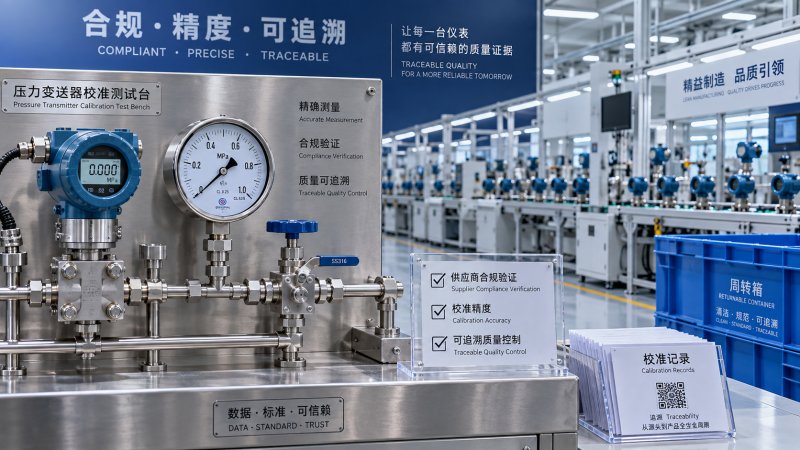
For quality and safety teams, the main question is not whether a supplier can quote a product. It is whether that supplier can consistently deliver verified conformity.
In instrumentation, failures often remain invisible until equipment enters a plant, laboratory, utility network, or regulated process. At that point, replacement costs escalate rapidly.
A pressure transmitter with uncertain calibration, an unsuitable cable gland, or an undocumented valve alloy can create consequences far beyond the original purchase value.
These consequences may include unplanned shutdowns, inaccurate process data, inspection findings, safety incidents, rejected batches, warranty disputes, and weakened confidence from internal stakeholders.
Supplier selection therefore deserves the same structured discipline applied to product inspection, preventive maintenance, process validation, and safety management within an operating facility.
An Industrial Standard reduces uncertainty by converting broad supplier claims into testable evidence. It gives buyers a common language for comparing capabilities, controls, and documented outcomes.
Without this framework, supplier approval can become heavily dependent on pricing, sales presentations, historical relationships, or incomplete certification documents that reveal little about actual performance.
Standards do not eliminate every risk. However, they establish a defensible baseline and help teams focus technical investigation on the risks that matter most.
What an Industrial Standard Actually Changes in Supplier Evaluation
An Industrial Standard defines agreed requirements for design, materials, testing, manufacturing control, measurement practices, safety, documentation, or product performance within a particular application.
For supplier selection, its value lies in specificity. Instead of asking whether a manufacturer has “good quality,” buyers can ask how conformity is demonstrated.
That distinction matters because a certificate alone may indicate a management system, while technical conformity requires evidence related to the actual product and operating environment.
For example, ISO 9001 may support confidence in quality management processes, but it does not automatically prove pressure accuracy, hygienic suitability, explosion protection, or chemical compatibility.
Quality managers should match the required standard to the critical characteristics of the purchased item, its installation conditions, and the consequences of failure.
A low-risk accessory may need basic material and dimensional verification. A safety-critical analyzer or hazardous-area device requires substantially deeper evidence and approval controls.
Standards also reduce interpretation gaps between engineering, procurement, quality assurance, operations, and suppliers. Everyone can assess the same requirement rather than relying on assumptions.
This alignment improves sourcing speed because technical objections are identified earlier, before commercial negotiations produce momentum around an unsuitable supplier or specification.
Which Standards Matter Most in Instrumentation Supply Chains
The relevant Industrial Standard depends on product category, sector regulations, process conditions, geographic destination, and the criticality assigned through the organization’s risk assessment process.
ISO 9001 remains a useful starting point because it evaluates whether a supplier maintains documented processes for control, corrective action, audits, competence, and continual improvement.
Yet quality managers should treat ISO 9001 as an entry requirement, not as the full technical qualification package for complex instrumentation or safety-sensitive components.
For calibration laboratories and measurement service providers, ISO/IEC 17025 is especially important. It addresses technical competence, method validity, measurement uncertainty, and traceability.
A calibration certificate is more credible when the issuing laboratory operates within an appropriate ISO/IEC 17025 scope covering the required parameter and measurement range.
For hazardous environments, ATEX and IECEx requirements may be essential. Buyers must confirm that certification covers the exact protection concept, temperature class, gas group, and equipment configuration.
For electrical and electronic instruments, IEC standards may define insulation, electromagnetic compatibility, functional safety, ingress protection, or performance requirements under environmental stress.
Ingress protection ratings, commonly expressed through IEC 60529, are meaningful only when interpreted against real exposure to water, dust, cleaning routines, condensation, and installation orientation.
In food, pharmaceutical, and life-science applications, material traceability, cleanability, surface finish, hygienic design, and applicable regulatory expectations may determine supplier suitability.
Energy, chemicals, oil and gas, and power sectors frequently require additional compliance with project specifications, national codes, customer-approved vendor lists, and documentation procedures.
The strongest supplier evaluation combines broadly recognized standards with site-specific requirements. A standard establishes the floor; the application defines the remaining acceptance criteria.
How Standards Help Identify Hidden Supplier Risks
Many supplier risks are not visible in product brochures or sample demonstrations. They emerge through weak controls, unclear traceability, inconsistent subcontracting, or incomplete testing records.
A standards-based assessment asks whether raw materials are identified, controlled, and traceable from receipt through production, inspection, packaging, and final shipment to the customer.
This is particularly important for wetted components, high-pressure parts, temperature sensors, analytical instruments, and products exposed to corrosive, sterile, or hazardous media.
Material certificates should be reviewed for relevance, completeness, and linkage to the supplied batch. Generic documents without heat numbers or product references offer limited assurance.
Standards also direct attention toward measurement systems. If inspection tools are not calibrated or capable, recorded dimensions and test results cannot support reliable acceptance decisions.
Buyers should ask how a supplier manages calibration intervals, out-of-tolerance findings, reference standards, uncertainty, environmental conditions, and the competence of inspection personnel.
Another hidden risk is uncontrolled process change. A supplier may substitute components, modify firmware, relocate production, or change subcontractors without informing the purchaser.
Effective quality systems include change-control procedures. For critical products, purchase agreements should require advance notification and formal approval before any relevant change is implemented.
Nonconformance handling provides another useful signal. Mature suppliers can explain containment, root-cause analysis, corrective action, verification, and communication responsibilities with practical examples.
A supplier that only promises to “improve quality” after an issue has occurred is less reliable than one able to demonstrate disciplined corrective-action management.
Build a Risk-Based Supplier Qualification Process
Standards are most effective when embedded in a repeatable qualification workflow. The goal is to apply the appropriate level of scrutiny without creating unnecessary delays for low-risk purchases.
Start by classifying the item according to operational impact. Consider safety consequences, regulatory exposure, process criticality, replacement difficulty, measurement importance, and potential downtime costs.
High-risk categories may include safety instrumented system components, hazardous-area devices, custody-transfer meters, medical testing equipment, and instruments controlling critical process limits.
Medium-risk products may affect product quality or maintenance workload without directly creating a severe safety event. Low-risk items usually have limited operational consequences and simple verification needs.
Next, create a supplier prequalification questionnaire aligned with the applicable Industrial Standard. Request objective information rather than broad statements about quality commitment or production experience.
Useful evidence includes organization charts, process maps, quality manuals, relevant certificates, calibration procedures, inspection plans, sample reports, material controls, and subcontractor management methods.
For high-risk suppliers, conduct a remote or on-site audit. Interviews should include quality, engineering, production, purchasing, calibration, and final inspection personnel, not only sales representatives.
Audit findings should be scored according to severity and linked to corrective actions. A minor documentation gap differs significantly from missing traceability for safety-critical pressure-retaining materials.
Product validation should follow system evaluation. Review samples, factory acceptance tests, calibration records, software versions, certificates of conformity, and packing controls before approving routine supply.
Approval should not be permanent by default. Set review frequencies based on risk, supplier performance, product changes, complaint trends, audit findings, and changes in regulatory expectations.
Use Documentation as Evidence, Not as a Formality
Documentation is often where supplier qualification succeeds or fails. The objective is not collecting the largest file package, but confirming evidence is relevant, current, complete, and traceable.
A certificate of conformity should identify the product, order, applicable specification, revision level, inspection status, and authorized signatory. Generic declarations should trigger follow-up questions.
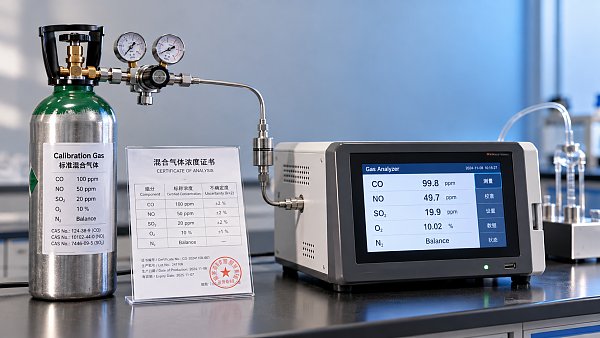
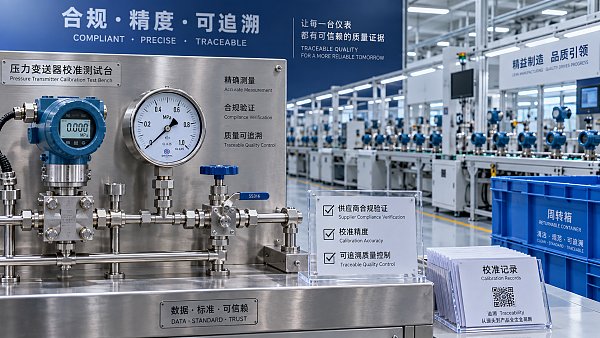
For measurement devices, calibration documents should include instrument identification, results, tolerances, reference standards, traceability statements, environmental conditions, and measurement uncertainty where applicable.
For hazardous-area equipment, verify that labels, certificates, manuals, technical files, and configuration details all match. A valid certificate may not cover every accessory or option.
For material-intensive components, request certificates linked to the actual batch. Confirm chemical composition, mechanical properties, heat treatment, and any required non-destructive examination records.
Digital document control is increasingly important because global supply chains involve multiple factories, distributors, service centers, and project teams working across different jurisdictions.
A centralized supplier record can preserve approved certificates, audit results, corrective actions, performance indicators, approved product configurations, and expiration dates for critical compliance documents.
This improves continuity when staff change roles and helps safety managers demonstrate due diligence during customer audits, regulatory inspections, incident investigations, or internal management reviews.
Balance Compliance, Cost, and Supply Continuity
Applying an Industrial Standard does not mean automatically choosing the supplier with the most certificates or the highest quoted price. It means making risk visible and comparable.
A lower initial purchase price can become expensive when it creates repeated incoming inspections, urgent replacement orders, production interruptions, customer complaints, or additional engineering support requirements.
Conversely, excessive qualification requirements can restrict competition and delay procurement if they are applied identically to every component, regardless of operational risk or business impact.
The practical solution is proportional control. Define minimum requirements for all suppliers, then add technical, audit, testing, and documentation requirements according to the risk category.
Supplier diversification should also remain compatible with standards. Approving alternate sources before an emergency reduces dependency without weakening quality expectations or compliance controls.
For global sourcing, verify local legal requirements alongside international standards. Certification accepted in one destination market may not satisfy the mandatory rules of another country or project.
Quality and procurement leaders should measure total cost of ownership, including inspection effort, failure rates, rework, logistics disruption, technical support, documentation quality, and lifecycle availability.
These measures turn standards-based supplier selection into a business decision rather than a compliance exercise. They show where stronger controls create measurable operational value.
Questions Quality and Safety Managers Should Ask Suppliers
Before approving a supplier, ask which Industrial Standard applies to the offered product and how the supplier verifies conformity for the exact model, configuration, and production location.
Ask whether calibration, testing, and inspection equipment is traceable to recognized references, maintained within interval, and suitable for the required accuracy and measurement range.
Ask how the supplier controls critical materials, special processes, firmware revisions, outsourced operations, and engineering changes that could affect product safety or performance.
Ask for examples of recent nonconformities and corrective actions. The response often reveals more about organizational maturity than a polished quality presentation or certificate portfolio.
Ask who reviews customer specifications before production and how discrepancies are resolved. Contract review is essential when drawings, standards, datasheets, and local regulations overlap.
Finally, ask whether the supplier can provide complete documentation on time. Late or inconsistent records can delay commissioning even when the physical product has already arrived.
Conclusion: Standards Create Better Supplier Decisions
Industrial standards reduce quality risks because they replace vague confidence with evidence-based evaluation. They help organizations identify technical weaknesses before products enter critical operations.
For instrumentation buyers, the strongest approach combines recognized standards, application-specific requirements, risk-based supplier qualification, meaningful audits, and ongoing performance monitoring after approval.
Quality and safety managers should view standards as practical decision tools. Used well, they protect measurement integrity, regulatory compliance, operational uptime, and long-term supplier resilience.
Global Instrument Hub supports this approach by helping procurement and engineering teams interpret supplier trust signals, technical compliance requirements, and global instrumentation market capabilities with greater confidence.