
When does a multi-component system reduce installation complexity?


The Practical Answer: Integration Must Remove Work, Not Relocate It

For project managers, the decisive question is not how many components arrive together, but how many installation decisions disappear before equipment reaches the site.
A multi component system is valuable when the supplier has already resolved mechanical fit, electrical compatibility, communication settings, and application-level configuration through documented design work.
It becomes less valuable when packaged equipment still requires separate drawings, custom cables, multiple software tools, and repeated clarification among vendors during field installation.
In instrumentation projects, complexity is rarely caused by one difficult device alone. It accumulates at interfaces between sensors, panels, power supplies, networks, tubing, and control platforms.
An integrated system reduces risk by turning those interfaces into tested boundaries. The project team receives fewer unknowns, fewer handoffs, and clearer responsibility for resolving failures.
This distinction matters most where installation windows are short, access is difficult, shutdown costs are high, or skilled commissioning labor is limited.
A well-designed multi component package can shorten field work substantially, but only if prefabrication replaces site fabrication rather than merely changing the procurement label.
Engineering leaders should therefore assess integration through the remaining site tasks. Count terminations, configuration steps, acceptance tests, vendor contacts, and specialist visits still required.
If those activities decrease in a measurable way, the system is likely reducing installation complexity. If they remain unchanged, the bundle may only simplify purchasing administration.
The strongest business case combines reduced installation hours with fewer schedule dependencies, less rework exposure, faster startup, and one accountable technical support path.
Where Installation Complexity Actually Comes From
Installation complexity begins before construction. Incomplete design data forces contractors to interpret specifications, identify missing accessories, and make late decisions under schedule pressure.
Separate component sourcing often creates subtle mismatches in mounting dimensions, voltage requirements, enclosure ratings, connector types, cable lengths, and communication protocols.
Each mismatch may appear minor in isolation. Together, they create site queries, material substitutions, additional drawings, procurement delays, and avoidable field modifications.
Instrumentation systems are especially sensitive because physical installation and data integrity must both succeed. A correctly mounted sensor can still fail operationally through poor configuration.
Consider a process measurement loop containing a transmitter, manifold, impulse tubing, junction box, power supply, I/O module, and control-system tag configuration.
When every item is independently selected, responsibility for compatibility can become unclear. The project manager may need multiple suppliers to diagnose one commissioning problem.
In contrast, a purpose-built multi component system can define approved components, terminal assignments, operating ranges, and validation procedures before delivery.
That reduces ambiguity for installers and makes inspection more consistent. It also prevents crews from improvising solutions that later complicate maintenance or compliance audits.
Complexity also rises when components use independent lifecycle assumptions. One vendor may provide obsolete firmware, while another requires a newer protocol version or security configuration.
The integration benefit is therefore broader than hardware assembly. It includes coordinated technical baselines that keep mechanical, electrical, digital, and operational requirements aligned.
Conditions That Make a Multi Component System Easier to Install
A multi component system delivers the greatest benefit when interfaces are standardized and proven. Standardization converts engineering uncertainty into repeatable installation instructions for site teams.
First, the system should have a defined functional boundary. Teams must know precisely what is included, where external connections begin, and who owns each interface.
Second, components should arrive preconfigured for the specified service. Factory settings, device tags, scaling, alarm limits, and network addresses should match approved engineering records.
Third, mechanical assemblies should be prefabricated where practical. Pre-mounted instruments, labeled tubing, fitted brackets, and tested panels reduce manual fitting and measurement work.
Fourth, electrical interfaces should be consolidated. Prewired assemblies, standardized connectors, terminal schedules, and cable-entry details can eliminate a large share of repetitive labor.
Fifth, documentation must be integrated rather than collected. One coordinated package should link datasheets, drawings, certificates, loop diagrams, and commissioning procedures.
Sixth, the supplier should verify operation under realistic conditions. Factory acceptance testing is most useful when it proves the complete package, not isolated individual devices.
Seventh, the system must support the project’s control architecture. Protocol compatibility, cybersecurity requirements, and data mapping need confirmation before factory shipment.
Finally, service responsibilities must be explicit. A single escalation route is useful only when that provider can investigate across the integrated assembly without deflecting ownership.
These conditions make integration operationally meaningful. Without them, the project receives a collection of products that still demand the coordination effort of separate components.
How Project Managers Should Compare Total Installed Cost
Purchase price alone can obscure the value of integrated instrumentation. Project managers should compare total installed cost, including engineering, labor, testing, rework, startup, and schedule exposure.
Start by estimating site labor for every connection and decision. Include mounting, cable pulling, terminations, tubing, labeling, programming, loop checks, and documentation reconciliation.
Then identify tasks shifted to the supplier. Prefabrication may cost more upfront, but factory labor is often more controlled, repeatable, and less expensive than field labor.
Schedule value should receive equal attention. Reducing interfaces can remove activities from the critical path, allowing construction teams to complete areas earlier and release resources.
Downtime-sensitive projects need a different calculation. In a refinery, utility plant, or pharmaceutical facility, one delayed startup day can outweigh modest equipment savings.
Risk-adjusted cost is also important. Estimate the probability and impact of late material changes, incorrect wiring, incompatible firmware, calibration failures, and disputed technical ownership.
Integrated packages often improve predictability more than they reduce nominal cost. That predictability is commercially meaningful when contracts include liquidated damages or fixed commissioning deadlines.
Procurement teams should request a transparent scope comparison. Ask suppliers to separate equipment cost from factory assembly, testing, documentation, startup support, and spare-parts provisions.
This approach prevents misleading comparisons between a fully engineered package and a lower-priced bill of materials that transfers integration responsibility to the project team.
The preferred option is the one with the lowest defensible installed cost and delivery risk, not automatically the option with the fewest line items.
When a Multi Component System Can Add Complexity Instead
Integration is not automatically beneficial. A multi component system can add complexity when it creates proprietary dependencies, constrains maintenance choices, or conflicts with established plant standards.
One warning sign is unclear configurability. If the package cannot adapt to actual process conditions without vendor intervention, startup may become slower rather than simpler.
Another concern is hidden single-source exposure. Proprietary connectors, locked software, and unavailable spare parts can increase lifecycle risk after the initial project is complete.
Projects with highly variable installation conditions may also benefit less. Standardized assemblies can require costly adaptation when piping routes, hazardous-area classifications, or access constraints differ significantly.
Over-integration can be problematic in phased programs. A complete package may be delivered before upstream design decisions are stable, creating storage, revision, and obsolescence risks.
Compatibility with existing systems deserves careful review. An integrated skid or panel may still need custom gateway work to communicate with the plant’s PLC, DCS, or historian.
Do not assume a vendor’s internal integration equals plant integration. The relevant question is whether the package fits your approved architecture, maintenance practices, and compliance obligations.
There is also a governance issue. One supplier may own the assembly, while separate contractors remain responsible for installation, controls, validation, and final performance acceptance.
Without a clear responsibility matrix, apparent simplification can create dispute points. Define who owns design changes, test failures, site support, and final documentation updates.
The best integrated solution preserves needed flexibility while eliminating predictable interfaces. It should not force unnecessary standardization on areas requiring project-specific engineering judgment.
Questions to Ask Suppliers Before Selecting an Integrated Package
Supplier discussions should focus on evidence, not broad claims about turnkey delivery. Ask which installation activities are eliminated, reduced, or retained by the project team.
Request a detailed interface schedule showing mechanical connections, electrical terminations, network links, utilities, software dependencies, and responsibilities at each boundary.
Ask whether components are selected from a controlled compatibility matrix. The supplier should explain how revisions, firmware versions, and alternative parts are managed.
Confirm what is completed at the factory. Useful details include assembly, pressure testing, wiring checks, configuration loading, calibration, functional testing, and documentation review.
For instrumentation systems, verify calibration traceability and certification needs early. Requirements may include ISO/IEC 17025 documentation, hazardous-area approvals, material certificates, or sanitary compliance.
Ask to review representative factory acceptance test procedures. The test should reflect real operating scenarios, failure alarms, communications behavior, and customer-specific acceptance criteria.
Clarify site commissioning support. Determine response times, remote diagnostic capability, availability of field engineers, and whether support covers third-party control-system integration.
Ask how spare parts are handled. An integrated system remains practical only when critical devices, seals, connectors, and replacement modules can be identified and sourced quickly.
Request reference projects with comparable conditions. Relevant similarities include process duty, environmental classification, regulatory requirements, control architecture, and installation constraints.
Finally, require an exceptions list. It should state every activity, cable, utility connection, software license, or engineering task that remains outside the supplier’s scope.
A Decision Framework for Engineering and Procurement Teams
A disciplined evaluation starts by mapping the current installation sequence. List every component, interface, party, approval, and test required from delivery through operational handover.
Next, identify recurring friction points from previous projects. Common examples include delayed drawings, missing fittings, inconsistent tags, failed loop checks, and supplier coordination gaps.
Use those pain points to define measurable acceptance criteria. Good criteria include reduced field terminations, fewer vendor interfaces, shorter commissioning duration, and complete traceable documentation.
Then assess each proposed multi component system against the same criteria. Avoid qualitative scoring alone; require suppliers to quantify their scope and factory completion level.
Cross-functional review is essential. Construction, instrumentation, controls, operations, maintenance, quality, and procurement may each identify a different hidden interface or lifecycle concern.
For large projects, consider a pilot installation. A representative package can validate installation time, documentation quality, communication performance, and practical maintainability before wider deployment.
Include contractual controls that reflect the integration promise. Tie acceptance to defined factory tests, delivered documentation, configuration accuracy, startup support, and resolution of interface defects.
Maintain configuration control after award. Changes in devices, materials, firmware, or enclosure design should be reviewed for their impact on testing and site installation.
Global sourcing adds another layer. Engineering teams should verify export documentation, regional certifications, logistics packaging, local service availability, and consistent technical support across locations.
A robust decision framework turns integration from a marketing claim into a managed project strategy with measurable scope, accountable suppliers, and predictable implementation outcomes.
Conclusion: Choose Integration That Simplifies the Critical Path
A multi component system reduces installation complexity when it removes real interfaces from the field, provides tested compatibility, and assigns responsibility to a capable integration owner.
For project managers, the practical test is straightforward: fewer site decisions, fewer manual connections, fewer unresolved handoffs, and faster evidence-based commissioning should be visible.
Evaluate complete installed cost, project schedule impact, technical flexibility, and lifecycle support together. A lower component price is not meaningful when integration work remains unpriced elsewhere.
The most effective systems combine prefabricated hardware, unified documentation, controlled configuration, factory validation, and clear escalation paths for electrical, mechanical, and digital issues.
Before committing, map interfaces and request proof of what the supplier has completed. This protects the project from packages that look integrated but transfer complexity downstream.
For complex industrial instrumentation, thoughtful integration can improve installation certainty, startup quality, and long-term maintainability. The value comes from disciplined scope definition, not bundling alone.
Recommended for You
 How condensation affects stack detector readings in wet flue gasStack detector readings can drift when wet flue gas condenses. Learn how to identify moisture interference, prevent sample losses, and improve emissions monitoring reliability.
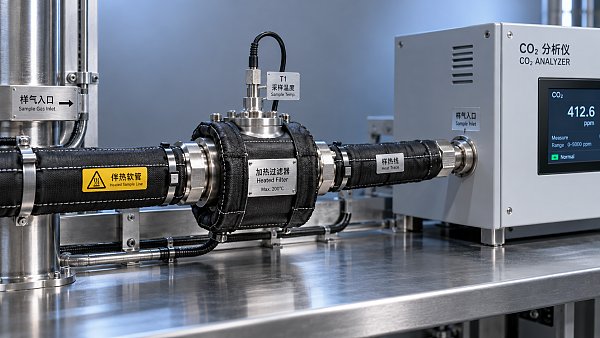
 How to prevent condensation in a CO2 analyzer sampling systemPrevent condensation in your CO2 analyzer sampling system. Learn how to control dew point, eliminate cold spots, and manage moisture for reliable readings and fewer costly disruptions.
 How to verify accuracy claims for industrial quality analyzersVerify accuracy claims for industrial quality analyzers with calibration checks, independent testing, and clear acceptance criteria. Learn how to reduce risk and buy with confidence.
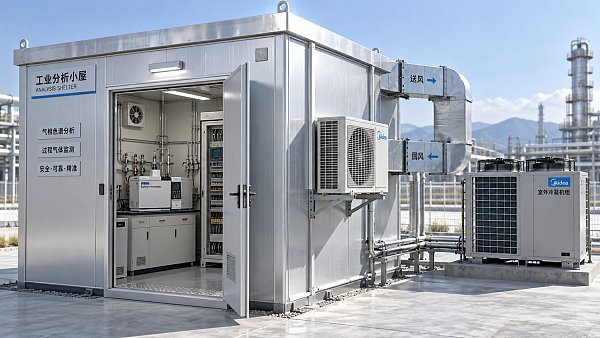
 How to calculate cooling loads for an industrial analyzer shelterSize industrial analyzer shelter cooling with confidence. Learn to calculate equipment heat, solar gains, and ventilation loads, then select HVAC capacity for reliable analyzer performance.
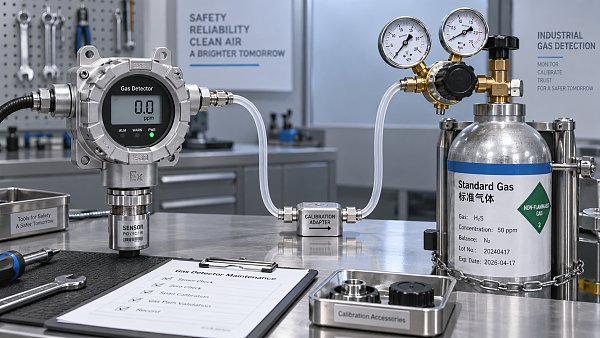
 What Happens When Combustible Gas Sensor Calibration Is Overdue?What happens if combustible gas sensor is not recalibrated on time? Discover the risks of inaccurate readings and missed alarms, plus steps to restore reliable protection.
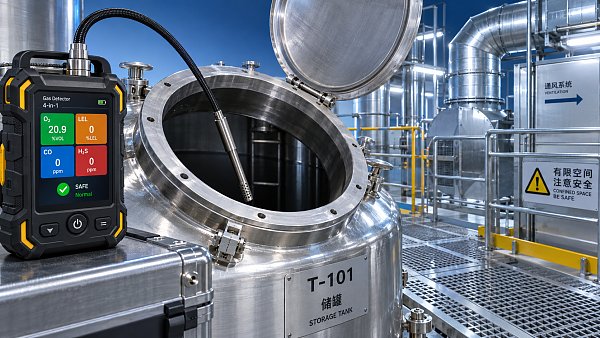
 Can One Multi-Gas Detector Replace Four Separate Analyzers?Find out: can a single multi-gas detector replace four separate analyzers? Compare accuracy, safety, compliance, and lifetime costs to make a confident buying decision.
 Industrial Safety vs. Emission Monitoring: What Are the Differences?What are the main differences between industrial safety and emission monitoring? Compare goals, sensors, response times, and compliance needs to choose the right systems for your facility.
 Is Remote Monitoring Worth the Cost for Small Emission Sources?Is it worth investing in remote monitoring for small emission sources? Compare costs, compliance needs, and potential savings to choose the right solution for your operation.
 How Do You Handle Analyzer Failure During an Environmental Audit?Learn how to handle analyzer failure during environmental compliance audit procedures. Protect evidence, verify data, and restore monitoring with this practical response guide.
 Do VOC Monitors Require Explosion-Proof Certification?Does VOC monitoring require explosion-proof certification? Learn when approval is needed, compare ATEX and IECEx, and choose the right monitor for your site.
 How sample conditioning affects accuracy in petrochemical analyzersImprove accuracy in petrochemical analyzers with smarter sample conditioning. Discover how phase control, filtration, and transport design prevent bias and deliver reliable process data.
 How to troubleshoot sensor drift in industrial gas detectorsIndustrial gas detectors showing sensor drift? Learn how to verify calibration gas, identify root causes, and determine when sensor replacement is needed for reliable monitoring.
 How to judge whether a competitive price reflects real valueCompetitive Price: learn how to compare scope, compliance, performance, and lifecycle costs to identify real value, reduce risk, and make smarter purchasing decisions.
 When custom gas analysis is the right fit for complex process streamsCustom gas analysis for complex process streams: learn when tailored sampling, interference control, and reliable measurement design deliver confident decisions.
 When does a laser gas analyzer meet stack emissions monitoring needs?Laser gas analyzer for stack emissions: learn when it delivers fast, reliable data, how to assess installation risks, and what to verify for CEMS compliance.
 How to select a hazardous gas analyzer for confined spacesHazardous gas analyzer selection for confined spaces: compare sensors, sampling, certifications, alarms, and maintenance to protect workers and choose with confidence.
 When is a single gas analyzer sufficient for workplace safety monitoring?Discover when a single gas analyzer delivers reliable workplace safety monitoring, and learn the key limits, calibration needs, and risks that require broader detection.
 How to choose an ambient gas analyzer for low-level leak detectionAmbient gas analyzer selection for low-level leak detection: compare sensitivity, cross-sensitivity, sampling design, alarms, and calibration for reliable site performance.
 How to tell when an oxygen sensor needs replacementOxygen sensor replacement signs explained: learn how live data, fault codes, wiring checks, and exhaust inspections pinpoint the real issue before you buy.
 How laser gas analyzers improve combustion control in steel furnacesLaser gas analyzer for steel industry applications delivers fast in-situ O₂ and CO data to optimize furnace combustion, cut fuel waste, and improve steel heating stability.
 How to verify whether explosion proof equipment meets site requirementsExplosion proof equipment verification made practical: match zones, gas or dust groups, temperature classes, certificates, and installation conditions for confident compliance.
 How industrial gas analysis helps detect contamination before releaseIndustrial Gas Analysis helps detect moisture, oil, oxygen, and toxic contaminants before release—protecting processes, ensuring compliance, and reducing costly risks.
 When is electrochemistry detection the right choice for water analysis?Electrochemistry detection for water analysis: learn when fast, reliable monitoring of ions, chlorine, pH, and more delivers actionable results.
 How industrial standards reduce quality risks in supplier selectionIndustrial Standard guidance helps quality and safety managers reduce supplier risks, verify compliance, strengthen traceability, and build resilient instrumentation supply chains.
 When does a multi-component system reduce installation complexity?Multi component systems reduce installation complexity when they eliminate field interfaces, streamline commissioning, and provide proven compatibility. Learn how to assess total cost and supplier accountability.
 How to size an industrial control shelter for outdoor equipmentIndustrial control shelter sizing guide: optimize layout, HVAC, access, safety, and expansion space for reliable outdoor equipment operations.
 How flue analysis helps verify combustion efficiencyFlue analysis verifies combustion efficiency by assessing O2, CO, CO2, and stack temperature to identify excess air, incomplete combustion, and heat losses.
 How to select industrial gas detectors for confined spacesIndustrial gas detectors for confined spaces: learn how to match sensors, sampling methods, alarms, and certifications to real atmospheric hazards.
 When does a laser oxygen analyzer outperform zirconia sensors?Laser oxygen analyzer vs. zirconia sensors: compare speed, selectivity, maintenance, gas chemistry, and installation needs to choose the right oxygen measurement solution.
 How to select a percent range analyzer for process measurementsPercent range analyzer selection made practical: compare accuracy, sample systems, calibration, gas matrix, integration, and lifecycle cost for reliable process measurements.
 How explosion proof analysis verifies safe equipment for hazardous areasExplosion proof analysis verifies hazardous-area equipment by matching certifications, temperature ratings, installation details, and inspection controls for safer compliance.
 When does fixed gas detection need point sensors instead of open-path monitoring?Fixed gas detection: discover when point sensors outperform open-path monitoring for predictable leaks, enclosed zones, local alarms, and safer design decisions.






















Search Categories
Search Categories
- Smart Meters & Power Quality
- Transformer Gas Analyzers
- BESS Thermal Runaway Detectors
- Energy, Power & Smart Grid Monitoring
- Optical Profilers & CMM
- Ultrasonic & X-Ray NDT
- Calibration Standards
- Precision Metrology & NDT
- Water Quality Analyzers
- CEMS & VOCs Monitors
- Price Trends
- Import & Export Updates
- Market Trends
- Industry News
- Industry Insights
Latest Article
- How condensation affects stack detector readings in wet flue gasStack detector readings can drift when wet flue gas condenses. Learn how to identify moisture interference, prevent sample losses, and improve emissions monitoring reliability.Posted by:
- How to prevent condensation in a CO2 analyzer sampling systemPrevent condensation in your CO2 analyzer sampling system. Learn how to control dew point, eliminate cold spots, and manage moisture for reliable readings and fewer costly disruptions.Posted by:
- How to verify accuracy claims for industrial quality analyzersVerify accuracy claims for industrial quality analyzers with calibration checks, independent testing, and clear acceptance criteria. Learn how to reduce risk and buy with confidence.Posted by:
Please give us a message
