How condensation affects HCl concentration analyzer accuracy


Condensation usually makes an HCl concentration analyzer read low because hydrogen chloride dissolves readily in liquid water. A cold probe connection, wet filter, or unheated valve can remove HCl before it reaches the measurement cell—even when the analyzer passes its internal calibration checks. The resulting signal may understate process concentration or emissions, respond slowly to changes, and remain unstable after operating conditions recover.
The first distinction is therefore between analyzer accuracy and sampling-system recovery. When readings fall during cold weather, startup, or a moisture increase, verify that the entire sample path remains above the relevant condensation temperature before adjusting calibration. An accurate instrument cannot reconstruct HCl that has already been absorbed upstream.
What changes when water condenses?
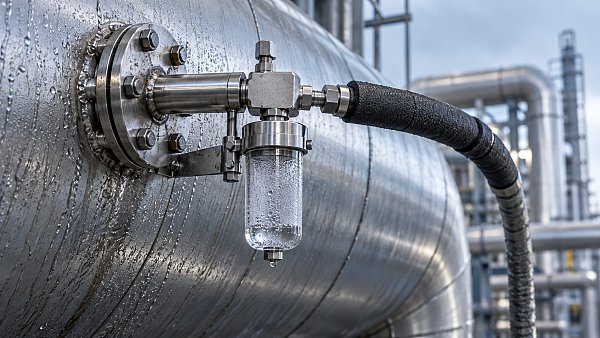
In a wet gas stream, cooling below the local dew point creates liquid on surfaces or as droplets. HCl transfers into that liquid and dissociates, making condensate an effective sink for the analyte. The concentration reaching the analyzer no longer represents the gas extracted at the sampling point.
The magnitude of the loss is not a fixed correction factor. It depends on liquid inventory, temperature, gas–liquid contact, flow rate, HCl loading, and whether condensate drains away or remains inside the system. A thin film across a filter can provide substantial contact area without producing visible liquid at an accessible drain.
Three effects complicate interpretation:
- Negative bias: HCl enters condensate instead of reaching the measurement cell. Continuous drainage can make that loss persistent.
- Delayed response: wet surfaces absorb a rising HCl concentration, flattening and slowing the measured increase.
- Memory effects: retained liquid and contaminated surfaces can release HCl during drying or changing operating conditions, extending the signal after the source concentration falls.
Liquid reaching an optical cell creates an additional problem. Droplets or films may reduce light transmission, contaminate windows, and trigger poor-fit or low-signal diagnostics. Depending on the measurement technology and its fault handling, the result may be an invalid reading rather than a simple low bias. A stable display alone does not prove that the sample is representative.
The cold spot matters more than the heater setpoint
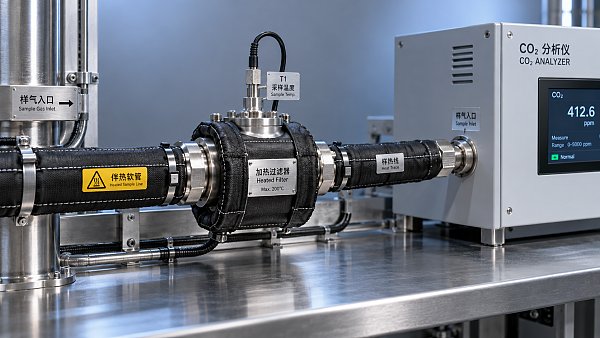
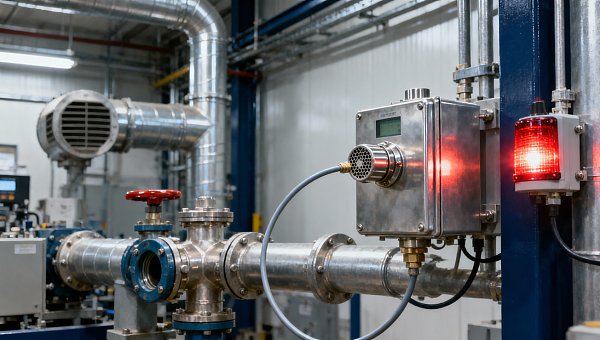
A heated sampling line does not guarantee a condensation-free system. The controlling location is the coldest wetted surface under actual operating conditions. Probe outlets, filter housings, unions, calibration tees, pump heads, and analyzer inlet fittings may operate colder than the temperature sensor controlling the main line.
During startup, the heater sensor can reach its setpoint before a heavy valve body or filter housing has warmed through. Outdoors, wind and rain can expose weaknesses in insulation. Inside a cabinet, a short unheated connection may be enough to create a local liquid film. These effects explain why condensation-related errors often correlate with operating transitions rather than normal steady-state conditions.
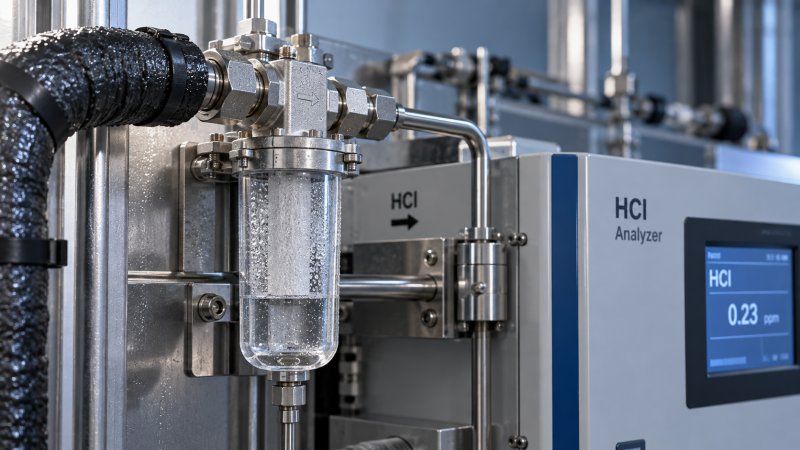
Evaluate dew point using the expected sample composition and local absolute pressure, not just the stack temperature. Pressure changes alter condensation conditions. Water content measured elsewhere in the process may not represent conditions at a restricted filter or pressurized analyzer inlet. Where other condensable species are present, their behavior must also be considered; a water-only calculation may not define the full operating boundary.
There is no universal sample-line temperature suitable for every HCl application. Establish a documented margin above the relevant condensation threshold across the expected moisture and pressure envelope, while respecting tubing, seal, filter, and analyzer temperature limits. Raising one setpoint without checking component ratings can replace a sampling error with equipment damage.
Reading the symptoms without confusing them with process changes
Condensation symptoms overlap with leaks, adsorption, flow restrictions, and genuine concentration changes. Use correlations to prioritize investigation, not to declare the cause from a single trend.
A useful diagnostic trend combines HCl concentration, relevant temperatures, heater status, sample flow, pressure, moisture, and analyzer quality flags. Concentration data alone cannot distinguish a cleaner process from a sampling system that has started removing HCl. Heater power or a “temperature healthy” signal also cannot confirm the temperature of an unmonitored fitting.
Why a cooler or dryer can make the result worse
For some gas analytes, sample cooling and water removal are routine conditioning steps. Applying that arrangement to HCl without recovery evidence is risky: the cooler deliberately creates liquid water that can absorb the component being measured.
A downstream moisture correction does not repair this loss. Converting a wet-basis concentration to a dry basis only changes the reporting denominator. It assumes the amount of measured HCl has been preserved.
For consistent molar or volumetric concentration units, the ideal basis conversion is:
Cdry = Cwet / (1 − xH2O)
Here, xH2O is the water-vapor mole fraction corresponding to the wet-basis measurement. If HCl has already dissolved into removed condensate, this equation cannot recover the missing analyte. Using a moisture value from another location or time introduces further uncertainty.
Membrane dryers and other conditioning devices also require application-specific assessment. A device described as suitable for gas analysis is not automatically suitable for quantitative HCl transfer. Require evidence for analyte recovery, response, and stability across the intended moisture and concentration range, including operating transitions.
A troubleshooting sequence that separates instrument error from sample loss
- Confirm the measurement basis. Establish whether the reported concentration is wet or dry, whether normalization is applied, and whether comparison measurements use equivalent conditions. Resolve basis mismatches before diagnosing physical losses.
- Review the operating envelope. Identify expected moisture, sample pressure, ambient extremes, startup conditions, and recent process changes. Compare these with the sampling system’s documented thermal limits.
- Inspect the complete wetted path. Trace the sample from probe tip to cell. Include filters, bypasses, calibration branches, valves, pumps, and drains. Look for retained liquid, low points, damaged insulation, corrosion, and components outside the heated enclosure.
- Verify temperatures under load. Check vulnerable locations while the system draws sample, not only when heaters operate without flow. Use suitable measurement methods; an external surface reading may not equal the internal wetted-surface temperature.
- Separate analyzer response from transport response. First challenge the analyzer at its inlet using an approved procedure. Then challenge as much of the upstream path as practicable. Additional bias or delay through the longer path points toward sampling effects.
- Test recovery after corrective work. Once leaks, liquid retention, or heating defects are addressed, repeat response and recovery checks before treating the data as representative.
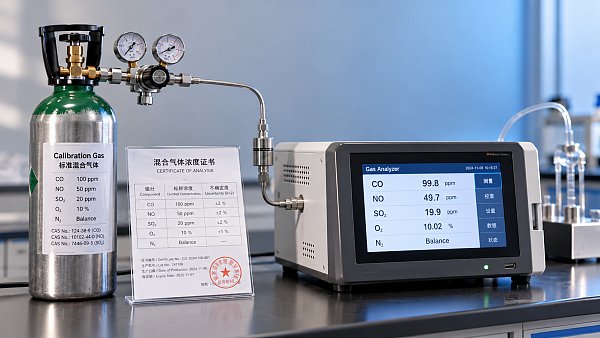
Calibration-gas delivery needs its own scrutiny. HCl can be lost in regulators and transfer tubing, and a dry challenge may not reproduce a wet process stream. An upstream injection is useful only when the delivered concentration and flow arrangement are controlled. If calibration gas mixes with process gas, dilution must be accounted for; if it displaces the process gas, the test may not challenge the original moisture conditions.
Do not recalibrate the analyzer simply to match a suspected process value while sampling losses remain unresolved. That adjustment can mask negative bias during wet operation and produce high readings after the sample path dries.
Design choices that reduce condensation risk
Hot-wet extractive measurement
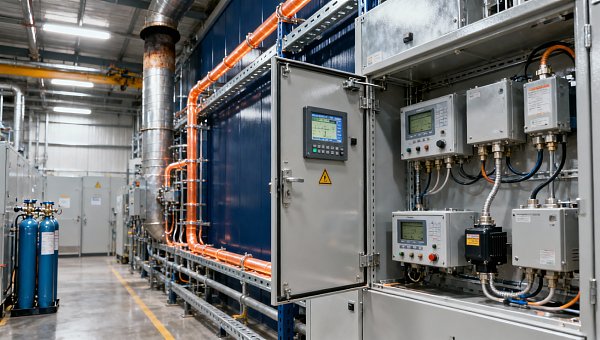
A hot-wet arrangement keeps the sample above its condensation threshold through extraction, transport, and measurement. It avoids deliberate water removal, but requires continuous thermal control across every wetted component. Evaluate insulation, heated filter construction, inlet connections, temperature monitoring, and startup interlocks—not merely the nominal line temperature.
Material compatibility also matters. Tubing, seals, filter media, and coatings must suit the actual HCl, moisture, temperature, and pressure conditions. Wet HCl can be highly corrosive, while surface interactions can affect response even without bulk liquid. A material acceptable in dry service should not be assumed acceptable during a condensation upset.
In-situ measurement
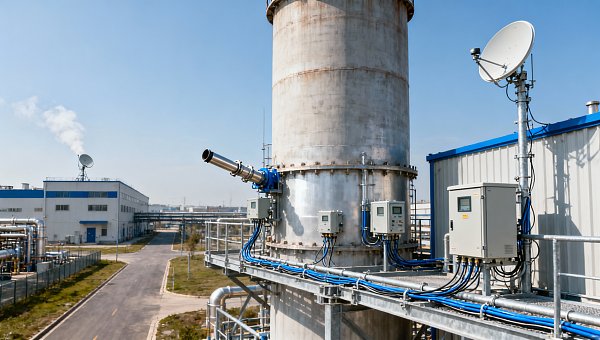
In-situ optical measurement removes the long extractive transport path, eliminating many upstream condensation opportunities. It does not eliminate all moisture-related errors. Optical windows, probe surfaces, and purge interfaces still need protection, and startup or shutdown may create local condensation. Verify whether the measurement represents a point or a path average and how that corresponds to the required process value.
Dilution extraction offers another approach by reducing water partial pressure before transport. Its suitability depends on mixing, dilution-ratio control, resulting detection capability, and HCl recovery through the extraction interface. Dilution cannot reverse losses occurring before effective mixing.
What evidence should support technical acceptance?
An analyzer specification normally describes performance under defined inlet conditions. It does not automatically establish end-to-end accuracy in a wet, corrosive sample system. Technical acceptance should therefore distinguish instrument calibration performance from sampling recovery and overall measurement uncertainty.
Request documented operating limits and test evidence covering the proposed configuration: injection location, moisture conditions, sample pressure, temperatures, flow, challenge duration, stabilization criteria, and both rising and falling response. A dry-gas factory test can establish instrument behavior, but cannot by itself demonstrate wet-service recovery through an installed probe and line.
Where measurements support regulated emissions reporting, use the applicable method and quality-assurance requirements to define acceptance criteria. Do not assume a calibration certificate or an unrelated laboratory accreditation establishes compliance for the installed system. Recovery thresholds, allowable response times, reporting basis, and treatment of invalid operating periods must come from the relevant requirements and agreed project specification.
Condensation recovery also has a safety boundary: trapped liquid may contain corrosive hydrochloric acid. Inspection, draining, and reheating should follow approved isolation, ventilation, and waste-handling procedures. After an upset, restore valid measurement only when thermal stability, sample flow, diagnostics, and complete-path recovery have been demonstrated—not simply when the concentration display becomes steady.
Recommended for You
 How condensation affects HCl concentration analyzer accuracyHCl concentration analyzer accuracy can suffer when condensation traps HCl. Learn how to spot sampling losses, prevent low readings, and improve measurement reliability.
 How does cross-interference affect multi-component gas analyzers?How does cross-interference affect multi component gas analyzers? Explore measurement errors, compensation limits, and validation tips to choose the right system for your process.
 How does temperature affect high-accuracy sensor performance?Explore how temperature affects high accuracy sensor performance. Learn to reduce thermal drift, evaluate compensation, and select the right sensor for reliable measurements.
 Can a C4H8O concentration analyzer distinguish between isomers?Can a C4H8O concentration analyzer distinguish isomers? Compare GC, FTIR and MS methods, uncover selectivity limits, and learn what to validate before choosing your instrument.
 How to identify a reliable supplier using on-time delivery recordsIdentify a Reliable Supplier by verifying on-time delivery records, original commitments, and complete shipments. Learn practical checks to reduce purchasing risk and protect your project schedule.
 How sensitive should a portable hydrogen analyzer be for lab use?Choose a portable hydrogen analyzer for laboratory use with the right quantification limit, accuracy, and range. Learn how to verify performance and avoid costly buying mistakes.
 How to set industrial calibration intervals based on equipment riskSet industrial calibration intervals based on equipment risk, drift, and as-found data. Learn when to shorten or extend schedules to improve reliability and avoid unnecessary costs.
 How to choose electrochemical analyzers for low-current measurementsCompare electrochemical analyzers for precise low-current measurements. Learn how noise, leakage, bandwidth, and real-cell testing help you choose the right instrument.
 What tolerance does a custom gas mixture need for calibration?Choose the right custom gas tolerance for calibration. Learn how blending tolerance, certified uncertainty, and stability affect accuracy—and avoid paying for precision you don’t need.
 How condensation affects stack detector readings in wet flue gasStack detector readings can drift when wet flue gas condenses. Learn how to identify moisture interference, prevent sample losses, and improve emissions monitoring reliability.
 How to prevent condensation in a CO2 analyzer sampling systemPrevent condensation in your CO2 analyzer sampling system. Learn how to control dew point, eliminate cold spots, and manage moisture for reliable readings and fewer costly disruptions.
 How to verify accuracy claims for industrial quality analyzersVerify accuracy claims for industrial quality analyzers with calibration checks, independent testing, and clear acceptance criteria. Learn how to reduce risk and buy with confidence.
 How to calculate cooling loads for an industrial analyzer shelterSize industrial analyzer shelter cooling with confidence. Learn to calculate equipment heat, solar gains, and ventilation loads, then select HVAC capacity for reliable analyzer performance.
 Hydrogen Analyzers for Energy Storage: Purity Monitoring vs. Leak DetectionChoosing a hydrogen analyzer for energy storage systems? Compare purity monitoring and leak detection to select the right sensors, improve safety, and protect fuel cell performance.
 NH3 Monitoring in Fertilizer Plants: Where Should Leak Analyzers Be Installed?NH3 analyzer for fertilizer production: discover where to place leak detectors around storage, compressors, and loading areas to reduce blind spots and improve early warning.
 Diesel Engine NOx Analyzers: Response Time and NO2 Conversion ExplainedChoosing a NOX analyzer for diesel engines? Learn how response time, NO2 conversion, and sampling design affect accuracy—and make a smarter, evidence-based purchase.
 SO2 Analyzers for Smelter Emissions: Sampling Hot, Dust-Laden Flue GasSelect an SO2 analyzer for smelting industry applications. Discover how to handle hot, dust-laden flue gas, prevent sample losses, and achieve reliable emissions monitoring.
 Unstable CH4 Readings in Biogas Monitoring? Check Moisture and Sample FlowCH4 analyzer for biogas monitoring giving unstable readings? Discover how moisture, sample flow, and pressure checks help pinpoint faults and restore reliable methane measurements.
 Buying a CO2 Analyzer for Brewery Gas Recovery: Costs Beyond the Purchase PriceBuying a CO2 analyzer for brewery applications? Compare sampling, installation, calibration, and downtime costs to uncover hidden expenses and make a smarter gas recovery investment.
 Where to Place CO Analyzers for Effective Parking Garage VentilationOptimize your CO analyzer for parking garage ventilation with practical placement tips. Learn how sensor height, airflow, and zone coverage support timely detection and effective fan control.
 NDIR vs. FTIR Gas Analyzers: Which Fits Your Environmental Research?Find the right infrared gas analyzer for environmental research. Compare NDIR vs. FTIR on sensitivity, gas coverage, sampling needs, and cost to choose confidently for your study.
 Oxygen Analyzers for Diving: Calibration Checks Before Nitrox BlendingUsing an oxygen analyzer for diving applications? Discover essential calibration, sensor, and sampling checks before nitrox blending to support reliable readings.
 How Paramagnetic Oxygen Analyzers Work and Why Sample Pressure MattersLearn how a paramagnetic oxygen analyzer works, why sample pressure affects accuracy, and what to check in compensation and calibration before choosing your system.
 How Much Does a Complete CEMS Integration Project Typically Cost?How much does a complete CEMS integration project typically cost? Explore budget ranges, hidden installation costs, and compliance needs to compare quotes and plan confidently.
 What Is the Typical Response Time for Industrial Air Monitors?What is the typical response time for industrial air monitors? Explore T90, sampling delays, and alarm settings to compare performance and choose the right monitor with confidence.
 Do Regulatory Monitoring Systems Need Third-Party Certification?Do regulatory monitoring systems need third-party certification? Learn when it is required, what certificates prove, and how to verify compliance before buying.
 How Do You Choose Wired or Wireless for Stack Monitoring?Learn how to choose between wired and wireless for stack monitoring. Compare reliability, lifecycle costs, and data recovery to find the right CEMS setup for your site.
 What Happens When Combustible Gas Sensor Calibration Is Overdue?What happens if combustible gas sensor is not recalibrated on time? Discover the risks of inaccurate readings and missed alarms, plus steps to restore reliable protection.
 Can One Multi-Gas Detector Replace Four Separate Analyzers?Find out: can a single multi-gas detector replace four separate analyzers? Compare accuracy, safety, compliance, and lifetime costs to make a confident buying decision.
 Industrial Safety vs. Emission Monitoring: What Are the Differences?What are the main differences between industrial safety and emission monitoring? Compare goals, sensors, response times, and compliance needs to choose the right systems for your facility.
 Is Remote Monitoring Worth the Cost for Small Emission Sources?Is it worth investing in remote monitoring for small emission sources? Compare costs, compliance needs, and potential savings to choose the right solution for your operation.
 How Do You Handle Analyzer Failure During an Environmental Audit?Learn how to handle analyzer failure during environmental compliance audit procedures. Protect evidence, verify data, and restore monitoring with this practical response guide.
Search Categories
Search Categories
- Smart Meters & Power Quality
- Transformer Gas Analyzers
- BESS Thermal Runaway Detectors
- Energy, Power & Smart Grid Monitoring
- Optical Profilers & CMM
- Ultrasonic & X-Ray NDT
- Calibration Standards
- Precision Metrology & NDT
- Water Quality Analyzers
- CEMS & VOCs Monitors
- Price Trends
- Import & Export Updates
- Market Trends
- Industry News
- Industry Insights
Latest Article
- How condensation affects HCl concentration analyzer accuracyHCl concentration analyzer accuracy can suffer when condensation traps HCl. Learn how to spot sampling losses, prevent low readings, and improve measurement reliability.Posted by:
- How does cross-interference affect multi-component gas analyzers?How does cross-interference affect multi component gas analyzers? Explore measurement errors, compensation limits, and validation tips to choose the right system for your process.Posted by:
- How does temperature affect high-accuracy sensor performance?Explore how temperature affects high accuracy sensor performance. Learn to reduce thermal drift, evaluate compensation, and select the right sensor for reliable measurements.Posted by:
Please give us a message