How to choose metrics for sustainable monitoring


Choose metrics for sustainable monitoring by starting with a decision: what must the organization control, improve, or report, and what measurement would change that decision? A useful metric has a defined boundary, a credible data source, and enough accuracy and coverage for its intended use. A large dashboard can still leave important impacts invisible if meters cover the wrong assets or if calculations combine inconsistent data.
For technical evaluators, the strongest starting set is usually a small group of absolute impact measures, paired with operational indicators that explain why those measures change. Add intensity ratios when a meaningful denominator is available, and select instruments only after defining the required measurement quality. The right balance depends on whether the immediate purpose is process control, investment evaluation, environmental reporting, or a combination of these.
Start with the decision and the boundary
A metric earns its place when someone can identify the action it supports. Total electricity use can track resource consumption at a site; electricity use by production line can help identify an inefficient process; power demand over short intervals can support decisions about peak loads. These measures are related, but they require different levels of coverage and time resolution.
Before selecting instruments or software, define four aspects of each proposed metric:
- Decision: What action could follow from a change in the result, and who would take it?
- Boundary: Which site, process, asset, operating period, and relevant upstream or downstream activities are included?
- Measurement basis: Is the value directly measured, calculated from measurements, estimated from a factor, or obtained from a supplier?
- Frequency: How quickly must a change be visible for the intended decision?
Boundaries deserve particular attention when comparing sites. One facility may include wastewater treatment, compressed air, and offices in its energy figures, while another reports production equipment only. A comparison based on those totals can point evaluators toward the wrong improvement opportunity. Document inclusions and exclusions alongside each metric, including any changes to the boundary over time.
The required boundary can also vary by purpose. A meter at the site incomer may be adequate for tracking total purchased electricity, but it cannot explain which production line caused an increase. Conversely, detailed equipment readings may omit shared utilities. Use the site total as a control on the completeness of more granular measurements where the system layout allows it.
Choose a balanced set of measures
Start with the impacts most closely connected to the operation and the decisions at hand. For an energy-intensive plant, electricity and fuel consumption may be central. For a facility with substantial water use or discharge, withdrawal, consumption, and effluent characteristics may require closer attention. The priority should reflect the process and its local obligations, not a generic list of sustainability indicators.
These categories serve different purposes:
- Absolute measures, such as total electricity used or total water withdrawn, show the scale of resource use within the chosen boundary.
- Intensity measures, such as energy per unit of acceptable output, help compare performance across periods with different production volumes.
- Process indicators, such as flow, pressure, temperature, or operating hours, help diagnose the causes of changes in the higher-level measures.
- Calculated impact measures, such as estimated greenhouse gas emissions from energy use, combine activity data with factors and calculation rules that must be recorded.
No single category is sufficient for every decision. An intensity ratio can improve while total consumption rises because production has expanded. Total consumption can fall because a line stopped operating rather than because efficiency improved. Reading both together, with production and operating context, gives a more useful account.
The denominator also needs scrutiny. “Per unit produced” can be misleading when products vary substantially in size, material, quality requirements, or processing time. Where output is mixed, separate metrics by product family or use a defensible production measure that reflects the workload. Include rejected or reworked material in the definition when it materially affects the decision; otherwise, an apparent efficiency gain may simply move losses outside the ratio.
For calculated emissions, keep the underlying energy or activity data visible rather than retaining only the final emissions figure. Record the factor, its source, the period it applies to, and any calculation changes. A reduction in the reported result may come from a revised factor, a change in activity, or both. Those causes lead to different operational decisions.
Match measurement quality to the decision
Once a metric is defined, assess whether the proposed measurement system can resolve changes that matter. Accuracy on a specification sheet is only one part of that assessment. The installation point, operating range, calibration, sampling method, data transmission, and treatment of missing readings can all affect the result.
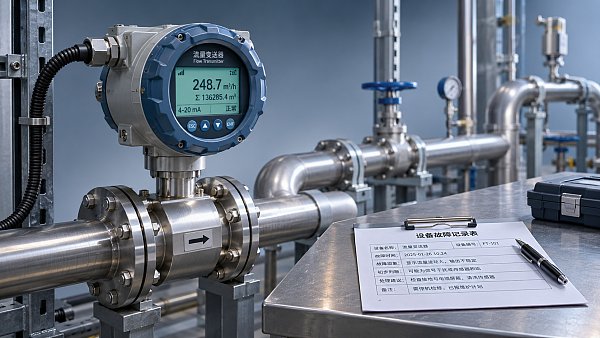
For example, a flow meter selected for a pipe’s maximum capacity may offer less useful performance when the process operates at a small fraction of that flow. An evaluator should examine performance across the expected range, including low-flow conditions, and consider the properties of the fluid, installation constraints, and maintenance access. The same principle applies to gas analyzers, electrical meters, and other instruments: evaluate performance under the conditions in which the data will actually be used.
Measurement uncertainty should be proportionate to the decision. If two proposed efficiency projects are expected to produce similar savings, uncertainty in the baseline and the post-change measurement may make it difficult to distinguish their effects. A more precise instrument can help, but so can a better measurement location, a longer representative observation period, or accounting for changes in throughput and operating conditions.
Consider the full data chain when comparing options:
Continuous measurement is valuable when conditions change quickly or when operators need timely intervention. It is less compelling if the decision is annual and a representative, reliable periodic measurement is sufficient. The choice should also account for maintenance, calibration, consumables, data storage, and the effort required to validate readings over the life of the system.
Make comparisons and reporting defensible
A baseline is useful only if later results can be compared with it. Record the baseline period, the assets included, the calculation method, and relevant operating conditions. If production mix, facility boundaries, or measurement methods change, preserve the original record and explain how the comparison is adjusted. Avoid silently replacing historical values with numbers calculated on a different basis.
Separate measured data from estimates in the data record. An estimated value may be appropriate for a minor source or a temporary meter outage, provided its method and scope are visible. Repeated estimates for a material source, however, can weaken confidence in a trend. Set rules for identifying gaps, assigning responsibility for review, and determining when a gap is significant enough to affect a reported result.
Reconciliation offers a practical check. Where meters are arranged hierarchically, compare the site total with the sum of submetered areas and investigate substantial or persistent differences. Some difference may be expected because of measurement uncertainty, timing, or loads outside the submeter boundary. The investigation should establish whether those explanations fit before treating the residual as a real loss.
Reporting requirements may call for particular boundaries, methods, or supporting records. Identify the applicable requirements before finalizing metric definitions, especially if data will be combined across facilities or used in external disclosures. Operational metrics can be more granular than reporting metrics, but the relationship between them should be traceable. For critical calibration work, evaluators can also consider whether the calibration provider’s competence and scope are appropriate to the instruments and measurements involved.
Test the shortlist against a real operating question
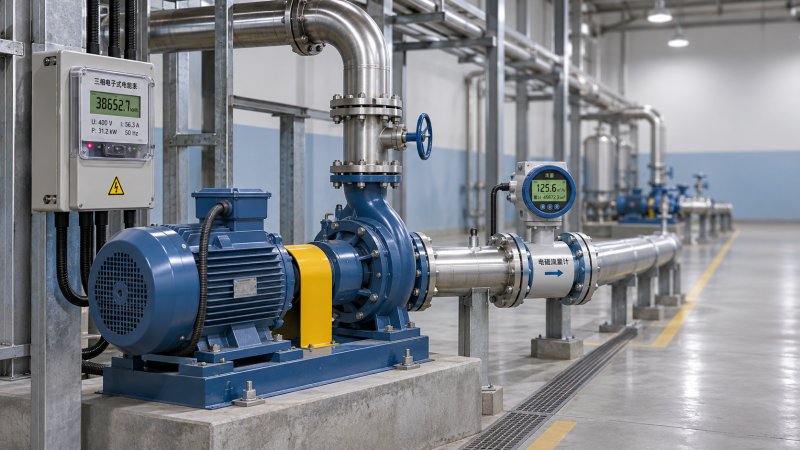
Suppose a facility wants to reduce the energy associated with a water pumping system. A useful shortlist could include electricity consumed by the pumps, volume delivered, and operating hours, with pressure or flow trends available to investigate changes. Energy per volume delivered provides an efficiency indicator, while total electricity shows whether the system’s overall demand has fallen.
Before accepting that ratio, check whether the flow measurement covers all delivered water and whether pumps serve different pressure zones or operating duties. A change in delivery pressure, demand pattern, or pump configuration can change energy per volume even if equipment condition is unchanged. If the measurement boundary excludes a standby pump or a bypass line, the ratio may improve simply because energy or water has moved outside the measured area.
The next step is to use a defined observation period to check coverage, data availability, and interpretability under normal operating conditions. If the resulting metric cannot distinguish a plausible operational change from measurement noise or missing data, revise the measurement plan before setting a performance target. A smaller set of metrics that can withstand that test gives evaluators a firmer basis for choosing instruments and judging subsequent improvements.
Recommended for You
 How to choose metrics for sustainable monitoringSustainable Monitoring starts with metrics that drive action. Learn how to define boundaries, assess data quality, and track meaningful improvements.
 How to verify a trusted manufacturer's production capacityTrusted Manufacturer capacity claims need proof. Learn how to verify production plans, bottlenecks, quality records and supply risks before you place an order.
 How to choose an emission controller for an industrial boilerChoose the right emission controller for your industrial boiler. Compare technologies, operating conditions, compliance needs, and costs.
 How to choose composition analyzers for low-concentration measurementsChoose composition analyzers with confidence. Discover how quantification limits, sample handling and matrix effects shape reliable low-concentration measurements.
 How does online analysis compare with laboratory testing for water quality monitoring?Online analysis vs. laboratory testing: compare speed, accuracy, costs, and compliance to find the right water quality monitoring strategy.
 How to choose the right detection range for a custom gas analyzerChoose the right custom gas analyzer detection range with practical guidance on accuracy, exposure limits, calibration, and supplier evaluation.
 How does multi component monitoring detect gases in stack emissions?Discover how multi component monitoring detects stack gases, manages interference and supports reliable emissions reporting. Explore key CEMS selection factors.
 How bright should an industrial monitor be for outdoor use?Choosing an outdoor industrial monitor? Learn why 1,000 nits is a starting point and how glare, contrast, and heat affect sunlight readability.
 How does water vapor affect infrared gas analyzers?Infrared gas analyzers can be affected by humidity, condensation and spectral interference. Learn how to protect sample integrity and achieve reliable results.
 How to reduce customer support response timesReduce Customer Support response times with actionable tips for reporting equipment faults, choosing the right channel, and getting expert help faster.
 How to choose a low range analyzer for trace-level measurementsChoose the right low range analyzer for trace-level measurements. Compare detection limits, sampling, calibration and support to make a confident decision.
 How to choose combustible gas detectors for a specific gasChoose combustible gas detectors with confidence. Compare sensor technologies, gas response, calibration, placement, and certification for your application.
 How to choose an air quality analyzer for the pollutants you need to measureChoose an air quality analyzer with confidence. Compare pollutant measurement methods, sampling, accuracy and calibration to find the right fit for your needs.
 How to choose industrial metrology tools for tight tolerancesChoose industrial metrology tools for tight tolerances with confidence. Compare uncertainty, calibration, tool types, and costs to reduce inspection risk.
 How moisture affects fixed analyzer accuracy in stack gas monitoringImprove fixed analyzer accuracy in stack gas monitoring. Discover how moisture causes dilution, interference, and sample loss—and learn practical ways to protect emissions data.
 How does production line speed affect in-line measurement accuracy?Discover how production line speed affects in-line measurement accuracy. Explore sensor response, sampling, and timing to boost throughput without compromising quality.
 How condensation affects HCl concentration analyzer accuracyHCl concentration analyzer accuracy can suffer when condensation traps HCl. Learn how to spot sampling losses, prevent low readings, and improve measurement reliability.
 How does cross-interference affect multi-component gas analyzers?How does cross-interference affect multi component gas analyzers? Explore measurement errors, compensation limits, and validation tips to choose the right system for your process.
 How does temperature affect high-accuracy sensor performance?Explore how temperature affects high accuracy sensor performance. Learn to reduce thermal drift, evaluate compensation, and select the right sensor for reliable measurements.
 Can a C4H8O concentration analyzer distinguish between isomers?Can a C4H8O concentration analyzer distinguish isomers? Compare GC, FTIR and MS methods, uncover selectivity limits, and learn what to validate before choosing your instrument.
 How to identify a reliable supplier using on-time delivery recordsIdentify a Reliable Supplier by verifying on-time delivery records, original commitments, and complete shipments. Learn practical checks to reduce purchasing risk and protect your project schedule.
 How sensitive should a portable hydrogen analyzer be for lab use?Choose a portable hydrogen analyzer for laboratory use with the right quantification limit, accuracy, and range. Learn how to verify performance and avoid costly buying mistakes.
 How to set industrial calibration intervals based on equipment riskSet industrial calibration intervals based on equipment risk, drift, and as-found data. Learn when to shorten or extend schedules to improve reliability and avoid unnecessary costs.
 How to choose electrochemical analyzers for low-current measurementsCompare electrochemical analyzers for precise low-current measurements. Learn how noise, leakage, bandwidth, and real-cell testing help you choose the right instrument.
 What tolerance does a custom gas mixture need for calibration?Choose the right custom gas tolerance for calibration. Learn how blending tolerance, certified uncertainty, and stability affect accuracy—and avoid paying for precision you don’t need.
 How condensation affects stack detector readings in wet flue gasStack detector readings can drift when wet flue gas condenses. Learn how to identify moisture interference, prevent sample losses, and improve emissions monitoring reliability.
 How to prevent condensation in a CO2 analyzer sampling systemPrevent condensation in your CO2 analyzer sampling system. Learn how to control dew point, eliminate cold spots, and manage moisture for reliable readings and fewer costly disruptions.
 How to verify accuracy claims for industrial quality analyzersVerify accuracy claims for industrial quality analyzers with calibration checks, independent testing, and clear acceptance criteria. Learn how to reduce risk and buy with confidence.
 How to calculate cooling loads for an industrial analyzer shelterSize industrial analyzer shelter cooling with confidence. Learn to calculate equipment heat, solar gains, and ventilation loads, then select HVAC capacity for reliable analyzer performance.
 Hydrogen Analyzers for Energy Storage: Purity Monitoring vs. Leak DetectionChoosing a hydrogen analyzer for energy storage systems? Compare purity monitoring and leak detection to select the right sensors, improve safety, and protect fuel cell performance.
 NH3 Monitoring in Fertilizer Plants: Where Should Leak Analyzers Be Installed?NH3 analyzer for fertilizer production: discover where to place leak detectors around storage, compressors, and loading areas to reduce blind spots and improve early warning.
 Diesel Engine NOx Analyzers: Response Time and NO2 Conversion ExplainedChoosing a NOX analyzer for diesel engines? Learn how response time, NO2 conversion, and sampling design affect accuracy—and make a smarter, evidence-based purchase.



Search Categories
Search Categories
- Smart Meters & Power Quality
- Transformer Gas Analyzers
- BESS Thermal Runaway Detectors
- Energy, Power & Smart Grid Monitoring
- Optical Profilers & CMM
- Ultrasonic & X-Ray NDT
- Calibration Standards
- Precision Metrology & NDT
- Water Quality Analyzers
- CEMS & VOCs Monitors
- Price Trends
- Import & Export Updates
- Market Trends
- Industry News
- Industry Insights
Latest Article
- How to choose metrics for sustainable monitoringSustainable Monitoring starts with metrics that drive action. Learn how to define boundaries, assess data quality, and track meaningful improvements.Posted by:
- How to verify a trusted manufacturer's production capacityTrusted Manufacturer capacity claims need proof. Learn how to verify production plans, bottlenecks, quality records and supply risks before you place an order.Posted by:
- How to choose an emission controller for an industrial boilerChoose the right emission controller for your industrial boiler. Compare technologies, operating conditions, compliance needs, and costs.Posted by:
Please give us a message