
How to choose a sampling method for environmental analysis


Choosing a sampling method for environmental analysis is not simply a choice between a bottle, an autosampler, and an online instrument. The method determines which part of a changing environment reaches the laboratory—and which part is missed. A sensitive instrument cannot recover a short-lived discharge event that the sampling plan never captured.
For technical evaluators, the defensible choice starts with the decision the data must support: detecting a peak, estimating an average, mapping contamination, or demonstrating compliance. From there, compare sampling approaches against variability, analyte stability, reporting limits, field conditions, and the requirements of the applicable method.
Start with the decision, not the sampling device
Before comparing equipment, define the population the result should represent. A sample from one location at one moment answers a different question from a sample representing an entire discharge over a working shift.
- Define the decision unit. Specify the location, depth or height, time period, and material of interest. A groundwater well sample does not automatically represent an entire aquifer, and one soil sample does not characterize a whole site.
- Identify the decision rule. Are you comparing an individual result with a limit, estimating an average, looking for a maximum, or determining whether further investigation is needed? Check whether the relevant permit or regulation prescribes the sample type and frequency.
- List target analytes and required reporting limits. Confirm that the complete sampling and laboratory method can achieve limits suitable for the decision in the actual sample matrix, not just in clean water or a manufacturer’s demonstration.
- Characterize variability. Consider changes across space, depth, flow, operating cycles, weather, and time. Use existing site records or a preliminary survey to identify where and when conditions may change.
- Set data-quality requirements. Agree on acceptable uncertainty, quality-control samples, documentation, and actions if a sample is compromised. The U.S. EPA’s Data Quality Objectives process provides a structured framework for this planning step. Source: EPA, Guidance on Systematic Planning Using the Data Quality Objectives Process, https://www.epa.gov/quality/guidance-systematic-planning-using-data-quality-objectives-process.
For example, if the question is whether a discharge ever exceeds a short-term limit, a time-averaged sample may conceal the event of interest. If the question is total contaminant loading, concentration alone is insufficient: representative flow information is also needed.
Compare grab, composite, and continuous sampling
Grab samples: precise in time, limited in coverage
A grab sample is useful when the individual condition matters: for example, investigating a suspected spill or measuring a parameter that must be determined promptly. It can also be the required approach for a specified analyte. Its weakness is representativeness, not sophistication. A carefully collected grab sample can still miss an intermittent release.
Improve confidence by linking collection times to operating records or triggering samples during known events. Where the aim is to characterize changing conditions, use a justified series of grabs rather than assuming one is typical.
Composite samples: choose the weighting deliberately
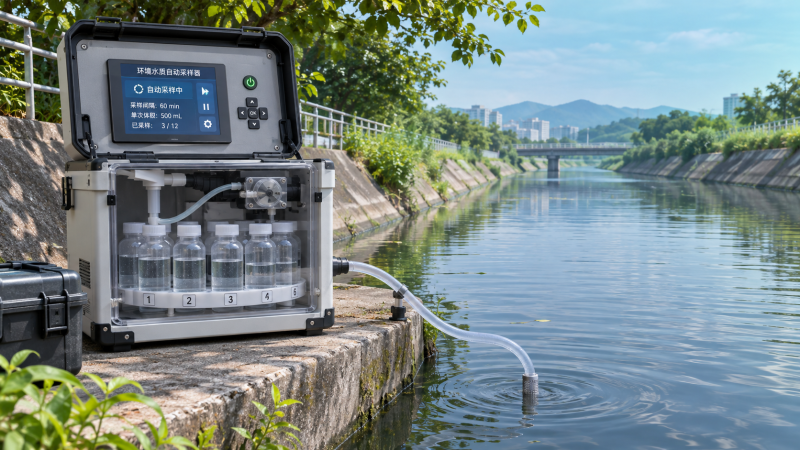
A composite combines increments collected over time or space. Equal-volume increments collected at equal time intervals can represent a time-weighted average under the planned conditions. Flow-proportional compositing weights collection by the volume discharged and is often more relevant when estimating the concentration associated with a variable-flow discharge.
Do not composite automatically. Peaks may disappear in the average, and mixing may be unsuitable for unstable or volatile analytes, incompatible preservation requirements, or a decision based on individual samples. Confirm the approach with the laboratory and the governing method before purchasing an autosampler.
Continuous measurement: high-frequency information with conditions
Online sensors and analyzers can reveal patterns that periodic sampling misses, but “continuous” does not mean every target contaminant is directly measured. A surrogate parameter, such as conductivity, may help identify a change without establishing the concentration of a specific pollutant. Its relationship to the target must be demonstrated for the site and periodically checked.
Review calibration, drift checks, fouling, cleaning, data gaps, alarms, and the procedure for confirming questionable readings. An automated sampler that collects discrete bottles for later laboratory analysis is also different from an online analyzer that produces measurements in the field.
Match the method to the environmental matrix
Water and wastewater
Start with mixing and flow. A sample taken from a stagnant edge or at an unrepresentative depth can be biased even when the container and laboratory method are correct. For a variable wastewater stream, compare the objective of detecting a short release with the objective of estimating average concentration or load; those objectives may require different collection strategies.
Ask whether the sampling train, tubing, pump, and container materials are compatible with the analytes. Determine filtration requirements in advance: dissolved and total measurements are not interchangeable, and the filtration point and procedure affect what the result represents. Preservation, temperature, and holding time must follow the applicable method and laboratory instructions.
For U.S. Clean Water Act compliance, EPA’s approved-method framework and sample preservation requirements are found in 40 CFR Part 136; the specific permit and method also matter. Source: https://www.ecfr.gov/current/title-40/chapter-I/subchapter-D/part-136.
Air and emissions
Air sampling decisions depend on whether the target is a gas, vapor, particulate, or combination, and whether the result must represent an instantaneous condition or an exposure over a defined duration. Active sampling draws air through a collection medium at a controlled flow; passive sampling relies on transport to a sampler without an active pump. Their applicability depends on the analyte, concentration range, environment, and validated method.
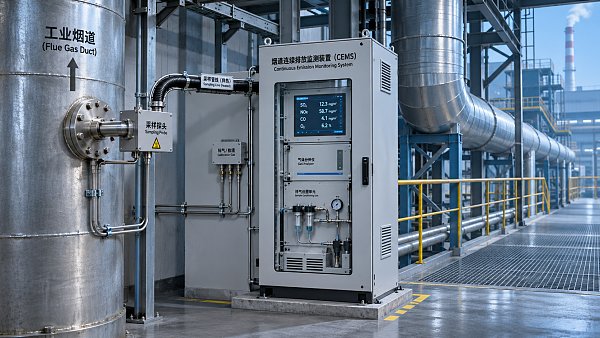
Evaluate flow verification, sampler placement, collection-medium capacity, breakthrough risk, and weather or process effects. For stacks, representative sampling may require defined traverse locations and, for particulate methods, isokinetic sampling; do not assume an ambient-air sampler is suitable. Source: EPA, Air Emission Measurement Center, Methods and Procedures, https://www.epa.gov/emc/emc-methods-and-procedures.
Soil and solid materials
Spatial heterogeneity is often the dominant issue. Define the area and depth interval before selecting locations, and distinguish between locating a hotspot and estimating an average across a decision unit. Combining soil increments can support an averaging objective, but it can also mask a localized hotspot and may not be appropriate for every analyte or method.
Sampling tools, subsampling, and preparation matter as much as the laboratory instrument. For volatile organic compounds, unnecessary handling and exposure can cause loss; use the collection and preservation procedures specified by the applicable method. Source: EPA SW-846, Method 5035A: Closed-System Purge-and-Trap and Extraction for Volatile Organics in Soil and Waste Samples, https://www.epa.gov/hw-sw846/sw-846-test-method-5035a-closed-system-purge-and-trap-and-extraction-volatile-organics-soil.
Check whether the complete measurement chain can meet the objective
A sampling method should be evaluated as a chain: collection, transfer, preservation, transport, preparation, analysis, and reporting. A weakness at any link can outweigh a nominally excellent instrument detection limit.
- Reporting limit versus decision threshold: Request the laboratory’s expected reporting limit for the relevant matrix and preparation, including any dilution. A result reported only above the decision threshold may not resolve the question.
- Recovery and contamination: Assess whether target compounds may be lost, transformed, adsorbed, or introduced by equipment and handling. Select blanks and recovery checks appropriate to those risks.
- Preservation and holding time: Confirm container type, preservative, temperature, and maximum holding time for each analyte and method. Plan transport around the shortest applicable requirement.
- Field measurements: Identify parameters that the method requires to be measured on site or promptly, and verify instrument calibration and documentation.
- Uncertainty and variability: Separate analytical precision from sampling variability. Repeated laboratory analysis of one bottle does not measure variation across the site or sampling period.
Involve the laboratory before finalizing the plan. It can confirm sample volume, bottle preparation, scheduling, analytical interferences, and whether a proposed composite is compatible with the intended test. EPA’s SW-846 resources provide methods and guidance for environmental sampling and analysis, but applicability must be checked for the particular regulatory program. Source: https://www.epa.gov/hw-sw846.
Build quality control into the sampling plan
Quality control should answer identifiable questions, not merely add bottles to a shipment. Select the type and frequency of controls according to the method, project objectives, and contamination risks.
- Field duplicates help assess variability associated with collection and analysis. Their interpretation depends on how the duplicate is collected and how heterogeneous the material is.
- Equipment blanks can reveal contamination associated with reusable equipment or its cleaning procedure.
- Field or trip blanks can help identify contamination introduced during handling or transport where relevant, particularly for volatile analytes.
- Calibration and verification records support the validity of field measurements and sampler flow or volume measurements.
- Chain of custody and field records document identity, collection conditions, preservation, transfers, deviations, and any event that could affect interpretation.
Define acceptance criteria and corrective actions before sampling. If a blank is contaminated or a cooler arrives outside the specified conditions, the team should know whether to qualify results, investigate, or resample rather than deciding under deadline pressure.
Evaluate equipment and suppliers against the plan
Only after the sampling design is clear should evaluators compare hardware. A useful procurement specification describes the required sample and field conditions, not merely a preferred instrument category.
- Test the operating envelope. Check flow range, lift and tubing requirements where applicable, sample volume, collection intervals, environmental protection, and power availability against site conditions.
- Review sample integrity. Ask for wetted-material information, cleaning procedures, cross-contamination controls, and evidence supporting suitability for the target analytes.
- Examine data integrity. Confirm time synchronization, event logs, calibration records, data export, and how the system flags missed samples or sensor faults.
- Assess maintainability. Identify consumables, service intervals, spare parts, field calibration needs, and the practical effort required to prevent fouling or blockage.
- Verify claims independently. Request method-specific performance evidence and clarify whether it applies to the complete configuration and matrix. Where laboratory accreditation is relevant, verify the laboratory’s current scope for the specific test; accreditation alone does not validate an unsuitable sampling design.
A short field trial can expose problems that a specification sheet will not: inaccessible intake points, sediment accumulation, unreliable power, or sample bottles that cannot be collected within the holding-time window. Record trial limitations and compare results with the project’s predefined acceptance criteria.
Frequently asked questions
Is a composite sample always more representative than a grab sample?
No. A composite can better represent a defined average when its increments and weighting match the objective. A grab may be more appropriate for a peak condition, an individual event, or an analyte that cannot be reliably composited. The applicable permit or method may determine the choice.
Can continuous monitoring replace laboratory sampling?
Sometimes for a particular parameter and authorized purpose, but not automatically. Confirm that the measurement principle, calibration, performance checks, and regulatory acceptance support the intended decision. Laboratory samples may still be needed for parameters the sensor does not measure or to investigate suspect readings.
How many samples are enough for environmental analysis?
There is no universal number. Sampling frequency and location depend on the decision, variability, acceptable uncertainty, practical constraints, and any mandated minimum. Use a documented design, review existing information, and consider a preliminary investigation when variability is poorly understood.
Recommended for You
 How to choose a sampling method for environmental analysisChoose the right sampling method for environmental analysis. Compare grab, composite, and continuous approaches to capture reliable, decision-ready data.
 How does an electrochemical detector measure gas concentration?Discover how an electrochemical detector measures gas concentration, what affects its accuracy, and how to choose and maintain the right sensor.
 How cross-interference affects electrochemical flue gas sensorsElectrochemical sensor cross-interference in flue gas can distort readings. Learn how to identify errors, assess sample conditions, and choose reliable solutions.
 How does sampling affect gas composition analysis accuracy?Gas Composition Analysis depends on representative sampling. Discover how probe placement, conditioning and transport affect accuracy, and what to verify before choosing a system.
 How does a CO analyzer control parking garage ventilation?Discover how a CO analyzer for parking garage ventilation controls fans, supports efficient airflow, and helps maintain a safer garage environment.
 How to choose a gas quality analyzer for natural gas pipelinesChoose the right gas quality analyzer for natural gas pipelines. Compare technologies, sampling systems and performance to support reliable decisions.
 How does pressure affect laser oxygen analyzer readings?Laser oxygen analyzer readings can shift with pressure. Learn how compensation, sample conditions and calibration affect accuracy—and how to troubleshoot changes.
 How to identify regulatory compliance requirements for your businessRegulatory Compliance starts with knowing which rules apply. Learn how to assess obligations, document decisions, and build effective controls for your business.
 How to choose industrial air monitors for workplace VOCsChoose industrial air monitors for workplace VOCs with confidence. Compare sensor technologies, placement, calibration, and safety requirements.
 Laser vs infrared gas analyzers for stack monitoring: Which handles water vapor interference better?Laser vs infrared gas analyzer stack monitoring: Discover which technology better handles water vapor interference and how to choose for your application.
 Can an air detector identify carbon monoxide indoors?Can an air detector identify carbon monoxide indoors? Learn which sensors detect CO, how to check device specifications, and why a certified alarm matters.
 How does a paramagnetic gas analyzer measure oxygen?Discover how a paramagnetic gas analyzer measures oxygen, what affects accuracy, and how to choose the right solution for your application.
 How to choose a reliable gas analyzer for low concentrationsChoose a reliable gas analyzer for low concentrations. Compare technologies, sampling, calibration and supplier evidence to make a confident purchase.
 How does cross-sensitivity affect multi gas analysis accuracy?Discover how cross-sensitivity affects multi gas analysis accuracy, and learn how to identify interference, validate compensation, and improve measurement reliability.
 How to choose metrics for sustainable monitoringSustainable Monitoring starts with metrics that drive action. Learn how to define boundaries, assess data quality, and track meaningful improvements.
 How to verify a trusted manufacturer's production capacityTrusted Manufacturer capacity claims need proof. Learn how to verify production plans, bottlenecks, quality records and supply risks before you place an order.
 How to choose an emission controller for an industrial boilerChoose the right emission controller for your industrial boiler. Compare technologies, operating conditions, compliance needs, and costs.
 How to choose composition analyzers for low-concentration measurementsChoose composition analyzers with confidence. Discover how quantification limits, sample handling and matrix effects shape reliable low-concentration measurements.
 How does online analysis compare with laboratory testing for water quality monitoring?Online analysis vs. laboratory testing: compare speed, accuracy, costs, and compliance to find the right water quality monitoring strategy.
 How to choose the right detection range for a custom gas analyzerChoose the right custom gas analyzer detection range with practical guidance on accuracy, exposure limits, calibration, and supplier evaluation.
 How does multi component monitoring detect gases in stack emissions?Discover how multi component monitoring detects stack gases, manages interference and supports reliable emissions reporting. Explore key CEMS selection factors.
 How bright should an industrial monitor be for outdoor use?Choosing an outdoor industrial monitor? Learn why 1,000 nits is a starting point and how glare, contrast, and heat affect sunlight readability.
 How does water vapor affect infrared gas analyzers?Infrared gas analyzers can be affected by humidity, condensation and spectral interference. Learn how to protect sample integrity and achieve reliable results.
 How to reduce customer support response timesReduce Customer Support response times with actionable tips for reporting equipment faults, choosing the right channel, and getting expert help faster.
 How to choose a low range analyzer for trace-level measurementsChoose the right low range analyzer for trace-level measurements. Compare detection limits, sampling, calibration and support to make a confident decision.
 How to choose combustible gas detectors for a specific gasChoose combustible gas detectors with confidence. Compare sensor technologies, gas response, calibration, placement, and certification for your application.
 How to choose an air quality analyzer for the pollutants you need to measureChoose an air quality analyzer with confidence. Compare pollutant measurement methods, sampling, accuracy and calibration to find the right fit for your needs.
 How to choose industrial metrology tools for tight tolerancesChoose industrial metrology tools for tight tolerances with confidence. Compare uncertainty, calibration, tool types, and costs to reduce inspection risk.
 How moisture affects fixed analyzer accuracy in stack gas monitoringImprove fixed analyzer accuracy in stack gas monitoring. Discover how moisture causes dilution, interference, and sample loss—and learn practical ways to protect emissions data.
 How does production line speed affect in-line measurement accuracy?Discover how production line speed affects in-line measurement accuracy. Explore sensor response, sampling, and timing to boost throughput without compromising quality.
 How condensation affects HCl concentration analyzer accuracyHCl concentration analyzer accuracy can suffer when condensation traps HCl. Learn how to spot sampling losses, prevent low readings, and improve measurement reliability.
 How does cross-interference affect multi-component gas analyzers?How does cross-interference affect multi component gas analyzers? Explore measurement errors, compensation limits, and validation tips to choose the right system for your process.

Search Categories
Search Categories
- Smart Meters & Power Quality
- Transformer Gas Analyzers
- BESS Thermal Runaway Detectors
- Energy, Power & Smart Grid Monitoring
- Optical Profilers & CMM
- Ultrasonic & X-Ray NDT
- Calibration Standards
- Precision Metrology & NDT
- Water Quality Analyzers
- CEMS & VOCs Monitors
- Price Trends
- Import & Export Updates
- Market Trends
- Industry News
- Industry Insights
Latest Article
- How to choose a sampling method for environmental analysisChoose the right sampling method for environmental analysis. Compare grab, composite, and continuous approaches to capture reliable, decision-ready data.Posted by:
- How does an electrochemical detector measure gas concentration?Discover how an electrochemical detector measures gas concentration, what affects its accuracy, and how to choose and maintain the right sensor.Posted by:
- How cross-interference affects electrochemical flue gas sensorsElectrochemical sensor cross-interference in flue gas can distort readings. Learn how to identify errors, assess sample conditions, and choose reliable solutions.Posted by:
Please give us a message
