How to verify a trusted manufacturer's production capacity


A trusted manufacturer may have the equipment, certifications and experience to make an instrument, yet still lack enough available capacity to deliver your order when you need it. The useful question is how many conforming units the supplier can complete for your specific configuration, in your required delivery windows, after accounting for existing commitments and production constraints.
Start with an order-specific production plan, then test it against evidence from the factory floor, recent production records and the supply of critical components. A credible answer should connect the supplier’s stated capacity to the steps that determine your shipment: assembly, testing, calibration, documentation and release. The amount of verification should match the consequence of a late or nonconforming delivery.
Define the capacity you need to verify
Before asking a manufacturer for its monthly output, give it a clear demand profile. Capacity for a standard pressure transmitter does not automatically translate to the same number of units with a different sensor range, housing material, communication interface or hazardous-area certification. Each variation can change the work content, component requirements and inspection route.
Provide the expected quantities by model and configuration, required shipment dates, destination markets, testing and documentation requirements, and any forecasted peaks. Separate firm orders from forecasts so the supplier can distinguish capacity it must reserve from capacity it may only need to plan for.
Ask the manufacturer to respond with a time-phased plan showing when materials will be available, when production will start, which operations the order will use and when finished units can be released. If the order is to be delivered in batches, the plan should show each batch rather than a single final date.
For instrumentation, make the unit of capacity precise. A supplier may report assembled units, units that have passed functional testing, or units ready to ship with calibration records. Those figures describe different stages. For a procurement decision, finished and accepted units are generally the most useful measure.
Turn the headline number into available capacity
A factory’s maximum output is a starting point, not a delivery commitment. Ask for the assumptions behind it: product mix, operating hours, staffing, yield, changeover time and the period over which output was achieved. Then establish how much of the relevant capacity is already allocated to other work.
A practical estimate begins with the capacity of the limiting production step during your delivery window. Subtract time already committed, planned maintenance and other known interruptions; then account for expected losses such as changeovers and rework. Convert the remaining time into finished units using a realistic processing rate for your product. If the factory reports its estimate in units per month, ask how that estimate maps to your actual shipment dates.
Suppose assembly can build the required quantity in a week, but final calibration requires more time per unit and serves several product lines. In that case, the calibration schedule may set the delivery limit. The same reasoning applies to environmental testing, burn-in, specialized inspection or document review when those steps are required before release.
Do not add together the nominal capacities of several machines unless they can all process the same configuration, have the required fixtures and are staffed when needed. Conversely, a bottleneck can sometimes be relieved through an approved additional shift, alternative equipment or a qualified subcontractor. Ask what must be in place for that extra capacity to be available and when the decision must be made.
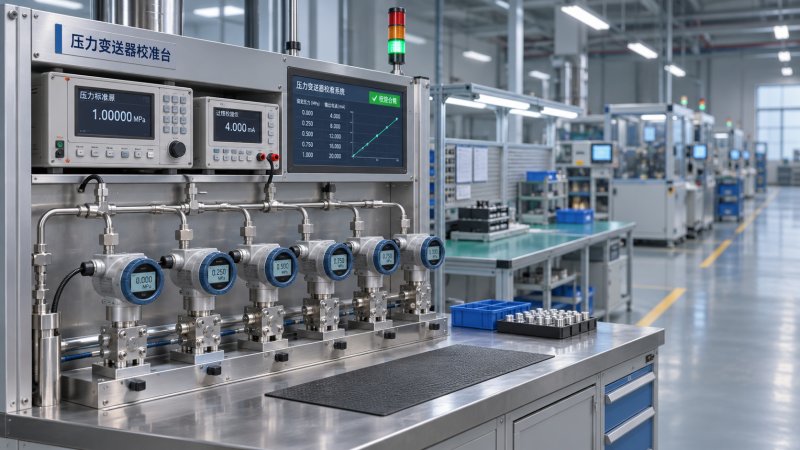
Check the evidence behind the production plan
The strongest evidence links a recent period of production to the product family and processes relevant to your order. Request a combination of records and a walkthrough, rather than relying on a single presentation or factory photograph.
- Production and shipment history: Review completed output and on-time shipments for comparable products over several representative periods. Ask how comparable orders differed in configuration, size and testing requirements.
- Equipment and scheduling: Identify the machines, fixtures and test stations assigned to your order. Review their schedules, maintenance arrangements and any shared use by other product lines.
- Workforce: Establish how many trained operators and technicians are available for the relevant shifts, including specialists needed for calibration, troubleshooting and final inspection.
- Quality and rework: Review first-pass yield, rejection and rework records where available. A high assembly rate is less useful if a substantial share of units needs additional work before acceptance.
- Order commitments: Ask how the proposed slot fits with existing orders and whether the manufacturer is willing to reserve the necessary resources against your purchase order or agreement.
Confidentiality may limit access to customer names, commercial terms or detailed schedules. Redacted records, aggregated figures or an independent audit can still help establish whether the claimed throughput is supported. Make sure the period, product family and production stage remain visible enough to interpret the evidence.
During a site visit or live remote walkthrough, follow the route your order would take. Look at work in process, queue points and the condition and availability of the relevant stations. A crowded calibration area, for example, deserves a discussion about scheduling and turnaround; a quiet line may simply reflect a changeover or a different shift. Observations need context before they become conclusions.
Distinguish demonstrated output from planned expansion
A supplier may reasonably propose a second shift, new test equipment or an outsourced operation to support a larger order. Treat this as a capacity plan with dependencies, not as output already demonstrated.
Ask for the implementation schedule, staffing and training requirements, equipment availability, and any customer approval needed for a process or subcontractor change. Agree on milestones that can be checked before the extra capacity becomes critical. If the expansion is delayed, the supplier should be able to show what volume it can deliver using existing resources.
Trace the components and outside services that control delivery
A manufacturer can have open assembly slots and still miss a shipment because a sensor element, electronic component, enclosure or specialized service arrives late. For each critical item, ask the supplier to identify the source, expected availability and the point at which a shortage would affect your production slot.
Focus on items that are custom, difficult to substitute or subject to long or variable lead times. A component shown as “on order” is less reassuring than stock available for your order or a supplier commitment aligned with the production schedule. Where a substitute is proposed, establish whether it meets the product specification and whether qualification or buyer approval is required.
Outside testing, calibration and certification-related activities can also affect release dates. Ask which work is performed externally, how it is scheduled and how records will be returned. If a calibration result is required for acceptance, check that the laboratory’s scope and the requested measurement requirements align; a certificate alone does not establish that every required measurement is covered.
For products supplied with ATEX or IECEx documentation, where applicable, verify that the exact product configuration and production arrangements are covered by the relevant certification. A change in a component or manufacturing site may require further review. Build that review into the schedule rather than assuming a capacity increase can be implemented immediately.
Convert the assessment into a delivery commitment
Once the production plan is credible, use it to define what the supplier is committing to deliver and when. The agreement should connect quantities and configurations to shipment dates, acceptance requirements and the documentation needed for release. It should also identify when the buyer must provide forecasts, specifications, approvals or materials on which the schedule depends.
For an order that strains the available capacity, consider staged deliveries and milestone reporting. Useful milestones might include critical material availability, completion of an initial production batch, test results and readiness for shipment. Set escalation points for a missed milestone while there is still time to adjust the schedule.
A trial batch can provide evidence about process readiness, documentation and actual throughput, particularly for a new configuration. Interpret the result carefully: a small batch may receive dedicated attention that cannot be sustained at full volume. Ask the supplier to explain what changes when the order moves to the intended rate and how shared resources will be scheduled.
Before placing the full order, compare the remaining exposure with your tolerance for disruption. If one calibration station, one critical component source or an unproven capacity expansion controls the whole schedule, decide whether the delivery plan needs more time, reserved capacity or a qualified alternative. A manufacturer earns confidence in its capacity when its production plan remains workable after those constraints are made visible.
Recommended for You
 How to verify a trusted manufacturer's production capacityTrusted Manufacturer capacity claims need proof. Learn how to verify production plans, bottlenecks, quality records and supply risks before you place an order.
 How to choose an emission controller for an industrial boilerChoose the right emission controller for your industrial boiler. Compare technologies, operating conditions, compliance needs, and costs.
 How to choose composition analyzers for low-concentration measurementsChoose composition analyzers with confidence. Discover how quantification limits, sample handling and matrix effects shape reliable low-concentration measurements.
 How does online analysis compare with laboratory testing for water quality monitoring?Online analysis vs. laboratory testing: compare speed, accuracy, costs, and compliance to find the right water quality monitoring strategy.
 How to choose the right detection range for a custom gas analyzerChoose the right custom gas analyzer detection range with practical guidance on accuracy, exposure limits, calibration, and supplier evaluation.
 How does multi component monitoring detect gases in stack emissions?Discover how multi component monitoring detects stack gases, manages interference and supports reliable emissions reporting. Explore key CEMS selection factors.
 How bright should an industrial monitor be for outdoor use?Choosing an outdoor industrial monitor? Learn why 1,000 nits is a starting point and how glare, contrast, and heat affect sunlight readability.
 How does water vapor affect infrared gas analyzers?Infrared gas analyzers can be affected by humidity, condensation and spectral interference. Learn how to protect sample integrity and achieve reliable results.
 How to reduce customer support response timesReduce Customer Support response times with actionable tips for reporting equipment faults, choosing the right channel, and getting expert help faster.
 How to choose a low range analyzer for trace-level measurementsChoose the right low range analyzer for trace-level measurements. Compare detection limits, sampling, calibration and support to make a confident decision.
 How to choose combustible gas detectors for a specific gasChoose combustible gas detectors with confidence. Compare sensor technologies, gas response, calibration, placement, and certification for your application.
 How to choose an air quality analyzer for the pollutants you need to measureChoose an air quality analyzer with confidence. Compare pollutant measurement methods, sampling, accuracy and calibration to find the right fit for your needs.
 How to choose industrial metrology tools for tight tolerancesChoose industrial metrology tools for tight tolerances with confidence. Compare uncertainty, calibration, tool types, and costs to reduce inspection risk.
 How moisture affects fixed analyzer accuracy in stack gas monitoringImprove fixed analyzer accuracy in stack gas monitoring. Discover how moisture causes dilution, interference, and sample loss—and learn practical ways to protect emissions data.
 How does production line speed affect in-line measurement accuracy?Discover how production line speed affects in-line measurement accuracy. Explore sensor response, sampling, and timing to boost throughput without compromising quality.
 How condensation affects HCl concentration analyzer accuracyHCl concentration analyzer accuracy can suffer when condensation traps HCl. Learn how to spot sampling losses, prevent low readings, and improve measurement reliability.
 How does cross-interference affect multi-component gas analyzers?How does cross-interference affect multi component gas analyzers? Explore measurement errors, compensation limits, and validation tips to choose the right system for your process.
 How does temperature affect high-accuracy sensor performance?Explore how temperature affects high accuracy sensor performance. Learn to reduce thermal drift, evaluate compensation, and select the right sensor for reliable measurements.
 Can a C4H8O concentration analyzer distinguish between isomers?Can a C4H8O concentration analyzer distinguish isomers? Compare GC, FTIR and MS methods, uncover selectivity limits, and learn what to validate before choosing your instrument.
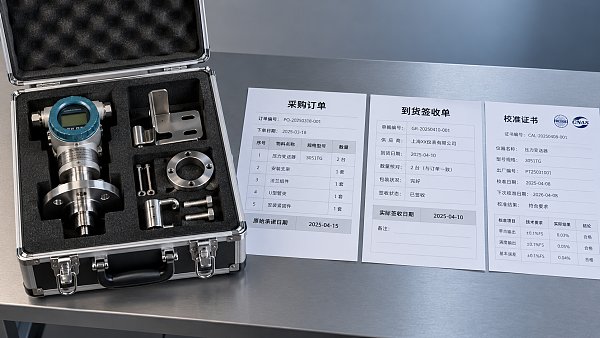
 How to identify a reliable supplier using on-time delivery recordsIdentify a Reliable Supplier by verifying on-time delivery records, original commitments, and complete shipments. Learn practical checks to reduce purchasing risk and protect your project schedule.
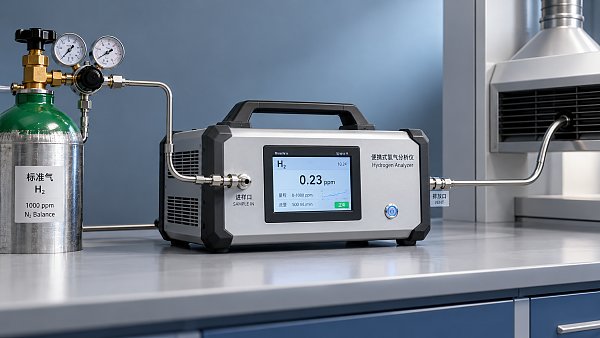
 How sensitive should a portable hydrogen analyzer be for lab use?Choose a portable hydrogen analyzer for laboratory use with the right quantification limit, accuracy, and range. Learn how to verify performance and avoid costly buying mistakes.
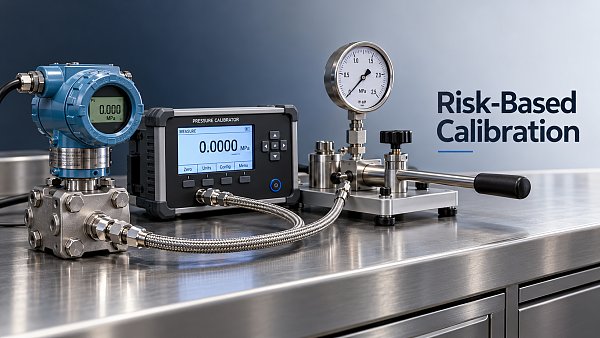
 How to set industrial calibration intervals based on equipment riskSet industrial calibration intervals based on equipment risk, drift, and as-found data. Learn when to shorten or extend schedules to improve reliability and avoid unnecessary costs.
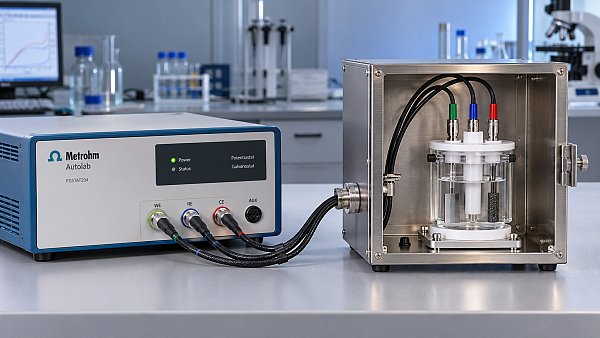
 How to choose electrochemical analyzers for low-current measurementsCompare electrochemical analyzers for precise low-current measurements. Learn how noise, leakage, bandwidth, and real-cell testing help you choose the right instrument.
 What tolerance does a custom gas mixture need for calibration?Choose the right custom gas tolerance for calibration. Learn how blending tolerance, certified uncertainty, and stability affect accuracy—and avoid paying for precision you don’t need.
 How condensation affects stack detector readings in wet flue gasStack detector readings can drift when wet flue gas condenses. Learn how to identify moisture interference, prevent sample losses, and improve emissions monitoring reliability.
 How to prevent condensation in a CO2 analyzer sampling systemPrevent condensation in your CO2 analyzer sampling system. Learn how to control dew point, eliminate cold spots, and manage moisture for reliable readings and fewer costly disruptions.
 How to verify accuracy claims for industrial quality analyzersVerify accuracy claims for industrial quality analyzers with calibration checks, independent testing, and clear acceptance criteria. Learn how to reduce risk and buy with confidence.
 How to calculate cooling loads for an industrial analyzer shelterSize industrial analyzer shelter cooling with confidence. Learn to calculate equipment heat, solar gains, and ventilation loads, then select HVAC capacity for reliable analyzer performance.
 Hydrogen Analyzers for Energy Storage: Purity Monitoring vs. Leak DetectionChoosing a hydrogen analyzer for energy storage systems? Compare purity monitoring and leak detection to select the right sensors, improve safety, and protect fuel cell performance.
 NH3 Monitoring in Fertilizer Plants: Where Should Leak Analyzers Be Installed?NH3 analyzer for fertilizer production: discover where to place leak detectors around storage, compressors, and loading areas to reduce blind spots and improve early warning.
 Diesel Engine NOx Analyzers: Response Time and NO2 Conversion ExplainedChoosing a NOX analyzer for diesel engines? Learn how response time, NO2 conversion, and sampling design affect accuracy—and make a smarter, evidence-based purchase.
 SO2 Analyzers for Smelter Emissions: Sampling Hot, Dust-Laden Flue GasSelect an SO2 analyzer for smelting industry applications. Discover how to handle hot, dust-laden flue gas, prevent sample losses, and achieve reliable emissions monitoring.








Search Categories
Search Categories
- Smart Meters & Power Quality
- Transformer Gas Analyzers
- BESS Thermal Runaway Detectors
- Energy, Power & Smart Grid Monitoring
- Optical Profilers & CMM
- Ultrasonic & X-Ray NDT
- Calibration Standards
- Precision Metrology & NDT
- Water Quality Analyzers
- CEMS & VOCs Monitors
- Price Trends
- Import & Export Updates
- Market Trends
- Industry News
- Industry Insights
Latest Article
- How to verify a trusted manufacturer's production capacityTrusted Manufacturer capacity claims need proof. Learn how to verify production plans, bottlenecks, quality records and supply risks before you place an order.Posted by:
- How to choose an emission controller for an industrial boilerChoose the right emission controller for your industrial boiler. Compare technologies, operating conditions, compliance needs, and costs.Posted by:
- How to choose composition analyzers for low-concentration measurementsChoose composition analyzers with confidence. Discover how quantification limits, sample handling and matrix effects shape reliable low-concentration measurements.Posted by:
Please give us a message