How to choose a reliable gas analyzer for low concentrations


Choosing a reliable gas analyzer for low concentrations requires more than comparing detection limits. Technical evaluators must also consider the target gas, measurement range, cross-sensitivity, calibration requirements, and sampling conditions that can affect results at trace levels. This guide explains how to assess these factors, compare analytical technologies, and evaluate supplier documentation so you can select an instrument suited to your application and make a more confident procurement decision.
Start with the measurement decision, not the instrument
A low concentration is not a complete specification. Measuring trace oxygen in a high-purity process gas is a different problem from measuring a toxic contaminant in ambient air or tracking a pollutant in a wet exhaust stream. The target molecule may be the same, but the background gas, moisture content, pressure and consequences of an incorrect reading can change the choice of technology.
Define the decision the measurement must support. Is the analyzer intended to detect a leak, control a process, demonstrate compliance or investigate intermittent contamination? A process-control instrument may need continuous output and fast recovery from an upset. A laboratory method may prioritize selectivity and documented uncertainty over response speed. A safety application may require a certified detection system and a separate functional safety assessment; a general-purpose process analyzer should not be assumed suitable.
Write down the expected normal concentration, the lowest level at which a decision must be made, and the highest credible exposure during startup or upset. Include whether results are expressed on a wet or dry basis. If a specification is given in mass concentration rather than volume fraction, confirm the conversion conditions, including temperature and pressure. These details prevent two apparently comparable readings from describing different samples.
Look beyond the advertised detection limit
The detection limit indicates how small a signal can be distinguished under a defined method and set of conditions. It does not, by itself, tell you how accurately the analyzer can report a concentration near that limit in your process. Ask how the figure was established: the test gas, averaging time, confidence criterion, ambient conditions and sample matrix all matter.
Resolution is another easy specification to misread. A display showing additional decimal places does not guarantee that those digits are meaningful. Noise, zero drift, calibration uncertainty and interference may be larger than the displayed increment.
For a practical comparison, request the following at the concentration where the instrument will normally operate:
- Repeatability and response time, with the averaging period and test conditions stated.
- Zero and span drift over a defined interval, including the recommended calibration frequency.
- Accuracy or uncertainty expressed clearly as a percentage of reading, a percentage of full scale, an absolute value, or a combination.
- Documented effects of relevant background gases, humidity, temperature and pressure.
- Recovery behavior after exposure to concentrations above the intended measuring range.
The distinction between percentage of reading and percentage of full scale is especially important. An error specified against full scale can represent a substantial fraction of a trace-level reading. A narrower range may improve practical measurement capability, but it must still accommodate expected peaks without damaging the sensor or causing excessive recovery time.
Match the technology to the gas and its background
There is no analytical principle that is best for every low-concentration application. The comparison begins with selectivity: can the instrument distinguish the target gas from everything else likely to enter the sample line?
Electrochemical sensors are used for a range of toxic gases and oxygen. They can be compact and practical, but sensitivity to other gases, sensor aging and environmental conditions must be checked for the specific cell. Manufacturer interference tables are a starting point, not proof of performance in every mixture.
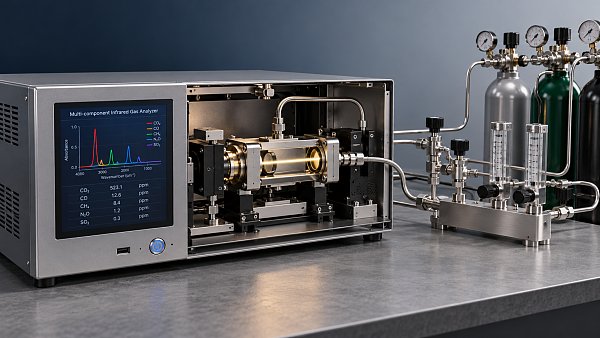
Infrared absorption analyzers, including nondispersive infrared and laser-based instruments, measure absorption associated with particular molecular transitions. They are useful for suitable infrared-active gases, but the achievable selectivity and detection level depend on the optical design, absorption features and sample matrix. Water vapor and overlapping spectral features deserve attention where relevant. Oxygen, which is not detected by conventional infrared absorption in the same way as common infrared-active gases, requires a different measurement approach.
Photoionization detectors can respond to many volatile organic compounds and are useful for screening or tracking changes. Their response is compound-dependent, however, and a total reading generally cannot identify each constituent in a mixture. Confirm the calibration gas, response factors and humidity effects before using the result as a concentration of a particular compound.
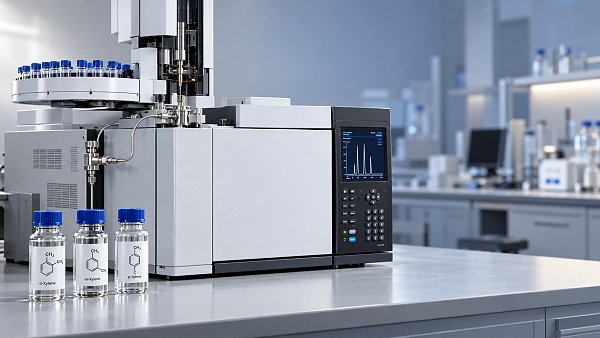
Gas chromatography and mass spectrometry can offer stronger separation or identification for complex mixtures, depending on the method. That capability comes with method development, calibration, maintenance and analysis-time considerations. An online process analyzer may be the better choice when continuous control matters more than detailed compound identification.
Ask suppliers to address the actual background composition, not just the target gas. A claimed compensation algorithm is most useful when accompanied by the concentration ranges and conditions over which its performance has been verified.
Treat the sampling system as part of the analyzer
At trace levels, the sample reaching the sensor may no longer represent the process. Reactive compounds can be lost to tubing or filters; leaks can introduce ambient air; condensation can remove soluble gases. Conversely, contaminated lines or previous high-concentration exposures can release material into an otherwise clean sample.
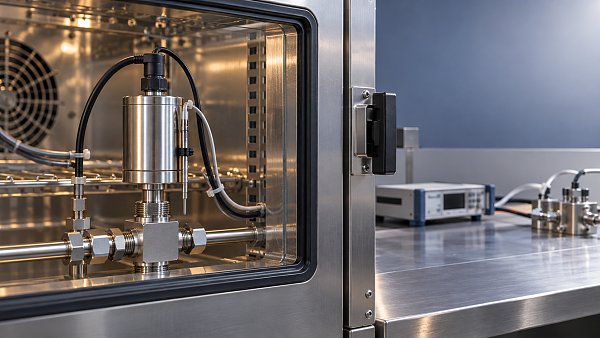
Map the complete path from the sampling point to the detector: probe, tubing, valves, pressure regulation, filtration, conditioning, pump and exhaust. Specify compatible materials for the target gas, and keep sample lines as short and simple as the installation allows. The correct material depends on the gas and operating conditions; it should be confirmed with the supplier rather than selected by habit.
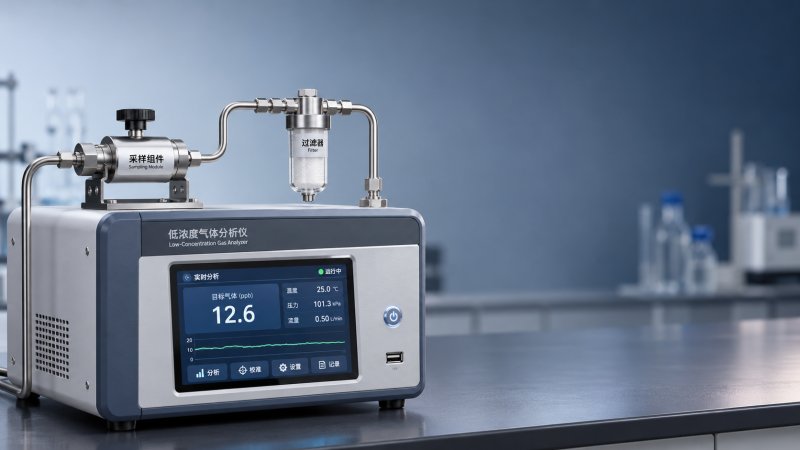
Sample conditioning requires particular care. Cooling a wet sample may protect an analyzer, but condensate can also absorb the component being measured. A dryer may introduce its own losses or alter the concentration basis. If a conditioned sample is reported on a dry basis while a process limit or control target is on a wet basis, the comparison may be misleading. Agree on the intended basis and correction method before acceptance testing.
Also distinguish analyzer response time from total system response time. Transport delay through the sample line, flow rate, mixing volumes and conditioning equipment can dominate the time needed to detect a change at the process. For an intermittent release or fast control loop, request an end-to-end response test rather than relying solely on the detector specification.
Plan calibration and verification before purchase
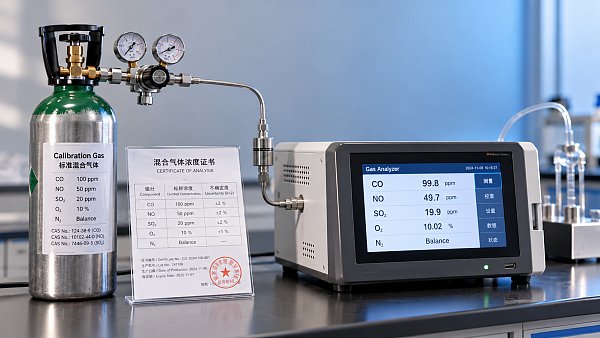
A reliable gas analyzer needs a calibration strategy that can be maintained at the installation site. Establish how zero and span gases will be supplied, whether the calibration gas matrix resembles the sample, and how regulators and lines will be kept clean. At very low concentrations, gas stability, cylinder handling and adsorption in the calibration path can be as consequential as the analyzer adjustment itself.
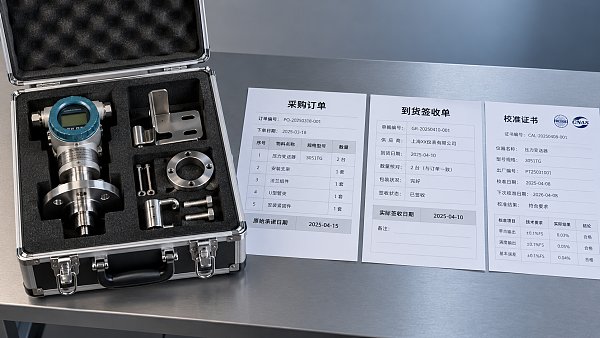
Ask for calibration certificates and the stated uncertainty and traceability of reference materials. Where an accredited calibration is required, verify that the laboratory’s ISO/IEC 17025 accreditation scope covers the relevant gas, concentration and activity. Accreditation of a laboratory should not be confused with certification of the analyzer or the entire installed system.
A routine check should be distinguishable from a full calibration. Define what operators will do when a check fails: repeat the test, inspect the sampling system, recalibrate, flag affected data or take the instrument out of service. Include the availability and replacement interval of sensors, filters and other consumables in the maintenance plan.
Turn supplier claims into an acceptance plan
A useful technical bid does more than list a range and a detection limit. It explains what is included in the delivered measurement system and what remains the buyer’s responsibility. Compare quotations against the same sample conditions, utilities, communications requirements and calibration arrangements; otherwise, an apparently lower-priced analyzer may exclude essential conditioning or installation work.
Request a proposed acceptance procedure covering the installed range, zero and span checks, repeatability, response time and relevant interference or recovery tests. Specify the test gases, concentrations, sample introduction point and pass criteria. A factory test can reveal instrument problems, but a site test is needed to assess the installed sampling path and local operating conditions. Where representative process gas is unavailable during commissioning, agree on a later verification and document the limitation.
For hazardous areas, check the applicable site classification and local requirements, then verify that any ATEX or IECEx documentation covers the supplied equipment and intended installation. An enclosure rating or a certificate for one component does not automatically establish suitability of the complete assembly. Likewise, emissions or regulated monitoring applications may require a specified method or approval; confirm applicability for the jurisdiction and measurement purpose.
Finally, evaluate support as a technical requirement. Confirm who performs commissioning, how faults are diagnosed, whether spare parts and calibration gases are accessible locally, and what happens if a sensor or optical component needs replacement. Global Instrument Hub’s instrumentation and supplier research can help frame these comparisons, but the decisive evidence remains the supplier’s application-specific documentation and the results of a representative test.
Before selecting a model, assemble a short measurement brief with the gas matrix, decision concentration, sample conditions, required response time and installation constraints. Send the same brief to each shortlisted supplier. The strongest proposal is the one that explains its limitations as clearly as its specifications—and shows how the complete system will be verified where it operates.
Recommended for You
 How to choose a reliable gas analyzer for low concentrationsChoose a reliable gas analyzer for low concentrations. Compare technologies, sampling, calibration and supplier evidence to make a confident purchase.
 How does cross-sensitivity affect multi gas analysis accuracy?Discover how cross-sensitivity affects multi gas analysis accuracy, and learn how to identify interference, validate compensation, and improve measurement reliability.
 How to choose metrics for sustainable monitoringSustainable Monitoring starts with metrics that drive action. Learn how to define boundaries, assess data quality, and track meaningful improvements.
 How to verify a trusted manufacturer's production capacityTrusted Manufacturer capacity claims need proof. Learn how to verify production plans, bottlenecks, quality records and supply risks before you place an order.
 How to choose an emission controller for an industrial boilerChoose the right emission controller for your industrial boiler. Compare technologies, operating conditions, compliance needs, and costs.
 How to choose composition analyzers for low-concentration measurementsChoose composition analyzers with confidence. Discover how quantification limits, sample handling and matrix effects shape reliable low-concentration measurements.
 How does online analysis compare with laboratory testing for water quality monitoring?Online analysis vs. laboratory testing: compare speed, accuracy, costs, and compliance to find the right water quality monitoring strategy.
 How to choose the right detection range for a custom gas analyzerChoose the right custom gas analyzer detection range with practical guidance on accuracy, exposure limits, calibration, and supplier evaluation.
 How does multi component monitoring detect gases in stack emissions?Discover how multi component monitoring detects stack gases, manages interference and supports reliable emissions reporting. Explore key CEMS selection factors.
 How bright should an industrial monitor be for outdoor use?Choosing an outdoor industrial monitor? Learn why 1,000 nits is a starting point and how glare, contrast, and heat affect sunlight readability.
 How does water vapor affect infrared gas analyzers?Infrared gas analyzers can be affected by humidity, condensation and spectral interference. Learn how to protect sample integrity and achieve reliable results.
 How to reduce customer support response timesReduce Customer Support response times with actionable tips for reporting equipment faults, choosing the right channel, and getting expert help faster.
 How to choose a low range analyzer for trace-level measurementsChoose the right low range analyzer for trace-level measurements. Compare detection limits, sampling, calibration and support to make a confident decision.
 How to choose combustible gas detectors for a specific gasChoose combustible gas detectors with confidence. Compare sensor technologies, gas response, calibration, placement, and certification for your application.
 How to choose an air quality analyzer for the pollutants you need to measureChoose an air quality analyzer with confidence. Compare pollutant measurement methods, sampling, accuracy and calibration to find the right fit for your needs.
 How to choose industrial metrology tools for tight tolerancesChoose industrial metrology tools for tight tolerances with confidence. Compare uncertainty, calibration, tool types, and costs to reduce inspection risk.
 How moisture affects fixed analyzer accuracy in stack gas monitoringImprove fixed analyzer accuracy in stack gas monitoring. Discover how moisture causes dilution, interference, and sample loss—and learn practical ways to protect emissions data.
 How does production line speed affect in-line measurement accuracy?Discover how production line speed affects in-line measurement accuracy. Explore sensor response, sampling, and timing to boost throughput without compromising quality.
 How condensation affects HCl concentration analyzer accuracyHCl concentration analyzer accuracy can suffer when condensation traps HCl. Learn how to spot sampling losses, prevent low readings, and improve measurement reliability.
 How does cross-interference affect multi-component gas analyzers?How does cross-interference affect multi component gas analyzers? Explore measurement errors, compensation limits, and validation tips to choose the right system for your process.
 How does temperature affect high-accuracy sensor performance?Explore how temperature affects high accuracy sensor performance. Learn to reduce thermal drift, evaluate compensation, and select the right sensor for reliable measurements.
 Can a C4H8O concentration analyzer distinguish between isomers?Can a C4H8O concentration analyzer distinguish isomers? Compare GC, FTIR and MS methods, uncover selectivity limits, and learn what to validate before choosing your instrument.
 How to identify a reliable supplier using on-time delivery recordsIdentify a Reliable Supplier by verifying on-time delivery records, original commitments, and complete shipments. Learn practical checks to reduce purchasing risk and protect your project schedule.
 How sensitive should a portable hydrogen analyzer be for lab use?Choose a portable hydrogen analyzer for laboratory use with the right quantification limit, accuracy, and range. Learn how to verify performance and avoid costly buying mistakes.
 How to set industrial calibration intervals based on equipment riskSet industrial calibration intervals based on equipment risk, drift, and as-found data. Learn when to shorten or extend schedules to improve reliability and avoid unnecessary costs.
 How to choose electrochemical analyzers for low-current measurementsCompare electrochemical analyzers for precise low-current measurements. Learn how noise, leakage, bandwidth, and real-cell testing help you choose the right instrument.
 What tolerance does a custom gas mixture need for calibration?Choose the right custom gas tolerance for calibration. Learn how blending tolerance, certified uncertainty, and stability affect accuracy—and avoid paying for precision you don’t need.
 How condensation affects stack detector readings in wet flue gasStack detector readings can drift when wet flue gas condenses. Learn how to identify moisture interference, prevent sample losses, and improve emissions monitoring reliability.
 How to prevent condensation in a CO2 analyzer sampling systemPrevent condensation in your CO2 analyzer sampling system. Learn how to control dew point, eliminate cold spots, and manage moisture for reliable readings and fewer costly disruptions.
 How to verify accuracy claims for industrial quality analyzersVerify accuracy claims for industrial quality analyzers with calibration checks, independent testing, and clear acceptance criteria. Learn how to reduce risk and buy with confidence.
 How to calculate cooling loads for an industrial analyzer shelterSize industrial analyzer shelter cooling with confidence. Learn to calculate equipment heat, solar gains, and ventilation loads, then select HVAC capacity for reliable analyzer performance.
 Hydrogen Analyzers for Energy Storage: Purity Monitoring vs. Leak DetectionChoosing a hydrogen analyzer for energy storage systems? Compare purity monitoring and leak detection to select the right sensors, improve safety, and protect fuel cell performance.
Search Categories
Search Categories
- Smart Meters & Power Quality
- Transformer Gas Analyzers
- BESS Thermal Runaway Detectors
- Energy, Power & Smart Grid Monitoring
- Optical Profilers & CMM
- Ultrasonic & X-Ray NDT
- Calibration Standards
- Precision Metrology & NDT
- Water Quality Analyzers
- CEMS & VOCs Monitors
- Price Trends
- Import & Export Updates
- Market Trends
- Industry News
- Industry Insights
Latest Article
- How to choose a reliable gas analyzer for low concentrationsChoose a reliable gas analyzer for low concentrations. Compare technologies, sampling, calibration and supplier evidence to make a confident purchase.Posted by:
- How does cross-sensitivity affect multi gas analysis accuracy?Discover how cross-sensitivity affects multi gas analysis accuracy, and learn how to identify interference, validate compensation, and improve measurement reliability.Posted by:
- How to choose metrics for sustainable monitoringSustainable Monitoring starts with metrics that drive action. Learn how to define boundaries, assess data quality, and track meaningful improvements.Posted by:
Please give us a message