
How to identify regulatory compliance requirements for your business


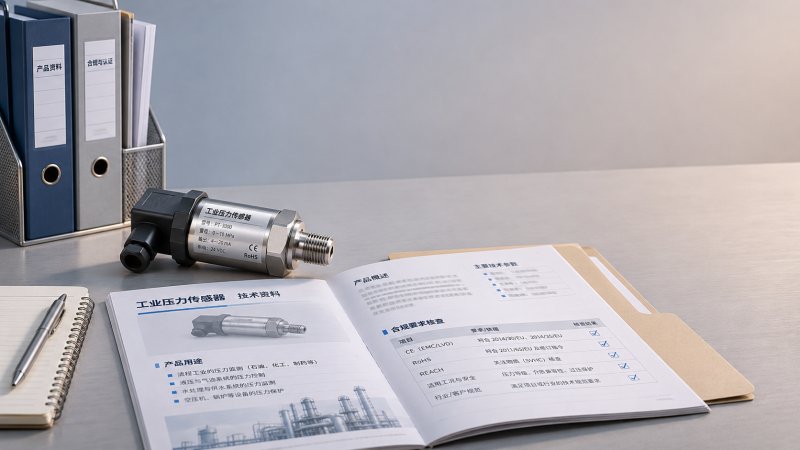
Regulatory compliance requirements cannot be identified from a product name or an industry category alone. They depend on where the business operates, what it does, who is legally responsible, and how a product or process is used. The same pressure instrument, for example, can raise different obligations when it is used in a laboratory, installed in a hazardous area, or incorporated into regulated medical equipment.
A reliable assessment starts by defining those facts and connecting each relevant legal requirement to a specific activity, product, site, or decision. Quality and safety controls can then be built around documented obligations rather than assumptions about certificates, customer specifications, or familiar standards.
Define what the business actually does
Begin with a factual description of the activities being assessed. “Manufactures instruments” is too broad to identify obligations: a company might design sensors, assemble imported components, calibrate finished devices, sell under its own brand, install equipment, or perform several of those activities. Each role can carry different responsibilities.
Set the boundaries of the assessment using:
- Locations: where products are designed, made, stored, sold, installed, serviced, and used.
- Business roles: whether the organization acts as manufacturer, importer, distributor, installer, service provider, laboratory, or operator.
- Products and processes: models, variants, materials, software, production methods, and safety-critical activities.
- Intended use and environment: what the product is designed to do, who uses it, and whether conditions include explosive atmospheres, patient contact, pressure, or other relevant hazards.
- Changes and timing: new markets, design revisions, facility changes, and the date on which a product is placed on a market or an activity begins.
Separate intended use from possible use. A distributor’s customer may want to install a general-purpose sensor in an explosive atmosphere, but that does not establish that the sensor is designed or approved for that environment. The proposed use is a signal to investigate additional requirements, not proof that existing documentation is adequate.
Also distinguish the rules that apply to the product from those that apply to the workplace or installation. A compliant component does not automatically make the complete installation compliant, and a safe workplace procedure does not replace required product conformity assessment.
Map jurisdictions and legal roles before searching for rules
Start with each country or region connected to the activity. A manufacturing site may have local worker-safety, environmental, and operating obligations, while a destination market may impose separate product, labeling, import, and documentation requirements. Where applicable, state, provincial, or local rules also need review.
Record the legal entity responsible at each point in the supply chain. The company whose name appears on a product, for example, should not assume that an original equipment manufacturer has taken on every obligation in the destination market. Contracts can allocate work and access to evidence, but they do not necessarily transfer legal responsibility.
A practical mapping exercise might distinguish these questions:
- Who determines the design and intended use?
- Who places the finished product on the relevant market?
- Who imports it into that market?
- Who installs, modifies, operates, or services it?
- Which entity holds the technical records and can respond to an authority?
The answers can change between markets and sales arrangements. Reassess them when a product is relabeled, sold through a new channel, or supplied as part of a larger system.
Find authoritative requirements and test whether they apply
Use official legislation and regulator guidance as the starting point. Depending on the jurisdiction, useful sources include government legislation databases, product-safety regulators, workplace-safety authorities, environmental agencies, and customs or market-surveillance authorities. Industry associations, certification bodies, and customer questionnaires can help identify issues, but their summaries should lead back to the relevant legal text or official guidance.
For each potentially relevant rule, examine its scope, definitions, exclusions, transition provisions, and obligations. Do not stop after finding a rule with a familiar title. A requirement may apply only above a pressure threshold, to a specified intended use, or to an entity performing a particular legal role. Check amendments and applicable dates, as well as whether a regional rule has been supplemented by national implementation or enforcement provisions.
Turn the applicability test into a short written decision:
- Identify the product, site, or activity being assessed.
- Cite the official source and the specific provision or scope definition.
- Record the facts that make the rule applicable or inapplicable.
- Identify any conditions that would change the decision.
- Assign a reviewer and a date for reassessment.
Recording exclusions matters as much as recording obligations. “Not applicable” is useful only if another reviewer can see why. For example, an exclusion based on a product’s intended use should be revisited if the marketing description or application changes.
Where classification or jurisdiction is uncertain, consult the competent authority or qualified local counsel with a concise description of the product, role, market, and proposed use. Keep the question and response with the assessment. An informal response can inform the decision, but its legal effect depends on the jurisdiction and the nature of the response.
Separate law, standards, certificates, and customer requirements
These sources can all influence a compliance program, but they do not have the same status. Legislation and binding regulatory instruments establish legal obligations. A technical standard may provide a recognized way to meet a requirement, become mandatory through a legal reference, or remain voluntary. Its status depends on the applicable rule and jurisdiction; the presence of a standard number alone does not answer that question.
A certificate or declaration is evidence to assess, not a substitute for the underlying applicability decision. Check who issued it, the product and variants covered, the relevant standard or regulation, any conditions of use, and whether its status can be confirmed through the issuer or an appropriate official register. A certificate for a component does not automatically cover a modified assembly or an end-use installation.
Customer specifications and contracts can impose controls beyond the legal minimum. They should be tracked separately so that an audit does not confuse “required by this customer” with “required by law.” Both may need to be met, but their owners, evidence, and consequences can differ.
Calibration and laboratory competence
Calibration requirements illustrate why context matters. A regulation, permit, recognized method, contract, or internal risk assessment may specify how measuring equipment is controlled. The necessary calibration interval, uncertainty, traceability, and acceptance criteria should follow the applicable requirement and the instrument’s use; they cannot be determined from the word “calibration” alone.
ISO/IEC 17025 concerns the competence of testing and calibration laboratories. Accreditation to it is not automatically required for every calibration. Where accredited calibration is required or selected, check that the laboratory’s accreditation scope covers the relevant measurement, range, and capability—not merely that the laboratory holds an accreditation certificate.
Hazardous-area equipment
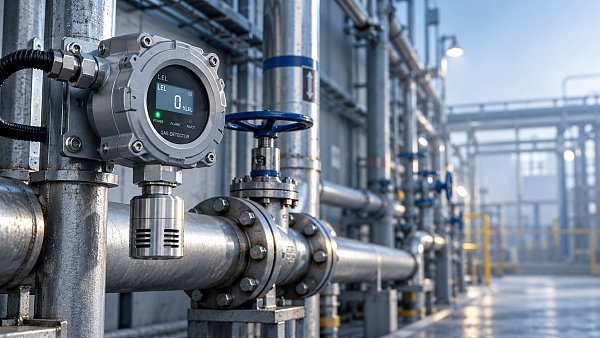
Equipment intended for use in explosive atmospheres requires an assessment of both the applicable market rules and the installation conditions. In the European Union, ATEX requirements can be relevant to equipment intended for use in potentially explosive atmospheres, while separate workplace and installation obligations may also apply. IECEx is an international certification system; an IECEx certificate should not be treated as automatically replacing every national or regional legal requirement.
Compare the equipment’s markings and certificate conditions with the actual area classification, gas or dust characteristics, temperature limitations, and installation arrangement. Special conditions of use can affect wiring, enclosure selection, maintenance, or repair. An installer’s change to a certified assembly should trigger a review rather than an assumption that the original evidence still covers the result.
Medical intended use
A measuring instrument does not become a medical device simply because it is used in a healthcare setting. Conversely, a supplier’s description of intended use, claims, and design can affect whether medical-device rules apply. Classification and obligations depend on the jurisdiction and the particular product, including whether it is an accessory or part of a larger system.
For a product intended for medical use, assess the relevant authority’s definitions and classification rules before relying on a general industrial certification. Changes to claims, software functions, or intended users can alter the assessment even if the physical sensor remains unchanged.
Convert identified obligations into controls and evidence
A list of regulations is not yet an operational compliance system. Each applicable obligation needs a defined control, an owner, and evidence that the control is working. An obligations register can make those connections visible without duplicating every procedure in full.
Write obligations in operational terms. “Follow electrical safety rules” is difficult to verify. A useful entry identifies the relevant requirement, the products or work it covers, the necessary control, and the record that demonstrates completion. Link to controlled documents rather than copying long legal passages that may become outdated.
Where a requirement is not yet met, record the exposure and the decision on whether affected work, release, or installation can proceed. Assign corrective actions with owners and due dates. Closing the action should require evidence that the control has been implemented, not just that a procedure has been drafted.
Build checks around changes, not just audit dates
Periodic reviews are useful, but business changes can make an assessment obsolete between reviews. Require a compliance check before approving a new destination market, product variant, safety-related design change, supplier substitution, revised intended use, facility modification, or change in legal entity or distribution model.
The review should ask whether the change alters the original facts: the product’s classification, the organization’s role, the installation environment, the certificate scope, or the evidence needed. A replacement component with similar performance may still affect a certified configuration. A software update may change a regulated function or a product claim. The significance depends on the applicable rules and the nature of the change.
Monitor official sources for amendments, revised guidance, and changes to referenced standards. Record both the date a change enters into force and any applicable transition provisions; publication alone does not always determine which requirements apply to a particular product or activity. When a standard is revised, check the relevant legal framework and certificate conditions rather than assuming that every existing product must immediately follow the new edition.
Internal audits and incident reviews can test whether the register reflects actual operations. Compare documented roles, approved configurations, calibration records, training, and supplier evidence with what is being used or supplied. Where the facts differ, update the applicability assessment as well as the immediate control. The most dependable register is one that explains not only what the business must do, but also why the decision remains valid for the product, place, and use being assessed.
Recommended for You
 How to identify regulatory compliance requirements for your businessRegulatory Compliance starts with knowing which rules apply. Learn how to assess obligations, document decisions, and build effective controls for your business.
 How to choose industrial air monitors for workplace VOCsChoose industrial air monitors for workplace VOCs with confidence. Compare sensor technologies, placement, calibration, and safety requirements.
 Laser vs infrared gas analyzers for stack monitoring: Which handles water vapor interference better?Laser vs infrared gas analyzer stack monitoring: Discover which technology better handles water vapor interference and how to choose for your application.
 Can an air detector identify carbon monoxide indoors?Can an air detector identify carbon monoxide indoors? Learn which sensors detect CO, how to check device specifications, and why a certified alarm matters.
 How does a paramagnetic gas analyzer measure oxygen?Discover how a paramagnetic gas analyzer measures oxygen, what affects accuracy, and how to choose the right solution for your application.
 How to choose a reliable gas analyzer for low concentrationsChoose a reliable gas analyzer for low concentrations. Compare technologies, sampling, calibration and supplier evidence to make a confident purchase.
 How does cross-sensitivity affect multi gas analysis accuracy?Discover how cross-sensitivity affects multi gas analysis accuracy, and learn how to identify interference, validate compensation, and improve measurement reliability.
 How to choose metrics for sustainable monitoringSustainable Monitoring starts with metrics that drive action. Learn how to define boundaries, assess data quality, and track meaningful improvements.
 How to verify a trusted manufacturer's production capacityTrusted Manufacturer capacity claims need proof. Learn how to verify production plans, bottlenecks, quality records and supply risks before you place an order.
 How to choose an emission controller for an industrial boilerChoose the right emission controller for your industrial boiler. Compare technologies, operating conditions, compliance needs, and costs.
 How to choose composition analyzers for low-concentration measurementsChoose composition analyzers with confidence. Discover how quantification limits, sample handling and matrix effects shape reliable low-concentration measurements.
 How does online analysis compare with laboratory testing for water quality monitoring?Online analysis vs. laboratory testing: compare speed, accuracy, costs, and compliance to find the right water quality monitoring strategy.
 How to choose the right detection range for a custom gas analyzerChoose the right custom gas analyzer detection range with practical guidance on accuracy, exposure limits, calibration, and supplier evaluation.
 How does multi component monitoring detect gases in stack emissions?Discover how multi component monitoring detects stack gases, manages interference and supports reliable emissions reporting. Explore key CEMS selection factors.
 How bright should an industrial monitor be for outdoor use?Choosing an outdoor industrial monitor? Learn why 1,000 nits is a starting point and how glare, contrast, and heat affect sunlight readability.
 How does water vapor affect infrared gas analyzers?Infrared gas analyzers can be affected by humidity, condensation and spectral interference. Learn how to protect sample integrity and achieve reliable results.
 How to reduce customer support response timesReduce Customer Support response times with actionable tips for reporting equipment faults, choosing the right channel, and getting expert help faster.
 How to choose a low range analyzer for trace-level measurementsChoose the right low range analyzer for trace-level measurements. Compare detection limits, sampling, calibration and support to make a confident decision.
 How to choose combustible gas detectors for a specific gasChoose combustible gas detectors with confidence. Compare sensor technologies, gas response, calibration, placement, and certification for your application.
 How to choose an air quality analyzer for the pollutants you need to measureChoose an air quality analyzer with confidence. Compare pollutant measurement methods, sampling, accuracy and calibration to find the right fit for your needs.
 How to choose industrial metrology tools for tight tolerancesChoose industrial metrology tools for tight tolerances with confidence. Compare uncertainty, calibration, tool types, and costs to reduce inspection risk.
 How moisture affects fixed analyzer accuracy in stack gas monitoringImprove fixed analyzer accuracy in stack gas monitoring. Discover how moisture causes dilution, interference, and sample loss—and learn practical ways to protect emissions data.
 How does production line speed affect in-line measurement accuracy?Discover how production line speed affects in-line measurement accuracy. Explore sensor response, sampling, and timing to boost throughput without compromising quality.
 How condensation affects HCl concentration analyzer accuracyHCl concentration analyzer accuracy can suffer when condensation traps HCl. Learn how to spot sampling losses, prevent low readings, and improve measurement reliability.
 How does cross-interference affect multi-component gas analyzers?How does cross-interference affect multi component gas analyzers? Explore measurement errors, compensation limits, and validation tips to choose the right system for your process.
 How does temperature affect high-accuracy sensor performance?Explore how temperature affects high accuracy sensor performance. Learn to reduce thermal drift, evaluate compensation, and select the right sensor for reliable measurements.
 Can a C4H8O concentration analyzer distinguish between isomers?Can a C4H8O concentration analyzer distinguish isomers? Compare GC, FTIR and MS methods, uncover selectivity limits, and learn what to validate before choosing your instrument.
 How to identify a reliable supplier using on-time delivery recordsIdentify a Reliable Supplier by verifying on-time delivery records, original commitments, and complete shipments. Learn practical checks to reduce purchasing risk and protect your project schedule.
 How sensitive should a portable hydrogen analyzer be for lab use?Choose a portable hydrogen analyzer for laboratory use with the right quantification limit, accuracy, and range. Learn how to verify performance and avoid costly buying mistakes.
 How to set industrial calibration intervals based on equipment riskSet industrial calibration intervals based on equipment risk, drift, and as-found data. Learn when to shorten or extend schedules to improve reliability and avoid unnecessary costs.
 How to choose electrochemical analyzers for low-current measurementsCompare electrochemical analyzers for precise low-current measurements. Learn how noise, leakage, bandwidth, and real-cell testing help you choose the right instrument.
 What tolerance does a custom gas mixture need for calibration?Choose the right custom gas tolerance for calibration. Learn how blending tolerance, certified uncertainty, and stability affect accuracy—and avoid paying for precision you don’t need.

Search Categories
Search Categories
- Smart Meters & Power Quality
- Transformer Gas Analyzers
- BESS Thermal Runaway Detectors
- Energy, Power & Smart Grid Monitoring
- Optical Profilers & CMM
- Ultrasonic & X-Ray NDT
- Calibration Standards
- Precision Metrology & NDT
- Water Quality Analyzers
- CEMS & VOCs Monitors
- Price Trends
- Import & Export Updates
- Market Trends
- Industry News
- Industry Insights
Latest Article
- How to identify regulatory compliance requirements for your businessRegulatory Compliance starts with knowing which rules apply. Learn how to assess obligations, document decisions, and build effective controls for your business.Posted by:
- How to choose industrial air monitors for workplace VOCsChoose industrial air monitors for workplace VOCs with confidence. Compare sensor technologies, placement, calibration, and safety requirements.Posted by:
- Laser vs infrared gas analyzers for stack monitoring: Which handles water vapor interference better?Laser vs infrared gas analyzer stack monitoring: Discover which technology better handles water vapor interference and how to choose for your application.Posted by:
Please give us a message
