How to choose an emission controller for an industrial boiler


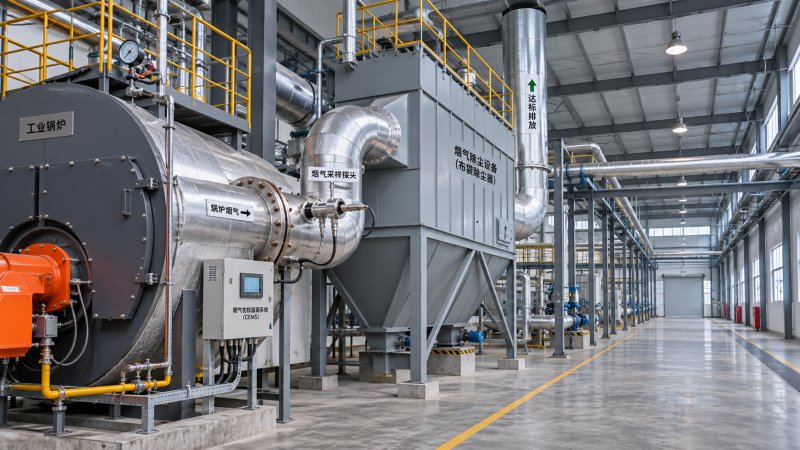
Choose an emission controller by starting with the pollutant that must be reduced, the boiler’s full operating range, and the emission limit expressed in the same units and conditions as the available measurements. A system that performs well at steady maximum load may struggle during startup, fuel changes, or low-load operation. The selection also has to account for pressure drop, reagent or waste handling, monitoring, and the way the equipment responds to the boiler’s existing controls.
In boiler applications, “emission controller” can refer to combustion controls, downstream pollution-control equipment, or the automation that coordinates both. Define the scope before comparing proposals: a burner oxygen-trim controller, for example, does not replace a particulate collector or a system designed to remove sulfur oxides.
Start with the pollutant and its emission basis
Identify the pollutants covered by the applicable permit and the conditions under which compliance is assessed. Common targets include nitrogen oxides (NOx), carbon monoxide (CO), particulate matter, sulfur oxides (SOx), and, for some fuels, acid gases or trace contaminants. The relevant limits may differ by fuel, operating mode, averaging period, or startup and shutdown conditions. Confirm the local requirements and permit terms before selecting equipment.
Put the measured or estimated inlet concentration and the required outlet level on a consistent basis. A concentration reported on a dry basis cannot be compared directly with a wet-basis value. Oxygen correction, reference conditions, and the distinction between concentration and mass emission rate also matter. Diluting flue gas with excess air can lower a measured concentration while leaving the actual pollutant mass largely unchanged.
Use representative data from each significant fuel and load condition. A single stack test at stable full load is a useful reference point, but it does not describe the entire duty. Record flue gas flow, temperature, oxygen, moisture, dust loading, and pollutant concentrations at the proposed installation point. For a new boiler or a major fuel change, request a documented emissions and flue gas estimate with its underlying fuel assumptions.
Match the control technology to the source
The technologies address different mechanisms and are often combined. Low-NOx combustion can reduce NOx formation at its source, but aggressive air staging or excess flue gas recirculation can increase CO or destabilize the flame. An SCR system treats NOx downstream using a catalyst and reagent; its performance depends on gas temperature, mixing, catalyst condition, and contaminants in the gas. SNCR also uses a reagent but relies on an appropriate reaction temperature without a catalyst, making the available furnace temperature profile especially relevant.
For solid-fuel boilers, a coarse particle collector may remove larger ash particles while leaving a fine fraction that requires additional treatment. A fabric filter’s suitability depends on keeping the gas within the selected filter material’s temperature and chemical limits. An electrostatic precipitator has different sensitivities, including dust electrical properties and gas conditions. Neither option should be selected from collection efficiency alone without defining the particle loading and operating envelope used to support that claim.
For sulfur control, compare the consequences of the fuel and the treatment train together. A lower-sulfur fuel can reduce the load on downstream equipment, provided its availability and effect on burner performance are acceptable. Scrubbing adds reagent and residue handling; wet systems also introduce water treatment and corrosion considerations. Confirm where collected material or wastewater will go before treating removal efficiency as a complete answer.
Test the design against changing boiler conditions
Request a performance assessment at maximum continuous load, normal load, minimum stable load, and any operating point where the fuel or burner configuration changes. Include credible extremes for fuel composition and ambient conditions. The limiting case is not always full load: reduced gas temperature at low load can place a catalyst outside its effective window, while a different fuel blend can increase dust, sulfur, or reagent demand.
Startup and shutdown deserve separate treatment. A downstream system may need time to reach its operating temperature, and reagent injection may be inhibited until the appropriate conditions are present. Establish the expected sequence, the emissions monitoring method during those periods, and the response to an aborted start. Compare that sequence with the permit and the boiler’s actual operating pattern.
Pressure drop is another system-level constraint. Add the expected resistance of the controller, ductwork, heat exchangers, and any future fouling to the fan assessment. A collector with adequate removal performance can still be unsuitable if the induced-draft fan lacks capacity or if maintaining draft at low load becomes unstable. Require the proposal to state clean and expected operating pressure losses, along with the assumptions used.
Define measurement and control together
The control scheme needs measurements that represent the process it is trying to regulate. Oxygen trim uses flue gas oxygen to adjust the air-to-fuel relationship, but an oxygen reading alone cannot establish complete combustion. CO measurement provides useful feedback about poor mixing, burner condition, or insufficient air. Air leakage into the duct upstream of an oxygen probe can create a misleadingly high reading and drive the controller toward an unsuitable air setting.
For reagent-based NOx control, define whether injection follows boiler load, inlet NOx, outlet NOx, or a combination. Load-based feedforward can respond quickly to firing changes; outlet feedback can correct for changing conditions, but sampling and transport delays need to be reflected in tuning. Poorly coordinated control can oscillate or overfeed reagent. Where ammonia or a related reagent is used, specify how excess reagent, often called ammonia slip, will be monitored or otherwise managed.
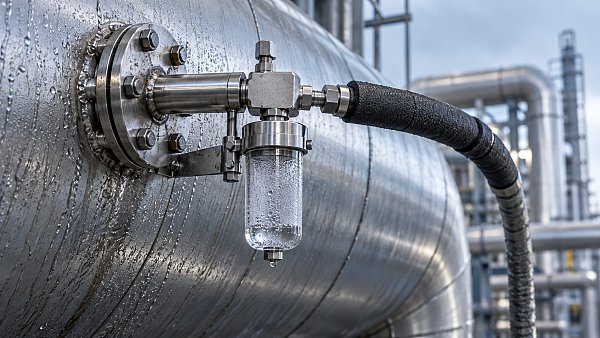
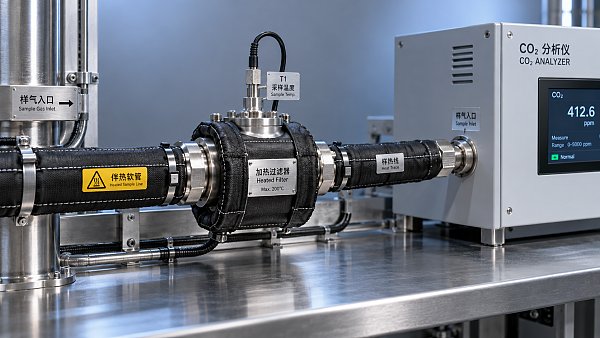
Review the sampling location and measurement basis for each analyzer. A probe upstream of treatment serves a different control purpose from one downstream. Stratified flow, condensation, dust, and sampling-line delays can distort readings. The sample conditioning system must preserve the measurement required by the selected analyzer, especially for components affected by moisture or condensation. Provide safe access for probe cleaning, calibration, and replacement.
Continuous emissions monitoring and process control may use related measurements, but their functions and applicable validation requirements are distinct. A control analyzer should not automatically be assumed suitable for compliance reporting. Confirm the required monitoring arrangement, data availability, calibration procedures, and treatment of invalid data under the applicable permit.
Set the operating boundaries before requesting a guarantee
A meaningful performance commitment states the inlet conditions, fuel properties, load range, measurement method, averaging period, and outlet basis. It also defines what happens when inlet concentrations exceed the design envelope. A quoted removal percentage without an inlet concentration and test basis does not establish whether the outlet limit will be met.
Ask for the expected consumption of power, reagent, water, compressed air, and replacement components at specified duty points. Include disposal of ash, spent sorbent, filter media, or wastewater where relevant. Catalyst life and filter life should be evaluated against the stated contaminants, temperature exposure, cleaning practices, and operating hours rather than treated as unconditional fixed intervals.
Access affects both cost and availability. Leave space to remove filter bags, catalyst modules, pumps, probes, and duct sections. Identify isolation points and the time needed to cool or purge equipment before maintenance. For retrofit projects, verify structural loads, lifting routes, duct geometry, and outage duration against the existing plant layout.
Compare proposals on the same duty
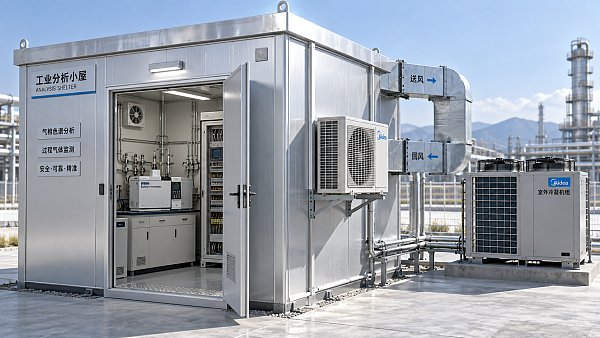
Provide each prospective supplier with the same boiler data, fuel envelope, emission limits, operating profile, plot constraints, and required control interfaces. Request a process flow diagram, an instrumentation list, the normal and abnormal operating sequences, and a clear boundary between supplied equipment and plant services. This makes it easier to expose omissions such as reagent unloading, residue storage, analyzer shelters, or fan modifications.
Review the interface with the existing distributed control system or programmable logic controller in detail. Agree on signals, communication protocols, alarm priorities, permissives, trip actions, and the behavior after loss of power, instrument air, network communication, or an analyzer signal. Changes affecting burner management or safety interlocks require a coordinated safety review and testing; emissions optimization must not compromise the boiler’s protective functions.
Before acceptance, agree on commissioning and performance-test conditions, including measurement locations, calibration status, fuel, load, and the method for resolving discrepancies. Where seasonal operation or multiple fuels prevent testing every case at once, document the remaining verification conditions and responsibilities. The strongest proposal is the one whose performance, interfaces, and ongoing operating demands are supported across the boiler’s defined duty.
Recommended for You
 How to choose an emission controller for an industrial boilerChoose the right emission controller for your industrial boiler. Compare technologies, operating conditions, compliance needs, and costs.
 How to choose composition analyzers for low-concentration measurementsChoose composition analyzers with confidence. Discover how quantification limits, sample handling and matrix effects shape reliable low-concentration measurements.
 How does online analysis compare with laboratory testing for water quality monitoring?Online analysis vs. laboratory testing: compare speed, accuracy, costs, and compliance to find the right water quality monitoring strategy.
 How to choose the right detection range for a custom gas analyzerChoose the right custom gas analyzer detection range with practical guidance on accuracy, exposure limits, calibration, and supplier evaluation.
 How does multi component monitoring detect gases in stack emissions?Discover how multi component monitoring detects stack gases, manages interference and supports reliable emissions reporting. Explore key CEMS selection factors.
 How bright should an industrial monitor be for outdoor use?Choosing an outdoor industrial monitor? Learn why 1,000 nits is a starting point and how glare, contrast, and heat affect sunlight readability.
 How does water vapor affect infrared gas analyzers?Infrared gas analyzers can be affected by humidity, condensation and spectral interference. Learn how to protect sample integrity and achieve reliable results.
 How to reduce customer support response timesReduce Customer Support response times with actionable tips for reporting equipment faults, choosing the right channel, and getting expert help faster.
 How to choose a low range analyzer for trace-level measurementsChoose the right low range analyzer for trace-level measurements. Compare detection limits, sampling, calibration and support to make a confident decision.
 How to choose combustible gas detectors for a specific gasChoose combustible gas detectors with confidence. Compare sensor technologies, gas response, calibration, placement, and certification for your application.
 How to choose an air quality analyzer for the pollutants you need to measureChoose an air quality analyzer with confidence. Compare pollutant measurement methods, sampling, accuracy and calibration to find the right fit for your needs.
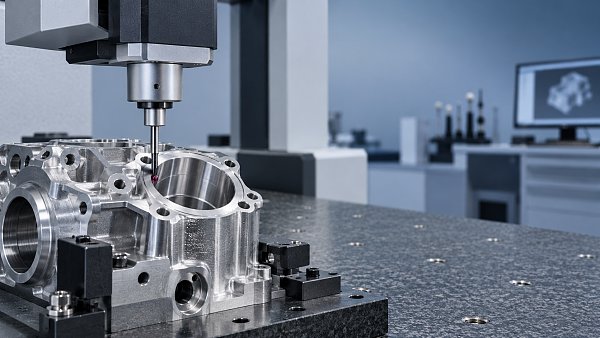
 How to choose industrial metrology tools for tight tolerancesChoose industrial metrology tools for tight tolerances with confidence. Compare uncertainty, calibration, tool types, and costs to reduce inspection risk.
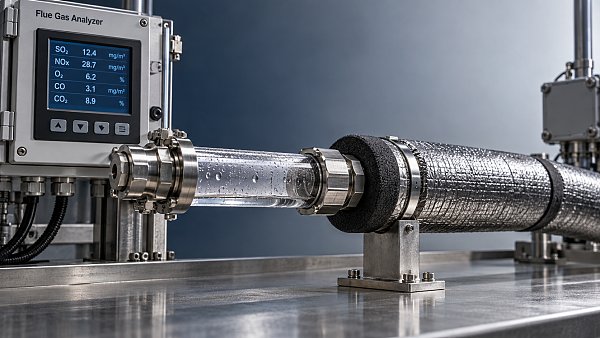
 How moisture affects fixed analyzer accuracy in stack gas monitoringImprove fixed analyzer accuracy in stack gas monitoring. Discover how moisture causes dilution, interference, and sample loss—and learn practical ways to protect emissions data.
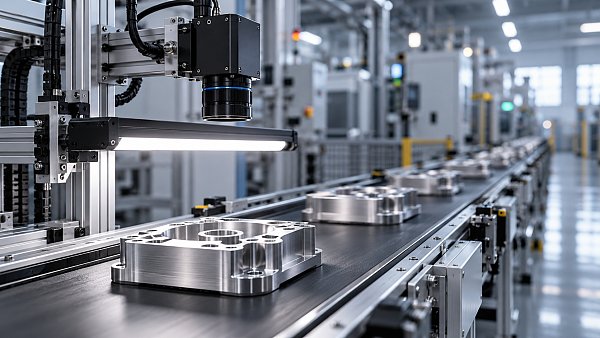
 How does production line speed affect in-line measurement accuracy?Discover how production line speed affects in-line measurement accuracy. Explore sensor response, sampling, and timing to boost throughput without compromising quality.
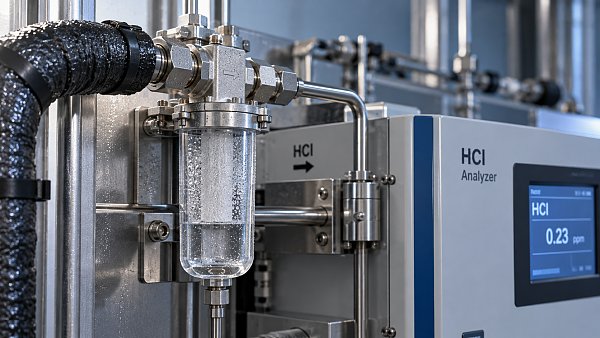
 How condensation affects HCl concentration analyzer accuracyHCl concentration analyzer accuracy can suffer when condensation traps HCl. Learn how to spot sampling losses, prevent low readings, and improve measurement reliability.
 How does cross-interference affect multi-component gas analyzers?How does cross-interference affect multi component gas analyzers? Explore measurement errors, compensation limits, and validation tips to choose the right system for your process.
 How does temperature affect high-accuracy sensor performance?Explore how temperature affects high accuracy sensor performance. Learn to reduce thermal drift, evaluate compensation, and select the right sensor for reliable measurements.
 Can a C4H8O concentration analyzer distinguish between isomers?Can a C4H8O concentration analyzer distinguish isomers? Compare GC, FTIR and MS methods, uncover selectivity limits, and learn what to validate before choosing your instrument.
 How to identify a reliable supplier using on-time delivery recordsIdentify a Reliable Supplier by verifying on-time delivery records, original commitments, and complete shipments. Learn practical checks to reduce purchasing risk and protect your project schedule.
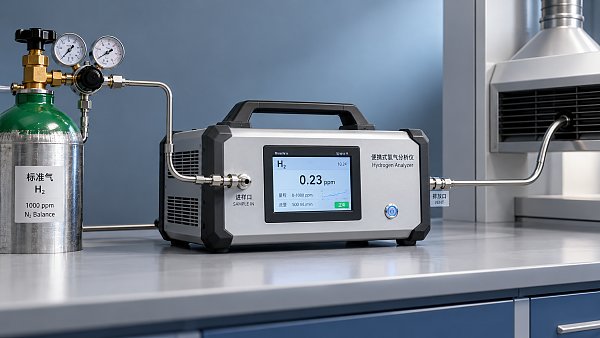
 How sensitive should a portable hydrogen analyzer be for lab use?Choose a portable hydrogen analyzer for laboratory use with the right quantification limit, accuracy, and range. Learn how to verify performance and avoid costly buying mistakes.
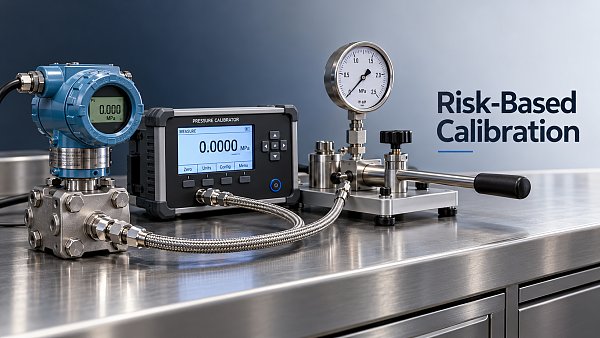
 How to set industrial calibration intervals based on equipment riskSet industrial calibration intervals based on equipment risk, drift, and as-found data. Learn when to shorten or extend schedules to improve reliability and avoid unnecessary costs.
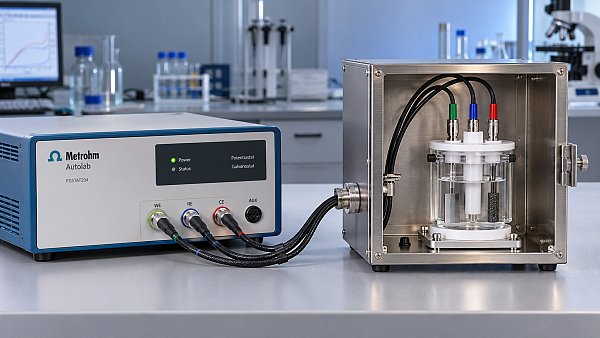
 How to choose electrochemical analyzers for low-current measurementsCompare electrochemical analyzers for precise low-current measurements. Learn how noise, leakage, bandwidth, and real-cell testing help you choose the right instrument.
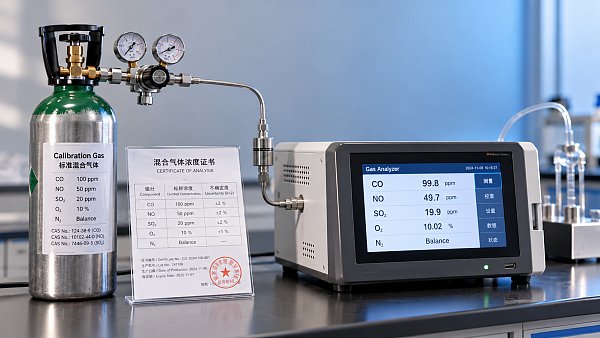
 What tolerance does a custom gas mixture need for calibration?Choose the right custom gas tolerance for calibration. Learn how blending tolerance, certified uncertainty, and stability affect accuracy—and avoid paying for precision you don’t need.
 How condensation affects stack detector readings in wet flue gasStack detector readings can drift when wet flue gas condenses. Learn how to identify moisture interference, prevent sample losses, and improve emissions monitoring reliability.
 How to prevent condensation in a CO2 analyzer sampling systemPrevent condensation in your CO2 analyzer sampling system. Learn how to control dew point, eliminate cold spots, and manage moisture for reliable readings and fewer costly disruptions.
 How to verify accuracy claims for industrial quality analyzersVerify accuracy claims for industrial quality analyzers with calibration checks, independent testing, and clear acceptance criteria. Learn how to reduce risk and buy with confidence.
 How to calculate cooling loads for an industrial analyzer shelterSize industrial analyzer shelter cooling with confidence. Learn to calculate equipment heat, solar gains, and ventilation loads, then select HVAC capacity for reliable analyzer performance.
 Hydrogen Analyzers for Energy Storage: Purity Monitoring vs. Leak DetectionChoosing a hydrogen analyzer for energy storage systems? Compare purity monitoring and leak detection to select the right sensors, improve safety, and protect fuel cell performance.
 NH3 Monitoring in Fertilizer Plants: Where Should Leak Analyzers Be Installed?NH3 analyzer for fertilizer production: discover where to place leak detectors around storage, compressors, and loading areas to reduce blind spots and improve early warning.
 Diesel Engine NOx Analyzers: Response Time and NO2 Conversion ExplainedChoosing a NOX analyzer for diesel engines? Learn how response time, NO2 conversion, and sampling design affect accuracy—and make a smarter, evidence-based purchase.
 SO2 Analyzers for Smelter Emissions: Sampling Hot, Dust-Laden Flue GasSelect an SO2 analyzer for smelting industry applications. Discover how to handle hot, dust-laden flue gas, prevent sample losses, and achieve reliable emissions monitoring.
 Unstable CH4 Readings in Biogas Monitoring? Check Moisture and Sample FlowCH4 analyzer for biogas monitoring giving unstable readings? Discover how moisture, sample flow, and pressure checks help pinpoint faults and restore reliable methane measurements.
Search Categories
Search Categories
- Smart Meters & Power Quality
- Transformer Gas Analyzers
- BESS Thermal Runaway Detectors
- Energy, Power & Smart Grid Monitoring
- Optical Profilers & CMM
- Ultrasonic & X-Ray NDT
- Calibration Standards
- Precision Metrology & NDT
- Water Quality Analyzers
- CEMS & VOCs Monitors
- Price Trends
- Import & Export Updates
- Market Trends
- Industry News
- Industry Insights
Latest Article
- How to choose an emission controller for an industrial boilerChoose the right emission controller for your industrial boiler. Compare technologies, operating conditions, compliance needs, and costs.Posted by:
- How to choose composition analyzers for low-concentration measurementsChoose composition analyzers with confidence. Discover how quantification limits, sample handling and matrix effects shape reliable low-concentration measurements.Posted by:
- How does online analysis compare with laboratory testing for water quality monitoring?Online analysis vs. laboratory testing: compare speed, accuracy, costs, and compliance to find the right water quality monitoring strategy.Posted by:
Please give us a message