
How explosion proof analysis verifies safe equipment for hazardous areas


How Explosion Proof Analysis Verifies Safe Equipment for Hazardous Areas
Explosion proof analysis helps quality-control and safety managers determine whether equipment can operate without becoming an ignition source in hazardous industrial locations.
The central question is not whether a device is labeled “explosion proof,” but whether its protection method matches the actual gases, dusts, temperatures, installation conditions, and maintenance reality.
A sound verification process combines hazardous-area classification, equipment certification review, engineering assessment, inspection planning, and traceable documentation before equipment reaches service.
For organizations managing chemical processing, oil and gas, power generation, laboratories, manufacturing, or bulk materials, this analysis reduces avoidable safety, compliance, and operational risks.
What Explosion Proof Analysis Actually Verifies
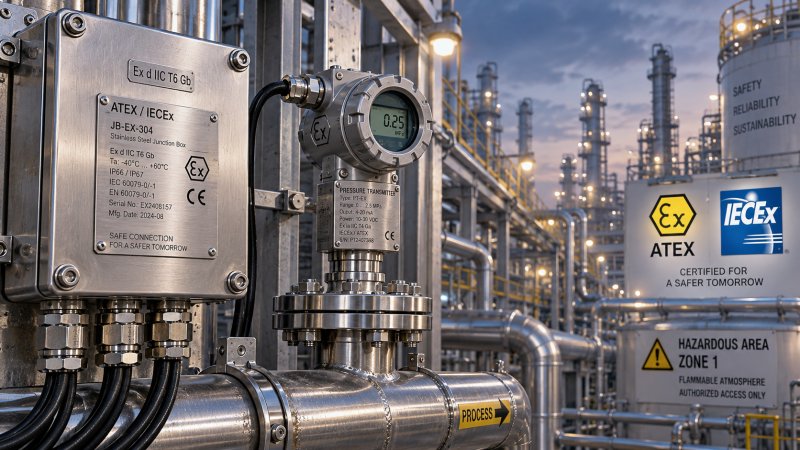
Explosion proof analysis is a structured evaluation of whether electrical or mechanical equipment can prevent ignition where flammable atmospheres may occur during normal or abnormal operations.
It reviews both the equipment and its intended environment. A certified product can still be unsuitable when its protection concept does not match site-specific hazards.
In North American practice, “explosion proof” commonly describes enclosures designed to contain an internal explosion and prevent flame propagation into the surrounding atmosphere.
Internationally, hazardous-area protection includes several methods, such as flameproof enclosure, intrinsic safety, increased safety, pressurization, encapsulation, and non-sparking equipment.
Therefore, explosion proof analysis should not treat every hazardous-area product as equivalent. The relevant question is whether the selected protection technique controls the credible ignition mechanisms.
Those mechanisms include electrical arcs, hot surfaces, static discharge, mechanical friction, impact sparks, chemical reactions, and fault conditions that increase internal temperatures.
Quality teams should verify product markings, drawings, certificates, temperature ratings, cable entry requirements, ambient limits, and special conditions listed by the certification body.
Safety managers should also examine how equipment will be installed, cleaned, calibrated, repaired, and inspected, because field deviations can invalidate an otherwise appropriate selection.
Start With the Hazardous Area, Not the Product Catalog
Reliable equipment verification begins with a current hazardous-area classification. Without it, purchasing teams cannot make defensible decisions about suitable protection levels or certification requirements.
The classification identifies where an explosive atmosphere may exist, how often it may occur, and whether the hazard involves gas, vapor, mist, combustible dust, or fibers.
IEC and ATEX systems commonly use Zones. Zone 0, 1, and 2 address gases, while Zone 20, 21, and 22 address combustible dust.
North American systems may use Class and Division terminology, although Zone-based approaches are also widely applied in newer projects and multinational engineering specifications.
Area classification must reflect process conditions, ventilation, release sources, material properties, operating pressure, housekeeping practices, and credible failures rather than generic facility assumptions.
A solvent filling station may require different equipment from an adjacent control room, even when both areas are physically close and serve the same production line.
Likewise, a grain handling conveyor may create a dust hazard that requires a different analysis from a nearby fuel-gas installation or chemical blending vessel.
Before approving equipment, confirm the documented zone or division, the material group, the required temperature class, and the environmental constraints at its exact installation point.
Verify Gas Groups, Dust Groups, and Ignition Temperatures
Explosion proof analysis must compare the equipment rating against the characteristics of the hazardous material. Certification alone does not prove compatibility with every flammable substance.
Gas groups indicate how easily an ignition can propagate through a gap. Equipment approved for a lower-risk group may not suit a more demanding group.
Under IECEx and ATEX conventions, Group IIC generally represents the most demanding gas group, covering gases such as hydrogen and acetylene.
Group IIB and Group IIA equipment may be appropriate for less demanding gases, but managers should never infer suitability without checking the substance data and certificate scope.
Dust groups also matter. Conductive dust can create additional electrical risks, while dust layers can insulate equipment surfaces and raise actual operating temperatures.
Temperature class verification is equally critical. Equipment surface temperature must remain below the autoignition temperature of the surrounding gas, vapor, or dust under specified conditions.
A T4 marking, for example, establishes a maximum surface temperature limit of 135 degrees Celsius under the certified operating conditions, not every possible site condition.
For dust hazards, maximum surface temperature assessments must consider both airborne clouds and accumulated layers, because thick deposits can change heat dissipation and ignition behavior.
Read ATEX and IECEx Certificates Beyond the Headline Marking
ATEX and IECEx certification provides essential evidence, but certificate review must go beyond checking whether a logo appears on a nameplate or supplier datasheet.
ATEX applies within the European Union framework, while IECEx is an international certification scheme based on IEC standards for explosive atmospheres and related equipment.
Both systems use detailed markings that identify equipment group, category or equipment protection level, protection type, gas or dust group, and temperature classification.
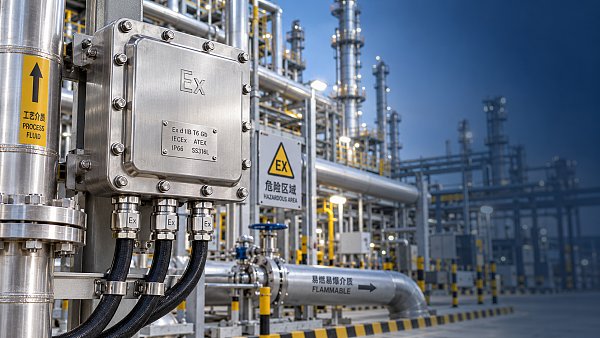
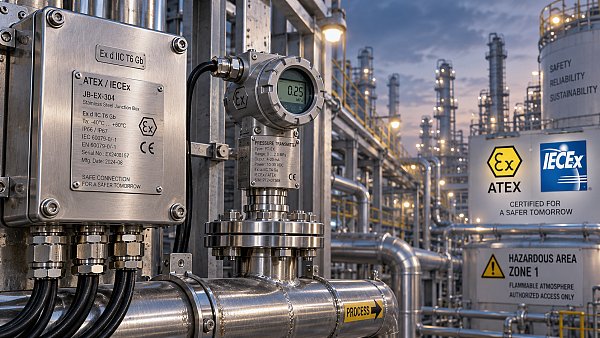
A typical marking may identify an Ex d flameproof enclosure, Ex i intrinsic safety circuit, or Ex e increased safety design, each with distinct installation expectations.
Quality-control personnel should obtain the actual certificate, not merely a manufacturer declaration, marketing brochure, edited test summary, or an image that cannot be authenticated.
Check the certificate number, issue date, manufacturer identity, model designation, applicable standards, approval status, and whether optional components match the ordered configuration.
Particular attention should be given to “X” conditions of certification. These conditions may restrict cable glands, ambient temperatures, fasteners, coatings, electrostatic risks, or repair methods.
A product can be genuine and certified yet become noncompliant when an installer uses an unapproved gland, substitutes a cover bolt, or exceeds the certified temperature range.
Assess the Complete Installation, Including Interfaces and Accessories
Hazardous-area compliance is achieved by an installed system, not an isolated device. Explosion proof analysis should cover every interface that may compromise the protection concept.
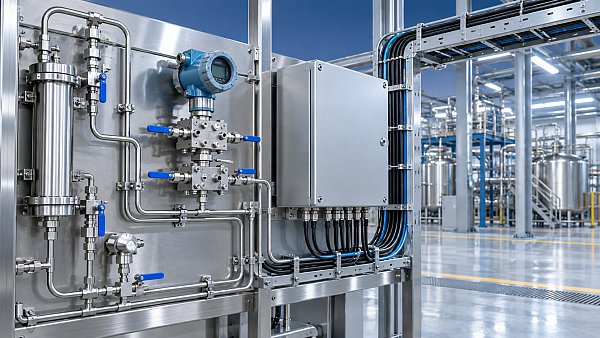
For flameproof equipment, enclosures, covers, joints, threads, and cable entries must preserve the tested flame path and mechanical integrity specified by the manufacturer.
Cable glands require the correct type, thread, sealing method, ingress protection, and certification. An unsuitable gland can defeat a compliant enclosure during normal operation.
Unused openings must be closed with approved stopping plugs. Improvised plugs, thread adapters, or damaged blanking elements can create serious safety and audit failures.
Intrinsic safety systems demand a different approach. Analysts must verify the complete loop, including barriers, field devices, cable parameters, grounding arrangements, and control-system interfaces.
Loop calculations should confirm that voltage, current, power, capacitance, and inductance remain within the entity parameters or system approval limits established for the circuit.
For pressurized or purged equipment, the analysis must include purge gas supply, pressure monitoring, startup sequencing, alarm logic, and actions following loss of pressurization.
Installation review should also include corrosion exposure, vibration, washdown, ultraviolet degradation, electromagnetic interference, access constraints, and accidental damage risks that affect long-term integrity.
Use a Practical Explosion Proof Analysis Workflow
A repeatable workflow allows safety managers to evaluate equipment consistently across sites, suppliers, projects, maintenance replacements, and modernization programs.
First, collect current hazardous-area drawings, process safety information, material safety data, operating procedures, equipment datasheets, and local regulatory or customer requirements.
Second, define the intended duty. Record location, zone or division, process material, ambient temperature, mounting arrangement, electrical supply, operating mode, and maintenance access.
Third, identify potential ignition sources associated with the equipment. Consider normal operation, foreseeable malfunction, loss of ventilation, overload, contamination, and human intervention during servicing.
Fourth, compare the required protection level with the proposed equipment marking and certificate. Confirm gas or dust group, temperature class, equipment protection level, and environmental suitability.
Fifth, inspect supporting parts. Review glands, conduit seals, junction boxes, barriers, plugs, adapters, earthing hardware, external coatings, and documentation for each relevant interface.
Sixth, document any gap as a clear action. Typical actions include selecting another model, changing the installation method, adding protection, revising the area classification, or obtaining manufacturer clarification.
Finally, retain a decision record with certificates, photographs, inspection findings, calculation sheets, approval roles, and evidence that corrective actions were closed before commissioning.
Common Errors That Create False Confidence
One common error is assuming that an “Ex” mark automatically means universal hazardous-area suitability. The marking is meaningful only when interpreted in its complete technical context.
Another mistake is relying on a supplier’s broad claim while ignoring differences between the certified model and the configured model actually being purchased or installed.
Temperature class mismatches are frequently overlooked. Heat from nearby process equipment, direct sunlight, insulation, or dust accumulation can exceed the product’s certified ambient assumptions.
Maintenance modifications can introduce equally serious failures. Drilling enclosures, repainting flame paths, replacing fasteners, or opening energized equipment may compromise protective characteristics.
Counterfeit or poorly traceable products create another exposure. Procurement controls should confirm manufacturer authorization, serial numbers, certificate validity, and consistency between documentation and nameplate data.
Organizations also underperform when area drawings are outdated. Process changes, new solvents, altered ventilation, or dust-generating operations can invalidate earlier equipment selection decisions.
Finally, teams often separate engineering, purchasing, safety, and maintenance responsibilities too sharply. Explosion proof analysis works best when approval criteria and records are shared.
What Quality and Safety Managers Should Request From Suppliers
Supplier qualification should include more than commercial capability. Ask for technical evidence that supports equipment selection, installation, traceability, and lifecycle maintenance in hazardous environments.
Request current ATEX or IECEx certificates, complete product markings, operating manuals, installation instructions, dimensional drawings, declared ambient limits, and approved accessory lists.
For critical equipment, request test reports where appropriate, quality-system credentials, manufacturing traceability information, repair policies, spare-parts controls, and documented change-notification procedures.
Confirm whether certificates apply to the exact voltage, enclosure material, sensor type, cable entry, display option, mounting configuration, and firmware or electronics revision offered.
For instrumentation, assess measurement performance alongside hazardous-area compliance. A compliant pressure transmitter still creates operational risk if its range, wetted materials, accuracy, or response time are unsuitable.
Global procurement teams should compare certification acceptability across destination markets early. A product suitable for one jurisdiction may require different approvals, markings, or documentation elsewhere.
GIH-style supplier intelligence can support this work by helping teams compare manufacturers, certification depth, product specialization, regional capability, and evidence of long-term technical support.
The objective is not to burden procurement with paperwork. It is to create a transparent evidence trail that allows purchasing decisions to withstand technical, safety, and regulatory scrutiny.
Build Verification Into Commissioning and Ongoing Inspection
Approval before purchase is necessary, but it does not complete the safety obligation. Final verification should occur after installation and before the equipment enters hazardous service.
Commissioning inspections should compare installed equipment against approved documents. Verify nameplates, location, orientation, cable entries, sealing components, bonding, labels, and physical condition.
Inspection frequency should reflect the hazardous-area classification, equipment type, environmental severity, process criticality, history of defects, and applicable standards or jurisdictional requirements.
Routine inspections can identify loose covers, damaged glands, corrosion, missing plugs, cracked windows, degraded seals, dust buildup, unauthorized modifications, and unreadable identification markings.
Any repair must preserve the certified design. Organizations should use competent repair providers and maintain records showing that work followed applicable hazardous-area repair requirements.
Training remains essential. Technicians need to understand why a seemingly minor substitution or adjustment can change the explosion protection performance of installed equipment.
Management should track defects and recurring causes. Patterns involving specific equipment families, contractors, suppliers, or installation methods often reveal systemic opportunities for improvement.
A disciplined lifecycle program turns explosion proof analysis from a one-time approval step into an operational control that protects people, assets, production continuity, and compliance standing.
Conclusion: Make Evidence-Based Equipment Decisions
Explosion proof analysis verifies safety by connecting the hazard, equipment rating, certificate scope, installation details, and lifecycle controls into one defensible decision process.
For quality-control and safety managers, the most important outcome is clear: select equipment only after confirming it suits the actual hazardous area, not a generic application label.
When area classification, ATEX or IECEx evidence, temperature limits, accessories, installation quality, and inspection records align, hazardous-area equipment decisions become substantially more reliable.
This approach reduces incident exposure while improving audit readiness, supplier accountability, maintenance discipline, and confidence that critical instrumentation can support safe industrial operations.
Recommended for You
 How to judge whether a competitive price reflects real valueCompetitive Price: learn how to compare scope, compliance, performance, and lifecycle costs to identify real value, reduce risk, and make smarter purchasing decisions.
 When custom gas analysis is the right fit for complex process streamsCustom gas analysis for complex process streams: learn when tailored sampling, interference control, and reliable measurement design deliver confident decisions.
 When does a laser gas analyzer meet stack emissions monitoring needs?Laser gas analyzer for stack emissions: learn when it delivers fast, reliable data, how to assess installation risks, and what to verify for CEMS compliance.
 How to select a hazardous gas analyzer for confined spacesHazardous gas analyzer selection for confined spaces: compare sensors, sampling, certifications, alarms, and maintenance to protect workers and choose with confidence.
 When is a single gas analyzer sufficient for workplace safety monitoring?Discover when a single gas analyzer delivers reliable workplace safety monitoring, and learn the key limits, calibration needs, and risks that require broader detection.
 How to choose an ambient gas analyzer for low-level leak detectionAmbient gas analyzer selection for low-level leak detection: compare sensitivity, cross-sensitivity, sampling design, alarms, and calibration for reliable site performance.
 How to tell when an oxygen sensor needs replacementOxygen sensor replacement signs explained: learn how live data, fault codes, wiring checks, and exhaust inspections pinpoint the real issue before you buy.
 How laser gas analyzers improve combustion control in steel furnacesLaser gas analyzer for steel industry applications delivers fast in-situ O₂ and CO data to optimize furnace combustion, cut fuel waste, and improve steel heating stability.
 How to verify whether explosion proof equipment meets site requirementsExplosion proof equipment verification made practical: match zones, gas or dust groups, temperature classes, certificates, and installation conditions for confident compliance.
 How industrial gas analysis helps detect contamination before releaseIndustrial Gas Analysis helps detect moisture, oil, oxygen, and toxic contaminants before release—protecting processes, ensuring compliance, and reducing costly risks.
 When is electrochemistry detection the right choice for water analysis?Electrochemistry detection for water analysis: learn when fast, reliable monitoring of ions, chlorine, pH, and more delivers actionable results.
 How industrial standards reduce quality risks in supplier selectionIndustrial Standard guidance helps quality and safety managers reduce supplier risks, verify compliance, strengthen traceability, and build resilient instrumentation supply chains.
 When does a multi-component system reduce installation complexity?Multi component systems reduce installation complexity when they eliminate field interfaces, streamline commissioning, and provide proven compatibility. Learn how to assess total cost and supplier accountability.
 How to size an industrial control shelter for outdoor equipmentIndustrial control shelter sizing guide: optimize layout, HVAC, access, safety, and expansion space for reliable outdoor equipment operations.
 How flue analysis helps verify combustion efficiencyFlue analysis verifies combustion efficiency by assessing O2, CO, CO2, and stack temperature to identify excess air, incomplete combustion, and heat losses.
 How to select industrial gas detectors for confined spacesIndustrial gas detectors for confined spaces: learn how to match sensors, sampling methods, alarms, and certifications to real atmospheric hazards.
 When does a laser oxygen analyzer outperform zirconia sensors?Laser oxygen analyzer vs. zirconia sensors: compare speed, selectivity, maintenance, gas chemistry, and installation needs to choose the right oxygen measurement solution.
 How to select a percent range analyzer for process measurementsPercent range analyzer selection made practical: compare accuracy, sample systems, calibration, gas matrix, integration, and lifecycle cost for reliable process measurements.
 How explosion proof analysis verifies safe equipment for hazardous areasExplosion proof analysis verifies hazardous-area equipment by matching certifications, temperature ratings, installation details, and inspection controls for safer compliance.
 When does fixed gas detection need point sensors instead of open-path monitoring?Fixed gas detection: discover when point sensors outperform open-path monitoring for predictable leaks, enclosed zones, local alarms, and safer design decisions.
 How to choose industrial metrology systems for tight-tolerance partsIndustrial metrology guide for tight-tolerance parts: compare CMMs, optical scanners, gauges, uncertainty, workflow, and traceable inspection strategies.
 How process metrology reduces measurement variation in productionProcess metrology reduces production measurement variation by improving traceability, uncertainty control, calibration, and reliable quality decisions.
 How to select an industrial monitoring analyzer for harsh environmentsIndustrial monitoring analyzer selection for harsh environments: evaluate sampling, durability, hazardous-area compliance, accuracy, maintenance, and data reliability.
 How calibration intervals affect test and measurement equipment accuracyTest and measurement equipment calibration intervals directly affect accuracy, risk, compliance, and uptime. Learn how to set evidence-based schedules that protect critical decisions.
 When does process gas monitoring need continuous measurement?Process gas monitoring needs continuous measurement when rapid changes threaten safety, quality, compliance, or uptime. Learn how to specify reliable, actionable monitoring systems.
 How to prevent false alarms in power plant instrumentationPower plant instrumentation guide: prevent false alarms with reliable signal checks, smarter alarm settings, mode-based control, and actionable operator responses.
 How fixed gas detectors help prevent leaks in enclosed workspacesFixed gas detectors provide continuous leak monitoring in enclosed workspaces, enabling faster alarms, safer responses, and stronger protection for people and processes.
 How industrial gas analysis helps detect process contamination earlyIndustrial Gas Analysis helps detect oxygen, moisture, and hydrocarbon contamination early, enabling faster fault isolation, safer operations, and stronger process control.
 What drives environmental compliance continuous monitoring setup cost?Environmental compliance continuous monitoring setup cost: uncover hidden expenses, compare bids accurately, and build a reliable, audit-ready system.
 How to select gas analysis equipment for continuous emissions monitoringGas analysis equipment selection guide for reliable continuous emissions monitoring—compare technologies, sampling, calibration, compliance, and maintenance needs.
 What detection limit is needed for NH3 environmental monitoring?High accuracy NH3 analyzer for environmental monitoring: learn how to set the right detection limit, improve sampling reliability, and make defensible decisions.
 How to select a NOX analyzer for power plant emissions complianceNOX analyzer for power plant emissions: learn how to select a compliant, reliable CEMS solution with the right range, sample handling, calibration, and data integrity.



Search Categories
Search Categories
- Smart Meters & Power Quality
- Transformer Gas Analyzers
- BESS Thermal Runaway Detectors
- Energy, Power & Smart Grid Monitoring
- Optical Profilers & CMM
- Ultrasonic & X-Ray NDT
- Calibration Standards
- Precision Metrology & NDT
- Water Quality Analyzers
- CEMS & VOCs Monitors
- Price Trends
- Import & Export Updates
- Market Trends
- Industry News
- Industry Insights
Latest Article
- How to judge whether a competitive price reflects real valueCompetitive Price: learn how to compare scope, compliance, performance, and lifecycle costs to identify real value, reduce risk, and make smarter purchasing decisions.Posted by:
- When custom gas analysis is the right fit for complex process streamsCustom gas analysis for complex process streams: learn when tailored sampling, interference control, and reliable measurement design deliver confident decisions.Posted by:
- When does a laser gas analyzer meet stack emissions monitoring needs?Laser gas analyzer for stack emissions: learn when it delivers fast, reliable data, how to assess installation risks, and what to verify for CEMS compliance.Posted by:
Please give us a message
