
How to select industrial gas detectors for confined spaces


Choose a confined-space gas detector from the atmosphere that can actually develop inside the space, not from a generic “four-gas” purchasing description. A vessel, pit, tank, sewer, duct, vault, or enclosed process area can lose oxygen, accumulate vapors, release toxic gases, or contain more than one hazard at different heights. The selected instrument must detect the relevant hazards early enough, remain reliable in the expected temperature and humidity, and fit the entry, ventilation, and rescue arrangement.
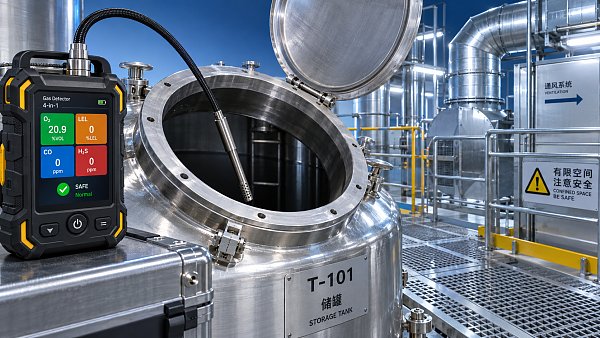
A portable multigas detector is often the starting point because it can monitor oxygen, flammable gas, carbon monoxide, and hydrogen sulfide at the same time. That configuration is useful in many maintenance and utility tasks, but it is not automatically sufficient. A tank that previously held solvents may require a volatile organic compound sensor. A wastewater structure may need protection against hydrogen sulfide and methane but also faces high humidity and sensor fouling. Purging a vessel with nitrogen changes the main concern from toxic exposure to oxygen displacement. The detector specification should follow the hazard assessment for the specific space and the work planned inside it.
Start with the atmosphere, process residue, and work activity
Confined-space selection begins by separating three sources of atmospheric change: what is already in the space, what may enter from connected equipment, and what the work itself can create. Residue on walls, sludge, scale, insulation, or porous linings can release gas after ventilation begins. Connected lines, drains, valves, and blanking arrangements can introduce material from an adjacent process. Welding, cutting, coating, cleaning chemicals, engine exhaust, battery charging, and inert-gas purging may create a new monitoring requirement after entry has started.
Ask for the substance history rather than relying on the space name. Two storage tanks of the same size can require different instruments if one contained water-based material and the other contained a low-flash-point solvent. A “clean” vessel can still have oxygen-deficient air after inerting. Likewise, a low combustible-gas reading does not establish that the atmosphere is breathable: an oxygen-deficient environment may suppress combustion and cause a flammable sensor to under-read or behave outside its intended conditions.
Define the expected gas or vapor, the possible concentration range, its relative vapor density, its likely release point, and whether its concentration can change during the job. This prevents a frequent error: choosing a detector because it has a sensor with a familiar gas label while overlooking cross-sensitivity, range limitations, or the inability to detect the actual contaminant.
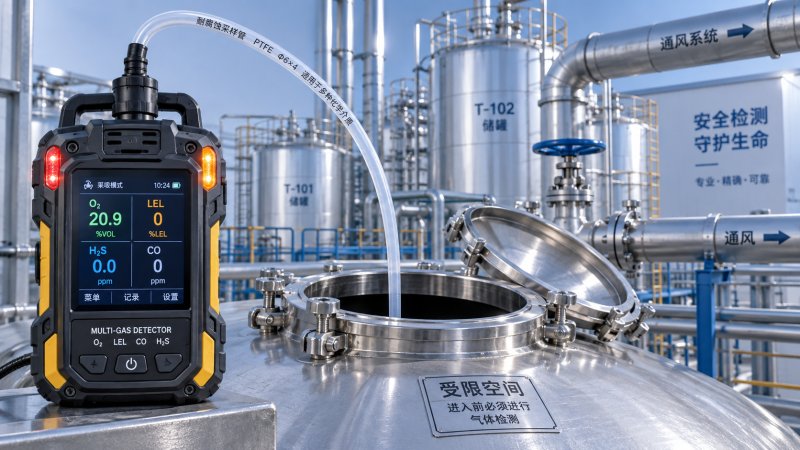
Use a sensor set that matches the hazard mechanism
Oxygen measurement is fundamental because both oxygen depletion and oxygen enrichment affect entry conditions and the interpretation of combustible-gas readings. An oxygen sensor should be suited to the anticipated temperature, humidity, pressure, and storage conditions. Electrochemical oxygen sensors are common, but they are consumable components. A detector that powers on and displays a value is not proof that the oxygen channel is still responding correctly.
For flammable atmospheres, understand whether the instrument uses a catalytic bead sensor, an infrared sensor, or another method. Catalytic sensors are widely used for combustible gases and vapors, but their response requires oxygen. They can also be impaired by substances that poison or inhibit the sensor element, including certain silicon-containing compounds, sulfur compounds, and lead-containing materials. In a recently inerted space or an atmosphere with uncertain oxygen content, a catalytic combustible reading needs careful interpretation.
Infrared combustible sensors do not depend on oxygen in the same way and are resistant to some catalytic poisons. They are often well suited to hydrocarbons, but they do not provide a universal replacement for catalytic technology. Their response to hydrogen and some other gases may be limited or absent, depending on the sensor design. A space with possible hydrogen release, such as one associated with battery systems or certain chemical reactions, requires an explicit review of the detector’s hydrogen response rather than an assumption based on an “LEL” label.
Electrochemical toxic-gas sensors are appropriate for many hazards such as carbon monoxide, hydrogen sulfide, sulfur dioxide, chlorine, ammonia, or nitrogen dioxide. Each sensor is selective only within practical limits. Interfering gases can create positive or negative response errors, and sensor filters can alter response speed or reduce sensitivity to related compounds. Review the manufacturer’s cross-sensitivity table for the expected chemical mixture, especially where cleaning agents, combustion products, acid gases, or amines are present.
Photoionization detectors are useful where volatile organic compounds are the central concern. Their readings are often expressed against a reference gas and should not be treated as an exact concentration for every vapor. Response varies with ionization potential, lamp energy, humidity, compound type, and correction factor. A PID is strong at showing that vapor is present and changing; it does not replace a gas-specific sensor when a particular substance has a defined exposure concern.
Sampling method determines whether the reading represents the space
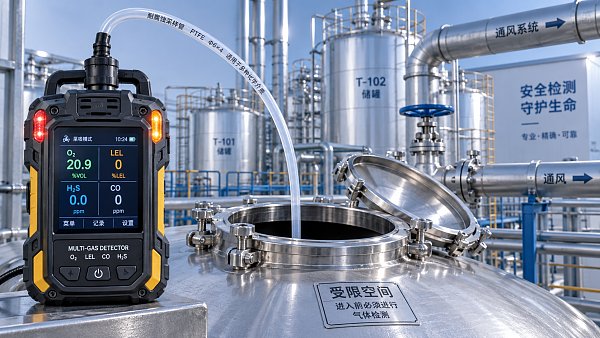
Diffusion instruments are compact and appropriate when the sensing inlet can remain in the same atmosphere as the person wearing the detector. They are less suitable for pre-entry testing of a remote interior, a deep pit, or a vessel where the opening is far from the bottom. A pumped detector with compatible sampling hose allows remote sampling before entry and supports measurements at several depths.
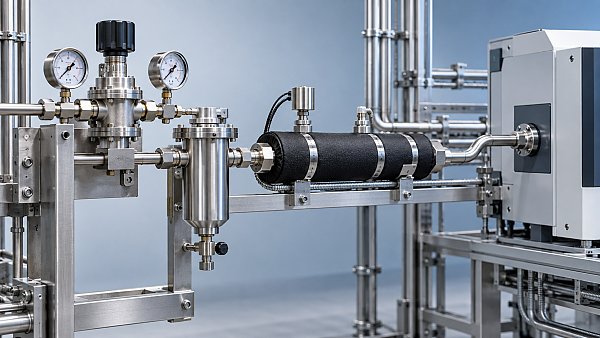
Sampling equipment needs its own evaluation. The hose material must not absorb or react with the gases being measured. Long tubing, water traps, particulate filters, quick-connect fittings, and probe assemblies add transport delay. A reading taken immediately after inserting a long hose may represent air from the line rather than air from the vessel. Allow adequate sample draw time, then confirm that readings have stabilized before recording the result.
Test vertically and at locations where gas may collect or enter. Lighter gases can rise, dense vapors can settle, and a space with poor mixing can contain layers. Yet density alone is not enough to predict distribution. Temperature differences, ventilation direction, internal baffles, agitation, and leaks from connected lines can move a hazardous layer to an unexpected location. A single reading at the access opening is not a valid substitute for representative sampling throughout the entry path and work area.
Water, dust, mist, and condensate deserve attention during probe selection. A clogged filter restricts sample flow; a flooded line can distort response or damage components. Select a pump instrument with a clear flow-fault alarm and confirm that its blockage test is meaningful with the intended hose and accessories installed. A detector that continues displaying normal values while flow has stopped creates a false impression of active monitoring.
Compare performance specifications in context
Alarm setpoints should be configured under the applicable site rules and task controls, with any gas-specific exposure criteria considered separately from combustible-gas thresholds. Do not use a single generic alarm philosophy for all channels. Toxic exposure may be affected by both peak concentration and time, while flammability decisions rely on a different hazard basis. Alarm latching, acknowledgment behavior, and the action required after an alarm should be defined before work starts.
Certification, equipment construction, and compatibility
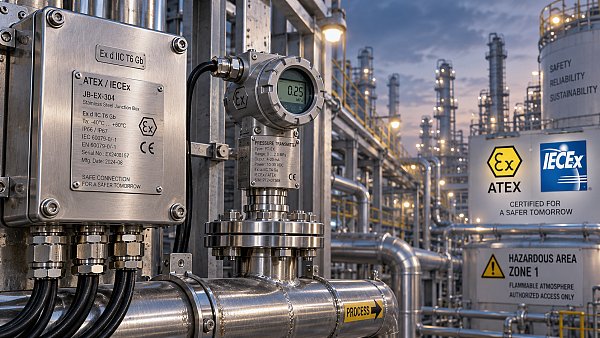
Where a potentially explosive atmosphere may be present, confirm that the instrument’s hazardous-location approval is accepted for the intended location and that the approval marking matches the gas group, temperature class, and environmental conditions involved. The detector, charger, battery pack, pump module, and any remote accessories should be considered as a system. Mixing accessories or batteries outside the approved configuration can invalidate the basis for using the equipment in a hazardous area.
Construction details matter in aggressive environments. Hydrogen sulfide, chlorine compounds, salt-laden moisture, solvent vapors, and condensate can attack external contacts, filters, seals, and pump components. A detector with an easily replaceable inlet filter may be practical for dusty work, but frequent filter replacement should not conceal a location where the sampling approach is repeatedly overwhelmed by contamination. For highly corrosive service, inspect the availability of compatible probes, tubing, charging contacts, protective boots, and replacement sensors before standardizing on an instrument.
Battery endurance must be assessed against the full task duration, including pre-entry testing, standby time, active sampling, communication functions, and possible delays. A stated runtime obtained under favorable conditions may fall when a pump runs continuously, temperatures are low, or alarms occur frequently. Charging arrangements also need a controlled location that does not introduce ignition or contamination concerns.
Calibration discipline is part of detector selection
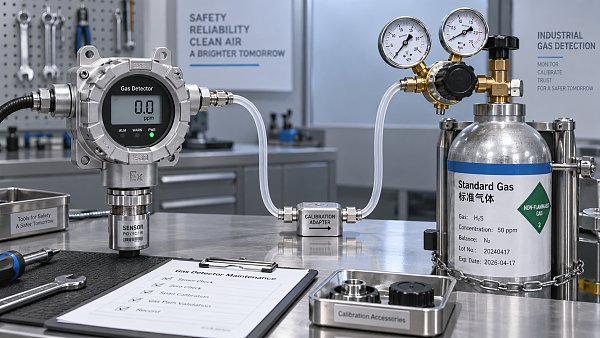
Every gas detector requires a support process. Select equipment only when the required calibration gas, regulator, docking hardware, replacement sensors, and competent service arrangements can be maintained over its operating life. A technically suitable instrument becomes a weak control when calibration gas is unavailable, expired, incorrectly balanced, or incompatible with the sensor configuration.
A bump test and a full calibration answer different questions. A bump test verifies that gas reaches the sensors and that the instrument responds and alarms. Calibration adjusts the instrument response against a known gas concentration. The exact frequency should follow applicable requirements, manufacturer instructions, exposure history, and local control procedures, but function verification before use is commonly treated as a distinct safeguard because sensors can fail between scheduled calibrations.
Document sensor replacement dates, calibration results, bump-test failures, flow-fault events, repairs, and unusual exposures. This history reveals patterns that a pass/fail record can miss. Repeated slow response on one channel may indicate aging, contamination, a restricted inlet, or an unsuitable sensor choice. Recurrent zero drift after exposure to a particular cleaning product may point to chemical interference rather than a random equipment fault.
Build the selection around the actual entry sequence
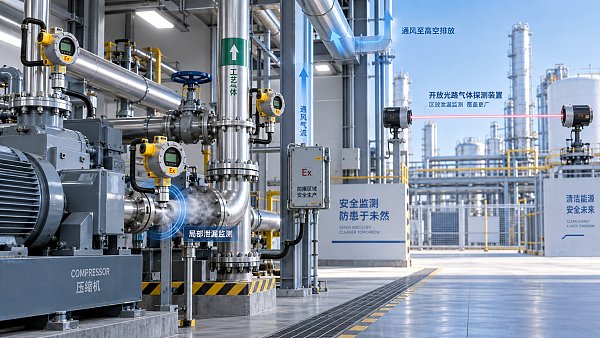
The detector should support pre-entry testing, initial entry, continuous monitoring, and reassessment after conditions change. Remote sampling is valuable before opening or entering a space, but it does not eliminate the need for continuous personal monitoring once the atmosphere can be altered by movement, ventilation changes, nearby process activity, or the work itself. A fixed monitor may add value at an opening or ventilation discharge, yet it cannot represent all locations inside a complex enclosure.
Before selecting a model, map the sequence from isolation through ventilation, testing, entry, work, interruption, and exit. Identify when the atmosphere can change and where the detector must be positioned to recognize that change. This often clarifies whether the requirement is one pumped multigas instrument, a personal diffusion monitor plus a pre-entry pump unit, or a gas-specific instrument added for a known toxic vapor.
The strongest selection is traceable: each sensor channel, range, alarm behavior, sampling accessory, approval marking, and maintenance requirement can be linked to a defined confined-space hazard. That connection is more dependable than choosing the detector with the longest feature list.
Recommended for You
 How to calculate cooling loads for an industrial analyzer shelterSize industrial analyzer shelter cooling with confidence. Learn to calculate equipment heat, solar gains, and ventilation loads, then select HVAC capacity for reliable analyzer performance.
 How Do You Handle Analyzer Failure During an Environmental Audit?Learn how to handle analyzer failure during environmental compliance audit procedures. Protect evidence, verify data, and restore monitoring with this practical response guide.
 Do VOC Monitors Require Explosion-Proof Certification?Does VOC monitoring require explosion-proof certification? Learn when approval is needed, compare ATEX and IECEx, and choose the right monitor for your site.
 How sample conditioning affects accuracy in petrochemical analyzersImprove accuracy in petrochemical analyzers with smarter sample conditioning. Discover how phase control, filtration, and transport design prevent bias and deliver reliable process data.
 How to troubleshoot sensor drift in industrial gas detectorsIndustrial gas detectors showing sensor drift? Learn how to verify calibration gas, identify root causes, and determine when sensor replacement is needed for reliable monitoring.
 How to judge whether a competitive price reflects real valueCompetitive Price: learn how to compare scope, compliance, performance, and lifecycle costs to identify real value, reduce risk, and make smarter purchasing decisions.
 When custom gas analysis is the right fit for complex process streamsCustom gas analysis for complex process streams: learn when tailored sampling, interference control, and reliable measurement design deliver confident decisions.
 When does a laser gas analyzer meet stack emissions monitoring needs?Laser gas analyzer for stack emissions: learn when it delivers fast, reliable data, how to assess installation risks, and what to verify for CEMS compliance.
 How to select a hazardous gas analyzer for confined spacesHazardous gas analyzer selection for confined spaces: compare sensors, sampling, certifications, alarms, and maintenance to protect workers and choose with confidence.
 When is a single gas analyzer sufficient for workplace safety monitoring?Discover when a single gas analyzer delivers reliable workplace safety monitoring, and learn the key limits, calibration needs, and risks that require broader detection.
 How to choose an ambient gas analyzer for low-level leak detectionAmbient gas analyzer selection for low-level leak detection: compare sensitivity, cross-sensitivity, sampling design, alarms, and calibration for reliable site performance.
 How to tell when an oxygen sensor needs replacementOxygen sensor replacement signs explained: learn how live data, fault codes, wiring checks, and exhaust inspections pinpoint the real issue before you buy.
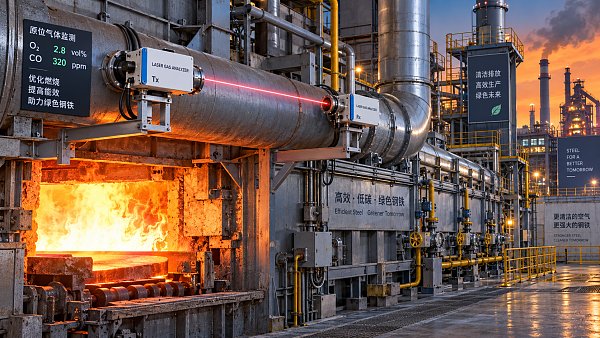
 How laser gas analyzers improve combustion control in steel furnacesLaser gas analyzer for steel industry applications delivers fast in-situ O₂ and CO data to optimize furnace combustion, cut fuel waste, and improve steel heating stability.
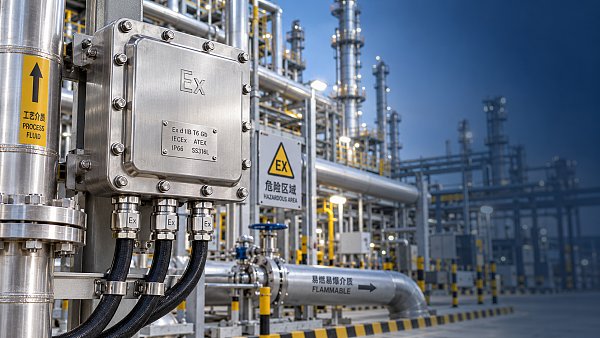
 How to verify whether explosion proof equipment meets site requirementsExplosion proof equipment verification made practical: match zones, gas or dust groups, temperature classes, certificates, and installation conditions for confident compliance.
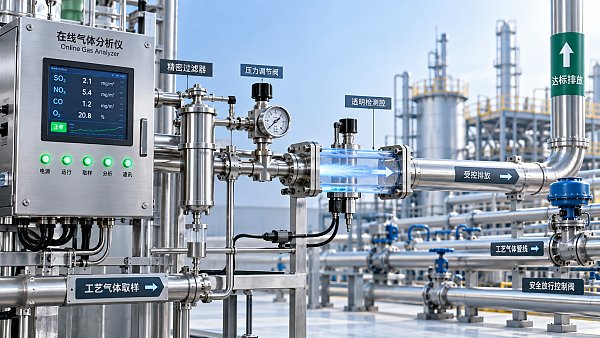
 How industrial gas analysis helps detect contamination before releaseIndustrial Gas Analysis helps detect moisture, oil, oxygen, and toxic contaminants before release—protecting processes, ensuring compliance, and reducing costly risks.
 When is electrochemistry detection the right choice for water analysis?Electrochemistry detection for water analysis: learn when fast, reliable monitoring of ions, chlorine, pH, and more delivers actionable results.
 How industrial standards reduce quality risks in supplier selectionIndustrial Standard guidance helps quality and safety managers reduce supplier risks, verify compliance, strengthen traceability, and build resilient instrumentation supply chains.
 When does a multi-component system reduce installation complexity?Multi component systems reduce installation complexity when they eliminate field interfaces, streamline commissioning, and provide proven compatibility. Learn how to assess total cost and supplier accountability.
 How to size an industrial control shelter for outdoor equipmentIndustrial control shelter sizing guide: optimize layout, HVAC, access, safety, and expansion space for reliable outdoor equipment operations.
 How flue analysis helps verify combustion efficiencyFlue analysis verifies combustion efficiency by assessing O2, CO, CO2, and stack temperature to identify excess air, incomplete combustion, and heat losses.
 How to select industrial gas detectors for confined spacesIndustrial gas detectors for confined spaces: learn how to match sensors, sampling methods, alarms, and certifications to real atmospheric hazards.
 When does a laser oxygen analyzer outperform zirconia sensors?Laser oxygen analyzer vs. zirconia sensors: compare speed, selectivity, maintenance, gas chemistry, and installation needs to choose the right oxygen measurement solution.
 How to select a percent range analyzer for process measurementsPercent range analyzer selection made practical: compare accuracy, sample systems, calibration, gas matrix, integration, and lifecycle cost for reliable process measurements.
 How explosion proof analysis verifies safe equipment for hazardous areasExplosion proof analysis verifies hazardous-area equipment by matching certifications, temperature ratings, installation details, and inspection controls for safer compliance.
 When does fixed gas detection need point sensors instead of open-path monitoring?Fixed gas detection: discover when point sensors outperform open-path monitoring for predictable leaks, enclosed zones, local alarms, and safer design decisions.
 How to choose industrial metrology systems for tight-tolerance partsIndustrial metrology guide for tight-tolerance parts: compare CMMs, optical scanners, gauges, uncertainty, workflow, and traceable inspection strategies.
 How process metrology reduces measurement variation in productionProcess metrology reduces production measurement variation by improving traceability, uncertainty control, calibration, and reliable quality decisions.
 How to select an industrial monitoring analyzer for harsh environmentsIndustrial monitoring analyzer selection for harsh environments: evaluate sampling, durability, hazardous-area compliance, accuracy, maintenance, and data reliability.
 How calibration intervals affect test and measurement equipment accuracyTest and measurement equipment calibration intervals directly affect accuracy, risk, compliance, and uptime. Learn how to set evidence-based schedules that protect critical decisions.
 When does process gas monitoring need continuous measurement?Process gas monitoring needs continuous measurement when rapid changes threaten safety, quality, compliance, or uptime. Learn how to specify reliable, actionable monitoring systems.
 How to prevent false alarms in power plant instrumentationPower plant instrumentation guide: prevent false alarms with reliable signal checks, smarter alarm settings, mode-based control, and actionable operator responses.
 How fixed gas detectors help prevent leaks in enclosed workspacesFixed gas detectors provide continuous leak monitoring in enclosed workspaces, enabling faster alarms, safer responses, and stronger protection for people and processes.
Search Categories
Search Categories
- Smart Meters & Power Quality
- Transformer Gas Analyzers
- BESS Thermal Runaway Detectors
- Energy, Power & Smart Grid Monitoring
- Optical Profilers & CMM
- Ultrasonic & X-Ray NDT
- Calibration Standards
- Precision Metrology & NDT
- Water Quality Analyzers
- CEMS & VOCs Monitors
- Price Trends
- Import & Export Updates
- Market Trends
- Industry News
- Industry Insights
Latest Article
- How to calculate cooling loads for an industrial analyzer shelterSize industrial analyzer shelter cooling with confidence. Learn to calculate equipment heat, solar gains, and ventilation loads, then select HVAC capacity for reliable analyzer performance.Posted by:
- How Do You Handle Analyzer Failure During an Environmental Audit?Learn how to handle analyzer failure during environmental compliance audit procedures. Protect evidence, verify data, and restore monitoring with this practical response guide.Posted by:
- Do VOC Monitors Require Explosion-Proof Certification?Does VOC monitoring require explosion-proof certification? Learn when approval is needed, compare ATEX and IECEx, and choose the right monitor for your site.Posted by:
Please give us a message
