
How to judge whether a competitive price reflects real value


A low quote is not evidence of low cost. It may reflect efficient production, a favorable sourcing position, or a supplier willing to win business with a thinner margin. It may also reflect omitted testing, substituted materials, incomplete documentation, weak after-sales capacity, or commercial terms that move cost into commissioning, maintenance, delay, and replacement.
That distinction matters especially for instrumentation. A pressure transmitter, flowmeter, gas detector, analytical sensor, PLC component, or laboratory device can appear interchangeable on a quotation while differing materially in measurement performance, certification validity, environmental suitability, firmware support, traceability, and spare-parts continuity. The relevant question is not whether the offered figure is a Competitive Price. It is whether the quoted scope can deliver the required function, compliance status, and operating life without creating an unbudgeted liability elsewhere.
Start by defining what is actually included in the price
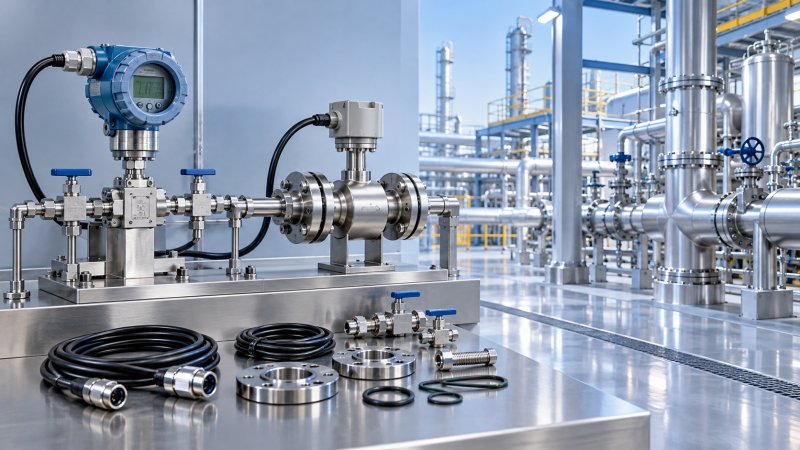
Price comparisons fail when line items carry the same general name but do not represent the same deliverable. “4–20 mA pressure transmitter,” for example, is not a complete purchasing specification. Its value depends on pressure range, wetted materials, process connection, accuracy over the working range, turndown, overload resistance, temperature limits, enclosure rating, hazardous-area approval where relevant, display and local controls, communication protocol, calibration documentation, and warranty terms.
A quote can look attractive because it excludes elements assumed to be included:
- Mounting accessories, manifolds, cables, connectors, impulse tubing, or installation kits;
- Initial calibration, factory acceptance testing, inspection records, and certificates;
- Configuration software, licenses, protocol modules, or integration support;
- Special packaging, export documentation, or compliant labeling;
- Commissioning assistance, training, remote diagnostics, or field service;
- Recommended spare sensors, seals, batteries, electrodes, lamps, or consumables.
The remedy is not merely asking for a “best price.” Request a scope matrix that identifies exactly what is supplied, what is excluded, and which deliverables are conditional. The matrix should compare each bidder against the same technical baseline rather than against a broad product description. If a lower offer cannot be mapped line by line to the required configuration, it is not yet comparable.
Commercial terms require the same scrutiny. A unit price quoted Ex Works cannot be judged directly against a Delivered Duty Paid offer. Freight, export crating, cargo insurance, customs handling, inland transport, and import obligations may alter the landed-cost position substantially. Currency validity, payment milestones, minimum-order requirements, and price-adjustment clauses also affect the true commercial exposure.
Separate compliance claims from compliance evidence
Instruments used in regulated, safety-critical, or quality-controlled environments must be assessed on evidence, not on product-page language. A statement that equipment is “CE certified,” “ATEX compliant,” “IECEx available,” or “calibrated” does not establish that the exact quoted configuration satisfies the intended application.
For equipment entering the European Economic Area, CE marking is a conformity marking associated with applicable EU requirements; it is not a universal quality certificate. For explosive atmospheres, ATEX and IECEx approvals have distinct legal and technical roles, and the approved product version, protection concept, gas or dust group, temperature class, ambient range, cable entries, and installation conditions must match the duty. A certificate covering one enclosure or sensor option may not cover another.
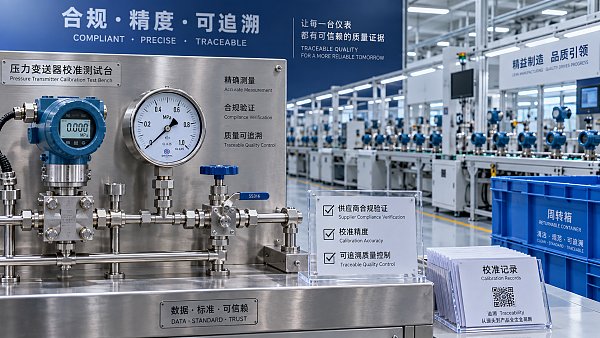
Similarly, a calibration certificate has different significance depending on its source and content. A manufacturer’s internal certificate may be appropriate for some applications. Where traceable measurement results or formally recognized laboratory competence are needed, documentation from a laboratory operating to ISO/IEC 17025 requirements may be relevant. The purchase requirement should state the needed calibration points, measurement uncertainty where applicable, traceability expectations, and reporting format. “Calibration included” is too vague to protect either measurement quality or auditability.
Documentation should be reviewed before release of the purchase order when compliance is decisive. At minimum, verify certificate numbers, issuing bodies, product model references, revision status, and any special conditions of use. A valid certificate attached to the wrong model is not a compliance solution.
Check whether the specification is technically equivalent at the operating point
Nominal specification values can conceal important differences. A supplier may quote a device with a stated accuracy that appears equal to a premium alternative, while the conditions behind that number differ. Accuracy may be expressed as a percentage of span, reading, full scale, or calibrated range. It may exclude long-term stability, ambient-temperature effects, vibration effects, response behavior, or installation error. Those exclusions matter when a measurement is used for control, custody transfer, emissions monitoring, batch quality, or safety interlocking.
Consider a flowmeter offered for a conductive liquid service. The basic technology may be suitable, but the price comparison remains incomplete until the process conditions are aligned: minimum and maximum flow, fluid conductivity, solids content, liner compatibility, electrode material, pipe size, grounding arrangement, available straight-run conditions, IP rating, and output integration. A less expensive unit that requires a different installation arrangement or performs poorly at the low end of the operating range can create a cost that was never visible in the purchase order.
For analytical instruments, equivalence extends beyond the main analyzer. Detection limits, selectivity, sample conditioning, reagent consumption, warm-up time, maintenance intervals, data integrity functions, and service access often determine whether the equipment will remain usable in routine operation. In laboratory equipment, a lower acquisition price can be offset by proprietary consumables, software restrictions, or the absence of local repair capability.
Technical equivalence should therefore be reviewed against the process duty, not only against a catalogue table. The most useful question is: What must this instrument reliably do under our actual operating conditions? A bid that satisfies only a nominal headline specification may be cheaper because it is designed for a less demanding duty.
Calculate the cost of ownership, not just the purchase price
Lifecycle cost does not require a complex financial model to improve a decision. It requires identifying where an apparently low upfront price can create recurring or event-driven expense. For instrumentation, the main cost categories are usually installation, calibration, maintenance labor, consumables, spare parts, downtime, rework, technical support, and replacement.
A useful comparison can be framed as:
Total ownership cost = landed purchase cost + installation and integration + operating and maintenance cost + expected failure and downtime exposure + end-of-life replacement cost.
Not every category can be converted into a precise number before purchase, but uncertainty itself is decision-relevant. If one supplier provides a clear consumables schedule, recommended spares list, repair turnaround policy, and product support period while another cannot, the difference should not be treated as neutral.
Downtime deserves particular attention. The cost of a failed sensor in a non-critical monitoring point may be limited to replacement labor. The same failure in a continuous process, environmental reporting system, utility plant, or safety-related loop can lead to lost production, invalid data, delayed restart, manual workarounds, or a shutdown. A low-priced instrument may still be the rational option for a non-critical application, but only when its consequence of failure is proportionate to the savings.
Warranty language also needs interpretation. A longer warranty is valuable only if it clearly covers the relevant failure modes, has a workable claim process, and is supported by a supplier capable of honoring it across borders. Exclusions for consumables, corrosion, process contamination, installation errors, or transport can be reasonable, but they should be visible before a failure occurs.
Look for the commercial reasons behind an unusually low offer
A low price is not automatically suspicious. It may result from standardized manufacturing, lower overhead, direct factory supply, inventory availability, regional cost advantages, or a strategic effort to establish a new sales channel. The task is to determine which explanation applies.
Warning signs appear when the commercial explanation and the technical offer do not align. These include a price far below alternatives without a corresponding difference in scope; reluctance to provide model-specific documentation; frequent changes to quoted models; vague answers on component origin; refusal to define lead time; unusually short quotation validity; or requests for payment structures that place disproportionate risk on the buyer.
Another concern is silent substitution. Suppliers may offer a stated brand, component grade, communication module, or approval level during negotiation, then propose an “equivalent” replacement after order placement. Equivalency should be controlled through the purchase order: no substitution without written technical approval, revised documentation, and confirmation that certification and interface requirements remain intact.
For custom-built panels, analytical systems, and configured automation equipment, a low initial quote may also depend on assumptions that are not visible. The supplier may have excluded engineering hours, site-specific drawings, loop checks, software modifications, factory acceptance tests, or third-party inspections. A written assumptions register is often more useful than another round of price negotiation because it exposes the work that otherwise returns later as a variation order.
Assess supply continuity as part of value
Instrument purchases are rarely isolated transactions. Devices need replacement parts, firmware updates, recalibration, technical clarification, and sometimes urgent fault support. A supplier’s ability to deliver the first unit says little about its ability to sustain the installed base.
Relevant checks include whether the manufacturer controls the design or is primarily trading standard products; whether serial numbers and production lots can be traced; whether critical parts are stocked or made to order; whether repair is available; whether the product has a documented obsolescence or change-notification process; and whether technical documents are stable and accessible in the required language.
For connected devices, support must also cover cybersecurity and compatibility. Industrial instruments may depend on firmware versions, device description files, communication gateways, or host-system drivers. A quotation that includes hardware but provides no commitment on software maintenance can create a hidden integration risk. This is particularly important where devices connect to DCS, PLC, SCADA, laboratory information systems, or asset-management platforms.
Lead time should be evaluated at configuration level. A supplier may have a base model in stock while the required diaphragm seal, hazardous-area enclosure, material grade, communication board, or calibration range has a substantially different delivery schedule. Confirm the lead time for the exact bill of materials, not the generic product family.
Use verification proportionate to the consequence of failure
Not every purchase requires the same level of due diligence. Applying full technical audits to low-risk consumables wastes time; accepting unverified claims for high-consequence equipment creates exposure. The review should scale with the operational impact of an error.
For low-value, non-critical items, a clear specification, sample confirmation where useful, and basic supplier validation may be enough. For equipment tied to safety, legal reporting, regulated quality systems, hazardous areas, or major production assets, the review should be more rigorous. This can include document review before award, independent inspection, factory acceptance testing, verification of serial-numbered certificates, incoming inspection, and defined acceptance criteria.
Acceptance criteria should not be deferred until delivery. They should be built into the order: required documents, labeling, test records, packing requirements, inspection rights, permitted tolerances, and the remedy for nonconforming goods. Without defined acceptance conditions, a dispute often becomes an argument over expectations rather than evidence.
A competitive price becomes valuable only when risk is visible
The strongest purchase decision is not always the lowest bid or the highest-specification bid. It is the offer whose scope, performance, compliance position, delivery commitment, and support obligations are sufficiently clear for the application. That clarity allows price to be evaluated as a real economic advantage rather than as an optimistic assumption.
When two offers are technically and commercially equivalent, the lower landed cost deserves preference. When they are not equivalent, the gap should be described in operational terms: missing certification, shorter expected support, additional integration work, uncertain spares, weaker measurement performance, or greater downtime exposure. Once those differences are made explicit, an attractive quote can be judged on value rather than appearance.
Recommended for You
 How to judge whether a competitive price reflects real valueCompetitive Price: learn how to compare scope, compliance, performance, and lifecycle costs to identify real value, reduce risk, and make smarter purchasing decisions.
 When custom gas analysis is the right fit for complex process streamsCustom gas analysis for complex process streams: learn when tailored sampling, interference control, and reliable measurement design deliver confident decisions.
 When does a laser gas analyzer meet stack emissions monitoring needs?Laser gas analyzer for stack emissions: learn when it delivers fast, reliable data, how to assess installation risks, and what to verify for CEMS compliance.
 How to select a hazardous gas analyzer for confined spacesHazardous gas analyzer selection for confined spaces: compare sensors, sampling, certifications, alarms, and maintenance to protect workers and choose with confidence.
 When is a single gas analyzer sufficient for workplace safety monitoring?Discover when a single gas analyzer delivers reliable workplace safety monitoring, and learn the key limits, calibration needs, and risks that require broader detection.
 How to choose an ambient gas analyzer for low-level leak detectionAmbient gas analyzer selection for low-level leak detection: compare sensitivity, cross-sensitivity, sampling design, alarms, and calibration for reliable site performance.
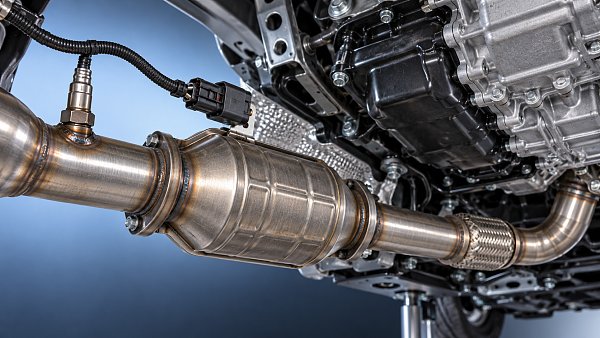
 How to tell when an oxygen sensor needs replacementOxygen sensor replacement signs explained: learn how live data, fault codes, wiring checks, and exhaust inspections pinpoint the real issue before you buy.
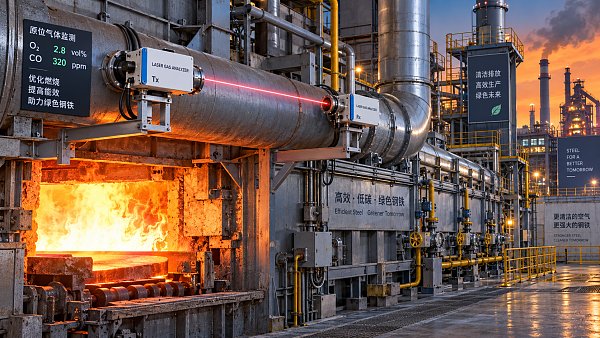
 How laser gas analyzers improve combustion control in steel furnacesLaser gas analyzer for steel industry applications delivers fast in-situ O₂ and CO data to optimize furnace combustion, cut fuel waste, and improve steel heating stability.
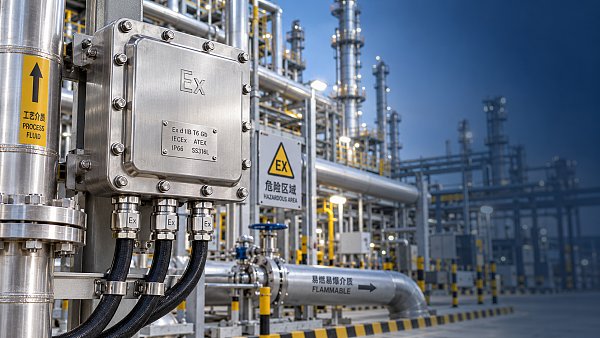
 How to verify whether explosion proof equipment meets site requirementsExplosion proof equipment verification made practical: match zones, gas or dust groups, temperature classes, certificates, and installation conditions for confident compliance.
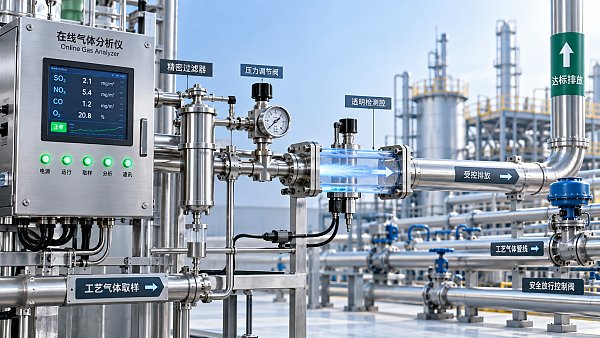
 How industrial gas analysis helps detect contamination before releaseIndustrial Gas Analysis helps detect moisture, oil, oxygen, and toxic contaminants before release—protecting processes, ensuring compliance, and reducing costly risks.
 When is electrochemistry detection the right choice for water analysis?Electrochemistry detection for water analysis: learn when fast, reliable monitoring of ions, chlorine, pH, and more delivers actionable results.
 How industrial standards reduce quality risks in supplier selectionIndustrial Standard guidance helps quality and safety managers reduce supplier risks, verify compliance, strengthen traceability, and build resilient instrumentation supply chains.
 When does a multi-component system reduce installation complexity?Multi component systems reduce installation complexity when they eliminate field interfaces, streamline commissioning, and provide proven compatibility. Learn how to assess total cost and supplier accountability.
 How to size an industrial control shelter for outdoor equipmentIndustrial control shelter sizing guide: optimize layout, HVAC, access, safety, and expansion space for reliable outdoor equipment operations.
 How flue analysis helps verify combustion efficiencyFlue analysis verifies combustion efficiency by assessing O2, CO, CO2, and stack temperature to identify excess air, incomplete combustion, and heat losses.
 How to select industrial gas detectors for confined spacesIndustrial gas detectors for confined spaces: learn how to match sensors, sampling methods, alarms, and certifications to real atmospheric hazards.
 When does a laser oxygen analyzer outperform zirconia sensors?Laser oxygen analyzer vs. zirconia sensors: compare speed, selectivity, maintenance, gas chemistry, and installation needs to choose the right oxygen measurement solution.
 How to select a percent range analyzer for process measurementsPercent range analyzer selection made practical: compare accuracy, sample systems, calibration, gas matrix, integration, and lifecycle cost for reliable process measurements.
 How explosion proof analysis verifies safe equipment for hazardous areasExplosion proof analysis verifies hazardous-area equipment by matching certifications, temperature ratings, installation details, and inspection controls for safer compliance.
 When does fixed gas detection need point sensors instead of open-path monitoring?Fixed gas detection: discover when point sensors outperform open-path monitoring for predictable leaks, enclosed zones, local alarms, and safer design decisions.
 How to choose industrial metrology systems for tight-tolerance partsIndustrial metrology guide for tight-tolerance parts: compare CMMs, optical scanners, gauges, uncertainty, workflow, and traceable inspection strategies.
 How process metrology reduces measurement variation in productionProcess metrology reduces production measurement variation by improving traceability, uncertainty control, calibration, and reliable quality decisions.
 How to select an industrial monitoring analyzer for harsh environmentsIndustrial monitoring analyzer selection for harsh environments: evaluate sampling, durability, hazardous-area compliance, accuracy, maintenance, and data reliability.
 How calibration intervals affect test and measurement equipment accuracyTest and measurement equipment calibration intervals directly affect accuracy, risk, compliance, and uptime. Learn how to set evidence-based schedules that protect critical decisions.
 When does process gas monitoring need continuous measurement?Process gas monitoring needs continuous measurement when rapid changes threaten safety, quality, compliance, or uptime. Learn how to specify reliable, actionable monitoring systems.
 How to prevent false alarms in power plant instrumentationPower plant instrumentation guide: prevent false alarms with reliable signal checks, smarter alarm settings, mode-based control, and actionable operator responses.
 How fixed gas detectors help prevent leaks in enclosed workspacesFixed gas detectors provide continuous leak monitoring in enclosed workspaces, enabling faster alarms, safer responses, and stronger protection for people and processes.
 How industrial gas analysis helps detect process contamination earlyIndustrial Gas Analysis helps detect oxygen, moisture, and hydrocarbon contamination early, enabling faster fault isolation, safer operations, and stronger process control.
 What drives environmental compliance continuous monitoring setup cost?Environmental compliance continuous monitoring setup cost: uncover hidden expenses, compare bids accurately, and build a reliable, audit-ready system.
 How to select gas analysis equipment for continuous emissions monitoringGas analysis equipment selection guide for reliable continuous emissions monitoring—compare technologies, sampling, calibration, compliance, and maintenance needs.
 What detection limit is needed for NH3 environmental monitoring?High accuracy NH3 analyzer for environmental monitoring: learn how to set the right detection limit, improve sampling reliability, and make defensible decisions.
 How to select a NOX analyzer for power plant emissions complianceNOX analyzer for power plant emissions: learn how to select a compliant, reliable CEMS solution with the right range, sample handling, calibration, and data integrity.











Search Categories
Search Categories
- Smart Meters & Power Quality
- Transformer Gas Analyzers
- BESS Thermal Runaway Detectors
- Energy, Power & Smart Grid Monitoring
- Optical Profilers & CMM
- Ultrasonic & X-Ray NDT
- Calibration Standards
- Precision Metrology & NDT
- Water Quality Analyzers
- CEMS & VOCs Monitors
- Price Trends
- Import & Export Updates
- Market Trends
- Industry News
- Industry Insights
Latest Article
- How to judge whether a competitive price reflects real valueCompetitive Price: learn how to compare scope, compliance, performance, and lifecycle costs to identify real value, reduce risk, and make smarter purchasing decisions.Posted by:
- When custom gas analysis is the right fit for complex process streamsCustom gas analysis for complex process streams: learn when tailored sampling, interference control, and reliable measurement design deliver confident decisions.Posted by:
- When does a laser gas analyzer meet stack emissions monitoring needs?Laser gas analyzer for stack emissions: learn when it delivers fast, reliable data, how to assess installation risks, and what to verify for CEMS compliance.Posted by:
Please give us a message
