
How industrial gas analysis helps detect contamination before release


A gas can meet its pressure, flow, and bulk-purity target while still carrying contamination capable of damaging a process, invalidating a batch, creating an unsafe atmosphere, or causing a non-compliant atmospheric release. The central value of industrial gas analysis is therefore not simply measuring composition: it is preventing a gas from being released, transferred, or admitted to a critical process before an unacceptable contaminant reaches its point of impact.
That distinction matters because contamination is rarely visible at the outlet. Moisture may condense only after pressure reduction. Oil can appear as aerosol, vapor, or both, with each form requiring a different measurement approach. Oxygen ingress may remain harmless in one nitrogen application but create a serious oxidation, flammability, or product-stability issue in another. A release decision is reliable only when the analysis method, sampling system, alarm logic, and acceptance limit are aligned with the actual risk.
What “release” means in industrial gas control
Release does not refer only to venting gas into the atmosphere. In quality and safety practice, a release point can be any point at which gas crosses a control boundary:
- delivery of bulk gas or cylinders from a supplier into site storage;
- release of gas from a generation unit into a distribution header;
- admission of compressed air, nitrogen, oxygen, hydrogen, carbon dioxide, argon, or specialty gas into a production process;
- transfer of recovered, recycled, or purge gas back into service;
- discharge from a treatment, combustion, recovery, or ventilation system to the environment.
The contamination question changes with that boundary. At receiving, the concern may be whether a delivered gas meets a purchase specification. Before process use, the concern is whether distribution piping, filters, dryers, lubricated compressors, or backflow have changed its condition. At an emission point, analysis must establish whether a toxic, combustible, corrosive, or regulated constituent remains above the operating limit or permit condition.
For this reason, a single “gas purity” number is often a weak release criterion. A nitrogen certificate stating 99.999% purity, for example, does not automatically resolve moisture, hydrocarbon, oxygen, particulate, sulfur-containing compounds, or cross-contamination risks at the point of use. The remaining 0.001% is not one known substance; it is an analytical budget that must be interpreted against the application.
Contamination is a process-specific failure mode
Industrial gas analysis becomes meaningful when each contaminant is connected to a credible consequence. Water vapor is not just an impurity. In compressed air systems, it can drive corrosion, microbial growth, freezing, control-valve malfunction, and degradation of desiccant or adsorbent beds. In semiconductor, coating, heat-treatment, and specialty chemical operations, trace moisture can alter surface chemistry or react with moisture-sensitive materials.
Hydrocarbons create a different set of hazards. Compressor lubricant carryover can contaminate pneumatic equipment, packaging lines, instruments, catalysts, and finished products. In oxygen-enriched systems, hydrocarbon contamination also raises oxygen-compatibility concerns because materials and residues that are manageable in air can become ignition hazards under high oxygen concentration and pressure.
Other contaminants are less universal but no less important:
- Oxygen in inert gases: can cause oxidation, compromise blanketing, affect welding quality, or change reactions designed to operate under inert conditions.
- Carbon dioxide: may affect pH-sensitive processes, adsorbent performance, cryogenic operations, and controlled-atmosphere applications.
- Carbon monoxide: is a direct personnel hazard and can poison catalysts or create unacceptable exposure risks in enclosed areas.
- Sulfur compounds, halogens, ammonia, and acid gases: can be corrosive, toxic, catalyst-poisoning, or environmentally significant at low concentrations.
- Particulate and aerosol: can obstruct small orifices, contaminate high-purity processes, and make a gas appear compliant if only vapor-phase analysis is performed.
A defensible release limit must therefore be tied to process tolerance, safety assessment, contractual specification, or applicable regulation—not selected because it matches an instrument’s most convenient range.
The analytical method must match the contaminant form
No analyzer detects every industrial gas contaminant equally well. The most common error in monitoring design is treating an analyzer as a general purity meter rather than a method with defined selectivity, response behavior, and measurement limits.
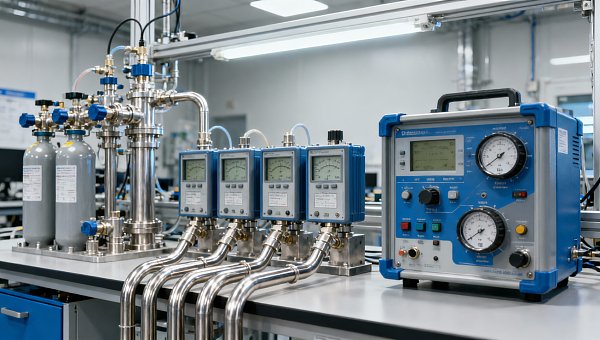
Gas chromatography (GC) is widely used where individual permanent gases, hydrocarbons, sulfur compounds, or other separable constituents must be identified and quantified. Detector selection matters: thermal conductivity detection, flame ionization detection, pulsed discharge detection, and mass-spectrometric detection each offer different sensitivity and selectivity. GC is particularly valuable for release testing when the identity of the impurity matters, not merely its total concentration. Its limitations include cycle time, carrier-gas dependencies, and the need for stable sample conditioning.
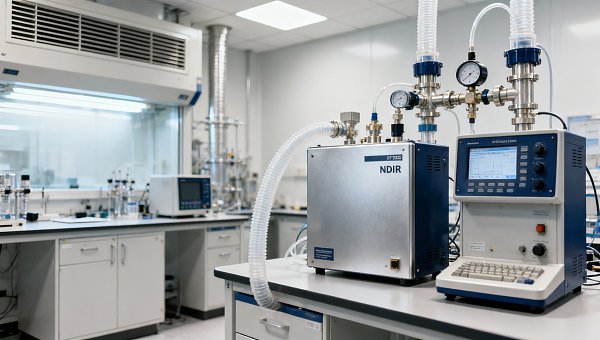
Fourier transform infrared spectroscopy (FTIR) can provide multi-component measurement for gases with infrared-active molecular bonds, making it useful for many organic vapors, carbon monoxide, carbon dioxide, ammonia, and acid-gas applications. It is not equally effective for all molecules, and spectral overlap, water interference, temperature, pressure, and path-length control must be addressed. FTIR is often most useful where a changing contaminant profile is more important than one ultra-trace analyte.
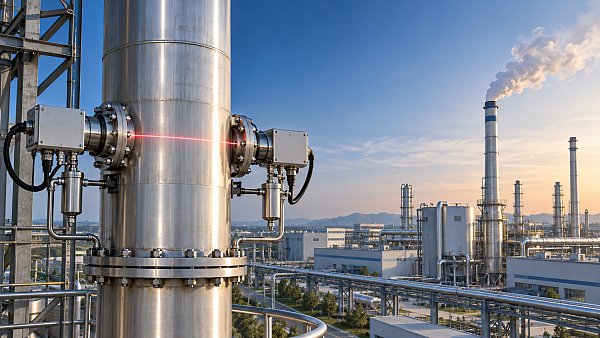
Tunable diode laser absorption spectroscopy (TDLAS) is often selected for fast, selective measurement of targeted compounds such as moisture, oxygen, carbon monoxide, carbon dioxide, hydrogen sulfide, or ammonia, depending on the optical configuration. Its strength is rapid response with little consumable use. Its limitation is equally clear: it generally answers a specific analyte question rather than characterizing an unknown contamination mixture.
Moisture analyzers require particularly careful interpretation. Dew-point instruments, quartz crystal microbalance systems, capacitive sensors, and spectroscopic analyzers do not have identical performance in all gases or at all moisture levels. Pressure affects reported dew point, and a measurement taken at line pressure should not be casually compared with a limit expressed at atmospheric pressure without proper conversion. Sampling tubing, regulator design, and ambient moisture ingress can dominate the result when very dry gas is being evaluated.
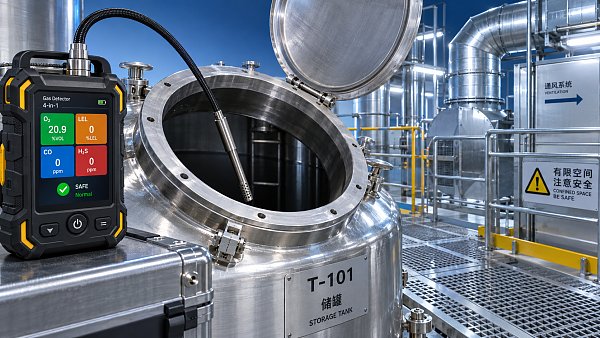
Electrochemical sensors are practical for many safety applications, including oxygen deficiency, toxic gas detection, and some process measurements. They can be suitable for screening or continuous safety monitoring, but their cross-sensitivity, drift, poisoning susceptibility, response time, and calibration requirements must be understood before they are used as the sole basis for a high-consequence release decision.
Photoionization detectors (PIDs) can provide a useful indication of volatile organic compounds, especially for leak investigation and workplace exposure screening. They do not identify compounds and do not respond equally to all VOCs. A PID reading should not be interpreted as a compound-specific concentration unless the correction basis is justified.
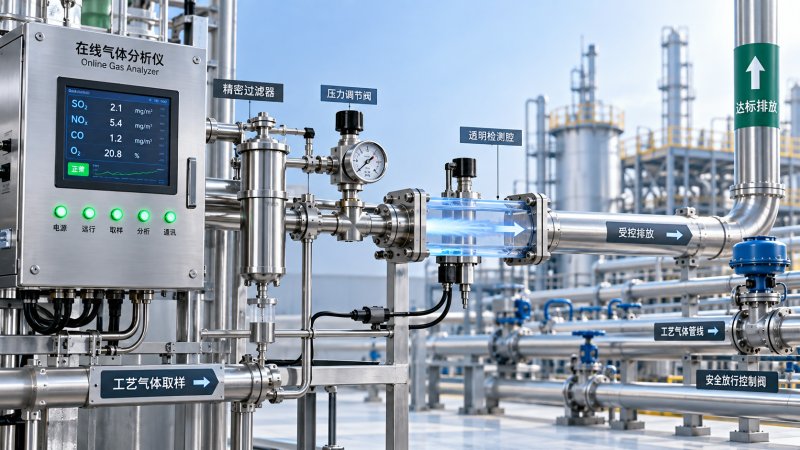
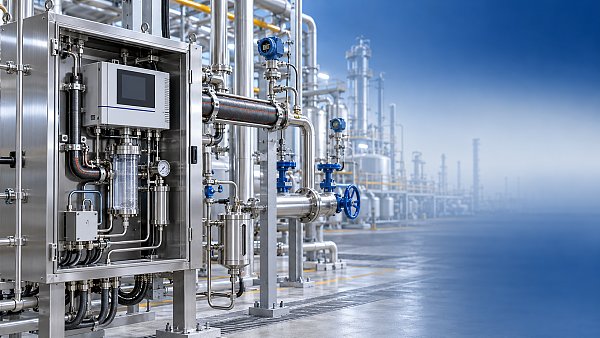
The sample system is part of the measurement system
An analyzer can be correctly calibrated and still deliver misleading results if the sample reaching it is not representative. This is especially important before release because the contaminants of interest may be sticky, reactive, condensable, or present in both liquid and vapor phases.
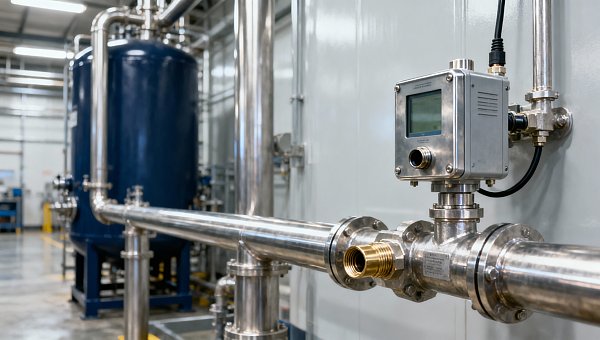
Sample take-off location should reflect the release boundary. A sample upstream of a final filter, dryer, vaporizer, or pressure-control station may describe equipment condition but not the gas actually released. Conversely, sampling far downstream can obscure the source of contamination because the distribution system itself may contribute moisture, rust, elastomer extractables, or back-diffused process gas.
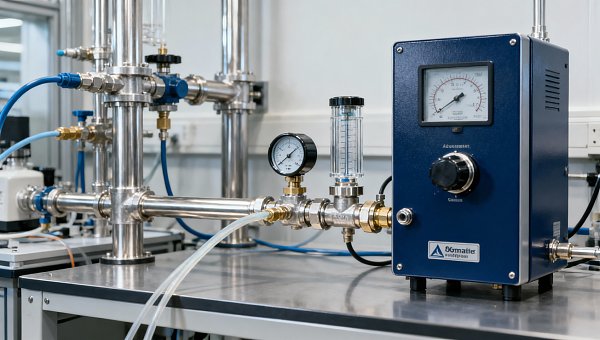
Materials selection matters. Stainless steel tubing is generally preferred for many high-purity, reactive, and low-moisture applications, while some gases require specifically passivated or otherwise compatible wetted surfaces. Long polymer tubing can delay response, retain hydrocarbons, or release absorbed compounds. Dead legs, poorly selected regulators, contaminated quick-connects, and unpurged sample lines are common sources of false alarms and false compliance.
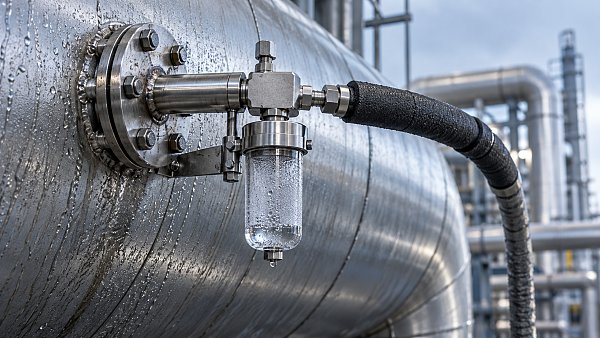
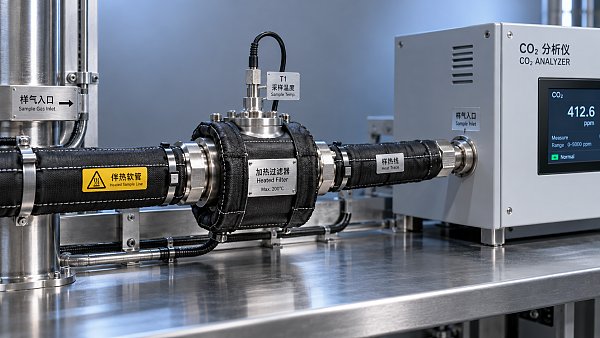
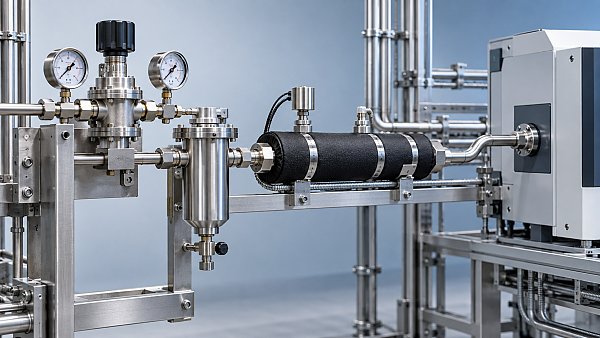
Pressure reduction is another critical point. A regulator can introduce particles, adsorbed moisture, or hydrocarbon residues, while rapid pressure reduction can cool the gas and change the phase behavior of condensable contaminants. Heated sample lines may be necessary for gases containing water, heavy hydrocarbons, or acid gases that could condense before reaching the analyzer. Heating is not automatically beneficial, however: excessive temperature can alter unstable compounds or create safety concerns. The correct objective is to preserve the sample state needed for the intended measurement.
Continuous monitoring and release testing solve different problems
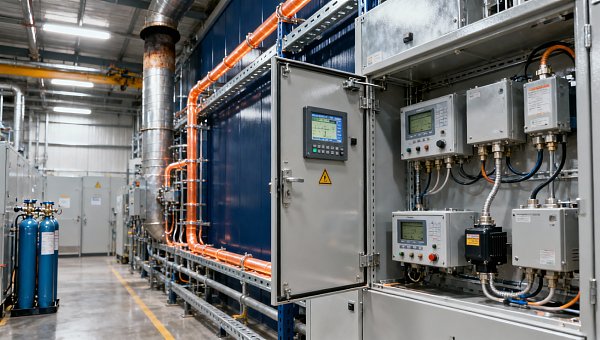
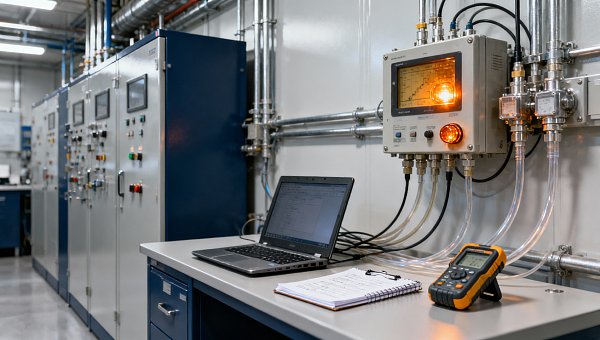
Continuous analysis is strongest when contamination can arise unpredictably or develop quickly: compressor seal failure, dryer breakthrough, membrane damage, air ingress, adsorption-bed exhaustion, incorrect valve alignment, or process backflow. A properly designed online analyzer detects deviation early enough for an interlock, diversion valve, shutdown, or operator response to prevent contaminated gas from entering the next stage.
Periodic laboratory testing is strongest when a detailed impurity profile is required, when trace-level confirmation is necessary, or when the contaminant spectrum is uncertain. It is also useful for validating online analyzers and investigating excursions. But an occasional grab sample cannot prove continuous compliance across an interval in which the gas source or process condition may vary.
A practical control arrangement often uses both forms of evidence: online monitoring for rapid detection of defined critical contaminants, supported by periodic confirmatory analysis for broader composition verification. The release decision should state which measurement is controlling, how often confirmation is required, and what happens if the two methods disagree.
Alarm thresholds should not be confused with acceptance limits
A release specification defines the maximum acceptable contamination level. An alarm threshold is an operating control point intended to provide time to act before the specification is exceeded. Setting both at the same concentration leaves no room for analyzer uncertainty, transport delay, process lag, or corrective action.
Well-designed alarm logic normally accounts for more than an instantaneous number. It considers analyzer response time, sample transit time, process residence time, signal stability, expected background variation, and the consequence of a false trip. A brief spike during automatic calibration should not be treated the same way as a sustained rise at the actual process sample point. At the same time, averaging can conceal a short but consequential contamination event if a small volume of off-spec gas can damage a sensitive process.
The appropriate logic may involve pre-alarm, high alarm, high-high trip, and post-event hold requirements, but the arrangement should be derived from the hazard and material balance rather than copied from another gas service. For a vent release, the response may include diversion to treatment or isolation. For a production gas header, it may require automatic block-and-bleed, a switch to a verified backup source, or formal quarantine of potentially affected material.
Standards provide structure, not a substitute for application limits
For compressed air, ISO 8573 is a widely used reference family. ISO 8573-1 defines purity classes for particles, water, and oil, while other parts address measurement methods for specific contaminant categories. For example, ISO 8573-2 addresses oil aerosol measurement, ISO 8573-3 addresses humidity measurement, ISO 8573-4 addresses particle measurement, ISO 8573-5 addresses oil vapor and organic solvent measurement, and ISO 8573-6 addresses gaseous contaminant measurement. The standard is valuable because it distinguishes contaminant types that are often incorrectly combined into one “oil” or “air quality” result.
It does not, by itself, establish that a particular purity class is safe or suitable for every food, pharmaceutical, medical, electronics, coating, or general manufacturing application. The required class must be set by the process owner based on the point of use, product contact status, equipment sensitivity, and applicable legal or customer requirements.
For atmospheric discharges, the controlling criteria are typically permit conditions, local environmental rules, workplace safety requirements, and the technical basis of the treatment system. Monitoring methods may be specified by regulation, permit, or recognized standards. Where emissions monitoring is required, the method’s detection range, interference management, calibration approach, data handling, and quality assurance procedures must be suitable for the stated compliance obligation. A process analyzer intended for operational control is not automatically a compliance-grade emissions measurement system.
Calibration alone does not establish confidence
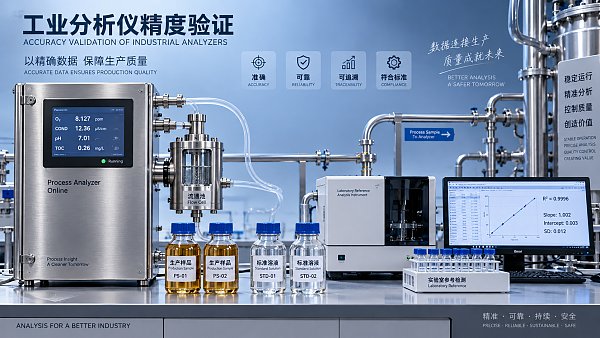
Calibration verifies analyzer response against a known reference under defined conditions. It does not prove that the entire monitoring chain is working correctly. Confidence in a pre-release measurement also depends on zero checks, span checks, calibration-gas traceability where relevant, sample-flow verification, leak testing, filter maintenance, response-time testing, and documented management of analyzer drift.
Particular caution is needed when the acceptance limit is close to the instrument’s practical quantification capability. An analyzer may detect a contaminant below the release limit but still have too much uncertainty to distinguish reliably between compliant and marginally non-compliant gas. Decisions near a hard limit should account for method uncertainty and should define an escalation route, such as confirmatory analysis using a more selective technique or a retained sample.
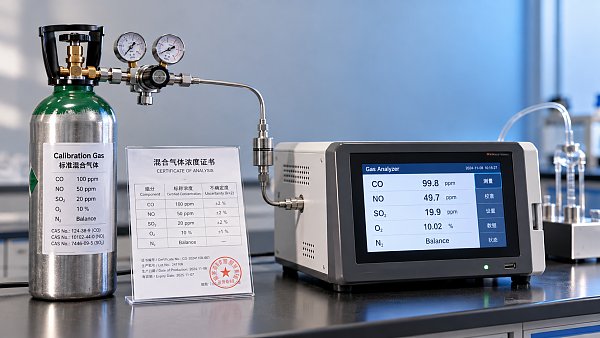
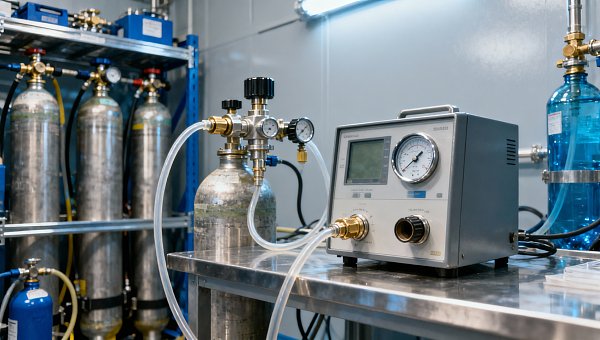
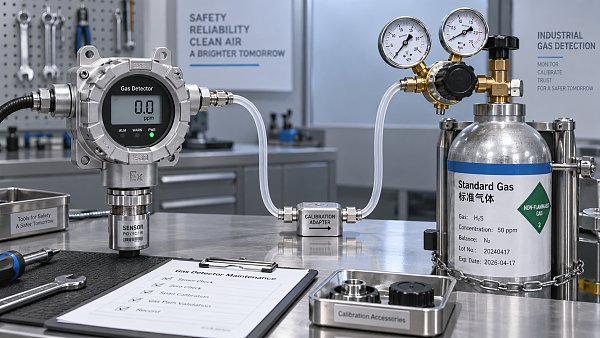
Calibration gases must also be compatible with the analyte and concentration range. Reactive gases can decay or adsorb in cylinders and regulators. Moisture standards require careful handling. Hydrocarbon standards can be affected by adsorption and phase behavior. Traceability is valuable only if the standard remains representative when it reaches the analyzer.
Release control fails most often at the interfaces
Many contamination events originate not in the gas-generation equipment but at interfaces: a temporary hose connected after maintenance, a shared manifold, a misidentified cylinder, an unprotected fill connection, a backflow path from process equipment, or an uncleaned regulator introduced during troubleshooting. Analysis detects the consequence, but control design must prevent recurrence.
A strong release protocol links measured results to physical system status. It identifies the approved source, required purge condition, line-up verification, filtration or drying status, sample point, acceptance criterion, instrument status, and action if a result is outside limit. Where a gas can contaminate product or create a significant safety risk, the procedure should also define how much downstream volume is potentially affected and how it is isolated or assessed after an excursion.
The useful question is not whether an analyzer has produced a number. It is whether that number represents the gas at the release boundary, whether it addresses the contaminant that could cause harm, and whether the organization can act before off-spec gas reaches its destination. Industrial gas analysis delivers its greatest value when those three conditions are treated as one control system rather than as separate instrumentation, quality, and safety tasks.
Recommended for You
 How to set industrial calibration intervals based on equipment riskSet industrial calibration intervals based on equipment risk, drift, and as-found data. Learn when to shorten or extend schedules to improve reliability and avoid unnecessary costs.
 How to choose electrochemical analyzers for low-current measurementsCompare electrochemical analyzers for precise low-current measurements. Learn how noise, leakage, bandwidth, and real-cell testing help you choose the right instrument.
 What tolerance does a custom gas mixture need for calibration?Choose the right custom gas tolerance for calibration. Learn how blending tolerance, certified uncertainty, and stability affect accuracy—and avoid paying for precision you don’t need.
 How condensation affects stack detector readings in wet flue gasStack detector readings can drift when wet flue gas condenses. Learn how to identify moisture interference, prevent sample losses, and improve emissions monitoring reliability.
 How to prevent condensation in a CO2 analyzer sampling systemPrevent condensation in your CO2 analyzer sampling system. Learn how to control dew point, eliminate cold spots, and manage moisture for reliable readings and fewer costly disruptions.
 How to verify accuracy claims for industrial quality analyzersVerify accuracy claims for industrial quality analyzers with calibration checks, independent testing, and clear acceptance criteria. Learn how to reduce risk and buy with confidence.
 How to calculate cooling loads for an industrial analyzer shelterSize industrial analyzer shelter cooling with confidence. Learn to calculate equipment heat, solar gains, and ventilation loads, then select HVAC capacity for reliable analyzer performance.
 Where to Place CO Analyzers for Effective Parking Garage VentilationOptimize your CO analyzer for parking garage ventilation with practical placement tips. Learn how sensor height, airflow, and zone coverage support timely detection and effective fan control.
 NDIR vs. FTIR Gas Analyzers: Which Fits Your Environmental Research?Find the right infrared gas analyzer for environmental research. Compare NDIR vs. FTIR on sensitivity, gas coverage, sampling needs, and cost to choose confidently for your study.
 Oxygen Analyzers for Diving: Calibration Checks Before Nitrox BlendingUsing an oxygen analyzer for diving applications? Discover essential calibration, sensor, and sampling checks before nitrox blending to support reliable readings.
 How Paramagnetic Oxygen Analyzers Work and Why Sample Pressure MattersLearn how a paramagnetic oxygen analyzer works, why sample pressure affects accuracy, and what to check in compensation and calibration before choosing your system.
 How Much Does a Complete CEMS Integration Project Typically Cost?How much does a complete CEMS integration project typically cost? Explore budget ranges, hidden installation costs, and compliance needs to compare quotes and plan confidently.
 What Is the Typical Response Time for Industrial Air Monitors?What is the typical response time for industrial air monitors? Explore T90, sampling delays, and alarm settings to compare performance and choose the right monitor with confidence.
 Do Regulatory Monitoring Systems Need Third-Party Certification?Do regulatory monitoring systems need third-party certification? Learn when it is required, what certificates prove, and how to verify compliance before buying.
 How Do You Choose Wired or Wireless for Stack Monitoring?Learn how to choose between wired and wireless for stack monitoring. Compare reliability, lifecycle costs, and data recovery to find the right CEMS setup for your site.
 What Happens When Combustible Gas Sensor Calibration Is Overdue?What happens if combustible gas sensor is not recalibrated on time? Discover the risks of inaccurate readings and missed alarms, plus steps to restore reliable protection.
 Can One Multi-Gas Detector Replace Four Separate Analyzers?Find out: can a single multi-gas detector replace four separate analyzers? Compare accuracy, safety, compliance, and lifetime costs to make a confident buying decision.
 Industrial Safety vs. Emission Monitoring: What Are the Differences?What are the main differences between industrial safety and emission monitoring? Compare goals, sensors, response times, and compliance needs to choose the right systems for your facility.
 Is Remote Monitoring Worth the Cost for Small Emission Sources?Is it worth investing in remote monitoring for small emission sources? Compare costs, compliance needs, and potential savings to choose the right solution for your operation.
 How Do You Handle Analyzer Failure During an Environmental Audit?Learn how to handle analyzer failure during environmental compliance audit procedures. Protect evidence, verify data, and restore monitoring with this practical response guide.
 Do VOC Monitors Require Explosion-Proof Certification?Does VOC monitoring require explosion-proof certification? Learn when approval is needed, compare ATEX and IECEx, and choose the right monitor for your site.
 How sample conditioning affects accuracy in petrochemical analyzersImprove accuracy in petrochemical analyzers with smarter sample conditioning. Discover how phase control, filtration, and transport design prevent bias and deliver reliable process data.
 How to troubleshoot sensor drift in industrial gas detectorsIndustrial gas detectors showing sensor drift? Learn how to verify calibration gas, identify root causes, and determine when sensor replacement is needed for reliable monitoring.
 How to judge whether a competitive price reflects real valueCompetitive Price: learn how to compare scope, compliance, performance, and lifecycle costs to identify real value, reduce risk, and make smarter purchasing decisions.
 When custom gas analysis is the right fit for complex process streamsCustom gas analysis for complex process streams: learn when tailored sampling, interference control, and reliable measurement design deliver confident decisions.
 When does a laser gas analyzer meet stack emissions monitoring needs?Laser gas analyzer for stack emissions: learn when it delivers fast, reliable data, how to assess installation risks, and what to verify for CEMS compliance.
 How to select a hazardous gas analyzer for confined spacesHazardous gas analyzer selection for confined spaces: compare sensors, sampling, certifications, alarms, and maintenance to protect workers and choose with confidence.
 When is a single gas analyzer sufficient for workplace safety monitoring?Discover when a single gas analyzer delivers reliable workplace safety monitoring, and learn the key limits, calibration needs, and risks that require broader detection.
 How to choose an ambient gas analyzer for low-level leak detectionAmbient gas analyzer selection for low-level leak detection: compare sensitivity, cross-sensitivity, sampling design, alarms, and calibration for reliable site performance.
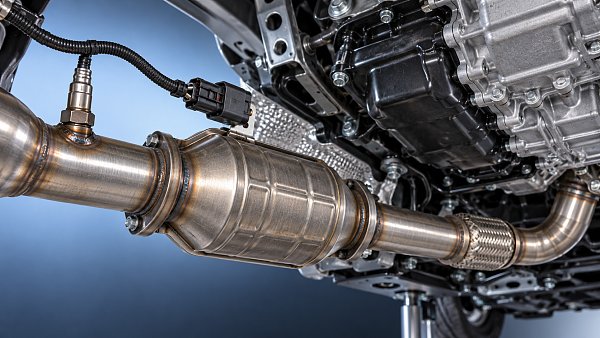
 How to tell when an oxygen sensor needs replacementOxygen sensor replacement signs explained: learn how live data, fault codes, wiring checks, and exhaust inspections pinpoint the real issue before you buy.
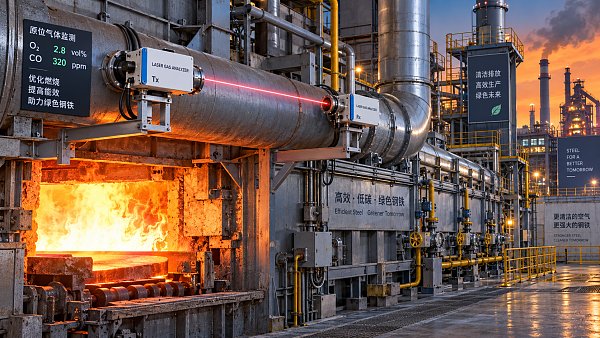
 How laser gas analyzers improve combustion control in steel furnacesLaser gas analyzer for steel industry applications delivers fast in-situ O₂ and CO data to optimize furnace combustion, cut fuel waste, and improve steel heating stability.
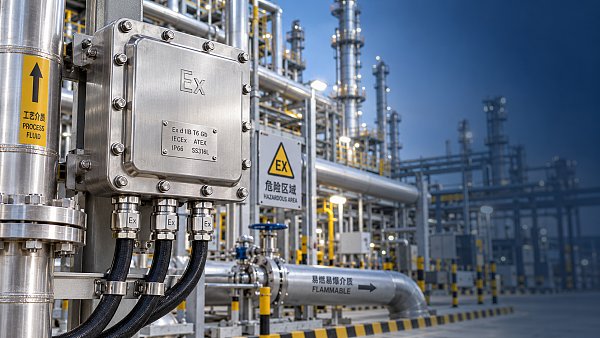
 How to verify whether explosion proof equipment meets site requirementsExplosion proof equipment verification made practical: match zones, gas or dust groups, temperature classes, certificates, and installation conditions for confident compliance.

Search Categories
Search Categories
- Smart Meters & Power Quality
- Transformer Gas Analyzers
- BESS Thermal Runaway Detectors
- Energy, Power & Smart Grid Monitoring
- Optical Profilers & CMM
- Ultrasonic & X-Ray NDT
- Calibration Standards
- Precision Metrology & NDT
- Water Quality Analyzers
- CEMS & VOCs Monitors
- Price Trends
- Import & Export Updates
- Market Trends
- Industry News
- Industry Insights
Latest Article
- How to set industrial calibration intervals based on equipment riskSet industrial calibration intervals based on equipment risk, drift, and as-found data. Learn when to shorten or extend schedules to improve reliability and avoid unnecessary costs.Posted by:
- How to choose electrochemical analyzers for low-current measurementsCompare electrochemical analyzers for precise low-current measurements. Learn how noise, leakage, bandwidth, and real-cell testing help you choose the right instrument.Posted by:
- What tolerance does a custom gas mixture need for calibration?Choose the right custom gas tolerance for calibration. Learn how blending tolerance, certified uncertainty, and stability affect accuracy—and avoid paying for precision you don’t need.Posted by:
Please give us a message
