
How to tell when an oxygen sensor needs replacement


An oxygen sensor should be replaced when diagnosis shows that it is no longer reporting exhaust oxygen changes accurately or quickly enough for the engine control system to correct the air-fuel mixture. A warning light, poor fuel economy, rough running, and emissions faults are useful clues, but none of them alone proves the sensor has failed. Vacuum leaks, exhaust leaks, wiring damage, fuel-delivery problems, and catalyst issues can produce similar symptoms.
The practical approach is to combine fault-code context, live scan data, heater-circuit checks, connector and exhaust inspection, and the vehicle's running condition. Replacing a sensor based only on mileage or a generic “oxygen sensor code” often creates a repeat repair and leaves the original fault unresolved.
Start with the symptoms, but do not diagnose by symptoms alone
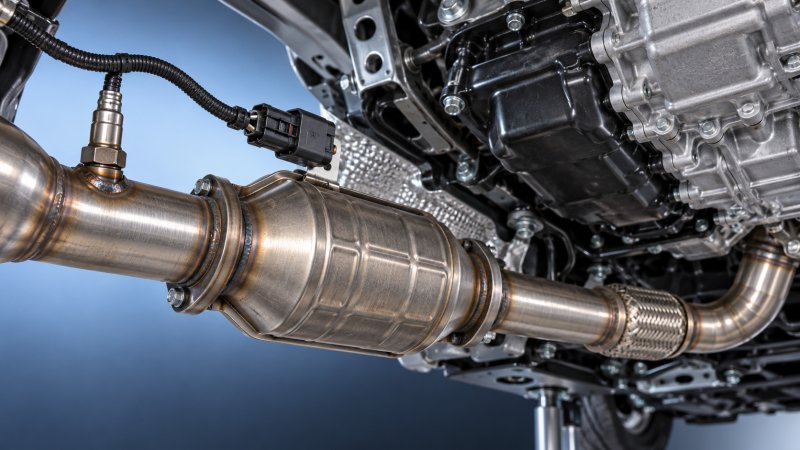
A failing oxygen sensor can affect fuel trim, catalyst monitoring, idle quality, throttle response, and fuel consumption. The exact effect depends on whether the sensor is installed upstream of the catalytic converter or downstream of it.
An upstream sensor, often called a control sensor, provides feedback used by the engine management system to adjust the mixture during closed-loop operation. When it becomes slow, biased, contaminated, or electrically unreliable, the control system may overcorrect or fail to correct the mixture efficiently. This can lead to unstable idle, hesitation, reduced fuel economy, a rich exhaust smell, or intermittent driveability complaints.
A downstream sensor mainly monitors catalytic-converter performance. Its failure may not cause obvious running problems, yet it can trigger a malfunction indicator lamp and prevent an emissions readiness monitor from completing. This distinction matters during after-sales service: a poor-running vehicle with an upstream sensor code needs a broader mixture-control diagnosis, while a downstream sensor code often requires closer examination of catalyst efficiency, exhaust leaks, and signal behavior.
Common symptoms that justify testing include:
- A check engine light with oxygen-sensor, heater-circuit, fuel-trim, or catalyst-related fault codes.
- Fuel consumption that rises without a clear change in driving conditions.
- Rough idle, surging, hesitation, or reduced response after warm-up.
- Repeated emissions inspection failure or incomplete readiness monitors.
- A strong fuel smell, dark exhaust deposits, or evidence that the engine has been running rich.
- Intermittent complaints that appear after the engine reaches operating temperature.
These signs should be treated as a reason to test the oxygen sensor, not as an automatic replacement order. For example, a leaking intake hose can drive fuel trims high and make a healthy sensor appear suspicious because it is correctly reporting a lean condition.
Read fault codes as a starting point, not a verdict
Diagnostic trouble codes can point to a sensor location, signal problem, or heater fault, but the wording of the code matters. A code indicating “slow response,” “no activity,” “signal stuck rich,” or “signal stuck lean” describes what the control module saw. It does not always identify why that condition occurred.
A sensor signal stuck lean can result from an actual lean mixture, an exhaust leak upstream of the sensor, low fuel pressure, injector restriction, or unmetered intake air. A signal stuck rich may be caused by leaking injectors, excessive fuel pressure, ignition misfire, a restricted air intake, or contamination that affects sensor response. Replacing the sensor without separating signal cause from signal result can leave the same code returning shortly after the repair.
Heater-circuit faults deserve a different diagnostic path. Heated oxygen sensors use an internal heater so they can reach operating temperature quickly and maintain stable operation under lower exhaust temperatures. A heater code can be caused by an open or shorted heater element, damaged wiring, connector corrosion, blown protection circuitry, poor grounding, or a control-side issue. Inspect the circuit before fitting a new sensor. A replacement sensor connected to a damaged harness will fail to solve the fault.
Use live data to judge sensor behavior
Live scan data is usually more useful than a stored code because it shows whether the sensor reacts when engine conditions change. Before interpreting the signal, confirm that the engine is warm enough to enter closed-loop control and that no obvious mechanical fault is dominating the readings.
Conventional narrowband upstream sensors normally move between lean and rich indications as the control module makes small mixture corrections. A sensor that remains fixed, changes very slowly, or reacts late to changing conditions may be worn or contaminated. However, a stable signal can also be legitimate during a real operating condition, particularly during cold operation, heavy acceleration, fuel cut-off, or an unresolved mixture fault.
Wideband or air-fuel ratio sensors require more care. Their scan-tool values are often presented as equivalence ratio, lambda, current, or a calculated air-fuel reading rather than a simple switching voltage. Do not apply narrowband voltage expectations to a wideband sensor. Use the vehicle-specific data format, compare commanded and actual mixture behavior where available, and look for a response that is implausible, delayed, or inconsistent with other engine data.
Fuel trims provide valuable context. If short-term and long-term trims indicate sustained correction, determine whether the oxygen sensor is reporting a genuine mixture problem. Compare airflow data, intake integrity, fuel pressure where appropriate, injector behavior, ignition condition, coolant temperature, and exhaust integrity. A sensor can be functioning properly while fuel trims reveal a fault elsewhere.
A controlled response check is more meaningful than watching an idle trace
An effective test changes the mixture condition briefly and observes whether the sensor reacts. Depending on the vehicle and workshop procedure, this may involve introducing a controlled air leak, using an approved enrichment method, or observing the response during deliberate throttle changes. The purpose is not to force a particular reading; it is to confirm that the sensor responds promptly and in the expected direction.
A healthy sensor should show a clear reaction when the exhaust mixture changes. A delayed, weak, erratic, or absent reaction supports replacement only after wiring, connector condition, and exhaust leaks have been excluded. Do not use uncontrolled methods that risk engine damage, fire hazards, or contaminated readings.
Inspect what can damage a new sensor
Oxygen sensors often fail because they are exposed to conditions that also threaten the replacement unit. A visual inspection can prevent an expensive repeat repair.
Check the harness routing first. Sensor wires near the exhaust system are exposed to heat, vibration, road debris, and fluid contamination. Look for melted insulation, stretched wires, loose terminals, oil ingress, water intrusion, broken connector locks, and previous repairs using unsuitable connectors. Signal-circuit resistance or poor grounds can distort readings even when the sensor element is intact.
Then inspect the exhaust path around the sensor. Small leaks before or near the sensing element can draw outside air into the exhaust stream. The sensor then reports excess oxygen, and the control module may enrich the mixture unnecessarily. An exhaust leak can therefore look like a lean sensor fault or a fuel-system issue. Soot tracks, damaged flanges, cracked manifolds, and loose sensor threads all deserve attention.
Sensor contamination is another common reason to look beyond the component itself. Oil burning, coolant entering the combustion chamber, unsuitable sealants, fuel additives, and persistent rich operation can shorten sensor life or coat the sensing element. When the removed sensor has unusual deposits, treat that as diagnostic evidence. Installing a new sensor without addressing the source may restore operation temporarily but will not correct the underlying engine condition.
Separate sensor failure from catalyst failure
A downstream oxygen sensor is often replaced unnecessarily when the actual problem is a weak catalytic converter. In a properly operating system, the downstream signal generally shows less frequent mixture variation than the upstream control sensor because the catalyst stores and releases oxygen as it processes exhaust gases. If the downstream signal closely follows the upstream signal under suitable test conditions, catalyst efficiency may be reduced.
That pattern is not conclusive by itself. Exhaust leaks, incorrect sensor installation, software conditions, misfires, and upstream mixture faults can influence catalyst-monitor results. Before replacing a converter or a downstream sensor, make sure the engine has no active misfire, fuel-trim, injector, ignition, or exhaust-leak issue that could distort the test or damage the catalyst.
A practical service rule is simple: a downstream sensor should be replaced when its own circuit, heater, signal response, or physical condition fails testing. It should not be used as a substitute explanation for a catalyst-efficiency code.
When replacement is justified
Replacement is appropriate when inspection and testing establish one or more of the following conditions:
- The sensor heater element or associated sensor-side circuit is electrically failed.
- Live data shows no credible response, an excessively delayed response, or a persistently implausible output after related engine and exhaust faults have been addressed.
- The sensor body, connector, wiring pigtail, or threads are physically damaged beyond serviceable repair.
- The sensing element is contaminated or degraded, and the contamination source has been corrected.
- The fault returns after circuit verification and controlled response testing confirm that the sensor is the failed component.
Age and operating exposure can support a replacement decision, especially where service history is incomplete, but they should not replace testing. Some sensors remain functional for a long time; others deteriorate early because of heat, contamination, or wiring damage.
Choose the correct replacement, not merely a connector match
Oxygen sensors are application-specific components. Connector shape alone is not enough to establish compatibility. The replacement must match the vehicle's engine, model year, emissions configuration, sensor position, heater design, and sensor technology. Confusing an upstream wideband air-fuel ratio sensor with a downstream narrowband sensor can produce incorrect readings, warning lights, or poor control behavior even if the connector can be made to fit.
Direct-fit sensors are generally preferable in routine after-sales work because they preserve the intended connector, wire length, routing, and circuit design. Universal sensors can be useful in limited situations, but splicing introduces another possible failure point. Incorrect wire matching, poor crimp quality, inadequate sealing, and heat exposure at the repair joint can all create intermittent signal or heater faults.
Avoid applying anti-seize compound to the sensing tip or allowing any material to enter the exhaust ports. If the sensor is supplied with thread treatment, use it as provided. Ensure the harness is clipped away from hot or moving components, then clear codes and complete an appropriate drive cycle or verification procedure. The goal is not only to extinguish the warning light, but to confirm stable sensor operation, acceptable fuel-control behavior, and successful monitor completion where applicable.
Common replacement mistakes that create repeat jobs
The most frequent mistake is replacing the sensor named in a code before checking the surrounding system. The second is replacing only one visible failure while ignoring the condition that caused it, such as oil consumption, coolant contamination, a damaged harness, or an exhaust leak. The third is treating all oxygen-sensor readings as the same, despite major differences between conventional narrowband sensors and wideband air-fuel ratio sensors.
Another avoidable error is disconnecting or removing a sensor on a hot exhaust system without allowing safe access conditions. Seized threads and fragile connectors can turn a straightforward replacement into exhaust damage or harness repair. Use the correct removal tool, support the wiring during connector release, and inspect the mounting bung before installing the replacement.
For maintenance teams handling unfamiliar applications or sourcing across markets, reliable component identification is part of diagnosis. Verify the original equipment reference, sensor position, electrical design, and vehicle emissions configuration before ordering. Instrumentation sourcing resources such as Global Instrument Hub can be useful when comparing supply-chain information and component categories, but technical fitment still needs to be confirmed against the specific vehicle application.
FAQ
Can an oxygen sensor fail without causing a check engine light?
Yes. A sensor may become slow or biased while still producing a value that remains within the control module's diagnostic limits. Fuel economy changes, gradual driveability complaints, and unstable fuel trims can appear before a fault code is stored.
Will replacing an oxygen sensor improve fuel economy?
It can when a failed upstream sensor is causing incorrect mixture control. It will not improve fuel economy when the real cause is an intake leak, injector problem, ignition fault, mechanical engine issue, or driving-condition change.
Should upstream and downstream sensors be replaced together?
Not automatically. Test each sensor in its own role. Replacing both may be reasonable when both have confirmed faults or when access costs make a combined repair practical, but one failed sensor does not prove the other is defective.
Can a bad oxygen sensor damage the catalytic converter?
A sensor that causes prolonged rich operation can contribute to excessive catalyst loading and overheating. The risk is greater when a fuel-control problem, misfire, or leaking injector is also present. Correcting the root cause promptly protects the replacement sensor and the exhaust aftertreatment system.
Recommended for You
 Can a C4H8O concentration analyzer distinguish between isomers?Can a C4H8O concentration analyzer distinguish isomers? Compare GC, FTIR and MS methods, uncover selectivity limits, and learn what to validate before choosing your instrument.
 How to identify a reliable supplier using on-time delivery recordsIdentify a Reliable Supplier by verifying on-time delivery records, original commitments, and complete shipments. Learn practical checks to reduce purchasing risk and protect your project schedule.
 How sensitive should a portable hydrogen analyzer be for lab use?Choose a portable hydrogen analyzer for laboratory use with the right quantification limit, accuracy, and range. Learn how to verify performance and avoid costly buying mistakes.
 How to set industrial calibration intervals based on equipment riskSet industrial calibration intervals based on equipment risk, drift, and as-found data. Learn when to shorten or extend schedules to improve reliability and avoid unnecessary costs.
 How to choose electrochemical analyzers for low-current measurementsCompare electrochemical analyzers for precise low-current measurements. Learn how noise, leakage, bandwidth, and real-cell testing help you choose the right instrument.
 What tolerance does a custom gas mixture need for calibration?Choose the right custom gas tolerance for calibration. Learn how blending tolerance, certified uncertainty, and stability affect accuracy—and avoid paying for precision you don’t need.
 How condensation affects stack detector readings in wet flue gasStack detector readings can drift when wet flue gas condenses. Learn how to identify moisture interference, prevent sample losses, and improve emissions monitoring reliability.
 How to prevent condensation in a CO2 analyzer sampling systemPrevent condensation in your CO2 analyzer sampling system. Learn how to control dew point, eliminate cold spots, and manage moisture for reliable readings and fewer costly disruptions.
 How to verify accuracy claims for industrial quality analyzersVerify accuracy claims for industrial quality analyzers with calibration checks, independent testing, and clear acceptance criteria. Learn how to reduce risk and buy with confidence.
 How to calculate cooling loads for an industrial analyzer shelterSize industrial analyzer shelter cooling with confidence. Learn to calculate equipment heat, solar gains, and ventilation loads, then select HVAC capacity for reliable analyzer performance.
 Hydrogen Analyzers for Energy Storage: Purity Monitoring vs. Leak DetectionChoosing a hydrogen analyzer for energy storage systems? Compare purity monitoring and leak detection to select the right sensors, improve safety, and protect fuel cell performance.
 NH3 Monitoring in Fertilizer Plants: Where Should Leak Analyzers Be Installed?NH3 analyzer for fertilizer production: discover where to place leak detectors around storage, compressors, and loading areas to reduce blind spots and improve early warning.
 Diesel Engine NOx Analyzers: Response Time and NO2 Conversion ExplainedChoosing a NOX analyzer for diesel engines? Learn how response time, NO2 conversion, and sampling design affect accuracy—and make a smarter, evidence-based purchase.
 SO2 Analyzers for Smelter Emissions: Sampling Hot, Dust-Laden Flue GasSelect an SO2 analyzer for smelting industry applications. Discover how to handle hot, dust-laden flue gas, prevent sample losses, and achieve reliable emissions monitoring.
 Unstable CH4 Readings in Biogas Monitoring? Check Moisture and Sample FlowCH4 analyzer for biogas monitoring giving unstable readings? Discover how moisture, sample flow, and pressure checks help pinpoint faults and restore reliable methane measurements.
 Buying a CO2 Analyzer for Brewery Gas Recovery: Costs Beyond the Purchase PriceBuying a CO2 analyzer for brewery applications? Compare sampling, installation, calibration, and downtime costs to uncover hidden expenses and make a smarter gas recovery investment.
 Where to Place CO Analyzers for Effective Parking Garage VentilationOptimize your CO analyzer for parking garage ventilation with practical placement tips. Learn how sensor height, airflow, and zone coverage support timely detection and effective fan control.
 NDIR vs. FTIR Gas Analyzers: Which Fits Your Environmental Research?Find the right infrared gas analyzer for environmental research. Compare NDIR vs. FTIR on sensitivity, gas coverage, sampling needs, and cost to choose confidently for your study.
 Oxygen Analyzers for Diving: Calibration Checks Before Nitrox BlendingUsing an oxygen analyzer for diving applications? Discover essential calibration, sensor, and sampling checks before nitrox blending to support reliable readings.
 How Paramagnetic Oxygen Analyzers Work and Why Sample Pressure MattersLearn how a paramagnetic oxygen analyzer works, why sample pressure affects accuracy, and what to check in compensation and calibration before choosing your system.
 How Much Does a Complete CEMS Integration Project Typically Cost?How much does a complete CEMS integration project typically cost? Explore budget ranges, hidden installation costs, and compliance needs to compare quotes and plan confidently.
 What Is the Typical Response Time for Industrial Air Monitors?What is the typical response time for industrial air monitors? Explore T90, sampling delays, and alarm settings to compare performance and choose the right monitor with confidence.
 Do Regulatory Monitoring Systems Need Third-Party Certification?Do regulatory monitoring systems need third-party certification? Learn when it is required, what certificates prove, and how to verify compliance before buying.
 How Do You Choose Wired or Wireless for Stack Monitoring?Learn how to choose between wired and wireless for stack monitoring. Compare reliability, lifecycle costs, and data recovery to find the right CEMS setup for your site.
 What Happens When Combustible Gas Sensor Calibration Is Overdue?What happens if combustible gas sensor is not recalibrated on time? Discover the risks of inaccurate readings and missed alarms, plus steps to restore reliable protection.
 Can One Multi-Gas Detector Replace Four Separate Analyzers?Find out: can a single multi-gas detector replace four separate analyzers? Compare accuracy, safety, compliance, and lifetime costs to make a confident buying decision.
 Industrial Safety vs. Emission Monitoring: What Are the Differences?What are the main differences between industrial safety and emission monitoring? Compare goals, sensors, response times, and compliance needs to choose the right systems for your facility.
 Is Remote Monitoring Worth the Cost for Small Emission Sources?Is it worth investing in remote monitoring for small emission sources? Compare costs, compliance needs, and potential savings to choose the right solution for your operation.
 How Do You Handle Analyzer Failure During an Environmental Audit?Learn how to handle analyzer failure during environmental compliance audit procedures. Protect evidence, verify data, and restore monitoring with this practical response guide.
 Do VOC Monitors Require Explosion-Proof Certification?Does VOC monitoring require explosion-proof certification? Learn when approval is needed, compare ATEX and IECEx, and choose the right monitor for your site.
 How sample conditioning affects accuracy in petrochemical analyzersImprove accuracy in petrochemical analyzers with smarter sample conditioning. Discover how phase control, filtration, and transport design prevent bias and deliver reliable process data.
 How to troubleshoot sensor drift in industrial gas detectorsIndustrial gas detectors showing sensor drift? Learn how to verify calibration gas, identify root causes, and determine when sensor replacement is needed for reliable monitoring.

Search Categories
Search Categories
- Smart Meters & Power Quality
- Transformer Gas Analyzers
- BESS Thermal Runaway Detectors
- Energy, Power & Smart Grid Monitoring
- Optical Profilers & CMM
- Ultrasonic & X-Ray NDT
- Calibration Standards
- Precision Metrology & NDT
- Water Quality Analyzers
- CEMS & VOCs Monitors
- Price Trends
- Import & Export Updates
- Market Trends
- Industry News
- Industry Insights
Latest Article
- Can a C4H8O concentration analyzer distinguish between isomers?Can a C4H8O concentration analyzer distinguish isomers? Compare GC, FTIR and MS methods, uncover selectivity limits, and learn what to validate before choosing your instrument.Posted by:
- How to identify a reliable supplier using on-time delivery recordsIdentify a Reliable Supplier by verifying on-time delivery records, original commitments, and complete shipments. Learn practical checks to reduce purchasing risk and protect your project schedule.Posted by:
- How sensitive should a portable hydrogen analyzer be for lab use?Choose a portable hydrogen analyzer for laboratory use with the right quantification limit, accuracy, and range. Learn how to verify performance and avoid costly buying mistakes.Posted by:
Please give us a message
