
How Can Data Logging Instruments Pass an Environmental Audit?


An environmental audit is not passed because a data logger has a calibration certificate or because its screen displays plausible values. It is passed when the organization can demonstrate that the recorded environmental data are accurate for the intended measurement range, complete for the required period, protected against alteration, and traceable to a controlled instrument and documented procedure.
That distinction matters. A temperature logger used to support a wastewater process, a particulate monitor connected to an emissions reporting system, and a humidity logger used in a regulated storage area may all record environmental parameters, but the evidence expected in an audit is different. The governing permit, reporting rule, customer specification, laboratory quality system, or internal environmental management procedure determines what must be proved.
To ensure data logging instruments pass an environmental audit, treat the logger as part of an evidence chain rather than a standalone device. The chain begins with a defined monitoring requirement and ends with an auditable record that can be reconstructed without relying on memory, unverified spreadsheets, or undocumented manual intervention.
What does an auditor actually need to verify?
Environmental auditors generally examine whether monitoring controls are capable of producing reliable compliance evidence. They are unlikely to accept a statement that equipment is “high accuracy” unless accuracy is connected to calibration records, operating conditions, and the actual monitored parameter.
The central questions tend to be practical:
- Was the correct parameter measured at the correct location and frequency?
- Was the instrument suitable for the environmental range, contamination risk, and installation conditions?
- Was it calibrated or verified against an appropriate reference?
- Can gaps, alarms, adjustments, and data corrections be explained?
- Can the organization show who accessed the records and whether the original data remained intact?
- Were out-of-specification readings investigated and retained rather than silently overwritten?
A logger can be technically functional yet fail this test. For example, a device may record temperature every 15 minutes, but if a permit or monitoring plan requires continuous measurement, the logging interval may be insufficient to establish compliance. Likewise, a logger installed in a cabinet may not represent the temperature at the regulated storage location. Instrument performance and monitoring design must both withstand scrutiny.
Start with the applicable requirement, not the logger specification
The most common planning error is selecting an instrument based only on a headline specification such as “±0.5°C accuracy” or “IP65 enclosure.” Those figures are relevant, but they do not establish compliance on their own.
Begin by identifying the controlling requirement. This may be an operating permit, an environmental reporting program, an emissions-monitoring method, a wastewater discharge condition, a corporate environmental procedure, a customer audit protocol, or a laboratory method. Requirements can address the parameter, measurement range, minimum resolution, logging interval, response time, calibration frequency, data retention period, alarm handling, and reporting format.
ISO 14001 can provide a useful management-system framework for evaluating compliance obligations, operational controls, monitoring, and documented information. It does not, however, prescribe one universal data logger or a single calibration interval. Similarly, ISO/IEC 17025 is relevant where a laboratory’s measurement results require traceability and competence, but it does not automatically govern every operational environmental logger. The correct standard depends on the role of the measurement and the applicable regulatory or contractual framework.
For electronic records used in pharmaceutical, medical-device, or other regulated quality systems, requirements concerning electronic records and signatures may also apply. In the United States, 21 CFR Part 11 may be relevant where applicable FDA-regulated records are maintained electronically. In the European Union, EU GMP Annex 11 may be relevant within its scope. These frameworks should not be applied casually to unrelated environmental programs, but where they do apply, simple file export and password protection are not enough.
Prove measurement fitness under real operating conditions
An instrument’s datasheet accuracy is normally stated under specified reference conditions. Environmental deployment can introduce temperature extremes, condensation, vibration, electromagnetic interference, pressure changes, solar loading, dust, corrosive gases, and sensor fouling. Audit readiness depends on showing that these influences were considered.
For a field-installed temperature and humidity logger, the relevant questions may include whether the enclosure prevents water ingress, whether direct sunlight creates a local heat bias, whether air circulation is representative, and whether the sensor is exposed to chemicals that can alter its response. For a water-quality logger, placement, flow conditions, probe fouling, cleaning controls, and sample contact materials may be more important than the nominal electronics specification.
The measurement location deserves the same level of control as the logger. A well-calibrated instrument placed beside an air discharge point may not represent ambient conditions elsewhere in the monitored area. In a cold room, a sensor close to an evaporator, doorway, or ceiling may produce readings that differ materially from the product zone. The audit file should make the selected location defensible through a site plan, installation record, risk assessment, mapping study where appropriate, or a documented rationale tied to the monitoring objective.
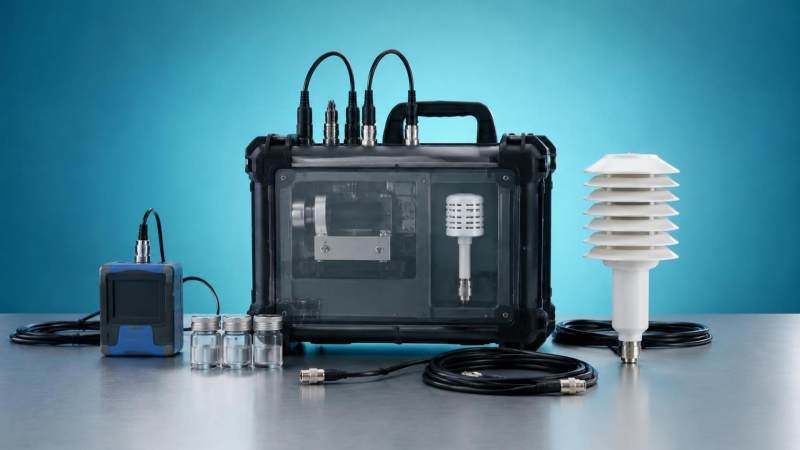
Calibration is evidence, not a sticker
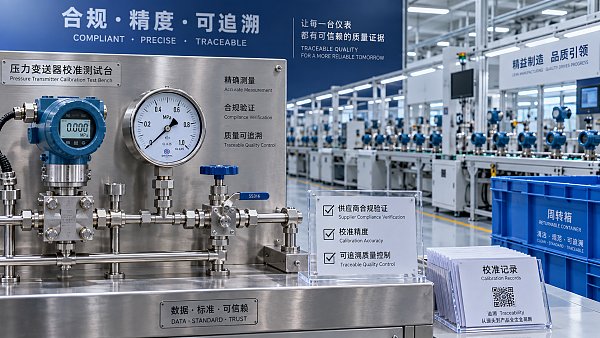
A calibration label showing a due date is useful for field control, but it is not the complete evidence an auditor may request. The supporting record should identify the instrument, the reference standard or calibration provider, the calibration date, the results, the measurement points, the acceptance criteria, and any uncertainty or limitation relevant to the intended use.
Traceability should lead through an unbroken documented chain to recognized standards, commonly national or international measurement standards. When calibration is supplied by an external laboratory, accreditation to ISO/IEC 17025 for the relevant parameter and range can provide stronger evidence of competence and traceability. Accreditation alone does not solve every issue: the calibration scope must cover the actual measurement being relied upon.
Calibration points should reflect the operating range and decision limits. A logger used to demonstrate that a process stays below a maximum threshold needs meaningful evidence close to that threshold. Calibrating only at a distant point may leave a critical gap in the argument. The required uncertainty must also be considered. If the compliance limit is narrow and the combined measurement uncertainty is large, a reading just inside the limit may not provide a defensible margin.
Between formal calibrations, documented verification checks can identify drift, physical damage, or sensor contamination. These checks are particularly important for instruments exposed to harsh conditions or where a failed reading could trigger a reportable environmental event. A verification failure should lead to a documented assessment of data collected since the last satisfactory check; simply recalibrating the instrument does not resolve whether earlier records remain reliable.
Data integrity must cover the full record lifecycle
Environmental audit failures frequently arise from weak data handling rather than sensor failure. Downloading a CSV file to a local computer, manually editing a value, and sending the revised file by email creates a record that may be difficult to defend. The issue is not that every manual action is prohibited; it is whether the original observation, reason for change, responsible person, and review outcome can be reconstructed.
A robust system preserves the original data and controls subsequent processing. The following capabilities are particularly important:
- Secure timekeeping: Device clocks should be synchronized through a defined process, with time-zone and daylight-saving treatment understood. Incorrect timestamps can invalidate an otherwise accurate record.
- Unique device identity: Each logger, probe, transmitter, and gateway should have a traceable serial number or asset ID linked to its calibration and maintenance history.
- Access control: User permissions should reflect job responsibilities. Shared credentials make accountability weak.
- Audit trail functionality: Where electronic records require stronger control, the system should record relevant changes, acknowledgements, configuration actions, and user activity without allowing retrospective concealment.
- Protected retention: Archived records need controlled storage, defined retention periods, and recoverable backups. A file held only on a laptop or removable drive is a fragile compliance record.
- Controlled exports: Reports should show device identity, measurement units, time basis, alarm status, and data source. A graph without its underlying data and context is weak evidence.
The ALCOA+ principles are often used as a practical data-integrity reference: records should be attributable, legible, contemporaneous, original, accurate, complete, consistent, enduring, and available. Even when no specific regulation formally requires the term, the underlying discipline is useful for environmental monitoring.
Configure alarms and sampling intervals around the risk, not convenience
A logger’s memory capacity or battery life should not determine the sampling plan. The monitoring interval must be capable of detecting the excursion that matters. Slow-moving room temperature may be adequately represented at a moderate interval, while a short-duration discharge event, rapid thermal excursion, or intermittent pump failure may demand far more frequent logging or continuous acquisition.
Alarm settings need equally careful design. An alarm threshold should correspond to a defined action level, regulatory limit, operating boundary, or investigation trigger. It should be clear whether an alert occurs at the first threshold breach, after a defined duration, or after an averaged value exceeds the limit. These choices materially affect the event record.
Unacknowledged alarms, repeated nuisance alarms, and disabled notifications deserve attention. Frequent false alarms can normalize non-response, while a disabled alarm may leave no timely indication of a meaningful deviation. An audit-ready procedure defines who receives alerts, the expected response time, how acknowledgement is recorded, and how the investigation distinguishes sensor error from a genuine environmental event.
Control changes, failures, and missing data
Perfect data are not the standard; controlled handling of imperfect data is. Batteries fail, wireless links drop, sensors drift, maintenance interrupts logging, and software platforms are upgraded. The audit question is whether these events were identified, assessed, and documented.
A change to a logging interval, alarm setpoint, sensor type, firmware version, location, or communication architecture can affect data comparability. Such changes should be subject to change control proportionate to their compliance impact. The record should state what changed, why it changed, the effective date and time, the person approving it, and whether requalification or comparison testing was required.
Missing data require an explicit disposition. Do not insert estimated values into the original dataset without a clear, authorized basis. If a gap can be reconstructed from an independent validated source, retain both the original gap and the supporting rationale. If it cannot be reconstructed, record the gap, assess its effect on compliance, and document any corrective action. Concealing missing data is usually more damaging than the gap itself.
Instrument failures should also trigger an impact assessment. If a logger is found out of tolerance, the appropriate response depends on the degree and likely duration of error, the affected parameter, and the proximity of historical readings to decision limits. A formal evaluation is more defensible than assuming all prior data are invalid or, conversely, assuming calibration adjustment has no retrospective implications.
Documentation should allow an independent reconstruction
The strongest audit package allows a reviewer who was not present during installation or operation to understand the system without informal explanations. This does not require excessive paperwork. It requires connected records.
Useful controlled documents include the monitoring plan; instrument specifications and suitability assessment; installation and location records; calibration certificates and verification logs; configuration settings; user-access records; maintenance and cleaning history; alarm and deviation records; change controls; backup and recovery procedures; and periodic review reports.
Document control matters as much as document existence. Obsolete procedures, unsigned installation sheets, inconsistent serial numbers, and uncontrolled spreadsheets suggest that the measurement process is not reliably governed. Naming conventions and asset registers should connect the physical instrument to its electronic data stream and compliance documentation.
Validate the system at the level of risk
Validation should establish that the complete system performs as intended: sensor, logger, communications path, software, alarm function, reporting process, and backup arrangement. A factory test certificate for the hardware does not validate the organization’s installed configuration.
The depth of validation should reflect the consequence of incorrect or unavailable data. A critical emissions parameter subject to mandatory reporting demands stronger evidence than a non-critical internal comfort-monitoring point. Relevant tests may include sensor comparison, clock verification, power-loss recovery, communication-loss behavior, alarm challenge tests, user-permission checks, report verification, backup restoration, and confirmation that exported records preserve meaning and traceability.
For networked systems, cybersecurity is no longer separate from measurement reliability. Unauthorized configuration changes, compromised credentials, unsupported software, or insecure remote access can undermine both operational control and record credibility. Asset inventories, patch governance, network segmentation where appropriate, and controlled vendor access help protect the integrity of environmental records.
Audit readiness is a continuing control
Passing an environmental audit is not a one-time document collection exercise. It depends on whether the measurement system remains under control between audits. Periodic review should confirm that calibrations remain current, alarms are acted upon, backups can be restored, device clocks remain correct, firmware and software changes are assessed, and monitoring locations still represent the process or environment being evaluated.
The practical test is straightforward: if an auditor selects any recorded value from the previous retention period, the organization should be able to show what instrument produced it, where it was installed, whether it was in calibration, how the value was transferred and protected, whether any alarm or deviation occurred, and why the record supports the compliance decision made from it. When that chain is intact, data logging instruments become defensible environmental evidence rather than merely sources of numbers.
Recommended for You
 How condensation affects stack detector readings in wet flue gasStack detector readings can drift when wet flue gas condenses. Learn how to identify moisture interference, prevent sample losses, and improve emissions monitoring reliability.
 How to prevent condensation in a CO2 analyzer sampling systemPrevent condensation in your CO2 analyzer sampling system. Learn how to control dew point, eliminate cold spots, and manage moisture for reliable readings and fewer costly disruptions.
 How to verify accuracy claims for industrial quality analyzersVerify accuracy claims for industrial quality analyzers with calibration checks, independent testing, and clear acceptance criteria. Learn how to reduce risk and buy with confidence.
 How to calculate cooling loads for an industrial analyzer shelterSize industrial analyzer shelter cooling with confidence. Learn to calculate equipment heat, solar gains, and ventilation loads, then select HVAC capacity for reliable analyzer performance.
 Do Regulatory Monitoring Systems Need Third-Party Certification?Do regulatory monitoring systems need third-party certification? Learn when it is required, what certificates prove, and how to verify compliance before buying.
 How Do You Choose Wired or Wireless for Stack Monitoring?Learn how to choose between wired and wireless for stack monitoring. Compare reliability, lifecycle costs, and data recovery to find the right CEMS setup for your site.
 What Happens When Combustible Gas Sensor Calibration Is Overdue?What happens if combustible gas sensor is not recalibrated on time? Discover the risks of inaccurate readings and missed alarms, plus steps to restore reliable protection.
 Can One Multi-Gas Detector Replace Four Separate Analyzers?Find out: can a single multi-gas detector replace four separate analyzers? Compare accuracy, safety, compliance, and lifetime costs to make a confident buying decision.
 Industrial Safety vs. Emission Monitoring: What Are the Differences?What are the main differences between industrial safety and emission monitoring? Compare goals, sensors, response times, and compliance needs to choose the right systems for your facility.
 Is Remote Monitoring Worth the Cost for Small Emission Sources?Is it worth investing in remote monitoring for small emission sources? Compare costs, compliance needs, and potential savings to choose the right solution for your operation.
 How Do You Handle Analyzer Failure During an Environmental Audit?Learn how to handle analyzer failure during environmental compliance audit procedures. Protect evidence, verify data, and restore monitoring with this practical response guide.
 Do VOC Monitors Require Explosion-Proof Certification?Does VOC monitoring require explosion-proof certification? Learn when approval is needed, compare ATEX and IECEx, and choose the right monitor for your site.
 How sample conditioning affects accuracy in petrochemical analyzersImprove accuracy in petrochemical analyzers with smarter sample conditioning. Discover how phase control, filtration, and transport design prevent bias and deliver reliable process data.
 How to troubleshoot sensor drift in industrial gas detectorsIndustrial gas detectors showing sensor drift? Learn how to verify calibration gas, identify root causes, and determine when sensor replacement is needed for reliable monitoring.
 How to judge whether a competitive price reflects real valueCompetitive Price: learn how to compare scope, compliance, performance, and lifecycle costs to identify real value, reduce risk, and make smarter purchasing decisions.
 When custom gas analysis is the right fit for complex process streamsCustom gas analysis for complex process streams: learn when tailored sampling, interference control, and reliable measurement design deliver confident decisions.
 When does a laser gas analyzer meet stack emissions monitoring needs?Laser gas analyzer for stack emissions: learn when it delivers fast, reliable data, how to assess installation risks, and what to verify for CEMS compliance.
 How to select a hazardous gas analyzer for confined spacesHazardous gas analyzer selection for confined spaces: compare sensors, sampling, certifications, alarms, and maintenance to protect workers and choose with confidence.
 When is a single gas analyzer sufficient for workplace safety monitoring?Discover when a single gas analyzer delivers reliable workplace safety monitoring, and learn the key limits, calibration needs, and risks that require broader detection.
 How to choose an ambient gas analyzer for low-level leak detectionAmbient gas analyzer selection for low-level leak detection: compare sensitivity, cross-sensitivity, sampling design, alarms, and calibration for reliable site performance.
 How to tell when an oxygen sensor needs replacementOxygen sensor replacement signs explained: learn how live data, fault codes, wiring checks, and exhaust inspections pinpoint the real issue before you buy.
 How laser gas analyzers improve combustion control in steel furnacesLaser gas analyzer for steel industry applications delivers fast in-situ O₂ and CO data to optimize furnace combustion, cut fuel waste, and improve steel heating stability.
 How to verify whether explosion proof equipment meets site requirementsExplosion proof equipment verification made practical: match zones, gas or dust groups, temperature classes, certificates, and installation conditions for confident compliance.
 How industrial gas analysis helps detect contamination before releaseIndustrial Gas Analysis helps detect moisture, oil, oxygen, and toxic contaminants before release—protecting processes, ensuring compliance, and reducing costly risks.
 When is electrochemistry detection the right choice for water analysis?Electrochemistry detection for water analysis: learn when fast, reliable monitoring of ions, chlorine, pH, and more delivers actionable results.
 How industrial standards reduce quality risks in supplier selectionIndustrial Standard guidance helps quality and safety managers reduce supplier risks, verify compliance, strengthen traceability, and build resilient instrumentation supply chains.
 When does a multi-component system reduce installation complexity?Multi component systems reduce installation complexity when they eliminate field interfaces, streamline commissioning, and provide proven compatibility. Learn how to assess total cost and supplier accountability.
 How to size an industrial control shelter for outdoor equipmentIndustrial control shelter sizing guide: optimize layout, HVAC, access, safety, and expansion space for reliable outdoor equipment operations.
 How flue analysis helps verify combustion efficiencyFlue analysis verifies combustion efficiency by assessing O2, CO, CO2, and stack temperature to identify excess air, incomplete combustion, and heat losses.
 How to select industrial gas detectors for confined spacesIndustrial gas detectors for confined spaces: learn how to match sensors, sampling methods, alarms, and certifications to real atmospheric hazards.
 When does a laser oxygen analyzer outperform zirconia sensors?Laser oxygen analyzer vs. zirconia sensors: compare speed, selectivity, maintenance, gas chemistry, and installation needs to choose the right oxygen measurement solution.
 How to select a percent range analyzer for process measurementsPercent range analyzer selection made practical: compare accuracy, sample systems, calibration, gas matrix, integration, and lifecycle cost for reliable process measurements.


Search Categories
Search Categories
- Smart Meters & Power Quality
- Transformer Gas Analyzers
- BESS Thermal Runaway Detectors
- Energy, Power & Smart Grid Monitoring
- Optical Profilers & CMM
- Ultrasonic & X-Ray NDT
- Calibration Standards
- Precision Metrology & NDT
- Water Quality Analyzers
- CEMS & VOCs Monitors
- Price Trends
- Import & Export Updates
- Market Trends
- Industry News
- Industry Insights
Latest Article
- How condensation affects stack detector readings in wet flue gasStack detector readings can drift when wet flue gas condenses. Learn how to identify moisture interference, prevent sample losses, and improve emissions monitoring reliability.Posted by:
- How to prevent condensation in a CO2 analyzer sampling systemPrevent condensation in your CO2 analyzer sampling system. Learn how to control dew point, eliminate cold spots, and manage moisture for reliable readings and fewer costly disruptions.Posted by:
- How to verify accuracy claims for industrial quality analyzersVerify accuracy claims for industrial quality analyzers with calibration checks, independent testing, and clear acceptance criteria. Learn how to reduce risk and buy with confidence.Posted by:
Please give us a message
