
What Happens When Combustible Gas Sensor Calibration Is Overdue?


What Happens When Combustible Gas Sensor Calibration Is Overdue?
For teams asking “what happens if combustible gas sensor is not recalibrated on time,” the concern goes beyond a missed maintenance deadline. Sensor drift, contamination, or aging can produce inaccurate readings, potentially delaying alarms or triggering false alerts. Overdue calibration does not automatically mean a detector has failed, but it reduces confidence in measurements that support critical safety decisions.
The awkward part is that an unreliable detector may still look healthy. Its display can show zero, its power indicator can remain green, and its communications can continue normally. None of those observations proves that it will measure a combustible gas release correctly. The practical question is whether there is current evidence that the complete detection system performs as required.
Does missing the calibration date mean the sensor has failed?
No. A calibration due date is not a physical failure threshold. A sensor does not necessarily become inaccurate at midnight when its service interval expires. However, the evidence supporting its accuracy is now outside the period accepted by the manufacturer’s instructions or the site’s maintenance program.
That distinction matters. “Overdue” describes a maintenance status; “failed” describes demonstrated unacceptable performance. Neither should be confused with “safe to use.” An overdue detector may still measure correctly, but assuming that it does is not a sound basis for confined-space entry, hot work, or protection of a process area.
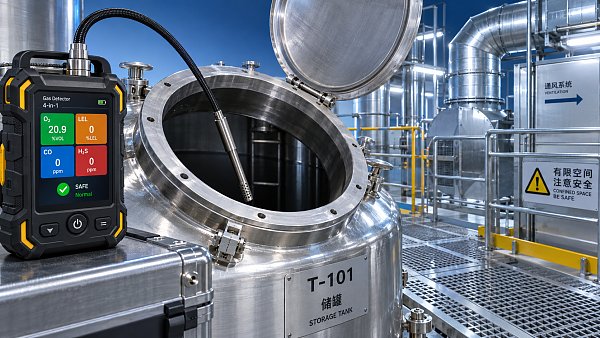
The appropriate response depends on the detector’s function, exposure history, manufacturer requirements, and applicable site rules. A portable monitor being issued for hazardous work presents a different operational decision from one fixed detector within an engineered detection arrangement. Neither situation justifies an informal grace period.
What can go wrong with the readings and alarms?
The most concerning outcome is under-reading: combustible gas is present, but the instrument reports less than the actual concentration. If an alarm depends on that measurement, the warning may occur later than intended or fail to occur at all. A reading expressed as percentage of the lower explosive limit, or %LEL, is only useful when the sensor response and instrument configuration remain appropriate for the gas being monitored.
For illustration, a detector configured to alarm at 10% LEL could remain below its alarm threshold if reduced sensitivity makes an actual 10% LEL atmosphere appear lower. This is a hypothetical example, not a recommended alarm setting; actual thresholds require site-specific selection.
Drift can also produce over-reading, unstable values, or nuisance alarms. These can interrupt operations and create pressure to acknowledge, bypass, or disregard warnings. A suspected false alarm should still be investigated under the site’s response procedure, not dismissed because calibration is overdue.
Response time is another concern. A contaminated inlet, obstructed filter, or impaired sampling system can delay gas reaching the sensing element even when a steady-state calibration result appears acceptable. Calibration is therefore one part of reliability, not a substitute for inspecting the gas path.
Why does sensor technology change the risk?
Combustible gas detectors do not all fail in the same way. For common industrial instruments, the distinction between catalytic-bead and infrared sensing is especially important.
Catalytic-bead sensors
Catalytic sensors detect combustible gas through oxidation at a heated element and require sufficient oxygen to operate correctly. Exposure to certain silicones, sulfur compounds, and other contaminants can inhibit or poison the catalyst, depending on the sensor design and exposure conditions. Sensitivity can decline without an obvious change in the clean-air display.
Consider a maintenance area where silicone-containing products have recently been used. That exposure history is a reason to consult the detector instructions and assess whether additional testing is needed, even if the scheduled calibration date has not arrived. Recalibration cannot reliably repair a permanently poisoned element.
Infrared sensors
Infrared combustible gas sensors avoid catalytic poisoning mechanisms, but they are not maintenance-free. Dirty optics, condensation, obstructed gas access, or incorrect configuration can compromise performance. Conventional hydrocarbon infrared detectors also do not detect hydrogen; the technology must match the hazard.
Gas selection matters for both technologies. A detector calibrated with methane is not automatically accurate for every solvent vapor or hydrocarbon mixture. Use only manufacturer-supported gas settings and correction methods. A calibration pass against the wrong gas basis can provide misleading reassurance.
Can a bump test replace overdue calibration?
Usually, no. A bump test and calibration answer different questions, although terminology and automated procedures vary between manufacturers.
- A bump test is generally a brief exposure to test gas that checks whether the detector responds and its relevant alarms operate. It does not normally establish measurement accuracy across the required acceptance criteria.
- A calibration check compares the indicated value with a known gas concentration without necessarily adjusting the instrument.
- Calibration establishes the measurement relationship with the reference gas; the manufacturer’s procedure may include zero and span adjustment, followed by verification.
A detector can pass a qualitative bump test while still displaying an unacceptable concentration error. Conversely, failure to respond properly to a bump test requires action even when calibration is not yet due. Follow the model-specific instructions rather than treating a docking-station “pass” as interchangeable with every other test.
What should maintenance teams do when they discover an overdue detector?
Start by identifying what safety decision depends on it. Do not simply reset the maintenance reminder or adjust the reading until it looks reasonable.
- Control its use. Prevent issue of an overdue portable monitor for hazardous work until it meets the required release criteria. For fixed detection, notify the responsible operations and safety personnel and follow the impairment procedure. Do not disable protection casually.
- Review the history. Check the last completed calibration, previous drift, failed tests, overrange exposures, fault records, and any recent contamination or process changes.
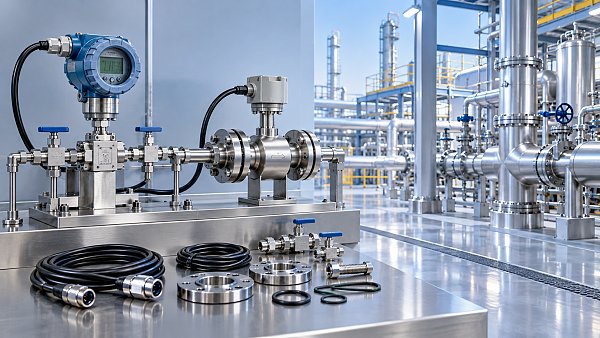
- Inspect the measurement path. Examine filters, sensor openings, sampling tubing, pumps, and installation condition as applicable.
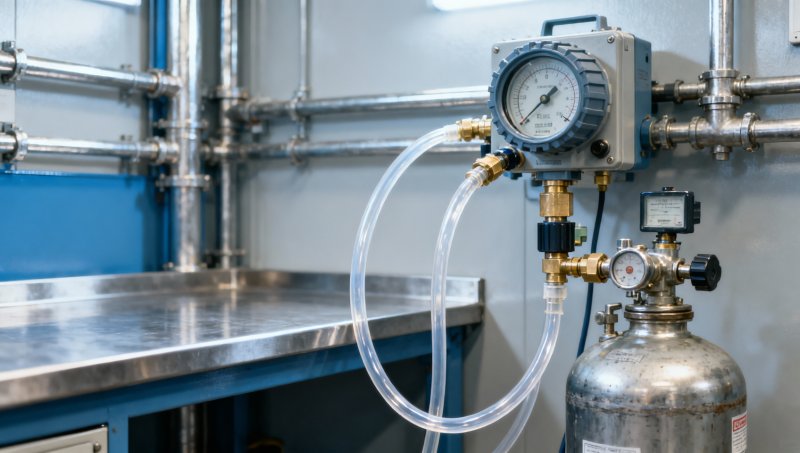
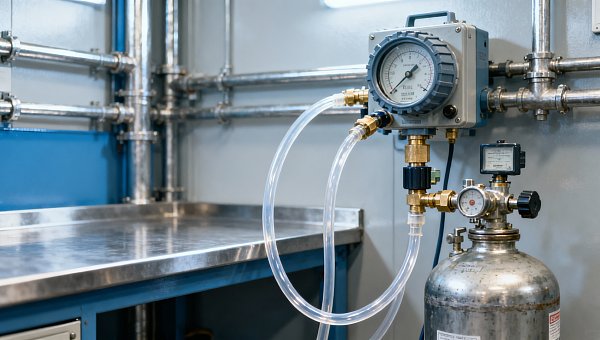
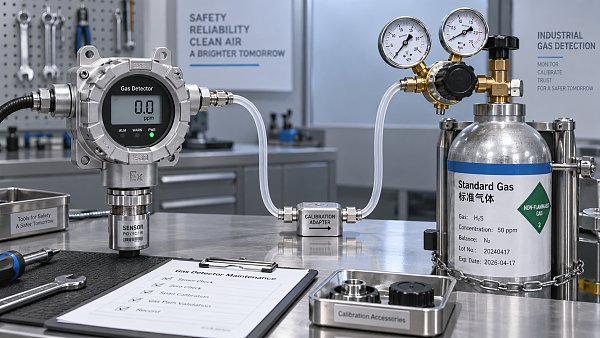
- Test with the specified equipment. Use the correct certified gas mixture, valid cylinder, compatible regulator, prescribed flow, and calibration adapter.
- Verify before release. Complete the required calibration and functional checks, resolve failures, and document the return-to-service decision.
Where the procedure allows, capture the as-found result before adjustment. Otherwise, a successful calibration may erase useful evidence of how inaccurate the detector was when discovered. Record the as-left result too, along with instrument identity, gas details, service date, and any repairs.
If testing shows unacceptable performance, review which work or protective functions relied on the detector since its last satisfactory verification. That does not prove an incident occurred, but it gives the safety team a factual basis for assessing the affected period.
Does calibrating the sensing element prove the whole system works?
Not necessarily. A fixed transmitter may respond correctly while its controller has incorrect scaling, an alarm relay is inhibited, or a shutdown interface is unavailable. Sensor calibration alone does not verify every downstream action.
Testing should cover the functions required by the maintenance plan: local indication, transmitted values, alarm annunciation, and relevant control interfaces. Coordinate any testing that could trigger ventilation, shutdowns, or evacuation signals. Where outputs must be inhibited, use an authorized process and confirm restoration afterward.
There is also a sampling-system trap: gas applied directly at the sensor can demonstrate sensor response while bypassing a leaking or blocked sample line. Check the complete sampling path separately where required. Neither calibration nor loop testing proves that detector placement adequately covers a changed release scenario.
How often should combustible gas sensors be recalibrated?
There is no universal interval suitable for every instrument and application. Begin with the manufacturer’s current instructions, then account for applicable requirements, site procedures, operating conditions, and documented performance history. Portable monitors and fixed systems may have different testing routines.
Additional checks may be necessary after events such as suspected poisoning, prolonged high gas exposure, sensor replacement, or failed functional testing. The exact triggers depend on the model. Waiting for the calendar date is inappropriate when there is already evidence of a problem.
Stable historical results can inform an interval review, but extending an interval should be a documented engineering decision within permitted requirements—not a response to staffing shortages. Repeatedly large adjustments are a warning to investigate the sensor, environment, or test method.
Will overdue calibration affect compliance or supplier evaluation?
It can create a maintenance nonconformance or weaken the evidence supporting safe operation. The legal and contractual consequences depend on the jurisdiction, application, and governing requirements. A missed date does not automatically invalidate every equipment certification.
ATEX or IECEx certification concerns suitability for specified explosive-atmosphere conditions; it does not demonstrate that a particular installed sensor remains calibrated today. Similarly, ISO/IEC 17025 concerns laboratory competence within an accredited scope, not a universal field-calibration frequency.
For instrumentation intelligence and supplier research, Global Instrument Hub (GIH) treats maintainability as a practical evaluation issue alongside specifications. Buyers should ask whether calibration instructions are clear, suitable gas and accessories are locally available, replacement sensors are supported, and usable service records can be retained. A detector that is difficult to maintain can become a recurring operational problem.
When is an overdue detector ready to return to service?
Return it only after the applicable acceptance criteria are met, faults are resolved, required functions are verified, and any test-related inhibitions are removed. Replace a sensor that cannot achieve acceptable performance; repeated adjustment is not a repair strategy.
The useful question is not “How many days overdue can we tolerate?” It is “What evidence supports relying on this detector for this task?” If that evidence is missing, arrange verified protection and restore the instrument through the approved maintenance process before depending on its reading.
Recommended for You
 How to prevent condensation in a CO2 analyzer sampling systemPrevent condensation in your CO2 analyzer sampling system. Learn how to control dew point, eliminate cold spots, and manage moisture for reliable readings and fewer costly disruptions.
 How to verify accuracy claims for industrial quality analyzersVerify accuracy claims for industrial quality analyzers with calibration checks, independent testing, and clear acceptance criteria. Learn how to reduce risk and buy with confidence.
 How to calculate cooling loads for an industrial analyzer shelterSize industrial analyzer shelter cooling with confidence. Learn to calculate equipment heat, solar gains, and ventilation loads, then select HVAC capacity for reliable analyzer performance.
 What Happens When Combustible Gas Sensor Calibration Is Overdue?What happens if combustible gas sensor is not recalibrated on time? Discover the risks of inaccurate readings and missed alarms, plus steps to restore reliable protection.
 Can One Multi-Gas Detector Replace Four Separate Analyzers?Find out: can a single multi-gas detector replace four separate analyzers? Compare accuracy, safety, compliance, and lifetime costs to make a confident buying decision.
 Industrial Safety vs. Emission Monitoring: What Are the Differences?What are the main differences between industrial safety and emission monitoring? Compare goals, sensors, response times, and compliance needs to choose the right systems for your facility.
 Is Remote Monitoring Worth the Cost for Small Emission Sources?Is it worth investing in remote monitoring for small emission sources? Compare costs, compliance needs, and potential savings to choose the right solution for your operation.
 How Do You Handle Analyzer Failure During an Environmental Audit?Learn how to handle analyzer failure during environmental compliance audit procedures. Protect evidence, verify data, and restore monitoring with this practical response guide.
 Do VOC Monitors Require Explosion-Proof Certification?Does VOC monitoring require explosion-proof certification? Learn when approval is needed, compare ATEX and IECEx, and choose the right monitor for your site.
 How sample conditioning affects accuracy in petrochemical analyzersImprove accuracy in petrochemical analyzers with smarter sample conditioning. Discover how phase control, filtration, and transport design prevent bias and deliver reliable process data.
 How to troubleshoot sensor drift in industrial gas detectorsIndustrial gas detectors showing sensor drift? Learn how to verify calibration gas, identify root causes, and determine when sensor replacement is needed for reliable monitoring.
 How to judge whether a competitive price reflects real valueCompetitive Price: learn how to compare scope, compliance, performance, and lifecycle costs to identify real value, reduce risk, and make smarter purchasing decisions.
 When custom gas analysis is the right fit for complex process streamsCustom gas analysis for complex process streams: learn when tailored sampling, interference control, and reliable measurement design deliver confident decisions.
 When does a laser gas analyzer meet stack emissions monitoring needs?Laser gas analyzer for stack emissions: learn when it delivers fast, reliable data, how to assess installation risks, and what to verify for CEMS compliance.
 How to select a hazardous gas analyzer for confined spacesHazardous gas analyzer selection for confined spaces: compare sensors, sampling, certifications, alarms, and maintenance to protect workers and choose with confidence.
 When is a single gas analyzer sufficient for workplace safety monitoring?Discover when a single gas analyzer delivers reliable workplace safety monitoring, and learn the key limits, calibration needs, and risks that require broader detection.
 How to choose an ambient gas analyzer for low-level leak detectionAmbient gas analyzer selection for low-level leak detection: compare sensitivity, cross-sensitivity, sampling design, alarms, and calibration for reliable site performance.
 How to tell when an oxygen sensor needs replacementOxygen sensor replacement signs explained: learn how live data, fault codes, wiring checks, and exhaust inspections pinpoint the real issue before you buy.
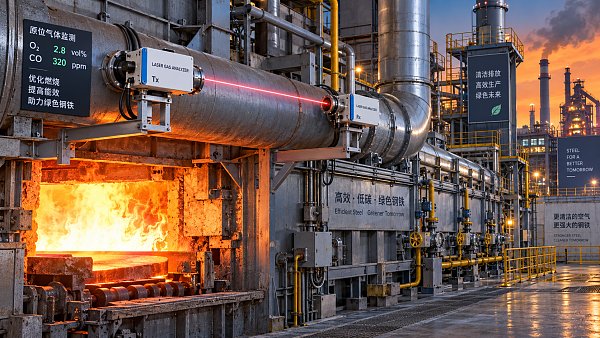
 How laser gas analyzers improve combustion control in steel furnacesLaser gas analyzer for steel industry applications delivers fast in-situ O₂ and CO data to optimize furnace combustion, cut fuel waste, and improve steel heating stability.
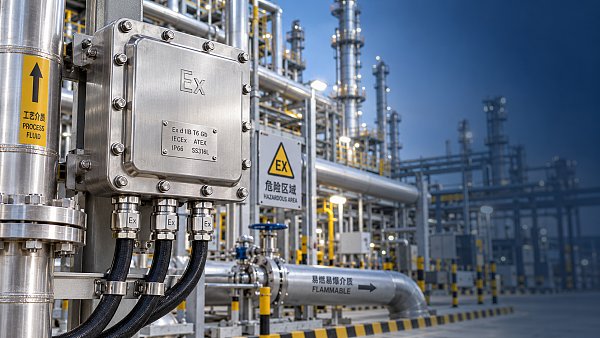
 How to verify whether explosion proof equipment meets site requirementsExplosion proof equipment verification made practical: match zones, gas or dust groups, temperature classes, certificates, and installation conditions for confident compliance.
 How industrial gas analysis helps detect contamination before releaseIndustrial Gas Analysis helps detect moisture, oil, oxygen, and toxic contaminants before release—protecting processes, ensuring compliance, and reducing costly risks.
 When is electrochemistry detection the right choice for water analysis?Electrochemistry detection for water analysis: learn when fast, reliable monitoring of ions, chlorine, pH, and more delivers actionable results.
 How industrial standards reduce quality risks in supplier selectionIndustrial Standard guidance helps quality and safety managers reduce supplier risks, verify compliance, strengthen traceability, and build resilient instrumentation supply chains.
 When does a multi-component system reduce installation complexity?Multi component systems reduce installation complexity when they eliminate field interfaces, streamline commissioning, and provide proven compatibility. Learn how to assess total cost and supplier accountability.
 How to size an industrial control shelter for outdoor equipmentIndustrial control shelter sizing guide: optimize layout, HVAC, access, safety, and expansion space for reliable outdoor equipment operations.
 How flue analysis helps verify combustion efficiencyFlue analysis verifies combustion efficiency by assessing O2, CO, CO2, and stack temperature to identify excess air, incomplete combustion, and heat losses.
 How to select industrial gas detectors for confined spacesIndustrial gas detectors for confined spaces: learn how to match sensors, sampling methods, alarms, and certifications to real atmospheric hazards.
 When does a laser oxygen analyzer outperform zirconia sensors?Laser oxygen analyzer vs. zirconia sensors: compare speed, selectivity, maintenance, gas chemistry, and installation needs to choose the right oxygen measurement solution.
 How to select a percent range analyzer for process measurementsPercent range analyzer selection made practical: compare accuracy, sample systems, calibration, gas matrix, integration, and lifecycle cost for reliable process measurements.
 How explosion proof analysis verifies safe equipment for hazardous areasExplosion proof analysis verifies hazardous-area equipment by matching certifications, temperature ratings, installation details, and inspection controls for safer compliance.
 When does fixed gas detection need point sensors instead of open-path monitoring?Fixed gas detection: discover when point sensors outperform open-path monitoring for predictable leaks, enclosed zones, local alarms, and safer design decisions.
 How to choose industrial metrology systems for tight-tolerance partsIndustrial metrology guide for tight-tolerance parts: compare CMMs, optical scanners, gauges, uncertainty, workflow, and traceable inspection strategies.




Search Categories
Search Categories
- Smart Meters & Power Quality
- Transformer Gas Analyzers
- BESS Thermal Runaway Detectors
- Energy, Power & Smart Grid Monitoring
- Optical Profilers & CMM
- Ultrasonic & X-Ray NDT
- Calibration Standards
- Precision Metrology & NDT
- Water Quality Analyzers
- CEMS & VOCs Monitors
- Price Trends
- Import & Export Updates
- Market Trends
- Industry News
- Industry Insights
Latest Article
- How to prevent condensation in a CO2 analyzer sampling systemPrevent condensation in your CO2 analyzer sampling system. Learn how to control dew point, eliminate cold spots, and manage moisture for reliable readings and fewer costly disruptions.Posted by:
- How to verify accuracy claims for industrial quality analyzersVerify accuracy claims for industrial quality analyzers with calibration checks, independent testing, and clear acceptance criteria. Learn how to reduce risk and buy with confidence.Posted by:
- How to calculate cooling loads for an industrial analyzer shelterSize industrial analyzer shelter cooling with confidence. Learn to calculate equipment heat, solar gains, and ventilation loads, then select HVAC capacity for reliable analyzer performance.Posted by:
Please give us a message
