
How Environmental Protection Standards Shape Industrial Equipment Selection


Why do Environmental Protection standards show up so early in equipment selection?
Because they change the definition of a “suitable” machine before anyone gets to throughput, price, or preferred brand. For technical evaluation teams, Environmental Protection is not just about whether a plant can pass an inspection after installation. It affects whether the equipment can legally operate in the target market, whether it can be integrated into emissions or wastewater control systems, and whether its operating profile creates hidden cost over the next five to ten years.
In practice, standards influence selection in four places at once: emissions, energy use, material compatibility, and monitoring capability. A pump, analyzer, boiler accessory, compressor, or thermal process unit may all meet process duty on paper, yet still fail technical review if it cannot support the site’s discharge limits, leak prevention plan, hazardous substance restrictions, or required measurement accuracy. That is why strong evaluation teams treat environmental requirements as a front-end filter, not a paperwork step at the end.
Which standards matter most when comparing industrial equipment?
There is no single universal checklist, and that is where many sourcing mistakes begin. The applicable standards depend on the equipment category, the process medium, the installation country, and whether the equipment itself emits, contains, treats, or monitors regulated substances.
A practical review usually starts with these buckets:
- Air emissions requirements: relevant for combustion equipment, exhaust treatment units, incineration-related systems, and process lines tied to VOC, particulate, SOx, or NOx control.
- Water discharge and sampling requirements: critical for analyzers, dosing systems, filtration units, wastewater treatment skids, and online water quality monitoring equipment.
- Energy efficiency rules: often shape motor selection, variable speed drives, heat recovery, insulation design, and standby consumption.
- Material and chemical restrictions: relevant when equipment uses coatings, seals, refrigerants, process-contact materials, or electronics subject to substance control rules.
- Measurement and calibration expectations: especially important for environmental monitoring instruments, where accuracy, traceability, and maintenance intervals affect compliance credibility.
The key is to map the equipment to the regulated impact. If the unit generates emissions, ask what it emits. If it measures environmental parameters, ask what proof of accuracy is accepted. If it touches a regulated medium, ask what materials and sealing arrangements are allowed.
Is supplier certification enough to prove environmental compliance?
Usually not. A certificate can be part of the evidence set, but it is rarely the whole answer. Technical evaluators need to separate system certification from product suitability. A supplier may operate under a recognized management system, but that does not automatically prove the specific model meets the environmental obligations of your project.
What actually matters is whether the supplier can provide document-level support for the exact configuration being purchased: model number, wetted materials, emission control design, sensor range, calibration method, power profile, and any environmental performance declarations tied to that version. If there are optional seals, linings, software functions, or burner settings, the compliance position may change with the option set.
That is why technical review should request the product datasheet, compliance declarations where applicable, test reports when relevant, installation constraints, maintenance requirements, and the exact bill of materials for critical components. General brochures do not carry enough weight.

What should a technical evaluator check in the documents?
Look for traceable facts, not marketing language. If a document says the equipment is “eco-friendly” or “low emission,” that is not useful unless the basis is stated clearly. The review should focus on fields that can be matched to the project specification and regulatory exposure.
One common miss: teams verify the instrument but not the sample conditioning, drain handling, or exhaust routing around it. Environmental noncompliance often comes from the package design, not the sensor core.
How do standards affect the choice of materials and sealing systems?
More than many buyers expect. When Environmental Protection requirements are strict, fugitive emissions, chemical leakage, permeation, and contaminated runoff become design issues, not maintenance issues. A technically acceptable valve, pump, analyzer enclosure, or tubing set can become the wrong choice if elastomers degrade, metallic surfaces pit, or seal arrangements allow repeated micro-leaks.
This matters most in corrosive, solvent-rich, high-purity, or hazardous media service. Technical evaluators should check whether the proposed materials match normal operation, startup, cleaning cycles, upset conditions, and ambient exposure. The question is not only “Will it survive?” but also “Will it keep the process contained without generating a secondary environmental problem?”
If the supplier only states broad compatibility, ask for the exact wetted materials and sealing compounds. A stainless body with the wrong gasket can still be a failure point.
Does energy efficiency belong in environmental equipment selection, or is that a separate procurement issue?
It belongs in the same decision. Environmental Protection standards increasingly interact with energy performance because operating efficiency affects both indirect emissions and lifetime cost. An oversized motor, poorly controlled blower, inefficient heater, or analyzer shelter with unnecessary utility load may meet process duty but still weaken the project’s environmental case.
For evaluation teams, this means comparing more than purchase price. Review the expected load profile, not just rated power. Ask whether the equipment runs continuously or intermittently, whether variable speed control is supported, whether purge or heating systems can be optimized, and whether the accuracy gain from a more complex design justifies the extra energy demand.
A low-cost unit that consumes more utilities every hour can become the less compliant choice once environmental reporting and operating cost are considered together.
What is different when the equipment itself is used for environmental monitoring?
The bar is higher, because now the equipment is not only part of the process. It is part of the evidence. That changes how you assess analyzers, CEMS components, water quality monitors, sample handling systems, and calibration devices.
In that situation, technical review should pay close attention to:
- Whether the measurement principle is suitable for the target contaminant and matrix.
- How drift, interference, and contamination are managed over time.
- What calibration routine is required, and whether traceability can be maintained on site.
- How alarms, data logging, and fault states are recorded for audit purposes.
- Whether maintenance downtime will create reporting gaps.
A technically advanced analyzer is not automatically the best option if the plant cannot support its upkeep. For compliance-related monitoring, stable field performance usually matters more than impressive lab-level capability.
Where do teams most often get the decision wrong?
Three patterns show up again and again. The first is checking only the main equipment tag and ignoring ancillary items such as seals, drain vessels, reagent containers, sample coolers, vent lines, or control logic. The second is reviewing compliance by region too late, after a preferred model is already locked into the project. The third is assuming that a proven unit in one plant can be copied directly into another without reconsidering local discharge permits, utility quality, or maintenance capability.
Another frequent problem is overvaluing declaration language and undervaluing operating conditions. Environmental compliance is usually lost in the gap between standard configuration and actual service conditions.
How should technical evaluators build an approval process that holds up later?
Start with a short project-specific matrix before RFQ release. List the regulated environmental impacts tied to the equipment, then define what evidence is needed for each one. That keeps suppliers from responding with generic compliance packs and helps engineering, procurement, and EHS review the same facts.
A workable sequence looks like this:
- Identify whether the equipment emits, contains, treats, or measures a regulated medium.
- Define the environmental performance criteria that affect acceptance.
- Request model-specific documents rather than company-level statements.
- Review ancillary systems that can create leaks, waste, or reporting gaps.
- Check whether installation, calibration, or maintenance conditions are part of compliance.
- Record unresolved deviations before commercial award, not after delivery.
The best final check is simple: if the environmental requirement depends on a field condition, a consumable, a software setting, or a maintenance interval, it should appear in the evaluation record. If it exists only in someone’s memory or in a sales email, it is not controlled well enough.
Recommended for You
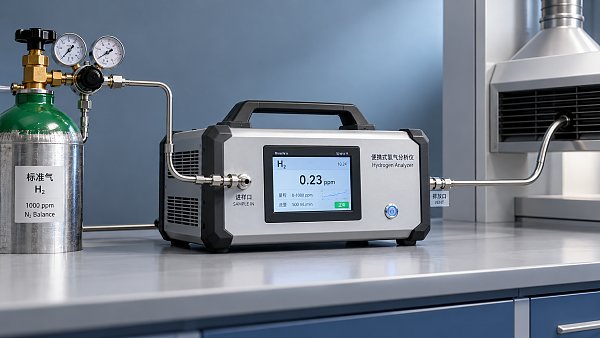
 How sensitive should a portable hydrogen analyzer be for lab use?Choose a portable hydrogen analyzer for laboratory use with the right quantification limit, accuracy, and range. Learn how to verify performance and avoid costly buying mistakes.
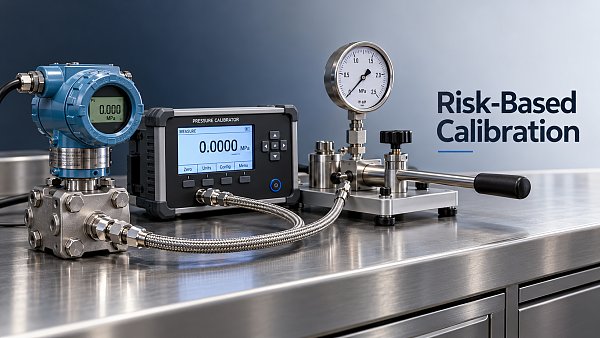
 How to set industrial calibration intervals based on equipment riskSet industrial calibration intervals based on equipment risk, drift, and as-found data. Learn when to shorten or extend schedules to improve reliability and avoid unnecessary costs.
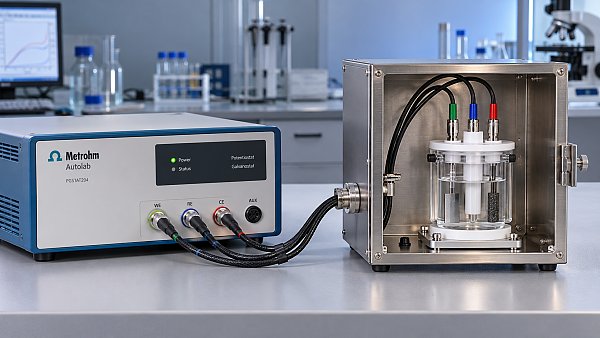
 How to choose electrochemical analyzers for low-current measurementsCompare electrochemical analyzers for precise low-current measurements. Learn how noise, leakage, bandwidth, and real-cell testing help you choose the right instrument.
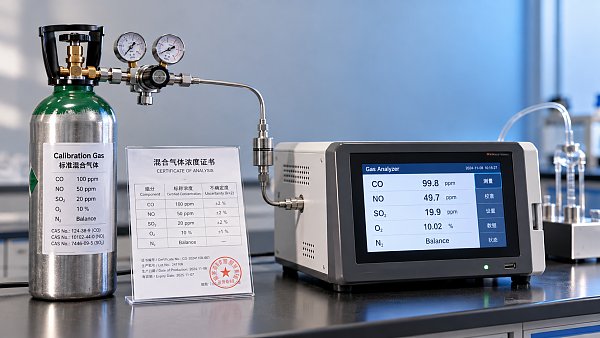
 What tolerance does a custom gas mixture need for calibration?Choose the right custom gas tolerance for calibration. Learn how blending tolerance, certified uncertainty, and stability affect accuracy—and avoid paying for precision you don’t need.
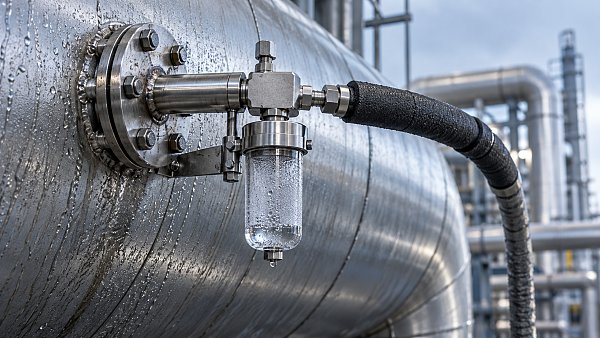
 How condensation affects stack detector readings in wet flue gasStack detector readings can drift when wet flue gas condenses. Learn how to identify moisture interference, prevent sample losses, and improve emissions monitoring reliability.
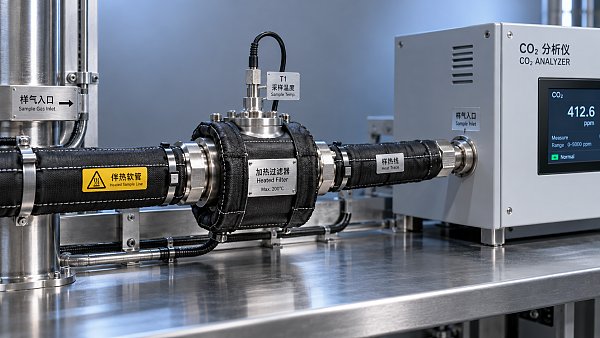
 How to prevent condensation in a CO2 analyzer sampling systemPrevent condensation in your CO2 analyzer sampling system. Learn how to control dew point, eliminate cold spots, and manage moisture for reliable readings and fewer costly disruptions.
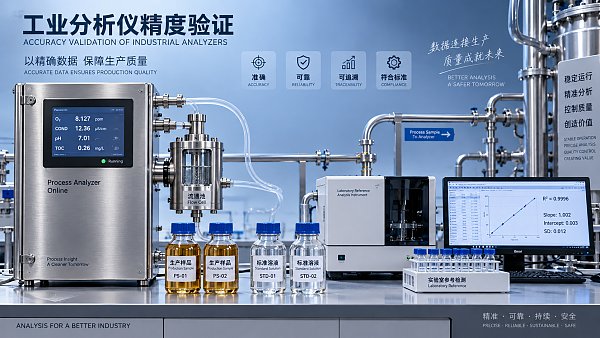
 How to verify accuracy claims for industrial quality analyzersVerify accuracy claims for industrial quality analyzers with calibration checks, independent testing, and clear acceptance criteria. Learn how to reduce risk and buy with confidence.
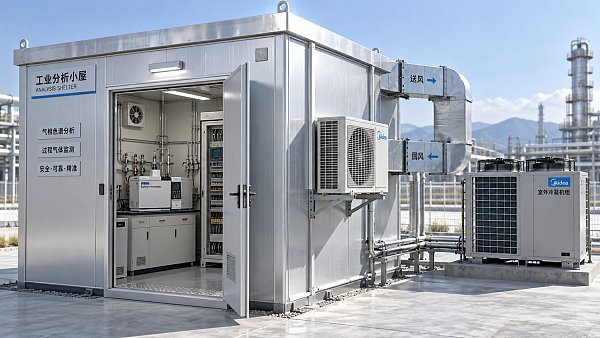
 How to calculate cooling loads for an industrial analyzer shelterSize industrial analyzer shelter cooling with confidence. Learn to calculate equipment heat, solar gains, and ventilation loads, then select HVAC capacity for reliable analyzer performance.
 Unstable CH4 Readings in Biogas Monitoring? Check Moisture and Sample FlowCH4 analyzer for biogas monitoring giving unstable readings? Discover how moisture, sample flow, and pressure checks help pinpoint faults and restore reliable methane measurements.
 Buying a CO2 Analyzer for Brewery Gas Recovery: Costs Beyond the Purchase PriceBuying a CO2 analyzer for brewery applications? Compare sampling, installation, calibration, and downtime costs to uncover hidden expenses and make a smarter gas recovery investment.
 Where to Place CO Analyzers for Effective Parking Garage VentilationOptimize your CO analyzer for parking garage ventilation with practical placement tips. Learn how sensor height, airflow, and zone coverage support timely detection and effective fan control.
 NDIR vs. FTIR Gas Analyzers: Which Fits Your Environmental Research?Find the right infrared gas analyzer for environmental research. Compare NDIR vs. FTIR on sensitivity, gas coverage, sampling needs, and cost to choose confidently for your study.
 Oxygen Analyzers for Diving: Calibration Checks Before Nitrox BlendingUsing an oxygen analyzer for diving applications? Discover essential calibration, sensor, and sampling checks before nitrox blending to support reliable readings.
 How Paramagnetic Oxygen Analyzers Work and Why Sample Pressure MattersLearn how a paramagnetic oxygen analyzer works, why sample pressure affects accuracy, and what to check in compensation and calibration before choosing your system.
 How Much Does a Complete CEMS Integration Project Typically Cost?How much does a complete CEMS integration project typically cost? Explore budget ranges, hidden installation costs, and compliance needs to compare quotes and plan confidently.
 What Is the Typical Response Time for Industrial Air Monitors?What is the typical response time for industrial air monitors? Explore T90, sampling delays, and alarm settings to compare performance and choose the right monitor with confidence.
 Do Regulatory Monitoring Systems Need Third-Party Certification?Do regulatory monitoring systems need third-party certification? Learn when it is required, what certificates prove, and how to verify compliance before buying.
 How Do You Choose Wired or Wireless for Stack Monitoring?Learn how to choose between wired and wireless for stack monitoring. Compare reliability, lifecycle costs, and data recovery to find the right CEMS setup for your site.
 What Happens When Combustible Gas Sensor Calibration Is Overdue?What happens if combustible gas sensor is not recalibrated on time? Discover the risks of inaccurate readings and missed alarms, plus steps to restore reliable protection.
 Can One Multi-Gas Detector Replace Four Separate Analyzers?Find out: can a single multi-gas detector replace four separate analyzers? Compare accuracy, safety, compliance, and lifetime costs to make a confident buying decision.
 Industrial Safety vs. Emission Monitoring: What Are the Differences?What are the main differences between industrial safety and emission monitoring? Compare goals, sensors, response times, and compliance needs to choose the right systems for your facility.
 Is Remote Monitoring Worth the Cost for Small Emission Sources?Is it worth investing in remote monitoring for small emission sources? Compare costs, compliance needs, and potential savings to choose the right solution for your operation.
 How Do You Handle Analyzer Failure During an Environmental Audit?Learn how to handle analyzer failure during environmental compliance audit procedures. Protect evidence, verify data, and restore monitoring with this practical response guide.
 Do VOC Monitors Require Explosion-Proof Certification?Does VOC monitoring require explosion-proof certification? Learn when approval is needed, compare ATEX and IECEx, and choose the right monitor for your site.
 How sample conditioning affects accuracy in petrochemical analyzersImprove accuracy in petrochemical analyzers with smarter sample conditioning. Discover how phase control, filtration, and transport design prevent bias and deliver reliable process data.
 How to troubleshoot sensor drift in industrial gas detectorsIndustrial gas detectors showing sensor drift? Learn how to verify calibration gas, identify root causes, and determine when sensor replacement is needed for reliable monitoring.
 How to judge whether a competitive price reflects real valueCompetitive Price: learn how to compare scope, compliance, performance, and lifecycle costs to identify real value, reduce risk, and make smarter purchasing decisions.
 When custom gas analysis is the right fit for complex process streamsCustom gas analysis for complex process streams: learn when tailored sampling, interference control, and reliable measurement design deliver confident decisions.
 When does a laser gas analyzer meet stack emissions monitoring needs?Laser gas analyzer for stack emissions: learn when it delivers fast, reliable data, how to assess installation risks, and what to verify for CEMS compliance.
 How to select a hazardous gas analyzer for confined spacesHazardous gas analyzer selection for confined spaces: compare sensors, sampling, certifications, alarms, and maintenance to protect workers and choose with confidence.
 When is a single gas analyzer sufficient for workplace safety monitoring?Discover when a single gas analyzer delivers reliable workplace safety monitoring, and learn the key limits, calibration needs, and risks that require broader detection.
 How to choose an ambient gas analyzer for low-level leak detectionAmbient gas analyzer selection for low-level leak detection: compare sensitivity, cross-sensitivity, sampling design, alarms, and calibration for reliable site performance.
Search Categories
Search Categories
- Smart Meters & Power Quality
- Transformer Gas Analyzers
- BESS Thermal Runaway Detectors
- Energy, Power & Smart Grid Monitoring
- Optical Profilers & CMM
- Ultrasonic & X-Ray NDT
- Calibration Standards
- Precision Metrology & NDT
- Water Quality Analyzers
- CEMS & VOCs Monitors
- Price Trends
- Import & Export Updates
- Market Trends
- Industry News
- Industry Insights
Latest Article
- How sensitive should a portable hydrogen analyzer be for lab use?Choose a portable hydrogen analyzer for laboratory use with the right quantification limit, accuracy, and range. Learn how to verify performance and avoid costly buying mistakes.Posted by:
- How to set industrial calibration intervals based on equipment riskSet industrial calibration intervals based on equipment risk, drift, and as-found data. Learn when to shorten or extend schedules to improve reliability and avoid unnecessary costs.Posted by:
- How to choose electrochemical analyzers for low-current measurementsCompare electrochemical analyzers for precise low-current measurements. Learn how noise, leakage, bandwidth, and real-cell testing help you choose the right instrument.Posted by:
Please give us a message
