
Digital Transformation: Costs, Risks, and ROI in 2026


Why is Digital Transformation in 2026 treated as a cost decision, not just a technology upgrade?

Digital Transformation now sits closer to capital allocation than IT experimentation. Budgets are tighter, compliance pressure is higher, and failure costs are easier to see.
The practical question is no longer whether modernization matters. The real issue is how to fund it without creating operational blind spots or sunk implementation expense.
That shift is especially visible in industries where measurement accuracy drives uptime, safety, and product quality. Instrumentation is no longer a background asset.
In manufacturing, energy, life sciences, environmental monitoring, and construction engineering, Digital Transformation often starts with better data capture rather than flashy front-end systems.
If flow, pressure, temperature, composition, or power quality data is unreliable, software layers cannot produce reliable decisions. Poor sensing creates expensive digital illusions.
This is where GIH has relevance. Its research focus reflects a simple procurement reality: transformation value depends on trusted instruments, compliant suppliers, and usable industrial intelligence.
So when boards ask about Digital Transformation in 2026, they are usually asking three linked questions. What will it cost, what can fail, and when does ROI become visible?
What does the real cost of Digital Transformation usually include?
The headline budget rarely tells the full story. Most programs underestimate integration, process redesign, training, validation, and supplier qualification.
In practice, Digital Transformation costs usually fall into five layers.
- Core infrastructure: sensors, gateways, control upgrades, edge devices, networks, and cybersecurity hardening.
- Software and data stack: MES, SCADA extensions, analytics tools, cloud storage, dashboards, and API work.
- Engineering labor: system design, calibration, commissioning, data mapping, validation, and downtime planning.
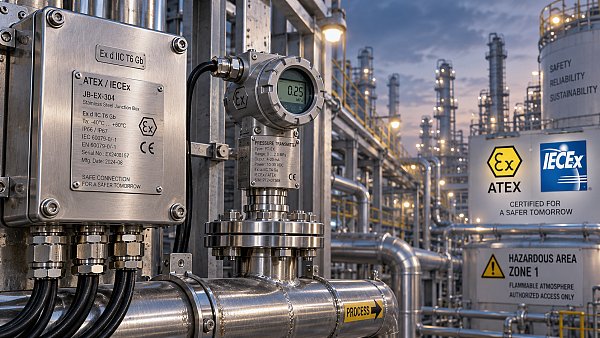
- Compliance and assurance: ISO/IEC 17025 alignment, ATEX or IECEx checks, FDA-related validation, and audit preparation where required.
- Change costs: operator retraining, workflow revisions, and temporary productivity loss during rollout.
A common mistake is treating instrumentation as a one-time equipment line item. In complex facilities, the real spend comes from making data trustworthy and decision-ready.
For example, replacing transmitters without reviewing PLC or DCS architecture may deliver fresh signals but weak system value. The data exists, yet the plant still cannot act fast enough.
The table below helps separate visible and hidden costs before approvals move too far.
A stronger cost model usually compares transformation phases against measurable operational constraints, not against an abstract innovation budget.
Where do Digital Transformation projects fail most often?
Failure rarely comes from lack of ambition. It usually comes from poor sequencing, weak supplier verification, or low-confidence data feeding expensive software decisions.
One major risk is digitizing unstable processes. If a plant, lab, or energy asset already suffers inconsistent measurement, automation simply scales inconsistency faster.
Another risk is compliance mismatch. A sensor may look cost-effective, yet fail local certification, calibration, or explosion-proof requirements after installation planning begins.
Data ownership is another overlooked issue. Different teams often assume someone else maintains tag quality, instrument health, or analytics thresholds.
In life sciences or environmental monitoring, validation risk becomes even more serious. A digital layer that changes records, alerts, or sampling logic can trigger audit complications.
More mature transformation programs tend to review risk through operational evidence, not vendor claims alone. That is why market intelligence platforms with technical depth matter.
GIH’s value in this context is not promotional. It is analytical. It helps clarify supplier reliability, standards exposure, and category-specific technical barriers before contracts harden.
- Check whether critical devices match the real process environment, not just the purchasing specification.
- Confirm calibration, traceability, and maintenance workflows before dashboard design begins.
- Map integration dependencies across instrumentation, controls, analytics, and reporting systems.
- Stress-test supplier claims against certifications, field history, and lead-time stability.
When does ROI from Digital Transformation become believable?
Believable ROI appears when the value chain is measurable from signal to action. If benefits stay descriptive, financial confidence remains low.
The strongest ROI cases usually start with operational pain that already has a cost. Unplanned downtime, energy waste, off-spec production, delayed testing, and compliance exposure are typical examples.
For industrial process control, ROI may come from tighter loop stability, less material loss, and fewer emergency interventions. That is easier to defend than vague claims about modernization.
In laboratories, returns often show up through throughput, repeatability, and lower rework. In environmental monitoring, the value may come from reporting reliability and faster anomaly response.
Smart grid and energy monitoring projects often produce a clearer case because power quality events, thermal risks, and efficiency losses can be quantified with precision.
A useful ROI test asks whether the transformation changes a physical outcome, not just a digital view.
In other words, Digital Transformation earns trust when it improves measurable physical performance and not only reporting aesthetics.
How should you compare suppliers and solutions without getting lost in marketing?
The cleaner approach is to compare decision quality, not feature volume. A larger feature list does not reduce implementation risk by itself.
Start with the data source. Ask how the solution handles field-level accuracy, calibration history, hazardous environments, and integration with existing control architecture.
Then evaluate supplier resilience. That includes component traceability, documentation quality, lead times, service coverage, and the ability to support audits or revalidation.
This matters even more in instrumentation categories with strict tolerances. Precision metrology, analytical devices, and process analyzers can create outsized downstream costs when supplier quality slips.
A practical comparison framework often includes these checkpoints.
- Does the supplier understand the operating context, or only the catalog specification?
- Are required standards and certifications already documented?
- Can the solution scale across sites without rebuilding the data model each time?
- What maintenance burden appears after commissioning?
- Is there evidence from similar industrial, laboratory, or energy scenarios?
This is where intelligence-led sourcing becomes valuable. GIH’s category coverage across process control, laboratory systems, environmental monitoring, metrology, and smart energy helps narrow uncertainty before procurement commitments.
What is a sensible next step if you need results without betting on a full overhaul?
The most effective next step is usually selective transformation, not universal replacement. Start where measurement quality, control reliability, and financial impact intersect.
That could mean a high-pressure process unit, a regulated lab workflow, an emissions monitoring stream, or an energy asset with recurring power disturbances.
Choose one area where baseline losses are known and field data can be validated quickly. That creates a cleaner ROI reference for later phases.
Before moving ahead, document four things clearly: current cost of inaction, target process outcome, supplier qualification criteria, and proof metrics for the first milestone.
Digital Transformation in 2026 rewards disciplined sequencing. The projects that perform best are usually grounded in trusted measurement, realistic cost models, and technical due diligence.
A useful closing check is simple. If the program improves data truth, operational control, and sourcing confidence at the same time, the investment case becomes much stronger.
The next move is to map one priority use case, compare supplier risk with evidence, and build an ROI model around physical results rather than digital promises.
Recommended for You
 When custom gas analysis is the right fit for complex process streamsCustom gas analysis for complex process streams: learn when tailored sampling, interference control, and reliable measurement design deliver confident decisions.
 When does a laser gas analyzer meet stack emissions monitoring needs?Laser gas analyzer for stack emissions: learn when it delivers fast, reliable data, how to assess installation risks, and what to verify for CEMS compliance.
 How to select a hazardous gas analyzer for confined spacesHazardous gas analyzer selection for confined spaces: compare sensors, sampling, certifications, alarms, and maintenance to protect workers and choose with confidence.
 When is a single gas analyzer sufficient for workplace safety monitoring?Discover when a single gas analyzer delivers reliable workplace safety monitoring, and learn the key limits, calibration needs, and risks that require broader detection.
 How to choose an ambient gas analyzer for low-level leak detectionAmbient gas analyzer selection for low-level leak detection: compare sensitivity, cross-sensitivity, sampling design, alarms, and calibration for reliable site performance.
 How to tell when an oxygen sensor needs replacementOxygen sensor replacement signs explained: learn how live data, fault codes, wiring checks, and exhaust inspections pinpoint the real issue before you buy.
 How laser gas analyzers improve combustion control in steel furnacesLaser gas analyzer for steel industry applications delivers fast in-situ O₂ and CO data to optimize furnace combustion, cut fuel waste, and improve steel heating stability.
 How to verify whether explosion proof equipment meets site requirementsExplosion proof equipment verification made practical: match zones, gas or dust groups, temperature classes, certificates, and installation conditions for confident compliance.
 How industrial gas analysis helps detect contamination before releaseIndustrial Gas Analysis helps detect moisture, oil, oxygen, and toxic contaminants before release—protecting processes, ensuring compliance, and reducing costly risks.
 When is electrochemistry detection the right choice for water analysis?Electrochemistry detection for water analysis: learn when fast, reliable monitoring of ions, chlorine, pH, and more delivers actionable results.
 How industrial standards reduce quality risks in supplier selectionIndustrial Standard guidance helps quality and safety managers reduce supplier risks, verify compliance, strengthen traceability, and build resilient instrumentation supply chains.
 When does a multi-component system reduce installation complexity?Multi component systems reduce installation complexity when they eliminate field interfaces, streamline commissioning, and provide proven compatibility. Learn how to assess total cost and supplier accountability.
 How to size an industrial control shelter for outdoor equipmentIndustrial control shelter sizing guide: optimize layout, HVAC, access, safety, and expansion space for reliable outdoor equipment operations.
 How flue analysis helps verify combustion efficiencyFlue analysis verifies combustion efficiency by assessing O2, CO, CO2, and stack temperature to identify excess air, incomplete combustion, and heat losses.
 How to select industrial gas detectors for confined spacesIndustrial gas detectors for confined spaces: learn how to match sensors, sampling methods, alarms, and certifications to real atmospheric hazards.
 When does a laser oxygen analyzer outperform zirconia sensors?Laser oxygen analyzer vs. zirconia sensors: compare speed, selectivity, maintenance, gas chemistry, and installation needs to choose the right oxygen measurement solution.
 How to select a percent range analyzer for process measurementsPercent range analyzer selection made practical: compare accuracy, sample systems, calibration, gas matrix, integration, and lifecycle cost for reliable process measurements.
 How explosion proof analysis verifies safe equipment for hazardous areasExplosion proof analysis verifies hazardous-area equipment by matching certifications, temperature ratings, installation details, and inspection controls for safer compliance.
 When does fixed gas detection need point sensors instead of open-path monitoring?Fixed gas detection: discover when point sensors outperform open-path monitoring for predictable leaks, enclosed zones, local alarms, and safer design decisions.
 How to choose industrial metrology systems for tight-tolerance partsIndustrial metrology guide for tight-tolerance parts: compare CMMs, optical scanners, gauges, uncertainty, workflow, and traceable inspection strategies.
 How process metrology reduces measurement variation in productionProcess metrology reduces production measurement variation by improving traceability, uncertainty control, calibration, and reliable quality decisions.
 How to select an industrial monitoring analyzer for harsh environmentsIndustrial monitoring analyzer selection for harsh environments: evaluate sampling, durability, hazardous-area compliance, accuracy, maintenance, and data reliability.
 How calibration intervals affect test and measurement equipment accuracyTest and measurement equipment calibration intervals directly affect accuracy, risk, compliance, and uptime. Learn how to set evidence-based schedules that protect critical decisions.
 When does process gas monitoring need continuous measurement?Process gas monitoring needs continuous measurement when rapid changes threaten safety, quality, compliance, or uptime. Learn how to specify reliable, actionable monitoring systems.
 How to prevent false alarms in power plant instrumentationPower plant instrumentation guide: prevent false alarms with reliable signal checks, smarter alarm settings, mode-based control, and actionable operator responses.
 How fixed gas detectors help prevent leaks in enclosed workspacesFixed gas detectors provide continuous leak monitoring in enclosed workspaces, enabling faster alarms, safer responses, and stronger protection for people and processes.
 How industrial gas analysis helps detect process contamination earlyIndustrial Gas Analysis helps detect oxygen, moisture, and hydrocarbon contamination early, enabling faster fault isolation, safer operations, and stronger process control.
 What drives environmental compliance continuous monitoring setup cost?Environmental compliance continuous monitoring setup cost: uncover hidden expenses, compare bids accurately, and build a reliable, audit-ready system.
 How to select gas analysis equipment for continuous emissions monitoringGas analysis equipment selection guide for reliable continuous emissions monitoring—compare technologies, sampling, calibration, compliance, and maintenance needs.
 What detection limit is needed for NH3 environmental monitoring?High accuracy NH3 analyzer for environmental monitoring: learn how to set the right detection limit, improve sampling reliability, and make defensible decisions.
 How to select a NOX analyzer for power plant emissions complianceNOX analyzer for power plant emissions: learn how to select a compliant, reliable CEMS solution with the right range, sample handling, calibration, and data integrity.
 How to evaluate a laser gas analyzer manufacturer in GermanyLaser gas analyzer manufacturer in Germany: compare accuracy, sample handling, interference control, calibration, and service to select a reliable solution.



Search Categories
Search Categories
- Smart Meters & Power Quality
- Transformer Gas Analyzers
- BESS Thermal Runaway Detectors
- Energy, Power & Smart Grid Monitoring
- Optical Profilers & CMM
- Ultrasonic & X-Ray NDT
- Calibration Standards
- Precision Metrology & NDT
- Water Quality Analyzers
- CEMS & VOCs Monitors
- Price Trends
- Import & Export Updates
- Market Trends
- Industry News
- Industry Insights
Latest Article
- When custom gas analysis is the right fit for complex process streamsCustom gas analysis for complex process streams: learn when tailored sampling, interference control, and reliable measurement design deliver confident decisions.Posted by:
- When does a laser gas analyzer meet stack emissions monitoring needs?Laser gas analyzer for stack emissions: learn when it delivers fast, reliable data, how to assess installation risks, and what to verify for CEMS compliance.Posted by:
- How to select a hazardous gas analyzer for confined spacesHazardous gas analyzer selection for confined spaces: compare sensors, sampling, certifications, alarms, and maintenance to protect workers and choose with confidence.Posted by:
Please give us a message
