
What Makes Customer Support Scalable Without Hurting Response Quality


What “Scalable Customer Support” Actually Means in a Decision Context
A lot of support teams claim they are scaling when what they really mean is that they are adding headcount, adding channels, or pushing more traffic into automation. None of that, by itself, makes Customer Support scalable. The real test is harder: can the organization absorb rising ticket volume, a broader customer base, and more operational complexity without letting response quality become erratic?
For decision-makers, that distinction matters because poor support rarely fails all at once. It degrades in layers. First response times stretch. Then answers become inconsistent across email, chat, and phone. Escalations pile up. Knowledge gets trapped inside a few experienced agents. Eventually, customers stop trusting the support function, even if the team is still hitting a few surface-level metrics.
So scalable support is not a synonym for low-cost support, and it is not a synonym for AI-enabled support either. It is an operating model in which service quality remains controlled as demand changes. That usually depends on process design, knowledge structure, tooling, staffing logic, and escalation discipline working together. If one of those layers is weak, volume growth exposes it quickly.
Why Response Quality Drops When Volume Rises
The common assumption is that quality falls because agents are overloaded. That is true, but it is not the full picture. In practice, response quality often falls because the support system was built around individual effort rather than repeatable decision paths. A skilled team can hide this for a while. Once the company adds new products, enters more geographies, or supports more complex buyer journeys, informal workarounds stop holding.
This is especially visible in B2B environments, where support questions are not all equal. Some are transactional, such as order status or warranty documentation. Others involve technical compatibility, regulatory questions, installation constraints, calibration issues, or procurement risk. In sectors tied to industrial operations, life sciences, environmental monitoring, or energy systems, support quality is judged less by friendliness than by precision, traceability, and confidence. A fast answer that is incomplete or technically loose can be worse than a slower but correct one.
That is why a scalable model must separate ticket volume from ticket complexity. Leaders who treat all interactions as interchangeable tend to over-invest in speed and under-invest in knowledge control.

The Core Design Principle: Standardize the Routine, Protect the Complex
Support becomes scalable when routine work is made predictable and complex work is given the right path instead of being forced through the same queue. That sounds simple, but it changes how teams make tooling and staffing decisions.
Routine interactions should be standardized enough that customers receive consistent answers regardless of channel or time zone. That usually requires a maintained knowledge base, structured macros or guided workflows, clear case classification, and service rules that determine what can be resolved at first contact. It also requires ownership. Knowledge articles that nobody curates become stale fast, especially in technical sectors where documentation, compliance references, firmware revisions, or product configurations change over time.
Complex interactions need a different design. They should not disappear into general queues where agents improvise. They need escalation logic tied to topic, risk, and customer impact. In an instrumentation-related context, for example, a query involving hazardous-area certification, calibration traceability, or system integration should not be handled the same way as a delivery-date request. The scalable approach is not to make every agent an expert in everything. It is to route complexity in a disciplined way while keeping the customer experience coherent.
What Leaders Should Evaluate Beyond Headcount
When companies assess support scalability, they often start with staffing ratios. Useful, but incomplete. A stronger evaluation looks at whether the support operation can preserve answer quality under variation. That means checking for a few concrete conditions:
- Are inquiry types classified in a way that reflects operational reality, not just CRM convenience?
- Can the team distinguish between high-frequency issues and high-risk issues?
- Is technical knowledge documented in a reusable form, or does it live inside inboxes and chat threads?
- Do automation tools reduce unnecessary effort, or are they simply deflecting customers into dead ends?
- Can management measure resolution quality, not only response speed?
That last point is where many implementations drift. First response time and ticket closure rate are easy to track, so they dominate dashboards. But those metrics do not reliably show whether the customer received a correct, complete, and usable answer. A support operation can look efficient while generating repeat contacts, preventable escalations, or downstream sales friction.
Automation Helps, But Only When the Support Model Is Already Structured
There is a persistent misunderstanding that automation creates scalability on its own. In reality, automation magnifies the logic already present in the support process. If categories are vague, source data is unreliable, and escalation paths are informal, AI assistants, bots, and workflow automation tend to amplify confusion faster than people can correct it.
Used well, automation is valuable. It can handle repetitive status requests, suggest relevant documentation, pre-fill forms, route tickets based on issue type, and surface likely resolutions to agents. It can also reduce waiting time in multi-region operations where support demand is uneven across time zones. But none of these gains hold if the underlying content is outdated or if there is no agreed definition of what a successful resolution looks like.
This matters in technical industries because customers are often not asking for generic help. They are asking whether a device fits an operating environment, whether documentation satisfies procurement review, whether a specification mismatch affects deployment, or whether a compliance requirement changes the purchase decision. Those are not questions a company should automate casually.
A Practical Way to Judge Scalability
If you are selecting a support model, platform, or service partner, it helps to frame the decision around failure modes rather than feature lists. Ask where quality will break first when demand doubles, channels expand, or product complexity rises.
This lens is particularly useful for organizations operating in regulated or specification-heavy markets. Where technical accuracy influences procurement, commissioning, or operational safety, support quality should be treated as part of commercial reliability, not as a back-office cost center.
Why This Matters More in Complex B2B Sectors
In simpler consumer environments, support can often be scaled through standardized scripts and self-service content alone. In industrial and technical B2B sectors, the support burden is different. Customers may need help before purchase, during integration, after installation, and again during maintenance or recalibration cycles. The same account can move between procurement questions, application engineering questions, and compliance verification.
That is why support quality is closely linked to information architecture. A business like Global Instrument Hub, which sits near sourcing decisions, technical trend analysis, and supplier evaluation, would naturally see support as an intelligence function as much as a service function. Buyers comparing instrumentation suppliers are not merely looking for courteous replies. They want confidence that answers are technically grounded, category-aware, and relevant to the actual operating environment. In that context, scalable support means preserving signal quality while transaction volume grows.
There is also a trust dimension. In markets where standards, certifications, calibration requirements, and application constraints shape buying decisions, an inconsistent answer can do more than frustrate a customer. It can introduce procurement delay, trigger revalidation work, or shift perceived supplier credibility.
What a Sound Decision Usually Comes Down To
The best support model is rarely the one with the most channels or the most visible automation. It is the one that can absorb growth without losing technical discipline. For some organizations, that means investing in better triage and knowledge ownership before adding AI layers. For others, it means creating clearer boundaries between front-line support and specialist review. In mature teams, the next constraint is often measurement: not whether tickets move quickly, but whether customers get correct answers the first time and know what happens next.
If you are evaluating Customer Support as part of a broader operating model, a useful question is this: when pressure rises, what exactly is being preserved? If the answer is only speed, quality will usually erode. If the answer includes accuracy, consistency, and controlled escalation, the support function is much closer to being genuinely scalable.
That is the standard worth using in any serious selection decision. Scalable support is not about handling more conversations. It is about making sure growth does not dilute judgment.
Recommended for You
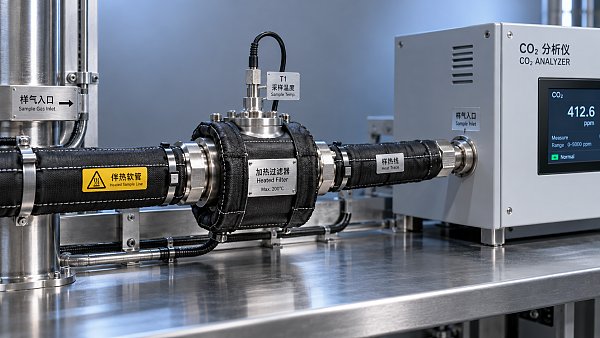
 How to prevent condensation in a CO2 analyzer sampling systemPrevent condensation in your CO2 analyzer sampling system. Learn how to control dew point, eliminate cold spots, and manage moisture for reliable readings and fewer costly disruptions.
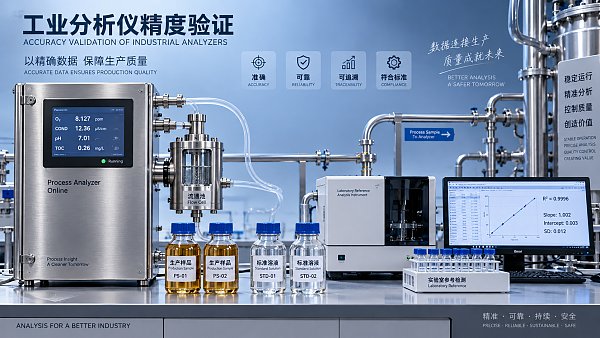
 How to verify accuracy claims for industrial quality analyzersVerify accuracy claims for industrial quality analyzers with calibration checks, independent testing, and clear acceptance criteria. Learn how to reduce risk and buy with confidence.
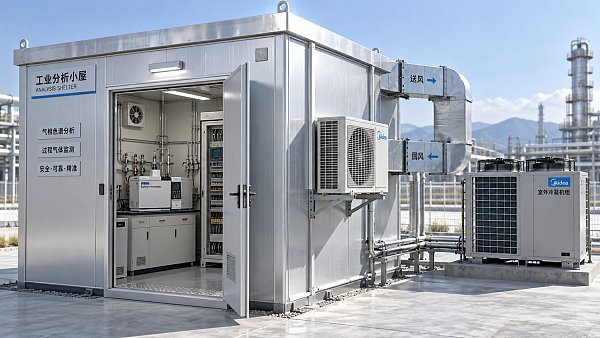
 How to calculate cooling loads for an industrial analyzer shelterSize industrial analyzer shelter cooling with confidence. Learn to calculate equipment heat, solar gains, and ventilation loads, then select HVAC capacity for reliable analyzer performance.
 What Happens When Combustible Gas Sensor Calibration Is Overdue?What happens if combustible gas sensor is not recalibrated on time? Discover the risks of inaccurate readings and missed alarms, plus steps to restore reliable protection.
 Can One Multi-Gas Detector Replace Four Separate Analyzers?Find out: can a single multi-gas detector replace four separate analyzers? Compare accuracy, safety, compliance, and lifetime costs to make a confident buying decision.
 Industrial Safety vs. Emission Monitoring: What Are the Differences?What are the main differences between industrial safety and emission monitoring? Compare goals, sensors, response times, and compliance needs to choose the right systems for your facility.
 Is Remote Monitoring Worth the Cost for Small Emission Sources?Is it worth investing in remote monitoring for small emission sources? Compare costs, compliance needs, and potential savings to choose the right solution for your operation.
 How Do You Handle Analyzer Failure During an Environmental Audit?Learn how to handle analyzer failure during environmental compliance audit procedures. Protect evidence, verify data, and restore monitoring with this practical response guide.
 Do VOC Monitors Require Explosion-Proof Certification?Does VOC monitoring require explosion-proof certification? Learn when approval is needed, compare ATEX and IECEx, and choose the right monitor for your site.
 How sample conditioning affects accuracy in petrochemical analyzersImprove accuracy in petrochemical analyzers with smarter sample conditioning. Discover how phase control, filtration, and transport design prevent bias and deliver reliable process data.
 How to troubleshoot sensor drift in industrial gas detectorsIndustrial gas detectors showing sensor drift? Learn how to verify calibration gas, identify root causes, and determine when sensor replacement is needed for reliable monitoring.
 How to judge whether a competitive price reflects real valueCompetitive Price: learn how to compare scope, compliance, performance, and lifecycle costs to identify real value, reduce risk, and make smarter purchasing decisions.
 When custom gas analysis is the right fit for complex process streamsCustom gas analysis for complex process streams: learn when tailored sampling, interference control, and reliable measurement design deliver confident decisions.
 When does a laser gas analyzer meet stack emissions monitoring needs?Laser gas analyzer for stack emissions: learn when it delivers fast, reliable data, how to assess installation risks, and what to verify for CEMS compliance.
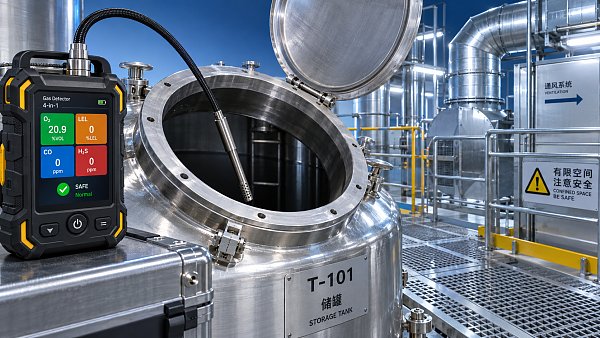
 How to select a hazardous gas analyzer for confined spacesHazardous gas analyzer selection for confined spaces: compare sensors, sampling, certifications, alarms, and maintenance to protect workers and choose with confidence.
 When is a single gas analyzer sufficient for workplace safety monitoring?Discover when a single gas analyzer delivers reliable workplace safety monitoring, and learn the key limits, calibration needs, and risks that require broader detection.
 How to choose an ambient gas analyzer for low-level leak detectionAmbient gas analyzer selection for low-level leak detection: compare sensitivity, cross-sensitivity, sampling design, alarms, and calibration for reliable site performance.
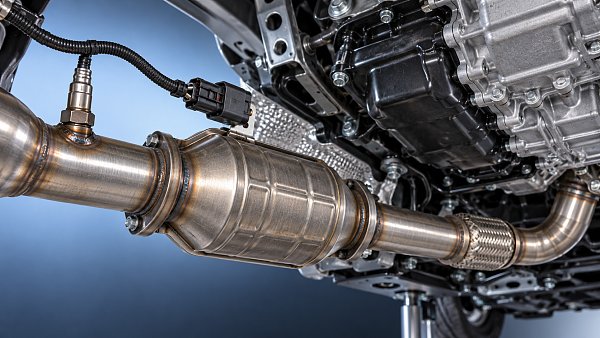
 How to tell when an oxygen sensor needs replacementOxygen sensor replacement signs explained: learn how live data, fault codes, wiring checks, and exhaust inspections pinpoint the real issue before you buy.
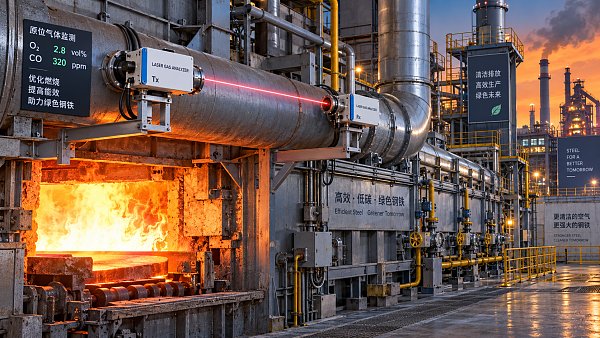
 How laser gas analyzers improve combustion control in steel furnacesLaser gas analyzer for steel industry applications delivers fast in-situ O₂ and CO data to optimize furnace combustion, cut fuel waste, and improve steel heating stability.
 How to verify whether explosion proof equipment meets site requirementsExplosion proof equipment verification made practical: match zones, gas or dust groups, temperature classes, certificates, and installation conditions for confident compliance.
 How industrial gas analysis helps detect contamination before releaseIndustrial Gas Analysis helps detect moisture, oil, oxygen, and toxic contaminants before release—protecting processes, ensuring compliance, and reducing costly risks.
 When is electrochemistry detection the right choice for water analysis?Electrochemistry detection for water analysis: learn when fast, reliable monitoring of ions, chlorine, pH, and more delivers actionable results.
 How industrial standards reduce quality risks in supplier selectionIndustrial Standard guidance helps quality and safety managers reduce supplier risks, verify compliance, strengthen traceability, and build resilient instrumentation supply chains.
 When does a multi-component system reduce installation complexity?Multi component systems reduce installation complexity when they eliminate field interfaces, streamline commissioning, and provide proven compatibility. Learn how to assess total cost and supplier accountability.
 How to size an industrial control shelter for outdoor equipmentIndustrial control shelter sizing guide: optimize layout, HVAC, access, safety, and expansion space for reliable outdoor equipment operations.
 How flue analysis helps verify combustion efficiencyFlue analysis verifies combustion efficiency by assessing O2, CO, CO2, and stack temperature to identify excess air, incomplete combustion, and heat losses.
 How to select industrial gas detectors for confined spacesIndustrial gas detectors for confined spaces: learn how to match sensors, sampling methods, alarms, and certifications to real atmospheric hazards.
 When does a laser oxygen analyzer outperform zirconia sensors?Laser oxygen analyzer vs. zirconia sensors: compare speed, selectivity, maintenance, gas chemistry, and installation needs to choose the right oxygen measurement solution.
 How to select a percent range analyzer for process measurementsPercent range analyzer selection made practical: compare accuracy, sample systems, calibration, gas matrix, integration, and lifecycle cost for reliable process measurements.
 How explosion proof analysis verifies safe equipment for hazardous areasExplosion proof analysis verifies hazardous-area equipment by matching certifications, temperature ratings, installation details, and inspection controls for safer compliance.
 When does fixed gas detection need point sensors instead of open-path monitoring?Fixed gas detection: discover when point sensors outperform open-path monitoring for predictable leaks, enclosed zones, local alarms, and safer design decisions.
 How to choose industrial metrology systems for tight-tolerance partsIndustrial metrology guide for tight-tolerance parts: compare CMMs, optical scanners, gauges, uncertainty, workflow, and traceable inspection strategies.









Search Categories
Search Categories
- Smart Meters & Power Quality
- Transformer Gas Analyzers
- BESS Thermal Runaway Detectors
- Energy, Power & Smart Grid Monitoring
- Optical Profilers & CMM
- Ultrasonic & X-Ray NDT
- Calibration Standards
- Precision Metrology & NDT
- Water Quality Analyzers
- CEMS & VOCs Monitors
- Price Trends
- Import & Export Updates
- Market Trends
- Industry News
- Industry Insights
Latest Article
- How to prevent condensation in a CO2 analyzer sampling systemPrevent condensation in your CO2 analyzer sampling system. Learn how to control dew point, eliminate cold spots, and manage moisture for reliable readings and fewer costly disruptions.Posted by:
- How to verify accuracy claims for industrial quality analyzersVerify accuracy claims for industrial quality analyzers with calibration checks, independent testing, and clear acceptance criteria. Learn how to reduce risk and buy with confidence.Posted by:
- How to calculate cooling loads for an industrial analyzer shelterSize industrial analyzer shelter cooling with confidence. Learn to calculate equipment heat, solar gains, and ventilation loads, then select HVAC capacity for reliable analyzer performance.Posted by:
Please give us a message
